JASON LI

Mr Watt´s Literary Services

However, Gullason does say that “Crane had a fanatic love for the truth …”. There is no doubt that Crane is reporting the actual facts correctly, as his work does not conflict with his associates at the scene, like Davis’s. Gullason even notes that while other reporters attributed wounds on dead Americans to machetes wielded by brutal Spaniards, Crane told the less sensational truth that they were simply rifle wounds in the normal tradition of battle. Crane’s seemingly racist tendency brings up the other major relevant PEJ principle, the 9th, which states: “Its practitioners must be allowed to exercise their personal conscience.” The principle was designed by the PEJ to address reporters living in fear of their editors not approving of their sense of morality. Crane has the opposite problem, as he shamelessly spits out his opinion, which itself is immoral to modern standards.

Who takes the gold!?

Sammy Xu snags the gold medal AGAIN for his outstanding essay on Stephen Crane!   Sammy said that this essay was a nine out of ten as far as the difficulty level. His classmates will probably concur as the drafting process for this type of critical analysis essay has been quite involved. Students were required Read more…

SAMMY XU

Mr Watt´s Literary Services

Apart from studying who Crane affected, studies have been conducted to see who affected Crane. After much research, analysts concluded that Crane’s creed, the origin of his writing style, was, unlike other authors, seemingly, independently realized. The only traceable impact an author had on Crane was Rudyard Kipling and his novel The Light that Failed. S. C. Osborn notes that Crane’s famous image at the end of Chapter IX in The Red Badge of Courage, “The sun was pasted against the sky like a wafer,” is also in Kipling’s The Light That Failed. In The Light that Failed, a young boy called Dick Heldar grows up to become a successful artist thanks to his illustrations on wars for the London newspapers. Osborn concludes that Crane’s early works have strong reflections of Kipling’s work, such as the “impressionistic ‘modern’ imagery, the sententious, often flippant, dialogue, and a keen sense of the ironic”. Crane was equally affected by the problems of his time. For example, when Crane visited the slums of New York and saw unfortunate people in poverty and suffering along, and he decided to write about it in Maggie: A Girl of the Streets. However, an even bigger real world problem conveyed in Crane’s work was the problem of racism and how it was reflected in The Monster and The Whilomville Stories.

ALEX LIM

Ettore Bugatti was the creator of Bugatti company and was an expert on every part of a car. Though he lived a short life he did many exciting things during that short life: he would design and make cars, enter and win races and much more! Ettore created some of the finest cars between 1907-1947; for example the Bugatti type 29, type 41 royale: and the Veyron, which were all great cars. He lived from September 15, 1881 to August 21, 1947.

SOPHIA SU

The writer then continues on, saying that each of Welty’s stories “…seems to return to Socrates’ sentiment that relative emotional values, while they might be able to blur the line between right and wrong temporarily, must ultimately give way to the established right and wrong.” He seems to leave unspecified just how Welty does this, though he supplies two contrasting examples.

OSCAR SHEN

He dares them to run into Boo’s back yard and mess around in it. They even try to write a letter to Boo Radley to try to get him to come out. Unfortunately, Atticus intercepts it before they can deliver it. “Jem held out a filthy piece of paper. Atticus took it and tried to read it.  ‘Why do you want Mr. Radley to come out?’

ZHUO-WEI LEE

Mr Watt´s Literary Services

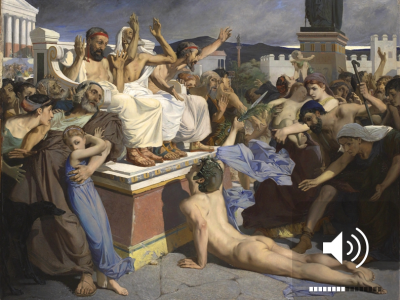
The Greeks heard that the Persians were coming for them and tried to get help from the Spartans, a people known for their aggressive fighting. They sent Philippides to ask for help but received no help, for Spartans were celebrating the festival of Carneia, a time of peace, but they did receive a thousand men from Plataea (a small city, located in Greece) to add to their troops, because the Athenians had fought for them before, thus they had a debt to pay to them.

ZHUO-WEI LEE

Changing History for the Better 2,503 years ago, foes met on the plain of Marathon in Greece. They were the Persians and the Athenian Greeks. In the year, 490 B.C, the Persians and Athenians were in a stalemate, the air tense and both armies bristling. The Persians were a very diversified group with light spearmen, Read more…

ALEX LIM

Mr Watt´s Literary Services

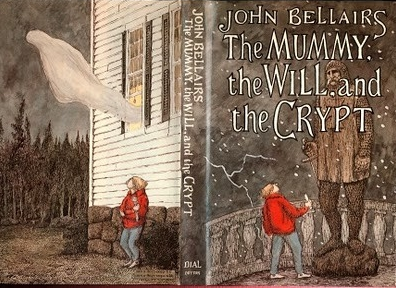
The Mummy, the Will, and the Crypt is a book more meant for kids age 8 to 11. This is because if the book is read by 13 year old it would be boring, and if it was read by a 6 year old he or she would not understand the book and what specific sentences mean. The book however is also somewhat tragic because Grandma gets a brain tumor, and Johnny’s dad also gets his plane shot down by the Koreans and they don’t know if he is dead or alive.