Myla’s Maryland

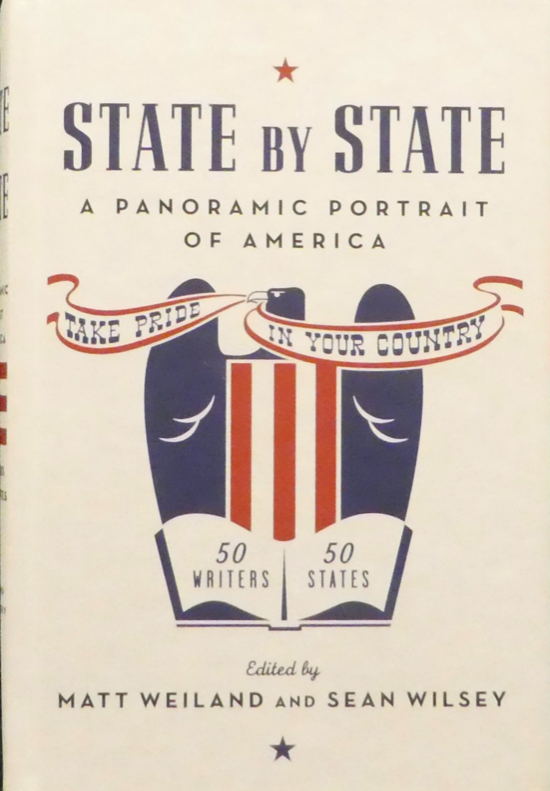
American editors Sean Wilsey and Matt Weiland
had a mission: uncover America and all its richness, one state at a time. The project grew from a hunch and a conviction. The hunch was that for one to truly understand America, they must learn it state by state, and to acquire an accurate understanding of a state, information should be gotten from the accounts of those who have an adept fluency in that state’s history, culture, and landscape. Beneath the hunch, Weiland and Wilsey sought to communicate a deeper conviction, which was that despite the largeness of the United States, many of its places remain under-described and neglected. So in 2006, the two invited fifty writers to serve as representatives of their respective home states. A few exceptions to this make the book even more interesting: Jackie Lyden, the NPR reporter, covers Missouri, and Paul Greenberg takes a fishing trip to Alaska, but for the most part, each state is written by a prominent writer who grew up there, moved there, or knows it very well. Two years later, they published their anthology, naming it State by State: A Panoramic Portrait of America. Each chapter of the book depicts each state through a unique lens formed from the personal experiences, cultural values, and relationships of the authors.

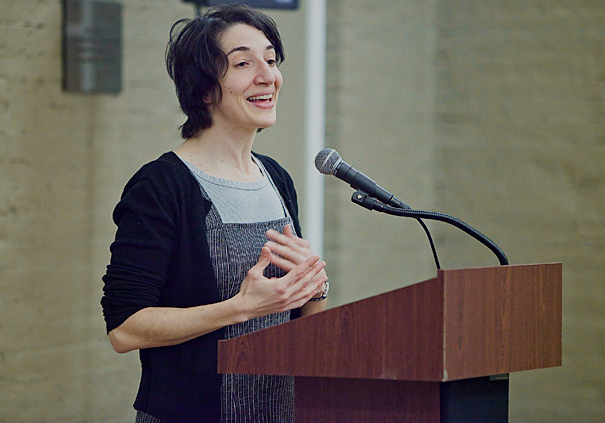
Myla Goldberg was chosen to write “Maryland”. Born in 1971, she was raised in Prince George’s County, which at the time was one of five out of Maryland’s twenty-two counties that was predominantly suburban. Goldberg’s upbringing in Prince George’s County placed her at the physical and ideological crossroads of Maryland. Growing up between federal institutions and the rural landscapes she longed to reach, Goldberg lived in a state that had always been divided geographically, politically, and socially. Throughout her essay, she depicts the dichotomies that she experienced while growing up: city versus suburb, North versus South, freedom versus restriction, and publicity versus secrecy. Myla’s unique position would later shape her portrayal of Maryland not as a unified state, but as one perpetually divided against itself, mirroring the larger United States.
Myla Goldberg has been writing all her life. As a young girl, she sat at her grandparents’ kitchen table, writing and illustrating a crayon-book story about Edgar Allan Poe. She enjoyed an abundance of genres, spanning from the works of Stephen King to childhood favorites like Bridge to Terabithia and Watership Down. Later, authors like Milan Kundera and Kurt Vonnegut introduced her to the idea that fiction could incorporate philosophy, humor, and non-linear storytelling. Today, Goldberg is a professor of writing at Sarah Lawrence College. She writes with both discipline and curiosity, often joking that she doesn’t outline because “the fun of writing is finding out what’s going to happen.” Her most famous novels, Bee Season and The False Friend, are concerned with childhood memory, belief, obsession, and ultimately, identity. Bee Season presents a family where each member becomes consumed by their own obsessive pursuit, leading to disaster. The father character, Saul Naumann, has a lifelong quest for divine connection which develops unhealthily onto Eliza when he sees her spelling ability as a mystical gift. His obsession blinds him to the needs of his other family members. Aaron, Eliza’s brother, also goes down a similar path in his spiritual search. Eventually, the family collapses from their obsessive pursuits. When I was reading Myla’s Bee Season, I developed feelings of sympathy towards the Naumann family. The daughter of Saul and central character of the book, Eliza, demonstrates an extraordinary ability in her school’s spelling bee competition, far surpassing the excessive mediocrity of the students around her as well as her own former mediocrity. It seems that overnight, she goes from a quiet, overlooked child to the center of attention in her family. Her father, a self-absorbed religious professor, notices her talent and, absorbing it as something enigmatic and rare, he attempts to connect her natural ability with Jewish mysticism, believing that there is deeper religious meaning to her spelling gains. His spiritual interest quickly turns into an obsession, and as the novel progresses, the relationship between the two begins to intensify, hinting at internal conflicts that aren’t obviously apparent. Her other novel, The False Friend, concerns a woman trying to untangle a 20-year-old memory and explores the complexities of moral judgment, the fallibility of memory, and the adults that children become.
Goldberg begins her essay by exploring the housing development that she was raised on, toying with the word “ivory” to illustrate the demographics and exposing the military-industrial complex of industries that surrounded the greater DC area. She provides an anecdote of a childhood excursion by bicycle where she’s hamstrung at every turn by buildings and even a guard who tells her to turn around. This yearning for physical freedom of course is mentioned in the first paragraph: “I liked the place best during the impressive blizzards of the 1970s”. When the “lanes and drives became impassable” and “towering piles of shoveled snow obscured” her view, the normally orderly suburban landscape was transformed. The snow disrupted the roads and boundaries that usually limited her movement, creating a sense of mystery and temporary freedom. In this way, she strengthens the idea that the blizzards made the environment feel less controlled and allowed young Goldberg to imagine greater physical freedom.
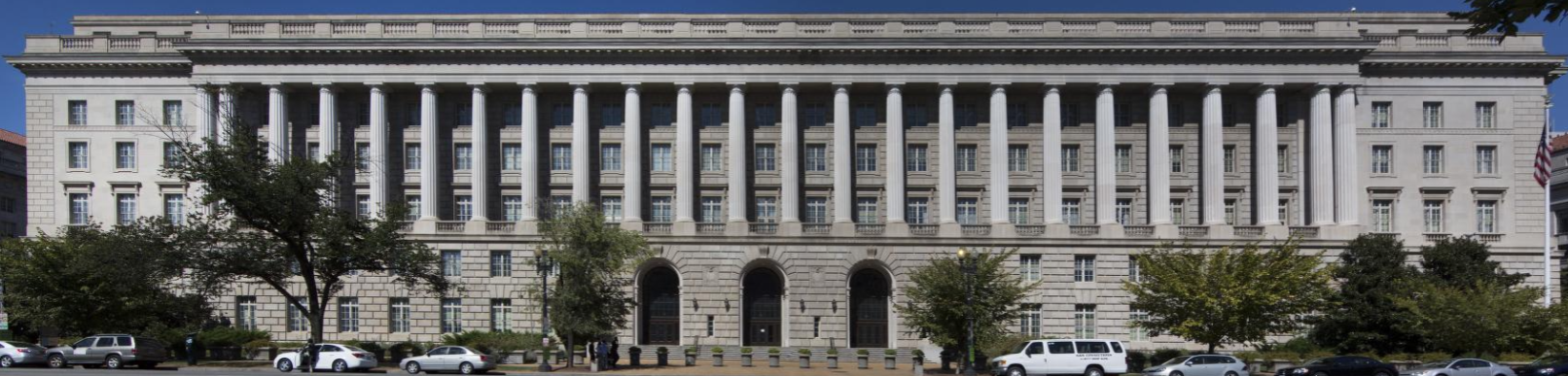
The metro area gave her many impressions. One of the earliest of these was “peeing in the shrubs that fronted the main headquarters of the Internal Revenue Services”.
The cities of Baltimore and D.C. provided for a series of mixed impressions. On one hand, they were the places where she would often visit the National Air and Space Museum and Washington Monument for the Fourth of July.


They were, however, also the lens to her first perceptions of crime, liquor addiction, and particularly poverty that her younger self found too “complicated” as opposed to more simple incidents she experienced back in the suburbs, like encounters with “experimental pigs”. She tells us that if she had been able to travel forty more miles, she would’ve discovered “the wilderness” outside of Montpelier. Comparing the state to a handgun, she says P.G. was the “trigger” that was stationed between the “rural areas that form Maryland’s barrel and handle”.
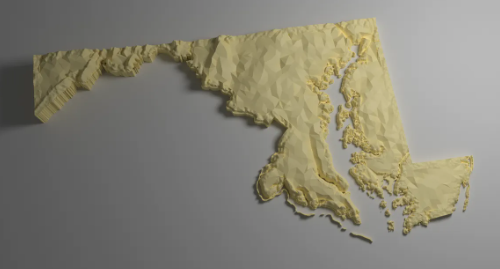
The two gun components represent a small epitome of our nation’s red/blue discord: the barrel, or the more liberal domain of Maryland, comprised Montgomery County, while the handle, a site of republican values, include Cecil County and others along the eastern border.
While her current depiction of MD as a border state between the north and south is largely accurate, upon further research, I, a Marylander myself, was surprised to find out just how divided the state had been even before the events that Goldberg covers, during and after the Civil War era. She vaguely gestures toward the liminal position of the Mason-Dixon line in her brief mentioning of it, but treats the boundary as a nineteenth century site of political and social quarrel rather than the culmination of centuries of religious, territorial, and cultural instability in the region. That is to say, she doesn’t thoroughly explore complexity of the Mason Dixon line’s history or that of Maryland’s. The state was actively contested rather than simply split, and had been since its colonial days. Long before the line became known as the divider between slavery and freedom, it was drawn to resolve land disputes and long-term rivalries between the Catholic Calvert family of Maryland and the Quaker William Penn family of Pennsylvania. As I delved deeper into the convoluted history of Maryland, I discovered that the state’s identity had been uncertain since the start. Boundary issues were always prominent; for instance, the Catholic leadership of Maryland often clashed with the Protestant Virginians. Furthermore, when William Penn came to the mid-Atlantic in the late 17th century, assertions for land developed due to an overlap of Penn’s chartered land within Maryland’s northern boundary. This dispute over land went on for decades, and wasn’t truly resolved until the Mason–Dixon line was surveyed in 1767.
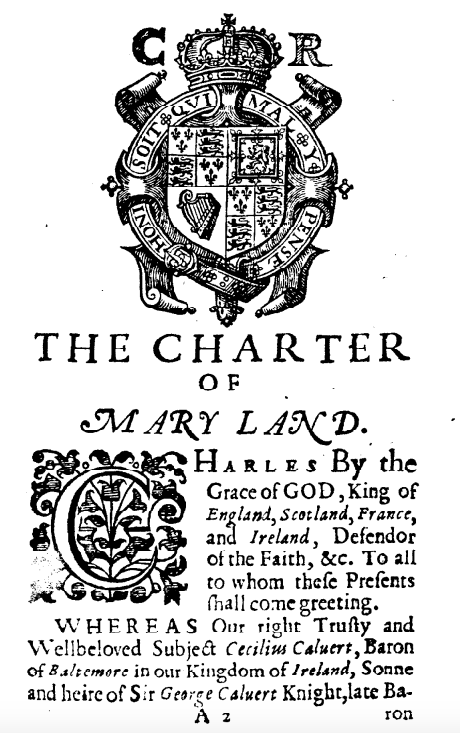
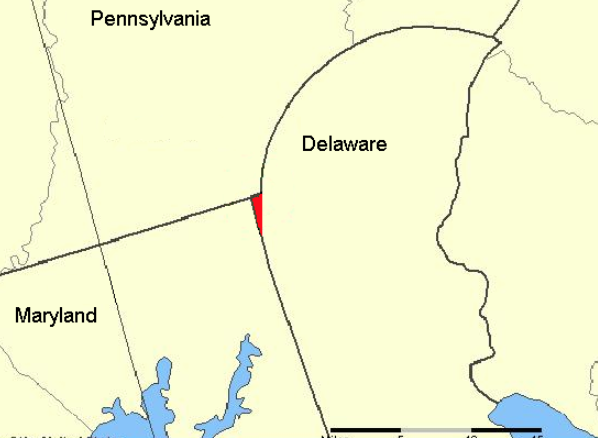
Furthermore, early faults in mapping allowed Penn to claim land that should have belonged to Maryland, including Philadelphia, and even after the survey of the line by Charles Mason and Jeremiah Dixon, those errors were not corrected, but instead standardized. Maryland was founded on division, negotiation, and shaky coexistence, and even nearly four hundred years since King Charles I granted the provincial charter to Cecil Calvert, as Goldberg confirms, those principles still linger. Upon further study of the eighty-year-long Penn-Calvert boundary dispute, I learned that a twelve mile arc spanning across northern Delaware exists as one of the only borders in the United States that is round. Known as the “Twelve Mile Circle”, the border was formed in 1681 by King Charles to shield his brother’s holdings from Penn’s charter. A portion of this circular border, known as the arc line, forms part of the Mason-Dixon Line. I view this unusual discovery as proof in the pudding of Maryland’s messy, conflicted state identity.
Goldberg reveals her own political leanings. Having grown up in Prince George’s County, she adopted Northern, Democratic values as opposed to the more Republican ones of rural Maryland – the part of the state she had sought out for much of her childhood. She calls herself a “Yankee”, a term referring to the Northerners and Union soldiers during the Civil War. As a child, she had thought Maryland to be firmly Unionist, but in fact the state probably would have joined the Confederacy had Lincoln not imprisoned nine Maryland legislators who were in favor of secession. She personally reflects on this gap of knowledge through comparing the secrecy of her childhood environment, where people avoided talking about their jobs likely due to their being government positions, and the two-dimensionality of her education, which presented a simplified, resolute history of Maryland. Goldberg goes on to write about the differences between her experience growing up, and her Northern friends’: “‘My life-long sense of kinship with those north of the Mason-Dixon Line was the last casualty of my civil re-education. I recently learned that my born-and-bred Bostonian friends don’t think of themselves as Yankees. In New England, there was no Us and Them’”. The Mason-Dixon Line, originally surveyed between 1763 and 1767 to settle a boundary dispute between Pennsylvania and Maryland, would eventually signify the crucial boundary between the Southern slaveholding states and Northern free states during the Civil War era.
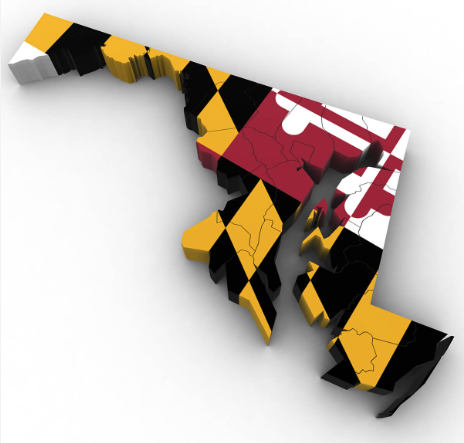
Nearing the end of her essay, Goldberg alludes to the state flag to capture the divided loyalties of Maryland. Instead of a customary blue background with a centered state seal, Maryland’s is divided into four diagonally symmetrical quadrants of yellow-black and red-white. The yellow-black originates from the coat of arms of Maryland’s colonial founder, while the red-white cross was adopted by the Maryland secessionists who flew it as a banner. Although combining the two elements was supposed to invoke reconciliation after the Civil War, the complete division of the colors and shapes reflect the true nature of Maryland’s internal discord. Goldberg concludes by reflecting on the continuity and change in Maryland, tying back to her initial childhood anecdotes. Housing integration has changed the demographic of Ivory Pass and the old “wooded road that provided [for her] escape from suburbia” was expanded to make room for new housing developments. On the other hand, the state song has survived through condemnation and a certain Stars and Bars flag in Cecil County reflects lingering Confederate sentiment. So although landscapes have changed, Maryland’s cultural division remains, just like the clashing design of its flag. Her final image of the Confederate flag shows it to be hoisted atop an industrial cherry-picker in such a way that it rises higher than the “torch-wielding arm of the Statue of Liberty”. Lady Liberty, long understood as an emblem of freedom and democracy, is visually surpassed by its literal antithesis, that being a banner (at least to a Northerner) associated with secession, rebellion, and resistance. The presence of the flag signals that for those of the South, it is something to be culturally honored and preserved.
What does it mean when a symbol associated with rebellion and division looms above one representing freedom and democracy? Can a state, or a nation rather, truly be united when visions of liberty still clash? These questions carry even greater weight when we consider the American Civil War, which was one of the deadliest conflicts in American history, resulting in roughly 1.6 million deaths. At major battles like Gettysburg, where about 25,000 soldiers were killed or wounded in just three days, the cost of division was made devastatingly clear. And yet, more than a century later, the symbols and ideologies that fueled such immense bloodshed still persist with the Confederate flag living on to represent heritage and regional pride. Like its flag, the state itself remains a both jumble of competing views and a reminder that unity is never absolute.
The pride of the South is tied to a historical narrative in which they have emphasized their distinct identity in opposition to Northern authority. The Mason-Dixon Line, slavery, the Civil War, and other factors contribute to a sense of regional autonomy and cultural discord. By emphasizing the height of the flag, Goldberg illustrates how ingrained this sentiment still is in American society today. Maryland, being a site of division since its establishment as an American state, is used to serve as the ideal proof of this. The contrast between the Confederate flag and Lady Liberty encapsulates the state’s, and the nation’s, dual nature. While one points toward liberty and opportunity, the other surpasses it, clinging to a smeared past. In this concluding image, Goldberg reveals that America’s internal divisions are not buried in history but remain visible and unresolved.
By revisiting one of the nation’s foundational documents, the Declaration of Independence, it can be observed that conflict in America has never been purely geographic or political. The Declaration starts with universal claims about human rights, consent of the governed, and the duty of citizens to revolt against corruption. This notion is representative of Maryland’s history. Maryland, a state where “battle lines divided homes and backyards” and where even the contradictions embedded in its state symbols persist, echoes this foundational American dilemma: how to create a unified society when people fundamentally disagree about justice, authority, and freedom. Goldberg’s choice to focus on cultural and regional divisions underplay the deeper ideological conflict in Maryland. By extending Goldberg’s insights through the framework of the Declaration, it becomes clear that the divisions she explains are not just regional, they are enduring and inseparable from the American identity itself. In this sense, Maryland is not just a divided state, it is a symbol of America striving towards unity.
In closing, Goldberg ultimately does advance the vision of Weiland and Wilsey, which posits that one’s authentic understanding of America’s complexity begins with a careful study of their familiar surroundings or their home state. Through personal memory and symbolic reflection, Goldberg presents Maryland as a prism through which the United States’ own divided identity becomes visible. Her Maryland is not simply a depiction of the Old Line State’s landscape, economic, and political flaws but a portrait of America in miniature. It is conflicted, complex, and still seeking to define itself.