Monthly- Archives: April 2012


ZHUO-WEI L

Mars vs. Earth

“Aaarrrgh!” Jimmy woke with a start. He just had the worst nightmare he could have ever imagined. He looked around. Everything seemed to be in place.  He wasn’t on Mars. He wasn’t about to get dissected by aliens. Jimmy’s parents hadn’t awakened yet. He looked beside him. The digital glow-in-the-dark-clock told two thirty-five in the morning. Remembering that he had a math test tomorrow, Jimmy fell asleep again.

*   *   *

            “Honey, are you okay?” his mother asked. “You look like you barely had any sleep last night.”

“I’m fine, mom,” Jimmy muttered.

“You don’t look fine. You haven’t been yourself lately. Does it have something to do with school? Is it something you want to talk about?”

            School. Part of him wanted to just skip school with all the nightmares still in his mind. All of them were about Mars. Weird. Jimmy knew he couldn’t skip school. Not with the math test today. How would he skip school? If he did skip school, he’d still have to do the math test some other time, not to mention homework.

“Toast.” Jimmy said.

“Would you like butter with it?” a computer voice asked.

“Yes.”

“Approximate time until ready: 2 minutes.”

Suddenly a screen appeared in front of him. INCOMING TRANSMISSION FROM U.S. GOVERNMENT. This worried Jimmy. These types of messages only came to normal households when there really was an emergency. The screen turned to the President of the United States. He was middle aged with neatly combed black hair.

“Friends, comrades and countrymen,” the President said. “I have come to you with a very unfortunate message. The Martians’ planet is dying. The peaceful Martians want our planet and have declared war. We have no choice but to fight back. All schools are closed. Lock all windows and doors and please stay in your homes.”

Jimmy knew at once that something was fishy. When the message first started out, he had seen a Jupitarian scurry behind the president. Jupitarians were sworn enemies of Martians. The Jupitarians must have made the President say that message so the U.S. Army would attack Mars! Then, Mars would be theirs! He knew that if he told his mom what he saw, she wouldn’t believe him. No one else he told would believe him either.

But how will I get the army to believe me? I have it! I’ll use my teleporter and teleport to Mars, get a picture and then I’ll have proof! But I’ll still need a camera. . . .        

Jimmy couldn’t believe what he was doing. After all those years with mom and dad telling him not to steal, he had just stolen a camera. He was riding his 400cc hoverbike that his mother had bought from a secondhand store. And now the police were onto him.

“Stop now and you will not be harmed,” the police shouted through bullhorns.

This just made Jimmy go faster. He heard the rapid-fire action of the machine guns and saw the red and blue flashing lights reflecting off of his mirrors. Only one more block to go. Jimmy had equipped a small tank of NO2 (the fuel that gives cars get an extra boost when they’re racing) to his hoverbike for emergencies. Now was the time to use it. The engine screamed and zoomed ahead. He braked hard and jumped off his bike and then ran into the house and slammed the door. The police soon broke through it. Jimmy’s mom was screaming. He ignored her. Jimmy got to his room, quickly typed in the coordinates for Mars and hit the teleport button. In a nano-second, he was on Mars.

Jimmy was angry with himself. After all this planning, he’d forgotten a spacesuit! He quickly went over his choices. He could give up, teleport back home and hand himself over, or try to find a space station and get a spacesuit. If he didn’t find a spacesuit, he would die.

Jimmy knew he could only last about an hour in this air. He gazed around and saw a small building in the bare land. Maybe he could get help there. After a couple minutes of jogging, he soon saw that it was a space station. He quickly ran up a hill to get a better view. There were two guards planted at each door, except for the back door. There was only one guard there. That looked like the only way to get in. Jimmy decided whether to throw a rock to distract the guard or try to tackle him and beat him up. He decided to throw the rock because the guard was bigger and had a gun. Jimmy was starting to feel light headed. He had to act soon or he would die.

*   *   *

            “Get me Mars communication now!” The chief of police screamed, his big face turning purple.

The chief was spazzing out, a cop thought. What could a little boy do on Mars?

            Suddenly a face filled a computer screen. “USA Mars Central Comm. How can I help?”

“This the Earth Defense System. A little boy is on Mars. Find him. Kill him. He cannot find out what we are doing.” the chief said.

“Yes sir. Right away sir.”

“Over and out.”

*   *   *

            “I’m in,” Jimmy said to himself. He slid inside the space station after almost getting discovered at the back door. His light-headed feeling immediately went away. There were many doors, many hallways, and luckily they were all labeled. Men’s room. No. Radio room. No. Basement. Maybe, but not likely… Storage. Yes!

Jimmy quickly opened the door and was surprised at how large the room was. It was probably the size of an ice skating rink without the stands. Like the doors, the boxes were labeled too. Computers. No. Guns. Useful, but not needed. Spare Items. Yes! This was starting to be like a routine. Jimmy carefully pulled off the tape and looked inside. There it was just as if it were placed in there just for him, a small spacesuit! Jimmy tried it on and found that it was a little big, but adequate. He quickly put it on with a helmet that he found in the box and carefully re-taped it. He heard voices in the distance. He ran behind the door of the storage room. Two guards walked in.

“I really don’t see what a boy could do on Mars,” one of them said, “Seriously, besides enjoying the view, what could he do?”

“Play with his Martian friends?” the other one suggested. They both laughed. As they neared the back of the room, Jimmy ran outside the door and headed to the exit.

“Hey you, stop!” somebody said. Jimmy looked behind him to find another guard rounding the corner.

He bolted out the exit where he saw a weird looking vehicle that looked like a quad.

Great, Jimmy thought, I always wanted to ride one of those.

            He jumped on the vehicle, pushed a green start button and zoomed away.

Catch me now suckers!

*   *   *

            Gunfire. That was the first thing Jimmy heard when he left the space station.

The two guards were on his trail.

Crazy guys. What did I ever do to you in the first place?

Coming up ahead, Jimmy saw a small village where Martians lived.

Good. Jimmy thought. I’ll lose them there. What if I ….

“LOW ON GAS! LOW ON GAS!” a computer voice said.

*   *   *

            “There is a problem.”

The chief spun around. It was his advisor. He had blond hair, was around forty, and had a deep tan.

“What is it?” the chief snarled.

“If we drop the nuclear bomb on Mars, not only will the Martians die, but their advanced technology will go with them too.”

The chief was really fuming now. “Do you think that I am stupid? Do you think I don’t already know that? Do you think that Martians are smarter than me? Do you think that Martians are smarter than humans? Hnnmm? If you think that, you should get your smart mouth out of this… this… place and work with the Martians instead!” the chief shouted.

The advisor could usually hold his anger in, but now he was an exploding volcano. “Let me tell you something, you freak! I do think the Martians are smarter than  humans! I definitely think that the Martians are smarter than you! I will get my smart mouth out of here and work for the Martians! I QUIT!” he screamed.

Before the chief could realize what just happened and apologize, the advisor teleported away from Earth.

*   *   *

            Back on Mars, Jimmy had reached the town without the engine dying. The guards were out of sight. They must have given up. Jimmy was about to explore the town when he heard faint voices somewhere around the block, so he headed towards the voices and saw a human talking in a crowd of Martians.

“…believe that there is still hope.” the man continued from his speech. “If you have any ideas on how to stop this, please contact me. It will happen tomorrow.

When the Martians all left, Jimmy waved the man over.

“What were you just talking about?” Jimmy asked.

“That Ear…”

Before the advisor could finish, Jimmy saw red and blue lights flashing all over his face.

“Put your hands up and don’t turn around.”

They were caught.

*   *   *

            It turned out that it wasn’t Earth’s police that caught them, but Mars’s police. Even though Mars’s police had the same lights, they had different uniforms. They wore a red jacket and blue pants.

Jimmy and the advisor were both sitting in front two of Mars policemen. They were in a dark room lit only by a desk lamp.

“What are you doing here?” the one on the left asked. Martians had humanoid form but had only one eye, three fingers, and green skin.

“I quit my job as an advisor to the chief of the New York City Police,” the advisor said.

“And you?” the other policemen asked.

“I am Jimmy Robinson from New York City, New York.” Jimmy answered.

“Now I know who you are, but you still didn’t tell me why you are here in the first place,” the officer on the left said.

“I am here because I have important information that could save the entire Mars race,” the advisor said, matter-of-factly.

“I am here,” Jimmy said, “because I wanted to see if the Martians were really making war against Earth. Now I see that you really aren’t.”

“And what is your name?” The policemen on the right pointed at the advisor.

“James Hugh.”

“What is the important information you have for us?”

“Earth is going to detonate a nuclear bomb on Mars.”

There was a minute of silence.

“How do we know that you are telling the truth?” one of the officers said.

“Don’t you guys have a machine that can tell whether I’m lying or not?” James asked.

“Yes.”

An officer opened a drawer and pulled out a weird looking helmet with antennas sticking out and many buttons.

The officer pushed a button and asked James to put it on.

“Now say what you just said.”

James put on the helmet and repeated himself. A couple of seconds after the sentence there was a ring and a green light blinked.

“How long until the bomb explodes?”

“Tomorrow.”

The officer suddenly stood up and pressed a button on the wall. “Code Red! Code Red! Nuclear bomb on Mars! All search teams move out! Kill all who stand in the way!”

The search was on.

*   *   *

             The police located the bomb. It was pretty easy to find. Some scouts found a big hole in the ground that was guarded by a few hundred Earth policemen. A computer searched the area using radar and found an enormous bomb the size of a truck, hidden underground.

“A bomb like that could destroy everybody on Mars!” a Martian policeman said. The chief of the Martians’ police told James and Jimmy what was going to happen.

“We outnumber them by five times, so we’ll have a big advantage.” he said, “The first troop will attack here, in the front, and another will attack in the back. There are about 300 in each troop and they all together have about 900 at the most, so we should get past them easily. Then we get the bomb, put it in a space ship and send it into space. “If you’re wondering why I don’t want to disable it, it is because I don’t want to take the chance of blowing the bomb up early.”

“Sir, all troops are in order,” someone said into a loudspeaker.

“Good then, start the attack.” the chief said.

“Right away sir.”

“Now, how about a game of chess?” the Martian chief asked, smiling.

*   *   *

            The Earth chief was devastated. The Martians were set on defusing the bomb. “Send in as many troops as we can,” he said to a cop next to him. “Make everyone guard the bomb.”

*   *   *

            The fight was crazy. It was even harder to find out who to fight in the confusion. At the beginning, the Martians seemed to be winning, but as the fight went on, the humans came back and there seemed to be more and more of them as they fought on. An hour later, the fight ended. The Martians had won with only about fifty survivors. The chief, Jimmy, and James soon arrived at the hole with in a truck carrying the space ship. The last fifty survivors helped get the bomb in the space ship. The plan to save Mars was almost over. The Martian chief let out a string of curses.

“What’s wrong?” Jimmy asked.

“We can’t navigate the ship.”

“What do you mean?”

“The navigation system on the ship is dead. We can’t send the ship to space without somebody getting in there and navigating it.”

“I’ll do it,” James said. “It’s my fault this thing got started in the first place. I’m going to end it.”

“You are a very noble man. For years we will sing songs of your bravery,” the chief said.

“Bye,” Jimmy said.

James climbed into the space ship and blasted away. He was gone.

*   *   *

            “He’s five million miles away from us right now,” the chief said as he pointed to a green dot on a computer.

Suddenly the dot disappeared.

“The bomb blew up. They must’ve made it blow up early.”

A couple seconds later there was a giant wind that sounded like a big man blowing into an oversized whistle.

Jimmy silently walked out of the building and teleported back home. His mom hugged him for five minutes. Jimmy told her what happened while he was gone.

“I’m proud of you,” his mom said.

“I didn’t do anything though,” Jimmy protested.

“Without you, Mars would’ve been toast.”

“Speaking of toast, can I have the toast I missed this morning?”


ZHUO-WEI L


The progression of friendship between Legolas and Gimli in The Fellowship of the Ring


All friendships tend to weaken or strengthen over time. One such example of a strengthening friendship exists in The Fellowship of the Ring by J.R.R. Tolkien. The friendship occurs between two of the main characters, Legolas and Gimli. Legolas is an elf and Gimli is a dwarf. In Middle Earth, elves and dwarves generally dislike each other, most likely because the dwarves are accused of killing Thingol, who is an ancient Elfish lord. It may also be because of nature: dogs and cats generally don’t get along. The two are together though, and one event at the edge of Lóthlorien forces them to come to an agreement that challenges and changes their relationship.


Both of the characters meet in the story at the Council of Elrond because there must be a man, an elf, and a dwarf in the company to start the journey to the Cracks of Doom that contains the hottest fires to melt the one and only commanding ring that Sauron desires so much. The company tries to circumvent Caladhras Mountain, but a snowstorm waylays them and they are forced to enter the Mines of Moria. Before going in, Gandalf explains that those mines were made when there were friends between all kinds of creatures, including elves and dwarves.


       “Well here we are at last!” said Gandalf. “Here the Elven-way from Hollin ended. Holly was the token of the people of that land, and they planted it here to mark the end of their domain; for the West-door was made chiefly for their use in their traffic with the Lords of Moria. Those were happier days, when there was still close friendship between Dwarves and Elves.”

       “It was not the fault of the Dwarves that the friendship was waned,” said Gimli.

       “I have not heard that it was the fault of the Elves,” said Legolas.

       “I have heard both,” said Gandalf; “and I will not give judgment now.”


Their mutual dislike leads them to not talk to each other for quite a while after entering the Mines.


The Company behind him [Frodo] spoke seldom, and then only in hurried whispers. There was no sound but the sound of their own feet: the dull stump of Gimli’s dwarf-boots; the heavy tread of Borimir; the light step of Legolas; the soft, scarce-heard patter of hobbit feet; and in the rear, the slow, firm footfalls of Aragorn with his long stride. When they halted for a moment they heard nothing at all, unless it were the occasional faint trickle and drip of unseen water.

         The company finally passes through the mines, although at a cost of a member of the Fellowship. Their journey continues to the secret Elvin land of Lóthlorien, or Lorien. During their attempt to enter Lóthlorien, they are stopped because the way through is known only to elves and must be kept a secret and unknown to outsiders. The Fellowship is told that they may pass, which is highly unusual, but only if the dwarf is blindfolded. Gimli is outraged that he alone should have to walk in the dark, and refuses to wear a cover over his eyes. Gimli says that there is no need for unfairness and just because he is a dwarf, it doesn’t mean he has to be blindfolded. Then Aragorn gets tired of the protesting and butts in to tell them that everyone is going to wear blindfolds and they will just have to deal with it. Legolas, outraged, adds to Gimli’s argument and says that he shouldn’t get blindfolded because he is one of their kind, an Elf, not an outsider. But the argument still remains in Gimli and Legolas’s mind because at that moment when the elf and dwarf both agree on something, a friendship is forged that will benefit the Fellowship in battles to come.

       “As was agreed, I shall here blindfold the eyes of Gimli the dwarf. The others may walk free for a while, until we come nearer to our dwellings, down in Egladil, in the Angle between the waters.”

       Gimli was obstinate. He planted his feet firmly apart, and laid his hand upon the haft of his ax. “I will forward free,” he said, “or I will go back and seek my own land, where I am known to be true of word, though I perish alone in the wilderness.”

       “I am an Elf and a kinsman here,” said Legolas, becoming angry in his turn.

         One of the battles where the friendship is helpful is during the fight between Orcs of the White Hand against the soldiers of King Theoden. Before the battle, Gimli and Legolas have a playful competition to see who will kill the most Orcs. Gimli turns out killing forty-two, one more than Legolas, and you can tell that their friendship is strong when the Elf says that he is glad to see Gimli healthy on his legs. Also, after the battle, you can tell that the tension between the dwarf and the elf are gone because the two creatures ride out of the battle scene sharing a horse. This would have never happened before they arrived at Lóthlorien.


The progression of friendship between Gimli and Legolas is about how two characters move from just tolerating each other to making amends; from this they seem to form an important agreement. They had to choose between friendship and acrimony, and friendship prevailed.  Such rivalry exists in our world: for instance, during Apartheid, there was racial segregation. In South Africa, black political representation was taken away and blacks in general were not considered citizens. This breach of human dignity finally ended in 1990. President Frederik Willem de Klerk made negotiations to end the segregation. Gimli’s and Legolas’s relationship is similar because they were both rivals. Help comes from Gandalf and Aragorn, but it is the two of them who finally solve their own problem. This teaches us a greater life lesson, which says, no matter how different you are with another person or group, it doesn’t mean both of you can’t share a lasting relationship. By making amends or negotiating with another person, or by acknowledging that the challenges each party faces are in some ways equal and complimentary, we can solve our problems in a peaceful way.


JONATHAN J

The da Vinci Disappearance


Leonardo da Vinci strolled through the crowd slowly with his mind on how to improve his new flying machine. Ever since he was a child he had pondered about how things worked, while all the other children were playing games. His biggest dream was to invent something that would enable man to fly in the air with the birds. So far he had plans, but no one would give him the money to fund his project because almost everyone thought what he was doing was rubbish. Around him merchants called out prices in a barrage, each and every one hoping to get some more customers. Everyone bustled around in a hurry and some people recognized him and glared at him. Leonardo just ignored them because he believed one day he would show them he was right after all.  He walked up marble steps to an elegant fountain, then slid his hand under and felt the icy river water. He scooped up some to wash his face and drops of water dribbled down his beard.


Suddenly, he felt dizzy, leaned forward and fell into the water, blacking out. Leonardo looked around; all he could feel was a darkness that stretched as far as he could see. Then in a flash everything began to spin faster and faster.  Leonardo felt like he was being stretched and pulled by an invisible force.  He felt something strange; his ears began to pop because of the air pressure. Then he disappeared in a flash of a purple light.  Leonardo suddenly emerged from the darkness, into a whole new area.  One of the possible reasons people did not know da Vinci’s location when he was apprenticing with the artist Verrocchio, was that they could not find him during this disappearance. They probably never bothered to look again, because they believed Leonardo da Vinci had gone insane.


***


I scribbled a few notes onto a piece of paper, listening intently to the presentation. Suddenly I felt the air get hotter and denser and I could feel sweat starting to form on my forehead. Then I began to smell a strong smoke coming from the middle of the classroom. Everyone else identified the smoke too, and the teacher began to line us up. Then a small explosion shook us down to the floor and I heard screams throughout the classroom. Out from the thick purple smoke emerged a man with a grey beard who was trembling. He seemed familiar from somewhere, but I couldn’t remember.


Then I knew who he was, I recognized him from a self-portrait print in our class. I looked up at the wall to make sure. Everything was about right, except he looked older in real life. This guy looked like Leonardo da Vinci! I figured that he got here by a kind of transportation, but how he had got into our classroom was bugging my mind. I could tell that he was just as scared of us as we were of him. He looked dizzy and gaunt, his hair and beard were uncombed and messy, and some parts of his shirt were covered in mechanical grease. Then he groaned and collapsed.


We didn’t know what to do, so we just got some paper and water. I dipped the paper into the water and laid it onto his forehead. The decision to contain what had just happened was a class vote, as we considered that this could turn into a worldwide crisis. All of a sudden his eyes began to flutter. “He’s waking!” I shouted. A couple students ran over to see what was happening. The teacher came over and told us she could handle it and thanked us. I walked away and sat at my seat, wondering how my life had turned upside down all of a sudden.


***


Leonardo woke up in a flash. Opening his eyes he saw children around him dressed in bright weird clothes. For a second, he forgot what had happened to him in the first place. He began to stand up. Where am I, he thought?  His eyes darted around, observing everything.  This technology is way too advanced, he thought, this isn’t possible. Then he remembered how Verrocchio had talked about creatures called aliens that kidnapped humans. Could he be one of the kidnapped? They almost looked exactly like him except for the choice of clothing. In addition, they spoke a different language. A crowd had already formed around him. He heard a variety of languages around him; finally he heard something sort of similar to Italian. Of course, he did not know it, but Italian had changed by a lot since the 1500s. Leonardo responded in a few words, asking what was going on. The teacher thought for a moment, and explained what had happened. Then Leonardo explained his journey through the darkness. Leonardo questioned where he was, in a fluent stringed Italian. The teacher told him where he was and the date. His mind was in shock from what he heard. He stood up slowly, and the crowd dispersed, making way for him. He looked outside from a window, following something with his gaze, and then he dropped to the floor and fainted.


Later that afternoon, Leonardo groaned as he sat up. He looked around and saw that the room was empty. He stood and saw that he was really alone. Then he remembered what he had seen outside, an object like a bird floating in the sky with a great humming noise. He had to tell all his friends about it. Maybe he could try to make one himself. Maybe he could use the same design to make his own flying machine. He quickly scribbled a sketch of what he had seen on his notepad, and stuffed it back into his pockets. Leonardo leaned on the ledge of the window, and saw more amazing objects: he saw fast moving vehicles on a smooth black road! He could see smoke coming from the back of them, and he saw humans in the front. There was only one possible answer to where he was. He knew about America, but this was something entirely different. This was beyond everything he had thought possible.


Then the same person who had spoken Italian before walked into the room. She told him that everyone had left the school building. “You’re going to have to take shelter in the school tonight,” she told him. She led him into the nurse’s office, and pointed to a small bed on the floor. Leonardo just sat on the bed for a while. The woman came back and told him he would have to wake up early in the morning. He lay on his bed thinking about the previous events.


He woke up prior to someone shaking his shoulders. He looked around and the teacher told him to run as fast as he could back to the classroom. He burst up the stairs and into the classroom. His hands gripped the wooden door but it didn’t seem to budge. He shook the handle even harder but still nothing happened. Then he pulled down on the handle and the door swung open with a squeak. He stumbled into the room and saw that this was not the same room, and there was a mass of people staring at him.


He became worried, not recognizing anyone in the crowd. Then all of a sudden he saw someone that looked like Verrocchio. Leonardo was relieved that he had actually found someone he knew, and he suddenly spoke in a fast panicked Italian asking what was going on. Verrocchio did not respond; instead, the group of people all started talking to him at once. Suddenly, the teacher that had spoken Italian walked into the room and pulled him out quickly. She asked him what his name was, and confirmed that the information from the students was correct. Leonardo followed her lead and ran after her as fast as he could down the stairs, not turning around amidst the yelling which was getting louder and louder. He suddenly looked behind him to check if they were close and tripped onto the ground. He stumbled out of the building only to slide and fall. Suddenly, Leonardo fell an immense pain in his neck and blacked out.


***


All the students in my class agreed that everyone should be able to listen to the supposedly-called Leonardo da Vinci. We hooked up a microphone to the computer that translated ancient Italian to English. Our teacher tested it out first by saying a couple phrases of Italian. Everyone had communicated that we were there to help Leonardo, because we had help him heal from his concussion from the emerging with the purple smoke and his other falls. We encouraged him to ask anything he wanted. Leonardo spoke something we couldn’t quite hear, and a robotic female voice translated the message: “How did I get here?” We told him how he had suddenly appeared in the classroom. The automated translator repeated what we had said, and his eyes began to grow wider as he heard the whole story. “I have to get back to Italy,” da Vinci said in a worried Italian.


Then da Vinci began to explain his account of how he had arrived in the classroom. After the translator spoke the last word, everyone began chattering at once. “Maybe Leonardo has to fall back into a fountain?” a voice called out from the back of the room. “That is a possible answer,” I responded. “But what was so special about the fountain Leonardo fell in?” the teacher asked. Everyone in the classroom began to ponder the matter, and wonder how we would get da Vinci back to Italy in the year 1515. Then as my friends and I were discussing, Jacob suggested that Leonardo could go the opposite way he came. “That means he would have to go through fire!” I shouted. The idea was approved by all, for all saw that the fountain mystery needed solving.


That day, incidentally, we started our new science unit, which incorporated the “Different Ways of Making Fire”. The principal had approved this unit, but we all had to wear protective equipment, as this was a dangerous experiment. We decided to let anyone outside the classroom think that Leonardo was a scientist supervising the experiment. He was more experienced with fire than us anyway, since he was an inventor.


We tried many different combinations every day. Leonardo would approach the fire in his protective suit, but nothing would happen, until the day everything changed. My group and I walked into the classroom early in the morning. No one was there yet, so we began to sit down and discuss how we could get Leonardo back to Italy. Ridge suggested using a fire made from natural gases. We went into the laboratory to ponder how to make the fire big, while still having it be connected to its supply of gas. We walked into the room only to find Leonardo slumped over a table, with broken beakers lying on the floor.


“I can’t give up on finding how I can get back,” he muttered. We were surprised at how dull his voice sounded, as he was usually more energetic. The translator had already picked up our early conversation about the natural gases, so Leonardo said into the translator, “Let’s get started on the natural gas project.” We began to wait for the rest of the class to get to the classroom. The teacher decided to let Leonardo take over the class, as he was more educated in science.  Everyone was assigned to make a group of three: all the groups were supposed to make a model of how we could possibly make a big and safe enough fire for Leonardo to walk into. We all finished models in the next fifteen minutes, and after looking over the models, Leonardo announced through the translator, “We will build the two models from Group 7 and Group 3. Everyone needs to volunteer for a certain job that they want to do while building the life-size model.” I was assigned the job with Sean, to dip the wood into a special coating Leonardo had created to make it more fire-resistant.


“Ready … 1, 2, 3!” I shouted, as Andrew and I dipped a large piece of wood into a thick black liquid. We held it up with our hands, to keep it from submerging. We then, according to da Vinci’s instructions, lifted it again after five minutes. You could see that the wood was now covered in a hard black covering. After an hour, we finished all the pieces of wood. Next we had to glue giant pieces of fiberglass to all four sides of a wall, in our testing room, to prevent the fire from spreading. It took six of us to lift up each piece of glass, and then two of us would spread glue onto the wall. Next, we would slowly push it into place, and make sure it was sturdy. After the first one, everyone was exhausted. By the time we finally finished the last one, we were out of energy. However, we did not get a long break, as we still had to coat it with the thick black material. We had to stand on chairs to reach the top of the wall. The only problem with the thick black material was that it kept dripping on the floor. We improvised by using a blow dryer to make it dry faster. Later, we found out the material was a thick rubber and metal combination. Now, we had to load the model that two other groups had built into the special protected room. However, the model did not fit through the doorway. This caused a giant delay for us; we had to work three times as fast to catch up. We had to dissemble everything, and then bring all the individual parts into the room to be assembled.


Finally, everything was assembled. Everyone waited in anticipation for the next day. At the beginning of class, I shouted across the room, “We’re ready!” and everyone ran over and crowded behind a fiberglass panel. da Vinci gave us the thumbs up, and we all clicked a red button that triggered the starting fire. However, our morale went severely down when nothing happened. We pressed the button repeatedly, but nothing happened. da Vinci looked at the pipe and began to walk toward it. He took the two pipes and switched their positions. However, as he popped the last pipe into place, he erupted in flames. Everyone leaped back, standing a safe distance away from a tremendous fire. We knew that something had gone wrong, but the fire was too big for us to go in and put it out. We activated our emergency sprinkler system and the fiery ball of fire diminished slowly. However, when we looked inside, no one was there. All we could see was smoke rising from the ground. “Where is da Vinci?” somebody cried from the back of the room. Our teacher rushed into the room, but it was completely empty and Da Vinci was nowhere to be found.


ROBERT C


Paul Greenberg’s Alaska 


The Federal Writer’s Project was instated in America during the Great Depression in order to provide employment for struggling writers and to boost the economy. The Federal Writer’s Project was part of the Works Project Administration, one of President Franklin Delano Roosevelt’s New Deal programs, and their collective magnum opus was the set of WPA State Guides known as the American Guide Series. John Steinbeck “would have packed the WPA States Guides – all 48 of them” had he had the room on his travels with his dog Charley. The American Guide Series gave detailed information: historical, geographical, cultural, and otherwise, on each individual city and town in America. The writers of this era also tried to capture the zeitgeist of the country at the time by taking into account the people and their traumatic experiences throughout the Great Depression. The American Guide Series was a series created by and for the people of America.

The collection State by State: A Panoramic Portrait of America, edited and compiled by Matt Weiland and Sean Wilsey, is an attempt at modernizing the American Guide Series. Wilsey, in the introduction of State by State, talks about his travel through America to refresh his mind. His trip is comparable to Steinbeck’s in Travels with Charley, a story about the Nobel Prize winning author’s own 1960 trip through America to reacquaint himself with the country. Steinbeck wrote in Travels with Charley that he could not fit the massive guide series in his camping truck. It’s a shame, since, as Wilsey writes, “Steinbeck could have spent a lot less time getting lost, then depressed, then drunk.” While this is a seemingly light-hearted joke, it gets to the true purpose of the original Guide Series – to be, as its name suggests, an informative and thorough guide for the reader. Weiland writes in his preface that he hopes “the great curiosity of America and American lives those magnificent [original] guides evince is evident in [these] essays.” He admitted that State by State would not be the “great storehouse of facts” that the original series was, simply because so much information could not be contained in a single book. Regrettably, the author for the state of Alaska does not achieve the factual substance or the American curiosity of some of the other essays in this collection. South Carolina’s essay shows the city of Charleston’s resilience and gives a clear view of its people and its development, as well as how its past has affected its present and future. Missouri, even with a format similar to Alaska’s (an essay framed by the author’s trip and his interaction with a native of the state), showcases a cultural pride and heritage in St. Louis. Jacki Lyden, the author for Missouri, says that “St. Louis is growing again,” but more importantly, shows in her essay the factors: the people, the environment, and the ethic that is reviving the once great city. In the essays for Missouri and for South Carolina, the personal connection by the author enhances the reader’s understanding of the state, and is relevant and cogent.

The author for the state of Alaska is Paul Greenberg, a critic and editorialist for the New York Times. As he travels through Alaska, Greenberg provides his story and goes into fine detail to describe to the reader what he sees. At times, the story seems promising. When Greenberg lands in Alaska, he encounters a Grand Aviation dispatcher who tells him, “If you’re here to write an article, you’ve got a lot of material.” The reader is filled with hope. What will they learn about the largest state in the United States … what does “a lot of material” refer to? Unfortunately, Greenberg does not pursue Alaska’s scope and variety any further; instead, he chooses to focus on the two friends that he meets in Alaska. Greenberg goes simply through his journey in Alaska: his conversation with Jac upon arrival, his meditations on Alaska’s Yu’pik Eskimos and nature, his fishing journey with Jac’s friend Ray’s family, his conversation with Jac after his return, and his departure from Alaska. This essay seems like a casual run-down of events relayed by Greenberg to the reader – in fact, it seems more like Why I Live at the P.O. by Eudora Welty than an informative essay.

Greenberg includes such minute details as the outline of his friend Jac Goodwill’s face when they meet, and Ray Waska’s expression of excitement as he catches a king salmon: “Just as things start to seem commonplace, Ray tenses. He pushes his son out of the way, makes one last haul, and thwap! A much bigger, more beautiful salmon lies on the deck.” He also sneaks in some sparse facts about Alaska, but these facts are all through a very limited lens, and are only those that pertain to his journey. The reader learns about Alaska’s landscape and bureaucracy, as well as its natural bounty – while some of these facts do give the reader an idea of Alaska as a whole, others have a tendency to be catered to Greenberg’s purpose only. Greenberg describes how the Fish and Game Bureau is extremely protective of Alaska, as the Bureau allows Jac to purchase fish “only if the amount of salmon in the river exceeds both the escapement and subsistence goals.” Greenberg is native of New York, and Greenberg’s opinion of Alaska is influenced by this prior experience with New York throughout the whole story, since he fixates on Alaska’s seclusion and proximity to nature, as well as its relaxed but spontaneously inspired mindset. The character of Alaska is encapsulated by a quote by Jac:

 In the Lower 48, people are sort of arranged. You know when they get out of school what they’re gonna do, what they’re gonna achieve. In Alaska it’s all mixed up. It’s like everybody’s running even along a mud track. But then all of a sudden someone throws sand under one guy’s feet and zoom! Off he goes. And you’re like ‘how’d he do that?’

 He tries to capture the emotions and perspectives of Jac and Ray, but not the sensation of Alaska as a whole. Instead of telling the reader that Jac was disappointed at the limits that Fish and Game placed on his fishery, Greenberg shows: “Jac slumped in his chair. He took a long drag on his cigarette and exhaled with a smoky cough.” He focuses especially on the interactions within Ray’s family. The family is the only one in a long way, it is located “on a hill overlooking a football sized clearing that is the Waska family fish camp.” When Ray talks to Greenberg, “Roberta [Ray’s daughter], bored by the conversation she’s heard too many times, turns to [him].” Greenberg shows here the familiarity that this lonely part of Alaska breeds and embeds a sentimental feeling in his descriptions of the Eskimo families. Using a quote from Jac, Greenberg does capture the volatility (and opportunity) of Alaska pretty well:

 I tell ya, I made a million dollars in a day once. Other times, I say I came to Alaska with $600 in my pocket and it’s taken me twenty years to make back my $600.

 This is New Journalism, a style pioneered by the likes of novelists Tom Wolfe and Norman Mailer that focuses on the storytelling aspects of journalism – description and narration – rather than the expository or argumentative ones. New Journalism’s authors seemed to fixate on certain individual characters – Wolfe and Mailer’s most famous pieces were twenty-plus page articles on Junior Johnson and John F. Kennedy, respectively. And while this focused approach may be appropriate to inform the reader about an individual, it does not quite work as the guide to a state, a much broader entity. Greenberg’s personal bent is apparent in his tangent about the death of the high school girls. He opens with “Crises are shared in the Yup’ik Nation.” Are they not shared everywhere else in the world? This paragraph offers nothing distinctly Alaskan, as death occurs everywhere, and is  irrelevant to the paragraphs immediately preceding and succeeding it – Greenberg simply includes it because it is what he saw and heard while in Alaska. In fact, Greenberg himself even comes off as insensitive due to this lack of organization: it seems as if he just jammed this tragic occurence in his story, when the paragraphs before and after are lighthearted Alaskan jokes about bootlegging alcohol and a faulty GPS. All in all, Greenberg does not truly try to capture the essence of the state for the reader; instead he captures for the reader his experience, an experience that may or may not be representative of Alaska.

Even setting the old America Guide Series aside, Greenberg’s essay is not quite efficacious in the way that the editors wanted it to be. Although he writes about one of the most natural and least industrialized states, Greenberg does not achieve the goal that Wilsey sets out to achieve in his drive across America, that is, “to see America slowly, a way almost nobody gets [it].” Greenberg’s essay has “velocity and ease,” two attributes that Wilsey wrote in his introduction that he did not want to have. The essay reads like a story, and the reader feels as if Greenberg had a fully zoomed-in camera and took pictures of his own journey. For all of the minute details that Greenberg gave us, he forgot to zoom out and let the readers see Alaska. In the end, there was little insight given into Alaska, the state.


Spring semester

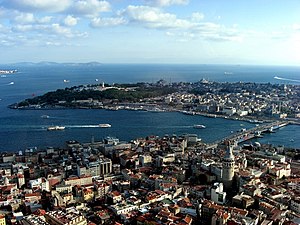
Hi students!  I am writing this from Istanbul, Turkey, a city so incredibly rich in history and in the arts that my new wife and I are truly inspired. We traveled to a region called Cappadocia and viewed the tremendous cave communities from a hot air balloon, rising to 6,000 feet; later we went to an underground city that was built in 900 A.D. that reminded me very much of certain scenes from The Hobbit and The Lord of the Rings. I was keeping a lookout for orcs and balrogs as we descended 80 feet below the surface, down long passageways and tunnels.  The ancient city of Ephasus was our next stop. I was transported into a feeling of living history as I walked along the wide marble avenues, and when sitting in the amphitheater I could almost hear the clashing of the gladiator’s weapons, smell the burning camphor and feel the pulse of the ancient crowds. All in all this has been an unforgettable honeymoon.

I am looking forward to teaching this spring semester, and want to re-introduce Homeroom as a go-to page for each and every one of you. I advise that you check this page twice a week. The prompts will be quite varied, from creative writing prompts to analytical ones, and your responses will be edited for posting. Naturally only the best responses will be posted, and this goes for your student work as well.


Stay tuned for State by State essays being published, but while you await that, please read Jessica Cheng’s essay on South Carolina, as well as Grace Guo’s essay on Chinese female poets of the Tang dynasty. Younger students, please read Olivia Shen’s essay about ice cream in Hong Kong, and other work from the 4-8th grade!  Please write comments about the student work you read, in advance of the first lesson.

See you next week!


Mr. Watt