Monthly- Archives: March 2022


ANGELA ZHAO

Weston, CT’s Path to VEX Robotics World Championships

Simply being invited to Regionals in any sport is an honor. The amount of work and effort you need to put in is exceptional. But in robotics, going to Regionals is a whole other thing. Robotics isn’t technically a sport, but you must put in all your effort or else you’re going nowhere. In fact, you need to put in the same amount of effort, teamwork, and cooperation as any team sport, if not more. Several months before the actual date of the tournament, my team had double qualified for Regionals through winning a tournament and winning the excellence award (and I was able to possess this award for one week, placing it on a bookshelf next to my desk, placed on an orange cube, a game element from a few years back) which was the highest ranking award you could win. I wasn’t completely nervous about Regionals yet because I was still in shock that my team had done so well. I thought that maybe we had a chance to do well this year, possibly even make it to Worlds. Oh boy, little did I know what we would accomplish this year.

The day I left for the tournament, I was pretty calm. During Quiet Study during school (which is basically a study hall), I grabbed a pass to go to my Robotics coach’s room to pack our box up with everything we could possibly need for Regionals. Because of Murphy’s Law that “everything that can go wrong will go wrong”, we packed everything that we would need and left out everything that we didn’t. By the end of the tournament, we only ended up using some of the things that we had brought (which is great!). My team and I worked together to bring everything up to my mom’s car, driven by my dad. I ate lunch in the car as we picked up my sister, and we were off to Framingham, Massachusetts. 

We finally arrived at the hotel after what felt like forever in the car, and we unpacked. The hotel literally looked like a castle on the outside, and it was really nice on the inside. We didn’t bring the robot into the hotel room yet because we were going to go to my coach’s hotel to practice in the lobby at night. After settling down a little, my mom said that we were going to Chinatown in Boston. As we rode in the car, the nerves started to kick in.

Sitting down in the Chinese restaurant where we were the only customers (we had an early dinner) didn’t make things much better. The room was empty except for tables with huge white tablecloths draped over them, and there was a big window looking outwards and across the bustling Boston streets. Between bites of sesame chicken and seafood tofu, I’d think about the tournament and pretty much nothing else. It was scary. We had somewhat of a reputation to keep us as a Claw Bot that could beat some of the best teams in Connecticut.

I focused on the food and the hilarious text messages my friends and teammates were sending. This worked, and the fears were chased away and replaced with funny messages and anecdotes of teammates fighting each other during the 2 ½ hour car ride. The support from the high schoolers was also a key factor in keeping my spirits up (it is a high school and middle school team). Despite everything however, I would still be scared for several moments of a time just thinking about the tournament the next day. You see, the most recent tournament hadn’t gone so well. There were disqualifications, bad losses, and other things that lowered my faith in our team. I thought, maybe those tournament championships we won were just luck. At least we did actually get a trophy from the last tournament, that being Robot Skills Champion 2nd Place. I didn’t even know that that trophy existed. But it helped me realize that we were actually really good at skills. So after the tournament, we started becoming laser focused on Skills. We knew that we didn’t have too much of a chance of winning the tournament, but there was a much higher chance of us making it to Worlds through our Skills score.

After Boston, we left for my coach’s hotel because the hotel let us set up a practice field in the lobby. I don’t know why they complied as we were just a little quieter than a monkey house. Anyway, I fixed up some code with the robot, and helped my friend out with his robot. Because of Murphy’s law, on the robot, the lift mechanism had decided to break, and the driver (and possibly the most annoying person on the team) had broken an entire shaft. How does one break a shaft? A METAL shaft? A STEEL METAL SHAFT?? His own team didn’t even know how it broke. Luckily, my friend’s dad was there to help them sort out the dilemma. But even so, it took a while for everything to be sorted out with them. And along the way, I was able to finish up my code as well as help another team with theirs. 

I awoke at 5 am on my own accord. It’s probably because it’s hard for me to sleep in general, but also because the hotel room was always really bright due to the fact that it doesn’t even have blackout curtains. In fact, my mom had woken up at 2 AM and thought that it was time to get up. Anyway, I got out of bed and readied myself for a long, long, day. My dad and I left the hotel at around 6:45, and we were off. 

I arrived at 7. As soon as I got there, we started rushing about frantically, getting the robot ready. Robot inspection started, and we just barely passed. Thankfully, the man running the inspection was a chill old guy who was happy to point out the issues with our robot. He was a tall man with bright white hair. He wore what appeared to be a white NASA jumpsuit adorned with colorful patches. I had seen him a few years ago at Regionals, and he looked pretty much exactly the same as back then. He carried with him a plastic bag full of rubber wristbands (I promptly lost mine and felt guilty about for the rest of the tournament). We fixed the problems that we needed fixed. For example, we continued to make adjustments to our autonomous, or autons. This is part of a match where nothing but pure code runs. We did this to make sure that it would be successful at least 90% of the time. In the end, the code worked around 70% of the time. Not perfect, but it was enough so that we would be able to rank pretty high. I’m the programmer on the team, and nobody else can really help me, so coding autons can take a very long time. I enjoy programming, and the thrill of your code actually doing what you want it to do is unrivaled.

Before long, the schedule for the qualification rounds dropped, and apparently I must’ve jinxed us the night before when I said that we were probably going to get queue 1 (the first match of the entire tournament!), and we ended up getting queue 1… because of course we did… in the pool of about 40 or so robots, we ended up in queue 1.

The way that matches work is that there are two alliances, red and blue. There are two teams per alliance, which makes a total of 4 teams per match. Which makes getting queue 1 a 1/10 chance. The odds aren’t terrible, but it’s still bad luck. The first match can always determine a winning/losing streak, and if everything starts badly, then… . Before matches began, we had the drivers’ meeting, which went over some important rules. Some of them I had seriously never heard of, which is concerning. But, nonetheless, I was able to pick up on these rules and they definitely helped us throughout the tournament. Not once did they turn against us. Yep, that totally happened. Definitely. I am totally not foreshadowing our demise. Nope.

Anyway, the tournament started off great. We won the first match (the other team got disqualified due to one of the rules that the head ref explained earlier) and we continued our winning streak, getting really lucky with the alliances we were being paired up with, which is great. We ended up getting paired with three of the best teams in the tournament a few times, and we won those matches in landslides. The only few times we lost matches was due to bad alliances. But we won most of our matches, and we ranked really high by the end of the qualifiers. In between matches, we also ran Skills. Robot Skills is when you drive your robot around a field alone and score as many points as possible (drivers skills) or run code so that your robot can score as many points as possible (programming skills). Our skills score ended up being super good, much better than anything we had accomplished before. In addition to our excellent driver skills, I had also managed to program an EXCELLENT programming skills, so by the end of the tournament, we had reached 6th place in skills. Which is really good, considering that we only had a clawbot compared to all the meta-bots (robots that fit the meta). 

Our last match ended after a long day of rushing around, talking to alliances, and scouting out potential ones – finally alliance selection began. You see, after all the qualification rounds take place, alliance selection for the elimination rounds happens. Starting from rank #1 from qualifications, up to 18 alliances are formed from the teams available. For example, rank #1 can pick anyone from the lineup, then #2, then #3. If one team picks another from the top 18 (which is a common occurrence), then they move further down the lineup, so that means that rank #19 can pick an alliance. The alliance we selected was a strong team (from Granby, CT) that was friendly with us and was willing to accept our request to become partners. In fact, after asking them, we heard them celebrating quietly, so that was a good sign. 

Right after alliance selection, we got ready for our first match. Because we ranked #3 in the qualifiers, we were seeded three in the elimination bracket, which meant that we would be facing off against a much lower seeded team, which meant that the chances of winning this match had to be super high. Right? RIGHT? Well, the match went well. Our score at the end was MUCH higher than the other side’s. But there was one small detail that ended our run. 

We were disqualified. More specifically, it was our alliance that was disqualified. It was for a rule that they had gone over during the drivers meeting, SG3. At that moment, my heart basically stopped.
The opposing alliance 12 feet away on the other side of the field appeared hopeful; did they have a chance? What was this immense stroke of luck? The spectators on the right side were highly interested. After all, something like this doesn’t happen every match. I looked at the singular object that caused this dilemma. That one red plastic object caused me so much strife I was beginning to question myself. Shaking, I looked at my coach on the side. I felt hot tears bubbling up behind my eyes.

I looked up at the ceiling: this was it, the end of the line. All of our hard work and efforts before were pretty much for nothing. This was a truly painful moment for me. But I needed to stay calm. For now, at least. After the ruling, I held my head high, and my team and I headed down to the pit area. My robotics coach gave my team a big hug and told us that we’d done well. I agreed. She then said that even though we were out of the running for some awards (such as finalists and champions), there were still other opportunities to go to Worlds. After what felt like a very long time, it was time for the finals and awards. One of our teams from Weston, CT, actually got an award called the Energy Award that did absolutely nothing, but it was cool to have. Our alliance partner who ended up giving us the DQ got the Design Award, which was indeed a World’s qualifying award, so that was cool. My coach was shooting daggers from her eyes at them, but I was really happy. The top teams were TOP TEAMS. A few specific teams multi-qualified for Worlds more times than I could count. And this gave us a chance to go to Worlds. You see, when a team double qualifies, they reach down into the skills rankings to bring more teams to Worlds. This way, one tournament doesn’t send too few teams. And because of all the qualifications, there was a super high chance of making it to Worlds. I left with my family soon after the tournament ended, and we arrived home after a long, long car ride. It had been a very long day, and I was completely out of it.

But that wasn’t the end of the story. Because a few hours after the tournament ended, my coach received an email from VEX, saying that my team, team #17814F had qualified for Worlds! To be honest, I wasn’t really in shock by the news, but confirmation was very relieving. My mom kept telling me to expect the worst, but this time, we received some of the best news possible. Still, my team and I were ecstatic. We are going to Dallas Texas for the World Championships of VEX Robotics! This was something that nobody in my town has ever done. We have basically made HISTORY. For my entire robotics team, of course. WOW. In fact, our local news outlet is currently working with the mom of one of my teammates to create a story about our team. Which is also cool. Going to Dallas is going to be a lot. Worlds is a three day tournament with people from all over the… world. We don’t expect to do very well, but we’ll try our best and have fun while we’re there. This year’s Robotics Regionals was an incredible experience for me and my team, and I really did enjoy it. I’m glad we qualified for Worlds, and I’m glad I was able to make a big contribution towards it.

ROEN SCOTT

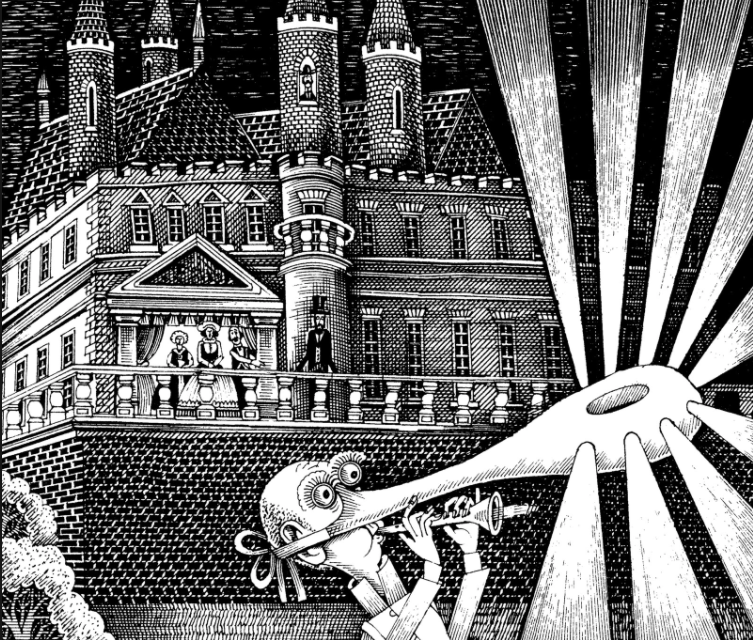
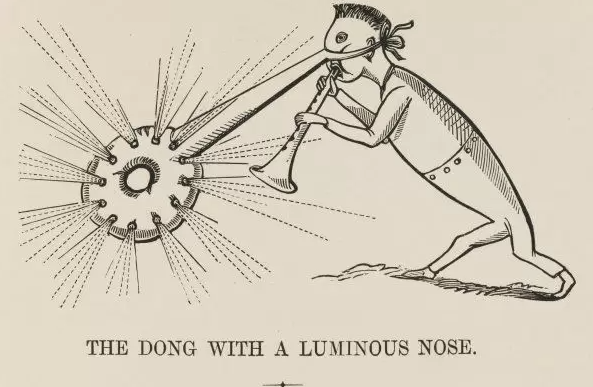
To me, the poem “The Dong with the Luminous Nose” by Edward Lear, is a rather intriguing story. It’s not one of those stories when the prince (the Dong) finds his princess (the Jumbly girl), gets married and lives happily-ever-after. The Dong has lost his Jumbly Girl when she went back to sea in the sieve with the other Jumblies, and still goes out overland in search for his Jumbly Girl and… is still out there, always looking for her. This ending was a nice change from the usual, but it also makes me curious why it ended like that. Why didn’t the author make it so that the Dong finally finds his true love and they sail off together in the moonlight and live harmoniously together? Was he just sick of the ending in every story (like I can be), or did this sort of experience happen to him?

Part of me wonders if he found his true love, but it somehow got away, and he didn’t get his happily-ever-after, maybe like he had dreamed about. This ending made me very curious – it made me hope that the author (when he was still alive) had made a sequel, and there was more to the story than it seemed. I want to know if the Dong ever found her, if they ever fell in love again, if all he did to try to find her paid off. I was also wondering why he chose to make the nose the part of his body that became luminous. Was it just random, or was there a meaning to it, one that I hadn’t noticed? All in all, I enjoyed this poem: it made me ask questions, be curious, and I liked that. I liked that I didn’t know everything there was to know about it, and that the story didn’t need to be like every other one to be amazing and unique.

Alison Bizzaro adds to the conversation:

This poem is extremely odd in an intriguing way. There is not a thing in this poem that makes sense, but it makes me curious to find out why such a strange poem was written. This poem is most likely famous for the same reason I am intrigued by it. It’s so odd, almost surreal, but it makes you curious. This poem also uses very colorful visual descriptions, such as “a lonely spark with silvery rays/ piercing the coal-black night” and “Slowly it wanders,–pauses,–creeeps,–/Anon it sparkles,–flashes and leaps;” which keep any readers of this poem interested in the poem. The illustrations give a clear idea of what these clearly made up beings look like. It would be quite difficult to imagine what such specific characters could possibly look like, and the illustrations help to paint a picture and set a tone for the poem.


MICHAEL LIN

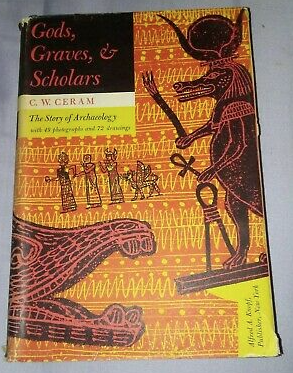
The Curse of the Blue Figurine by John Bellairs has been quite a marvelous experience for one of my age to read. Right from the beginning you cannot but just help imagining the scenario as if you were Johnny Dixon himself. Bellairs creates very thorough and thought-out characters, most significantly Professor Childermass. At first, the professor just seems like an average grumpy old man who does nothing but complain. But he is far from it. The Prof only seems like this to people he doesn’t like. (Have you noticed that I’m not consistent with capitalizing ‘professor’? Well, neither is Dial Press. Look with me, if you will, on page 41. At the beginning of the first full paragraph of page 41, the word professor is capitalized while not addressing anyone in particular! But you can look at the 3rd line of the same paragraph to see the word Professor being properly capitalized – so because of this mistake, I will simply stick with the capital letter, partially to show Dial Press that I’m a better proofreader than they are, and partially to show honor and respect to… PROFESSOR C!)  While on the topic of Professor Childermass, he is introduced to the story as he makes his entrance into the Dixon home, hot and cursing. His car is stuck in the snow, and he’s ready to blow one of his own cylinders. “You know Henry,” the professor snarls, “in a hundred years, people will think we’re out of our ever-loving minds to spend so much of our valuable time taking care of automobiles. Think of it! Everybody on this block owns a two-ton hunk of metal that he has to feed gas and oil – .” But suddenly, the Prof stops when he sees “Gods, Graves, and Scholars, by C. W. Ceram,

and The Mountains of Pharaoh, by Leonard Cottrell,

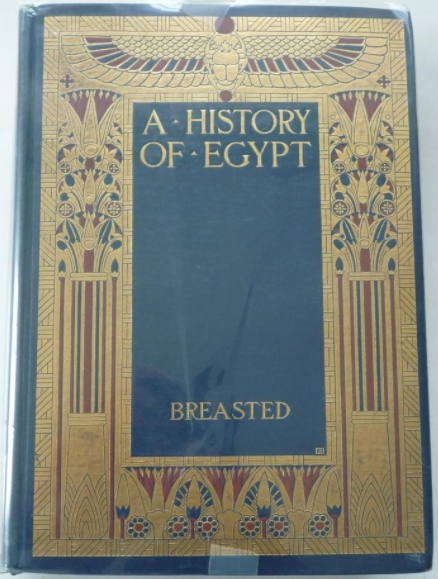
and James Henry Breasted’s History of Egypt.” 

Commenting on Johnny’s books on page 15, the Professor speaks disparagingly about his nieces, in glowing approval of Johnny reading these books (and not even for an assignment!): “I have just come from visiting my sister’s daughter, who lives up in New Hampshire. She has two children your age, but they couldn’t read their way through a book of cigarette papers.” The Professor then launches into the story of Father Baart, an evil parish priest from the 19th century, who ran the church that the Dixons attend.

Prof Childermass describes Father Baart by saying, “He was short and wore a black cloak and he had a big head and a jutting chin and lots of grayish hair that he wore long. And an overhanging forehead, and a hawkish nose, and a deep-set, burning eyes. So if you’re ever in the church late at night well…” only to be cut off by Johnny’s grandpa. But in this short outburst, we can clearly see that on the outside the Prof may seem like a toxic, grumpy guy, but when he is speaking with someone he finds interesting or worth talking to, the Prof really opens up.

We can really see this bond being formed between the two when Johnny discovers the figurine. On pages 39-42, the Professor is the first person who comes to mind to help figure out the mystery of the figurine. But Johnny catches the Prof off guard in his so-called fuss closet. The Professor proceeds to go on a story of his whole fuss closet. Explaining that “[he] has a rotten temper… [he] came up here –as [he] always [does] in such cases… and he fussed. [He] cursed and yelled and pounded the walls and the floor,” (Bellairs, 39). Normally, even a friend walking inside of your home wouldn’t incline you to tell them a story about a closet, right? But the Professor is so fond of Johnny that he can’t help but welcome him in at any time even though he doesn’t even know why Johnny is there in the first place.

 Bellairs writes, “Johnny found the old man kneeling beside the tub. He was wearing a rubber waterproof apron, and the sleeves of his shirt were rolled up. The tub was half full of water, and in it floated a fleet of little wooden boats. They were galleys, with matchstick oars and little triangular sails. Little paper flags fluttered from the sterns of the ships. Half of the flags were red and gold and had coats of arms on them. The other half were green and had gold crescents,” (Bellairs, 61). Why such detail? In reality, these are just little tiny boats that are being fiddled with by the Professor. No one would expect a scene with a Professor playing with wooden ships in a bathtub, or would they? But the Prof elaborates and see explains the specific battle he is re-enacting, in preparation for his next day’s class, so we learn about the Prof’s abiding passion for teaching history. When reading that scene for the first time, one would not immediately discard the scene and say it has no meaning. In fact, we think of it as revealing character and humanizing the Professor even more. And without the realism in these kinds of scenes, readers would just gloss over them, which is why we can really appreciate Bellairs’ craft and choice of vocabulary. Without it, the book would not be itself, and without this craft, readers like myself would not be so enticed into the book and almost forced to make predictions. The book itself is just so enjoyable and welcoming to read so readers cannot help to try and predict the story. Questions like, is the blue figurine actually cursed? Is Johnny going to get more revenge against Eddie? and Why did Johnny remove the figurine from the church crowd and compete in our minds, fueling interest. Overall, Curse has been a wonderful enticing story that I am eager to finish and to read sequels. 


INAYA MAJID

Inside Welty’s mind: a vision for fiction

“Greater than scene, I came to see, is situation. Greater than situation is implication. Greater than all of these is a single, entire human being who will never be confined in any frame.” 

~Eudora Welty

The best stories are created when a character is not in a stereotypical box or is held back by anything and are those where a character lives on in the reader’s mind after the work is complete. However, this is not what Welty is trying to convey. Instead, this quote should be seen as a gradient because Welty says “greater than…”. At the height of her gradient, she talks about a character that will never be confined in a frame. This could make a memorable character, as it is most evident in Phoenix Jackson from “A Worn Path”, and Joel the deaf boot boy in “First Love”. But in some stories we see that Welty creates characters that are oppressed and bound to the end. In fact, these are the characters that stay with us longer because we ache for their liberation. 

The definition of a gradient is the degree of a slope on a graph. That being said, if a story cannot reach the highest level on the gradient, it does not imply that the story is inadequate. In fact, some of Welty’s stories don’t reach the highest point of this gradient. Aside from Welty’s gradient, what sets her apart from other writers is her ability to portray the characters’ different states of mind. There is a repeated pattern of her using dreams, dreamlike states or hallucinogenic states to convey information about a character. She uses these dreamlike states and this gradient to build clever stories.  

Eudora Welty was born in Jackson, Mississippi on April 13, 1909, and became a great short-story writer, novelist, and photographer. She was the daughter of Christian Webb Welty and Mary Chestina Welty and the older sister to Edward Jefferson and Walter Andrews. Both of her parental influences helped her later on to write beautiful and captivating short stories. Her mother influenced her passion to read while her father inspired a love of mechanical things. You could say that she grew up in a close-knit and above all, loving family.  

While Welty attended Central High School in Jackson, she moved to a house on 1119 Pinehurst Street which is now known as the Eudora Welty House and Garden. She graduated at the age of 16 and studied at the Mississippi State College for Women. She finished her studies at the University of Wisconsin and received her bachelor’s degree. After graduating in 1929, she came to Columbia Business School expanding her knowledge on advertising then went to Manhattan to work at an advertising firm. After what she called, “a most marvelous year” the sudden death of her father brought her back to Jackson effort to look after her family. Here, she began to write for the Memphis newspaper Commercial Appeal. Then in 1933, (during the Great Depression) she began to work for the Works Progress Administration. She had to collect stories, conduct interviews, and take photographs of daily life in Mississippi. Three years later she left this job to become a full-time writer.

In 1936, Welty published her first short story, “Death of a Traveling Salesman” and five years later she published her first book of short stories, A Curtain of Green. This is what sparked her career. In 1942, she published a short novel called The Robber Bridegroom, and in 1946 a full-length novel called Delta Weddings. Her novel The Optimist’s Daughter which was published in 1972, won a Pulitzer Prize. Because Welty’s books were such a hit, she wrote an autobiography called One Writer’s Beginnings. The autobiography is a three-part memoir of her lecture at Harvard University. The first section of this book is called “Listening”. The beginning is about her being surrounded by books and constantly being fascinated by them even if she was unable to read them. She even says at one point that she tries to find stories by listening. This in fact made me wonder how Welty’s childhood influenced the stories that she had written. 

Trying to figure out Welty’s inspiration for her books, we can look at One Writer’s Beginning where she writes about what makes a writer a writer. In it, she says, “I learned from the age of two or three that any room in our house, at any time of day, was there to read in, or to be read to.” Welty, from a young age, has been fascinated by books. Her mother grew up reading Charles Dickens, Jane Eyre, Trilby, The Woman in White, Green Mansions, King Solomon’s Mines, and her father kept a set of Stoddard’s Lectures. Even though Welty was unable to read at this age, she says, “In my own storybooks, before I could read them for myself, I fell in love with various winding, enchanted-looking initials…”. This is interesting because one of Welty’s short stories, “First Love”, is about a boy who is deaf but is mesmerized when people talk. Similarly, Welty is fascinated by the letters but has no clue what they say. Is this why “First Love” seems so realistic because she understands how Joel feels? She does say that in kindergarten, she was told to draw a yellow daffodil but she also wanted to include its smell if she drew how it looked. She wanted to immerse the person looking at the art to have the same feeling as the artists did. 

Not only does One Writer’s Beginning depict how Welty’s childhood provided inspiration for her stories, but we get a glimpse of this wonderful childhood. She tells us that “[My] childhood was taken entirely for granted that there wasn’t any lying in our family… [and later] I realized that in plenty of homes where I played with schoolmates and went to their parties, children lied to their parents [and vice versa].”. This reveals to us that while other writers have different stripes in the sense that they might come from abused, neglected, or foster homes, Welty grew up in a positive and loving environment. She had this overall idea that families were honest and kind to each other. This might be why Welty creates characters that are poor, neglected, and lied to, because this is reality she only came to know, and perhaps felt that people needed to be aware of it.  

To illustrate, if we look at one of Welty’s short stories, “The Whistle ”, we find an old couple, the Mortons, who sharecrop near Dexter, Mississippi. They pour all of their efforts into raising crops then they sell them to the landowner, Mr. Perkins, who then ships them off. By the early 1870s, a significant form of agriculture was sharecropping in the cotton-planting South. This system functioned with poor families renting a small portion of the land to farm on. At the end of the year, they would give a certain amount of their hard-earned crops to their landowner. In fact, while sharecropping gave families freedom from the gang-labor system which dominated the slavery era, most of the time sharecroppers would owe more crops, tools, or supplies to their landowner. The Mortons are never able to escape this unfortunate cycle of misery. 

Welty starts the story off with, “Night fell. The darkness was thin, like some sleazy dress that has been worn and worn for many winters and always lets the cold through the bones”. She implies that the Mortons have been through the cold to a point where they are unable to stop caring, similar to how they are unable to stop the night and cold from coming. The Mortons are neck-deep into poverty to the point where they don’t talk to each other, causing their souls to be trapped in “… poverty which may have bound them like a disaster too great for any discussion but left them still separate and un-desirous of sympathy.” This is heartbreaking because a couple should be able to lean on each other and talk difficult situations out to relieve their pain. But Welty is showing that when you know that there is no way out, there can be a breakdown in communication for it seems as if there is no possibility to live life happily. 

The reader is able to see this when Jason and Sara lay down to sleep “between the quilts of a pallet which had been made up close to the fireplace”. While the reader is able to visualize that after a long day’s work, you fall asleep and possibly fall and escape into a vivid dream, however, for the Mortons, it’s not that easy. Welty doesn’t allow her for her character to fully dream, and instead describes it as a ‘vain dream’. She foreshadows this idea by portraying the fire, “still flutter[ing] in the grate… its exhausted light beat up and down the wall… over the dark pallet where the old people lay, like a bird trying to find its way out of the room.” The bird who simply wants to rest, is never able to because it will never escape the “grate” no matter how much it noise it makes. This is additional evidence as to why the Mortons do not talk: they can’t escape. The only noise that is made is the fluttering of the fire and “…the long-spaced, tired breathing of Jason… like a conversation or a tale – a question and a sigh.” Does this imply that it is only when he sleeps that Jason can ask these existential questions? As in his conscious mind cannot even engage this way? Even Sara lays there with her mouth agape but not sleeping, thinking about the summer and spring. 

In this vain dreamlike state, she imagines color, the warmth, the people, the energy: “… dusty little Dexter became a theater for almost legendary festivity, a place of pleasure.” She was not in the room where the fire was the only source of warmth and the only sound was the inhalation and exhalation of Mr. Morton. Instead, she was in a place where “The music box was playing in the café… With shouts of triumph the men were getting drunk… In the shade the children celebrated in tomato fights.” It’s clever of Welty to include the tomato fights because Sara was able to imagine kids throwing tomatoes instead of growing them to survive which reveals a carelessness and entitlement around her. This brings up the question, are these kids perhaps Mr. Perkins’? It’s like a rich man letting his kids splurge in front of poor neighbors. 

This being said, when one is not liberated, can one be selfless? In some ways, the Mortons’ behavior seems entirely selfless. For example, when a freeze threatens, they take the only clothes they own (the ones they’re wearing) and put them on the crops to protect them. Keep in mind, they will never get to enjoy these crops. Indeed, they cannot even communicate with each other. Therefore, they are unable to be selfless, as they have no self to give. And when Sara hears the whistle, the story ends. She must understand that it’s impossible for her to walk out of the frame. She’s trapped. While we ache for the Mortons to be free, it is Welty’s social obligation to create characters that are “confined in a frame” because this was the reality of the 1930s Mississippi. So, looking at the situation the Mortons are in, there is this implication that the Mortons are stuck in this frame because they will never truly be free in this situation, which itself suggests that sharecropping is unjust and bad for society. Although Sara wishes she is able to dream, she is the first one to wake up when the whistle initially blows: “[Mr. Perkins’ whistle]… sounded in the clear night, blast after blast… Jason Morton was not woken up by the great whistle… [but] Sara felt herself waking.” She lets the situation control her soul, implying that because she is confined, she and Jason are doomed; like the flames that looked like a “bird trying to find its way out of a room”, they will not succeed. 

Another short story of Welty’s is “A Visit of Charity”. This story is about a Campfire Girl, Marian who visits an Old Ladies Home. Marian, during the whole visit, is extremely timid around the old ladies. But why is that? The way Welty describes the old ladies, having claws and being seen as robbers almost makes the ladies seem violent. This behavior of Marian’s then seems appropriate. But if we look at it from afar, we see that the old ladies want to leave the home but they are stuck in a single frame, a single room, making them go insane. “Then something was snatched from Marian’s hand… ‘Flowers!’ screamed the old woman. She stood holding the pot in an undecided way.” The old ladies lose their identities and are treated badly, almost like animals: “… an old lady cleared her throat like a sheep bleating.”

“With her [(Marian’s)] free hand, she pushed her hair behind her ears, as she did when it was time to study science,” as if Marian was going to study these animals or has the mindset of “Let’s get to work”. All the old ladies wish for is a small part of the outside world, because they are constantly being studied, or observed coldly by the nursing staff. So when they see Marian, a young girl, it is a visit of charity, and just because “Marian wished she had the little pot for a moment – she had forgotten to look at the plant herself before giving it away” does not mean that her heart is in the wrong place. She simply wants to know “What did it look like?” 

Later, Marian, trying to make conversation while feeling trapped, asks one of the old ladies, Addie, about her age. However, Addie starts to cry because of this question. It is hard for the reader to imagine that these two old ladies can be free. They are confined in a frame because their quality of life is forgotten due to being stuck in a Ladies Home. While Marian gave a small token to the ladies, she left because she was scared to death. As a reward, she eats the apple she’s left outside. If we see the apple as a symbol of youthfulness, it is as if Marian wants to keep her youth so she will never be confined in any frame, and in fact, the bus whooshes away with her in it, eating the apple. She had no chance to look at the plant she gave the ladies, and that’s ok – it was a gift. But she has nothing else to give.  

In the stories I have read by Welty, I have noticed that she applies dreams, dream-like and hallucinogenic states in her work and uses this in a variety of ways. In her breakthrough story, “Death of a Traveling Salesman” (1941), R.J. Bowman is a salesman (of unknown age) who has been at this job for over a decade. After losing more time in the hospital because he contracted the flu, he suddenly regrets the decisions he has made throughout his life. However, he doesn’t understand that he is dying and his perceptions, while intensely personal, also simply portray the breakdown of the body and mind, approaching death. In other words, as he slowly starts to figure out that constant traveling prevents him from living his life, the more he realizes what he’s missed all along. This causes him to brush away any symptoms of death, denying what his body is trying to tell him. 

Bowman has traveled for a shoe company through Mississippi for a long 14 years not allowing him to find a woman and start a family. It is when he stays at a young couple’s home that he realizes this. The reader implies that Welty puts Bowman into a situation, traveling constantly, to the point where it confines him. The first Welty hints at this idea is when she says that whenever “Bowman stuck his head out of the dusty car to stare up the road, it seemed to reach a long arm down and push against the top of his head, right through his hat…” In “The Whistle”, Sara lets the whistle control her and her life because she is at its beckoning call and similarly, Bowman lets his situation of traveling control him. All he wants to see is how much longer he has to drive, but when doing so, something forces him back into the car. He is never able to escape this job. All he does is drive. 

One of the landscapes Welty includes is a “… cloud [floating] there to one side like the bolster on his grandmother’s bed. It went over a cabin on the edge of a hill, where two bare chinaberry trees clutched at the sky…”. Perhaps distracted by this image, Bowman’s car goes over the cliff: “his wheels stirring their weightless side to make a… whistle as the car passed through their bed… [and] he saw that he was on the edge of a ravine that fell away [and the car tipped over]”. It is interesting how Welty creates this scene similar to a description of a bed with a bolster because previous to this, Bowman wishes to lie down in his grandmother’s bed. Hence, Bowman was meant to fall over the cliff. He wanted to go to sleep. 

However, does Bowman manage to survive after the fall? Yes. Bowman does manage to escape. Welty describes this as: “He got out [of the car] quietly, as though some mischief had been done to him and he had his dignity to remember”. Later “… he saw that his car had fallen into a tangle of immense grapevines… it [rocked] it like a grotesque child… [and he was] concerned somehow that he was not still inside it…” The only vehicle that allows Bowman to do his job is his car. He is a traveling salesman. But the car is being “held” like it is a “grotesque child”. What does that make Bowman? You have to submit your whole life when you become a salesman and this might be why Bowman wonders why he was not in the car if he wanted to sleep? If the car was to go down, he must too, and this is why Welty describes this act as “mischievous”. 

The word “mischievous” has a more playful and less harmful connotation. For example, when he finds the house of the young couple, “he took a bag in each hand and with almost childlike willingness went toward it. But his breathing came with difficulty, and he had to stop to rest”. Even though he had to catch his breath, for a split moment he was not thinking of his fatigue, the rest of the trip he had to travel, or the hospital, but instead reverted to the childlike willingness to be cared for.

Throughout the story, Welty makes it clear that Bowman has no one and the only person he remembers is his grandmother, but he deeply wishes to have a woman in his life. This is implied because Welty never mentions the name of a woman Bowman likes. It is ambiguous to the reader because whenever he is around a woman, he is unable to hear his heart beat uncontrollably, which for him is a shock. Is this because he feels alive and connected to humanity or simply because it is a woman? For example, when Bowman saw the woman at the house for the first time “his heart began to behave strangely… It began to pound profoundly, then waited irresponsibly, hitting in some sort of inward mockery first at his ribs, then at his eyes…” and he “automatically judged… her age at fifty.” But we learn later in the story that this woman is young and expecting. It is as if Welty is implying this idea that when his heart started to beat at irregular patterns, this hallucinogenic state began. The mockery was that instead of seeing the young woman, he saw a fifty-year-old woman because he was longing for someone. When he found out “he set his cup back on the table in unbelieving protest”. It is as if he is protesting the fact that whenever he likes a woman, his eyes continue to deceive him. “A pain pressed in his eyes.” At this point, Bowman puts the puzzle pieces together: how she was able to find Sonny in the darkness and how they flow together like nature, how proud she was of Sonny towing the car out of the ravine, making his own whisky and how gets wood to have a steady fire. Bowman describes it as “A marriage, a fruitful marriage. That simple thing. Anyone could have had that… The only secret was the ancient communication between two people.” This literally kills him. 

In exploring Welty’s stories and scoring them against her quote, one finds that her some of her stories were written to educate people about the awful ways that the Great Depression diminished Americans. She realized this as a young, wealthy, and loved child who became an adult who could deliver to the world her vision for fiction.