Monthly- Archives: April 2020


BRANDON LIU

Mr Watt´s Literary Services

Napoleon’s greatest work: Battle of Austerlitz
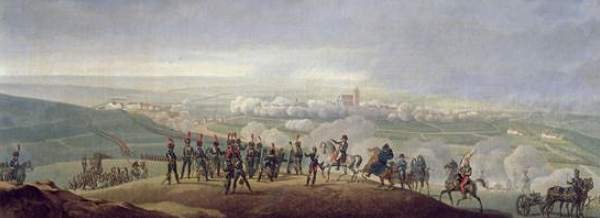
The muskets were firing and the soldiers were yelling. The boom of cannons and screams of pain from troops from both sides sounded across the battlefield. But the violence kept going, and suddenly, the bugle sang the song of war and the sound of hooves thudding against the dirt could be heard for miles. The French were making their attack. The sound of swishing sabres impaling human flesh and the screams of pain came next and the infantry began moving in. They were to charge up the hills with bayonets fixed, straight into the under-defended Russo-Austrian line. Rippling through the lines of the enemy came chaotic sounds of panic, and the Russo-Austrians began to waver as morale dropped.

French soldiers moved north of the main Russo-Austrian force in a flanking maneuver (encircling attack), and they turned southeast to execute their plan. The Russo-Austrians saw the great danger they were in and retreated southward, over the not-totally frozen pond where many died when trying to run over the ice, was shattered by artillery strikes. This was not just any battle in standard military history; this was the battle of Austerlitz, the greatest victory of the French Emperor, vanquishing at low odds the Russo-Austrians. You may ask: “Who was this French Emperor? Didn’t he lose at Waterloo?” My friend, let me introduce you to one of history’s most glorious and influential military leaders: Napoleon Bonaparte.

People know Napoleon as the one who lost at Waterloo, like how Washington was the one who won at Yorktown. No one looks at the 50 or so other battles Napoleon won or the seven battles Washington lost. It is always the last battle that has the everlasting impact in people’s minds. Therefore, to the general (non-French) public, Napoleon is a loser general because of his defeat at Waterloo. However, many people refuse to look deeper into any other of Napoleon’s works to find out that he was a military genius of caliber higher than Julius Caesar. One such example of his genius was the Battle of Austerlitz. The Battle of Austerlitz best exemplifies Napoleon’s great leadership and his military techniques that set him apart from other commanders of his time.

First, let us explore the early life of our hero. Napoleon Bonaparte was born Napoleone di Buonaparte in Ajaccio, Corsica in 1769. During his childhood, Napoleon was deeply interested in the military careers of other great leaders such as Julius Caesar, Alexander the Great, and Hannibal. He later went into the military academy in France. Almost as soon as he graduated, Napoleon joined the army in an artillery regiment. A few years later, in 1789, the French Revolution started and the French First Republic was born. This Republic was built from radical ideas about the human as a creature with natural born rights and the uselessness of an absolute monarchy interfering with these rights. When Corsica had been taken by the Bourbon Absolute Monarchy in 1768, Corsicans were not pleased, due to the liberties that were restricted by the king. The French First Republic promised greater amounts of civil liberties to all people within France, and Corsica, an administrative region of France.

By receiving more civil liberties, Corsicans could have a greater ability to represent themselves. Napoleon was a strong advocate for Corsican Nationalism (he wanted Corsica to have more representatives in French government) and he supported the First French Republic during its beginning, despite the brutality of its leader Maximilien Robespierre and his execution of anyone for the smallest of all offences. Overall, 17,000 people were executed during the Reign of Terror (1794).

Two wars (Seven Years War, 1756-1763, and American Revolutionary War, 1775-1783) had starved the French peasantry to their breaking point, and the First French Republic was born out of French desire for more liberties, but also to counteract the poor’s starving situation. However, other nations, Britain, Spain, Austria, Prussia and others, concerned at the idea of spreading these radical ideas, of Liberté, égalité, fraternité, began preparing for war.

Napoleon was unknown to many until he took back the key port of Toulon from the British in its namesake siege in 1793. He was only 24 years old at the time and was promoted to brigadier general for his victory. This promotion began Napoleon’s ascension to power as French Emperor and the beginning of the transition from the French Revolutionary Wars to the Napoleonic Wars. Although the French First Republic had drafted a constitution, the constitution became secondary to Robespierre’s ever-growing policies of brutality and terror. The French First Republic, having such promise, inspired perhaps by what was happening across the Atlantic, was now promoting terror as government policy. When Robespierre was executed by the government he created, he gave way to a power vacuum.

The French Revolution changed forever what nationalism meant for the French. Rather than fealty to a monarch, the Republic was founded upon Liberté, égalité, fraternité. However, as French nationalism and anti-monarchy ideas began to spread, other nations were eager to contain it, such as Austria and Prussia, who wanted to restore the recently-deposed king, Louis XVI, back to the throne. The Austro-Prussian army immediately began an invasion of France, at the Austrian Netherlands border (modern-day Belgium). Austria and Prussia both promised to reinstate King Louis XVI back on the throne, which freaked out the French public, adjusting as they were to their new constitution. The First French Republic ordered a conscription law (drafting soldiers) and sent troops to the border, to fight the invasion.

What factor put Napoleon apart from other commanders of the time, given that France had the same weapons as everyone else? Well, Napoleon had the big picture gift – he was a natural leader as he considered the long-term effects of his military strategy, this is what formed his reputation and established his supremacy. Napoleon had also created a new system of organizing his troops. 

He divided his army up into divisions that he called Corps. These Corps were controlled by Marshals and often moved independently from each other. One Corps could be refuelling supplies in a city while another could be marching into battle. One Corps could be resting while another could be sending aid. Since the Corps could all go into villages and towns nearby to look for and plunder supplies in conquered villages, there was no need for long and slow wagon trains to supply the army. Without wagon trains, La Grande Armeé was renowned for moving at a speed previously unknown to other armies around Europe, and surprising many. Napoleon also set up numerous artillery batteries (artillery are large-caliber guns, very heavy, such as cannons, mortars, howitzers, etc) within the Corps, knowing that having good artillery meant that it was easier to cut down enemies especially when they were in large numbers and marched slowly into battle. Cavalry (mounted warriors) were included inside the Corps because it was important for speedy charges into the enemy, therefore routing the enemy infantry. Napoleon, for his part, was often seen with an elite Corps called the Imperial Guard, the most powerful infantry in Europe, divided into Old Guards and Young Guards.

The rest of Europe had been brutally humiliated by their inability to defeat the French army, despite having the numerical advantage.  Indeed, the land powers of Europe remained ineffective against Napoleon. Austria (then a massive empire that spanned from modern-day Austria to Romania) was humiliated twice by Napoleon himself, most significantly at the Battle of Marengo in July of 1800. Russia’s invasion had been halted in Switzerland by Andre Massena, in 1802, and the Dutch Republic had fallen into a French puppet state called the Batavian Republic.

On December 2, 1804, Napoleon was crowned Emperor, and it was time for Britain, Austria and Russia to rise up. Austria and Russia would march gloriously in the same marching style they had done before, in large and easy-to-pick-off formations moving slowly to the battlefield. The Russo-Austrian forces were led by Russian General Mikhail Kutuzov and Austrian General Mack von Leiberich, and both armies were to face Napoleon. Mack was silently defeated and surrendered at Ulm in October of 1805 while Mikhail Kutuzov retreated to an area in modern day Czech Republic in December of 1805 known as the Pratzen Heights, right outside of the town of Austerlitz.

Kutuzov chose the Pratzen Heights because they could give him a better lookout over Napoleon’s positions. 

He stood over the battlefield that he chose to fight his enemy: the Pratzen Heights. Having retreated from Germany to Bohemia (modern day Czech Republic), he was eager to let his troops rest before the French arrived. Raising the telescope to his only good eye, Mikhail Kutuzov saw that there was a deficiency of support in Napoleon’s right flank. Kutuzov looked at his senior officers and shared his plan: to attack Napoleon’s weak right and encircle the La Grande Armeé for a quick victory. He passed the orders to his commanders and said “Скажите это своим войскам и без исключений”. 

With his telescope, Kutuzov saw the pale French troops straining under heavy gear wearing blue so bright that he may as well have had two working eyes. Kutuzov was amused at the bright colors that French nationalism sported, but one look at his own soldiers and their bright green uniforms drove his mind to think the contrary: anti-amusement. Kutuzov then recalled the reason they were in Bohemia and feared suffering a humiliation similar to his colleague Mack a few months back. A gentle breeze swept across his tired and weary face and he relaxed, knowing he faced an army with numbers inferior to his own.
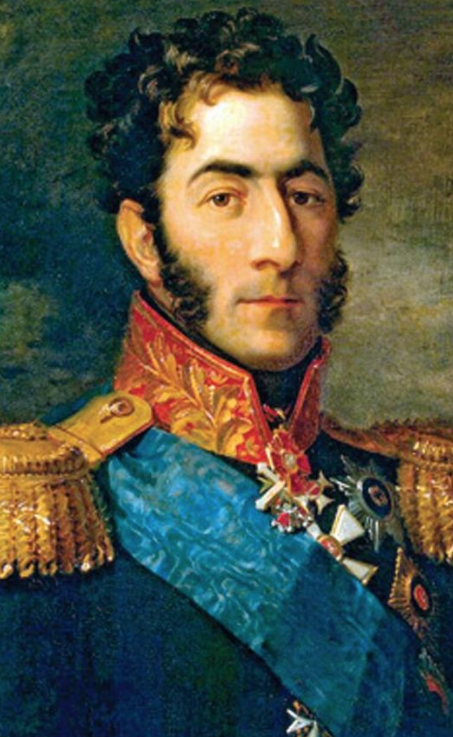
Meanwhile, the leader of Kutuzov’s advance guard (division of troop that makes attacks before the main army arrives), the General of the Infantry, Prince Pyotr Bagration, was impatient. He was forty, Georgian, and eager to push the pursuing French back to their homes. However, Kutuzov had put a time restriction on the order, and any disobedience would result in his expulsion from the top office. Prince Bagration’s infantry consisted of a mix of Austrians and Russians, and the need for translation would involve going to the Prince of Liechtenstein, Johann I Joseph; this could delay Kutuzov’s orders from going to all his troops. But, in time, the Prince advanced his troops at the right moment, despite the disadvantages.

Through observation, Kutuzov saw Napoleon’s right wing was rather under-defended, and so he planned for an assault on the right wing. Once the Russo-Austrian forces could break the right wing with his superior force, he could encircle the main force and win a quick and decisive victory. However, Napoleon had relied on his weak right flank to draw in the Russo-Austrian army, expecting his youngest (and iron-willed) Marshal Louis-Nicolas Davout to arrive with Third Corps to shore up the weakness. The plan was that the combined force would charge the enemy with the rest of his army at the center.

Napoleon’s forward-thinking capability of luring the enemy in was one part of why this battle was such a devastating blow on the Third Coalition’s morale. The reason Napoleon used this weaker right flank was because he knew that the Russians would take the bait, and that Davout would arrive in time to shore up any breaches, preventing the Russo-Austrians from turning towards the main French force. Therefore, he could concentrate his main attack on the now exposed Allied positions at Pratzen Heights.

Davout’s Third Corps was all the French needed to prevent the Russians from breaking through the French right flank. Napoleon then immediately began his march to the Pratzen Heights in an attempt to cut off the Russo-Austrian retreat.

The Russo-Austrian troops turned and saw Napoleon’s main force behind them and began to run, turning southwards as all other ways of retreat were blocked. They screamed blasphemies at the French troops as a salvo of cannonballs could be seen hurtling from the top of the hill to the frozen body of water. For the troops on the lake’s icy surface, the salvo would be the last rain shower they would ever see before their lives were greeted by the warm welcome of death. The French troops yelled out their victory, as they were too tired to chase the enemy down.

Napoleon’s plan proved successful. Once the French made their attack to the now weakened Russian positions on the Pratzen Heights, the Russo-Austrian armies realized that all was lost and they had no choice but to retreat. However, the French had turned southeast to cut off the Russo-Austrian’s retreat, meaning that the only way remaining was through or over the freezing body of water. Many Russo-Austrian troops drowned in the frozen lake, unable to swim with all the equipment. La Grande Armeé, excluding Davout’s reinforcements, boasted a force consisting of 68,000 troops, a clear majority advantage to General Mikhail Kutuzov.

Napoleon fought a battle in which he held the disadvantage (68,000 French troops to 95,000 Russo-Austrian), but inflicted four times the casualties on the Allies than La Grande Armeé suffered (9,000 French to 36,000 Russo-Austrian).

Napoleon’s victory at Austerlitz was in the same league as Alexander the Great’s decisive blow to the Persians at Gaugamela and Hannibal’s destruction of an entire Roman army at Cannae. Napoleon had about two thirds of the men that Kutuzov did, but still managed to beat him, inflicting four times the casualties on the Russo-Austrian army than his own.

Austerlitz was the best example of Napoleon’s genius. It saw Napoleon take a very risky strategy and resulted in one of the most decisive victories of war history, ensuring French military dominance throughout Europe (until Napoleon’s disastrous invasion of Russia against Mikhail Kutuzov in 1812).

This battle occurred on December 2, 1805. Does the date seem perfect to you? It was fought exactly a year after Napoleon was crowned Emperor of France.

CHLOE ZOU

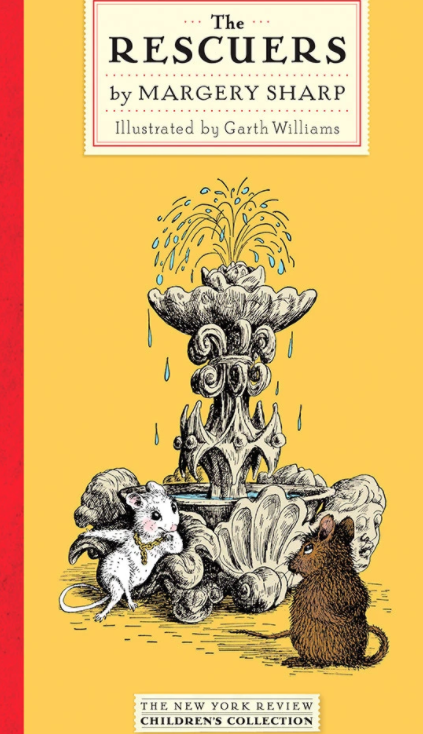
The Rescuers movie (an adaptation of Margery Sharp’s The Rescuers and Miss Bianca) is an exciting and fun movie that keeps you in suspense at times, making you wonder what will happen next: especially the parts where Bernard and Miss Bianca were getting chased by the crocs, or when Evinrude was being chased by a colony of bats. I think that this movie isn’t a movie that just kids like, it seems to me that this movie is one that you can watch throughout your life, even as an adult. Though it is meant for children, it doesn’t mean adults can’t watch it as well! This movie was released in 1977 and is a Disney Animation. Unfortunately many reviews about this movie are not great, and many parents think it is not meant for children, because of the scenes where they almost drown, or they find out that the Devil’s Eye is in a human skull. The movie does start out with a darker feel than I expected, what might almost be a start to a horror movie, but soon everything calms down and you can see Miss Bianca’s elegance after the stormy, lightning start. For me I think that this movie might be too much for young kids but a great entertainment for older kids.

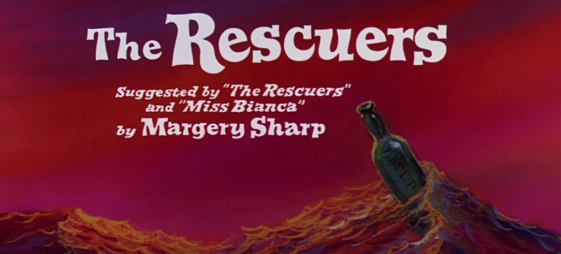
This movie was what I was expecting, but it also wasn’t what I was expecting. That might sound confusing, but let me explain. I expected it to be somewhat of a variation of the first two books combined, which is what it was, for the producers state this in a title card:

The characters were based off characters from the first two books, especially Miss Bianca, so that was basically a variation, but at the same time it was a different story, with different supporting characters. There were new exciting and horrible looking characters, as well as a team of supporting field mice, and even an albatross. His name is Orville after Wilbur and Orville Wright (the Wright Brothers).

I was expecting Sharp’s calmer, more elegant scenario, but I can see why they produced this more exciting plot. For many kids the real plot that was in Miss Bianca would just not provide enough excitement, and as a movie they couldn’t make it a movie that kids would ignore. So adding the crocodiles in instead of the bloodhounds and making Medusa so very ugly, does make sense.

The filmmakers (and the great voice actors) did manage to keep the personalities of Bernard and Miss Bianca the same, which I quite appreciate, since after all I don’t want to watch a movie with characters that are the opposite of what the author depicted them as. For example, you can see in the movie that Bernard is the worrier out of the two of them and Miss Bianca is always like “stop worrying Bernard”; she is a more “this is an adventure and this is just part of the fun included in the adventure” type of mouse. Well, Bernard does enough worrying for both of them, as he has to plan every single little detail out and still he will worry: you can’t really change that he is just that type of mouse. But the thing he worries about most is not himself but… Miss Bianca! I’m quite sure that he is much in love with Miss Bianca and what he says in the movie further proves that. Bernard, even though stuck in a green glass bottle, cries out “Mr. Chairman, sir. I don’t think Miss Bianca should go. It could be dangerous. I mean, anything could happen to her.” This just really proves how much Bernard cares about Miss Bianca, and to me it is also quite lovely because I feel that there is also a bit of romance included behind what Bernard is saying.

Though the main characters’ personalities didn’t change, other stuff did. And one change that just keeps jumping out to me is the fact that Miss Bianca is Hungarian instead of British like she was in the books, and how all the mice are meeting in the United Nations in New York City instead of somewhere in Europe.

Many parts of the movie are quite entertaining. For example, in the beginning you can see how colossal the green help bottle is compared to the minute mice. Or when poor Bernard falls down the bottle once again due to the surprise of being chosen by Miss Bianca for her co-agent. And the frantic struggle to get out of the zoo, with one of them always dropping something, is quite funny and entertaining too. The animation of the mice is also quite nice, with the big ears compared to their small bodies. Overall this is just a very entertaining, but also suspenseful movie that keeps you on your toes and is quite enjoyable to watch even if not all parents think that… fortunately if you want more, you can always watch The Rescuers Down Under! But there’s one thing that I’ve never puzzled out, what is that thing in the bottle that when you drink it, it makes your eyes pop out and your mouth start to breathe out fire? At least it brought Evinrude back up! So it doesn’t look like a great substance but at least it still came in handy!

Aubrey (4th grade) responds:

Chloe, I agree a lot with you. First, I feel quite bad for Evinrude, because he had to get away from bats, had to be the engine for the boat, had to fly all the way to the field mouse house and back and he nearly got trampled by Medusa! I do indeed believe that there is some kind of romance or love between Miss Bianca and Bernard. Bernard shows much that he likes and cares for Miss Bianca during the movie, like when Bernard says that she should not go, and then when Miss Bianca chooses him. I think Medusa was using and abusing Snoops and definitely little Penny. I felt so bad for Penny but I think she was smart to leave a message in a bottle for help, otherwise who would help her? I noticed that Medusa wears lots of makeup, pretends to be nice, dampens Penny’s spirit and hates mice! She literally screams and freaks out when she sees the mice. I think Snoops is actually good and only helps Medusa because she forces him to or double crosses him. I agree with you when you say that that the film should be for grownups and older kids, but not younger kids. I wonder why Medusa puts the diamond in Teddy? Or does Penny do that? I’m also glad that they kept Miss Bianca and Bernard the same as the book, although I miss Nils.

I notice that they keep the field mice but change what they do in the movie. For example, in the book they are not important but in the movie they try to help Miss Bianca, Bernard and Penny. Also, they help distract Medusa. It was a bit funny but also serious when they were talking how the field mice would hit Medusa with the rolling pin and show her!


JONATHAN LIM

Mr Watt´s Literary Services

Fording the River to Grab Independence

 As the soldiers grabbed their oars preparing for the cold journey ahead, they knew that this could be the crucial moment that changed everything. They plowed ahead of the ice and strained against the current to cross the icy Delaware. Determination kept them warm as they crossed the dangerous river. And as the silence stretched, the soldiers looked at their fearless leader paving the way for them to follow and all their fear crumbled away only to be replaced with hope and will for freedom. In the Battle of Trenton, the Hessian troops (mercenaries hired by the British) suffered twenty-two deaths and ninety-two wounded while 918 were captured and 400 managed to escape in the chaos. This battle was a turning point in the American Revolution. Now the American troops were not to be underestimated under the leadership of George Washington, but would the Battle of Trenton’s success ensure that the Patriots could take down the largest and most powerful army in the world?

The American Revolution was not just a war that was quickly declared and won, for the Revolution took years; the buildup involved more and more tension until the colonies exploded. It started with the French and Indian War in 1756, also known as the Seven Years War. This war was significant because even though the British won, they fell into extreme debt. Up until then, the colonists were relatively happy with being British subjects, living a new life full of hope and freedom. Often being able to conduct much of their business freely, and to form somewhat autonomous governments, the British still needed money so they taxed the colonists. The first major tax was called the Stamp Act, passed by Parliament to be enacted on November 1, 1765, and although this tax did not affect a lot of people, many people were furious that this law was passed without their permission. “Taxation without Representation” was an anti – British saying that many colonists used when talking about the Stamp Act. Eventually, after many people voiced their displeasure, the Stamp Act was repealed. Then on June 15, 1767, the Townshend Acts were passed, which were taxes on importing goods going to the colonies. This was met with even more hostility: mobs and protests everywhere! One big protest you might have heard of was the Boston Massacre, where a group of British soldiers fired on unarmed protesters, killing five and injuring 3. This event infuriated even more colonists as trouble kept brewing. Another act was passed called the Tea Act, and once again people revolted, even going as far as dumping 90,000 pounds of tea into the harbor. This event was known as the Boston Tea Party, and occurred on December 16, 1773. In response to this act of revolt, Great Britain passed the Intolerable Acts (which consisted of 4 different acts: the Boston Port Act, Massachusetts Government Act, Administration of Justice Act, and Quartering Act) in 1774, which punished all the Rebels who participated in the Boston Tea Party. Instead of intimidating the unhappy colonists, it pushed them over the edge, and a meeting of all the leaders in the 13 colonies met to talk about the issues with the British. This was called the Continental Congress and was the beginning of modern American government. 

Picture a tennis match: one player is named Britain and one is named America. Britain hits the ball to America (the Stamp Act); America somehow manages to hit it back (Stamp Act Revolt). Britain returns with a sneaky shot to the left corner of the court (Townshend Acts), and the Americans barely manage to hit it back (Townshend Act Revolt) and the Brits slam back with the Boston Massacre! The British begin a new round and serve the (Tea Act) – America hits back (Boston Tea Party). Britain fires back (Intolerable Acts) and Americans win the match with a huge whammy (The Declaration of Independence). 

During all of these acts and revolts, there were two sides: the Patriots, who were seeking freedom from Britain’s tight grip, and the Loyalists, who believed that with the most powerful army backing them up, that they should stay with Britain. There was no in-between: only two sides from which you must choose. Now the war had begun and so far, the Patriots were known for breaking lines and running for their lives. The Patriots had a few weaknesses and strengths. One problem was that the Continental Army was small with only 16,000 troops. But they had a resilient spirit, and a willingness to win the war for establishing a better life was more powerful than the British soldiers’ fealty to the crown, 2,000 miles from home.

Without the inspired leadership of George Washington, without his genius battle strategies, and without his patriotic spirit, lightning-fast reflexes, and sharp instincts, America would not have won the war. The British had 50,000 troops and a massive, intimidating fleet of ships. Their troops had also been trained for months and had been waiting for a moment like this. The first battle, Lexington and Concord, was a blow for Britain; the Patriots lost 93 troops and the British lost 300 troops, which was a great morale boost. Then the Battle of Bunker Hill, which occurred on June 17th, 1775 was also successful – 1,000 British troops were hit, with more than 200 killed and more than 800 wounded. More than one hundred Americans perished, while more than 300 others were wounded. Then the real turning point was the Battle of Trenton and Princeton. And this started out with George Washington coming up with an amazing plan. 

Morale was low. Washington’s army was growing smaller, due to General William Howe’s driving out the Continental Army from New York on November 16th, 1776, taking over Fort Washington (in northern Manhattan) capturing 2,000 American soldiers. Under Washington’s orders they retreated across the Delaware River from the New Jersey side to the Pennsylvania side, on December 8th, and camped there with a shortage of food, ammunition and optimism. He knew that he had to do something now, for the troop’s enlistments were expiring, and they would head home and his army would be even smaller. With a risky move, he roused his soldiers and commanded them to cross the Delaware River on the evening of Christmas Day, 1776. Meanwhile, the Hessians were exhausted after being harassed by the local militias/minutemen, and were desperately trying to rest. The Hunterdon County militia (nearby county) played an excellent role in keeping the Hessians tired by constantly attacking them, to the point where the Hessians had to sleep with all their equipment on. 

It was the night of December 25th, and Washington was getting ready for the departure. He could feel the breeze on his cheek as he watched the sun slowly set. He watched the river as if it was going to jump out and attack him and promised himself that he would conquer this challenge. Now, this was not just a tiny river that you find in a forest; this river is 300 yards wide and there were huge ice chunks in the way, which the troops had to navigate around. Not only that but they had some extra weight that burdened them – there were eighteen cannons in total that included: 3 pounders, 4 pounders and 6 pounders. A six pounder is a large cannon that has a cannonball that weighs six pounds. The cannon itself weighed 1,750 pounds! They also were transporting horses to pull carriages and a lot of ammunition for the upcoming battle. While they were rowing along, Mother Nature threw an additional challenge at them; a huge storm had arrived. Washington’s plan was made with three separate crossings, a three-pronged attack. But only one (Washington’s) made it due to the fierce storm that fired ice and snow at them. General Ewing and Colonel Cadwalader did not make the crossing due to the ice blocking their paths. They turned around and went back to camp in Pennsylvania. When Washington’s portion finished the crossing, they were completely exhausted and he organized the soldiers into two groups. One was led by General Major Nathanael Green, which would attack from the North, and the second, led by General John Sullivan, would attack the south with the cannons. This was his original plan with his other troops but since they were unable to cross he split his group further into smaller groups to continue the plan. 

George Washington’s life of war, presidency and leadership all began on February 22, 1732, in Virginia. He was born into the middle class, and was the oldest of 6 younger brothers and sisters. George was homeschooled and was taught how to farm. In 1752, his brother, Lawrence, died of tuberculosis. Two months later Lawrence’s daughter died too. This unfortunate event made Georgie the only heir to 5,000 acres in Mount Vernon, at only age 20. Before George Washington died he had increased Mount Vernon to 8,000 acres. Washington volunteered for the French and Indian war at the age of 21. In February 1753, Washington was appointed to major in the British Army, which gave him the experience he would use in the near future. Unfortunately, he became sick (also of tuberculosis) and headed to Mount Vernon to take a long break. On January 6th, 1759, he was married to Martha Dandridge Custis, and had two young children that he loved – but sadly, both died, one before the American Revolution and one during. Now, coming up to the American Revolution, Mr. Washington, who had experienced the taxes firsthand, decided to side with the Patriots and to separate from Great Britain. Washington became a delegate in the First Continental Congress in 1774, and was appointed the Leader of the Continental Army. Washington proved to be extremely useful, and not just on the field of battle, as he helped boost morale during the hard times: especially in Valley Forge where some soldiers did not even have shoes during winter. He was the crucial and essential deciding factor in the Battles of Trenton and Princeton. 

After the war was over, Washington had plans to head home and relax and tend to his field. He did so for four years before being asked to serve his country again, but instead of being the leader of an army, he became the leader of the new country. The only president to get every single vote from all electors, and the only president who reluctantly took power, he took an oath and served our country, paving the path that our presidents are expected to follow. Finally after 8 years of being president, he went home and lived a peaceful life on Mount Vernon. 

George Washington paced the small tent floor, mumbling to himself, “Not enough ammo… enlistments expiring… maybe this plan, no, too risky.” He needed to come up with a plan soon, for his troops enlistments were expiring. Right now the Continental Army was stationed on the Pennsylvania side of the Delaware, after retreating from General Howe’s army in New York. On the other side of the river lay Hessian forces, 1,400 in total, waiting for the Patriots to give up. Suddenly an idea popped into his head, but Washington quickly dismissed the idea because it was too risky. As he attempted to brainstorm other ideas, that one risky idea kept nagging at him, until finally he accepted the idea, and began working out the finer details. He then called his trustworthy generals to a meeting, who glanced at each other, nervous that Washington was going to call for surrender. In the most confident voice George could muster, he said, “I want to cross the Delaware River and attack the Hessian forces!” All the generals’ eyes widened and their mouths gaped open like fishes trying to breathe on land. They all admired Washington but as he attempted to convince them. They couldn’t help but feel like all hope was lost and their leader was crazy. “How are we going to get the artillery across?” said a short rotund man who helped prepare weapons. “We will row them across!” said Washington confidently as he started calculating how the boats could lift the heavy artillery. Washington then promptly left claiming he had to use the privy, leaving the generals to ruminate. When George returned, the generals agreed, much to Washington’s relief and quickly filled in the rest of the plans.

George Washington was now watching his troops prepare for the journey ahead. It was December 26th and this was the day he had so anxiously anticipated. He looked at their faces, noting their expressions: confidence, fear, determination, hunger and revenge. Occasionally, he offered kind words, and hid his own fear and panic, behind a calm cool demeanor. Washington’s plan consisted of the three-pronged attack, with three divisions – little did he know that only his section would cross the Delaware. Unfortunately, General Ewing and Colonel Cadwalader were not present during the Battle of Trenton, being unable to cross the Delaware River. 

Once on the river, he sighed with relief but his troubles were far from over. As his troops pushed through the ice, Washington saw heavy clouds rolling in, but dismissed them as annoying flies. He soon regretted dismissing the storm, for it was now above him and about him: rain, hail, and wind attacked him and his troops from all sides but they pushed on. After crossing the river, 300 yards wide, they arrived on the other side, exhausted. Washington was annoyed, for the river crossing took five hours longer than he had hoped and some troops were still stranded in the middle of the river. He noticed his troop’s energy draining, and allowed them a quick break as he reconnoitered. He then led a steady march toward Trenton, while his loyal troops followed behind. As the Army was marching the nineteen-mile hike, the Hessians were resting and feasting in Trenton. Colonel Rahl, the head of the Hessian troops, was feasting on his favorite meal – chicken! He thought chicken was the best thing ever created and he could not stop eating it. He didn’t bother with talking or appetizers, he just went straight into the chicken. So when he was handed an urgent letter about the Continental Army approaching, he assumed it was completely fake, and continued feasting. Now, as Washington and his army got closer to Trenton, Washington calmed his nerves. He knew a battle was coming and hopefully he wouldn’t suffer too many casualties. He separated his group into three parts, one led by General Nathanael Green and the other by General John Sullivan. With a few deep breaths, and with his loudest, most confident voice, George Washington bellowed,” CHARGE!!!!” His men charged into battle, their fatigue melting away – they caught the sleepy Hessian patrols by surprise. Then they ran down the streets only to find the town unguarded. They attacked every soldier they encountered, but for some odd reason the Hessian resistance was listless. Some were drunk but most were just tired. Washington silently thanked the militia for harassing the Hessians, and continued the charge farther into the town. As the Continental Army continued to scour the streets, General Rahl was trying to rally his Hessian troops into a defensive position, but fortunately the Hessians were either discombobulated from the alcohol or just so tired they couldn’t stand up straight. During the Battle, Washington lost only two troops, and captured over 900 Hessians soldiers.

After the victory at Trenton, Washington decided to cross the Delaware again! He was worried about the reinforcements the Hessians had called, so he crossed it, back to home camp in Pennsylvania, for the 3rd time. When he was on the other side, he considered his position. His soldiers were leaving the army due to expiring enlistments but he managed to convince them to stay for an extra month. He had to act soon.

Up in Manhattan, Cornwallis wanted to go home. He sent a request to leave his post and began packing his bags. Unfortunately the British Army denied his request and sent him to Trenton, New Jersey to deal with the pesky George Washington. He immediately set out from New York with an army of 8,000 to crush Washington’s army of 5,000.  He recruited some of the best soldiers and set out on a brisk march towards Trenton. On January second when he arrived at Princeton, Washington was on his way to Assunpink after crossing the Delaware for the 4th time. He set up a line of defense on the south side of the creek and sent 1,000 men halfway in between Princeton and Trenton. This force was essential to the Second Battle of Trenton, for these American soldiers harassed the British, firing shots at them then running back, keeping them aware and tense. A large group of Rebels hid in the dense woodland, surprising the British when they jumped out and rained bullets on them, before running away. This was called the guerrilla technique that was created by militias to counter the British soldiers. The British soldiers were taught traditional warfare, where you stand in line and take turns firing at each other. The Rebels attempted this method but eventually, after a few losses, decided to break these ROE (rules of engagement) and develop a new method. Every single time they jumped out on these slow moving British columns the British would attempt to form a line to attack them but by then the Rebels would be long gone. The effect of the Patriots on the British approach to Trenton was that it slowed them to a grinding pace – one mile an hour. This gave the Continental Army time to prepare. Finally when Cornwallis arrived at Assunpink he spotted the army and attacked. Cornwallis, feeling very confident, attacked three times, and each time the Continental Army held them back.

 This battle was known as the Second Battle of Trenton and the Battle of Assunpink Creek. After the three attacks, Cornwallis, not willing to lose any more troops, decided to stop attacking until the morning. Washington knew not to attack such a large force and was planning an escape. Cornwallis expected a retreat across the Delaware River and sent some troops but instead, Washington and his army left in the middle of the night as quietly as they could and made their retreat toward Princeton. They left their fires burning to deceive the enemy, select soldiers instructed to make noise with picks and shovels, and muffling their wagon wheels, the rest of the troops made haste towards Princeton on a night march. 

Then next morning, General Cornwallis awoke only to find that an entire army had disappeared. The Continental Army was on their way to Princeton – finishing a 12-mile hike. At the exact moment, British Commander Charles Mawhood was on his way to join Cornwallis with a small army. Drawing close to Princeton, Washington, seeing a few British soldiers from afar, sent his brigadier general, Hugh Mercer, and a small brigade to investigate. Unfortunately Hugh Mercer, surprised by the army of 1,200, took multiple bayonets to the body (many of the British soldiers thought they had killed Washington) and his brigade was completely overrun. Nine days later, Hugh Mercer died. As poetically described by Rick Atkinson, the author of The British are Coming, “More troops, royal and rebel, charged into the fight. Scarlet stains spread in the snow, and billowing smoke from ‘the two lines mingled as it rose, and went up in one beautiful cloud.’” Washington, once again seeing the commotion, dispatched another brigade and sent them to figure out the problem. John Cadwalader rode into the field only to find complete chaos. His brigade attacked and despite their heroic efforts, the British were winning. Washington finally decided to find out the problem for himself and when he saw the field of battle just south of Princeton, he charged into the field and attacked the British troops with some fresh soldiers. When the soldiers saw that George Washington was on the field risking his life alongside each of them, it gave them a confidence boost. “I saw him brave all the dangers of the field, and his important life hanging as it were by a single hair with a thousand deaths flying around him,” a Philadelphia officer later wrote. The tide turned and Washington’s Army won the battle. This was a great victory because when the French heard about these two stunning victories, they decided it was time to intervene and send their Army to aid the Colonies.

By winning the war, America won our freedom. Thirteen colonies fought the largest army in the world and prevailed, becoming the powerful nation we know today.


OLIVIA LIU

“The Force that Through the Green Fuse Drives the Flower” by Dylan Thomas describes an internal conflict he has with his body as he struggles to grasp how to describe himself as nature. This poem is composed of vivid comparisons between parts of himself and free-flowing aspects of nature in the world that surrounds him. It is a romantic piece that follows a consistent slant rhyme, creating a sense of unity among the diverse moods each stanza embodies. For instance, in the first stanza:

The force that through the green fuse drives the flower

Drives my green age; that blasts the roots of trees

is my destroyer.

And I am dumb to tell the crooked rose 

My youth is bent by the same wintry fever.

The endings of lines 1,3, and 5, “flower”, “destroyer” and “fever” demonstrate a rhyme scheme that persists through much of the poem. In addition to a rhyme scheme, Thomas creates beautiful imagery with his comparisons that are not quite metaphors. His use of nature-related diction like “green fuse drives the flower”, “roots of trees”, “crooked rose”, and “mouthing streams” paints a picture of him as one with nature and the wilderness. I notice that all of his descriptions depict nature as flowing, unimpeded, and free. By correlating his “green” youth to a “crooked rose bent by the same wintry fever”, he expresses that though he is young, his body is one with nature itself, and it seems almost like his recognition of youth cannot occur without that.  He craves to be a part of the immortal and everlasting parts of the Earth which make up nature. Thomas displays how he wants to become wise, and to experience how time as ticked for so long, hinting at immortality and the heavenly aspect of living: “and I am dumb to tell a weather’s wind/How time has ticked a heaven round the stars.”  

Despite all of these bold comparisons, Thomas repeats the line “and I am dumb to tell”. I interpret this repetition as a self-reminder that he doesn’t feel the power to say that he is truly what he wants to be. In “The Force that Through the Green Fuse Drives the Flower”, there is an underlying theme: a sense of struggle with identity. With Thomas, this is about being one with nature, yet his poem has an inherent futility: there is a muteness he cries against: ‘And yet I am dumb,”… . He understands that he is still an individual, and set apart, despite the similar characteristics he shares with nature.

In a similar fashion, Adrienne Rich discusses her ongoing journey of self-discovery, finding herself within parts of the vast world around her. Of course, Rich lives on to be much older than Thomas, who died at 39, so the general feeling of their two poems is very different. Thomas’ “The Force that Through the Green Fuse Drives the Flower” emits a youthful, fresh, almost inexperienced energy, while Rich’s “Orion” is much more matured and developed, even though there is still some naiveté in her poem as well.

In “Orion”, she composes a narrative that spans most of her life, centering around her relationship with the constellation Orion, and how she relies on him as a constant in her life. Throughout the narrative, she consistently personifies Orion as her brave hero, portraying him as a majestic warrior: “you were my genius, you/my cast-iron Viking, my helmed/lion-heart king in prison.Rich almost idolizes Orion as she begins to develop a personal relationship with the ever-burning constellation. The way she creates the narrative makes it seem like she is enkindling a special bond or understanding between her and the stars. In particular, she has a deep connection with the outdoors as a whole, especially the night sky: 

as I throw back my head to take you in

an old transfusion happens again:

divine astronomy is nothing to it.

Indoors I bruise and blunder

break faith, leave ill enough

alone, a dead child born in the dark.

Night cracks up over the chimney,

pieces of time, frozen geodes

come showering down in the grate

When embracing the outdoors, she feels liberated, free, and calm. However, when she enters her home and exits outside to come indoors, she experiences a feeling of being trapped and unfaithful, almost like she is betraying the nature that she loves. Another part of this stanza that stands out is her description of pieces of time. Stars are timeless, and perhaps she is also looking back at past memories and experiences or dreaming about the stars at night. At night, “frozen geodes/come showering down” into her home. Even though she is indoors, she desires the beauty of the stars to come down the chimney. But do they? 

As she grows older, Orion continues to stare down, but now from a “simplified west”. Maybe she is struggling or experiencing hardships, and she imagines that when her Viking Orion was staring, life was simpler. This sense of struggle is enforced with the next stanza:

A man reaches behind my eyes

and finds them empty

a woman’s head turns away

from my head in the mirror

children are dying my death

and eating crumbs of my life.

The mood of this stanza shifts dramatically to a much more negative, bleak outlook on life focused on the emptiness of her home life and the internal conflicts she feels. From Rich’s real life, I know that like in “The Force”, she was also struggling with the concept of identity, and for her it was sexuality, motherhood, and being Jewish as well as Protestant. Maybe she is contemplating who she truly is, but as she stares back at Orion, her mood changes immediately: 

Pity is not your forte.

Calmly you ache up there

pinned aloft in your crow’s nest,

my speechless pirate!

Rich knows that she can’t feel sorry for herself when she stares at the stars. Despite all these years, Orion still burns strong, meaning she can and should as well. The poem ends with her gazing at Orion as if she were a constellation; she throws a cold spear at the sky, but knows it can’t hurt him.

It seems like this poem was written as a reminder that no matter what occurs in life, she (and we) always has Orion in the sky, burning bright to reassure her as a strong warrior fighting by her side. Orion helps build her character and will forever be a part of her life.

Rich shows the reader her internal desire to model her life after something eternal, yet fails to achieve a sense of wholeness as her feelings of loneliness and emptiness persist. In comparison, Thomas based his identity on driving nature, a full, powerful, yet youthful and dynamic thing that revels in itself. This recurring reflex is mirrored in Rich’s craving to escape her life. Both the starlight shattering into her home and the force that drives the stream and his blood propel them deeper into the perennial and immortal identity that they mold their mortal lives to.


OLIVIA XU

Mr Watt´s Literary Services

Giant panda, ailuropoda melanoleuca, is a typical bear. It is completely white except for black fur on its ears, around its eyes, muzzle, legs, and shoulders. Giant pandas first became endangered in 1990 due to excessive poaching in the 80s and deforestation, depleting their bamboo food source. However, in 2016, their extinction status got boosted from endangered to vulnerable.

A regular giant panda eats bamboo for 12 out of 24 hours a day. This happens because bamboo isn’t very nutritious. They only digest approximately twenty percent of what they eat, so they have to eat a lot, and fast, or they don’t get enough nutrition. Then, they sleep for the rest of the day to conserve their energy to digest the bamboo. This bear relieves itself dozens of times during a day, because of all the water in their food. Pandas can eat 28 pounds of bamboo shoots and leaves, which is 15 percent of their body weight – over 1 percent – every hour! Giant pandas are probably poorly adapted to bamboo, because they used to be carnivores. However, they simply love it, so it is a huge percentage of their diets. If they cannot find anything else to eat, they may also eat small animals and fish, or other types of vegetation.

The giant panda has lived in bamboo forest for a few million years. It is highly specialized and has adapted uniquely to China. They have a thick, wooly coat that keeps it warm in the chilly bamboo forests. Giant pandas have giant molar teeth and giant, strong jaw muscles to crush giant and tough bamboo. Of course, they’re not all that giant. Not strangely, a good amount of people find these bulky and bumbling animals to be cute, but watch out, if you provoke one, those carnivorous instincts will come rushing in, and giant pandas can be quite dangerous!

If they are on all four legs, or laying about, they are around two to three feet tall at the shoulder, and 4 to 6 feet in length. In the wild, males and females are different weights, the male being up to two hundred and fifty pounds but the female almost never reaching 220. They can live from 15-20 years, although in zoos pandas can live to thirty, and are bigger and heavier, on account of the foods that are given to them other than bamboo. The oldest panda who ever lived was Jia Jia, a female giant panda in captivity who was born in 1978. She lived to be 38 years old.

Giant pandas can be found in zoos, yet in the wild they only exist in the remote regions of central China. Part of the reason is because there are many bamboo forests in China, and since they are in high areas, the forests are cool and wet, just like a panda likes them. If the giant panda isn’t in a forest, it will climb up to 13,000 feet just to reach the bamboo shoots.

A female panda can give birth to one or two panda cubs after being pregnant for five months. Unfortunately, the panda cannot take care for both cubs, so usually only one survives.

Pandas go number two more than 100 times a day, producing more than 40 pounds of waste, which is the same as four bowling balls. They have tiny cubs because of their poor diet. The cubs are born blind, helpless, and tiny, weighing just 5 ounces, which is 1/1000 the size of their mom.

These panda cubs are dependent on their mothers for up to three years before they can leave and live on their own. Therefore, at best a wild female panda can give birth to cubs every other year. They may only successfully raise five to eight cubs. Giant pandas are very bad at keeping their babies alive. In five years at the National Zoo in Washington D.C. five different cubs died, due to infection but mostly panda infant mortality.

Cubs do not officially wake up until they are 6-8 weeks old, and not ready to move around by themselves until they are three months old. A cub may nurse for eight or nine months and can eat adult food at 1 years old, although they are not socially mature until two years.

Giant pandas reach breeding maturity around four to eight years old. They are reproductive until age 20. Every year in the spring, female pandas have a baby. She is in heat for only two or three days. Scents and calls draw pandas together to mate.

Although many people don’t know, pandas are very good swimmers. Since they eat almost completely bamboo, they have a healthy diet, so they are actually very lean under all the fur. Male pandas can relax by doing handstands against trees! Scientists are stilled stumped at why these pandas are black and white, but they have a couple theories, of which one is that they camouflage well in the dense stalks of bamboo.

In the wilderness, giant pandas nap between eating for 2-4 hours at a time. This happens in a zoo, too. They like to catch some Zs by dozing on their side, back, or belly, either sprawled like a crooked starfish, or curled up. Pandas sleep similarly to humans, but they sleep on tree branches sometimes too though. They continue to defecate when they are resting.

It seems like giant pandas never developed visual communication, most likely because they are solitary animals that live mostly by themselves. Another reason is because, in their habitat, dense stands of bamboo block a direct line of sight and some visual communications. They do not communicate with each other with body characteristics and visual signals. Other animals’ characteristics could be face expressions, flagging signals, erecting their crests or manes, and ears cocking forward or flattening. But giant pandas don’t do any of those. Their faces are circular and inscrutable, and their tails are stubs, similar to a bunny’s or rabbit’s, hence they cannot flag. The pandas have no crest or mane, and their ears are only flexible enough to wiggle a little. From time to time giant pandas vocalize. They use abundantly detailed vocalizations to express their different moods. Sometimes, they also communicate by scratching on trees and leaving unpleasant scent markers.

Giant pandas are generally loners. They don’t like being around each other so they have an enhanced sense of smell to be aware if other pandas are near so they can avoid them. Pandas can also be aggressive to each other. If they accidentally come into contact with an organism of the same species as them, they will wrangle with each other by growling, swatting, and biting each other until the less persistent one gives up and retreats. It is a challenge for zoologists to breed pandas, as sometimes they refuse to mate. Additionally, bamboo in the wild seems to be diminishing because pandas are gobbling it all up.

Today, pandas are at a higher risk of habitat loss than predatory animals. Human development has driven pandas into isolated fragmented mountain regions, so they can no longer get bamboo. Additionally, climate change might eliminate a third of the bamboo habitat that pandas rely on by the end of the century.

In 1972, President Richard Nixon, the 37th president of the United States, started a strengthening relationship with China by visiting the country, the first time a US president had done so. The president of China, Mao Zedong, gave America male panda Hsing-Hsing and his mate, Ling Ling as gifts. The White House gave China a pair of musk oxen in return. Time and again, the two pandas mated, but unfortunately they left no surviving cubs, even with the assistance of science. Between 1983 and 1989, Ling-Ling gave birth to five pandas, but not a single one of them survived over five days.