Anna Qin
The Spider Monkey
by Anna Qin, entering 6th grade
According to A to Z Animals, the spider monkey’s scientific name is Simia Paniscus. However, National Geographic disagrees and believes that it is actually Ateles. They usually grow from 15 to 20 inches and weigh from 14 to 26 pounds. The spider monkey’s lifespan is 15 to 27 years. However, in captivity, it can live up to 40-50 years. Did you know it can run up to 35 miles an hour? Compared to a cheetah (the fastest land mammal on Planet Earth who can reach up to 75 mph), the spider monkey is like a snail, but compared to a human, it is ⅓ faster. Spider monkeys much prefer to be in troops rather than alone. They try to stay away from humans, eagles and jaguars, but fruits and nuts and leaves are what give them the energy they need. These monkeys have a long and strong tail that help it grip onto things and swift hands and feet to move around. Since the spider monkey avoids heading into the further southern regions of South America because of all the mountains, it tends to be found in the tropical jungles of Southern Mexico and Brazil.
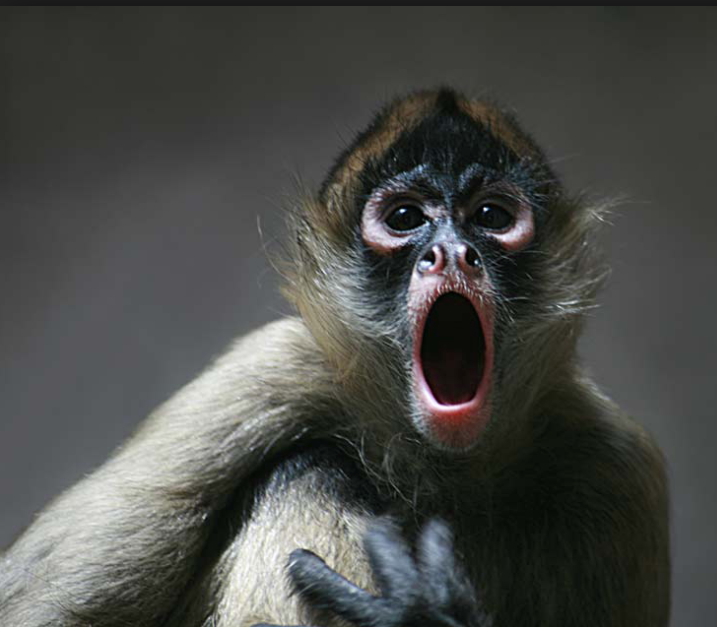
There are a wide range of spider monkey subspecies. There are approximately fourteen different spider monkeys. From the white-cheeked spider monkey to the Ornate spider monkey, each monkey comes in different shapes and sizes. For example the red-faced spider monkey has a red face while all other 13 spider monkeys have another color. Compared to other monkeys, spider monkeys are a normal size. The world’s smallest monkey is a pygmy marmoset and they are about 4 ounces which is 0.25 pounds and the world’s largest monkey is the mandrill. Mandrills can weigh 77 pounds. Spider monkey tails can even get to be longer than their body, which of course gives you the impression that they are 40 inches tall.
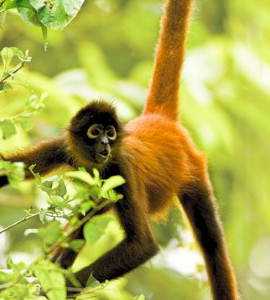
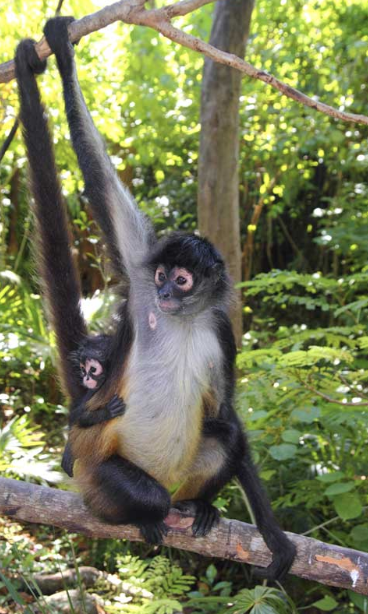
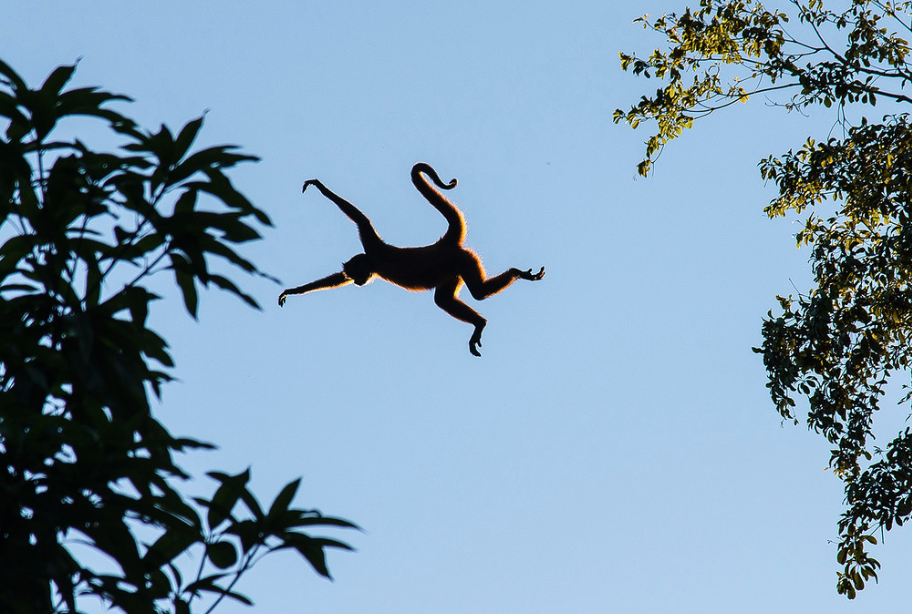
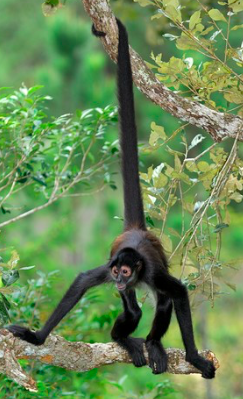
Do you know how the spider monkey got its name? It got its name by how it looks on the branches. It can be found with all four legs and its tail, stretched in different directions on different branches, causing it to look like a spider web. It could also look like a spider when it hangs from its tail. Here’s a partial list of types: There are black-handed spider monkeys, red-faced spider monkeys, black-headed spider monkeys, white bellied spider monkeys, brown spider monkeys, peruvian spider monkeys, and a white-cheeked spider monkeys. They are all similar in some ways and different in others.
The main diet of a spider monkey is fruits and berries. The black-handed spider monkeys’ diet is mainly of fruit, but they will occasionally eat leaves, flowers, nuts, seeds, insects, arachnids: spiders. I am not saying black-handed spider monkeys are cannibals, but… . White-bellied spider monkeys’ diet mainly consists of fruits, although leaves, seeds, and invertebrates (95% of the world’s animals are invertebrates) are also commonly consumed. These monkeys even eat the decaying wood and mud used by termites to build nests, for reasons that are not yet understood. People think that they play a big role in the spreading of seeds through the South American rainforests. The spider monkey also enjoys eating insects and small reptiles to get protein, and also honey. All types of spider monkeys are considered endangered or critically endangered species because of hunting from humans and bigger jungle animals including jaguars and crocodiles. For instance, there are only 2,000 Yucatan spider monkeys who still live on the Yucatan Peninsula.
Mainly you would see these animals come in groups of 10-30 monkeys each. They split up during the daytime to avoid competition for food. What makes this species of primates different from others is that the female monkey is the one who leaves to join another group instead of the male leaving. People think that the males stay together throughout their whole life. Three to four times a year, female spider monkeys will breed. Soon, the female spider monkey will choose a male spider monkey to mate with but it has to be from her group. After about 7 months, it will give birth to a baby spider monkey.
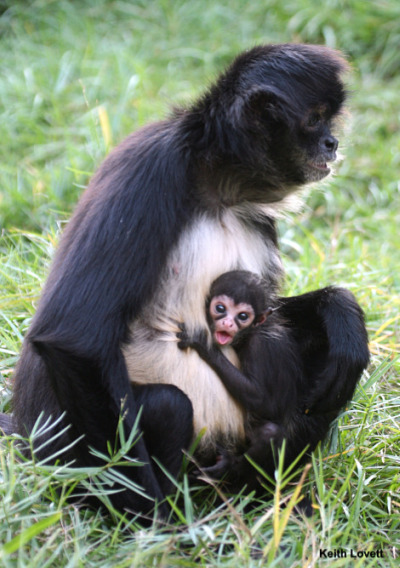
Each female monkey gives birth to a baby spider monkey once every three to four years and each pregnancy lasts about 7 months. Baby spider monkeys are very dependent and rely on their mother. They do this till they are strong enough to live on their own. However, from between 6 to 10 months old, the mother will have to carry the baby on their stomach or on their backs to keep them safe. They will also help them get up in the trees and groom them. Once they are all grown up, they usually separate. Spider monkeys are very interesting animals.
Wouldn’t it be cool to have a monkey as a pet?! I think so! Monkeys act so much like humans it almost would be like another sibling but… a very hairy sibling. However, is it a good thing to capture a wild animal? Is it good for the spider monkey to live in a house instead of a jungle? Do you think ethics about pets change, from a person who owns a dog to a person who owns a spider monkey? Spider monkeys and dogs are in some ways similar. A poor person who would own a dog probably would set basic rules like, the dog can’t do its business on a rug or have entry to rooms that have valuable items. However, rich people could easily repay for all these things. Their rules might be more lenient.
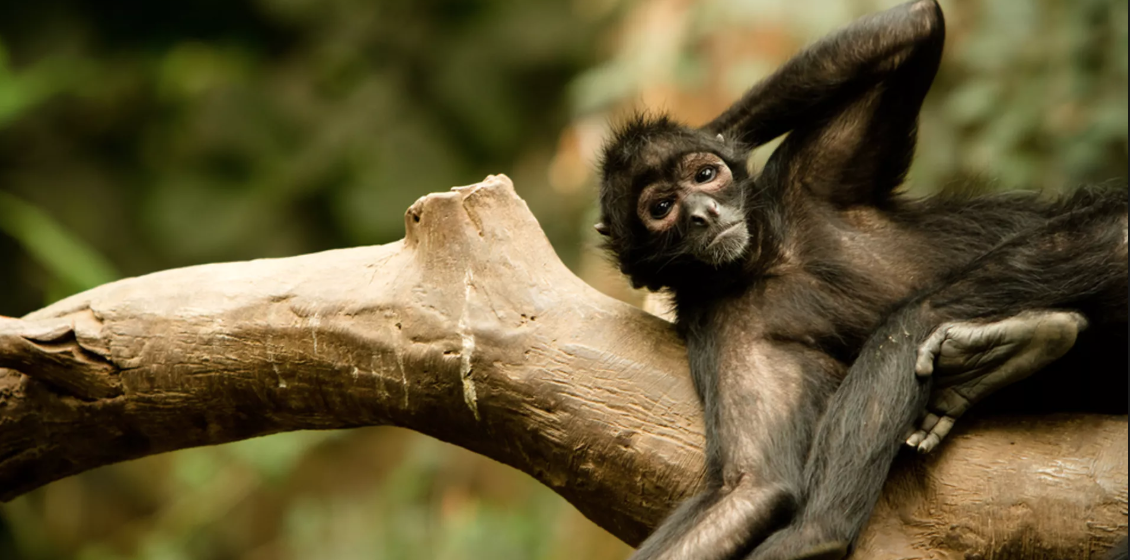
Some animals are bred for being pets. They are snuggable and are not dangerous. For example, hamsters, guinea pigs, bunnies, mice, mini-pigs, and even shetland ponies. They learn who their person is, and dogs, especially, learn to protect them instead of hurting them. As babies, spider monkeys are adorable and probably are very fun to play and snuggle with. According to National Geographic, as spider monkeys grow older they also grow more destructive and believe it or not, are dangerous animals. They will live more like a spider monkey out in the jungle instead of acclimating to domestic pet life. There are over 41,000 species of animals on the endangered species list and over 16,000 are also on the threatened to extinction list. Three species of spider monkey are included on the highly threatened list while five species are endangered and one listed as a vulnerable species. In 1996 and 2003, the black-faced spider monkey was listed as a least-concern species, but five years later in 2008 was considered an endangered species. Spider monkeys should not be kept as pets knowing the fact that they could become even more endangered if you take producing females out of population. As stated, too, adult spider monkeys can become more and more difficult to handle, and just like human teenagers start to gain independence and have their own ideas. As they grow older they require more and more attention and become more and more costly. They would be more comfortable living in the wild. Therefore, most animal welfare organizations don’t recommend keeping a spider monkey, or any other primate, as a pet.
In an interview in the London Guardian from February 28, 2016, a primate owner in the Cotswolds, UK, had this to say: “Just don’t get a monkey!” she says. Just like most animal welfare organizations, Laura also doesn’t recommend any monkeys for pets. Laura also states that she can’t cuddle with these monkeys as they are not tamed and would bite. “Get a dog or have a baby,” she suggests. As most sources have said before, spider monkeys require a lot of attention and money. Laura, unluckily, was dragged into taking care of more than just one monkey, not two, not three, but eight! Laura first imagined a life with only one monkey as a pet but ended up with a handful more than she expected. She got in touch with a seller, and ended up back at home with two adult spider monkeys-one female and one male, because of something unexpected, an offer, from the seller. The male monkey continued to suffer from dental and even tail issues, and was treated, and along the way Laura realized that not only was the male struggling, but also the female monkey was pregnant! Laura now had two newborn males on her hands. Not soon after, all the health problems caused the male to die during an operation but you won’t believe it! Before he died, he impregnated the female monkey again! Soon Laura ended up with 8 monkeys to deal with.
Think about it- she basically needs to take care of eight children.
Having needs that would be better met in the wild, people need to remember that even though spider monkeys are small, they are non-human primates. Even though spider monkeys are adorable and snuggly when they are newborns, they can possibly be dangerous and destructive as they grow older, especially during times when they are bored or away from owners. Many challenges lay ahead knowing that they can not be properly/ fully potty trained. As an human adult, especially one with a full time job or long periods of time away from home, spider monkeys would be very difficult to care for. They require more than a handful of attention and stimulation, and are very costly ($13,000 was the cheapest one I saw in online forums). Yet some people are still willing to take on the challenge, knowing that these spider monkeys would prefer to be out in the wild, accompanied by fellow spider monkeys. Therefore, many animal organizations hope that people would keep these primates out in the wild and discourage anyone who is thinking about getting one as a pet, though obviously, some disagree. Some state governments allow spider monkeys as pets; however, many would advise prospective buyer to seek guidance about the challenging task. Good resources to rely on about this are both the World Animal Foundation as well as the University of Wisconsin who both pass out many good-to-know facts and more.
Spider monkeys are very interesting animals. They seem like regular monkeys but their qualities show otherwise. These monkeys are fun, loving, and energetic, but NOT suitable for pets.
SILVER AWARD goes to Anna for her essay. And here’s some more live insight from her, with pictures.

Ref: https://www.theguardian.com/lifeandstyle/2016/feb/28/why-primates-should-never-be-pets