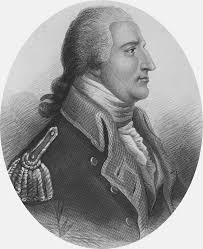
“We are apt to shut our eyes against a painful truth, and listen to the song of that siren till she transforms us into beasts.” Patrick Henry, a 38 year-old delegate to the Second Continental Congress spoke thus in 1775, at the Second Virginia convention, to try and pass a resolution for Virginia militia members to fight in the Revolutionary War. The speech was so well-thought out and delivered with passion that the whole convention sat in silence for a few minutes. “Every word he says not only engages but commands the attention, and your passions are no longer your own when he addresses them,” said the drafter of the Virginia Declaration of Independence, George Mason. Now, what did Mason mean when he said “your passions are no longer your own”? Mason meant that despite the speaker not knowing their individual passions, he spoke so eloquently and passionately that the individual worries and concerns were eclipsed by the nature of Henry’s speech – which was a stirring call to arms. The speaker influenced and guided the audience’s passions, bringing the room to mute astonishment. “There is a just God who presides over the destinies of nations, and who will raise up friends to fight our battles for us.” He made it seem like God was fighting for them, or was going to fight with them if they joined the revolution; Henry states that the new country, with a destiny, is palpable; in God’s hands, and if the audience joins in this fight, then they would have secured the future and safety of the new nation. He uses these successive words which show the growing demoralization: petition, remonstrate, supplicate and finally, prostrate, and from this he commands the listener to heed his call: we must fight. At last he ends with “give me liberty or give me death!”
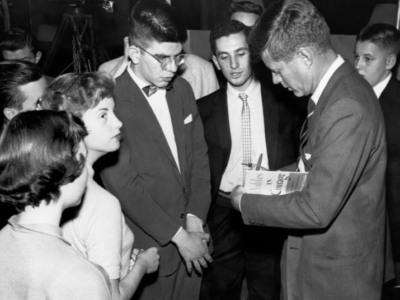
As a 38 year-old junior senator from Massachusetts, in 1956, John F. Kennedy wrote and published Profiles in Courage, a volume of short biographies describing acts of courage by senators. The book immediately became a bestseller. In the 1950s, America was in the grip of the Cold War. Kennedy wrote the book to provide assurance and bring hope to Americans – that they had survived similar experiences in the past and will survive this one too. In his profile of John Quincy Adams, the son of the second president and founding father John Adams, Kennedy details the courage of John Quincy when he was abandoned by his colleagues and his friends. It details John Quincy Adams’ single term in the Senate, where he was pushed out by his own party, the Federalists, for voting for the acquisition of the Louisiana Territory Treaty and the $11 million appropriation to effectuate it. Despite this, he was not welcomed by Federalists, because he voted against their proposition of imposing a government and taxes upon the residents of the Louisiana Territory. John Quincy completely disregarded his party affiliation, claiming that he was free to pick whatever choices were good for the American Republic. George Frisby Hoar, also a Massachusetts Senator later on, claimed that “he had a tenacity of purpose, a lofty and inflexible courage, an unbending will, which never qualified or flinched before human antagonist, or exile, torture, or death.” John Quincy’s choices for the United States were more important than his party, and his friends. John F. Kennedy wrote “We would admire the courage and determination of John Quincy Adams if he served in the Senate today. We would respect his nonpartisan, non sectional approach.” Kennedy clearly admired his character, and his devotion to his state, Massachusetts, which was also JFK’s state, and the country he served.
And here, we come to the main question, is this the country that the founders envisioned? The founding fathers, which included Patrick Henry, expected the country to be for the people. As we come up to the election, many more people are voting than 4 years ago. The people are taking advantage of the gifts and the freedoms that the founding fathers created, to vote for the right president for the next 4 years. Like John Quincy Adams, we have to vote for whoever wethink is the right choice, and not be influenced by whoever our friends or colleagues vote for, even though they might pressure you and abandon you. We, as the people of the United States, have to vote who we think will be the right president.
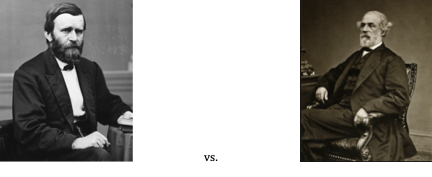
General Ulysses S. Grant and General Robert E. Lee
The United States has not always been united. In fact, our country survived intact the greatest civil war in World History between 1861-1863, and almost a million US soldiers from both the Union Army led by Ulysses S. Grant, and the Confederate Army, led by General Robert E. Lee, perished in the war. The ongoing disagreement over the topic of slavery, between the Union who wanted to ban slavery and the Confederate who depended on slavery, is what caused the Civil War. To understand the great drama of the Civil War, one should know this term: antebellum. It is Latin for “before war” and without understanding where America was before a shot had been fired, the entire war will be seen as a waste of time.
The antebellum South is a curious period of national growth in the history of the USA, and it is one that operated fairly successfully for a number of decades. But, as we all know, the South has the great stain of slavery upon it, and though there were positive elements of this society, it must never be forgotten that the South lost the war, and in that vein, “the spoils of war go to the victors”. For the future of the United States, the Union victory was the best outcome. Although the South depended a lot on slaves, it was finally best that slaves were freed, and we are doing fine without them. We are a United States today because of the victory of the Union forces.
Life in antebellum South: well, there were riches, splendid plantations and wealth for much of society – except for negroes. There were some plantations in the Deep South where the most atrocious and desperate violence occurred – indeed, other slave-holding nations and plantation owners (from Haiti and other nations) were shocked by the South by their inhumane and barbaric treatment of slaves.
In December 1845, Texas became a part of the United States when
Sam Houston 1793-1863
Sam Houston, the American commander, told Santa Anna, the Mexican leader, after capturing him, that if he didn’t declare Texas independent, they would end his life. What was Santa Anna supposed to do?
Of course Santa Anna decided to sign the papers giving Texas’ independence and eventually becoming a part of the US. In 1846, the Mexican American War was the conflict between the US and Mexico from dispute over whether Texas was to be claimed by Mexico or the US? America and Mexico disagreed on where the border should end. That border is now what we now know as the Rio Grande. The war took place between April 25, 1846- February 2, 1848, leaving 17,000 dead and thousands more wounded. By the end, Mexico ceded to the United States bounteous territory, including New Mexico, Utah, Nevada, Arizona, California, Texas and part of Colorado. This left Mexico with more than half of their territory lost, the US gaining control over most of the West and Texas.
The Treaty of Guadalupe Hidalgo was the agreement of Mexico to give up half of their land for 15 million dollars, worth half a billion in today’s dollars. Even worse for the Mexicans, the Americans the very next year found billions of dollars of gold and silver in the newly acquired land. Ever hear of the San Francisco ‘49ers? Why are they called that?
Later on, in the 1880s, Mexico ended up selling another little chunk of desert land to the US for 10 million dollars so that the US could connect Texas by a railroad to the West.
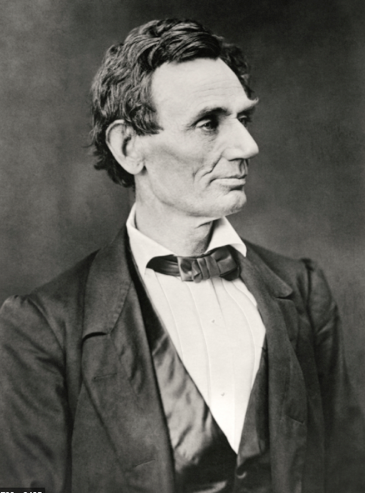
In the 1860 election, Abraham Lincoln was elected as the very first Republican president. Here’s a little more about Lincoln for those who don’t know much about him: Abraham Lincoln was the 16th president of the United States. He was in office for four years from March 4th, 1861 to April 15th, 1865. The Vice President at the time was Hannibal Hamlin and then Andrew Johnson. Although I bet he enjoyed his time as President, he was later assassinated by John Wilkes Booth. Booth was strong supporter of slavery and he believed that Lincoln was determined to overthrow the South and ban slavery.
Abe had tried to keep slavery out of the new territories during his time at the Illinois House of Representatives (1834-1842). But before the Civil War, the government came up with many laws but… most did not pass. The Wilmot Proviso of 1846 (concurrent with the outbreak of the Mexican-American War) was a law proposed to completely ban slavery from taking root in the new territory. David Wilmot, a United States Representative, United States Senator from Pennsylvania, and a Judge of the Court of Claims, spent two years fighting for his plan. After many attempts, even on a 2 million dollar budget from the House, it could only get past the House but couldn’t get past the Senate. Then again, it came up in 1847 and did not have any better luck. In 1848, Wilmot tried again to enter the Wilmot Proviso into the Treaty of Guadalupe Hidalgo but, you guessed it, it failed. With low expectations, he entered it into the Compromise of 1850 and it was finally included! The South did not approve of this law because they depended a lot on slaves. However, this was the beginning of first serious discussions of banning slavery. From there, they came up with more laws including Popular Sovereignty which meant that each state got to vote if their state would allow slavery. The Dred Scott v. Sandford case, arguing against the Fugitive Slave Act, meant that slaves from slave states who went to free states were still considered slaves. As we see, the topic of slaves was popular in discussion and the government was busy coming up with rules regarding slaves in slave states and slaves in free states. The Wilmot Proviso, the Dred Scott v Sandford case, and Popular Sovereignty were the messy events that defined this prelude to war.
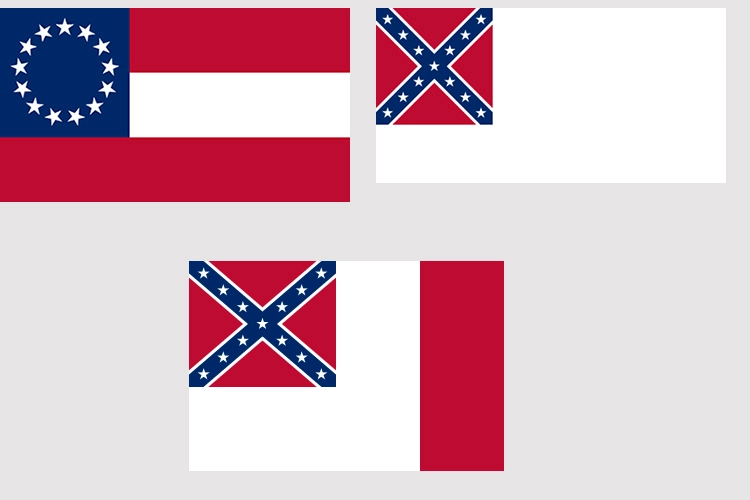
The South, also known as the Confederate States of America, decided that they should secede from the Union which allowed them to govern themselves. Here is the Confederate States of America’s flag:
Being a new country, they needed a new president, and they elected Jefferson Davis. Jefferson Davis became president of the Confederate states on February 22, 1862. He had served in the United States Army as a first lieutenant Colonel, then was elected as a United States senator from Mississippi. Davis and his Vice President Alexander H. Stephens led the Confederate States of America.
What kicked off the war was when the Confederates attacked Fort Sumter in Charleston Bay. On that day, the Confederates, consisting of 6 states at that time, “opened fire on the Federal garrison and forced it to lower the American flag in surrender.” Later, four more slave states joined the Confederates. By the end of 1861, nearly 1 million armed men enlisted, from Virginia to Missouri.
The bombardment of Fort Sumter (the Battle of Fort Sumter) took place on April 12th and 13th, 1861, in Charleston Harbor, South Carolina. It is most famous for being the site of the first shots of the Civil War. Fort Sumter was a man-made island that was one of the three fortifications in Charleston Harbor. The Union occupied the fort. When President Lincoln announced that he was going to resupply the fort, the Confederates decided to attack it. However, soon, P.G.T Beauregard, who trained alongside many others at the West Point Military, served for 23 years in the US Army, awarded a Brevet Major,
, ordered the Union to surrender Fort Sumter and leave. Major Robert Anderson, the Union commander who also attended the United States Military Academy and fought in Black Hawk War, Second Seminole War, and the Mexican American war, declined this order… which then led to a bombardment of Fort Sumter, and a 34-hour exchange of artillery fire followed. After the firing back and forth, Anderson was forced to try to negotiate a deal because of lack of supplies – they were under siege! Eventually, Confederates took control of Fort Sumter and they stayed there for most of the Civil War. Today, there is a Fort Sumter monument which is completely surrounded by water. The Confederates won the fort and they occupied it for the next four years. Avoiding several attacks by the Union, they eventually had to abandon the fort just before the capture of William T. Sherman in 1865.
The first major battle of the Civil War was the Battle of Bull Run which started when the 35,000 Union troops under the new Brigadier General Irvin McDowell marched from the federal capital in Washington to strike the Confederate troops consisting of about 20,000 men. General Irvin McDowell had earned command of the I Corps of the Army of the Potomac. Before really learning about this battle, you might think that this battle includes bulls running but you are sadly mistaken. Bull Run is just the name of the small river where the battle took place. When the Confederates were able to break the Union’s right flank, the Union had no choice but to retreat to Washington. The Confederates’ victory gave them a boost of confidence and many people in the North realized that this war was not going to be easily won and it wouldn’t end as fast as they had imagined.
In the above map, one can see that the Union Army was split and had some maneuvering to do, and that the Confederates were able to consolidate and beat the Union to a retreat.
On January 1st, 1863, I imagine President Lincoln must have been so tired of the war and ready for it to be over. He issued the Emancipation Proclamation which declared that “all persons held as slaves henceforward shall be free.” However, this entirely depended on the Union military victory. The Emancipation Proclamation only applied to the states that had seceded from the United States. The Emancipation Proclamation, on paper, ended up freeing the around 4 million slaves in the United States when he signed it. Although the Emancipation Proclamation did not fully end slavery as the war was underway, it did change many people and the focused the “character of the war”. Even better, the Proclamation allowed black men to be accepted into the military and by the end of the war, over 200,000 black men had fought in the war. The Proclamation completely changed the purpose of the war for the one and only reason: to end slavery.
During the Battle of Gettysburg, the Union was led by General George G. Meade. Meade was born on December 31st, 1815 in Spain. Cool birthday- you don’t see lots of people who are born on the last day of a year. General Meade led the Union to victory. He was a United States Army Officer as well as an engineer. He previously served in the Second Seminole War and the Mexican American War. Earlier in his career, before joining the Army, he constructed many lighthouses. He gained the nickname of “Old Snapping Turtle” because of his short temper. On his birthday in 1840, he married his wife Margaretta Sergeant and together, they had seven children. He served in the Battle of Gettysburg and then later died in 1872, at only 56, due to his war wounds and pneumonia.
The Confederate States of America were led by General Robert E. Lee. General Lee was born on January 19, 1807 in Virginia. He was five years older than General Meade. He had a couple of nicknames including “King of Spades” and “Marble Man” because… one of his classmates thought that he looked like he was hewn from this hard material as he rode by. Lee was a top graduate of the United States Military Academy. He served as an officer for 32 years. In 1865, he became president of Washington College which is now known as Washington and Lee University. General Lee was an icon in the South and later on, believed to be one of the greatest generals in the Civil War. Lee was married to Mary Anna Randolph Custis and they also had seven children. In 1870 he suffered from a stroke and died at the age of 63.
MAPS:
July 1, 1863
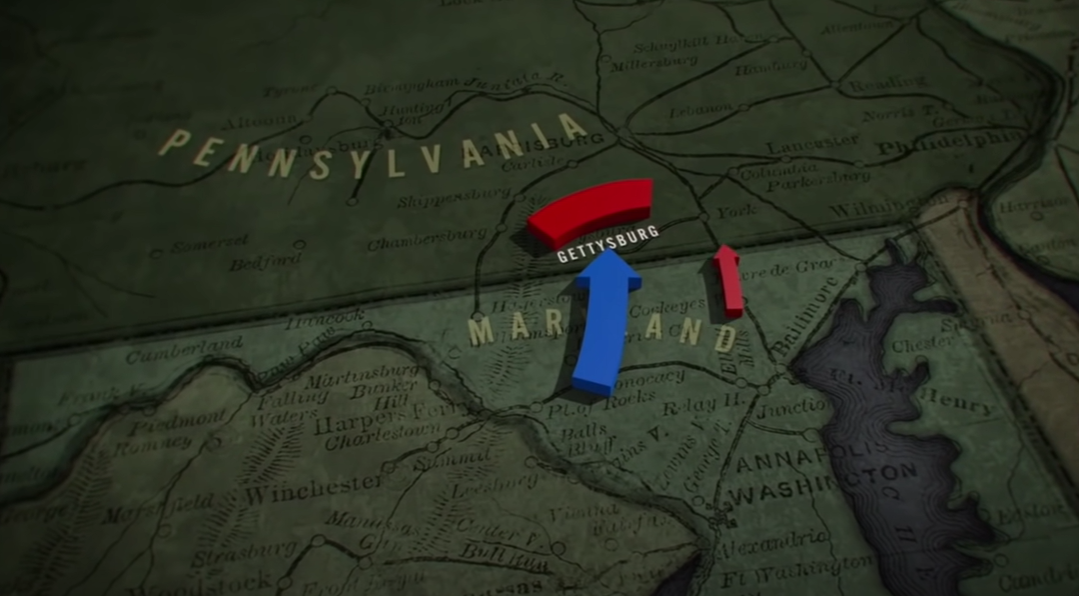
Day one begins when once at the Pennsylvania border, the Confederates split into 3, one third looping around Gettysburg to the east, and the other meeting them northwest of the town. Lee takes his army and settles right above Gettysburg as they wait for the Union to arrive.
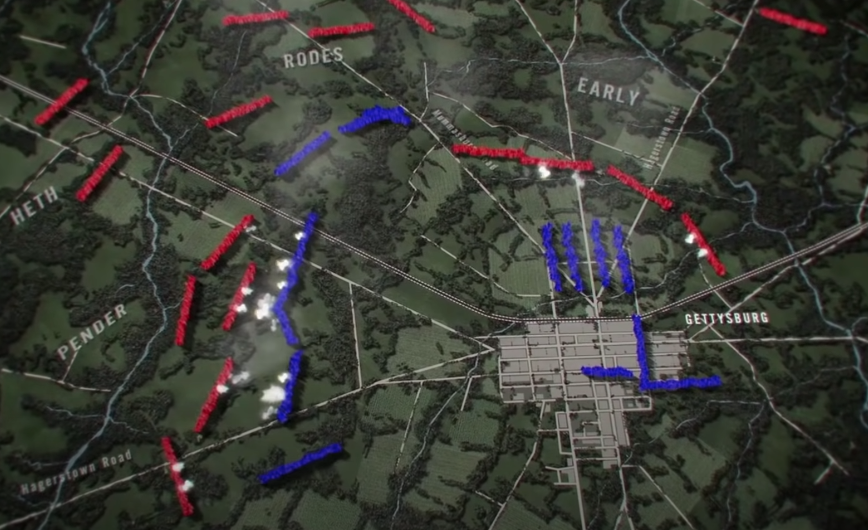
Time passes as the Confederates are on a lookout for the Union. The battle finally starts west of Gettysburg after the Union approaches. General Heth’s army from the Union advances making the first move to kick off the battle.
With a big reputation of being the highest ranking Union officer in the area, General Reynolds arrives with reinforcements and immediately infantry against infantry start spitting bullets… they fight on their feet. On Oak Hill, General Rodes’ army arrives. However, they are poorly coordinated and therefore are repulsed back over the hill by Reynolds’ first Corp. While directing infantry from Wisconsin, Reynolds’ Corps is interrupted as he gets shot in the back of the neck just before the battle starts to escalate. In the distance stands a group gathered around a leader. The sharpshooter pulls the gun close and carefully aims at the back of a head. In a split second, the bullet is soaring past each tree and hits Reynolds right in the neck.
He is killed and the Corps is left to fight without leadership. Reinforcements come with a Union brigade charging right through the town of Gettysburg as citizens of the town scramble to safety. Soon, a semicircle around the north of Gettysburg is formed, the town against the Union back. More and more reinforcements come rolling in fast. In the attack, Rodes and Early’s army break the Union’s right flank as they start to retreat, all while Buford stays stationed east of Gettysburg as back up.
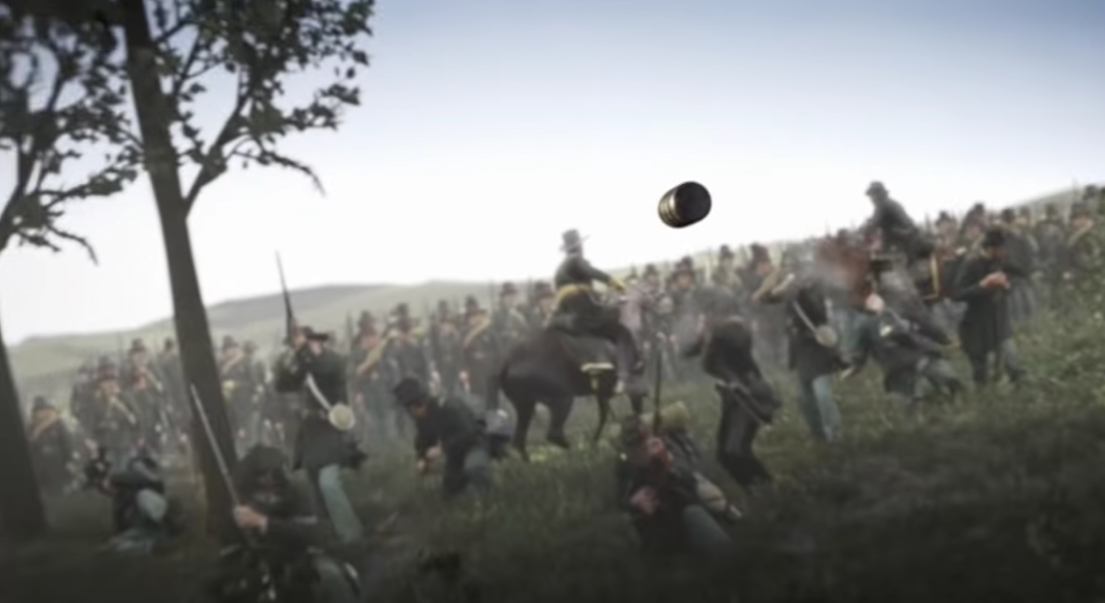
It is the hottest day of the year, the sun is shining bright, sweat rolling down faces. As the Union retreats, loud booms come from every direction as bombs land yards away from the lines. With no other choice, the Union line charges through town heading north to safety. Some are trapped and have nowhere to go. There is a lookout in the town, held as it is by the Union, and a young girl from the time remembers what it was like on the day of battle, as she was living in the town. The Union are now reforming on Cemetery Hill away from all the attack. The ragged edge of General Howard’s left flank is the final to wrap around Cemetery Hill, and as the sun sets, it seems as if the hill has a hat of blue uniforms. At Cemetery Hill, General Howard leaves the brigade with cannons; the Confederates reshape and reform but do not attack. As the sun sets behind the hill, soldiers take their bloody jackets off to dry. Laying down looking at the stars, they reminisce on the days before the war, some with their entire bodies covered in blood.
July 2, 1863
As the sun rises from behind the hills, the Confederates are up and ready.
The Federals occupy high ground. General Meade’s formation allows easy reinforcements in a formation famously known as the fishhook. “Attention! 3rd corps! We need to move towards the peach orchard in order to be in the best position. There, we will have a better use of our artillery and might as well grab a peach.” The Peach Orchard is located along Emmitsburg Road.
General Dan Sickle thinks the movement will create a better use for artillery but it leaves a bulge in their shape. When Sickles’ plan backfires, the Union has to send their entire 5th corps and parts of 4th corps as reinforcements for Sickles. Although the move up to the Peach Orchard seems very useful at the moment, Sickles does not think of the consequences and the formation the Union would be left in. Now, the fish hook has a big bulge. Since the 5th corps and parts of the 4th corps were sent as reinforcements, gaps open in Union center and right side. General Lee orders Longstreet to attack Union left, Hill to threaten Union center, and Yole to assault Union right. General Longstreet under John Bell Hood and Lafayette under McLaws line up on Cemetery Ridge along with Richard Anderon and his Hill’s Corps. Soldiers with big packs hoist weapons on their shoulders. Hood’s brigade advances together but then splits apart. At Devil’s Den and Little Roundtop scrambling feet and screaming come from every direction. Both sides are rapidly sending reinforcement.
Devil’s Den, one of the most strategic points, changes hands three times, from Union to Confederate, and then back! One side thinks they’re in complete control but in a flash of an eye, they become the underdogs. Alabama and Texas soldiers clash at Little Roundtop but a Union bayonet charge sends the troops back. Meade sends reinforcements from the 2nd to the 5th core to support Sickles. Near the Peach Orchard, the fight for the wheat field changes hands six times and is one of the bloodiest combats of the entire war. The color red is spread into every person’s hands and clothes. Hood and McLaws push near Cemetery Ridge with Anderson where the Union has left a gap from Sickle reinforcement. Luckily, the Union reinforcements are saving the day. Confederates are planning to capture little Round Top. As the attack goes on, Little Round top becomes the “valley of death”. After hours and hours of non-stop combat, the fighting slows down on the south end. By the end of the day, 14,000+ men became casualties of the war. At dusk, General Yole moves on the Union right, starting night attacks. General Jubal Early’s brigades sweep to Cemetery Hill, the Union line held by 11th corps soldiers. Sections of east Cemetery Hill are captured and Meade knows he will lose if all Cemetery Hill is lost. The Union sends reinforcements to come and fight for Cemetery Hill. General Johnson attacks Culp’s Hill against General Greene and Hill’s 1,300 soldiers. That night, Greene faces many nighttime assaults. In two days, 37,000 soldiers become casualties and many were severely injured. Now, it has definitely become one of the bloodiest battles of all time.
July 3, 1863
Lee plans to overtake Culp’s Hill in a morning assault. In the attack, Meade orders the return of 5 brigades that left to aid Sickles to come back as reinforcements. Upon the return, Lee is now outnumbered. The fighting finally comes to a halt after 7 hours of continuation. The Union attacks near Spangler Spring and again, the Confederates become far outnumbered and forced out. Lee attacks on the Union center which leaves General Pickett as the only fresh division and the core of the attacks. General Meade is the first ever Union general to outguess General Lee! When Lee bombards Union defenses, Meade is prepared and the largest artillery barrage in the Western hemisphere takes place. Lee’s bombardment fails and the Confederates retreat, but 12,000 men come from Seminary Ridge to join back in the battle. The Union fires and General Meade orders 20,000 reinforcements. Confederates move to the great “pencil of Yankees”. In front of the rout, there is a tall wall but only a few could get across the wall, and those who crossed the stone wall are either captured or killed. Some manage to breach Union positions, but the Union brings in reinforcements so powerful, the Confederates have to surrender. When they got back to safety, only half the men who originally attacked, return to Seminary Ridge. This basically ends it for the Confederates. Lee’s biggest chance has become his worst defeat. However, the Confederates are not ones to easily give up. Confederate cavalrymen became active on the flanks. General Stuart’s horsemen try to swing around the Union but are stopped east of Gettysburg by Union cavalrymen. The battle of Gettysburg has finally come to an end. Lee and the Confederates have lost, but still remain on the field. In a state of anger, Lee wants a counter attack on July 4th to even out the odds but it doesn’t happen. With gloomy spirits, Lee pulls back to Potomac River along with a long lumbering wagon train of wounded. General Meade plans to attack again but Lee’s river position is too strong. The Army of Northern Virginia crawls back to Virginia.
In the aftermath of the battle, bloody bodies cover the town of Gettysburg. Wounded soldiers outnumber the citizens of Gettysburg 12 to 1. Every home, church and farm has become a hospital.
Later, the citizens of Gettysburg thought that the Union dead should be buried on the battlefield in honor of the battle. The first national cemetery on a battlefield is built, for, in previous battles, the fallen were removed and brought to Arlington National Cemetery. 3,512 Union Soldiers were moved to the National Cemetery and family members of lost ones huddled over graves.
Volunteers in process of moving the fallen to their resting place in Gettysburg
A dedication ceremony was held on November 19th, 1863 and 15,000 people attended. Edward Evertt was the main speaker, who spoke for two hours, along with President Abraham Lincoln who delivered the Gettysburg Address. His two-minute speech became one of the greatest speeches in American history.
Please feel free to read the below reviews IF you have already read Factory, Fox, Witches, and Danny. If you have not read these, please read them! Dahl is required reading for all MWLS students!
Chloe’s Roald Dahl Collection
Charlie and the Great Glass Elevator:
Being old and close minded, the group of grandparents (not Grandpa Joe of course) caused lots of trouble, well… Grandma Josephine caused the most.
Grandma Josephine, feeling as if Wonka was “whackers” and a “maniac” and a “madman” proceeded to hold Mr. Wonka back as he tried to press the green button that would send them down to earth from terrifying heights straight through the glass roof of his chocolate factory (hopefully, if they didn’t accidentally land somewhere else) before they went too far and launched into orbit. But because of Grandma Josephine’s stubbornness about Wonka, and her determination to hold him down, he was unable to get to the button in time, launching them into orbit (coincidentally on the same day that the transport capsule for the Space Hotel U.S.A was in the air) where they met all types of things including possibly the worst animal on earth (worse than the honey badger may I add, way worse) the… Vermicious Knids!!
Imagine looking at a glass elevator flying in the middle of the air with eight very odd and frail looking passengers inside, three still in bed, one dressed in lots of colors and an incredibly large top hat, two people looking like a couple huddled close together, a young boy who looked alive with excitement, and a old person looking in the 90s who was alive with the same excitement on his face, well that’s how the three astronauts, Shuckworth, Shank and Showler felt staring at the great glass elevator in space. And such oddness immediately sent these three in frenzy, calling Ground Control in Houston and soon the president.
Now you see, The President, Lancelot R. Gilligrass, may not really be up to the leadership needed in such a crisis – if you really are looking for some advice, then go to the vice president, Miss Tibbs, but you might want to be careful because she’s a scary one! Miss Tibbs is a rather large lady of 89 and was actually the President’s nurse when he was a baby; as Roald Dahl put it, she “was the power behind the throne”. The President, upon hearing this news of such an odd thing flying in the air, immediately jumped to the conclusion that these were foreign people and they were planning to bomb the Space Hotel (he thought that the bomb was disguised as the bed that we all know the grandparents have been lying on for the past 20 years!) The tension in the White House and in the transport capsule was only worsened when Willy Wonka, Grandpa Joe, and Charlie maneuvered the magnificent glass elevator to land on the Space Hotel itself.
The Space Hotel is a truly jaw-dropping sight, much like the Porcelain Pagoda of Miss Bianca, and though it should have been a very enjoyable visit, it was unfortunately cut short when those Vermicious Knids appeared in the elevator door, as they were so deathly that even Wonka was frozen on his feet.
Vermicious Knids are “the terror of the universe” and they look like an egg only squeezed slightly out of proportions with the top rather round and big and the bottom pointy and small. Some might even say they look cute in some aspects, but they are quite the opposite. Extremely flexible (that should be expected as they have no bones) they can stretch and change into any shape their heart desires. They are so dangerous that they can just sit there, 50 yards away from you, relaxing and then suddenly they just stretch their necks gulping you down in one breath. As Wonka put it, “[We]’ll be eaten like peanuts”. For, long, long ago, there was a nice, kind, friendly group called Poozas that were living on the moon, but then this deadly, ruthless, animal, known as the Vermicious Knids came and ate all of them, and they proceeded to do this on many other planets, traveling through the solar system in great clumps. We would have been dead if there wasn’t a nice layer of air and gas surrounding our planet earth, so I think we should all take a moment to thank this lovely layer of air and gas which is the only reason we are all alive today!
You know how you might see a shooting star here and there? Well, this might come as a surprise to you (just like they came as a rather shock to Grandma Georgina) but these shooting stars are actually shooting Knids that are trying to break through our air and gas barrier… only they are not able to and instead end up in red hot flames! What you learned in science class about asteroids, meteors and satellites is dead wrong: they’re just flaming Knids.
As you might have already figured out, the poor people in the transport capsule are going to have quite a shock (though they might not have time to process it before they are gulped up) when they enter the majestic Space Hotel only to find creepy creatures: the Vermicious Knids. And this is exactly what happens.
During the time the transport capsule was landing on the Space Hotel, the glass elevator had an odd companion, a Vermicious Knid, strolling along, as the elevator sped on ahead (that Knid had no problem following since it usually goes way faster than this to travel throughout the solar system) around the earth. Charlie, Grandpa Joe and Willy Wonka are determined to help save the many passengers aboard the transport capsule and therefore attach a steel rope to the transport capsule and the elevator so that they could tow them back to earth! You may be wondering about the chink in this plan, how was the elevator supposed to survive these attacks by the Vermicious Knids? well… being the genius man Willy Wonka is, he obviously built this elevator to withstand Knid attacks. As he put it, this elevator is “Knidproof”.
Towing the transport capsule the great glass elevator flew back to earth, the Knids were trying to stop this from happening by hooking themselves together like a chain, and thankfully our air and gas barrier helped us once again. As the great glass elevator with the transport capsule in tow went through the barrier back into the earth’s atmosphere, all the Knids were turned into shooting Knids, or as most people know them, shooting stars. Just think about what a spectacular sight it would have been if you were looking up from the ground!
Back at Willy Wonka’s factory the grandparents are presented with Wonka Vite!!! One pill will send you back 20 years of your life – for example if you were 50, after taking one of these you would be only 30! Imagine something that powerful! Most, when presented with something extraordinary, become greedy – this usually comes with consequences. Here, the grandparents (not Grandpa Joe) ate too much of the Vite and went too far back, where two grandparents become babies and Grandma Georgina goes to minusland! Thankfully, Wonka had thought ahead. Not only was he the proud inventor of Wonka-Vite, the youth-replenishing pill, but he had an aging pill too, with the logical name: Vita-Wonk. You guessed it: it did the exact opposite. After some hard work everyone returned back to their original ages. Whew, that was a ride!
And perhaps the most shocking miracle is that all grandparents have finally set foot on terra firma after being confined to their rusty old four-poster bed for two decades – when they heard that there was a helicopter in front of the factory ready to take them to President Gilligrass in honor of their heroic move of saving the transport capsule, up they all jumped!
And that’s it! Quite a romp!
Fantastic Mr. Fox:
Three most disgraceful and disgusting farmers you will ever find are the cause of all the trouble that Mr. Fox, his family, and all the other animals who live underground have experienced.
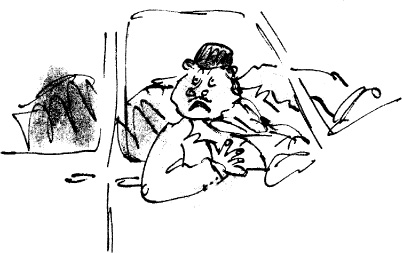
Number one: Farmer Boggis, is an extremely fat chicken farmer who owns thousands of chickens and eats a most disgusting meal of “three boiled chickens smothered with dumplings”. He has a belly that could be used as a table due to his appetite and diet.
Number two: Farmer Bunce, is a “pot-bellied dwarf” is a duck and goose farmer who owns thousands of ducks and geese and also eats extremely disgusting meals of donuts and goose-livers. To make this mess of food, he “mashed the livers into a disgusting paste and then stuffed the paste into donuts”. Due to this horrific combination it resulted in him to have a “beastly temper” and a tummy ache.
Lastly, number three: Farmer Bean, is as thin as a pencil, turkey and apple farmer who has thousands of turkeys and an orchard bursting of apples. He eats no food, instead he drinks “gallons of strong cider which he made from the apples in his orchard”. He also has the nasty habit of never washing, resulting in nearly deaf ears that were clogged with “muck and wax and bits of chewing-gum and dead flies and stuff like that”. Despite that, of the three, he is the smartest.
One family of foxes (Mr. Fox, Mrs. Fox, and four small Foxes) live in hole under a huge tree in the woods on a hill above the valley. Every night, whatever Mrs. Fox wanted to eat from the farms owned by Boggis, Bunce and Bean, Mr. Fox would get. As expected, this enraged the three farmers who “were not men who liked to give anything away” and thus, they wanted their revenge.
Bean, being the smartest out of the three, formulated a plan. They would “hide just outside the hole where the fox lives” and wait until he came out, then with a few “bangs” the fox would be no more. This plan nearly worked, for they were careful to position themselves in a way that the wind would not carry their filthy and grimy smell to the foxes’ waiting noses. But just as Mr. Fox realized that the “glint of something bright” was actually the barrel of a gun, he whipped straight around and launched himself in the hole, sadly, he was unable to escape unscathed. He paid the price of not being careful enough with his “finest tail for miles around”, leaving only the stump of his tail behind, where there would never be another tail.
The farmers, being extremely determined, were unhappy to only have a fox tail as a souvenir, they wanted the whole fox, preferably his family too, so they decided to speed up the process (instead of waiting for the fox to come out after days when he was starving) by digging him out. Soon, the family of foxes who petrified of being killed (who wouldn’t?) could see the “sharp end of the shovel” above them. But thankfully, the title of the book means something, and being the fantastic Mr. Fox that he is, he quickly realized a key detail: “A fox can dig quicker than a man”!! And quickly, without a moment to lose, he started frantically to dig, quickly joined by the rest of his family. Dirt flew everywhere as the front legs of all six foxes were hard at work digging and digging, expanding the tunnel farther and farther down, until they could not hear the “scrunching and scraping” of the shovels anymore. They thought they were safe, but these three farmers were not ready to give up yet.
Boggis, Bunce and Bean had dug a hole so deep you could stick a house in there, and yet they still did not find the foxes and it was quite clear they would be unable to, unless they used mechanical shovels (this was again Bean’s idea). The “two enormous caterpillar trucks with mechanical shovels” were many, many times faster than the farmers, and it “easily ripped the big tree under which Mr. Fox had dug his hole in the first place”.
As Roald Dahl put it, “now there began a desperate race, the machines against the foxes”. As it looked very likely that the machines would win the race, the foxes dug furiously, as fast as they possibly could, so that even after a whole day of digging the mechanical shovels still had not reached the foxes. Instead they had turned the hill into the size of a volcano crater, attracting people from the surrounding villages. After all, it was an extraordinary site!
At six o’clock that day, Bunce and Bean stopped the tractors, still without a sign of the foxes, but they were determined, now more than ever to get that fox hanging on their porch, so they decided to camp out in the crater, until the foxes who would be starving came out. The farmers were sure that sooner or later Mr. Fox would have to come because he and his family needed food and they could shoot them then, which does seem rather logical… if it wasn’t for fantastic Mr. Fox.
The whole fox family was huddled down underground far from Boggis, Bunce and Bean, but they were starving and thirsty, especially Mrs. Fox who “was suffering more than any of them from the lack of food and water” when Mr. Fox came up with a brilliant idea. It required more digging, but the small foxes were willing to give it a try, and so they headed off.
They had to dig in a very specific way to reach their first destination, but the little foxes following their fathers instruction managed perfectly. After a long, weary while of digging, Mr. Fox claimed that they had reached their destination. Slowly they angled their digging up, until they came to wooden planks! Had Mr. Fox, along with the four small foxes really achieved it? Yes, in fact they had! Mr. Fox, cautiously pushed up one floorboard, and then another, and he took a peek. “He let out a shriek of excitement”! And started dancing, yelling “I’ve done it! I’ve done it!”. Soon, the four small foxes climbed up and joined him and they couldn’t believe their eyes. Where had all their digging brought them? The Boggis’s Chicken House Number One!! This was pure joy to see chicken after chicken, and Mr. Fox carefully chose three plump chickens and killed them quickly (hopefully it was a painless death!) Back in the tunnel, Mr. Fox sent the eldest of his four children to bring back the three plump chickens to their mother to cook into a feast, as the rest of them had a “few other little arrangements” to tend to. Can you guess where they went next??
Mr. Fox and three of his children started digging once again, this time to another very specific location and on the way they met a familiar friend! BADGER!!!
Badger wasn’t quite happy about Mr. Fox, as he was the reason that all the diggers couldn’t get out to get food. But he was soon delighted when he heard about the feast Mrs. Fox was preparing (and the fact that Mr. Fox wasn’t teasing him about that) and helped them dig, where they soon arrived at… Bunce’s Mighty Storehouse, filled with “thousands and thousands of the finest and fattest ducks and geese” and “at least a hundred smoked hams and fifty sides of bacon”!!! From here, Mr. Fox chose “four plump young ducks”, three geese, “a couple of nice smoked hams”, a side of bacon, 10 carrots for the rabbits who only eat vegetables, and two “useful pushcarts”. And sent two out of the three remaining small foxes, each to push a pushcart to Mrs. Fox to add to the growing feast.
Mr. Fox, one of his kids, and Badger continued digging to their last destination. And very soon, Badger hit a wall made of bricks. Mr. Fox carefully examined the wall and popped a brick out, which was met with a mad rat, who was not happy to have Mr. Fox interrupting his private place. But Mr. Fox threatened to eat him, and gulping with fear he jumped right out of the way. Inside the brick wall, they found Bean’s Secret Cider Cellar filled with jars upon jars of the strong cider. They were enjoying a sip of that strong, “home brewed fiery liquor” when they heard a voice. There was a “huge woman” coming down to the cellar, and instantly Mr. Fox yelled to everyone to hide. The group was tense as they crouched behind some of the jars of cider. Mabel (the huge woman) who was taking some jars to be brought to Bean who was still camping in the huge crater waiting for the appearance of the foxes took the jar right next to the one Mr. Fox was crouching behind. Mabel took another one, and paused to ask Mrs. Bean if two was enough. Mrs. Bean really didn’t care (it seemed like she was rather impatient) and so Mabel only took two. We should all be very thankful that Mrs. Bean didn’t ask for three, because that would have been the one Mr. Fox was taking cover behind. After that very close call, Mabel walked out, and Mr. Fox told everyone to take one jar of that strong cider. Soon, they were back in the tunnel, and “flew” along it, singing songs as they went, right back to where Mrs. Fox used to be resting, only now it was a big space filled with a large dining table (it seated 29 animals in all) that was covered in all the delicacies they had taken. And what a wonderful meal to fill their stomachs up they had.
While up above, in that volcano crater Boggis, Bunce and Bean were still sitting there waiting, unaware of the fun the foxes and all the other animals were having under them, and to make it worse for them, it had also started to rain (it looks like Mother Nature was on the foxes side!).
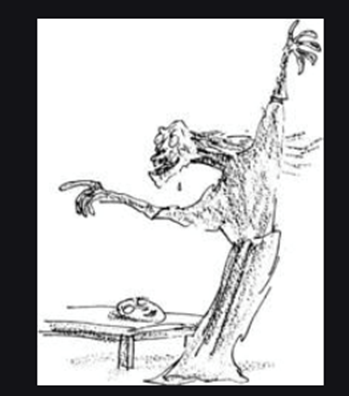
The Witches:
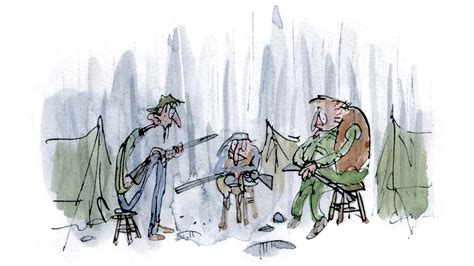
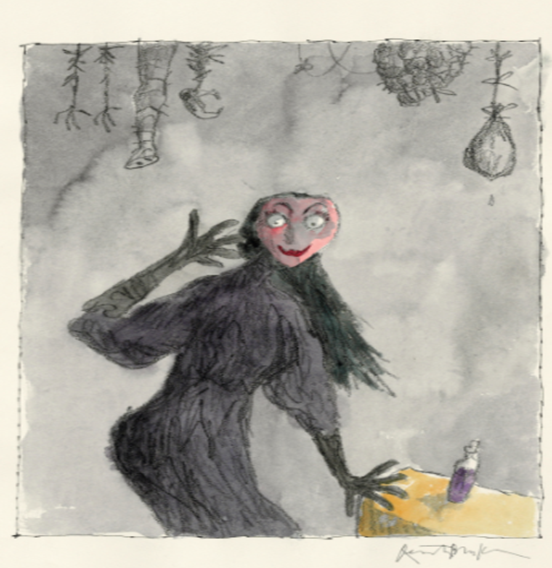
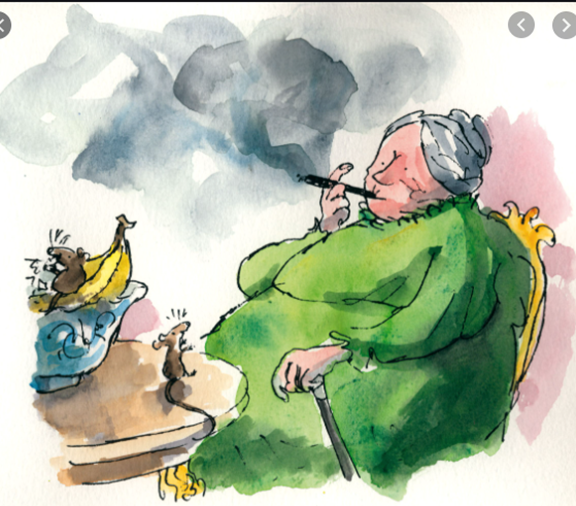
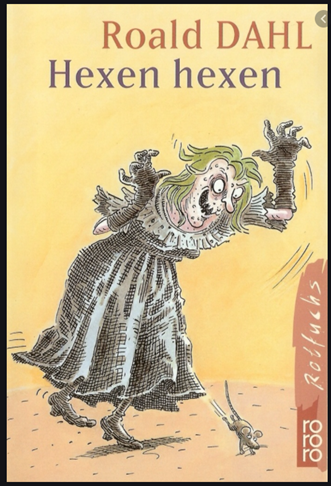
Which of the above Witches appeal to you?
Witches are… how do I put this… are the worst creatures to roam the earth. They are not the ones that you dress up as for Halloween, with the pointed hat, and broomstick. The real witches are much scarier. Why is that? Because they look just like regular ladies when they have their disguises on, so you can’t know whether she is a witch… or an innocent young lady. These witches can easily turn a child into a slug, who will probably be stepped on by someone random… if not your very own parents. The first terrifying example would be simply just vanishing. A witch comes up to you, dressed like a lady with gloves and everything, and takes your hand and you are never seen again. No matter how hard everyone looks, they never find you!
Terrifying example number two is to end up in an oil painting with no way out. Poor Solveg’s dad found out the hard way that his daughter was just “simply a part of the painting, just a picture painted on the canvas.” And to make things worse, you will actually move in the painting and as more days pass, the older you will look in the oil painting. Another horrifying example would be getting turned into a chicken. Birgit Svenson “started growing feathers all over her body. Within a month, she had turned into a large white chicken.” And these are just some examples. The witches have powers that we do not, and they can get rid of you in many different ways, so WATCH OUT!!!
Witches HATE children. To them, children smell like dogs’ droppings, and their biggest desire is to get rid of every single child in the world. In fact, that’s exactly what they were planning to do if the boy and his grandmother had not stepped in and saved the day. Now kids, even though you are probably trembling in fear right now, there is a way to spot a witch. It is not a hundred percent foolproof, but it’s better than nothing. Six signs that this person is actually a witch:
Number one! Witches always wear gloves. In the hottest days of summer and the coldest days of winter, and every day in between, they wear gloves. They wear it inside their house. The only time they take it off is when they go to bed. Why? To hide what is really under there. It is not fingers but claws, and if they didn’t wear gloves it would be quite obvious that they are witches.
Number two! Witches are BALD!! They are “bald as a boiled egg” but obviously they can’t walk around bald, so they buy “first class” wigs. Only these wigs are very bothersome to a bald head as they are extremely itchy. You see, if we were to wear wigs, it would be on top of our own hair, but for witches, the rough underside of the wig would be directly touching her scalp. Ooof, that doesn’t sound good! And because of this, a witch will constantly be scratching her head, kind of like as if she has lice.
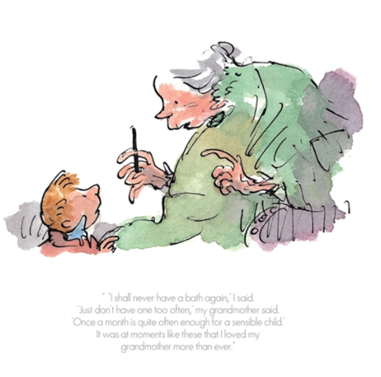
Number three! Witches have bigger nose holes than normal people. As the grandmother put it, “The rim of each nose-hole is pink and curvy, like the rim of a certain kind of sea-shell”. And these abnormal-sized nosed holes are used to smell children out. In fact, the cleaner you are, the easier the “stink-waves” come wafting out of you. If you were to be covered in dirt, it would be harder for these stink-waves to come wafting out and into the witches’ large nostrils. So kids, you can now march to your parents and tell them that you are only going to wash once a month at most, so that these witches don’t smell you out.
Number four! Witches have different eyes. You know that black dot you see in the middle of your eye when you look in the mirror? Well, if it is actually a witch that black dot won’t stay black… instead, it will change colors. As Roald Dahl put it, “you will see fire and you will see ice dancing right in the very center of the colored dot”. If someone’s black dot keeps changing colors, chances are, you have just met a witch!!!
Number five! Witches DON’T HAVE TOES!! Their feet are basically squares. If you were ever unlucky enough to meet a witch without her shoes, you would see that it looked as if someone got an ax and chopped off all her toes. Sadly this isn’t very helpful if you were trying to spot a witch, as they will be wearing regular human shoes. Just imagine how uncomfortable that is: to squeeze a square foot into a small pointy shoe. But the witches are willing to bear the discomfort, as long as they get at least a child a week, after all their motto is “one child a week is fifty-two a year. Squish them and squiggle them and make them disappear”.
And lastly, number six! Witches have… BLUE spit. Their spit is like ink and that’s exactly how they use it. Witches use “those old-fashioned pens that have nibs and they simply lick the nib”. If you were talking to a witch, you might see that their teeth have a bluish tint. If so, run the other way as quick as you can!
Well, these are all the signs of a witch! I hope that you will never encounter one as long as you live, but just to be safe, smother yourself in dirt!! And if you do encounter one, let’s just hope you come out alright. Hopefully not in an oil painting, or as a mouse, though that wouldn’t be too bad, just think of Miss Bianca and Bernard!
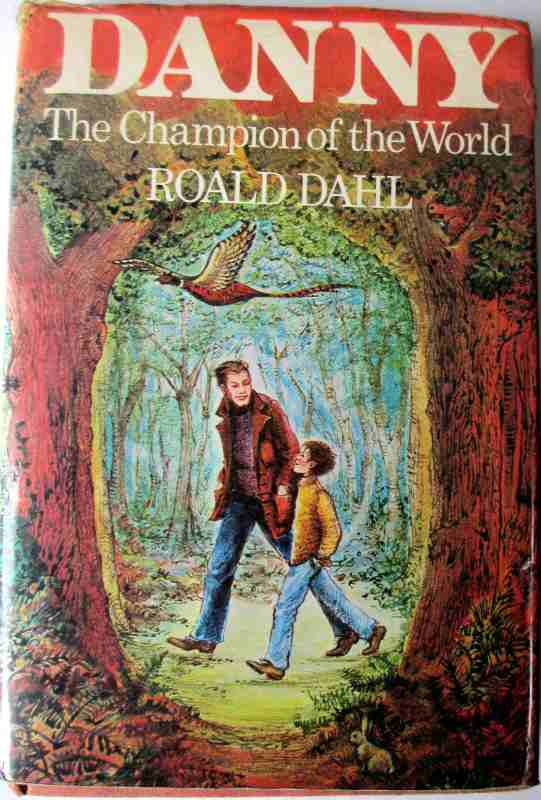
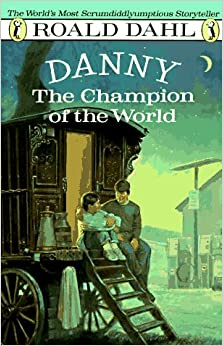
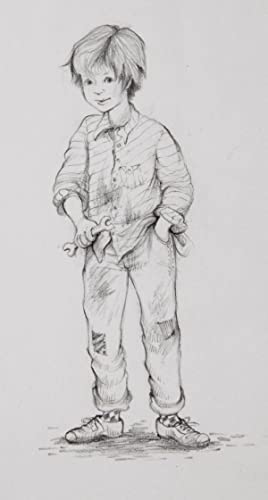
Danny The Champion of the World:
Poaching, (hunting illegally) is considered horrible, something that we would never think about doing, but there might be an exception here where the foul, atrocious, Victor Hazell, who raises these pheasants just to be killed by fancy, rich people with a long title, and the duo, Danny and his dad, are concerned.
Poaching is a dangerous sport where you master the art of “going up into the woods in the dead of night and coming back with something for the pot”. This is a sport where you often end up with a back full of bullet scars that look like dirty snowflakes, or worse, caught and sent to jail. But it also contains a thrill that nothing else can offer, which makes it so appealing to some people. Poaching pheasants without the guards catching you requires a certain amount of cleverness. That’s where two secret methods that Danny’s grandfather came up with himself come into play! The most important secret that you must know about pheasants is… they are “crazy about raisins”!
And with that in mind here is method number one, called the Horse Hair Stopper! This method is so brilliant because the pheasants don’t make any noise – none of that usual “squawking or flapping” that will get you caught! All you have to do is take a few raisins and soak them in water overnight, which will give you some “plump and soft and juicy” raisins, and then you cut a bit of “good stiff” horse hair into half-inch lengths. You slide these horsehairs into the raisins so that there is a little bit sticking out on each side, and you are set and ready to go catch some pheasants! The reason this works so well is that it will get caught in the pheasant’s throat like a crumb in ours and tickles them and then after that, the pheasant will never move again!! Shocking, right?!
Method number two is called the Sticky Hat! All you have to do is dig a small hole into the ground, twist a piece of paper into the shape of a cone, put it into the hole so that it looks like a cup, smear the inside of the cup with glue, pop a few raisins in and also drop a few raisins near it to make a raisin trail! Then a pheasant will come to gobble up the raisins and because of the glue the hat will get stuck on its head and cover its eyes! Once that happens, the pheasant won’t even attempt to run away! Like with Horse Hair Stopper, it becomes immobilized – it really is brilliant! Now, you must wait to hear about the third technique which Danny himself came up with. But first, learn more about Danny’s poaching background.
Danny’s mom and dad were caught in the fascination and thrill of this sport. “She came with me every single time until just before you were born. She had to stop then. She just couldn’t run fast enough.” But once Danny is born, and his mother dies, Danny’s father vows to give up poaching until Danny is old enough to be left alone at night. Well, one night Danny’s father is unable to fight that “tremendous longing” to go poaching once more!
Danny happens to wake up that night his father has gone to Hazell’s Woods. He finds himself in a state of panic when he can’t find his father. And when his father does show up, Danny is then introduced to the art of poaching. In fact Danny is fine with his father going poaching as long as he tells Danny first! So the next day, with Danny’s consent, Danny’s father heads off for an evening of poaching. But because he was a little rusty from lack of practice, instead of coming back with a handful of pheasants to feast on, he fell into a ginormous crater that was at least 12 feet deep and 6 feet wide instead, breaking his left ankle when he fell in.
Danny, who was back home in the gypsy caravan worried about why his father was still out when he had said it wouldn’t take long, decides to set out to find him in a Baby Austin, a car that had been delivered to the mechanical shop that his dad owned to get fixed. Calling and calling, he finally found his dad in the ditch injured and worried. Following his dad’s instructions, he went to the Baby Austin to get a rope so that his father could climb to get out. Little by little, hand over hand, Danny’s father slowly climbed his way out of the ditch.
Victor Hazell pays the equivalent to 100 loaves of bread for every pheasant and its care just so that “for one day every year he becomes a big cheese in a little world and even the Duke of So-and-so slaps him on the back and tries to remember his first name when he says goodbye.” What Danny’s father “dearly wants” to accomplish is to make it so that there aren’t any pheasants left on the “big opening-day shoot on October the first”. And this aching desire was how the third method to poaching pheasants is invented: The Sleeping Beauty! You may think that Danny’s father came up with the idea but no, it was indeed Danny himself.
The Sleeping Beauty works like this: you soak the raisins until they swell up nice and big. Then you cut one of the sides of the raisin with a razorblade, dig out a little bit of its middle and pour some sleeping powder into it. Then very carefully you get a needle and thread and sew up the cut you made! And now you have a nice raisin that looks just like any normal raisin, but it is filled with sleeping powder that should easily put to sleep a pheasant. Once, the pheasant is limp and fast asleep all you have to do is go and collect the fat bird!
The more Danny’s father thought about it, the more the idea seemed like it would work, and so they set up a game plan. The next day (Thursday) when Danny’s father was dropping off Danny at school, he would pick up two packets of seedless raisins and that night he would put them in water to soak. Then on Friday Danny would be “suffering from a nasty cold” so he could stay at home and help. All through Friday they would work tirelessly to cut a slit in each raisin, fill it with sleeping powder, and sew it back again, so that at a quarter to six they would be ready to head out!
They sprinkled with care on the forest grounds, and as suspected, the raisin-loving pheasants gobbled them right up. And by the time it kicked in they were all in their roosts sleeping. It was a truly remarkable sight to see limp pheasants dropping out of their trees and onto the ground where they were picked up by Danny and his father. These were brought back to their town and dumped at Mrs. Clipstone’s for the night because the number one rule of poaching is always walk home empty handed so that in case there is a guard there, you will look innocent!
The next day they were delivered to Danny’s house by Mrs. Clipstone, but obviously she didn’t just walk over with a handful of birds; instead she put them in a pram, under a blanket with her son Christopher Clipstone sitting on top. But the sleeping powder is wearing off, as every sleeping powder does, and the pheasants start to fly out of the pram (startling both the baby and Mrs. Clipstone) to the nearby roof of the workshop and the office window.
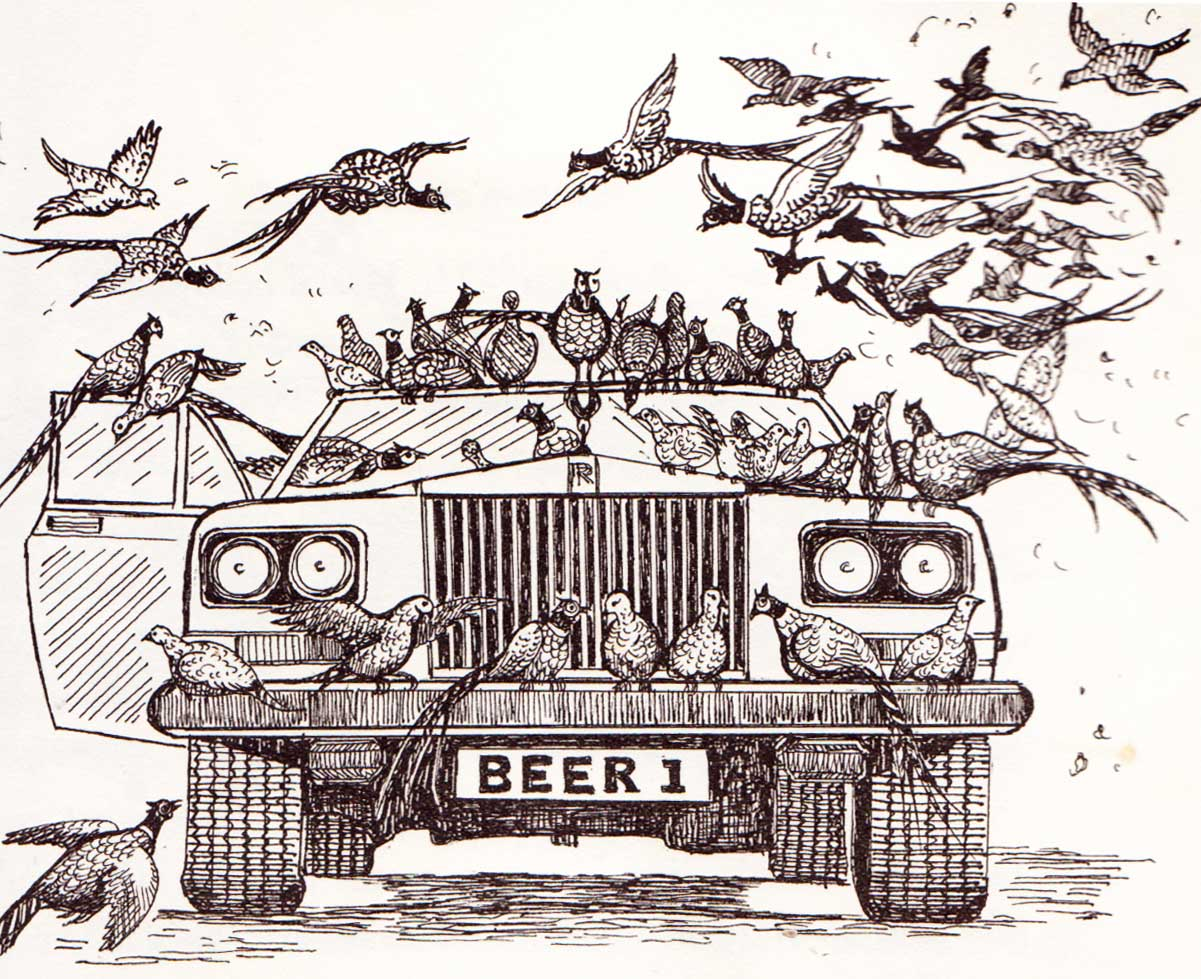
Then, all of a sudden, Victor Hazell in his fancy Rolls-Royce drives up, turning a shade of scarlet when he sees all the pheasants perched on the roof. He is spitting out horrifying words when Sergeant Samways comes along. And Sergeant Samways who also secretly poached a few pheasants in his time is on Danny’s side, though of course he can’t show that, being a policeman. So, he comes up with an idea of trying to get the pheasants to fly back Mr. Hazell’s land which seems reasonable to Mr. Hazell. The only problem being that the Rolls-Royce was still parked in the middle of the road and in order for the pheasants to get to Mr. Hazell’s land they had to fly over the car. Now, do you guys see a problem in that? Yes, indeed it is a trick – a trick that Mr. Hazell was not smart enough to catch! The pheasants were still too dopey from the sleeping powder to fly properly, so instead of flying over the car, they land on the car, scratching and scuffing the car’s silver paint. This only makes Hazell even madder, and causes him to want to get out of there, so he jumps into his car and drives away! And in the blink of an eye, the pheasants perched on the car seemed to have disappeared, all flying in the opposite direction of the shooting party!! Ahhh, they are smart pheasants after all!
Only six pheasants were left to be feasted on. The only reason they were even there being because these were the greedy pheasants that had been in the bottom of the pram all along. The ones that had eaten waaaayyyy to many raisins and would never wake up again. See kids? Don’t be greedy! Let that be a lesson to everyone!!
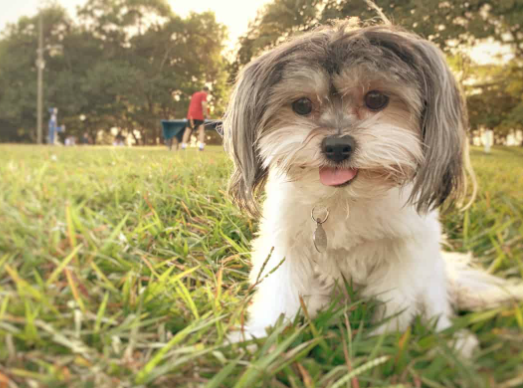
You might know a lot about dog breeds in general, but have you ever met, or even heard of the Havanese breed? They are a one of a kind species, and can fit in almost perfectly with any family. When my mom let me choose a dog for the family, I went straight to the Havanese as a contender (and the Western Terrier, but that’s beside the point). When I first saw the Havanese dog, I knew they were something special. Right off the bat, they are non – shedding (cute) fur balls, small lap dogs, and have an outgoing, silly yet smart personality. My Havanese, named Scout, is a small little dog, with a big personality, and a bigger heart. Something really special about the Havanese is that they can feel for you. They know when you need a cuddle, a laugh, or just some time alone. You will learn to love the Havanese as much as I love the Havanese. If you’re looking for a dog after you have learned about this amazing breed, I am almost certain that you’re going to consider having the Havanese as your pet.
A Havanese is always ready to play, sleep, cuddle, and more! They do whatever they think fits the mood best. Failed a test? They’ll kindly stare at you. When excited, they’re excited. When you’re in bed, they’re laying down in cute positions. You can always count on your Havanese to cheer you up, get you active, or just be a good stress reliever. No matter the problem, your trusty Havanese can put up with the task! The Havanese is an outgoing, cute, and (very) lovable dog. They love being with humans, and sometimes even act like one! They’ll do cute things to make you laugh, play, and cuddle with them! The Havanese loves all people, and is able to easily get along with everyone, including toddlers, babies, and children.
Anyone who chooses a dog wants one that’s friendly. Not many people want a dog that growls and barks at another dog that’s passing by. If you have several animals at home, you most likely want a dog that can get along with all those animals. A Havanese is usually able to get along with other animals. That doesn’t mean that some could possibly be aggressive, and you should definitely still assess the dog to make sure they fit your expectations and needs.
Bigger dogs need bigger space. They eat more food, sleep in bigger kennels, take up more space on the couch, and more. For those who live in small houses, condos, or apartments, it could be really convenient to have a smaller dog. It also will help save money. If you have any kids, you should really consider getting a smaller dog. It could help the kids walk the dog. If you have a bigger dog, the dog could walk the kids! The kids wouldn’t be able to carry a larger dog. They could weigh 70 – 150 pounds! A Havanese weighs about 12 pounds on average. Some smaller, some larger, but they surely don’t take much space on the couch! Most Havanese grows to about 11 inches tall. That’s not much compared to larger dogs, like golden retrievers, mastiffs or big Dobermans!
Because the Havanese has hair (like humans) rather than fur, they require more grooming. You need to brush them more than dogs that have regular fur, and you also need to cut their hair if they start getting (big impossible-to-untie) knots. After you cut your Havanese’s hair; they usually have a very soft coat. It feels very silky and fluffy. As for many other dogs, you should brush his or her teeth on a regular daily basis. Washing your Havanese every week or so is required. Bringing your dog to the groomer every so often is usually nice, because they clip, brush, wash, comb, and cut your dog’s fur. That is possible to do by yourself too.
The Havanese is titled and known for being a hypoallergenic dog. Though that IS a big word, it has a simple meaning. It just means that the Havanese has hair instead of fur, so it doesn’t shed much at all. It is unlikely that anyone would have allergies to the Havanese, but it is possible. If someone were allergic to the Havanese, they would be allergic to either the Havanese’s saliva or its dander, which is skin flakes in an animal’s (including human) hair. Luckily, the Havanese does not drool much, and does not have much dander compared to some other dogs.
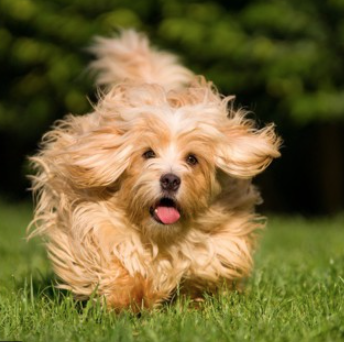
The Havanese has a silky, fluffy, and soft coat. The Havanese grows hair quite quickly, and it appears slightly wavy. While the Havanese grows up, they should start getting a little bit of a firmer coat. His or her hair is still going to be silky and fluffy, but not as much as when they were puppies. Depending on the dog’s parents, fur colors can vary. Most dogs have random spots or splotches of color, a bold, plain color, and others might have a streak of a certain color on a different background.
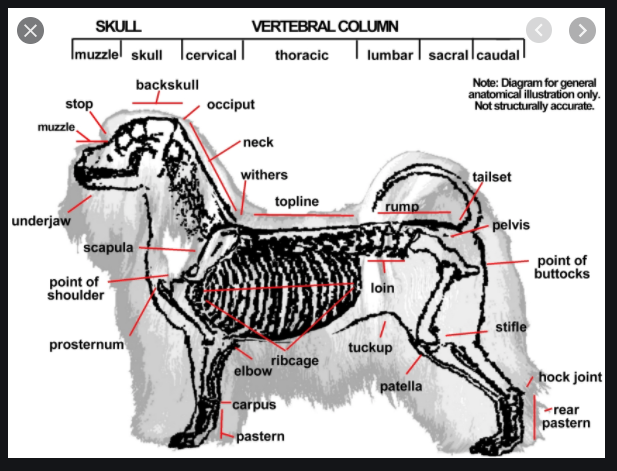
The Havanese has many joints in its hindquarters. Its paw pads (or as I like to call them, “toe beans”) and nails can come as any color, usually a darker color, with a little bit of red or pink near the inside. The Havanese’s hocks (the jutting joint a little lower than the middle of the dog’s legs) are let down fairly low. His or her dewclaws (the part where, when the Havanese runs, the leg bends… not all Havanese have them) can be removed, and are not necessary. The croup, found near the Havanese’s rear end, is usually higher than the withers (found where the neck breaks). His or her hind legs should be muscular with a non- extreme angle, generally around 45 degrees.
The Havanese
has kind, wise, and (kind of) sappy eyes. Its expression is a little mischievous, but at the same time, very mindful. Havanese usually have brown eyes, and it is quite rare to have any other color of eyes. The Havanese has folded ears that don’t perk all the way up when excited. Instead, they will perk, but always stay folded. The ears are planted at around the same area as the occiput, (the back of the head or skull, which has no particular function) and are just directly above the zygomatic arch (located just under the eye sockets and back of skull).
The Havanese’s neck is held high. The neck bends smoothly because of where of the shoulder blades rest. Sometimes, the Havanese will stick its head forwards, but usually, they will keep their heads high and perked up. His or her front legs are shorter, and less meaty than the hind legs. The Havanese has elbows tucked tight in, so that all legs are straight, and face forward. Then there are the pasterns – a small jutting joint that is barely visible, located very low in the foot, just above where the fold to the dog’s paw is. Pasterns help bare weight of the dog’s body, and work with the dog’s paws to sense different things, and give the Havanese flexibility when running, walking, or even going down stairs. Pasterns are short, yet both strong, delicate, and flexible.
The breed of the Havanese was discovered a very long time ago. Someone named Mr. Cowley brought a group of Havanese to Queen Anne (1665-1714), who loved the dogs! That led to them being famous. In the time, the names of the Havanese were changed, and different every time. Just a few of the Havanese’s names: the Blanquito Cubano, the Bichon Havanais, Bichon of Cuba, Havana Silk Dog, and many more.
The Havanese is the only dog native to Cuba but this is also disputed. As a toy dog, the Havanese looks like many crosses of other toy dogs. The Havanese comes from the Bichón Tenerife. It is said that some other dogs may have been crossbred to develop the modern Havanese. That is a possible answer for why the Havanese looks like so many other breeds of dog. The Havanese was descended from the Blanquito de la Habana, which is now extinct. The Blanquito de la Habana’s small size and ear fold was very similar to the modern Havanese.
The Havanese dog originated from both Cuba and from the Mediterranean areas of Western Europe.
The Havanese also is said to come from Mediterranean areas along Spain, France, and Italy. Because the Havanese has its brown tobacco color, and with Cuba’s history with tobacco, people began to use the term for the Havanese color: ‘tobacco-colored’. But it seems now that political events have led to the disappearance of the Havanese’s bloodlines.
There are many theories and legends of how the Havanese was developed. One of the most well know theories and most believed from Cubans, is that the Havanese was sometimes smuggled to Cuba, (Yes, I did mean “smuggled”, as in sometimes illegally being brought to Cuba, because of their unstable relationship with America) or being raised on ships as young (sailor) pups. Later, they would sometimes be sold or traded for more wanted goods. (Not saying they’re anything better than a cute small fluffy fur ball!)
In late 1777, the Revolutionary War was almost getting into its third year (the first battles of the war, Lexington and Concord, occurred in April, 1775) and the British wanted to crush the rebels once and for all. They were worried that foreign powers, specifically the French, would join the war. So, the British hatched a perfect plan to crush this silly, worthless, never-to-succeed American rebellion.
The plan was to send a strong force down Lake Champlain into the heart of the American armies. The British planned to have three armies converge at Albany, New York. This plan was perhaps audacious and a bit hastily arrived at. The 3 armies were to be led by General John Burgoyne, Lieutenant Colonel St. Barry Leger, and General William Howe. They thought capturing the capital of New York would be a turning point in the war.
Howe
St. Leger
Burgoyne
General Burgoyne would lead his troops down from Canada. Lieutenant Colonel St. Leger would move east from Ontario. General Howe would move north from New York City.
Everything went wrong for the British, even though along the way Burgoyne captured Fort Ticonderoga. Lieutenant Colonel St. Leger travelled across Mohawk Valley but was stopped by local forces before arriving at his destination. General Howe was tied up in his campaign to capture Philadelphia, which he successfully did in September, leaving Burgoyne without any backup.
At the same time,George Washington was getting his Continental Army to the winter fields of Valley Forge… (around 25 miles away from Philadelphia). And, General Burgoyne’s army was loaded down with 30 extra wagons to support Burgoyne’s lavish lifestyle. Burgoyne loved eating, fine clothing, wine and tobacco. Along the way, the redcoats, in bright red uniforms were easy targets for colonists. The colonists shot at them and cut down trees to block the road.
While General Burgoyne and his 8000 men were making their way to Albany, a general named Lincoln (not to be confused with 16th president Abraham Lincoln) from Virginia gathered a group of about 750 men to attack Burgoyne. This gave the American troops time to set up defenses on the area called Bemis Heights, just south of Saratoga. The British needed the river to transport supplies, so Burgoyne sent a detachment of troops to a farm belonging to a loyalist by the name of John Freeman. Imagine being one of Burgoyne’s scouts and gaining the view of 9,000 patriots, all posted up around the farm! These men were under the command of General Horatio Gates, a British-born American officer. Gates, unlike Burgoyne, was receiving daily reinforcements.
Horatio Gates
The First Battle of Saratoga, or The Battle of Freeman’s Farm, took place then and there, on September 19. As the battle started, the American troops started picking off the redcoats, and many of the redcoat officers were killed or wounded. However the British drove the Patriots off of the battlefield when German reinforcements arrived. This was declared a British victory, but they had had twice as many casualties as the Americans. (600 deaths, while the colonists had 340).
At 10:00 AM, Burgoyne, finishing his crumpets and tea, waited for the fog to blow away before ordering his troops to form three columns. Burgoyne ordered a German general, Baron Riedesel, to lead the left column. Riedesel would be in charge of the boats, supplies, and artillery. Scottie James Inglis Hamilton would command the center column. He would attack the heights. General Simon Fraser, a favorite among the British for his rousing words and encouragement, led the right wing northwest of Bemis Heights.
Benedict Arnold had thought that the British and the Germans would work together to trap them, and he sent a messenger to ask permission from General Gates to move his troops down off the cliff and into the surrounding woods – for between the two sides, the American patriots were naturally far more adept at dealing with firing from within the woods. Arnold’s messenger leapt off of his horse. Gates took the letter from him and read it carefully. “That Benedict Arnold,” Gates growled. “That is a terrible idea, but if I say no, he will do it anyways.” He turned toward the messenger, muttering through gritted teeth, “Tell Arnold it’s… fine.”
As all of these columns from both sides careered towards Freeman’s Farm, one can just imagine the confusion settling into the various generals’ minds. For when Daniel Morgan’s men came near the field, they could see and hear the redcoats, and some among them could also sense approaching over a rear ravine, scrambling over broken trees and bracken, the approach of Hamilton’s column.
On the way to the battle, Riedesel was having a fit because of a huge boulder blocking the road. “THOSE REBELS! STOP THROWING THINGS AT US AND LET US GET THROUGH!” The boom of a gun pierced the air, and as Riedesel maneuvered around the rock and towards the battle, he sent a section of his troops toward the sound.
The British officers in their long and elegant topcoats, with their wigs barely askew during this onrush of combat, were in some ways totally unprepared for what was about to occur. For little did they know that Colonel Daniel Morgan had commanded his snipers to blow the heads off of the officers, leading the lower ranks to confusion. Pop! Pop! Bang! Now an officer down in the middle. Pop! Pop! Bang! Now a neighing horse comes charging through, its rider crying out encouragement. It is Simon Fraser. His troops charge, attacking Morgan’s left, scattering the patriots back into the woods. The British started to retreat back to the main column. But oh my! In what would go down in battle infamy, that exact column opened fire during the retreat, killing quite an amount of their fellow British.
The American side started to feel confident at 1 PM. Reinforcements were coming from the south, and Hamilton’s men were fighting well at the north side. Gates sent 2 regiments, or, units of an army, to Morgan to help. The battle switched between vicious fighting and the exhausted troops still attempting to fight, but resting at the same time. Morgan’s riflemen hid in the dense woods, taking down the British. They were one of the most helpful men in this battle for the Americans, helping the Americans gain control from time to time.
“I got him! I got him! Burgoyne is down!” A sharpshooter ran towards Morgan. There was an excited shout across the American army, but from across the field, Burgoyne bellowed, “I’m alive, idiots! Keep fighting!” It had been one of Burgoyne’s aides that had died. The main British line faltered: the Americans almost pushed through, but General Phillips, riding his horse, rushed into the midst and helped push the Americans back.
At 3:00 PM, Riedesel sent a messenger to Burgoyne for instructions. At 5:00 PM, the messenger came back, telling Riedesel to guard the baggage train and send as many men possible to the American’s right flank. Riedesel left 500 men to guard the baggage train (ooh, risky), and left with the rest of his troops. Following Burgoyne’s orders, Riedesel attacked the American’s right flank while Fraser attacked the left. About to be overturned, Arnold went to ask Gates for more forces, and he got them. Luckily, Arnold was not on the field at that time, and did not need to face Riedesel’s intimidating troops hounding in.
The battle had ended. The Americans retreated back to their defenses, leaving the British on the field. Burgoyne had gained the field of battle, but at a heavy cost.
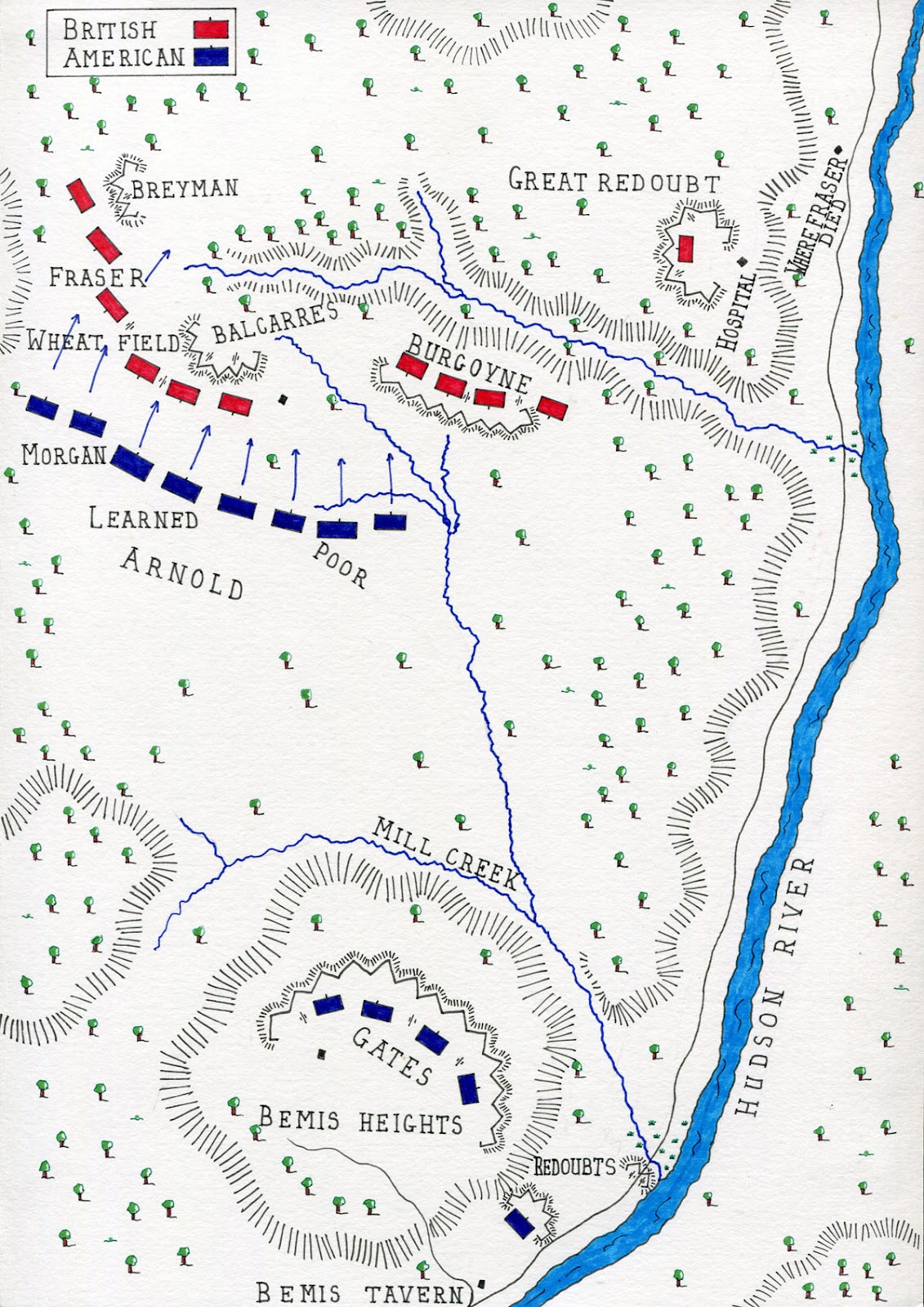
Layout of the Battle of Freeman’s Farm
After the first battle, Burgoyne decided to retreat back to Saratoga to rest his wounded soldiers and wait for back-up from General Clinton, instead of advancing to Albany. While the British sat around, the American army grew to 13,000 men and Burgoyne’s army dwindled to about 5,000 men. Not quite three weeks later, on October 7, General Burgoyne received a letter from General Clinton, promising that he was coming up the Hudson with reinforcements from New York. Unfortunately, the furthest north Clinton would reach was Clermont, nearly 50 miles from Albany and 70 from Bemis Heights. Burgoyne realized that the backup would not arrive in time. He decided to launch a surprise attack on the Americans’ left flank near Bemis Heights. The two sides clashed.
Layout of the Second Battle: the Battle of Bemis Heights
Just as the American side began to falter, none other than Benedict Arnold (not yet traitorous) arrived, saving the Americans with a fresh brigade of troops behind him, driving the British back to their redoubts. The British had erected a defensive redoubt (an enclosed defensive fort) behind their forward position, called the Balcarres Redoubt. It was formidable and well-defended. Several hundred yards away was the less impressive Breymann Redoubt, defended by 200 German soldiers, which was overwhelmed by the Americans.
Soldiers squinted out from behind their redoubt, watching the fight at the Breymann Redoubt unfold. After some pops! they watched fellow soldiers collapse to the ground. The Americans triumphantly poured into the redoubt, claiming it as their own. Back in the Balcarres Redoubt, a soldier called out fearfully, “They’re coming for us next! Look what they did to our soldiers!” He pointed at the bodies strewn all over the field. The redoubt dissolved into an uproar and the Brits stampeded out into the woods. Burgoyne and his men tried to escape north, with Gates chasing, now with 20,000 men. However, the cold weather and heavy rain slowed them down. Cold, hungry, exhausted, the British stopped and prepared to fight. Within 2 days Gates surrounded Burgoyne’s army, forcing them to surrender. This battle became known as the Battle of Bemis Heights, the Second Battle of Saratoga. The British had lost another 600 men.
Benedict Arnold
On October 17, 1777, an entire army of 5,895 British and German troops surrendered to the American army.
The Battles of Saratoga were turning points in the American Revolution. It gave the Patriots a huge boost in confidence and convinced the Dutch, French, and Spanish to join the Americans’ cause. It also made Gates very popular, almost (but not quite) as popular as George Washington.




 Of course Santa Anna decided to sign the papers giving Texas’ independence and eventually becoming a part of the US. In 1846, the Mexican American War was the conflict between the US and Mexico from dispute over whether Texas was to be claimed by Mexico or the US? America and Mexico disagreed on where the border should end. That border is now what we now know as the Rio Grande. The war took place between April 25, 1846- February 2, 1848, leaving 17,000 dead and thousands more wounded. By the end, Mexico ceded to the United States bounteous territory, including New Mexico, Utah, Nevada, Arizona, California, Texas and part of Colorado.
 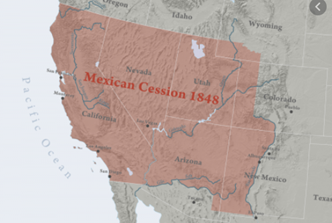 This left Mexico with more than half of their territory lost, the US gaining control over most of the West and Texas.
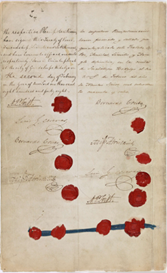 was the agreement of Mexico to give up half of their land for 15 million dollars, worth half a billion in today’s dollars. Even worse for the Mexicans, the Americans the very next year found billions of dollars of gold and silver in the newly acquired land. Ever hear of the San Francisco ‘49ers? Why are they called that?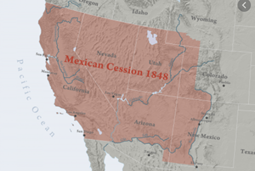
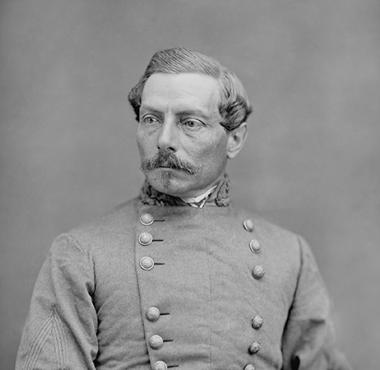 ordered the Union to surrender Fort Sumter and leave. Major Robert Anderson, the Union commander who also attended the United States Military Academy and fought in Black Hawk War, Second Seminole War, and the Mexican American war,
 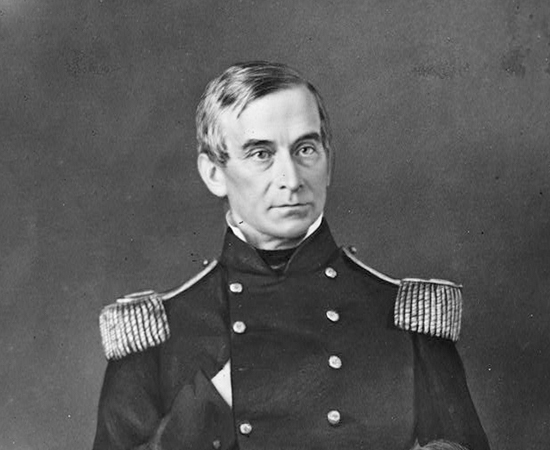 declined this order… which then led to a bombardment of Fort Sumter, and a 34-hour exchange of artillery fire followed. After the firing back and forth, Anderson was forced to try to negotiate a deal because of lack of supplies – they were under siege! Eventually, Confederates took control of Fort Sumter and they stayed there for most of the Civil War. Today, there is a Fort Sumter monument which is completely surrounded by water. The Confederates won the fort and they occupied it for the next four years. Avoiding several attacks by the Union, they eventually had to abandon the fort just before the capture of William T. Sherman in 1865.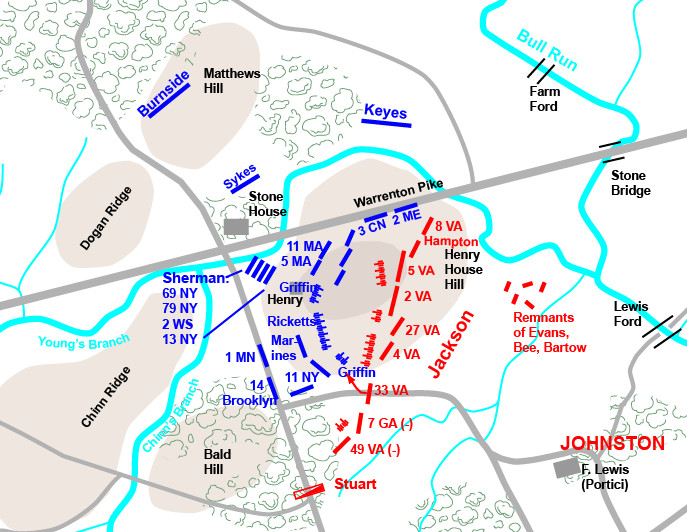
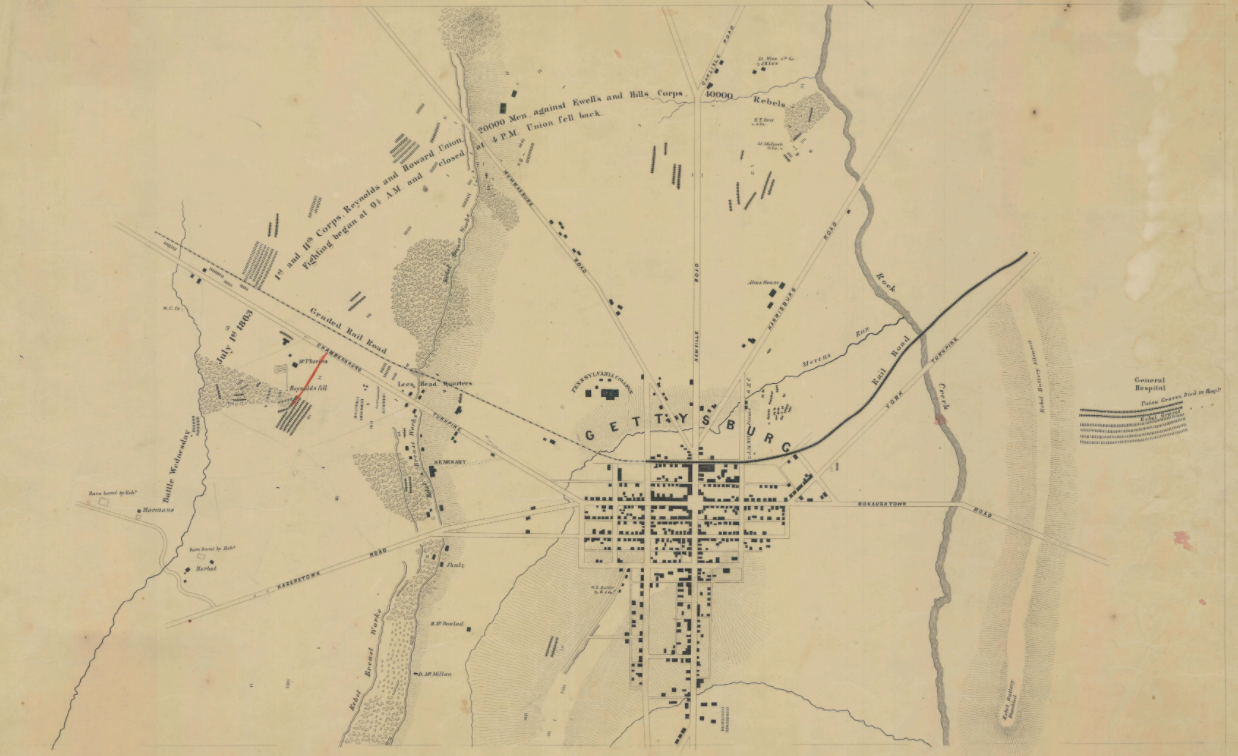
 The ragged edge of General Howard’s left flank is the final to wrap around Cemetery Hill, and as the sun sets, it seems as if the hill has a hat of blue uniforms. At Cemetery Hill, General Howard leaves the brigade with cannons; the Confederates reshape and reform but do not attack. As the sun sets behind the hill, soldiers take their bloody jackets off to dry. Laying down looking at the stars, they reminisce on the days before the war, some with their entire bodies covered in blood.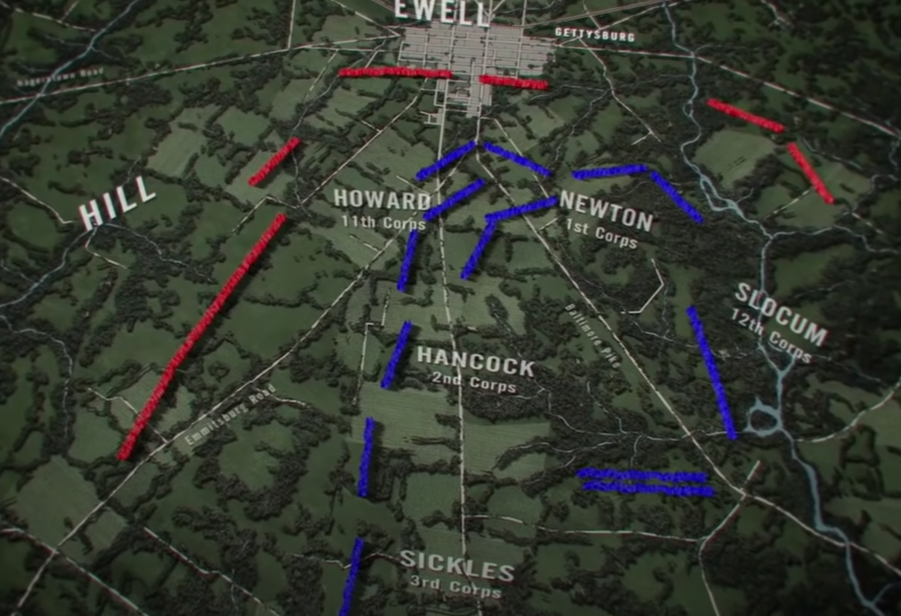
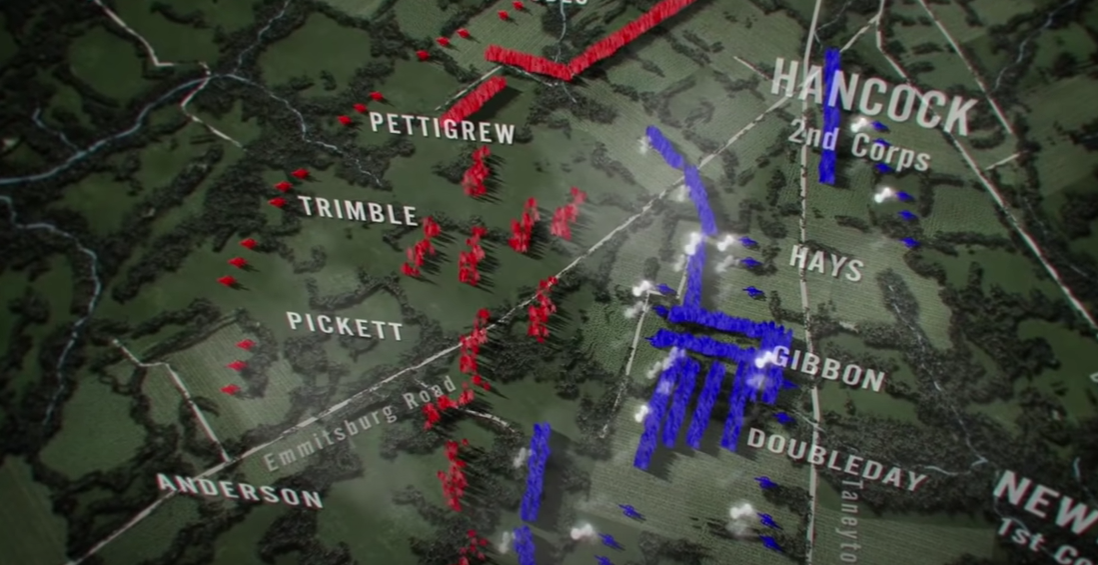 The fighting finally comes to a halt after 7 hours of continuation. The Union attacks near Spangler Spring and again, the Confederates become far outnumbered and forced out. Lee attacks on the Union center which leaves General Pickett as the only fresh division and the core of the attacks. General Meade is the first ever Union general to outguess General Lee! When Lee bombards Union defenses, Meade is prepared and the largest artillery barrage in the Western hemisphere takes place. Lee’s bombardment fails and the Confederates retreat, but 12,000 men come from Seminary Ridge to join back in the battle. The Union fires and General Meade orders 20,000 reinforcements. Confederates move to the great “pencil of Yankees”. In front of the rout, there is a tall wall but only a few could get across the wall, and those who crossed the stone wall are either captured or killed. Some manage to breach Union positions, but the Union brings in reinforcements so powerful, the Confederates have to surrender. When they got back to safety, only half the men who originally attacked, return to Seminary Ridge. This basically ends it for the Confederates. Lee’s biggest chance has become his worst defeat.
  However, the Confederates are not ones to easily give up. Confederate cavalrymen became active on the flanks. General Stuart’s horsemen try to swing around the Union but are stopped east of Gettysburg by Union cavalrymen. The battle of Gettysburg has finally come to an end. Lee and the Confederates have lost, but still remain on the field. In a state of anger, Lee wants a counter attack on July 4th to even out the odds but it doesn’t happen. With gloomy spirits, Lee pulls back to Potomac River along with a long lumbering wagon train of wounded. General Meade plans to attack again but Lee’s river position is too strong. The Army of Northern Virginia crawls back to Virginia.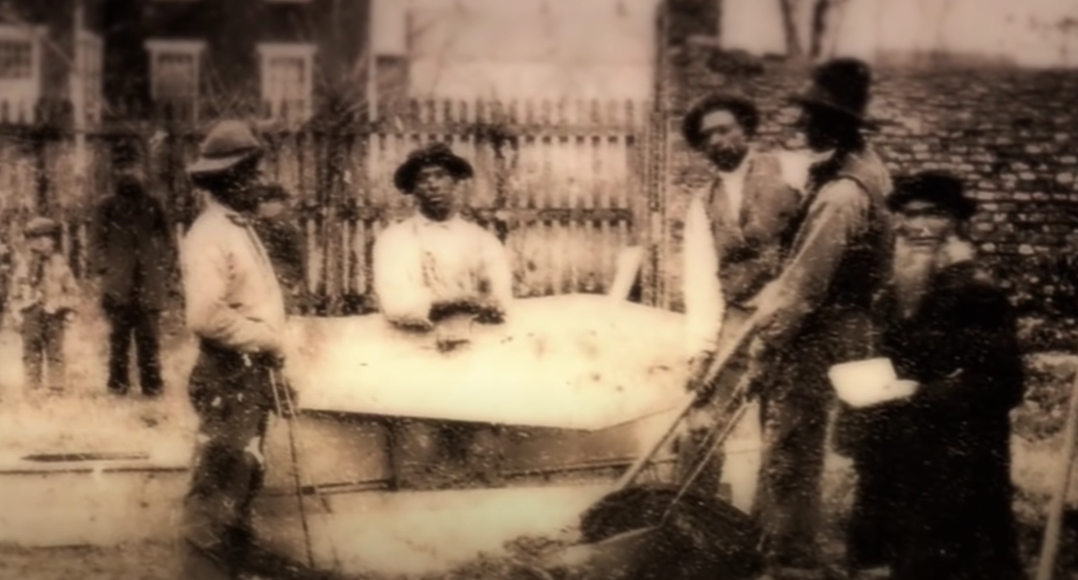

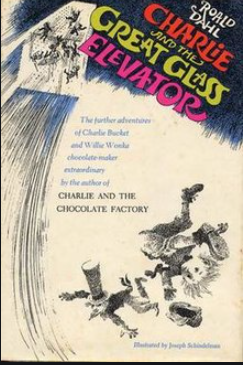


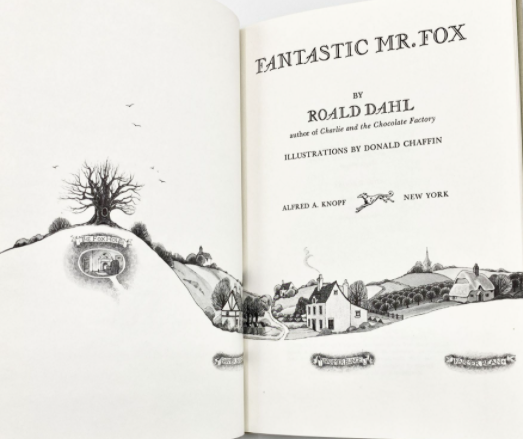
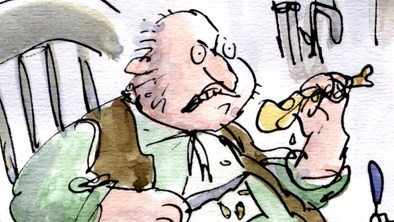
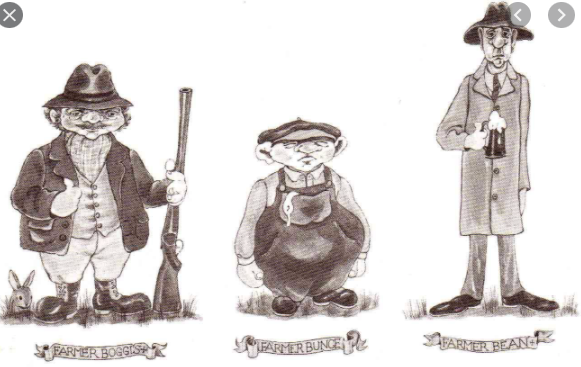
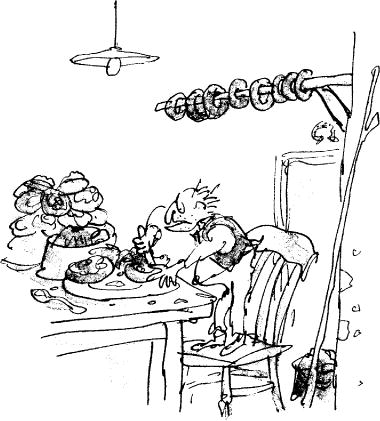

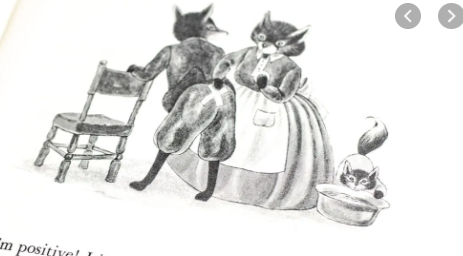
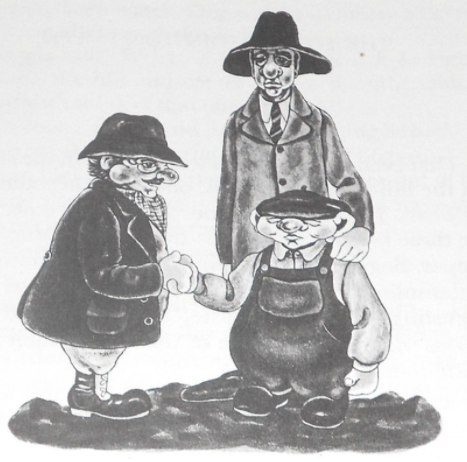
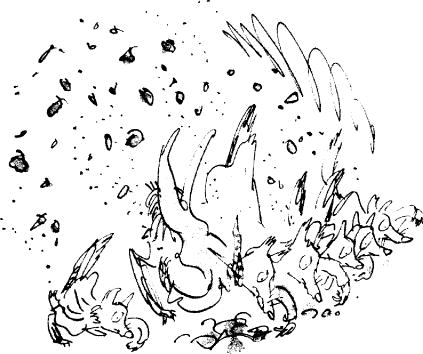
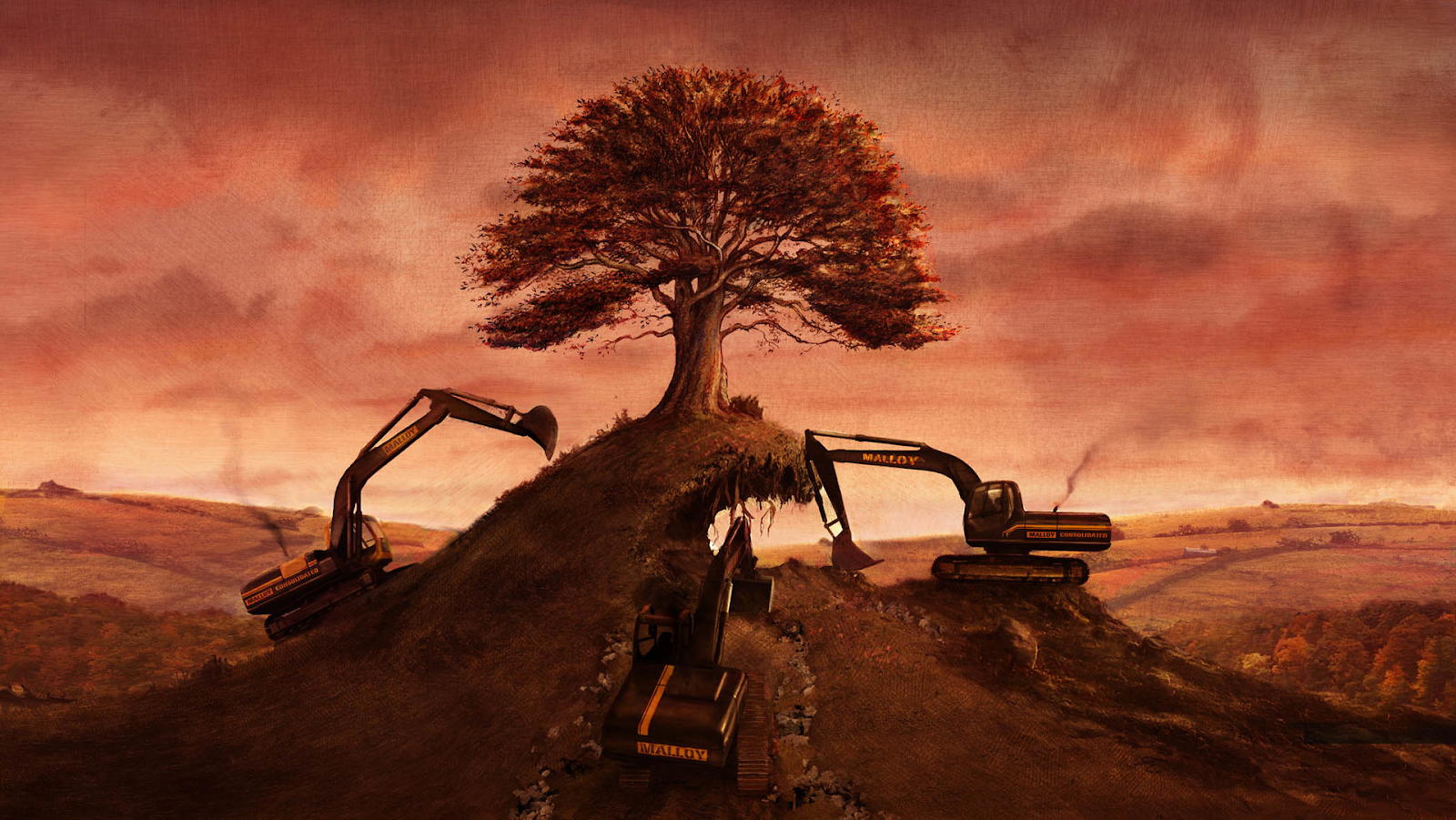
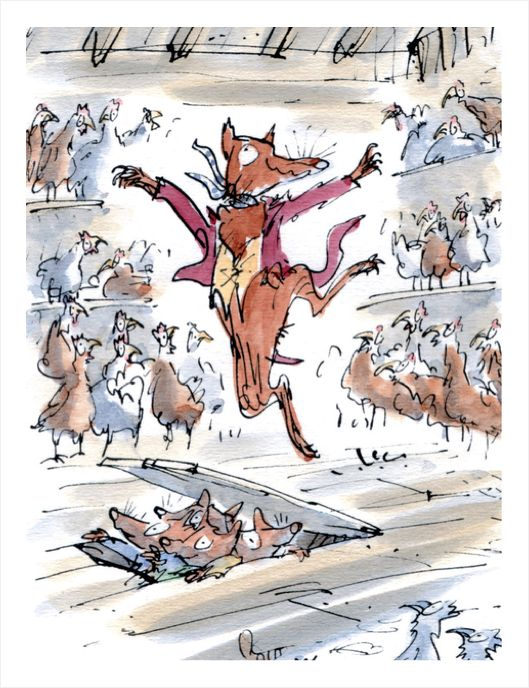
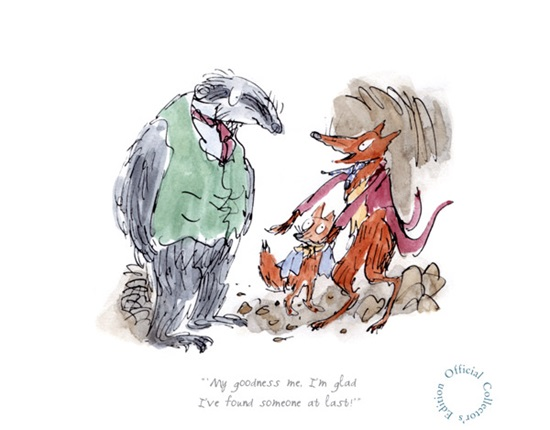
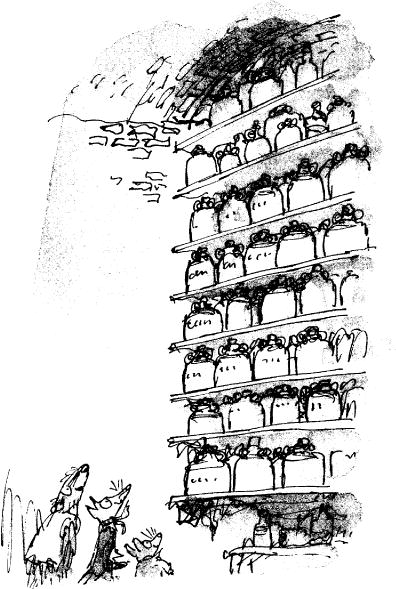 Soon, they were back in the tunnel, and “flew” along it, singing songs as they went, right back to where Mrs. Fox used to be resting, only now it was a big space filled with a large dining table (it seated 29 animals in all) that was covered in all the delicacies they had taken. And what a wonderful meal to fill their stomachs up they had.