Monthly- Archives: May 2024


JONATHAN LIM

Jonathan won a Gold Key for Novel from Scholastic Awards for the below! Congratulations Jonathan!
The Marmon Wasp

Chapter I: 

I was in shock. There are few things as exciting and as terrifying as finally getting to walk inside the Marmon Plant, the place where all the greatest cars get made. I felt my knees almost collapse like twigs on a windy day when I took my first step toward the brick building. My brother and father stood behind me watching me as I knocked on the large door. Both of my brothers had been apprentices for Marmon Motor Car Company so thanks to them I had an almost guaranteed spot as a worker here. When no one answered my knock, my father rolled his eyes and pushed open the door. I followed him into the magical place I’d only imagined being in only to be greeted by the strong smell of paint, oil, and sweat all rolled up into one. My brothers and my father led the way and walked around with the familiarity of people who had worked there before and brought me to the office. My father offered me a reassuring smile and nodded at me to knock again, this time on the office of Marmon’s CEO, a Mister O’Malley. 

“Come on in!” said a booming voice behind the door. I gathered my courage and slowly pushed open the door, “Mister O’Malley?” I opened the door and was immediately greeted by a large man practically bursting with energy. “Yes! Yes, that’s me! I’m Mr. O’Malley! And you must be James! So good to finally meet you!” He thrust out his hand in greeting but I was so thrown off by the energy that it took me a second to realize that he was trying to shake mine. “H-hello sir, it’s an honor to meet you,” I stuttered as I shook his hand the way my father taught me, firm and with good eye contact.

“Sit down! Sit down! Let’s talk about your apprenticeship!” He collapsed into his large leather chair behind the desk and pointed at a small wooden stool for me to sit on. My father walked in with me and sat on a desk at the side of the room. My brothers stayed outside and offered me a nod as the door closed. 

“Ricky! My friend! How’s the leg been? How’s li’l William and Joseph? I think I saw them outside! Not so little anymore huh?” I almost fell off my chair: no one calls my father Ricky; it’s always Rick or Mr. Feldman that I hear. I almost expected Father to lose his temper but instead, he just shook his head and chuckled. 

“It’s going quite all right, Frank. The kids are good, leg isn’t as great. Still givin’ me hell early in the morning. And how’s that wallet of yours doing?” 

O’Malley shook his head, “Getting lighter and lighter every day. These darn metal horses of mine just don’t go fast enough. So! You’ve brought me a runt to put through the ringer huh? He looks kinda small.” I bit my lip and looked down at my brown, worn-out shoes. I wanted to repudiate but I knew better and kept my mouth shut. 

“Yep!” my father said. “He’s a bit small, but he’s got some kick in him. He can run like hell too.” 

“He can run huh? Well, I know a few jobs that could use someone like that. He’s probably fine doing some other jobs though… like sorting through mail right? You gotta place to live kid?” I opened my mouth to respond but before I could say anything my father cut in. 

“Yeah, he gotta place to stay, about 2 or 3 blocks away from here with some family friends.” 

“Good! Good to hear. Oh hey, Ricky have you heard the News?” 

“News? I ain’t heard anything! Tell me!” 

“Ok, I’ve been hearing some rumors…” Mr. O’Malley paused dramatically and brought his head closer to my father’s. “That there’s going to be a big race right here in Indianapolis.” 

“Aww ‘pshaw Frank. That aint news! Races are going on all the time!” 

“That’s what I thought! But they say this one’s gonna be big, the stadium will be huge, and racers from all over the country I hear some are even coming from Europe to compete. Winner gets $30,000!” 

“Wow almost makes me want to be a shoe?” The two men burst out into booming laughter while I just sat there wondering whether the interview part was over. 

While they were talking and catching each other up on the things that had happened since they last saw one another I took the opportunity to look around. I noticed the ugly green carpet and a trail of mud coming from the door to my hand-me-down shoes. Oops! I felt the cool breeze as the fan above me circled, and I heard the laughter of my father. I even leaned back a bit and as the sun jumped into view right at my eyes, I blinked in surprise and quickly leaned forward again. I tried imagining all the fun things I would do at Marmon when I remembered that I should probably pay attention. 

“Well! Great talking to you old pal but it’s time to get on with the tour!” Mr. O’Malley said begrudgingly. 

“Oh, nonsense! Not the tour! I’ve taken it twice already. Just give it to him on his first day.” 

“Alright fine. I guess I’ll be seeing you later Ricky.” He got up to shake his hand and my father did too signaling to me that it was time to go. 

I got up quickly and pushed my stool in, “Thank you, Mr. O’Malley, it was a pleasure meeting you.” I said this just as my mother taught me. 

“No no! The pleasure was all mine! I’ll see you soon James!” 

We arrived home just as the sun was beginning to set and I was greeted with the smell of chicken soup. My stomach rumbled as I jumped out of our family’s car and dashed to the open door, my feet kicking up dust and rocks. My mother was a fantastic cook, but if you ever interrupted her while she was cooking she would be very angry, but if you didn’t respond in time when Mother shouted dinner she would also be very angry. In short, she had a temper. She was a stout woman with the only dark brown hair in our family, as the rest of us got our light brown hair from Father. Her face was always set in a scowl and since she was also my teacher I got a few whacks from anything she would be holding in her hand for my behavior. I jumped through the door and quickly sat down in my seat and gave my mother a big toothy grin. 

“Hi Mama!” I said quickly, digging my spoon into the delicious-looking soup. WHACK! I saw and heard the wooden spoon in her hand hit my hand before I felt it. 

“What’d you do that for huh Mama?!” 

“Wait till your brothers and your father sit down! Where are your manners!” I looked outside and saw my brothers carrying in spare parts for a wagon that my father had bought at the market. My father had this wagon and even though it was constantly in disrepair and we had a car he insisted on always fixing it and trying to get it to move without the entire thing falling apart. 

“Thanks James,” Joseph said sarcastically as he sat in his seat and gave me a glare. 

“None of that Joseph! Let’s eat!” Mother shouted as we all began eating the meal. 

While we were eating my mother asked me, “So did the interview go well?” 

“Yeph it went really well!” I said with my mouth still half full. Mother glared at me but thankfully didn’t comment on my manners, or lack thereof. 

“He’ll be going into town in a few days for a tour and an orientation,” my father said. 

“Wait by himself? Isn’t that a little dangerous? He’s a bit young.” 

“He’ll be fine!” my father said in a conciliating tone. “He can handle himself, right kid?” I nodded along not wanting to involve myself. 

“Fine, just be careful okay James?” I nodded again and finished my meal, excused myself, and collapsed in bed tired. 

Chapter II: 

The rooster crowed. My eyes opened begrudgingly as I slowly blinked away the tiredness. I never wanted to move out of my comfortable bed. I felt as if I had just closed my eyes to go to sleep. My mind was full of potential scenarios and thoughts of the next day, so much so that I couldn’t fall asleep. The next day… Why was I thinking of the next day? WAIT TODAY IS THE DAY. I threw off my blankets and jumped out of bed only to stumble right back onto it, as my mind had woken before my body, and I needed a second to let my body catch up. I stood up again and looked around my small room. There wasn’t much to look at. My two older brothers shared a room cause they were so close in age but since I was the young one I got my own room, but the downside was that it was small. I had my bed in one corner, and a dresser in another. There was a small desk with some papers on it filled with half-finished problems and doodles of cars… and dust collecting everywhere. I threw on the most appropriate clothes I could find and stood in front of my small mirror. I took a deep breath and walked out of the room. I can’t remember any of the details, but I know I ate breakfast, said goodbye to my family, got onto the train to Indianapolis and Marmon factories, and before that, settled in with my host family the Davis’s. 

Once again, I faced the door of Mister O’Malley. I knocked and waited patiently for him to answer, but I heard no movement on the other side. I slowly pushed open the door and peeked my head through. “Mister O’Malley?” He wasn’t in the room and I know the normal thing to do was to just leave the room, but as soon as I started stepping back I noticed a letter on the main desk addressed to me. Of course, curiosity won. So I opened it. The letter read: 

Dear James Feldman, 

Welcome to the factory! Couldn’t be at the factory today, terribly sorry. Please send the note under this letter to Ray. 

Good luck on your first day, 

Mr. O’Malley 

Hmmm. Not exactly how I wanted to start my first day. And wait. Is this the Ray that I think they’re saying?? I left the office and began searching for the Ray Harroun. 

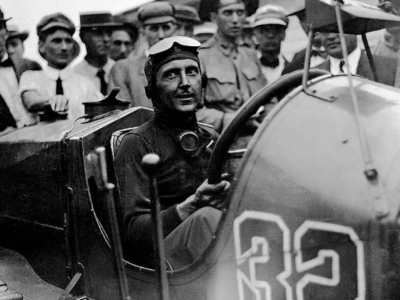
See, the Marmon Motor Car Company was originally part of a bigger company that manufactured flour mill grinding equipment in the late 19th century. Eventually, they branched out and in 1902, Marmon Motor Car Company was founded by Howard Carpenter Marmon. After a few years of experimenting with different types of cars, they finally settled on one, and Marmon became known for their reliable and fast cars. Marmon had some drivers too, drivers who represented them in races and with their cars. Ray Harroun was the team’s number-one driver and was already a very successful winner. He won many big racing events including The Wheatley Hills Sweepstakes. The Wheatley Hills Sweepstakes, located in Long Island, New York, was actually a bit of a bust. Ray Harroun was the only one to finish the race, the only one to finish out of 4 racers. 

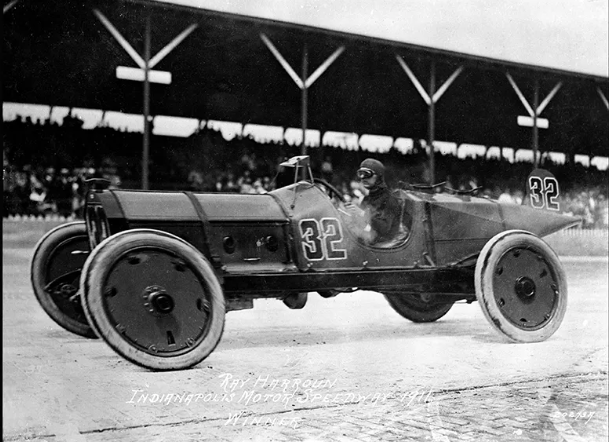
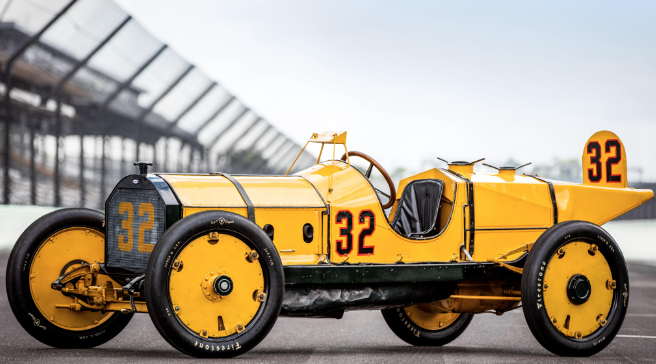
Now, one of the greatest cars built by Marmon Motor Car Company was the Wasp. This was all built for speed, and it was the first car to have only one seat (no seat for the engineer who usually rode with the driver in races). Ray was obviously the choice for this speedy car. 

An interesting fact is that the Marmon Wasp already had some history on the track. Two days after the Wheeler-Schebler win, a 200-mile race, the Wasp blew a tire and slammed into a wall on the northeast turn. By his lucky stars, Ray Harroun walked away uninjured. The car however did not look too good. The damage was so bad the people at Marmon considered scrapping it. 

I was currently in the office building and I started heading towards all the clanging and banging in the back. When I opened the door to the main factory I was immediately hit by even more noise, car engines, tools clanging, and people murmuring, and by an overpowering and complex odor. I remembered smelling this in Mr. O’Malley’s office but it was so much stronger now that I was at the source. Sweat, paint, oil, and car exhaust attacked my nose and I felt my eyes begin to water. 

“Hah the smell’s pretty bad huh? Don’t worry about it you’ll get used to it.” 

I turned and said, “I don’t think I can ever get used to this.” He chuckled and shook my hand. 

“I’m Charlie, and you must be our new guy.” Charlie looked to be about 20-25 years old. He had smudges of grease all over his face and brown floppy hair atop his head. 

“Yep! First day today. I’m James.” 

“Well James, it’s nice meeting you. I’m one of the head engineers in this place so if you ever need anything, come find me.” I thanked him and was about to leave before I realized what I had in my hand.

“Hey! Actually Charlie, I could use some help right now finding where Ray is. I got a message for him from Mr. O’Malley.” “Yeah, no problem kid. He’s in the far corner all the way over there you see?” he said pointing. “He likes to be in a secluded area to do his work.” I thanked Charlie and started heading towards Ray. 

I remember reading about Ray Harroun winning race after race and I guess because of that I kind of imagined him as a god. I wasn’t expecting him to be standing there regally with the aura of a supreme being, but I also wasn’t expecting him to be yelling at himself as he paced frantically. I watched for a while, feeling a rush of emotions. Excitement, from seeing a hero that I’d read about my entire life. Disappointment, from him not being exactly as I imagined. And confusion, from what was causing him so much stress. After recovering, I coughed to try and get his attention. 

“What?!” He abruptly turned towards me. I took a step back in surprise. “What do you want??” 

“Uh, uh, j-just a message from Mr. O’Malley. Sorry to disturb you” After seeing my expression he shook his head. “No, no, I’m sorry. That was incredibly rude of me. Hello son, I’m Ray Harroun.” He reached out his hand and I shook it. “Hello Mr. Ray, I’m James and today is my first day. Are you having some trouble with work?” 

“Hah! Yes, you must have seen all that pacing. Err sorry ‘bout that, just helps me think.” 

“Ray! We need some help over here with this engine!” Ray turned to me. 

“Well, I must get going!” I handed him the note. 

“Thank you for delivering this. I hope to see you again.” And with that, he walked off towards the engine in need of repair. As I watched him walk away, I realized that now that I’d delivered the letter, I had nothing to do. So, with a grin on my face, I began exploring the factory. Charlie was right though, for after about 10 minutes my eyes stopped watering and I got used to the smell. The feeling had finally set in. I was in the Marmon Factory. I was in the building where they produced the most amazing cars. I took a deep breath and felt like this, this factory, was where I belonged: with the clanging of the tools, the yelling of men as they argued over materials, the engines, some sputtering and some steadily purring, with all this, I somehow felt at peace in this chaos. I felt excited to start my life here, to grow up, and become so much more. This feeling was so empowering I smiled and- 

“Hey! Watch it run!” WHAM! I felt a large shoulder slam into my head and I was knocked down to the ground. “Get your head out of the clouds!” A large burly man stood above me sneering at me. As I scrambled back up, my cheeks bright red, I heard laughter around me, only brightening my cheeks even more. 

For the rest of the day, I had trouble having a good time. I received some friendly smiles while walking around but my head was down and I didn’t notice them. I did notice, however, the laughs hidden behind hands, the smirks as they noticed me, and the outright glares from some workers. Lunch was just as terrible. I sat on top of a toolbox in the corner of the factory. I didn’t even taste the lunch that my mother so devotedly packed for me. I just kept my head down and ate as fast as possible. Nearing the end of my workday, I was already begging for this apprenticeship to be over. I was planning the speech I would give to my parents, the speech to somehow convince them to relieve me of this apprenticeship. I could picture their disappointment as they saw their son quit on their first day and my eyes began brimming with tears as I imagined how the scene would play out. 

“Hey Jimmy! Jimmy!” I felt a tap on my shoulder. I turned and was greeted by Ray breathing hard. “Hey son, I was calling your name!” 

“Oh sorry, Ray I was a bit distracted.” 

“No worries. I talked to that idiot who pushed you and gave him a piece of my mind. He won’t mess with you again. Anyway, I was looking for you during lunch break, but I couldn’t find you. I wanted to tell you what the letter you delivered to me said. It said that Mr. O’Malley wanted you to be my assistant, that you would work with me and help me out around the factory. Is that ok with you?” I stood there, shocked. 

“Y-yes! Yes! I would love to work with you! That would be amazing!” 

“Great Jimmy, I’ll see you tomorrow.” I was so happy I didn’t even notice him saying my name wrong. 

“Goodbye, Ray!” And despite what felt like a terrible day, I left the factory with a smile on my face. 

Chapter III: 

Weeks flew as I was put to work by Mr. Ray. I was a bit disappointed at first when he had me doing errands and mundane jobs like grabbing food, but it gave me the chance to explore. Mr. Ray always loved the sandwiches from Kings Deli on Capitol Avenue which meant a quick 10-minute trolley ride deeper into the heart of the bustling city of Indianapolis. I always loved getting those sandwiches though, because sometimes Ray would give me a little more than what the sandwich cost so I could get something for myself. On dreary days, it would rain which meant walking… because the dirt roads quickly turned into mud, mud that would greedily sink the carriages, blocking the road and preventing any other vehicles from passing. Sometimes Ray would ask for odd things like a helmet or a small handheld mirror. Finding these objects was always difficult, and I got lost a few times. Fortunately, Marmon Factories was a well-known location so I could always ask for directions. I also talked to Ray quite often about many things and noticed he had two moods which he often switched between for hours at a time. The first mood was the frantic pacing mood I first encountered when I met him. When an idea popped into his head and wouldn’t leave, he’d pace. The second, however, was a much more relaxed loose version and that’s when I really got to talk with him. I learned that he had a son a little younger than I am now. I also learned more about cars. As it turns out, driving race cars is incredibly dangerous and that’s what attracted so many spectators. The thrill of seeing boxes on wheels traveling up to 70 miles an hour potentially hurtling to their death, despite being grim, delighted me. Racecars were unreliable, tire blowouts were common, as were oil leakages which caused explosions, and cars careening out of control. Cars also frequently flipped upside down, crushing the driver. Bets were made during races on whether the driver would live or die. Many towns and cities banned racing and many more believed it should be made illegal. 

I enjoyed hearing all of Ray’s exploits, exploits that usually ended in failure. After a while, I started seeing Ray less as a god and more as a friend. Marmon Factories started to become my home. Every day I would wake up, get on the bus, and head straight to the back of the factory, where I would always find Ray sitting there with a task for me at the ready. After walking around the city I’d get back to the factory where I would eat my lunch with Ray and get working. Sometimes I would do manual labor, and other times I would help him improve the Marmon. My favorite time, however, would be when Ray decided he wanted a break and would sit with me on the roof of the factory. Up there it was so peaceful and calm. We would sit on the roof watching the people on the streets scuttle around like ants, walking wherever they were trying to go to do whatever they needed or wanted to do. 
Chapter IV:

The first time I heard mention of the International Sweepstakes was when I was coming back from Kings Deli, with a half-eaten sandwich in one hand and a wrapped one with the name Ray on it in the other. I was munching contentedly on the trolley when I overheard a couple talking. 

“Well, now it seems like those rich men running the Indianapolis Motor Speedway found a way to get richer. Look how desperate these fools look talkin’ about a 500-mile race called the International Sweepstakes!” She passed the newspaper she was reading to her husband. The husband took the newspaper and read for a short amount of time, clearly developing a quite different opinion from the wife. 

“Helen, what are you talking about?? This looks fantastic!” You could see the excitement bursting from his face. He was obviously a racing enthusiast. “This race could forever change the entire industry of racing! We have to attend this!” 

They continued talking as they exited the trolley. That was the first time I heard about the race. It grew exponentially throughout the day. The newspaper the couple was reading was also printed everywhere. I walked into the factory and immediately noticed it was incredibly quiet. There was still shuffling and murmuring but no clanging, no yelling, and no engines on. I also noticed three crowds of people crowding around one person in different areas of the factory. All three of the crowds were dead quiet as the person in the middle read the very same newspaper I had just seen the couple read earlier. 

I walked past these groups scanning each of their faces for Ray. I wanted to talk to him about what was going on. As I passed each group I caught snatches of the articles and the men murmuring: 

“This could be the beginning of a new era.” 

“The international sweepstakes is bogus.” 

“It says right here that racers from all over the world will be here representing motor car companies! That could mean Ray!” 

The last sentence gave me a moment of pause. Ray?? In the race? That would be incredible! I rushed to Ray’s office to congratulate him and see if he knew any more details. I saw him on the phone talking with someone with a grin so wide his cheeks were all scrunched up on the side of his face. When he saw me, he waved me over and gave me a thumbs-up. Pretty soon I was smiling just like him. 

As more weeks passed I was put to work like never before. I noticed a change immediately in the workplace. Organized chaos erupted in the factory as everyone began preparing for the big race. I had less and less time to myself, staying long hours and, much to my mother’s dismay, skipping weekends when I would go see my family. I was working so much that occasionally I would fall asleep in Ray’s office, only to be awakened by men coming into the factory as the moon slowly inched toward the horizon. I also noticed a change in the way people acted around me. I was no longer the new guy but Ray’s right-hand man and I loved it. But not as much as Ray did. As he walked through the factory he would get looks of praise and respect. People would come up to encourage him all throughout the day. 

There were changes all around the factory but the biggest change was in the city. People from all over the world were flooding into the small city of Indianapolis. Hotels and buildings were filled up, stores running out of things to sell, and cars and horses clogging up the road; it was madness. There were car enthusiasts, curious families, young adults wanting to see what the fuss was about, vendors taking advantage of the crowd, and racing companies fighting for attention. Newspapers were all over this race as they described the anticipation and energy coming from the crowd: “Sweeping down upon the city in a cloud of dust; bussing, sputtering, droning; leather capped, goggled, ulstered and grimy…” (The Sun); trains “vomited forth thousands of dirty but happy passengers” (Automobile Topics). And as The Star so eloquently put it, everyone should brace themselves for “the largest slumber party in history.” People were sleeping on the ground and any place they could find – you couldn’t even walk into a public bathroom now without having to wait in line for hours. And all of this, for one race.

Chapter V 

My eyes opened to darkness. After a moment of confusion, I realized I had fallen asleep on Ray’s couch. I sat up and felt around, guided by only the pale light from the moon to find the light switch. Flicking the switch sent a flood of light rushing toward my eyes and made me regret turning it on in the first place. Once I got used to the light I checked the clock. 1:57. Why am I up so early?? Knowing from experience, once I woke up I couldn’t fall asleep so I resigned myself to beginning my workday much earlier. I didn’t turn all the lights on just yet because I wanted to enjoy this moment of peace. I walked around the factory until I ended up right in front of the Marmon Wasp. I realize after so many hours working on the Wasp I never had a moment to just admire it. It was a beautiful car, built for speed with a tail like a stinger. The one-seater was our key to victory, most racing cars had 2 seats, for the racer and the mechanic. This car had only one, which meant that it would be much lighter and therefore much faster. For a brief second, I imagined myself in the seat, crossing the finish line and hearing the roar of the crowd. I smiled at my daydream (or was it a nightdream?) and watched the moon sink into the horizon. For a while, I was content to just stand there looking at the moon as it looked back at me. Eventually, it drifted out of the window frame and I stood in the complete dark. After working in this factory for months I could still hear all the clanging and yelling but I embraced the peacefulness. There weren’t many moments of quiet nowadays so I just sat on the ground and listened to nothing. I fell into a half-sleep; aware of my surroundings but not the time. Too soon I heard the grumble and shuffling of men outside as they walked into the factory. I stood up, brushed the dust off my pants, and got to work. The day was filled with small fixes and modifications of the Marmon Wasp as we prepared for what was now the biggest race of all time. As I was trying to solve a crisis involving a potential tire blowout threat, I heard the office door slam and I saw Ray storming into his corner. I followed him curiously and when I walked in I could see on his face anger, sadness, and a bit of resignation. 

“Ray, what’s wrong?” He looked up noticing me. “Oh hey kid, it’s looking like I’m not going to be allowed to race.” 

 “What?? Why?” 

 “Well, they think I’m a danger to myself and the other racers because of my one-seater.” I’d heard this before. There’d been some commotion stirred up by the crowds and other racers. The mechanician was there to keep the car in good shape and also to navigate. Without one, Ray wouldn’t be able to see behind him. I grew angry. Although many of these people said this out of concern, others said this to get the Marmon Wasp out of the race. 

I sat on the desk facing Ray. 

“What are you going to do?” I said, hoping he had a genius idea. 

“Honestly Jimmy, I’m not sure. There may be nothing I can do.” My heart deflated a little when I heard the sadness in his voice. I wanted to do something to help him. We sat in silence for a good while. I tried my best to brainstorm but all I could focus on was the emotion in Ray’s eyes. It hurt watching the hero you grew up admiring and now your closest friend in pain. 

“C’mon Ray, there’s gotta be something. There has to be.”

“James! There’s nothing we can do!” 

“No, Ray! There’s something! I know there is!” Ray stood up, quite angry. 

“James just stop! Give up man! Unless you have a tiny 6-inch mechanician in your pocket who can look behind for me then-” He paused, looked at me in shock, looked around the room in shock then dashed to his desk drawer. He pulled it open with such force the whole desk shook as he rummaged through it like a madman. Finally, he stopped. He reached in and pulled out a small mirror. 

“Jimmy. Let’s get to work, I’ve got an idea.” He thrust the mirror towards me and I felt the frantic energy of an idea desperate to be released all around Ray. 

“Listen, I’ll be right back. I need approval from the big man and I need to enlist some help. Thank you man thank you. This is it! This is going to work. I can feel it! Ok here’s what you’re going to do.” Instructions flew at me as Ray began pacing with so much energy I was afraid he’d make scorch marks on the floor. As he explained his plan it all started falling into place and pretty soon I was just like him, eager to get out there and start working. He rushed out of the office to talk to Mr. O’Malley and I rushed out and grabbed a toolbox and some workers who looked quite bemused as a kid started ordering them around. Eventually, they understood the gravity of the situation and got themselves organized. A few men ran out to grab more mirrors while others grabbed blueprints work tables and more tools. As I was working I had moments of extreme clarity and the rest was just hazy. I felt sweaty hands pass me a tool I needed, I heard the sound of men rushing into and out of the factory, and most of all I saw my reflection as I worked on the mirror. I had a crazed look in my eyes. My hair stuck to my face as sweat dripped down my forehead. When Ray got back we were working on the second one and he helped make small modifications. Finally, we finished. Ray and I smiled proudly at each other, then towards the mirrors. We attached them to the car and at long last, the Marmon Wasp was done. 

Chapter VI:

The deafening roar of the crowd did not help drown the worries and emotions so loudly playing at the front of my mind. Everybody was here. Everybody I had ever talked to, passed on the street, and worked with was here. But more than that, my heroes were here. Racers I had looked up to were standing just a few hundred feet away. Racers who were retired like Mulford, Louis Chevrolet, Bill Endicott, Lytle, and Aiken were all here to participate. They unretired just to be here for this race. There were so many types of cars, cars that looked like they were being held together with tape and hope, and others that seemed to push away the dust with their sheer beauty. Ralph Mulford, one of my heroes, was driving a Detroit-made Lozier which obviously cost him a fortune. Another driver that caught viewers’ eyes was Louie Disbrow. With raw speed and a coldhearted driver at the wheel, the Connecticut-made Pope Hartford emitted power. Another worry I had was the distance. I didn’t realize how long 500 miles was until I was told the race would take around 7 hours. 7 hours?? 7 hours of driving – adrenaline couldn’t last that long but adrenaline was what you needed in racing. Could the cars even last that long?? I brought this up with Ray and he agreed. He found the best relief driver he could, to take his spot when he got tired. His name was Cyrus Patschke and I had only met him once. He seemed competent enough that Ray was satisfied. Then the news got even worse. His starting position would be the 28th spot. According to Ray, this was not good, starting so far behind would make it incredibly difficult to win the race. I could tell he was nervous. I’ve been around him for months and I could see his feet itching to pace and his eyes constantly flicking from one car to another. I felt quite jumpy too, my legs refused to stand still, and my hands constantly moved, looking for something to do. I looked back at the Marmon crew. I’ve worked right beside them for months now, I’ve grown close to many of them and I’ve earned their respect. Working with them and with Ray has been such a great experience. “RACERS TO YOUR STARTING POSITIONS” I jumped at the loud noise which was soon followed by even louder cheering. I saw Ray say goodbye to his family and rush over to me. He put a hand on my shoulder with a smile on his face, “Hey Jimmy. This is it. No matter what happens, I’m proud of you man.”

I felt my eyes tear up but before I could say anything he waved at the crowd renewing their fervent cheers. He gave me his signature grin and ran over to his car. 

Epilogue: 

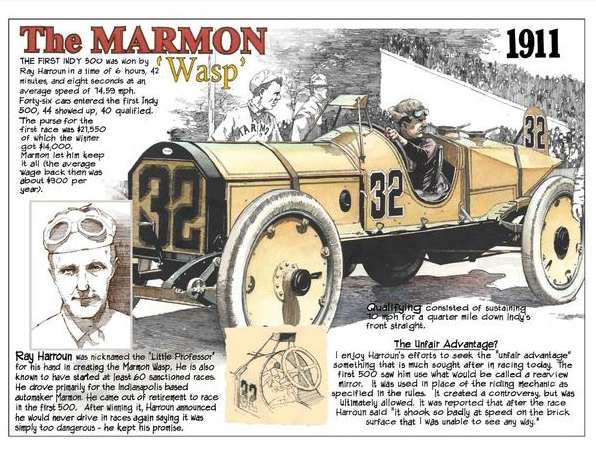
On May 30, 1911, the first Indianapolis 500 took place. 40 cars drove up at the starting line and only 11 finished. The race (for Ray Harroun) lasted 6 hours and 42 minutes. He was first. His name will always be remembered as the first Indy 500 winner. The Indy 500 continues to this day and is one of the biggest sporting events in the world. Harroun had a 74.59 mph average and received a 14,250 prize. Now, racing cars average 200 mph, and the prize for winning is roughly 10 million dollars.

TAYLEN LI

The Rocker

I wanted to go home. I wanted to be anywhere but Mr. Johnson’s classroom. The gray-haired nuisance had humiliated me for the fifth time this year – this time he had snatched my blank homework from my hands, and upon seeing it, had continuously reprimanded me. When I thought the eruption was finally over, the toothless fiend spat out one of those clever jests that simply robs one of their dignity. “Well maybe if you would stop pickin’ at your nose and start paying attention, you would at least have a passing grade, you lazy rat!”

After seeing my head fall to the desk for the seventh time today. I’ve never picked my nose unless in the deepest solitude, and even then, only when dealing with hygienic matters, so you can see that this man is outrageous and hurtful. Additionally, pesky ol’ Gandalf had ruined my chances with Sally, who was snickering the whole time – probably at the cranberry that was my face.

I took the shortcut home today – a desperate measure to escape the lingering embarrassment.

To avoid further ridicule from the other kids, I made the journey through a smaller neighborhood that resided on the hillside. I lived at the top of the hill, where my family’s great Victorian house stood formidably, distinguished by several honed towers with majestic, cylindrical turrets. My gate was now within sight – a craft of rusted steel that had endured years of rain and storm. There was close to no glint of the metal, for the masses of vines covered much of the gate’s profile. At the entrance of my welcoming abode, a pair of menacing gargoyles of horribly contorted shapes perched atop two accompanying spires, casting silhouettes that could cause any unsuspecting suburbanite to think twice. They didn’t startle me, however. Well, nothing really did.

Upon entering the house through the large oak door, I proceeded to my room and began a long examination of Monet’s water lilies to relieve myself of the traumatizing embarrassment that had occurred an hour before. While flipping through the thick papers of the big hardbound book, my thoughts wandered into the lush paintings, the sounds, the smells, and the atmospheres. One painting of a bridge over a small pond of water lilies delighted me a whole lot, as it reminded me of my childhood, when my father and I would stroll across the park, gazing at the scenery of lush grasses and beautiful lotus flowers much like those in the painting.

I started to recall memories of my late father, who had worked as an art dealer for years in Paris. He had had the best connections to fine art, and the book on Monet joined hundreds of others on my shelves and the many fine side tables in our elegant home, along with actual originals by the masters adorning our walls. He died when I was just ten years old, and it is a touchy subject, especially for my mother. So much so that I believe our relationship has suffered a great deal from it.

Five years ago, on a day quite similar to this one, my father returned home after a six-month business trip in Florence. He was utterly exhausted upon arriving on our doorstep and we practically dragged him into the library to the rocking chair as he gasped for breath. I was horrified by the sight of my father – I’d never before seen him in such ill condition. While my mother scrambled to get some ice and water, I gently rocked him on the chair, back and forth. Before long, the sound of his breathing had come to a slower, more even rhythm. As I continued to rock the chair, my father settled down a great deal. When my mother returned with the ice, I told her it was not necessary. Together, we watched him rest in the old rocker. He seemed at peace. My father was a collector of all kinds of art, and the rocker was one of his most valuable antiques – it had a seat of rattan and a redwood framework. He had purchased it many years ago from a vendor in Prague, and it has not lost a single shaving since. My mother and I left my father alone in the library to rest – he was rocking himself, in a manner that almost seemed too serene.

Hours passed, and while my mother prepared dinner for us, I went out by the lawn to paint – it had always been a hobby of mine. I was mixing a dash of royal blue and crimson on my palette when I heard my mother screeching ignominiously from inside the house. Deeply alarmed, I retrieved my brushes and rushed back inside. My mother was in the parlor, and she asked me if I knew where my father went. I said that I did not.

Days went by, and there were still no signs of him. In my mother’s panic, she had called the police officers, her friends, and our neighbors. The search went on for weeks on end, but in the end, not even a miserable, pathetic “sorry” was uttered to my heartbroken mother.

She was sobbing, crying because she could do nothing, weeping because her heart was experiencing a terrible, terrible pain, mourning against such an injustice inflicted upon her, shedding great waterfalls of tears, for she had lost her life-long partner.She was never the same after that.

Some nights I heard her crying in bed, and some nights I would hear her whispering to herself. Some days she wouldn’t wake up, and some days she wouldn’t go to bed. She tried to talk to me, but I never responded. I couldn’t. My guilt was immeasurable, and for a month after my father’s disappearance, I sat on the verandah every evening, staring off into the distance.

For a time, I would not eat, sleep, or talk; my eyes seemed glued open, and my heart beat faster and faster, searching for nutrients. My mother tried hard to make me eat, but I refused her every time, until one day, I conceded to a plate of haricot vert and mutton with plum sauce. Time went by slowly after that. A word was not exchanged between the two of us for the first month, and it became routine after that. Sometimes we glanced at each other in the hallways but would immediately look away. My mother started going outside less, restricting herself to her room for most days. As time passed, I noticed that her health had started to worsen. Bringing her what she demanded every evening, I would notice that the number of pill bottles was growing. Her coughs woke me up at night. It was not until last year that I finally reconciled with her. 

A sudden sound shattered my thoughts, and with a loud thump, I shut the book. I began to listen. Creeeak. Was it my mother? No, it couldn’t be, as she was always asleep when I returned home from school and would not awake until evening to provide my dinner, which she believed to be quite the burden now. What could that possibly be? It was silent now. With an irritated groan, I reached for my book bag and retrieved my art supplies. Creak. There it was again! What was that cursed noise? I bitterly went down the stairs and upon entering the common room, expecting to see my mother, I saw the ancient rocker, swaying back and forth. Perhaps there was a breeze moving it. Before I could approach the chair, the sound of my mother’s rough, hoarse voice called for me from back upstairs.

“Teddy, could you come here?” she croaked, with a loud cough.

“Just one moment, mother.”

“No Teddy, please come right now,” she said, crankily.

“Wait, just one – .”

“Please.”

“Fine.”

I rushed up the stairway and through the hall, past my room and my father’s study, and into the grand master bedroom. I softly knocked and pushed the door open. In the center of the room was a unfathomably large bed draped in fleur-de lis brocaded velvet curtains. The room was lit by two flickering tapers, which perched on either side of my mother’s bed, and great narrow stained glass aligned to the alcoves on the outermost wall of the room, adorned with intricate designs as faint beams of the setting sun passed through. An elegant, crimson carpet covered the ancient floorboards that absorbed the warmth of the crackling fireplace, which was guarded by a wall of entangled metal. My mother’s body was covered in blankets and all but her face, which was flushed, wrinkled, and pudgier than usual, was visible. She brushed her coarse grey hair to the side of her face and, in a stern manner, beckoned with her frail, skeletonic hands to me as I walked in.

“What do you need, mother?”

“Could you pass me the phone? It’s on the desk by the door.”

I handed her the heavy candlestick telephone and as I was about to leave the room, she called for me once more.

“Oh, come back! It doesn’t seem to be working.”

“What? Did you pay the bill?” I scowled. After all, our wealth had been dwindling ever since the death of my father, and ever since my mother lost her job, it had been declining more than ever.

“I don’t remember. Maybe check the receiver.”

“I’ll be back.”

 I left the room and went back down the stairs. Before heading to the basement, I took another glimpse at the rocker. It had stopped moving. Perhaps it hadn’t ever moved in the first place. I strode towards the rocking chair to investigate it, but as I was about to touch the artifact, I remembered my impatient mother. Perhaps I should go check on the receiver box. I lit a candle and ventured down the stairs, and upon reaching the basement, a feeling of uneasiness enveloped me. My fear of the dark had remained ever since I was a child. Something blew, extinguishing my candle. On any other day I would have brushed aside such a matter, but today I decided to question it. How could there be wind, if there had never been any windows in the basement? Perhaps I had left the front door ajar. I relit the candle, hoping to get it all over with. With haste, I examined the wires, which all seemed to be fine, except for a few frayed ones. To solve the problem, I ventured into my dad’s workshop, which I used as my art studio now, and began to fling open the drawers, in search of extra wires. This went on to no avail since I discovered that all of them were in fact empty. How could that be? I was here just yesterday, painting a beautiful landscape of the hill. It must’ve been my mother.

On returning to my mother’s room, which was flooded by darkness, I lit a candle by the bedside. When the room was illuminated some by the little yellow flare, I noticed that she had set quite the large and snug blanket atop herself on the bed. Despite the seemingly comfortable scene, she was very unwell. Her coughs had grown violent, with a harsh cutting sound to each one, and her face was engulfed in such paleness that one could identify her as a ghost.

“Teddy, could… could you get me some ice for my head, dear?” groaned my mother.

“Are you well?” I asked.

“Yes Teddy, please get me some ice now.”

“Yes, mother.” I exited the room.

As I crossed the dining hall to grab some ice from the kitchen, I passed the library door and glanced at the rocker. It had not moved. I put aside the thought of it and proceeded to the cooler to fill up a small pouch for my mother – the ice was melting rapidly.

***

“Mother? Your ice is ready.” I softly knocked her door, for she was loathe to have me burst into her private quarters, even whilst completing an errand. Some time passed, but there was no response. I entered the room and saw that the candle had burned out.

“Mother? Are you there?” Again, I was met with silence. Something cold sank into the back of my throat, which made me tremble a little. Using my hands to feel for the match, I relit the candle. The room was, as I feared, empty.

“Mother? Mother?” I shouted out. Where is she? Where did she go?

“Mother! MOTHER?” I desperately rushed out of the room, through the hallway, and down the stairs. The kitchen was empty, the dining hall was empty, the lavatories were empty, the parlor too, and the bitter, icy feeling had resurged. Dread. I hurried to the basement and scoured every last room corner, choking back a moan.

My discoveries were bleak. I yelled and yelled for my mother until my throat was hoarse and weak. It was no use.

“I’m sorry. Oh, I’m so sorry mother.” A single tear droplet tumbled down my cheek and onto the floor.

Wait. There was one place I hadn’t checked yet – the library. I rose once more and scampered up the stairs. There it was. The rocker was… rocking. And my mother was gone.


TAYLEN LI

Dear students,

The process for finding the best battle (Famous Battles essay = FB essay) to write about is a tricky one for two reasons. #1. It is such a monumental choice because writing the FB essay is a long and exacting process, combining the principles of journalism (verification of information and sources, and context, among others) with a goodly dose of creative nonfiction. #2. Because human history hinges on certain battles (which is why they are famous) the battle you choose will be expressive of larger conflicts and ideas that are vital to know about, and writing the essay must dig into all of that, requiring a patience and resolve to see the job through. Part of the process in choosing is eliminating options, and below see the work of Taylen as he eliminates choices, and finally justifies the winning battle.

1. My interest in writing a Famous Battles essay on the decisive Battle of Santa Clara was initially sparked by its relationship with the greater Cuban Revolution and the role it played in overthrowing corrupt Cuban dictator Fulgencio Batista. I was also interested in simply learning more about the renowned Cuban leader Che Guevara, whose historical prominence I have heard so much about. However, my overall curiosity and appeal towards the modern country of Cuba was certainly the driving factor in researching the Battle of Santa Clara, for I was originally intrigued by the matter through an NHD project on the Cuban Missile Crisis I had done in middle school. However, I had never thought of continuing my study of Cuba’s revolutionary era during the Cold War. Upon discovering the Battle of Santa Clara, I had mixed feelings. This was because while the battle seemed very significant in that it was a decisive victory for Castro and the Cuban revolutionaries under Commander Guevara against the regime of Batista, I just didn’t feel the same interest I had originally felt. Perhaps it’s just me, but the battle seemed a bit unexciting to write about compared to the enthralling event that was the Cuban Missile Crisis and the other battles that, in my opinion, had much higher stakes for the combatants. Another factor that contributed to my diminishing interest was the lack of action and overall atmosphere of the Battle of Santa Clara. The derailing of an armored train by guerilla warriors and rebelling rail workers under the leadership of Guevara sounds remarkable at first thought, but in reality, I don’t believe I could write an entire essay, a good one, about the obstruction of a locomotive and the ensuing fight that I found nearly no information about. 

2. The Battle of Dien Bien Phu was certainly the most famous of the three I chose due to its prominence in the First Indochina War, which marked the end of French colonial rule in Indochina during the height of the Cold War, and ultimately led to Vietnamese independence and the later Vietnam War. Despite its prominence as a historical battle, it was the battle that least interested me out of the three because of the overwhelming focus on military strategy and tactics. While it is understandable and necessary to incorporate the important technical aspects of Dien Bien Phu, such as the specific defensive fortifications that the French built and the Viet Minh’s employment of entrenchment and sapping, into a Famous Battles essay, it was the engulfing amount of military strategy that made up the battle when I was researching that made me uninterested, and would probably make the readers as well. I would rather incorporate numerous aspects like creative nonfiction, contextualization, military leadership, environmental factors, and social dynamics, like the civilian experiences. 

3. The Battle of Chosin Reservoir, to me, was the most thrilling and compelling battle to research about. I believe this battle would be best suited for an extensive and unique Famous Battles Essay due to a variety of factors, including the fascinating location and terrain of the battle, the complex battle strategies used by both sides, the size of the engagement and the intensity of the combat, consequential aftermath and impact on the Korean War, and much more. The thing that first attracted my attention to the Battle of Chosin Reservoir was the freezing cold weather and icy terrain that it took place in. The battle was mainly fought around a 78-mile-long icy road that connected the North Korean city of Hungnan and the Chosin Reservoir during the harshest winter weather conditions of the Korean War – it seemed like something straight out of a movie. To add on just for fun, while researching, I learned a shocking fact about the sub-zero temperatures of the battle – bullet wounds would sometimes freeze, keeping soldiers from bleeding out until they safely retreated to the inside of heated tents. Along with the danger of dying from soldier-to-soldier combat, there was the risk of frostbite and a number of other medical conditions that soldiers could acquire in the cold climate, further adding to the gripping atmosphere of the battle. The second aspect that brought the battle to my interest was the different stages of it, culminating in the remarkable Evacuation at Hungnam. As I read about the Battle of Chosin Reservoir, I thought that it would be much easier to write about because I could go chronologically in relation to the stages of the battle, which include the initial Chinese surprise attack by the Chinese People’s Volunteer Army on the UN troops, the encirclement of the Chinese forces on the UN forces around the reservoir, the ultimate withdrawal of UN forces to the port city of Hungnam because of the overwhelming Chinese forces and harsh weather, and the final conclusion of the battle and its impacts. This, along with the other characteristics of the battle, will suit for quite a detailed and engaging essay. 


LEONA ZHOU

Dennis

         Dennis and Daniel loved going in the sandpit to play all sorts of games. In one game, one would be the genie while the other would pretend to be Aladdin making wishes to the genie. And after that wish, they would immediately find what they want in the sandpit by digging it up… 

One day, in the middle of Aladdin, they heard an announcement from the rusty speaker in the play yard: “Dennis, please come into the building and into the main office”. Daniel, digging in the sandpit for the treasure, immediately jerked his head up midway to stare at Dennis. Dennis stared back, reluctantly. He got out and made his way to the gate and headed inside the dark building. Dennis had always questioned why the lights inside were so irregular, some dim, some broken, one red bulb… the walls were mostly white, the halls were small and crowded with either people or donated clothing, and it almost always had an odor of floor wax mixed with food smells, odors of the three different meals served every single day: cabbage soup, hotdogs with buns that tasted like cardboard, and soggy egg salad sandwiches. Dennis was familiar with the smell, but it seemed to never clear up. As he kept on walking, his heart gradually started beating faster and louder. He preferred not to be faced with unexpected situations. He walked in the main office. 

An old grumpy lady volunteering to watch the main office handed him a piece of small white paper. He read it over and over again – not daring to believe what he saw. 

“To Dennis, you will be meeting a pair of foster parents that selected you, please wait in the main office”. He sat down.

In the main office there was an old grandfather clock – it was twelve o’clock, and the time was going – nothing would stop it. Dennis’s heart was pounding so fast that it seemed as if that’s the only thing he would hear for the rest of the afternoon. It was Dennis’s first time ever being selected by foster parents, and he had vivid memories of other orphans getting picked up and then being sent back again after only a few weeks. The old grandfather clock had been there ever since he was only a little four year-old; now he was nine, and his birthday was next week. He had been hoping to get an iPhone soon. He always was intrigued by technology.

“Hi, Mrs. Hart.” Mrs. Hart had mid-length blonde hair and wore high heels, a white shirt tucked into her knee length skirt. Though she had a few strands of white hair and a few wrinkles in the forehead, she changed her earrings every day and had light makeup on, and her eyes always carried a youthful sparkle.  

“Dennis! We have good news for you: a couple saw your file and wants to have a meeting with you! Come with me.” Dennis followed without a word. They then walked across the hall and into a bright room with a framed poster of the beach on it and some photos of posturing foster parents with their adoptees. Inside was a room with white paint peeling off and even though the room seemed of considerable size, it was claustrophobic. A glossy wooden table was plunked in the center with two matching seats on either side. Sitting opposite were a lady and her husband both in their mid-thirties. The lady had a well-tailored dress and her husband had an equally well-tailored suit; they seemed to be overly nice and smiley. 

“Dennis, this is Mr. Treech and Mrs. Treech,” introduced Ms. Hart.   

“Hiiii, Dennis! We’ve been looking forward to meeting you!” trilled Mrs. Treech. 

Mr. Treech eyed him up and down, “You seem like a very quiet kid – that’s my type of kid!” He gave a smile that didn’t quite reach his eyes. 

“Mhmmmm,” Dennis mumbled. He didn’t know what to say to that. What was he going to do if he did end up with these parents? How were they going to react when they found out that he was not quiet at all?

“Awww, no need to be scared, Dennis. What do you like?” 

“Umm, I like reading and-and… playing.” 

“Do you like any sports?” Mr. Treech had a demanding voice.

“Uh, yeah I-I do.”

“Don’t scare the boy!” Mrs. Treech scolded. 

Dennis nodded and stared at his shoes. He did not have a good feeling about these people. 

“So, Mrs. Hart, when can we take him in?” said Mrs. Treech in a high pitched sweet voice.        

“Um, as soon as you want. As the paperwork is finished, and the interview is happening now, I would just suggest that you give it a day or so.”

“Great! How ‘bout we pick him up tomorrow?”

“W-wait, what?” Dennis found himself saying out loud.

“Don’t be scared, we’re going to love you very much!” Mrs. Treech leaned forward.

“Sure! Are you guys sure you don’t want a few more meetings before that though? How do you feel, Dennis?” Dennis didn’t know what to say. He didn’t want to leave with these people, and before he could answer… “Ahh, shy kid! He must definitely like us!”

“Oh, um, alright! Dennis you may go back to your dorm. Playtime is already over.” Wordless, Dennis left, his heart beating faster than ever. 

The next day after lunch, at playtime in the yard, Dennis was playing with Daniel like normal.
“I don’t know about you, Dennis, but I think today’s sand is a bit deeper than yesterday!”

“I think it’s just your imagination – hey get out of the sand pit! It’s our turn, you guys get it later!”

“Dennis! Check this cool rock out! It has so many colors!”

“Yeah, I wish Mrs. Hart would let us keep them.”

The speaker interrupted them: “Dennis, please report to the main office right now.”

Dennis left and went to the gates and into the building. When he got to the office, Mrs. Hart was there waiting for him with a sympathetic look on her face. 

“Dennis, I am so sorry, but Mr. and Mrs. Treech had a delay in picking you up today. You’re going to stay in the orphanage.”

“Oh… okay, thanks Mrs. Hart,” Dennis said in disbelief.

“Alright Dennis, you can go back to playing.”

Dennis walked back, heart pounding, his mind swirling with questions and confusion. It had seemed so close – so quick and so sudden – that he was about to abandon his life in the orphanage and go and live with a rich couple for his parents. He felt a surge of strange disappointment and relief, so unfamiliar. Perhaps he felt relieved because he knew that a part of him didn’t feel quite ready to leave Daniel, Mrs. Hart and the orphanage yet. But deep down he felt regret – maybe Mr. and Mrs. Treech didn’t like him. Maybe he should have said a bit more about himself: how was he supposed to know what to say and do anyways? After all, he had no memory of having parents before. He went to sleep that night and had strange dreams.

Dennis woke up to puffy and slightly red eyes, and a slight headache forming at what felt like the base of his skull. It was like he’d woken up from one of those dreams where you cry and soak up your pillow with tears. Dennis felt like he was sagging into himself as he threw off his blanket; while everyone was getting up and tidying their beds, Dennis sat there, and out of nowhere a Dennis felt a hand on his shoulder. It was Daniel.

“Hey, you alright?” 

“Ye-yeah,” said Dennis, finding that his voice somehow sounded kind of faded. He could barely hear himself over other kids’ waking noises.

“Mrs. Hart told me to tell you to go down to the office… said something about foster parents.” Daniel’s voice was shaking a little as he turned away. He felt like a bruise, having it iced up, and after, it felt just a bit better – but someone had hit the same place again. For just a few seconds Dennis felt nothing but numbness. He got up, and slowly made his way out to the hallway, dreading the news that was waiting for him. 

 “Hiiiiiii Dennis!” was the first thing Dennis heard when he walked in the office. He immediately recognized Mrs. Treech’s sickly sweet trill. 

 “We’re here to pick you up – there was a bit of a confusion yesterday”, said Mr. Treech. Dennis saw that he had rather yellow teeth.

“Dennis, why don’t you go pack your things?” Ms. Hart said. “Do you want a few extra minutes to say goodbye to everyone?”

“Umm, I’ll just go pack, thanks.”

Dennis made his way up again, feeling a strange scratchy feeling in his throat. It felt like something was blocking it, and the closer he got to the dorms, the bigger it got. Soon, while Dennis was packing, he found his vision all blurry. He roughly wiped his eyes and carried on. Other children were beginning to stare, and some even rudely pointed at him and started talking loudly. He didn’t care, and by this point even though it was very loud around him with kids talking and bickering, all of that seemed to be blocked out. Daniel seemed to be feeling the same sensation as Dennis. He came over, and pound-hugged him, pressing his head on his shoulders. Both thumped each other’s back – Dennis still remembered the first time Daniel taught him how to hug like that; he had said that it was called a “man’s hug”; he said he remembered seeing his dad hugging his uncle like that. From then on, that was how they always celebrated small victories – and finally Daniel let go with a noogie on Dennis’s head.

“This will be the last time.”

“Y-yeah, bye.” Just like that, Dennis grabbed his things and left. He found he wasn’t even really paying attention to where his legs were bringing him. When he got down to the office, he was determined to not show his emotions. Mrs. Hart crouched down and put both her hands on Dennis’ shoulders. Dennis saw that her eyes seemed to shine more than usual. 

“We’ll be missing you, Dennis. Bye bye now.”

“Come on, kid,” said Mr. Treech gruffly, putting his huge hand on Dennis’ head. Though his voice was harsh, his hand felt rather gentle.

Dennis’ stuff was packed in the trunk of Mr. Treech’s black Toyota Highlander. It smelled of cigarettes and heavy perfume. “Sit in the back, boy,” Dennis was told, “and try not to get anything dirty.” Dennis was astonished by both Mr. Treech’s rudeness and the luxurious leather interior of the car. Mr. Treech took out a cigarette and lit it, and Mrs. Treech took makeup out of her purse and started to dab it all over her face. Dennis saw in the reflection from the visor mirror that Mrs. Treech’s mouth was nowhere as wide as the smile she had given to Mrs. Hart at the orphanage. Mr. Treech looked into the rearview mirror and into Dennis’s eyes – there was no warmth in them and right above the corner of his right eyebrow, there was a small scar. 

“From now on, you call us sir and ma’am. Ya hear me?” 

“Yes sir.”

Mr. Treech then took a glance at his watch. 

“We’re about an hour away from the airport; our plane is in three hours. Kid, remember, when the security asks you questions, either stay quiet or say that you don’t know. I don’t care what they ask you. You follow and do what I say. Got it?”

 “Yes sir.”

“Dear, we have a change of clothes for you, so when we get to the airport, just follow Roger into the men’s restroom to change.”

“Yes ma’am.”

Dennis then looked out the window. The orphanage was already out of sight. Mrs. Treech had her legs crossed in the front seat. She bent over to retrieve what looked like a plate from her tote bag, turned around in her seat.                  

“Dear, I thought you would be hungry, so I cut up some fruits for you before we came to pick you up – eat up!”

“Yeah, the kid ought to have some food – he can’t walk around looking like that with us. It’ll look like we starved him!”

Dennis didn’t say anything. He suddenly felt defensive of the orphanage. Even though they didn’t serve the best food, he was still fed, and thinking of that, his thoughts immediately swirled to Mrs. Hart and Daniel. All of a sudden, it began to slowly, slowly sink in… He was going to leave the orphanage forever – he was never going to see Mrs. Hart and Daniel again. He felt a similar scratchy sensation in his throat. It was as if something was trying to come out of him, but whatever it was, he wasn’t going to let the Treeches see. The more he held it in, the more painful it became. His new life was waiting for him, whether he liked it or not….


LEONA ZHOU

Big Headed Boneheaded Bowheads

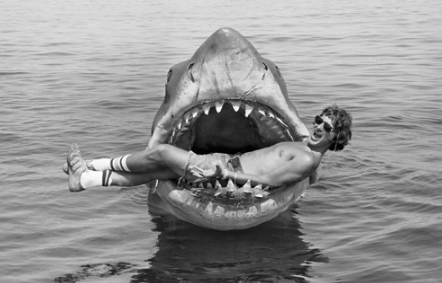
When you imagine a beautiful sea animal, part of the image that comes with it is a dorsal fin, but bowhead whales don’t have one, nor do the narwhal and beluga. In case you’re wondering what in the world a dorsal fin is, it’s a triangular protrusion that seems like it’s floating on water: think JAWS.

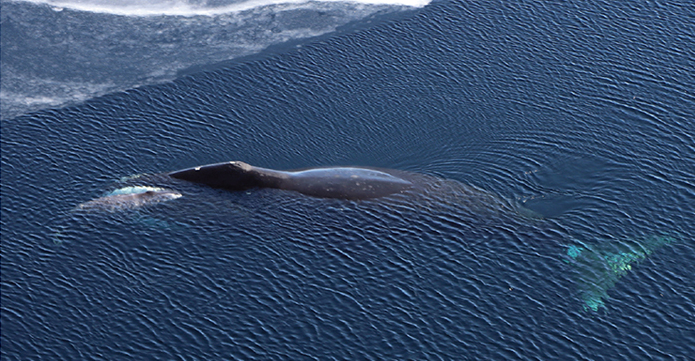
But, you see, there are benefits to not having a dorsal fin as it prevents heat loss, reduces surface area, and allows these whales to swim under ice sheets. 

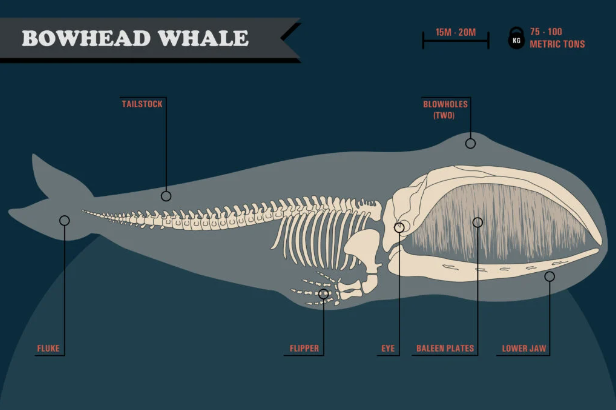
The bowhead whale is famous for its size, and even just the measure of its mouth is marveling. Their mouths can be up to twelve feet high, sixteen feet long, and eight feet wide, and their tongue alone weighs a ton. Now that you have a vague image of their mouth, can you imagine their head? It takes up about one third of their body and can be used as a battle ram to smash through ice up to two feet thick. They are one of the largest whale species in the world, second only to the blue whale in size. Their average length is fifty to sixty feet. They can also weigh up to 100 tons (220,462 Ib). On the surface of their head are not one, but two blowholes that can be used to spray water twenty feet high into the air after thirty minutes underwater. Bowhead whales can normally hold their breath for about thirty minutes, but the most they have ever held is forty mins, and they have the ability to dive in between the range of 330 and 850 feet, and the maximum is 370 to 1,584 feet. To give you a bit of deeper information, the Cuvier’s beaked whale, also the leader in this pack, can dive down to 9,816 feet, so our bowhead buddy is actually a pretty shallow diver.

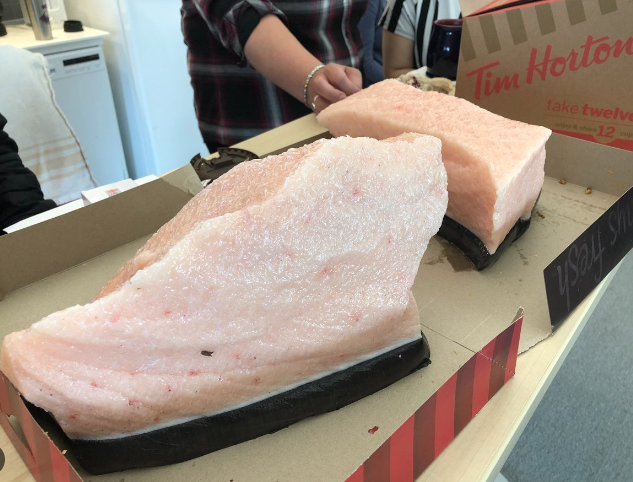
Since the bowhead whale’s environment is in the icy waters of the Arctic, it needs to keep itself warm. So they have a thick layer of blubber to provide heat and energy, and it can be up to around 27.5 inches thick. As mentioned, this whale often uses its powerful skull that is about up to one foot thick to break ice, which creates a breathing hole for them.

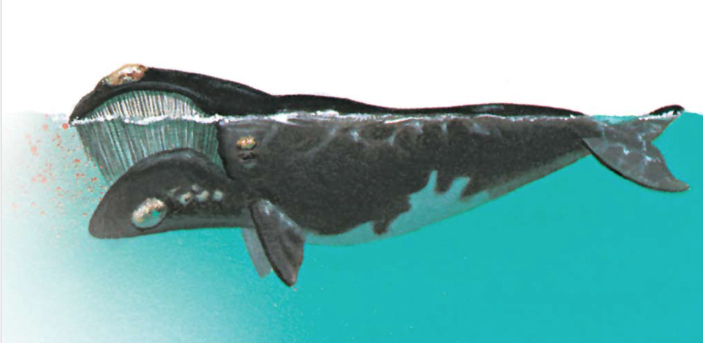
But even though they have such a huge size, their food is very small. The massive bowhead whale is huge, and it needs food to keep up. Can you believe that they can eat up to two tons of food every day? And can you believe that they eat about 100 tons each year? That’s amazing! The bowhead whale eats by swimming with their mouths open, and in comes the food. Can you imagine just showing up at the dinner table and opening your mouth? What would your mom say? Their food filters through their baleen plates. Out of all whales, the bowhead whale’s baleen is the longest. 

Most of their feeding is during the summer months of the Canadian Arctic. 

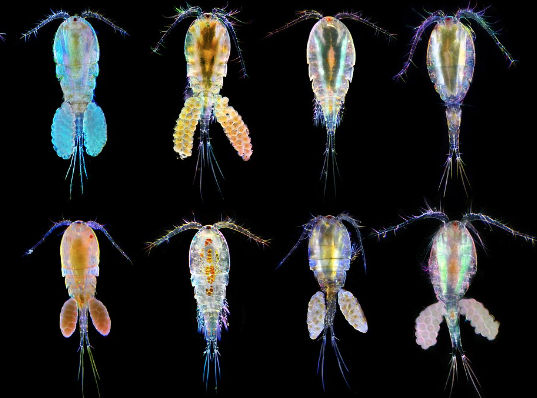
As mentioned, they eat microscopic plankton, and feed exclusively on marine invertebrates like krill and copepods, so they migrate seasonally to take advantage of food and to also avoid ice entrapment. You can normally find them at the edge of the pack-ice areas. They’ll migrate over very short areas depending on the movement of ice above them. In the winter, where ice is freezing up, they will move north, but in the summer, they move south. 

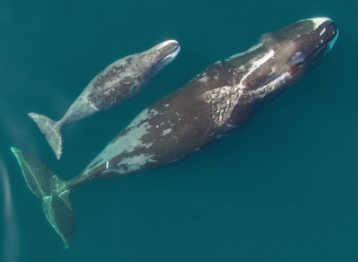
Females typically give birth to one calf every three to four years of a gestation period of about thirteen to fourteen months. Newborns are about thirteen to fourteen feet long and nurse their mother (oops I am sure you are thinking that for some reason the mother sidles up to the baby looking for milk, my bad, it is the other way around) the MOTHER nurses the baby for nine to twelve months. To survive the low temperature of the water, newborns are born with a thick layer of blubber to protect them. And amazingly, calfs are able to swim after thirty minutes they are born. They also typically grow 30 feet during their first year: imagine giving a birthday party to a forty-five foot long infant! Sexual activity normally occurs in pairs of boisterous males and one or two females. Breeding seasons are observed to be around from March to August. Reproduction can begin for a whale at the age between ten to fifteen years old. Conception mostly occurs during March, which is when song activity is at the highest time of the year.

All whales like to sing, for whether it is to communicate with each other, locate food, find each other or even for the males to show off to attract the females during mating season, these bigheaded and boneheaded goliaths love to make music!

An oceanographer from the University of Washington, Dr. Kate Stafford ventured into the dark icy waters of Fram Strait, between the Greenland and Norway islands, and found bowhead whales singing. It was described to sound like they were shrieking like cats, making trumpet-like noises, and low woo woo noises. Scientists say that the bowhead whale sings with two voices: one voice making a low-pitched sound and the other making a high-pitched noise at the same time. I mean if your tongue is as big as a Yugo, it makes sense that two or even three or even 15 voices could come out of it, no?

Bowhead whales are highly vocal, and use low vocal sounds during traveling, feeding seasons, and when socializing with each other. While more intense calls are heard for communicating and navigating, especially during the migration season. During breeding season, bowheads tend to make long, complex variable songs: a type of romantic swooning. During mating season, bowhead whales tend to be singing twenty four hours per day, and they would do this most of the winter for every single year. These calls would be made by males to attract females and show dominance. 

A group of scientists and biologists from Suffolk University, Arctic Aquatic Research Division, Fisheries and Oceans Canada, and the Greenland Institute of Natural Resources studied hormones of the dead bodies of bowhead whales killed by the Inuit during a 13-year period. Their research shows that a group of female bowhead whales were likely pregnant for about fourteen months, and they found this by noting fetus size in many dead whales. However, they also found that bowhead whales can be pregnant for up to twenty three months. Why? Well, according to a research team, they found that the bowhead was able to put a pause to their pregnancies, which allowed the mother-to-be to choose a suitable time to birth her baby, with ideal hormone levels. But to research more about reproduction, the group collected baleen samples from bowhead whales that were killed by Inuit hunters in the Greenlandic and Canadian Arctic.during these thirteen years: 1998 to 2011. By studying closely, these samples offered a snapshot of their life, like their hormone levels, and in particular progesterone, estradiol, and corticosterone. Each of those hormones are produced during different times of the pregnancy process. Studying these hormones over time, they discovered that these female whales were pregnant for a period of twenty three months! The research group suggests that baleen females were able to put a nine month pause on their pregnancy, which is why the pregnancy lasted so long. Now, I found this mind-blowing and I’m sure you feel the same way, too. I wish I could tell you more, but additional research will need to be done by this amazing research group. But if the number holds, that would make baleen mammals like bowhead whales have the longest pregnancy duration. The current champions of this are the elephants, with the average pregnancy duration of twenty two months. 

Even though the bowhead is such an amazing whale and loved by so many, some populations are currently endangered due to the economic value of their oil, and with their slow swimming speeds, they were once hunted to near extinction. The Inuit still use their oil for cooking and making traditional whale oil lamps. Bowhead whales are normally seen in groups of three or less, though they do get together in larger groups during feeding periods.

There are also legends: an Inuit legend says that the whales were offered to the people for survival, and were not killed needlessly. The legend goes that the special season spring was created, and it was when the ice would crack and mists appear above the sea. That made it easy for the people to capture the whales and the mist blurred the vision so the creator didn’t have to see the killing; thus the whales were treated with great respect. They are the symbol for the people of mankind and nature, and it was also believed that the whale’s spirit would return to the water and be reborn. Sadly, European and American whalers did not have this sort of respect and once almost hunted the whales to extinction.

All this time I have been teaching you about their pregnancy, mating, baleen, songs and more, did I mention about their lifespan? Bowhead whales are considered to be one of the longest living mammals on earth. The average age for bowhead whales is either around two hundred years old or even older than that. Imagine living for that long! How long a bowhead whale can live can depend on their cells and their genetics. Since they are one of the biggest mammals, they have about a thousand times more cells than other animals. Australia’s national science agency estimated that a bowhead whale’s maximum natural lifespan based on genetics is 268 years old.