Roald Dahl’s “The Hitchhiker” and O. Henry’s “After 20 Years”
Roald Dahl has had a place on my bookshelf, and in my heart, since I was a little girl. Seeing his name again in this short story brought back memories of Charlie and the Chocolate Factory and Matilda. Before reading the story, I had high expectations for his storytelling, and, of course, he did not disappoint! “The Hitchhiker” starts off with the narrator taking his new BMW 3.3 Li for a ride up to London. When children get a new toy, they immediately want to open it and play with it, and in some way, the narrator expresses this course of action but, instead, his toy is a brand new car. Dahl sneaks some childlike wonder into this narrative – as he fully enjoys his new ride on a “lovely June day” he takes in the “haymaking in the fields and… buttercups along both sides of the road.”
While driving, he notices a person with a thumb raised in the air on the side of the road. He formerly being a hitchhiker gives the man a lift. “I knew just how it used to feel to be standing on the side of a country road watching the cars go by, and I hated the drivers for pretending they didn’t see me.” The narrator hasn’t let wealth disconnect him from the person he was before and is still compassionate to people who are in the situation he was in. After the man on the side of the road hops in, they make small talk and the conversation leaks into how fast the narrator’s car can go. He says, “‘One hundred and twenty-nine miles an hour’” and the hitchhiker doubts it. To prove him wrong, the narrator starts applying more pressure on the accelerator and just as they get to one hundred twenty miles per hour, a police motorcycle is on their case. They are stopped and as the policeman questions them he writes down their names in the “dreaded book of tickets.” The driver is given the fine and they are free to carry on with their lives.
After getting in trouble, the narrator is upset but asks the hitchhiker why he lied to the police about his job. The passenger teases him a little which increases the narrator’s, and the reader’s, curiosity. I can’t say I wasn’t shocked when the hitchhiker revealed that he took the narrator’s belt, shoelace, watch, driver’s license, his wife’s broken ring, etc. Since he takes something as insignificant as, for example, a shoelace, it stresses how good he is at the craft of stealing. It makes me wonder if there are people like this in real life. Can someone really tug the laces off my shoes without me noticing? Or could this potentially show how unaware the narrator is of his surroundings? The passenger finally says that he is a pickpocket, or as he calls it, a fingersmith. The name “fingersmith” is a clever way to twist something that is normally thought of as bad, in this case pickpocketing, into something that sounds like a real job. The fingersmith also believes that he is above normal pickpockets because he is very stealthy and never gets caught. Since this is the case, he might feel that he deserves a better title. I suppose everyone wants to feel proud of their talents, and the hitchhiker is no exception.
But then the narrator focuses back on his own life and recalls what the police said about going to jail for speeding and his dilemma makes him panic. The fingersmith senses his worry and pulls out the policeman’s ticket book! The narrator’s reaction is: “I nearly swerved the car into a milk truck, I was so excited.” The snatching of the ticket book provides the reader with a sense of relief for the characters because after getting to know them in the beginning, they start to form a bond with them. The fingersmith suggests that breaking the law is okay because he gradually gets the reader on his side as the story progresses and the reader feels bad when the narrator gets into trouble. This makes the reader think that they don’t deserve to get into trouble and presents the idea that there are no punishments for breaking the law if you manage to avoid getting caught.
I couldn’t be the only one making exceptions for their rule-breaking! At first, my views on pickpocketing were negative, but now it’s a curious topic that intrigues me, especially after reading that their skills could get them out of trouble. By getting this reaction out of the reader, it is clear Dahl wants the reader to think outside of their own lives and get into the minds of other people. Throughout the story, the reader’s perspective changes, which causes them to feel a sense of victory when the ticket book is stolen.
When it comes to stealing the ticket book from the policeman, I can’t decide whether it is a good thing or a bad thing. The policeman’s “dangerously soft and mocking” voice makes me think that he deserves it because he is so full of himself. Not only that but I also thought it was good because, in the end, the two characters didn’t really deserve to get into a lot of trouble. But they were breaking the law, so maybe they were deserving of some punishment. And maybe, stealing the book was bad because people that caused more harm might’ve been written down there, which puts others in danger and lets criminals escape. Aren’t they considered criminals since they broke the law? What is defined as bad law breaking? What is defined as reasonable lawbreaking? In my opinion, they didn’t hurt anyone, so they didn’t do anything wrong, which justifies stealing the ticket book. Then again, the question–what if their recklessness eventually caused an accident?–arises. It feels good that they get away with it, but this is because Dahl makes the reader support the bad guys and creates a bond of friendship that opposes the justice system, contrasting the message being sent in the next story, “After Twenty Years”.
Turning our attention to O. Henry’s “After 20 Years”, the way the author describes the setting makes the tone sound mysterious, but also calm. I can suddenly picture the shops lined up on both sides of the road, empty of life, when the story starts. “Now and then you might see the lights of a cigar store or of an all-night lunch counter”, which puts a picture in mind of dark windows, and the select few that have light, stand out. The attention turns to the character looming in the darkness. ‘Silky’ Bob is a fugitive, and the “little white scar near his right eyebrow” portrays him as such and adds a hint of edginess to his character. His “keen eyes” make it clear that he is waiting for something to happen, or that he just might be alert to his surroundings. In addition, his pale complexion can be linked with sickness which is could be a cause of not having enough earnings due to running away from the law.
So, Bob is waiting for someone. This someone is a friend, and 20 years ago (hence the title) they decided to meet at this appointed time. His friend, Jimmy, the beat cop who speaks with Bob without revealing his identity, keeps his promise too, but they never ended up having their reunion, because Jimmy realizes that his old buddy Bob is a wanted criminal. The fact that Officer Jimmy did show up at the “‘appointed place on time’” clearly makes him a reliable and trustworthy person because he kept his promise even after many years. I know if I were in his position, I wouldn’t have been able to even remember the person I was meeting with, let alone the time we were supposed to meet! “‘Somehow I couldn’t do it myself, so I went around and got a plain clothes man to do the job.’” The lack of confrontation indicates that he never wanted to harm Bob. Even though he felt this way, he couldn’t let Bob keep wreaking havoc, so he decided to do the right thing and turn him in. By doing this, he preserves their old perception of each other. In the end, when Bob thinks of who actually arrested him, the stranger that Jimmy sent will probably pop up in his mind because he was the one who acted. Therefore, Jimmy won’t always be the bad guy in Bob’s head.
If we compare the lessons the authors are trying to teach from “The Hitchhiker” and “After 20 Years” we notice that they’re complete opposites. In the former, Dahl gives the reader a story where they are happy that the bad guys win, but in the latter, the story ends up disappointing us when Jimmy turns Bob in. One suggests that being bad is good, and another suggests that being bad is, in fact, bad. Both stories show how society either “root[s] for the underdog or the lawbreaker” (quote from Mr. Watt’s question) and that people’s morality depends on which side is more appealing to them, considering that they receive the details on the side they support. And at times, they might just choose a side because their place in society already puts them on that side. What I’m trying to get across is that, if someone reading the story is a thief, they will justify the fact that it is okay to steal because they don’t want to identify as a bad person. Human nature does this naturally, as we don’t want to be in the wrong most of the time. Now I’m not saying that everyone who read the story and was happy that they got out of trouble is a thief, because then I’d have to admit to being this form of crummy lawbreaker! I’m just explaining why someone may be compelled to choose that side if they’re in a similar situation as the character. No matter what side you are on, and how you view society, both stories are entertaining. On the surface, they might just be another piece of writing, but after taking a deep dive, I realize how much a few pages can hold. I’m looking forward to reading more stories, but for now, I can officially say that I’ve completed my first quiz for Mr. Watt!
I stepped outside and took a long, deep breath of the cool refreshing air. Everything was caked with a thick layer of glistening and shining white snow. The majestic pine trees with their skinny branches struggled to push against the snow that weighed them down. I stepped out and my heavy boots were airtight sealed to shield any cold from seeping through the layers and freezing me to death. I checked every single nook and cranny of my hefty snow jacket, brushing off any ice chunks that had already formed from the moisture left on the jacket. It was normal at this point, a part of my everyday routine, just like every other July I had lived through.
I really never understood why everything became like this. It had been a tale passed down from my great-great grandfather, so many details were muddled around as it was passed down, but apparently everything was normal one day, and the next day became a wasteland. Like a deity wreckingp their revenge upon us, causing a calamity that would wipe humanity out, or put us on the brink of extinction. Everything became frozen to the core; the bitter cold seeped into houses, immediately wiping out those who weren’t quick enough to react, wrapping them around a thick layer of ice, like a mummy. Those who survived the first wave of glacial wrath quickly started working on ways to survive the below-zero temperatures, eventually designing the strange contraptions that are used today, and passing the flame on to the next generation to live. I myself didn’t have the slightest idea of how it worked, but it kept the entire body isolated from the entire outside world, shielding us from the piercing cold.
Scanning around, I saw no one else coming out of their small igloos to start gathering food. It was only me out here, trudging forward to the central fishing hole, our only source of food. I had woken up early to get a headstart on the fishing today, to both finish early, and lighten the load on my father, and many others did too, but I couldn’t figure out why no one was out today…
The sun just barely breached the horizon, and I slowly crept forward, stomping through the ice with my spike-tipped boots, eager to get to fishing. The vibrant blue ice was something that I could always gaze at and let my mind wander, thinking about what the world was like, and what other colors there could be in nature besides white, blue, and green. Or what other food there was in the world that wasn’t the same fish we had every day? In the midst of my roaming thoughts, I stopped paying attention to what was in front of me, and just marveled at the beautiful sun reflecting the ice, creating brilliant flashes of blue light, but then, I stepped in a divot and lost my balance.
I swung my arms around, in a feeble attempt to catch myself, but it was inevitable. I slipped and fell forward, straight onto my visor, shattering the thing into a million pieces. I gasped for any air that could rejuvenate me, but I was met with a bitter cold. My lungs were being impaled by glacial spikes, and I was slowly fading away. I tried to cry out for help, but I couldn’t produce any sound, and all that came out was a dry gasp. The polar air forced itself onto my cheeks, immediately freezing my entire face, up my nostrils, consuming any moisture along its path for destruction, reaching to completely freeze my brain. I tried to move my arms, and my legs, and even blink to shield my eyes from the blast of air, but they were all already frozen down to the bone. No one was coming to save me. I was immobilized, and silenced by the cold. There was nothing I could do against nature’s undying wrath. Yet, through the painful sensation that nature was bringing me, I couldn’t help but peer into the rich blue ice that I was lying upon, how could something be so beautiful yet so deadly? I couldn’t feel anything anymore, I couldn’t feel the sharp stinging of the cold all over my body anymore, how merciful nature could be! In the soothing relief I had, my mind truly escaped me, and I slipped away from this cruel, desolate world.
Eudora Welty’s second voice: how she infused her own thoughts into countless stories
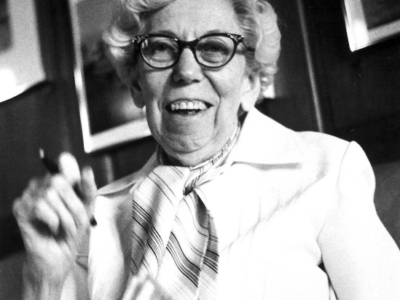
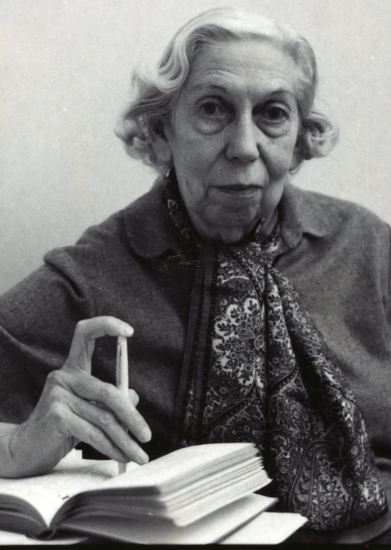
Eudora Welty mastered the art of writing. She created complex characters who follow her trademark saying, that “…Greater than situation is implication. Greater than all of these is a single entire human being who will never be confined in any frame”; she wrote stories about the South which harbored symbolic meanings, metaphors, and interesting characters, some difficult to crack open, but while she’s a talent at all of those things, her particular narrative voice stands out just as much. While the common idea is that writers write to create the story, which means the plot, might they also have a deeper reason? Does a writer feel a need to share something extra, more elaborate than the plot, the characters, and even the theme? When the story seems finished, does the writer say, no, I must add something?
Like all writers, Welty chooses her narrative voice, appropriate for the particular story – and there are many options – see how Helen Liu covers this in her Welty essay. But then, subtly, without most people’s knowledge, she steps out of the perceived narrative limits, almost as if she’s noticed that you, as a reader, need a little bit of prodding, or a little extra to think about. Most often, her second narrative voice appears when Welty asks rhetorical questions in her stories. One wonders, are these questions for herself, signaling that she can’t even fully understand the depths of her pen-created characters? Or are they only for the reader, making them think long and hard about what the outcome of the story might be? Of course, there are times when Welty doesn’t use questions to aid her second voice. Sometimes, all she does is hide her words of wisdom in half of a sentence, seamlessly transitioning between her character’s thoughts to her own. Is Welty’s use of both normal and second voice narration what brings her story to an even higher level? Does this second voice have certain characteristics, ones that elevate her writing? What exactly is Welty’s method when it comes to stepping out of the box of her narrative voice and entering a wider zone of commentary and inquiry?
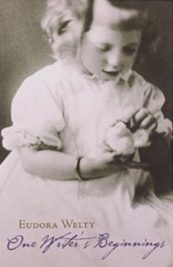
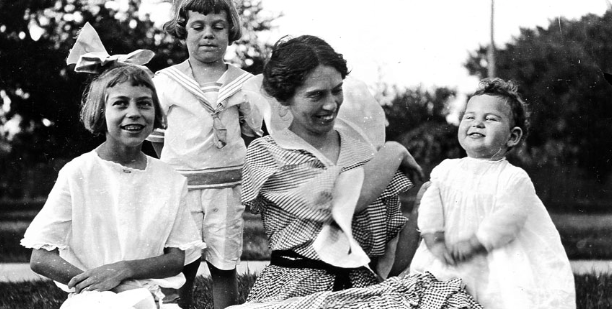
On North Congress Street of Jackson, Mississippi, April 13, 1909, with the striking of an old grandfather clock and the whirring of a small bird poking out of a cuckoo clock, Eudora Welty made her appearance – the first daughter of Christian and Chestina Welty. From there on, she grew into a fun toddler, a book-loving young girl, a talented photographer… and a phenomenal American author. At the apex of her career, several years after winning the Pulitzer for The Optimist’s Daughter, she was invited to do three lectures at Harvard University in 1983, later becoming the book One Writer’s Beginnings. This memoir stayed at the top of NY Times Listings week after week, for almost a full year (unheard of for a literary memoir).
***
Her recollections in One Writer’s Beginnings all started with Welty’s parents nourishing her and providing a multitude of experiences. Her mother read to her often – mornings, afternoons, nights, even when she was churning away in the kitchen. It was because of her that Welty quickly came to the realization at the “age of two or three [,] that any room in our house, at any time of day, was there to read in, or to be read to” (5). Growing up listening to the voice of her mother reading in her rocker or in front of the coal fire was sure to be “good at least for a future fiction writer, being able to learn so penetratingly” (3). Welty goes on to say this helped her develop a voice inside of her that read every line out loud.
As she put it, “It isn’t my mother’s voice, or the voice of any person I can identify, certainly not my own. It is human, but inward, and it is inwardly that I listen to it” (11). Is this what perhaps guides her to the creation of an extra voice, being so conscious of its origin?
Welty’s father, on the other hand, pushed the curious side of his daughter, guiding her see the world in a different way. With her father, she grasped concepts of meteorology, later helping her to create specific atmospheres in her fiction, where “commotion in the weather and the inner feelings aroused by such a hovering disturbance emerged connected in dramatic form” (4). For instance, while writing “First Love” Welty created the freezing winter of 1806-7, adding dramatic effect to the story, where even the reader can start to shiver at the thought of the “strange drugged fall of snow” (153) through meteorological research. Christian Welty also provided Eudora with hands-on experiences, giving her both train sets that had “the engine with its pea-sized working headlight, its line of cars, tracks equipped with switches” (5) and countless other mini things. That is not to say her father didn’t enjoy literature. He too cherished it, reading Sanford and Merton many times over, until the book “was lacking its front cover, the back held on by strips of pasted paper, now turned golden, in several layers, and the pages stained, flecked, and tattered around the edges” (8). This Sanford and Merton wasn’t the more famous one written by Thomas Day, but instead it is Sanford and Merton in Words of One Syllable by Mary Godolphon. As Welty described it, “Here are the rich boy and the poor boy and Mr. Barlow… in long discourses alternating with dramatic scenes” (7). It only uses one syllable words and ends with two morals: “Do what you ought, come what may,” and “If we would be great, we must first learn to be good.”
The first section of One Writer’s Beginnings is titled “Listening.” With both her mother and her father, Welty listened, whether it was to stories being read aloud or to the description of fancy gadgets. She discusses how she first had to listen for stories, knowing they existed, before she got to writing them. Even at night, when she lay in bed, Welty listened to the “murmur of [her parents’] voices, the back-and-forth” (21). While she didn’t know what they were talking about, she felt that she “was included, in–and–because of—what I could hear of their voices” (21). Growing up listening to everything around her gave Welty the tools to create her own future voice.
After expanding her knowledge with her parents, Welty had her first experiences at school, the Davis School, just a short walk away from her home. Despite Miss Duling, the principal, being on the strict side, “a lifelong subscriber to perfection [and] a figure of authority” (22), Welty learned a lot: “grammar, arithmetic, spelling, reading, writing, and geography.” People often say that the basics are the most important, and that’s exactly what Welty was learning at the Davis School, building up her foundation for her later success in writing. And even young Eudora, just a fourth grader then, was demonstrating a strong love and appreciation towards books. During the rainy days at school, when it was too dark to teach normal classes, she was envious of the other fourth graders in Mrs. McWillie’s class, who got to hear The King of the Golden River being read aloud.
A book by John Ruskin, The King of the Golden River starts with a paragraph of beautifully written setting: Treasure Valley, capable of rain, sun and crops no matter the time: “But the clouds were drawn so constantly to the snowy hills… that in time of drought and heat, when all the country round was burned up, there was still the rain in the little valley.” Ruskin then moves on to depicting the three characters living in this valley – two ugly and cruel older brothers who “killed everything that did not pay for its eating” and a younger brother, an exact opposite of his older siblings, who was “kind in temper to every living thing.” Once characters are introduced, Ruskin brings us into desperate times, when crops have failed everywhere except this valley. He showcases the impressive lack of sympathy of the two older brothers and brings in rising action with a “little gentleman”. I wonder what the little gentleman will do in the future?
Nevertheless, Welty did not get to hear about the Treasure Valley, or the little gentleman being read aloud. But she did enjoy the spelling bees in Miss Louella Varando’s class. As Welty put it, “I did not suspect that there was any other way I could learn the story of The King of the Golden River than to have been assigned in the beginning to Mrs. McWillie’s cowering fourth grade, then wait for her to treat you to it on the rainy day of her choice” (28). Of course, Welty later read it on her own time (though it didn’t quite reach her expectations). Still, reading it must have expanded her horizon, helping the development of her future narrative voice.
Welty’s loving childhood didn’t just stop at school or reading – it could also be seen in the car trips her family took in the summer “to Ohio and West Virginia to visit the two families” in their “five-passenger Oakland touring car” (43). These trips let her discover interesting aspects of her family history and experience both sides of her family. Her mother’s side in West Virginia was situated in the mountains, with the Elk River somewhere below. Experiences here taught Welty a sense of independence and freedom. As Welty put it, “It took the mountain top, it seems to me now, to give me the sensation of independence. It was as if I’d discovered something I’d never tasted before in my short life” (57). On the other hand, her father’s side in Ohio lived a more traditional life in “one of the neat, narrow-porched, two-story farmhouses, painted white, of the Pennsylvania-German country” (62). This gave her the experience of northern farm life. They went to church on Sundays, in the designated “shiny black buggy… with a fringe on top” (66). And while this house might not have been as exciting as one in the mountains, and the family not as talkative, it was very loving: “He never brought out much to say till I was ready to go. Then on my last day… he never stopped talking at all. He talked up one blue streak” (62), Welty’s mother would say about Grandpa Welty.
Skipping a bit farther ahead into her adult years, Welty was also a nationally-recognized photographer. In some ways, taking photos is similar to writing – it can capture a story. However, one is done without any words, as there is only a moment, or a snapshot, to convey everything. Every time she took a photo, she likely thought of what her message was; why was she snapping the shutter at this moment? This is like a form of narration, but it’s without words and can be interpreted in many ways by others.
Looking at Welty’s special ability to create a wise second voice, we should remember to give credit to her parents who provided her with such an enriching environment. And perhaps it is because the characters she created lack the nourishing childhood Welty herself grew up in, she took the creative liberty to step in and add her perception of the world, the second voice.
As we read through The Collected Stories of Eudora Welty, “Livvie” shows examples of Welty’s second narrative voice. Livvie is a young woman, only 25 years old, who has been married to Solomon, an old and dying man for nine years. They live together deep on the Natchez Trace, an ancient Native American road which is featured in several of the stories I read, where Livvie hasn’t left their house or its vicinity, much if at all. She isn’t miserable, but she also doesn’t enjoy the freedom and life a 25 year-old should be getting.
As Livvie and Cash (a handsome field hand who Livvie is just noticing) watch Solomon sleeping, close to death, Welty writes, “People’s faces tell of things and places not known to the one who looks at them while they sleep, and while Solomon slept under the eyes of Livvie and Cash his face told them like a mythical story that all his life he had built, little scrap by little scrap, respect” (237). For half a sentence, Welty went into a more general form, saying “People’s faces” instead of focusing on just Livvie. Welty is infusing a larger picture and an idea that can be applied to life in general. Is she infusing the reader’s understanding of Solomon from a perspective wider and more knowledgeable than Livvie could have? Had Livvie witnessed this before – the idea that one’s face during sleep tells of things that aren’t usually seen during the waking hours? Perhaps, perhaps not.
On page 238, Welty writes, “Livvie and Cash could see that as a man might rest from a life-labor he lay in his bed… he sighed to himself comfortably in sleep, while in his dreams he might have been an ant, a beetle, a bird, an Egyptian, assembling and carrying on his back and building with his hands, or he might have been an old man of India or a swaddled baby, about to smile and brush all away” (238). In the first half of the sentence, Welty writes like she has the whole story, describing what Livvie sees and hears. But then, starting at “while in his dreams,” a secondary wisdom settles in. We already know that Livvie has been living in isolation, deep in the Natchez Trace, for nine years, so it seems to be a stretch for Livvie to be making observations that Solomon could be “an Egyptian, assembling and carrying on his back and building with his hands.” What could make more sense in this situation is Welty making these observations for Livvie, stepping out of the perceived limits of her narrative voice, helping the reader’s imagination along and making the story all the more interesting.
Not just in “Livvie” does Welty present to us her second voice – it also appears in “A Memory”, which is a unique story because it’s one of Welty’s own memories of growing up. Welty writes, “I was at an age when I formed a judgment upon every person and every event which came under my eye, although I was easily frightened” (75). This seems to be her second voice as well, written many years later looking back to understand her younger self. Her wise voice isn’t just narrating the story of her memory but starting to understand that at this age, she would form “a judgment upon every person and every event,” itself a secondary voice.
Welty sees her (first) crush, who she has immense feelings for, get a nosebleed: “But this small happening which had closed in upon my friend was a tremendous shock to me; it was unforeseen, but at the same dreaded; I recognized it, and suddenly I leaned heavily on my arm and fainted. Does this explain why, ever since that day, I have been unable to bear the sight of blood?” (76). Welty went from discussing a crucial moment of her pre-teen years to pondering her own thoughts about this, perhaps being the reason why she can’t “bear the sight of blood.”
Welty’s second voice also adds a layer of understanding that the reader can gain towards her. We start seeing how this memory plays an important role in the development of her character and person, and we get the chance to connect a couple of moments of her younger self into how she is as an adult. This is similar to the many times throughout One Writer’s Beginnings that Welty looks back at her own childhood and sees her formation. Just one example would be, “The future story writer in the child I was must have taken unconscious note and stored it away then: one secret is liable to be revealed in the place of another that is harder to tell, and the substitute secret when nakedly exposed is often the more appalling” (17). This “substitute secret” realization was from a life-changing moment when as a curious young girl, Welty dug around her mom’s drawer to find a “small white cardboard box” that held “two polished buffalo nickels.” Seemingly not important, young Welty soon learned just how much meaning they held. These were two nickels that belonged to her little brother who had died before she was born – “They had lain on his eyelids, for a purpose untold and unimaginable” (17). In one moment, Welty realizes that she is not the first-born child. Just like the memory told in this short story, the two buffalo nickels also influenced and changed Welty’s later life. Her realization that “one secret is liable to be revealed in the place of another” could also connect to her writing. She’s writing her primary narrative, but at the same time, unearthing that secondary narrative (secret).
Welty’s second voice also seems to have a pattern of appearing when characters have less freedom. It appears in “Livvie”, where Livvie had been isolated in Solomon’s house for nine years, and now it takes shape in “The Whistle” where Jason and Sara Morton live a disheartening life. They are sharecroppers in extreme poverty, controlled entirely by Mr. Perkins. At a blow of the whistle, they must get up to tend to their tomato crops, no matter the time of day.
This story starts with a panoramic illustration of the farm, as if in a movie. The camera is far away, and from 300-1,00 feet above the earth you can see a “farm [that] lay quite visible, like a white stone in water, among the stretches of deep woods in their colorless dead leaf” (57). But even from this view, one can see the dots of “the tiny tomato plants in their neat rows closest to the house… appalling in their exposed fragility” (57). Welty does an excellent job of setting a dejected tone, even the lamp in the famous “had just been blown out.”
Then the camera zooms in, getting closer, as if the narrator is now entering their farmhouse to see the two “lying between the quilts of a pallet.” The narrator tells us about Jason lying there with “his lips opened in the dark” and Sara on her back “with her mouth agape, silent, but not asleep.” This is what the narration usually covers, but as they continue to lie there trembling, it’s as if the second voice starts to make an appearance, silently creeping in. It says that “every night they lay trembling with cold, but no more communicative in their misery than a pair of window shutters beaten by a storm” (57). Welty, no longer painting a cinematic picture, is now taking the time to add a paragraph highlighting their lack of communication, making it even clearer how miserable their life is. She gives information such as “They were not really old—they were only fifty; still, their lives were filled with tiredness, with a great lack of necessity to speak.”
Welty also writes, “Perhaps, years ago, the long habit of silence may have been started in anger or passion. Who could tell now?” Just like in “A Memory” Welty is asking rhetorical questions that give the reader a little something more to think about. And we also wonder, does Welty even know the reason behind their “long habit of silence” or is she just demonstrating the near-breaking point that Sara and Jason are at? Or, does she know, but she purposefully occludes this from the reader because Jason and Sarah themselves have forgotten? As we read, it makes us wonder how bad life has to be for a couple of fifty to entirely lock themselves into their own silent world, even when the other is only a couple of inches away, lying on the same sleazy quilts. Perhaps in addition to being able to move between characters’ actions and her own words of wisdom (seen in “Livvie”), Welty is also able to prod the reader along in their thoughts, which she does by subtly incorporating her voice and questions into the text.
A last example of Welty adding questions in a second voice is in “The Wide Net.” William Wallace has gone off to the river to look for his pregnant wife Hazel in fear that she had gone to drown herself. He dives down deep into the dark waters of the river: “All day William Wallace kept diving to the bottom” (180). However, while this paragraph starts off with Welty’s usual narrative voice, describing the dive, the darkness at such depths, the bubbles on the surface, it seems as if Welty starts speculating as well. She writes, “So far down and all alone, had he found Hazel? Had he suspected down there, like some secret, the real, the true trouble that Hazel had fallen into, about which words in a letter could not speak… and there was nothing she could do about it—they knew—and so it had turned into this?” (180). Of course, one could argue that this is Welty continuing to narrate William Wallace’s subconscious submerged in the water, and not infusing her own thoughts, but it also seems as if she is trying to hint at what she knows as an author. Welty obviously already knows what happens to Hazel later in the story, so it’s like once again, she is prodding the reader along and providing a voice which only wisdom and the perspicuity of special insight brings. She makes one wonder what William Wallace was doing down in the water. Was he exploring his own consciousness, knowing his life is about to change with a new baby? Welty’s extra voice also helps the reader produce their own ideas as to what Hazel really meant with the letter she wrote (basic plot).
With these four examples, it seems that Welty’s second voice appears most often in the form of questions. She throws them in after an important occurrence, as if she doesn’t want the reader to slack off. They make you think, not just about the story, but about life around it. Have you ever seen a sleeping family member or friend and wondered what they thought they had dreamed of? Are there moments from your own childhood (or younger years for us still in our teens) that have changed your way of life now, or been a watershed? Why do couples fall into a void of silence that neither cares to fill? These are all excellent questions raised by Welty through her second voice. So perhaps what the second voice really does is make the readers’ brains turn. Welty, being so educated from her youngest years at the Davis School, the University of Wisconsin Madison, then Columbia University, and of course being brought up so fastidiously by her loving parents, was an exceptional writer filled with wisdom, and she uses her stories to not just to tell an exquisite tale of different characters, but to add insight into the lives of each and every character, and thereby, each and every reader.
Chloe’s friend Montserrat Reyes has some Student Feedback for her:
Eudora Welty doesn’t seem to be the only one that mastered the art of writing as your second sentence is quite the mouthful, but in the most artistic and wonderful way. Right off the bat, you spark questions that get me thinking about what the meaning of writing truly is to me and to Welty. I love how you stack the use of phrases to create a conversational piece, an open floor to discuss Welty’s writing. It’s inviting and reminds me of specific moments throughout her short stories that correspond with that “little bit of prodding” she does with her “second narrative voice” to weave her wisdom and the character’s thoughts. I see your clever use of questions while talking about Welty’s tendency to ask rhetorical questions.
By giving a little biography (or autobiography) of Welty you allow anyone that hasn’t heard of her to get a feel of her accomplishments and bring importance to her contribution to the world of writing, and even I learned something new!
Hearing about Welty’s recollections of her youth, I am reminded of my own experience as a child: according to my parents, they would read to me every night while I was in my mother’s stomach and throughout my childhood, and, similar to Welty, my mom worked away in the kitchen preparing bottles of breastmilk and homemade purees in the kitchen all while balancing her work life. My mom also has her signature rocker—which we still own to this day—where she would hold me in her arms as an infant, or place me on her lap as a child, that “helped [me] develop a voice inside of [me] that read every line out loud”.
You pointed out that the extra voice within her writing isn’t her own, but rather, as she describes it, “human”. I didn’t realize that could be the case. Contributions to the growth of this voice seem to be her connection with her parents, as you discuss later, and the openness to absorb and learn from the world, whether it’s from home or school. I’m not surprised that from an eager “fourth grader” with a “strong love and appreciation towards books” sprouted a gifted writer. It’s wonderful that you dove deeper into the book she had overheard being read in the older classes because John Ruskin’s description vaguely reminds me of Welty’s.
When you bring up Welty’s photography era, it reminds me of Mia from Little Fires Everywhere by Celeste Ng and how Mia, the main character’s mother, believes that her photos are more than what they show because there should be an emphasis on what they mean.
Additionally, your analysis of “Livvie” provides evidence for Welty’s wise, second voice she likes to use throughout her writing. I can see what you mean with the snippet about the Egyptian that it obviously can’t be Livvie making these connections but instead the second voice “helping the reader’s imagination along and making the story all the more interesting”.
By referencing her childhood and her adult self, I see how much of an impact one’s childhood has on one as an adult. The paragraph analyzing the importance of secrets in her, and anyone’s, unpeels another layer about why Welty’s writing is the way it is and how it is seen in the use of her primary and secondary voice and how “They make you think, not just about the story, but about life around it”.
After reading the whole piece, I appreciate your use of all of Welty’s stories from The Collected Stories of Eudora Welty and her personal life from One Writer’s Beginnings. By introducing each story with a brief summary you have made your work accessible to a person hearing about Welty for the first time or even a well-versed fan who is looking for deeper interpretations and analysis. Five stars!
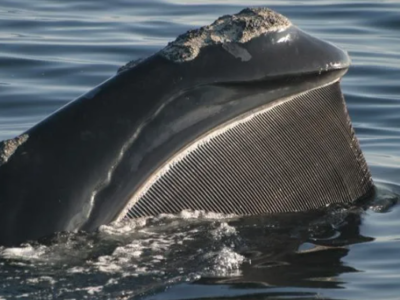
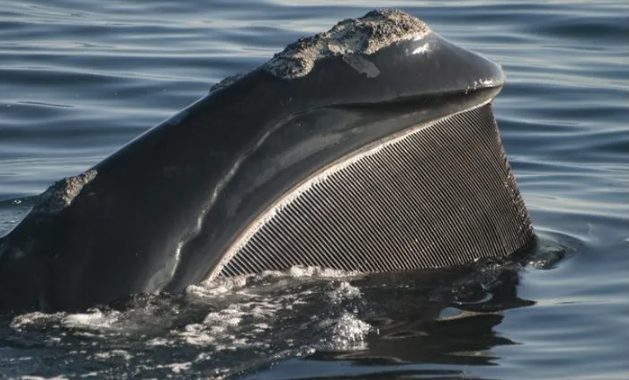
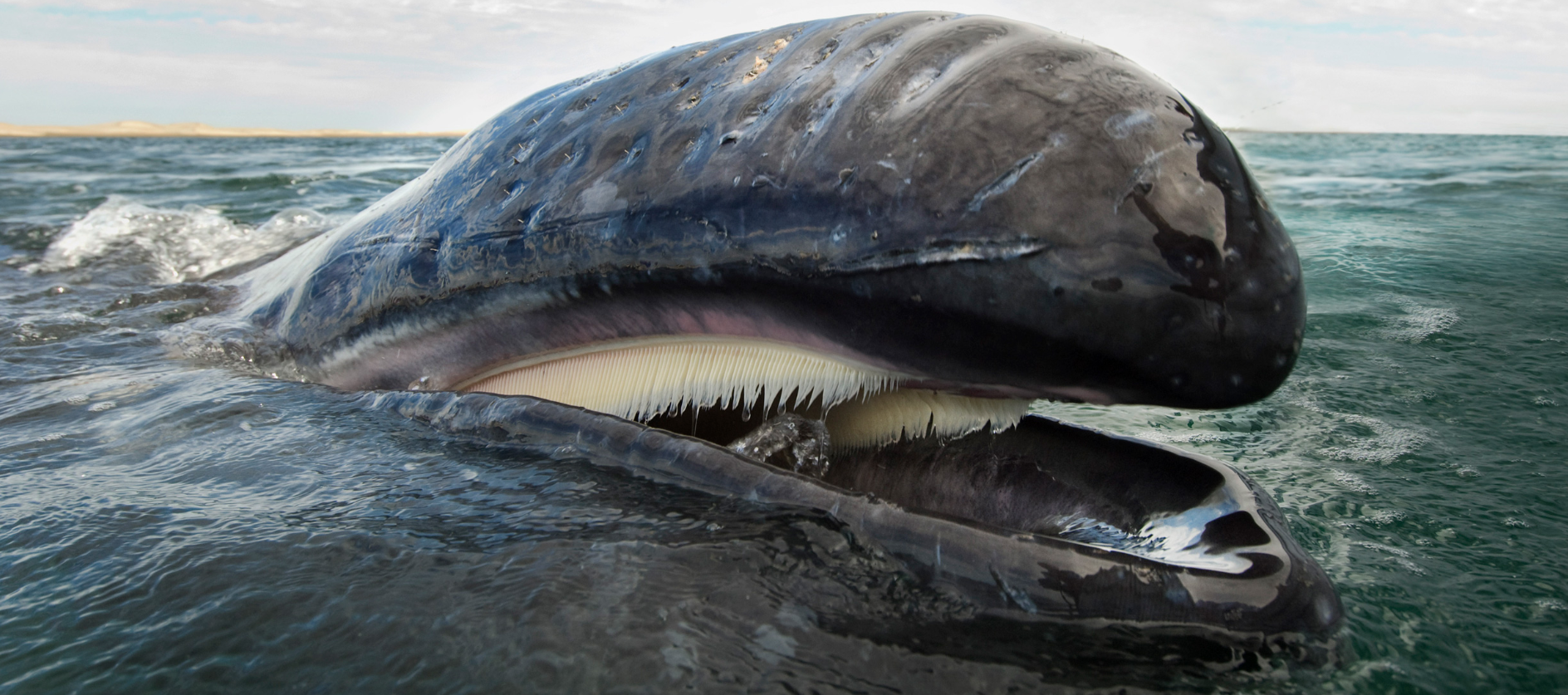
Cetaceans are a big family of massive mammals that act like fish. All whales, porpoises and dolphins are in this class. Balaenoptera musculus is identified in the cetacean family by their baleen, which is a fur-looking substance made of keratin, a protein.
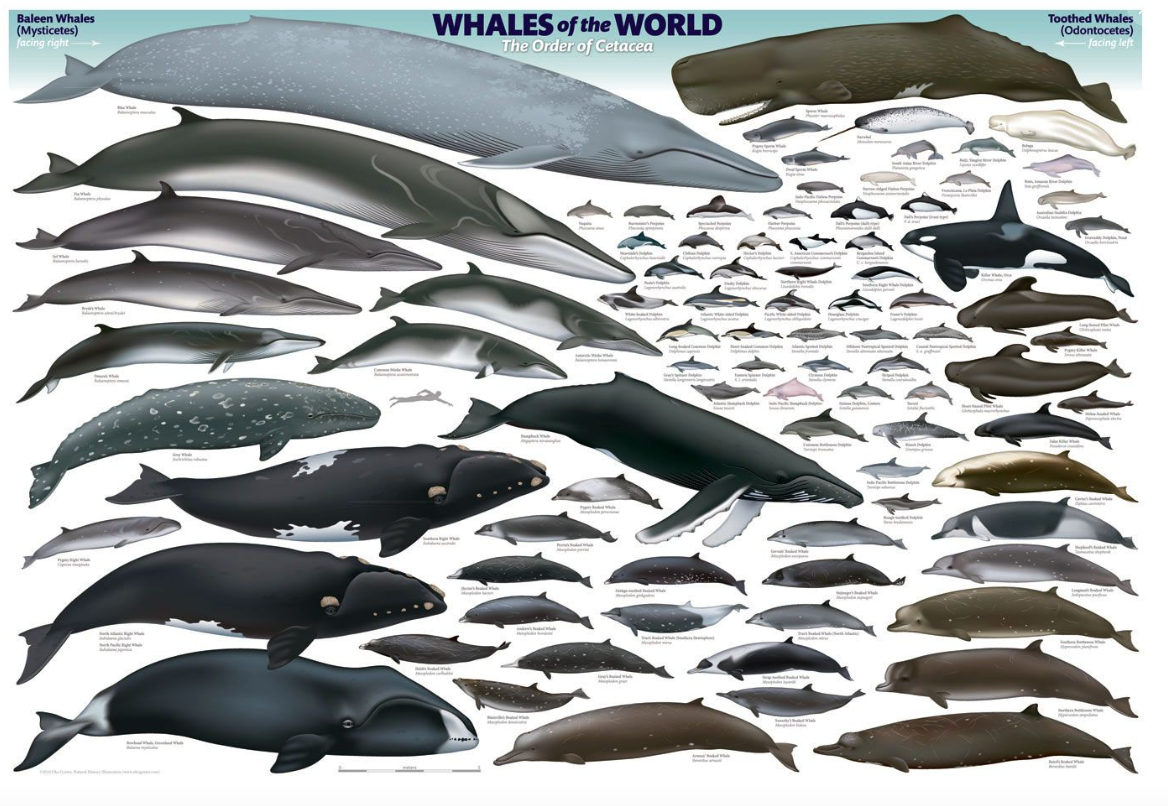
Cetaceans are mammals who live in the ocean. Only the cetaceans live their whole life in the ocean; seals, sea lions and elephant seals all have to haul up on shore from time to time, to mate and sleep, and get a tan. Mysticeti and odesetie are the two types of cetaceans. The odontoceti family has the dolphins, whales, and porpoises that have teeth, but the mysiceti family, which is mostly whales, have baleen which causes them to eat with a filter feeding process.
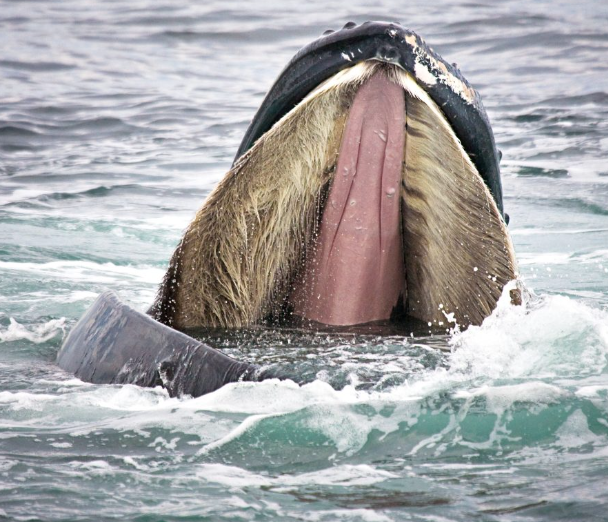
Baleanoptiridae: these are whales with baleen, but also with expansive mouth flaps; these whales are mostly mentioned as rorquals, which is a Norwegian word meaning furrow whale. You know how when you fold a piece of clothing it becomes smaller, and you can place it on a shelf? Think about that with baleen whales: their furrowed throats can expand dramatically. Furrows and keratin are two very different things: furrows are like a bag that takes a big gulp of water, but keratin is baleen that filters. Baleen is made out of keratin, which is also what a fingernail is made out of. Baleen could look like a horse’s tail or even a strainer that is vertical. So, these whales have throat pleats on the bottom of the mouth which are used for catching a lot of food at once.
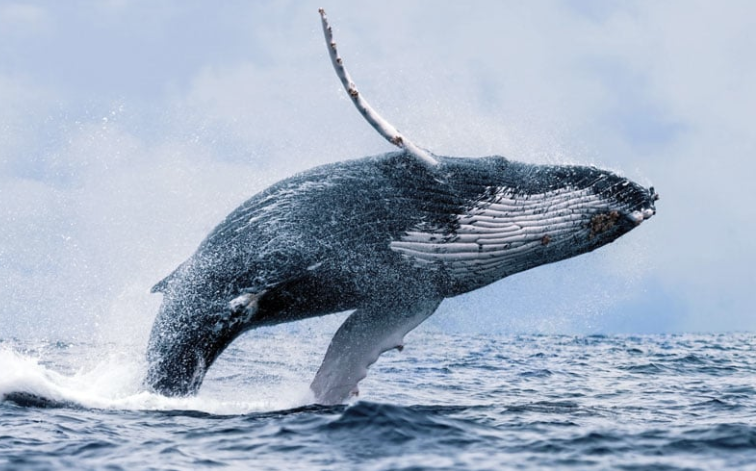
The balaenopteridae is split into two batches: the balaenopteridae, which has the genus balaenoptera; and the megapterinae, confining the genus megaptera and it also has the lonely species megaptera novaeangliae, which is frequently known as the humpback whale.
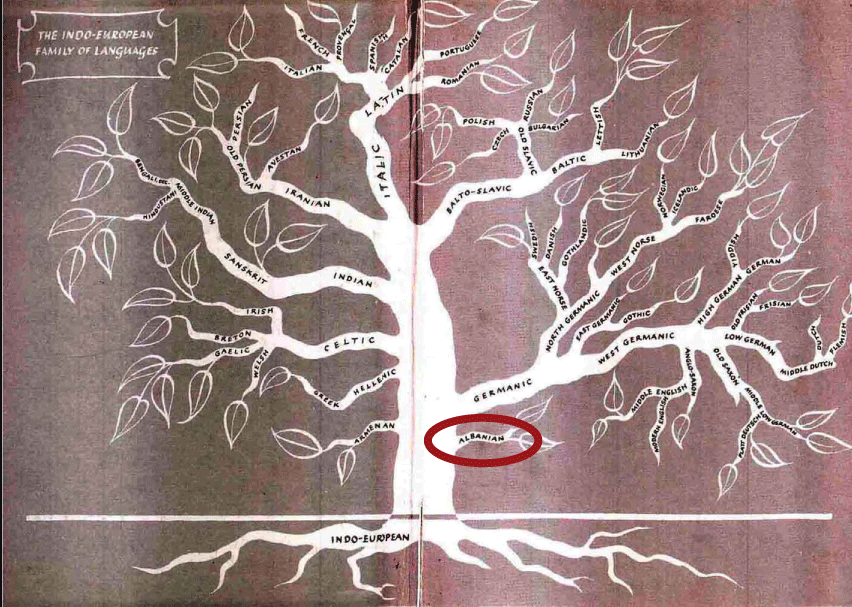
For a way to relate the humpback to the Albanian language, see the Indo-European Language tree (which is massive)… there is one little twig coming off of it which unconnected to any other language: Albanian language: sorta like a humpback!
This lone whale, separated from the others must have a reason for being separated, right? Yep, it is their pecs! Now, I know you’re thinking about that gym rat who has massive pecs (and canckles) but get out of the gym obsession – we’re talking animals here. The humpback’s pecs are huge and long – and just like the sperm whale, whose head is one-third of its body length, the humpback’s pecs are also one third of its length!
The genus balaenoptera contains eight species (the eighth species, balaenoptera omurai, once thought to be a pygmy form of balaenoptera brydei (Bryde’s whale), has recently been proposed). It also contains the minke whale and Antarctic minke whale, fin whale, sei whale, and Bryde’s whale.
Instead of hair, which they don’t have much of, they have blubber to heat themselves up when they are in the colder parts of the ocean. The front limbs that you can see in terrestrial mammals are, for the whales, fins.
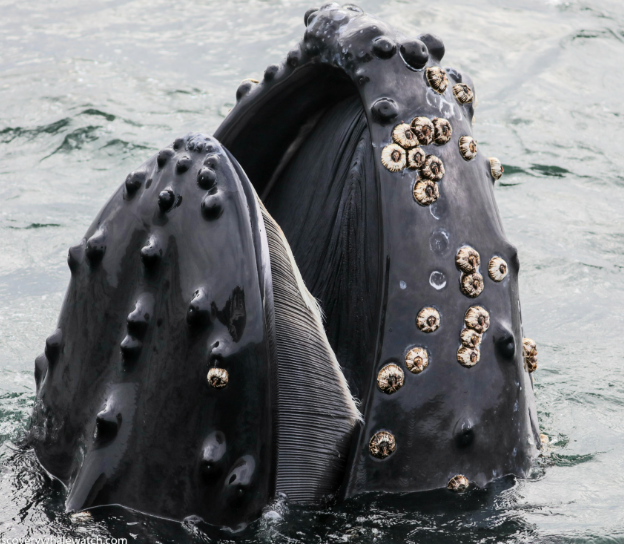
Most of the baleen whale population have hair follicles attached to them. Some of those baleen whales for example the Humpback whale have hair that you can see with your own eyes though it might be a little tough because each tubercle on the head only has a single hair on them. If the whale is brave enough to get close, you might be able to get a glimpse of one. Now thinking that their head is massive you might be wondering oh they probably have thousands of hairs but in real life they only have 30-100 depending on what kind of whale.
Now that you are a classified genius on whales you will now feast your eyes on the greatest part of the entire essay. The information you will learn in a couple of minutes will demolish your idea of the blue whale and rebuild it brick by brick.
The blue whale diet
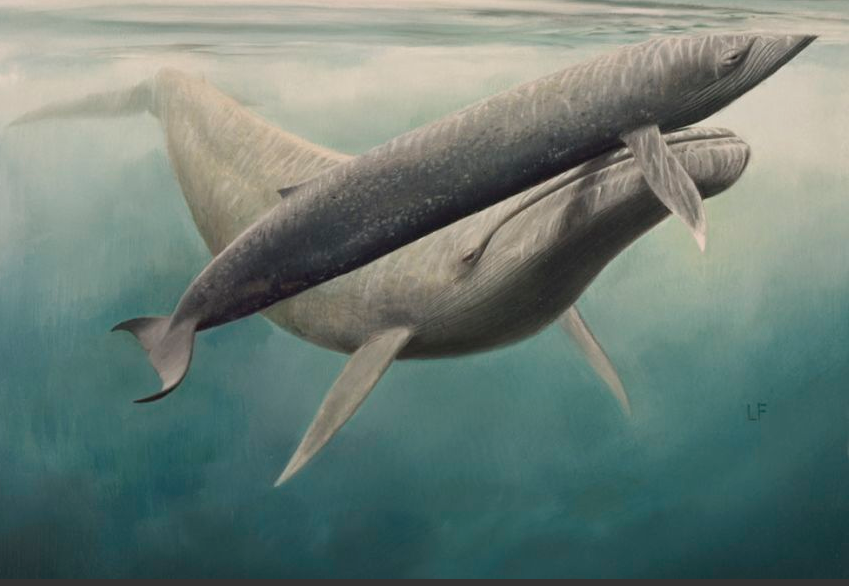
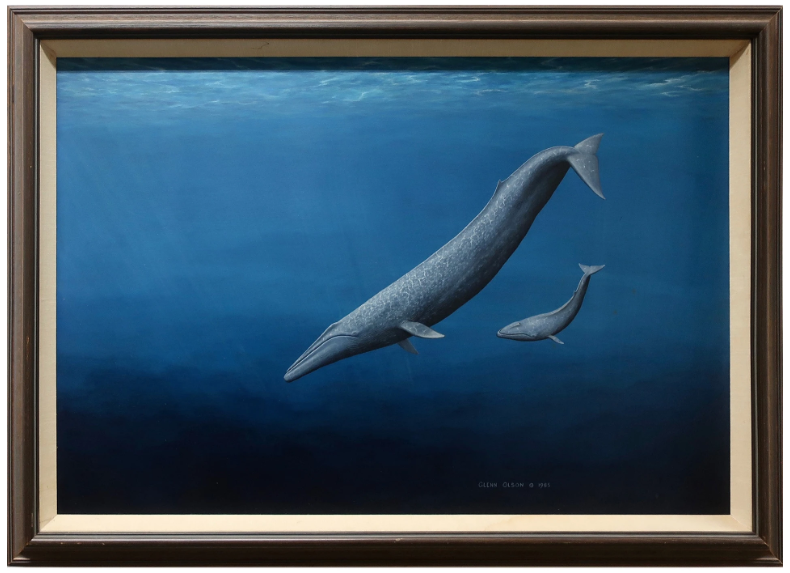
The blue whale is the biggest animal in the world but what they eat can be very interesting! The blue whale favorite food is krill, but they are actually very small, and that is why they can eat 40,000,000 every day (yes that is 40 million). The reason they eat so much is because one, they are biggest animal on the planet but two, they need the energy to swim which you could imagine takes up A LOT of energy. The big blues are most likely found in large schools of krill but other than that they are pretty rare rarely spotted. They can chomp three to four tons of food per day: that’s 8,000 pounds! Blue whales gulp a big mouthful of water and krill and they use their baleen plates to filter the krill and water so it’s only krill, and then they feast on the krill. The blue whales are mammals so the moms breastfeed their young. The young of a blue whale is called a calf. Calves drink 380 liters of milk a day within 7 months of being alive – imagine drinking 100 gallons of milk a day! A blue whale calf gains 200 pounds a day just from milk. The calf drinks the milk by going under water and nudging the mom’s tummy and drinking and coming up for air and drinking and it keeps going until the calf is full. The blue whale also eats copepod which is a miniature animal that has whiskers on their head.
Painting by Larry Foster
The blue whale’s stats
The blue whale has so many stats that it is really hard to count. The blue whale is huge, and its length surpasses the length of two school buses. Being so big you’d think it was slow, but it can actually swim as fast as 30 knots (34.5 mph). Did you know that the blue whale almost went extinct! Recent estimates put the population at below 25,000, but this is better than what it was in the year 1970, when it is estimated that the population shrank to just 600. Babies: the blue whale babies can weigh 6,000 pounds and 25 feet. The blue whale calf can be the size of an orca. The adult blue whales can be 70-90 feet long and they usually live to about 80-90 years old. The largest blue whale ever recorded was 109 feet long and it weighed about 200 tons. The oldest blue whale is 109 years old, that’s almost as old as the oldest person ever. The calves gain about 200 pounds a day. The blue whale is a big animal, and they can hold the weight of 150 tons which is 300,000 pounds.
Predators and threats
The ginormous blue whale is very large but did you know they are ‘frady cats? The blue whale’s main predator is the orca also known as the killer whale. One reason that the orca is the biggest predator of the blue whale because they are mean, but they are also one of the only known predators of the blue whale. Now you may be thinking what’s the other predator of the blue whale and it is actually human beings. The humans are predators because they used to (it’s banned now) go whaling which is when they catch and kill whales for their large amount of blubber and rich oil.
The blue whale has three different main threats. One of which is vessel strikes, which is when a boat or object collides with an animal. Vessel strikes usually end in death for the animal because they can bleed out and no one is there to help them. Another threat is oil and toxic waste. When oil leaks out of the machines and a blue whale is near it is really toxic and poisonous to the blue whale and can sometimes kill them. Also, the plastic is really bad for them because it can get stuck to the blue whale or they swallow it by accident and they can choke or not be able to move. The last reason is entanglement of fishing gear. Fishers can sometimes get snapped off which means their fishing line breaks and when that happens it can get tangled in a lot of things including a blue whale which is really bad because it is like it you have a hook stuck in your back or throat and you can’t get it out and it is just there and hurts so much!
The baleen
The big blue whale has an extraordinary way of eating their food, remember? It is called, can you guess it? … baleen! The blue whale has 500-800 baleen plates attached to the upper jaw to help separate the water and the krill. It works like a strainer; if you dump all the pasta in and then the water goes out and all you have left is the pasta. The blue whale version is you take a big mouthful of water and the baleen plates filter it out and all you’re left with is krill. Each of the baleen plates is made out of a type of protein called keratin which is the same material that’s in your hair and fingernails. The blue whale keeps repeating the eating process and that is why they eat almost three to four tons of krill every single day. The baleen can filter 50-100 tons of water and krill daily.
You now know everything there is to know about a blue whale and can forever be a person with a big brain. Also you will hopefully see at least one blue whale in your lifetime. Now even that you maybe don’t live near an ocean or you never travel you can see the wonderful pictures of them and get a glimpse of what they actually look like.
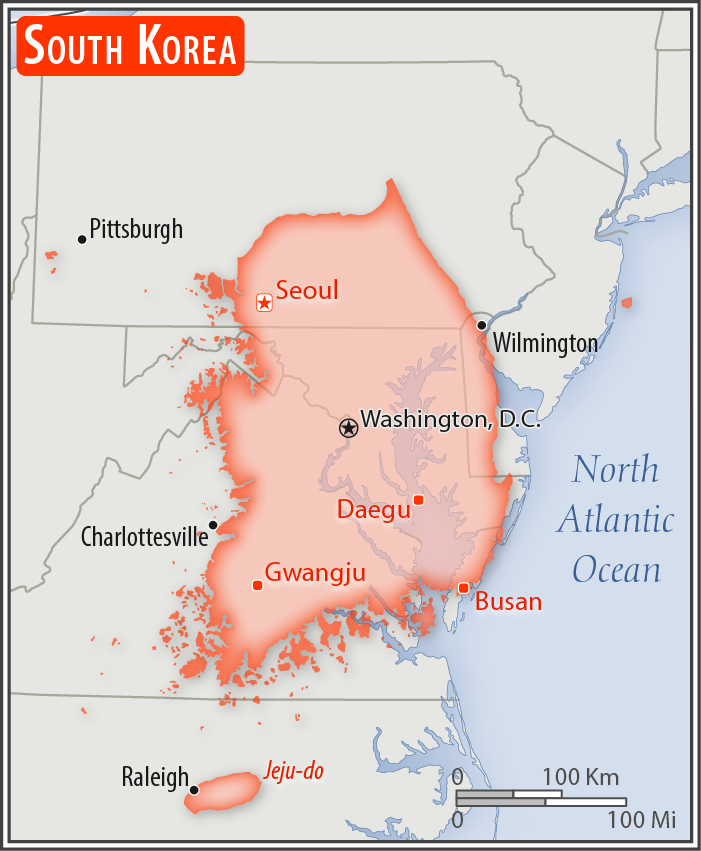
Many times, it seems that ancient histories of countries are displayed much more than other countries, just because they are looked at with such superiority. But don’t sleep on Korea because they’re right up there and deserve to share the spotlight. China is often looked at as a major power in many history books, as it is massive and in the heart of Asia. With Korea being a small little peninsula, looking over at a country that is almost 100 times bigger than itself, it is small but mighty when it comes to its history.
Many major world powers have one thing in common, which is having a benefit from physical features that may form barriers or provide an advantage to that region. Although Korea seems petite, it has a massive advantage being a peninsula, having three sides surrounded by water. Additionally, another advantage is that a great part of the country is mountainous.
Nations are formed by borders, language, and common history – what connects a people together and unifies them is an origin story that binds them to their roots.
Many modern nations’ origin stories consist of the creation of the nation itself, but with countries as old as China and Korea, their stories correspond with the creation of the world.
To really get a feel on what was at stake in this dramatic and intense series of invasions against Korea, we need to get a sense of the identities that these nations display, their beliefs, motives, and roots. All of these things were very different between these two rivals back then, so let’s take a look at each individual region’s basics and ancient identities.
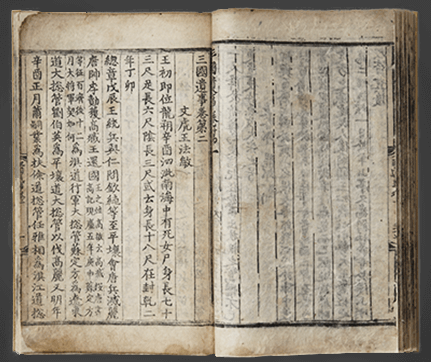
Samguk Sagi, known as the oldest living piece of writing in Korean history, was based on the history of the Three Kingdoms. It was created by Kim Pu-sik (1075-1151).
As mentioned, you will find that the ancient Korean origin narrative is not only about the formation of Korea, but also the creation of the world. The ancient Korean formation legend dates all the way back to 2333 BC, when Hwan-in, the heavenly king, had a son whose name was Hwan-ung. Hwan-ung had strong ambitions to descend from heaven and live in the human world. Hwan-in gave Hwan-ung three heavenly treasures and commanded him to rule over his people in the human world.
Hwan-ung descended from heaven and onto the T’aebaek Mountain, along with three thousand of his followers, settling there. He called the mountain Sin-si, meaning City of God, and led his ministries of wind, rain, and clouds, the originating weather patterns of the world. He also taught his people more than 360 arts, consisting of agriculture, medicine, moral principles, and codes of law. It is not clear how long they settled there, but at a certain point, two half animal, half humans came into the picture.
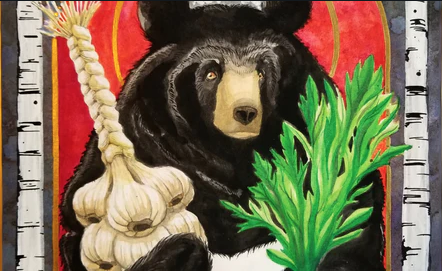
Nearby, in a cave, there was a she-bear and a tigress. They prayed to Hwan-ung to be blessed as human beings. In response, Hwan-ung gave them twenty pieces of garlic, and said that if they ate them and didn’t see sunlight for one hundred days, they would become human beings. The she-bear and tigress took this offer and went back into their cave. Just 21 days later, the she-bear became a woman early, because she had obeyed his order, unlike the tigress, who had disobeyed the order by emerging from the cave prematurely.
The new woman (no longer bearish) realized that she couldn’t find a husband, so she prayed to Hwan-ung to bear her a son. Hwan-ung heard her prayers, and visited her, married her, and she bore him a son named Tangun. Tangun grew up and set up a royal residence in Pyongyang, the nation’s capital, and created his kingdom. He later moved to nearby Asdal, modern day North Korean province, Hwanghae, and ruled for 1,500 years there. He became the mountain god at the young age of 1,908. Just like in the Bible, the early human beings seemed to live a very long time, though Tangun almost doubles the age of the oldest-known human being from the Old Testament, Methusaleh, aged 969.
Like Korea, and perhaps even older, China’s origin myth corresponds with its national identity. Across the Yellow Sea, the ancient Pangu Chinese myth was written around 220-265 AD, by Xu Zheng, though it was told long before that oral tradition.
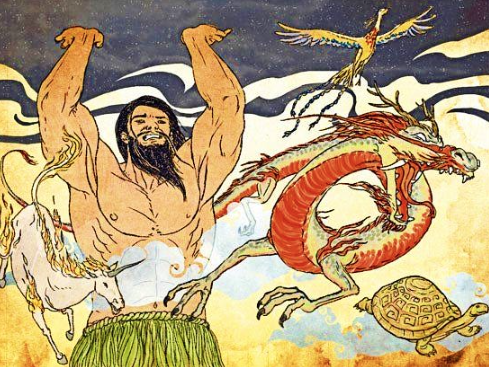
Like Hwan-in, there is an originating king, or creator god: Pangu. Pangu was inside a huge egg containing chaos, the mixtures of yin and yang, male and female, aggressive and passive, cold and hot, dark and light, and wet and dry. Within this egg full of chaos, Pangu broke from the egg as a giant, and unleashed the chaos.
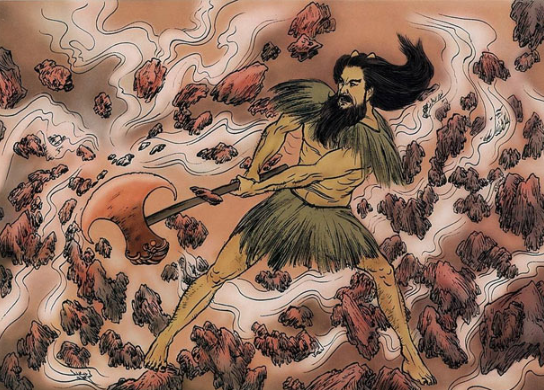
Yin became heaven, and Yang became earth. Pangu stood in the middle of the opposites, his head touching the sky and his feet planted on the earth. Heaven and Earth began to grow rapidly, 10 feet per day, and so did Pangu. After 18,000 years, Pangu stood between them 30,000 miles high, so they would never join again. When Pangu died, his skull became the top of the sky, his breath the wind and clouds. His voice became thunder. One eye became the Sun, and the other the Moon. His body and limbs became five big mountains, and his blood the water. His veins became roads, and his muscles the fertile land. His hair and beard became the stars, and his skin the flowers and trees. His sweat flowed like rain and sweet dew. Even the fleas and lice on his body became the ancestors of humanity.
Some say that Pangu didn’t die and became human, and a half dragon goddess named Numu created humans out of clay. Numu found forming figures out of clay too time consuming, so she dropped a string across the mud and made a whole bunch of them, this becoming the reason behind social stratification.
The two origin myths have a direct connection with each countries’ motives. China represents the god Pangu, and that he is the almighty power and rules over the earth. He is displayed literally as the earth itself, signifying that China is a force and a power of the earth. Korea, on the other hand, also displays the creation of the world, but is specific to where the small group of people, the Hwan-ung, are located in Pyongyang, developing their own culture – leaving the rest of the world a mystery. These two motives may show the reason for how the outcome of the war came to be, and why one side unanimously succeeded.
Let’s fast forward several thousand years to the 6th century A.D., when China has just entered a new era of rulers.China was united by the Sui Dynasty (approximation of date 589 AD) under Yang Jian (Emperor Wendi), after defeating the Chen Dynasty. This unification made China see itself as superior to other countries in Asia, and other countries yielded themselves to them.
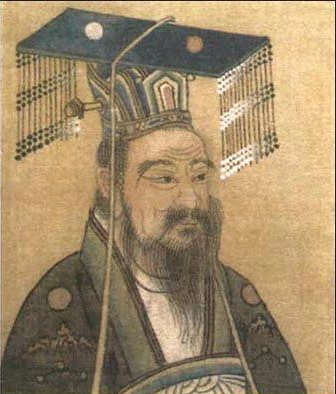
Emperor Wendi, aka, Yang Jian, was the founder of the Sui Dynasty. Emperor Wendi, unlike many other emperors at the time, used his power for his people rather than himself. He was a very suitable emperor for China at the time, being a very worthy ruler. Emperor Wendi was overall a very good emperor for the time, and his reign was known to be prosperous. He was known as a Confucian Perfect Gentleman. A Confucian Perfect Gentleman is made up of five characteristics: humility, sincerity, graciousness, magnanimity, and diligence. After he was settled and had the throne, he attacked with 500,000 troops to invade the Chen Dynasty in the south of his nation, eventually uniting all of China under the Sui Dynasty.
During Wendi’s reign, he distributed land very fairly, having a system that distributed land based on the size of families. Additionally, taxes on farmers and merchants were less chaotic than his predecessor, Yuchi Jiong, resulting in a very productive agriculture period. Emperor Wendi acted for not only himself, like many other emperors would, but for the people’s own good. However, all this success was later to be destroyed by his son, who murdered him, and couldn’t keep Wendi’s greatness going. Emperor Wendi was already on bad terms with his son, for he stripped him from his title after he was caught raping one of Wendi’s concubines. The son, after doing this terrible crime, successfully kills Wendi as a coverup. Could you imagine strangling your father to avoid the punishment of a crime you committed?
Before Korea was its own united country, it was split into three regions: Baekje, Silla, and Goguryeo. These regions were known as the Three Kingdoms. Goguryeo dated back all the way to 37 BC. Silla was established in 57 BC, and Baejke in 18 BC. Can you hear the word Korea in any of these three names? Go ahead and try it out for yourself.Any luck?
All the tension between Goguryeo and the Sui Dynasty started when Goguryeo wouldn’t surrender themselves to the Sui. Goguryeo thought that they should have an equal relationship with the Sui. Because of this, Sui didn’t like the fact that Goguryeo challenged them.
Goguryeo put together small raids into Sui’s border, so Wendi sent papers telling Goguryeo to stop any military alliance with the Turks (ancient Eastern Turk Khanate, not modern day Turkey), demanding they acknowledge the Sui Dynasty as superior. In response to this, Goguryeo launched a preemptive invasion against the Chinese in 597.
So now let’s jump to the conflict that between 598-612 AD created the boundaries of modern day Korea: the Sui/Goguryeo War.
The first real invasion happened in 598 BC, following the 597 attack.
***
The year was 597 and Hu Min was helping build the Fang Ships for the upcoming invasion of Goguryeo. The sun was blazing right on top of his neck, as he was finishing up the oars of the FANG ship. This massive monstrosity of a ship took hundreds of men to complete, and several months to build. As they were right next to the beautiful Three Gorges of the Yangtze River, Hu Min wanted so badly to jump in the glossy, clean water, and feel the cool lemon-like water. But he and everyone else knew that Emperor Wendi and Admiral Zhou needed the ship done as soon as possible before the invasion. As the ship was almost done, Hu Min took a step back to look at what was at hand; with six 50 foot-tall rods, and five layers of perfection, the ships were to be used in a few months from now, and Hu Min thought Goguryeo had already lost.
Hu Min had just turned 18, but had been working hard since he was little. For what seemed like countless months, he was ordered to work on these huge, intricate ships. As he stood looking at the Fang Ship, he couldn’t help but feel waves of pride. From the wooden castle walls that acted as an upper tier of crenellation, designed for archers and crossbowmen, to the 50 foot striking rods, designed to demolish any enemy within distance, from the five layers of complex designing, meant for crushing ships abeam, to the cypress booms that was the center of destruction of the ship, this FANG knew no rivals.
Once the Goguryeo army had spotted this monstrosity containing 6 striking rods that could be dropped at any time to crumple an enemy ship, and several floors with hundreds of soldiers, they would flee at the sight.
“Hu Min, get back to work!” yelled an officer. “Do you see anyone else lacking? People like you are going to get us killed!”
“Yessir!”
“We’re almost done, and we need this done fast, to show Emperor Wendi how skilled and hardworking you all are. We need to make sure he sees the five layers of absolute glory, 40 oars put together with hard work to sail over any wave in any weather, sky-high striking rods designed to give goosebumps to any opponent, and finally the sheer countless number of these FANGs will ultimately bring glory to China. So make sure you’re not the reason that doesn’t happen!”
Because of his father, Hu Min from a very young age had been involved with the military. He served as a cabin boy when the Sui invaded the Chen Dynasty 9 years prior, running errands and scrambling around for the captain. He was young and couldn’t fully comprehend the level of intensity that was at hand, but remembered a time when he saw the mass destruction the striking rods had cost. The striking rods were 16.7 meters high, and had a stone boulder on top. In battle, the boulder would be lifted up to the top, and then would be released on top of an enemy ship. The rod could be used repeatedly. This was the main weapon they had used to win the naval battle in many previous conflicts. Hu Min saw often that the boulder would come crashing down onto the enemy ship, and go straight through like butter, either decimating the ship, or making it unusable.
It was a clear dark night, and Wen of Sui was laying on his triple king-size bed. He was thinking about Goguryeo, and how they just wouldn’t seem to acknowledge the Sui Dynasty as the superior power in all of Asia. On top of this, they had launched a preemptive invasion just last year. While laying in bed, Wendi came up with a plan that he thought would be both unpredictable, and unstoppable, forcefully bringing Goguryeo to their knees. The next day, Wendi ordered a meeting with Admiral Zhou Luohou, the Chinese naval leader, general, and administrator. Although he was old, with a fairly long beard, and a frail face and body, he was one of Emperor Wendi’s most reliable assets. Yang Liang, who had a round, chubby face, and a bulky body, was the prince under Emperor Wendi, and led the land pursuit in the invasion, was present with Luohou, to go over what he’d cooked up the night before. His plan was to send 300,000 troops to Goguryeo! But little did Wen of Sui know that his plan wouldn’t be as nasty as he had intended it to be.
Jin Seoung was a man in his 40s who had dedicated most of his life to the Goguryeo naval army, on the coast near Pyongyang. He had joined the navy when he was 18 and had been in the naval section ever since as a captain. When the news of an invasion of the Sui Dynasty came to his attention, he was forced to leave his wife and two kids, ages 8 and 6, at home, and proceed to battle. Jin Seoung didn’t know what to expect, for he was told that his job was to be on the lookout for Sui ships coming at Goguryeo. When he embarked on the Yellow Sea, instant storms and cold weather hit him and his fellow sailors. But this was part of his long military training – withstanding any sort of weather when at sea, and still fighting the enemy. He and other vessels waited out at sea, waiting for any sign of Sui ships, praying for safety.
After three weeks on patrol, the weather got even more worse and dangerous. They were about a mile out at sea, and Jin Seoung was getting pretty exasperated, thinking of his family. Each storm got more violent, with more wind and less visibility. Each passing moment felt like an hour, and Seoung’s hands became frozen in his pockets – his breath was freezing in the air. Despite the many layers of clothing, the wind made it hard to even open one’s eyes, and even then, there wasn’t much to see. Despite all this, Seoung knew he needed to stay on his assignment and lead Goguryeo to success. One blistering morning, he thought back to his military training and the finest moments he’d witnessed in battle, and called on all the soldiers on his ship and told them that Korean liberty was worth the sacrifice of a few weeks of discomfort, and that the people on the ship would go down as heroes if they could successfully stop the Sui invasion.
A few days prior, Emperor Wendi had heard the news that Yang Liang’s land pursuit had been stopped short due to weather and a surprising number of Goguryeo forces.
Emperor Wen had sat on his throne, his hand stroking his beard, contemplating the next move. After a few hours, he decided that a second part of the invasion was necessary and would surely catch Goguryeo off guard via FANG ships and a naval attack. Admiral Zhou was one of his best assets in winning this war with Goguryeo, and this was the time to decimate Goguryeo. Goguryeo had barely dodged the first swing – the left uppercut was on their blind side.
But as Admiral Zhou was walking out of Emperor Wen’s majestic palace, he found it hard to fathom what had just been asked of him. He was now expected to create a flotilla and pick up for the fallen soldiers, to lead a new total of 300,000 soldiers and sailors in a combined invasion.
A few days later, the naval fleet, under Admiral Zhou’s command, was on their way to Goguryeo. But because Admiral Zhou was in such a rush to get his naval army in action, he hadn’t anticipated the poor weather at hand. He had taken note that the soldiers had been stopped because of the weather, but didn’t think much of it. Smoke and sound signals were most likely the form of communication between these ships, but because of the low visibility, communication was limited, for the fog dampened sound and obviously was impenetrable, being smoky itself. When Zhou combined his forces with the soldiers, it still wasn’t looking auspicious. Zhou was losing ships fast due to the weather, their top-heavy construction becoming a vulnerability not yet tested; that and constant Goguryeo ambushes were taking their toll. FANG after FANG, those towering battle axes of the sea, were sinking! The ultimate hope of the mission was that the ships would reach Goguryeo’s shoreline, and the soldiers would proceed their ambush, but one, the soldiers were already in poor condition with illness and fatigue, and two, the ships weren’t getting there in the first place. The numbers dwindled fast. A normal day for Zhou was this: lead his naval fleet with a valiant attempt at communication, but at night he’d resort to sitting on the deck, listening to the pouring rain, wind, and thunder, praying that he wouldn’t have to deal with another Goguryeo ship ambush.
Once they finally reached the shores of Goguryeo, they were ambushed by a small series of ships that caught them off guard. With no visibility, the Sui had no idea what had hit them, and more ships were demolished. But now at the border of their enemy, they knew there was no turning back. Zhou’s navy was exhausted and worn out.
A few days later, Admiral Zhou encountered the bulk of the Goguryeo naval fleet. There were only a few hundred ships, so Admiral Zhou thought this would be like snacking on a piece of mooncake. They clashed with the first layer of Goguryeo ships, and were surprised at how powerful they were. Despite this, Admiral Zhou still thought this would be an easy victory with how much of an advantage they still had in numbers. After they blasted through a few layers of the Goguryeo fleet, Admiral Zhou became a little confused, for Goguryeo ships just kept coming at them, seemingly in an infinite number of layers. With Zhou losing ships rapidly, he became a little worried as to how many ships Goguryeo actually had. All of a sudden, 20,000 of Goguryeo’s highest quality ships instantaneously surrounded his fleet, absolutely demolishing the remaining ships. Zhou had just a few milliseconds to process this, before he saw his surrounding ships split in half, bloodied sailors drowning.
Jin Seoung celebrated the victory with yells and cheers with pouring rain and wind. As soon as the Goguryeo ships retreated, the weather became a second thought. Jin Seoung had successfully led his group of ships to victory. His strategic plan had panned out flawlessly.
But Admiral Zhou was a tough man, for throughout his childhood, he had always liked to play military games with other daring kids in his neighborhood and as a young warrior, he’d distinguished himself from many in battles, receiving the title of Kaiyuan General. During a battle in 573, an arrow struck him in the eye. He continued to fight, and when his general was surrounded by opposing troops, Zhou and his subordinates bravely fought off and routed the enemy. Throughout his life, Zhou had distinguished himself by saving many important people. He had found much success in fighting, but this invasion was his biggest test. But even the strongest fail, and in this case, he fell short. With all the factors stacked against him, he couldn’t prevail. He was deFANGED.
The second invasion occurred in 612:
The year is 611, and it is Hu Min’s 31st birthday. He is hoping to relax and stay in to spend time with his family, but he is receiving an order from the Sui military. With little details on what is going on, Hu Min is rushing to the army camp, and receives his order of constructing a canal that connects the north and south part of China. The canal is almost done, but he’s needed as backup support from the many workers who have died during the construction. With little idea about the details of his task, Hu Min has no idea of the danger in constructing this massive canal.
“What’s going on? Hello? What’s this canal about?” Hu Min asks a fellow worker.
“Honestly, I don’t really know. The Sui authorities kind of dragged me into this. My guess is that it will be a transport for a large military operation coming up. All I’ve heard from rumors is that the new Emperor, Emperor Yang, has cooked up some crazy plan that I’m still trying to digest. His plan is to avenge the loss we suffered against Korea 14 years ago. As you probably remember, that loss enraged the Emperor pretty badly, and I think that this battle has been in the midst of planning since the day we retreated.”
Two years earlier:
Emperor Yang (the guy who killed his father Emperor Wendi) is stroking his beard, sitting on his throne for hours.
“Sir, is everything alright?” His assistant Feng asks.
“Feng…” Emperor Yang says slowly in his raspy, smoke-scarred voice. “Do you remember the day…11 years ago. When we lost to Goguryeo? Do you remember how badly we embarrassed ourselves, our nation? When the great China lost to a small peninsula, to weaklings, inferior peasants! My father never got over that defeat… and neither will I. Feng, ever since I was crowned Emperor, I have been planning a revenge war on Goguryeo. I remember… the pure anger I felt 11 years ago, and nothing, you hear me? Nothing will get in the way of this plan; it will go down as the greatest invasion mankind has ever seen! We will build a massive canal from the North to the South of China, and prepare over a million trained troops, along with 2 million auxiliaries! I don’t care how many men it takes, Feng. Goguryeo will feel our wrath!”
After a brutally heated argument on whether or not to send the Sui troops to Goguryeo, the commanders decide to pursue Pyongyang, despite the possibility of running out of supplies.
Sure enough, the troops run out of resources: at the start of the battle, Sui troops are given 50 kilos worth of food that they carry in packs. A group of soldiers are sent to Pyongyang, but along the journey are forced to dump food to lighten the load. Hu Min is one of these soldiers.
It is midday, and the sun is out, blinding Hu Min, scorching his face. He and his companions are traveling to Pyongyang, with a 50 kilo pack of food. Hu Min has already gotten rid of 10 kilos worth of valuable food and resources, but a 40 kilo pack in 90 degree weather isn’t ideal either. Hu Min’s back is aching with soreness and pain, and his entire body is glazed with sweat and dirt. He dumps 5 kilos more from his bag, as the pain is almost unbearable. His legs are wobbling and struggling from days of walking, and his shoulders are numb. Because of the loss of resources, he has to ration each day’s meal out, knowing that he will be forced to dump more out later. This demoralizing journey is taking soldiers much longer to reach Pyongyang, and Hu Min, on little rest, is seeing triples by the time he reaches the destination. With lack of energy, sleep, and motivation, there is no way that Hu Min is fighting a battle after this. All he can think of is resting in his nice, cool, comfortable bed back at home, with his family.
After Hu Min and the Sui army set up a camp to settle just outside of Pyongyang, he sees a mysterious, unfamiliar man enter the camp. His name is General Eulji Mundeok, a Korean commander. Hu Min and others approach him, ready to attack.
“I come here in surrender and peace.” Mundeok said as he raised his hands in the air. “All I ask is that I tour this camp that you’ve set up.” As he is touring, Zhongwen, a Sui authority, claims that he has been instructed by Emperor Yang to capture Mundeok, but Liu, Zhongwen’s companion, thinks they should release him.
“What do you mean release him? He’s on the opposing side, you fool!”
“What harm can he do? He has surrendered and offered peace. It will be too much of a hassle to monitor him anyway, especially with how tired we all are!” Zhongwen disagrees, but doesn’t have the energy to get into a heated argument. Mundeok is somehow released, and after the exhausted Sui dynasty pursues Pyongyang, Mundeok re-attacks, leading several battles a day against the Sui, surrendering and retreating, luring in the army, and further exhausting them. The exhausted army is soon forced to retreat back to Sui, as the fortifications in Pyongyang seem impenetrable.
The Sui call on Lai Hu’er, a naval commander, to supply the army with food, but Goguryeo is always one step ahead of them.
Goguryeo calls on their trusty long-term commander, Seoung Jin, who is now nearing 60 years of age. He is now the naval commander, leading a group of ships against the Sui right outside of Pyongyang. Upon engagement, Sui ships crush Seoung’s ships, and very soon, Seoung realizes that his ships are no match for the FANG of the Sui, and retreat, forcing him to come up with a plan. But no need to fear, because due to his decades of experience, he comes up with an ingenious plan.
Once Goguryeo retreats, the Sui see this as an opportunity to advance to Pyongyang, with an even larger naval attack. Once they spot a castle, they find the gates open, a perfect opportunity to loot it. They loot and destroy Korean art and culture, but can’t finish before Seoung Jin and his naval army ambush the Sui during their looting session. They slam into the Sui, destroying several thousand ships, resulting in another success for Seoung. Confused, Lai, the Sui commander, retreats, but not before his army is decimated.
With neither food nor support, Hu Min and the Sui’s soldiers are not looking good. The remaining army has reached Salsu, and the Goguryeo army charges the Sui. Despite having little energy, Hu Min and his companions give everything they have left, and are starting to make a comeback. Their pursuit keeps going for months, but ultimately fizzles. Mundeok defends Goguryeo fortresses, and holds attacks against the Sui army and navy.
Hu Min is included in those soldiers making a last valiant attempt at victory. Although it is looking bleak, they move further into Goguryeo territory. Soon, the last straw is pulled in an ultimate culmination of all the attacks, when the Sui reaches Salsu, where Mundeok releases a dam on the Sui troops as they are crossing. Sui troops are flooded and drowned. As Hu Min sees the water crashing down on thousands of Sui troops, he slashes down one more Goguryeo troop, says his final prayers, and is swept by the crashing dam. Out of 305,000 Sui men that enter Pyongyang, only 2,700 return.