Monthly- Archives: February 2022


RABIA MAHMOOD

The Amazing Underground Owl
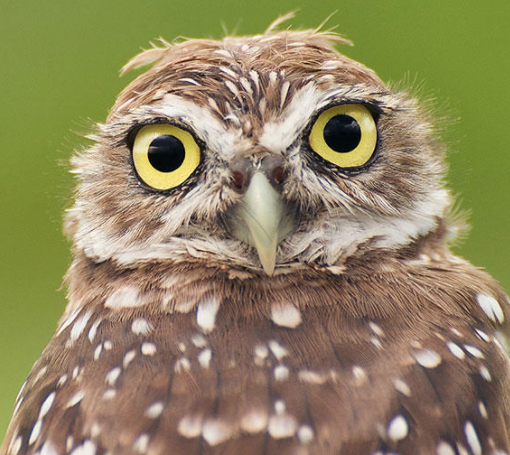
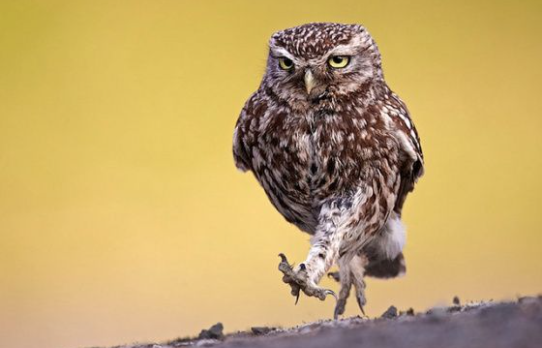
The burrowing owl has large lemon-lime eyes with alternating brown and off-white feathers. The burrowing owls prefer to live in plain, flat grasslands for they can catch their prey which are insects, rodents, and small lizards; they also use the grasslands to hide from predators such as coyotes, great horned owls… or cats. They make their homes underground by using holes that are already made from many animals including prairie dogs and burrowing squirrels.

The burrowing owls and the burrowing squirrels engage in what is called symbiosis. Symbiosis is when two different living things are in the same habitat and they both take advantage of living together. The burrowing owl takes advantage of the burrowing squirrels’ ability to dig burrows. That is why they are called burrowing owls. But do they themselves actually burrow? NO, this means that they and the squirrels exist in symbiosis. So, I guess the real question is, what do the desert squirrels get out of this? Well, the squirrels get another pair of eyes (lemon-lime at that) to help watch out for nearby predators.

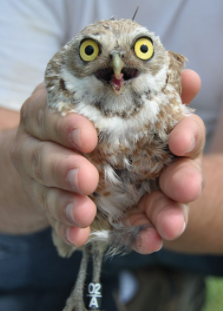
The burrowing owl is one of the smallest owls. They weigh 3 – 6.2 kg which is about 7 – 14 lbs, with a length of 60 – 120 cm. or about 24 – 47 inches, and attain a height of seven to ten inches. The burrowing owl is so tiny that it can fit in the palms of your hands. Because it is so tiny it becomes a prime food for larger animals.
According to Mountain View Voice on Tuesday, November 16, 2021, in Mountain View’s North Bayshore in California, feral cats are a big problem for burrowing owls. When a domestic animal escapes or is dumped into the open, it can become feral, which is, one could say, half-wild. Imagine your favorite puppy being left to fend for itself for a few months.

A while later, you would find it with mangy fur, wounds covering its back and belly from fights, perhaps missing an eye – it would be bonkers! Unfortunately, people abandon unfixed kittens who run away or are straight-up abandoned, resulting in more feral cats.
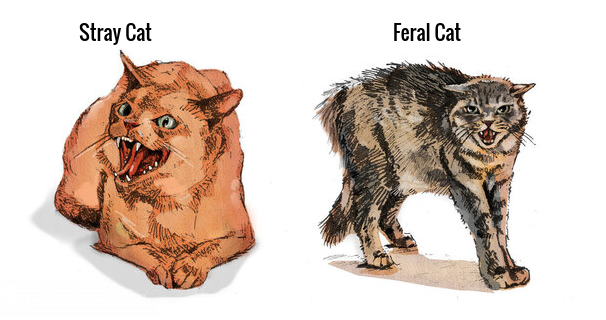
In Mountain View, the feral cats are annoying the neighbors and eating small animals. Reporter Bee Hanson says, “There were so many complaints that the office started looking for people who could do something about this”. The neighbors don’t like the cats because they are finding cat poop in their backyards and they think that the cats are spreading fleas. Furthermore, the cats are eating small and protected species. For example, these feral cats munch on the California Ridgway’s rail, the salt marsh harvest mouse, the western snowy plover, and the western burrowing owl.

In 2016, according to the Cornell lab, feral and household cats are responsible for 2.4 – 4 billion bird deaths per year in the U.S. Matthew Dodder, the executive director of the Santa Clara Valley Audubon Society says, “There is overwhelming evidence that feral cats are a serious threat to wild birds and other animals”. The feral cats in Mountain View’s North Bayshore area have wandered to Shoreline Park where they have been eating burrowing owls. The burrowing owls had not met this new predator prior, so they had no idea what to expect. Their vulnerability made them an easy meal for the cats. In 2015 there was a report that found a feral cat attacking a burrowing owl. Sadly, that was one of the few that remain in that area.

Some may say getting rid of the cats is the only solution. But is it really worth it? Is the burrowing owl’s life more valuable than the feral cat’s life? Shouldn’t all species of life have the same respect? Hanson worries about the health and safety of her furry friends. “Environmentalists say that cats kill a lot of birds, but what are we going to do about that? Kill the cats? That’s not a good answer.” She is against killing the cats and says that there must be another solution. She is correct. Instead of killing the cats, they could neuter or spay the cat then release it back into the wild. Cat advocates did that exactly. They used the trap-neuter-release (TNR strategy) to decrease the spread of the cats. But in 2020 and because of the COVID-19 pandemic, animal shelters closed down, so it was difficult for feral cats to be treated.        


According to The San Diego Union – Tribune on November 26, 2020, near San Diego in Ramona, CA, the San Diego Habitat Conservancy adopted 24 burrowing owls. The owl population in Ramona increased with a whole new generation of owls. Hopefully, biologists will transfer more pairs of burrowing owls so that they can expand the population even more. They want to expand the population because the tiny little burrowing owls are a rare species. Christina Schaefer is a private biologist and conservancy board member. “The chicks that are born here hopefully will come back to breed,” she said. Christina hopes that making a place for the burrowing owls to stay and feel like home will encourage them to come back, stay and raise another generation of owls.

Researchers have been releasing small groups of young owls to the community around Ramona. They hope to continue getting excellent results. To keep the burrowing owls in a good habitat they have made artificial burrows. “They use the California ground squirrels as their ecosystem engineers,” said Schaefer. “Ground squirrels dig the burrows, and the owls move into them.” However, people have been killing ground squirrels because they think that they are pests. This leaves fewer squirrels to make burrows which affect the burrowing owls because they don’t have enough burrows to use as shelter. In San Diego County, researchers said that there were only about 75 breeding pairs left. Because the owls were so rare it is very hard to tell how many are actually left; they might accidentally count one owl twice thinking it is just another owl.

The Ramona Grasslands County Preserve is the largest open area of wildlife in San Diego County. At 3,521 acres, it is a living library of biodiversity with a variety of habitats. Don Scoles, the executive director of the San Diego Habitat Conservancy said: “We’re trying to conserve and preserve and manage these high-quality lands”. Even though they had so much land, the Conservancy still had to figure out the right land for the burrowing owls. The habitat that they found was grassy with rich soil for burrows.

Was the new habitat perfect? Well, some adjustments had to be made. The habitat does not have nearby perches or fences for any larger birds, owls, or predators. For the owls the habitat must also have native animals that can graze and keep the grass short enough. In this particular habitat, the Conservancy makes artificial burrows for the owls. Some burrows are made for breeding pairs, so they have two entrances that lead to a plywood box. Researchers place the breeding pairs in the burrow then cover it with a temporary aviary to keep the owls there until they reproduce. Once they reproduce, they are set free.

During their breeding, thankfully, they still feed the owls so that they don’t go hungry. Every once in a while, when the researchers check on the eggs, they feed the owls frozen mice. Schaefer compared the artificial burrows to the squirrel burrows. She said that they obviously prefer the artificial burrows over the squirrel burrows just like how people would prefer a villa over a cabin. Indeed, while the burrowing owls are enjoying their habitat they may still not feel at home, the researchers played recordings of burrowing owl calls.

The goal is to maintain, preserve and expand San Diego’s natural environment. The help that the burrowing owls received from the researchers was only temporary. Schaefer said, “Eventually we go away, and they do this all on their own”. Most of the burrowing owls that were at the site migrated after they had bred, so now there are only about five owls left. Schaefer and company hope that the chicks will return to their birthplace and raise their own families. Once owls keep coming back and reproducing, researchers will know that their efforts for reintroducing burrowing owls to this area have worked. The successful part of this action was that they returned the owls from where they were from. You might be wondering what makes the burrowing owl so special and why the researchers are caring for them so much. If you keep reading you might start caring for the bird yourself.

Burrowing owls usually live in colonies. The adults and older owls take turns guarding and protecting the colonies. They are very active day and night. They are especially active during nesting season. The guard owls often hunt prey from tall posts of trees and then swoop down like a jet to catch their prey.

The burrowing owl likes to eat a variety of food. Their diet depends on the seasons and where they live. For example, they prefer to eat mostly large insects such as dragonflies, grasshoppers, beetles, crickets, moths, butterflies, caterpillars, scorpions, and centipedes in the summer. But if they are in Florida they might like to eat many frogs, toads, lizards, and snakes. However, for most of the year, they feed upon small mammals like voles, mice, rats, gophers, and ground squirrels.

The burrowing owl has unique mating habits and behavior. They are typically what are called monogamous animals. Monogamous means that the animal can only have one mate at a time. However, males do occasionally have two mates. The males also perform courtship displays. This means that they do a coordinated dance and song. The courtship display may include flashing white markings, cooing, bowing, scratching, and nipping. When the burrowing owls find mates, they start nesting. The nesting season is between February and August. The female lays their eggs only one day apart. The eggs are incubated by the female for 28 to 30 days. During incubation, the female stays put while the male hunts, feeds her, and stays guard over the nest. The male also takes care of the babies once they hatch. It seems like the male does a lot of the work. Most breeding pairs have 4 – 5 babies.
Owls loom large in Native American lore. For example, there are many tribes that believe that the burrowing owl is related to death in some way. The Hopi Indians named the burrowing owl Ko’Ko, which means “Watcher of the Death”. They thought that the burrowing owl was somehow connected to their god of death, Masau’u. Masau’u is the protector of the underground.
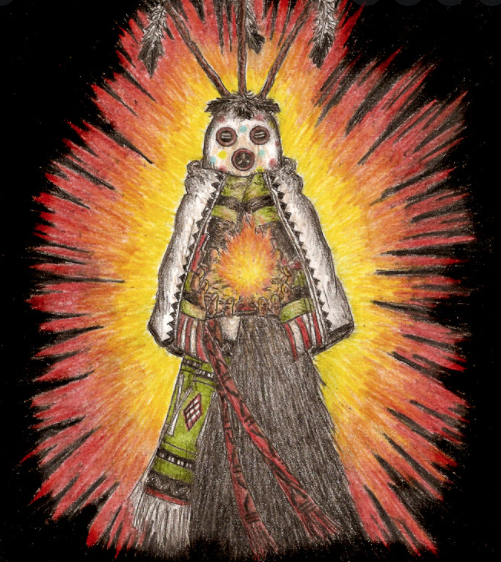
Masau’u

There are also many other Native American tribes that have beliefs about different owls. The Apache Indian tribe also thought that the burrowing owl signifies that death is approaching.

The Cherokee tribe believed that the Eastern screech owls brought sickness and punishment, whereas the Dakota Hidatsa tribe thought that the burrowing owl was a protective spirit for warriors. The Cree people believed that the Boreal owl has certain whistles that are summoned from the spirits. If a person mimicked the animal’s sound but didn’t hear a response, then that person would soon perish. The Lenape Indians believed that if they dreamt about any owl it would become his or her guardian.

Owl lore grew from real to imagined owls. An Indian legend says that the ‘Spedis Owl’ was a protector from water devils and monsters. These creatures are believed to pull people into the water. The ‘Spedis Owl’ was carved on a stone slab by the Sheepeater tribe.

Spedis Owl

The American Indians weren’t the only ones that had beliefs about the burrowing owl. There is also some Greek mythology about the owl. One famous one sits on Athena, the goddess of wisdom and war. The owl of Athena is kept on the shoulder of Athena revealing the world’s truths, lies, and secrets to the goddess. The owl helps Athena fulfill her reputation being the goddess of wisdom. With this in mind, when Greek soldiers during, or in preparation for a battle saw even a glimpse of an owl they believed that Athena had blessed them for victory in the battle.
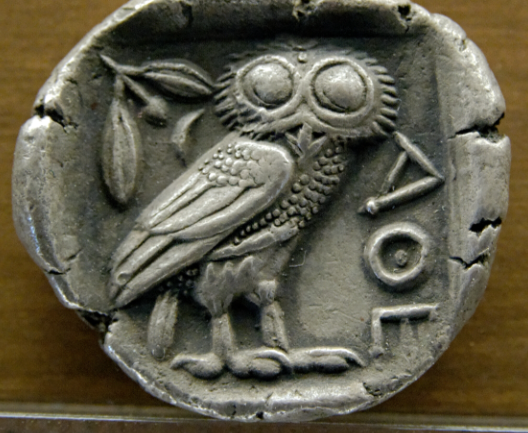
Athena’s Owl

In the Bible, it is said that the owl is unclean and abominable. The owl is compared to other terrible creatures such as dragons (which were mispercieved as giant squids, crocodiles, alligators, etc), bats, ravens, crows, and other birds. Moses commanded the Israelites to not eat these creatures. 

Also, many people believe that if you see an owl in the daytime then it could mean that you might have to learn something or that you are seeing the world as it really is. That is one of the many good beliefs about owls.

In India, if an owl is seen then it is the symbol of luck and wisdom but, their screech is an omen of death. In Hindu mythology, an owl is a symbol of Lakshmi, the goddess of wealth. When people worship Lakshmi on Diwali, they sacrifice the owl during black market rituals. It is believed that this sacrifice takes away the bad luck that the owl brings and restores it with prosperity.

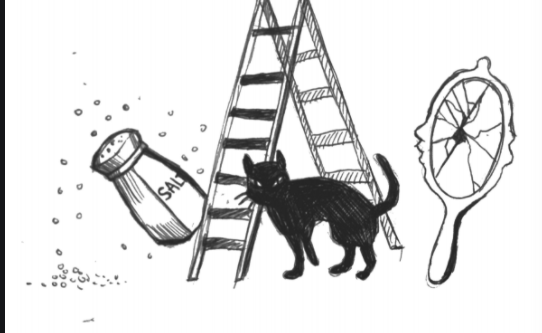
In other cultures around the world, the owl is considered to be bad luck, bringing omens of death, although in reality owls are not any more bad luck than black cats, broken mirrors, or spilled salt.


AARON HUR

Automobiles are more than just cars    

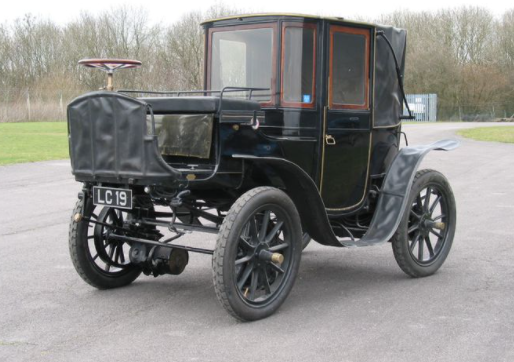
Automobiles have come a long way and have a storied history that leads to today. Nowadays, there are automobiles ranging from sports cars, to huge RVs, to models of electric powered, self-driving cars, along with an infinite amount of styles. Technically, the first real automobile, in 1885, was invented by Karl Benz, but the history of automobiles has great depth, and goes even further back in time. Some early plans of automobiles, “date back to the 15th century when Leonardo da Vinci was creating designs and models for transport vehicles” (Library of Congress). Automobiles have a long and eventful history that went through many challenges. 

Back in 1769, the first self-propelled road vehicle was invented by Nicolas-Joseph Cugnot, for the French army. It was a three-wheeled steam vehicle that went 2.5 mph.

Giddy up! Time to go! Got steam?

The next highlight in 1832-1839, was the electric carriage built in Scotland by Robert Anderson. 

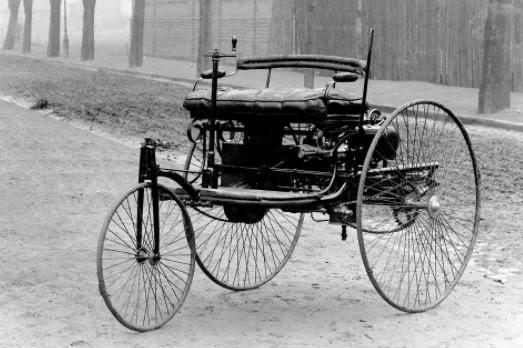
Then, finally in 1885, the automobile invented by Karl Benz was probably considered the first real automobile because it was an “automobile powered by an internal combustion engine: three wheeled, four cycle, engine and chassis form a single unit.”

Quite dainty, eh? That’s the first legitimate car^

In the US, in 1893, the first successful gas powered car was invented by the Duryea brothers, Charles and Frank. 

Many people had a hard time rationalizing that a machine could do the work of an animal, so well-educated people put into fancy and flowery language their rationales for why animals were superior to machines. Did it work? Nope.

“You know horses are smarter than people. You never heard of a horse going broke betting on people.” ~Will Rogers.

Will Rogers

Switching from horses to cars took about a decade and was not a smooth process. Although you eliminated the stench and heft of horse manure (shoveling it must have been fun), the noise added to cities was overpowering. Many people preferred horses because for one, they were extremely cheap, and a more effective user of energy, than automobiles at the time. Hay does not equal gas.

“Horses are self-feeding, self-controlling, self-maintaining and self-reproducing, but they are far more economical in the energy they are able to develop from a given weight of fuel material, than any other existing form of motor.” ~Robert Thurston.

In other words, horses are very much capable of making more copies of themselves without a factory, can maintain themselves (no one needs to help them chew, digest, nor defecate), and are more economically efficient in energy than any other automobile. But watch out for those road apples! But what am I saying – one must feed, bathe, curry and lodge these beasts! With a car, all you have to do is park it and shut her down!

That’s a curry comb!

Some of the reasons for why cars were more useful than horses are because the price of these machines had plummeted.

Cars like the Ford Model T sold for $850 in 1908, but then fell to $260 in 1916 ($6k now) and became more reliable. Sounds like a bargain to me. Additionally, trucks got more valuable; quickly developed for World War I, they could carry heavier loads farther, and much faster than horses. 

I could write on and on about the famous inventions, brands, how much Lambos cost, how the Porsche was invented, why the Ferrari’s logo is a horse, but what I want to do is blow your minds with exploring the strangest cars of all time.

“Everything in life is somewhere else, and you get there in a car.” – E.B. White

Self-driving cars are expected to have a few benefits, one of them being the biggest cause of accidents. 94 percent of traffic accidents happen because of human error. Self-driving cars don’t get drunk, or drowsy, or even distracted by text messages, so by preventing humans from having full control over these speedy modes of transportation can reduce the amount of accidents that happen. 

As of right now, you may have seen commercials of many vehicles that are considered semi-autonomous, which means that they have warning signals, parking assistance, and brake systems. Some even have the ability to drive themselves, with supervision, such as the Tesla. They are capable of driving themselves, but require human supervision at all times. But when you are on the freeway, you can set the Tesla on autopilot, which means that it can change lanes, accelerate, brake, and notice other cars around you, so you can sit back, relax, and have a nice cold Hawaiian drink, while listening to Li’l Nas’s new album. 

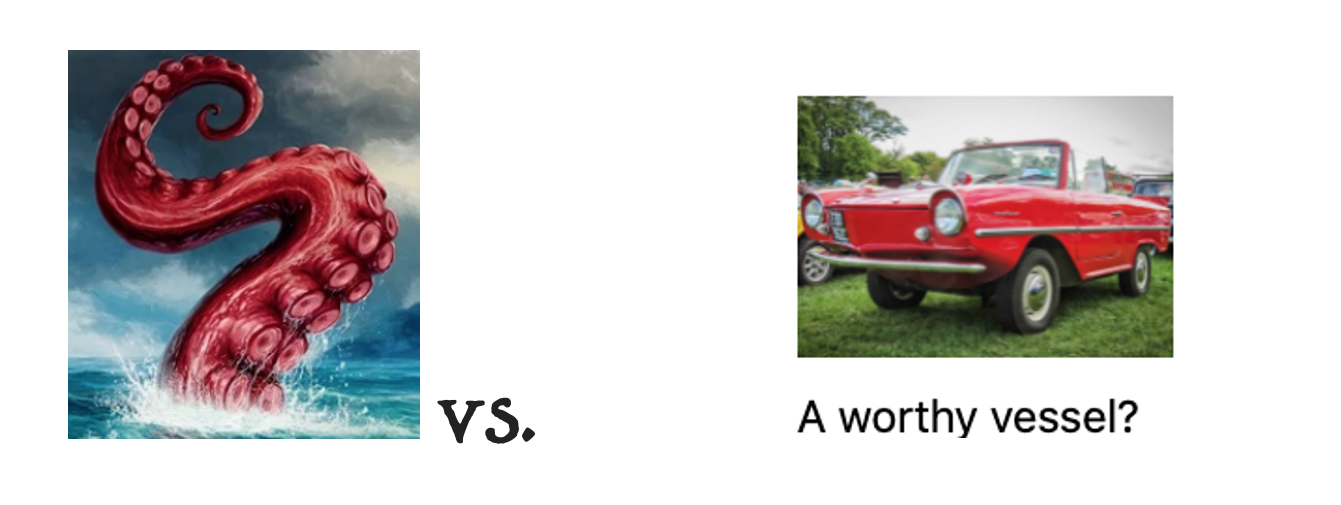
Who needs to buy a car and a boat, when you can buy the amphicar?

The Amphicar (aka the boat car) was built in West Germany and was in production from 1961 to 1968. Back in the day when these were created, although they were creative, they weren’t actually a good car or boat. The amphicar was called the Model 770 because it was supposed to go 7 knots on water, and 70 mph. Through the years the amphicar has developed, and gotten better, and who knows, could be the future of cars and boats. “The engine only puts out 43 horsepower. But you can’t measure the car’s ability to amuse” (an advertisement from the time).

3878 amphicars were built in Germany from 1961-1968. From 1961-1967, 3046 boat cars were imported to America. Originally, there were only 4 colors for the amphicar: Beach Sand White, even though beach sand isn’t really white, Regatta Red (get it, because it’s a “boat car”), Lagoon Blue as if it were actually riding on lagoons (and as if lagoons weren’t blue already!). Fjord Green, not that they would be riding in a Norway? How does the amphicar move on water, and land you might ask? It is propelled by twin nylon propellers, and a special two-part land-water transmission that was built by Hermes, who are the makers of the Porsche transmission (no not the god!?). This allows the wheels and propellers to be operated independently, and simultaneously. The land transmission has a 4-speed reverse unit, while the water transmission has only a 2-speed unit, the front wheels acting as rudders for the boat. 

So if you ever need to steer away from some ferocious huge 40-ft wave, with a kraken tentacle sticking out of it ready to suck you into the depths of the ocean, you can do all that you can to steer away from that wave, why? Because of the genius invention of using the front wheels as rudders to save your life.

The last unique car that I will be talking about is the flying car. Although the flying car is an advanced technology, attempts of making this automobile have dated back all the way to the 18th century, when someone attempted a gliding horse cart (no, I’m not joking).  The first real attempt at this was in 1917, when Glenn Curtiss, who would later be called the father of the flying car, made an aluminum autoplane (so not exactly a car), with three wings that was 40 feet. The car’s motor was in the back. This car never actually flew, but managed a few hops. 

In 1946, Robert Fulton created the Airphibian. This in my opinion was a very cool and interesting invention. Instead of attempting to make a car fly, he attempted to make a plane suitable for a road. The wings and tail would be removed and the propeller would be stored inside the plane. It took 5 minutes for the plane to transform into a car. It was considered the first flying car by the Civil Aeronautics Administration. It could fly 120 mph, and drive 50 mph. The Airphibian did not last as long because of financial reasons. The Avocar, in 1958, was designed for the military, between the Canadian, and British army. It was like a flying-saucer thingys that you might see in movies, to deploy troops on the battlefield.

But guess what? The Avocar never took off – it was simply too awkward.

This is about as far as the Avocar got: a visual model.

Lastly, the Aerocar, still developing today into an advanced automobile, was inspired by the Airphibian. It is the most successful flying car, and is designed to drive, fly, and then drive again without delay. It can go 120mph, being the last road worthy aircraft to receive FAA (Federal Aviation Administration) approval. 

You may have heard various statements along the lines of electric cars being good, or bad for the environment. There are many viable opinions out there, and I think it is a very interesting argument that has lasted for a long time, not having a clear, or direct answer. For electric cars to function, they need to be charged up, and they do that by taking electricity from the grid. The cars store that electricity in rechargeable batteries in the car that supposedly power the motor (which is responsible for turning the wheels), so the car can move. Electric cars accelerate faster than gas cars, which makes them feel light and swift.


Electric cars don’t release tailpipe emissions. Some electric cars have interior parts made from recyclable materials. The BMW has interior parts made from recyclable plastics, making it 95% recyclable. Also, the battery is recyclable, and if used right, can be used elsewhere with still 70-80% capacity left. Another common argument people say is that the batteries release toxic gasses into the air, but batteries running on fossil fuels are recycled in the US. One last thing that a lot of people have arguments that electric cars produce less pollution in the atmosphere, and have a lower production of CO2 emissions.


However, electric cars take longer to charge than just pumping the gas in, and can be more expensive to recharge. The charged battery can only last so long, compared to other gas emission vehicles that can travel much farther. Of course, some people argue that electric cars are not environmentally-healthier than gas cars because the electricity used to charge electric vehicles requires fossil fuels. Also, because the large batteries in the car are made of earth minerals: graphite, cobalt, nickel, etc, these minerals are beneath the earth which means that there had to be some polluting processes in digging for these underground. The need for these mining activities can expose toxic metals, which can create pollution. But the bottom line for eco-conscious consumers is that though electric cars are not at zero emissions, they don’t release co2 into the air while driving.

“The human relationship to combustion is as mysterious as it is fraught with madness. From the candle flame to the nuclear blast, it has lit up the human imagination with fear and fascination.” ~Michael Leunig


How a combustion engine works may seem complicated, but it’s actually pretty simple. A combustion engine is the most common engine for cars. Basically, a combustion engine works by drawing in air and fuel, compressing it, igniting it, and having it getting pushed down by pistons, generating force that ultimately moves the car. The first stroke, the Intake stroke, is the one that draws in air and fuel into the cylinders, as the piston moves down. The next stroke, the Compression Stroke, has air go into the engine, and the fuel is compressed when the cylinder moves upwards. The Combustion Stroke ignites the air and fuel mixture with a spark, creating pressure that moves the piston downward. Finally, there’s the Exhaust Stroke, where the whole gas mixture created by the spark is expelled from the cylinder as waste. Just because the engine has more cylinders, doesn’t necessarily mean it has more horsepower. The engine’s output varies on the number of cylinders, which I will get to next.

Inline engines are cylinders arranged in a straight line. Most four-cylinder cars have inline engines. The 6 cylinder inline engine is balanced, resulting in a less vibrating, smoother ride. BMW and Mercedes-Benz use this. Inline engines are also less expensive to build, adding on to its utility.

V engines are engines that have 2 rows of cylinders at a 90 degree angle. Their engines are shorter, taking up less room, and leaving more room for passengers. 

Boxer engines are supposedly shaped like two boxers, horizontal from each other, having a more bulky, weird shape. They are more difficult to fit, resulting in weird-shaped cars, but have better handling. The pistons do not go up and down, but rather side to side. Ever hear on the road a loud sound of a Porsche, or an old Subaru? That’s because those cars use a boxer engine, which is also why they are lower to the ground.

A boxer engine makes the car able to be lower and more centered.
A boxer cylinder set close-up^

Diesel engines don’t require spark. They vary in number of cylinders. Since they don’t require spark, they need higher pressure for combustion. Because of this, they have an engine built like a tank. They last longer, and are more efficient, extracting more energy than gas engines.

There are obviously many, many more components to automobiles than I have covered in this essay. Some things such as what is an external combustion, or exactly how self-driving cars are made, or… who would win, a kraken tentacle, or a boatcar? But I think that there is so much to automobiles’ history, and their origin than most people consider. I mean, the boxer engine has to originate from somewhere, right?


JASON QIN

Guy de Maupassant: Ironically Disturbing

Henri Rene Albert Guy de Maupassant was a prolific French writer of the mid-to-late 1800s writing some 300 short stories, six novels, three travelogues, and one volume of verse (a book of poetry). He published his first story, “Boule de Suif” or “Ball of Fat” in 1880 and it is considered by many to be his best work. He is credited for being the father of the modern short story. Personally mentored by the French novelist Gustave Flaubert, Maupassant’s stories are known for their efficiency and their effortless dénouements (endings or resolutions). Damaged psychologically in the Franco-Prussian War

of the 1870s in which he had served in the Navy, he captures not the front lines, but the citizens whose welfare is ignored because of the French government’s greed for a sense of power and control or its total malfeasance. He also captures those who are less affected and still ignored, and he undermines those whose pride causes their despair. However, both these groups are scarred nonetheless, most of whose pride is ruined. At the same time, his stories always find a way to be ironic.  

Contrary to popular (a middle schooler’s) belief, literary irony does not come in one form and it is not always intended for humor. Literary irony comes in three forms: dramatic, verbal, and situational. Dramatic irony is used by writers to keep readers reading by giving them information that a character does not have, making the reader feel more tension. Verbal irony is more than sarcasm. It is irony through words, the use of wordplay to create a double meaning that is different from what is blatantly expressed. Situational irony is when the unexpected happens. An author uses the setting of the story, the situation that the character is in, and the outcome that is implied to twist and to turn the situation inside-out. There is always a meaning to take whenever this technique is used because it is never just a gag. It tells the reader that anything can happen, and will happen in a memorable way. How would someone not know these forms of irony? Well, they are usually well integrated into their works and usually cause a careful, second read. In fact, I call it structural irony when, upon finishing the story, one looks around for a secret answer, as if it is lurking in the room. There seems to be a bitter, a tart, or an acrid taste in one’s mouth, depending on the story. One cannot know exactly what it is that makes the story unforgettable. One will find this to be true when one reads Maupassant’s stories. 

It is still not to say that irony is not humorous, because irony is a large part of humor. In fact, reading many of Guy de Maupassant’s ironic stories has impacted my sense of humor because there is always something that feels wrong to laugh at. This is dark humor where the humor typically involves pain. All humor plays on surprise. When a darkly humorous joke is told, people do not know how to react quickly and settle with laughter. Concerningly, my humor has not drastically changed though it has grown, partially in recognition, partially reinforced. In fact, I was not surprised when I read Maupassant at how dark and weird his stories can get. This is because it is surprisingly easy to create dark humor, because it is semi-fake. It is also because of the human desire for attention, and laughter is the best type of attention, seen as a positive reaction even to negative things. In my eyes, the only acceptable pieces of dark humor are the ones that would not be hurtful to other living people. Enter Guy de Maupassant’s short stories. He brings in dark humor as an integrated part of his stories and they are intricately woven in the lines. They are woven so intricately that the dark humor is not there for a joke, rather, it is the base of the storytelling.

Maupassant’s story “On the River” is a peculiar tale narrated by a river boatman, set on the Seine. The river boatman tells a tale of one of his bone-chilling days back when he would ply the Seine and how an unassuming, quiet, and calm river can be a façade for a graveyard of evils. However, it is assumed that the river boatman continued with his work even after his horrifying experience and still loves the river that caused him a night of terror. 

J.T. Beukers

Maupassant gives an insight into the horrors that stay covered up and the ones that prefer to stay that way. He contrasts the river with the sea by saying that the sea reveals its power while the river stays ever so silent and mysterious. “It shrieks, it roars, it is honest, the great sea…” reveals the sea’s noise and its openness. In comparison, Maupassant describes the river as “silent and perfidious,” therefore being the scarier one because one cannot know the crimes that the river is capable of, unlike the sea which throws its power around. Furthermore, this is even more applicable at night because the river can seem bottomless and endless, all the while staying deceptively calm and still. In addition, Maupassant details the conditions when there is no moon, where a river boatman can feel lonely to the point of feeling vulnerable to the conditions of nature.

The story is about a moonlit night where, on the river, and returning from a dinner party, the boatman gets snagged and must pass the night on his boat. The river boatman becomes uncomfortable in his boat as the river is unusually silent. He begins to see things. To him, the river is seemingly throwing his boat around, something that the sea would do. The silence is also replaced by the noises around. He stands up, and the river stops. This is Maupassant emphasizing the malignant power of the river and its ability to cause traumatic experiences, for the river boatman is nearly paralyzed by fear. He narrates, “I could not smoke; at the second draw I was nauseated… I began to sing. The sound of my voice was distressing to me. So I lay still, but presently the slight motion of the boat disturbed me.” The river boatman is on edge as he considers how he’ll get unstuck. Once he realizes that the river, a non-living entity, is messing with him, he begins to pull on the anchor, but “the anchor did not come up.” Nature has trapped him in the “silent and perfidious” river. The narrator’s fear subsides (the narrator being a lonely boatman) as he sees a bright landscape, contrasting to the earlier dark river. This light connects back to how he fears the river more than the sea because of its silence, but here it has become bright with fog that “had gradually cleared off and massed on the banks.” The fearsome darkness and secrecy of the river fades and this is all topped by “the frogs [croaking] furiously.” Also, he is in “such an unusual landscape that the most remarkable things would not have astonished [him]. His ability to think is partially removed which shuts his ability to fear. In other words, he finds an escape from the limitless river as he stares into this contrasting landscape: “Strange to say, I was no longer afraid.” This is important because the light shines on everything and makes things predictable while the darkness instinctively makes someone want their back to a wall. For the narrator, it shows him a wonderland: he wants a world where he can know what is going to happen instead of being trapped on the silent and perfidious river.

The last paragraph of the story reveals these hidden horrors as the narrator ends up finding “the corpse of an old woman with a big stone round her neck.” The river seems to hoard its crimes and dark secrets behind a locked door and uses its dark bottom to deter anyone who could expose the evil lair. Also, the denouement gives the reader a sense of why the narrator describes the river as an area filled with secrets. The structural irony of the story is shown in the narrator’s arc of confidence, and with his lack of it at the beginning, he gains it back in the middle, and is probably scarred for life at the end, which is likely why he fears the river… yet oddly enough, he still loves it.

“A Ghost” is a tale recounted among friends by an old man about his younger days, masquerading as a truly peculiar ghost story. This old man was a military man in his twenties, and just so happened to come across a friend he hadn’t seen in a while during these military days. This friend seemed fifty years older as “a terrible event had broken him down.” He had fallen in love with a young woman who had died from heart disease, “no doubt killed by love itself.” However, the narrator seems apathetic towards his friend’s troubles and what could await him. By revealing this, his horror later is seen as a result of hubris. 

 His pride is exhibited as vainglorious: his mood in “A Ghost” when he departs to the manor house is of ignorance and innocence as he thinks that he is just going to do a regular errand, one that will take an hour on horseback. His ignorant and apathetic mood is seen multiple times as, “[he] [is] almost hurt” by someone’s words without realizing the meaning behind it. He is touchy; his ego is on alert, and his pride is right beneath the surface. Indeed, on his approach, his arrogance mixed with pride raises him to a summit of experience: not only is he riding a horse, but he is so content and “avid” that he bites a leaf as he canters through the wood. His attitude towards life is that of a master: he is sitting pretty, as some would say. On the contrary, when he races back, he runs back like a seven- year-old running up the stairs at night. This is because his entire view of the world, his military pride as Maupassant describes, was crushed, shown as he spent “an hour [asking himself] whether [he] had not been the victim of a hallucination”. Here, it is learned that not only are there ghostly horrors in the world, but it is they that are the most crushing to those who think they are masters of this world. The irony of this story comes in the form of structural irony. The reader imagines a pompous air around the narrator as he walks, and sees how after encountering the ghost, he is a shell of the man he once was. His uncertainty and insecurity are laid bare.

Maupassant’s “A Normandy Joke” stretches the limits of the term joke. In this story, we see an extreme practical joke (a trick played on someone to make them look foolish and to amuse others) unfold as a man’s wedding day is ruined by his pride. “A Normandy Joke” starts with a wedding procession, the bridegroom being a wealthy sportsman by the name of Jean Patu and the bride who was courted by many other fellows but of course, picked “the richest farmer in the neighborhood.” 

During the big wedding dinner, four young groomsmen think of practical jokes for the newly married couple and find one so good that when one shared the idea out loud, “the whole table convulsed with laughter.” They then suggest that people would poach on his land during the wedding, an idea that Jean did not like, so he challenged them. He would be proven wrong. Later, in his marriage chamber, his wife and he hear two shots while getting ready for bed, and he races out to hunt them down in a tumultuous rage.” The next day, he would be found “two leagues from the farm, tied hand and foot, half dead with rage, his gun broken, and a placard on his chest with these words: ‘Who goes on the chase loses his place.’” The irony here is the dramatic kind because the reader can infer early on that the four young fellows had been planning this from the start. There is also a strong stench of situational irony where Jean Patu, the hunter, is lured into a trap like an animal and for a moment becomes the hunted.

Maupassant’s “An Uncomfortable Bed” speaks in irony as a man brings out his undoing that he so desperately tried to prevent. In “An Uncomfortable Bed,” a man is described as an “old ferret”’ is staying with his friends for the hunting season in a chateau in Picardy. His friends are fond of practical jokes and he is immediately suspicious when he steps into the “chateau,” for he is greeted by “princely reception” as they “embraced” and “cajoled” the old ferret. He also notes excessive mirth at the dinner table as if they were getting their appetizer-giggles out before the main course, and by the title, it is assumed to be an uncomfortable bed? Apparently, they needed a second appetizer as “during the entire evening, everyone laughed in an exaggerated fashion.” They even needed a third as they escorted the old ferret to his apartment and he “heard laughter and whispering in the corridor.” The old ferret inspected everything like a paranoid animal and found that “the bed was particularly suspicious- looking.” So, he pulls the mattress onto the floor. Dessert is coming soon, do not worry. 

The ferret goes to sleep. What happens? He is awakened by the fall of a heavy body. He “[receives] on [his] face, on [his] neck, and on [his] chest a burning liquid which made [him] utter a howl of pain. And a dreadful noise, as if a sideboard laden with plates and dishes [fell] down, [penetrates] [his] ears.” It turns out that as a consequence of his suspicion, he brought “the interlude [he] had been striving to avoid,” as a valet, bringing breakfast, tripped over his makeshift bed and failed to catch himself, scalding our ferret with coffee. Dessert is the best course of a meal. The irony here is of the situational kind where the unexpected happens. In this story, it finally feels like the narrator will win while he essentially loses to himself because of his paranoia. 

For both of the stories, “A Normandy Joke” and “An Uncomfortable Bed,” the characters suffer from their undoing because their troubles could have been prevented, which makes the pain resound more.

Konstantin Yegorovich Makovsky

Would rendering a blind individual useless before even trying to help them, appear in our modern world? Well, I cannot answer that question, but Maupassant’s “The Blind Man” gives an insight into how this issue would unfold in a pessimistic fashion. Maupassant begins the story “The Blind Man” by rapturously praising the gift of sight – he frames the tragedy with excluding those who “sit in the doorways, impassive in their eternal darkness.” He emphasizes the primacy of the visual sense, but also throws an ironic tone, for it is rapturous and seemingly divinely inspired, this gift of sight. Is the blind man’s family even capable of this type of reflection? No, as they are the scum of the earth, worse than dogs, cruel and unusually wicked.

The family engineers him to become a moneymaker by making him into a laughingstock and essentially turning him into a circus animal. They would gather the townsfolk to watch the man eat his soup and perform practical jokes and, “ranged along the wall would burst out laughing, nudge each other and stamp their feet on the floor.” They would “nudge each other” because they love knowing what the blind man doesn’t, and they cherish his suffering. Is this issue solved? No, spoiler alert, the blind man dies. The irony here is verbal, where he is considered useless by his family while becoming a moneymaker for them. The irony also comes when the blind man’s eyes are pecked out by crows, the eyes that were useless to him for his entire life.

Maupassant’s “The Beggar” is akin to Maupassant’s story, “The Blind Man” where injustices are committed against these individuals when all they need is a loving home. The beggar’s head is depicted as being squeezed between two mountains with shoulders, hunched up because of his crutches. He has these crutches for an idiotic reason – he got drunk. He had been walking on the Varville highway in a stupor after being given and drinking several glasses of brandy by a baker without knowing the effects as he is “utterly without education.” This is an almost complete mimic of the poverty cycle. A foundling, “picked out of a ditch” he was too poor to afford a good education, and he would end up making a bad decision that would ruin his life and lower his status to beggar. This is also an unfortunate and nowadays rarer form of natural selection in society, where he doesn’t get to pass on his genes because society deemed him far too crippled. The beggar goes on to beg, for his life is on the line. 

The townspeople eventually get annoyed and start to think that giving a piece of stale bread to the beggar is like giving away their life savings, their first-born child, all their property, and their soul to the beggar. He eventually gets arrested for trying to steal some chickens when he had finally tired out the townspeople he knew, and he dies in a jail cell immediately because the police did not think he needed food. The structural irony here is where he had foraged for himself for a long time and the reader thinks that his story will go on for longer when the beggar dies because of negligence. This is also a great example of Maupassant’s efficient denouements.

Maupassant’s “My Uncle Jules” is made peculiar because of the weird family dynamics that he brings to the table. This family is made unique by the interesting bond between the narrator’s father and Jules, which is more of a company/investor bond than a brother/brother bond. This is shown as the father was only excited about Jules’ potential return when according to him, “business is good.” The unique nature of this family is this: they have false hope, and this hope, like cancer, eats away at them. The only other hope they have is in the possibility of the daughters marrying some rich stud, and of course, when Uncle Jules makes his appearance, he is hidden from the suitors. In all, the Davranche family is led by a weak-willed, materialistic, and arrogant father. It is heavily implied that Jules would do nothing good, especially in the beginning where “a white-haired old man begged [them] for alms”… and then that reminds the narrator of the story of Uncle Jules, implying the Jules would become a poor unfortunate like the white-haired old man. There is also dramatic irony with the mother, father, narrator, and the son-in-law who doesn’t know that Uncle Jules failed in his quest to be rich; his quest was the deciding factor in the son-in-law’s decision, but the family wants to marry off the daughter to hopefully bring in money. This keeps the readers reading because they are expecting a little bit of conflict, but it is mostly all washed away, just as Jules washes the oysters in preparation for selling them. The end of the story is bleak, but it does seem as if, because the Uncle is seen as a washout, that perhaps the family can get a dose of reality and stop pinning their hopes on this donkey.

William Henry Hunt

Maupassant’s “The Donkey” covers the adventures of mischievous crooks, Mailloche and Chicot. Mailloche resembles a sailor, typically a pirate and one that takes orders from another pirate. It is easy to picture him with a pirate hat and a black eyepatch. As a man of 40- 50 years, he seems tense and was very glad in cruel enjoyment, or sadism. He seems a little paranoid about being stopped in what he is doing, as the text describes him, “with the restless eye…” he either doesn’t get enough sleep, or he is always trying to analyze his surroundings. This paranoia is also shown as he is the one that hides the fish and the gun, much more than Chicot hides. This shows his fear of being caught even for things like possession of a gun, which I’m pretty sure he should be able to just get a permit for, like a hunting license or something of that sort. Chicot assumes a leadership role over Mailloche as he seems to bring a lot less stuff to the table than Mailloche, so to prevent him from being less useful than Mailloche, he leads the two and decides what they should do each day to get by. Chicot has an irreverent streak calling men and women alike ‘sister’ and he uses this to disarm people so that they consider him a harmless freak, and as they’re put off-guard, he filches their money, abuses their trust, and continues on his way, maniacally laughing. Chicot is a crook, one who takes advantage of every possible scenario, aiming to line his pockets, keep his wineskins full to bursting, and his belly full with the carcasses of any animal he can poach. His exuberance allows him to stay in an irreverent state, making fun of all occurrences and keeping his head above conflict. He engages in conflict-bringing activities but seems to get away, leaving despair in his wake. In calling men and women alike ‘sister’, he disarms them with this odd and frivolous term, and in the interim where they wonder at his seriousness or respond to his absurdity, he gleefully makes his way forward in taking advantage of them. 

The emotional tone of the story is very mischievous which is especially shown in the actions of Chicot and Mailloche. “Sometimes looking for drowned people and searching for their clothes,” the story paints them as criminal, wrong, and as leeches as they are riding off of what other people did. They even stretch the term “junk-gatherers” and steal and sell stuff that is not junk, like a boat that someone is still using. Another example of stealing “not junk” is when they hunted the rabbit. What is so stomach-churning about this is that they aren’t doing this legally, or they don’t want to be recognized, and the text emphasizes this by saying “they were approaching the shore so slowly, so quietly that no noise betrayed them.” The author plays with the tone by driving the story to a darker side and then bringing it back to a very cruel triumph when they scam an innkeeper for 20 francs by making him pay upfront for a dead donkey. The emotional tone changes from calm and peaceful to a journey deeper into the cruel daily life of crime of the two junk-gatherers. The story starts with a description of a calm and peaceful shore of the Seine at dawn and is interrupted by the noises of Chicot and Mailloche poaching fish. They then shoot a rabbit, and Guy de Maupassant includes a disturbing detail that the rabbit was not yet dead when they picked it up. They then pay money to torture a donkey and then end up killing it for trying to escape. This clearly shows the emotional tone being driven into a darker tone. Then, the story resurfaces to the mischievous plot to scam the innkeeper. It is interesting how it seems as though Chicot and Mailloche’s presence alone disturbs the calmness and peacefulness of Frette. There is dramatic irony with the innkeeper where the reader knows what Chicot and Mailloche know while the innkeeper is thinking that he got a great deal.

Irony is a strange tool in writing, one that Guy de Maupassant used to its fullest extent. What is that fullest extent? What is the full potential of irony?  It is the power to create a compelling story through the harshest conditions while keeping it simple. With irony, the story does not rely on long monologues and flowery sentences that make the average reader start to snooze. In Maupassant’s stories, irony is the heartbeat, pumping the life into the story instead of the convoluted symbolism of blue curtains. That is the fullest potential and that is why it is almost freeing to read Guy de Maupassant’s stories.