The Naval Battle of Guadalcanal: how the Allies squeaked through a most important victory

On the evening of November 12, 1942, Admiral Daniel J. Callaghan proudly stood on the deck of the USS San Francisco, waiting for any sign of Japanese ships off the coast of Guadalcanal. Guadalcanal is one of the many islands that make up the Solomon Islands. The Solomon Islands are located in an area around 500 miles east of Papua New Guinea. Callaghan had already served for thirty-one years in the US Navy and it was an honor for him to lead the Allied ships into battle on this night. The ships were floating in the calm waters off of Guadalcanal as Callaghan was concentrating on what he saw on the other side of his binoculars. He didn’t want to miss out on anything after hearing about the fatal loss at the Battle of Savo Islands a month previous, when the Japanese were able to sneak up on the unaware Americans. He did not want to be the one remembered in history as the one who didn’t take enough risks to defend his country. The Japanese were much more skilled naval fighters than their opponents the USA, who lacked in training, especially night combat. The Allied forces were trained much better in different aspects of war such as launching torpedoes and accurate onboard shooting. Their more efficient ships also gave them an advantage. The Americans specialized in submarines, and they gained their training and competitiveness in different sea battles throughout the war. The Battle of Savo Island taught the Americans about their weakness in nighttime battle, as the Japanese used fighting in the dark to their advantage. Even though Callaghan had as much information as was available about how the Japanese operated, it still frightened him to operate in pitch-black conditions. The thought of the Battle of Savo surprise happening again under his command haunted him in his sleep – when he could get it. But this was not the time to be thinking about the past, because perhaps the future depended on him.
 Some of the ships in his fleet had the newest type of radar called the SG Radar, which gave him a little more confidence, because it would give clues about the location of the Japanese ships. This radar was able to spot ships on the surface at distances as far away as 41 km. Its accuracy in spotting far-away objects underwater was 200 yards. The radar weighed 3000 pounds (1350 kg). Some of Callaghan’s ships had these new pieces of equipment, which would give them an advantage over the Japanese. The Allies had the upper hand in terms of technology in this battle, but Callaghan had decided to put the five ships with the new SG radars in the back of his formation. Putting the radar in the back of their formation would allow the radar to last longer because the front ships would get attacked first, right?
It was already past midnight: Callaghan was still wondering whether or not they would come. He still stood in the same upright posture, holding up his binoculars – not only observing far away for signs of ships, but also making sure that the leaders of the other ships were doing their jobs. There was almost no unnatural sound at all for miles around Guadalcanal. The waves crashing against the sides of the ships and the whispers between men on board were all he could hear. The bright half moon and stars illuminated the skies. Callaghan’s stomach rumbled but he knew there was no time to sit down for a meal, because an attack could occur at any second.
As the clock struck one a.m. on November 13, Callaghan and his men were all very tired but they could not fall asleep. Callaghan thought that the battle would perhaps not occur tonight. He was unaware that messages were trying to be communicated to him, then, suddenly, he heard shots. Ships from both sides started to fire all at once when the Japanese all simultaneously turned on their spotlights. When the lights turned on, both forces realized how close they were to each other. The noise level changed from dead silence to deafening explosions. Shots were being rapidly fired because they didn’t require as much accuracy. Callaghan was startled by the sudden burst in noise but he had been in these situations before. This was the start of the Naval Battle of Guadalcanal. Thousands of men put their lives on the line to defend a very important island and take part in a major turning point of World War II. Why is the Naval Battle of Guadalcanal so important and what made this battle a turning point in history?

The dense forests on the island of Guadalcanal are very unwelcoming. They do not allow any sunlight to penetrate the tops of the trees, which make them very inhospitable to armies. Why would any country want to have control over a frightening, sparsely populated island like this one? Well as William Manchester, a biographer who went to Guadalcanal in 1944, said, “If I were a king, the worst punishment I could inflict upon my enemies would be to banish them to the Solomons.”
The Allies knew how important it was to have control of the air, so they spent a lot of time and soldiers to try to capture Henderson Field, on Guadalcanal, which had been a Japanese landing strip with another name. The Allied forces had arrived and stormed Guadalcanal on August 7 and captured Henderson Field. The Allies figured that to control Guadalcanal, constant air and sea patrols were necessary. The so-called “Cactus Air Force”, the name given by soldiers to the USAF at Henderson Field, would fly around Guadalcanal patrolling the area looking for anything out of the ordinary. The Japanese had tried to recapture the airfield several times but they had not succeeded. The Japanese then sent 7,000 soldiers to try to damage USA ships but the Allied forces were prepared, and protected Guadalcanal. They used their warships to keep the Japanese soldiers away and their aircraft to stop Japanese ships from getting to Guadalcanal. This is the main reason why the small island of Guadalcanal was so important.
The Naval Battle of Guadalcanal was a combination of air and sea attacks. The battle was between the Allied Forces and the Imperial Japanese Forces. The goal of this battle for the Japanese was to retake the island to reinforce this most strategic position.
After Midway and Savo, on August 8th, the night after the Allied forces got to the area, they put 11,000 troops around Tulagi Island and other islands nearby. Over the next two months, they increased the number of troops to 30,000. Japan’s first attempt to recapture Henderson Field had failed on August 21. They only sent 917 men. This was known as the Battle of Tenaru. Their next attempt occurred less than a month later, from 12-14th of September, and also failed, even though they were using a much larger force. Their last attempt had occurred October 14th, and it was only a partial success. They were able to hold off the Allies long enough so they could get their large supply ship to the shore. When they arrived, the 15,000 Japanese soldiers destroyed half of the Cactus Air Forces’s fleet and burned most of the fuel. However, the Cactus Air Force was able to recover in a few weeks.

And, on October 20-26, the battle of Henderson Field and battles of the Santa Cruz Islands were fought. The Allies were able to fend off the Japanese at Henderson Field but lost some of the other battles.
First Naval Battle of Guadalcanal, 13 November
The hard-fought Naval Battle of Gudalcanal was one of the most important battles of World War II and had an unexpected outcome. As mentioned, the weaker Americans had been able to lessen the power of the Japanese fleet in the Battle of Midway, the beginning of the turning point, June 4, 1942. This retreat of the Japanese allowed the Americans to somewhat regain their defenses.
The Japanese also had a fleet of slower transport ships, and twelve other battleships that were estimated to arrive later that night, November 12, 1942. A US aircraft saw the Japanese formation approaching and warned the commanders. In early November, the US had sent combat ships San Francisco, Portland, Helena, Juneau, Atlanta, Cushing, Laffey, Sterett, O’Bannon, Aaron Ward, Barton, Monseen, and Fletcher to protect Guadalcanal, and they later sent some supply ships, too.
The two sides took on very different types of formation in the battle. The Allied ships lined up in a single file line of 13 ships. Their ships formed a line that was almost parallel to the northwestern side of the island. The last few ships in the formation were positioned directly in front of Henderson Field, protecting it almost if it were a giant game of capture the flag. The Japanese took a different formation. Since they were on the offense side of the battle, they had to focus on attacking the defense from different angles. Hiroaki Abe, the commander of the Japanese forces, and split up his seventeen ships into several different groups.
Fear was running through people’s minds and especially families who had loved ones sent to fight in the war. Back at home, they weren’t able to see what the war was like because TV wasn’t yet invented. Sometimes camera crews would follow some military units around during the evening, but it would take a week before they could play in newsreels at the movie theaters back home. At the time, citizens were not aware of how close their armies were to losing the important battle, and what hung in the balance. There are still some unanswered questions remaining about the battle to this day such as, was Callaghan justified when he put his radars in the back? What crucial mistakes caused Callaghan to die?
On the Japanese approach to Guadalcanal, there was an intense headwind, and not only were the orders given by Abe confusing, but the fleet also passed through a powerful rain storm which forced them to split up their formation. The US ships, on the other hand, stayed in a line. The Japanese forces arrived at 1:25 in the morning on November 13, trained to fight in the dark.
 The waters where the meeting of the two forces and the fighting all happened would later receive the name “Ironbottom Sound” given by the Allied Sailors. This name came from the fact that many ships and planes had been shot down or sunken and all that iron wreckage lay at the bottom of the sound.
The Japanese ships were detected early on during the battle, indeed, with US radar, but messages were not sent to Commander Callaghan, due to lack of training. This was very big mistake, which if prevented, could have saved many people’s lives.
When both forces were able to catch glimpse of each other, Abe, the commander of the Japanese forces, decided against stopping his ships, and kept going forward, even though he had the option of switching his ships from bombardment ammunition to anti-ship ammunition. Anti-ship missiles are guided missiles, which are mainly used to attack larger ships. This was a very important decision he couldn’t change midway through the battle.
Nonetheless, after a few minutes, both forces were able to see each other without radar. The Allies’ ship formation started to break down immediately, which caused them to have to wait longer until they had permission to fire. The Japanese were starting to trap the Allied ships. Callaghan was giving commands that made no sense to anyone, because, before the battle, he had organized the ships this way: “Odd ships fire to starboard; even ships fire to port”. Not being able to interpret their commander’s unclear orders, they decided the best thing to do was just to start to open fire. The ships shot at each other at close range and the Japanese took the advantage because of their skill at nighttime combat.
Both forces used the same strategy of gaining the upper hand by overpowering. Six of the US ships targeted a Japanese ship until it sank, while the Japanese focused on the lead cruiser, Atlanta. The cruiser was shot repeatedly until its power was cut off. Later, a U.S ship accidently shot its own, the Atlanta, which caused it to drift away from the combat. A US destroyer was stopped because of the attacks from several Japanese ships.

The Hiei was a very large ship that had 9 searchlights, which made it one of the targets for the US ships. It had the length of 728 feet, just over the length of two football fields. It could go at a top speed of 35 mph. At one point, it passed the USS Laffey by twenty feet! The Laffey then damaged the Hiei severely until it pulled away.
Officers and administrators have accused Callaghan for not making a smart decision with putting the advanced radars in the back, for not using the radar and simply relying on what he could see from the deck of the ship, and not pre-planning enough – giving out confusing orders. However, in the long run, as Callaghan was dealing with new technology, his mistakes helped improve military radar protocol for the future.
 Later on, Hiei and four other ships started firing at the USS San Francisco because it was the nearest ship. San Francisco was no match for Hiei. It was 140 feet (42 meters) and not much faster. Hiei was equipped with more weapons. USS San Francisco’s smartest decision would be to clear the area because it was incapable of taking down Hiei by herself. Unfortunately for Callaghan and his men on board San Francisco, they were unable to get away soon enough. San Francisco could not withstand the missiles being fired at her. The damaged ship was unable to steer away from battle. Many people onboard were killed, including Admiral Callaghan. While the San Francisco was trying to steer away, it shot one shell, which landed perfectly in the Hiei’s steering room, disabling their steering. Callaghan and his men did not go down without fighting. They did not stop until their ship had sunk. How could have Callaghan’s death been prevented? Was this death caused because of all the small mistakes made before or was it entirely from the mistakes made in the moment?
Additionally, the USS Cushing and Laffey weren’t able to survive the attacks from Japanese ships because they were outnumbered. Cushing faced two Japanese ships and she was unable to fight back. The crew later abandoned ship. Luckily, Laffey was able to escape attacks from Hiei.
The Yūdachi and Amatsukaze decided to go attack the ships in the back of the US Formation. Amatsukaze was able to sink the USS Barton, having to use just two torpedoes. Yūdachi and Amatsukaze then worked together to damage the USS Juneau enough for it to steer away from combat.
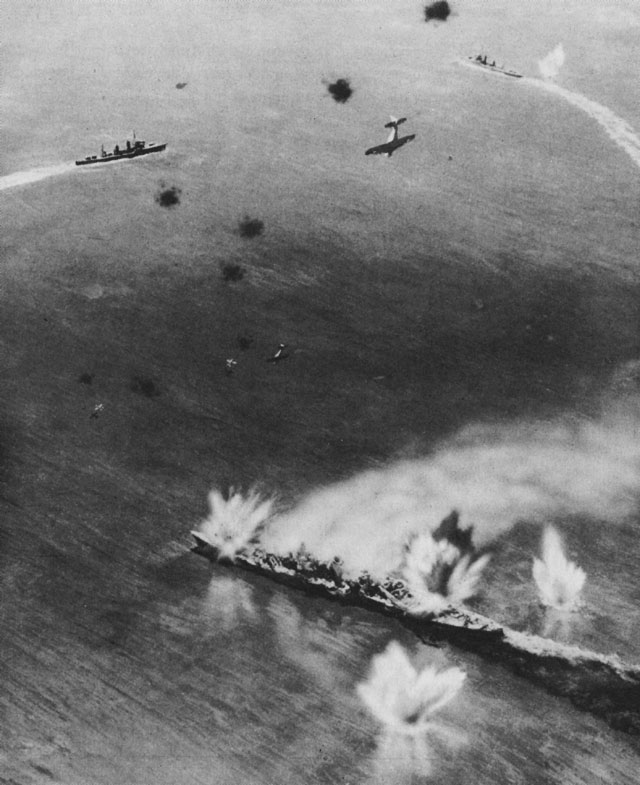
The USS Monseen was trying to be useful by attempting to find a Japanese ship to attack, but encountered three of the Japanese warships. These three ships were easily able to destroy Monseen and forced the crew to abandon ship.
After Amatsukaze had fought off Juneau, she wanted to sink San Francisco. At this point in time, San Francisco had not yet sunk. While they were firing shots at each other, Helena was able to sneak up from behind and fire some close range shots at Amatsukaze. Luckily for her, she was able to get away under the cover of the three Japanese ships that had just sunk Monseen.
Two US ships then attempted a sneak attack on Yūdachi. Yūdachi did not notice them approaching. The two destroyers were able to damage Yūdachi and the crew onboard was forced to abandoned ship as well. The two destroyers then encountered two other Japanese ships, and they lost.
_in_the_Bay_of_Bengal,_-5_Sep._2007_b.jpg/1280px-JS_Y%C5%ABdachi_(DD-103)_in_the_Bay_of_Bengal,_-5_Sep._2007_b.jpg "Yūdachi")
Yūdachi Battleship
The whole battle lasted only 40 minutes and ended with both sides ordering to disengage. The Japanese left Guadalcanal unsatisfied with the outcome. They had expected that they could easily snatch Henderson Field back into their possession when their opponent was the less experienced Allied forces, but it turned out it could not be won as easily as they hoped.

Second Naval Battle of Guadalcanal, 14-15 November
The Japanese traveled towards Guadalcanal for a second attempt at recapturing Henderson Field, in almost pitch-black conditions. In the distance from the Japanese vantage point, were formed a line of Allied Ships who sat there, waiting for their radars to pick up on any signal. The Japanese had one goal in mind, to recapture Henderson Field, and after the first Naval Battle of Guadalcanal, had restocked their forces to prepare for the second battle.
The Japanese, who were now being commanded by Nobutake Kondō, arrived in close proximity of Guadalcanal late at night on November 14. Nine destroyers that had been damaged from the first battle were used again. Konda had placed himself in a heavy cruiser, Atago. The new commander of the US ships, Admiral Willis A. Lee, had no choice, like the Japanese, to release damaged ships from the first battle into battle once again. The US ships that were assigned to stay near Henderson Field had only worked together for a few days so they lacked experience.
Since Commander Kondo had more ships than his opponent, he was able to split them into multiple groups. Each groups took a different route. Gaining advance notice from radar, the two US ships had started to fire at 23:22 on Nov 13. They were able to sink a few destroyers in the 26 minutes of engagement before they were told to stop.
The USS Washington had started to go into areas where there were Japanese ships; she was able to set Ayanami to catch on fire. The USS South Dakota was following behind Washington, and was suffering electrical failures but it still managed to follow. Later on it was separated from the Washington and was forced to go in the middle of Japanese ships. South Dakota suffered much causality before it went away from combat. Meanwhile as the Japanese were focusing on getting rid of South Dakota, they did not notice Washington approaching. Washington did not want to shoot because they were unsure if it was South Dakota or not. Whenever Japanese forces started to shoot at South Dakota, it was clear to Washington who was who. The USS Washington fired 49 shots at Kirishima, which caught on fire.
The Japanese then tried to get rid of any surviving Allied ships. They did not know that all the ships had already left the battle area. Washington was trying to distract the Japanese from heading to Guadalcanal. Washington was able to dodge torpedoes shot from the Japanese ships.
The American’s effort to defend Guadalcanal came at a price. They lost many ships at sea and thousands of men whilst fighting the Japanese. The amount of men killed on shore was only a third of those killed in air and at sea. They lost 24 ships and 5,041 men. The impact of this battle on the Japanese came at a much higher price than their opponents. They lost nearly six times more men from air, sea, and land. Many Japanese men were also captured during the battle. Both forces were needing supplies. Many battles were being fought all over the world so the supplies had to be distributed.
Kondo was about to let his ships proceed to capture Henderson Field but he then realized the danger of continuing because they might be attacked from the air. They decided to steer all of the still surviving ships and retreat from Guadalcanal.
A Japanese rescue ship, Uranami, later came in to rescue crew whose ships had sunk. The number of casualties was 242 US sailors and 249 Japanese sailors. The battle of Guadalcanal was one of two Naval Battles during the whole Pacific Campaign of World War II.
After having fought two Naval Battles for Gudalcanal, Henderson Field still remained in the Allies’ possession. This battle may seem like it is not important because the ownership over Guadalcanal didn’t change, but it was very important. It was one of the major turning points in the World War II along with the Battle of Midway.



 I must admit, baby food was nasty. My mom gave me millions of different things to eat. I spit it out every single time my mom put something into my mouth that wasn’t milk or water. I even spit out my favorite foods! I don’t even know HOW I spit out all of that stuff. Poor mom. Eeeek. I feel so bad. Boy, do I wonder what life is going to be like when I get kids. Let’s just hope none of MY kids end up like somebody like me. Otherwise… I dunno. (Sigh) It’s a long time from now anyways.
 BING BING!!!! YES! Oh My God!!!! I thought of an amazing idea.