Monthly- Archives: April 2024


COLLIN AARONSON

How Did We Get Here?
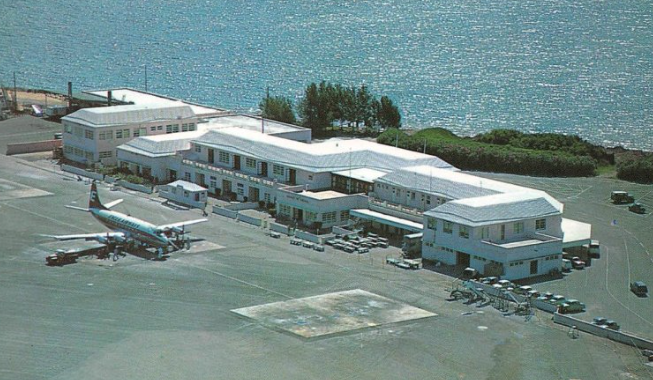
“Jerry, get over here – we gotta leave now. The chicken pox vaxx is gunna spoil! I’ll be made a laughingstock,” I yelled from across the tarmac.

“Here I come boss!” Jerry hollered. “Let me finish up fueling the plane. You don’ wanna crash into the ocean do ya’?”

“Fine, just hurry it up – even the dog is ready to go!”

I looked at the sun, gauging how long… I checked my heartbeat – I sure was agitated! I had a lot on the line here – not only my rep as doc, but also… .

I looked up at the sun again. It was about noon when he finally finished fueling the plane. I looked at the looming palm trees swaying in the wind one last time before we started loading the rest of the things on. A cute but-ever-so stupid dog jumped up on me and started to lick my face right before we left, so I just gave him and angry look and a forgiving pat whilst I got in.

“Jerry!”

“Yah Boss.”

“What’s the hold up, NOW!?”

“Boss, I ain’t flown over this stretch of the Atlantic, so I’s checkin’ the coordinates, eh?”

“Jerry, if I was as stupid as you than I would be flying a toy, now let’s get a move on would you?”

“Yeesh, no need to yell I’m right here – couple last things before we go.”

Oh my Gosh, I thought, “What now?”

“I need to feed my dog Henry and talk with the radio towers!”
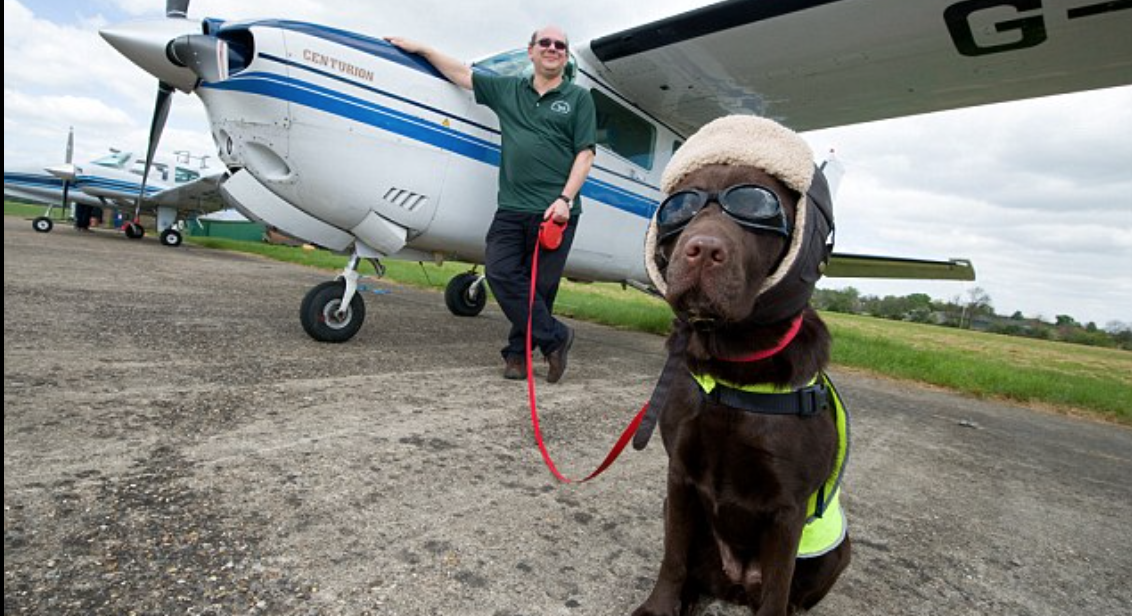
I turned around to find a strong gust of wind with a hint of dead fish and dog food surrounding me as Henry immediately started kissing me with his wide and ever-so-slimy tongue. I checked my fat Rolex watch, given to me by Louisa on the day I graduated medical school. It was blue and silver, with a gold rim around the face, and I stared as the hand went tick tick tick. I thought about the thirty or more Seminole Indians on that watery, swampy reservation down in remote Florida, north of the Keys, scratching their poor bare arms until blood flowed, blood that the mosquitoes seemed to want to ski down. CAN WE LEAVE!? Patience. 

Finally, a few minutes later Jerry hauled his big old carcass into the pilot’s seat. I looked at his golden-brown hat and his goggles that looked like a blind monster made them. Then all of a sudden, the plane lurched forward: we started taxiing but I couldn’t help myself from yelling at Jerry. 

“You stupid buffoon!” I squealed. “Hows’bout a warning?”

“WHAT?” he questioned in the loudest voice possible.

There was no use even trying with that man: he was a stupid buffoon after all. 

“Hey boss, I will turn this plane around if you keep talking to me like that!”

“Okay, okay, I’m sorry, I’m sorry, there isn’t any need to yell is there?”

“Was that sass I heard in your voice?”

As Jerry gave me the warning for takeoff, the plane lurched forward, and Henry was as ecstatic as ever. He was sneezing like there was no tomorrow! As the tarmac turned into water I could feel the plane no longer going straight, but up at a steep angle. In the rearview mirror I could see Henry slamming the walls of the plane with his tail making frightening noises that sounded like we lost an engine. As the plane started to straighten out I decided to try to loosen the tension with some chips.

“Hey! Do you want some Lays?” I asked.

“Sure,” he said not daring to take his eyes off the endless path ahead. “Can you give one to Henry? He might start to beg.” As I tossed one back for the dog I couldn’t help but feel like a god looking out the window into the skies and the ground below – it just gave me a feeling of power.
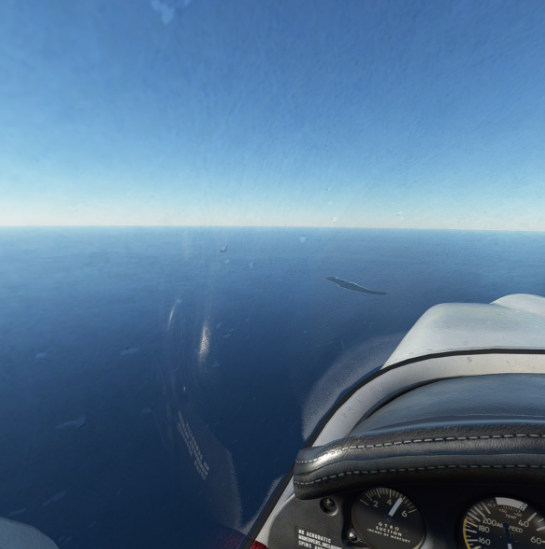
“Hey? Where are you from?” I asked without any genuine interest.

“I’m from New York. I got Henry there too,” Jerry responded. “Where are you from?”

“I’m from Ohio. My father and grandpa are from there too.” He also didn’t seem that interested in what I had to say so I just turned and looked out the window again. The sun was starting to come down but the view was spectacular, it was like we were in a picture. As the sky was turning dark and Henry less ecstatic, I couldn’t help but feel sleepy; moments later I was in a sweet dream that seemed to go on forever.

When I woke up and checked my surroundings to look for the time I saw Jerry’s eyes on the path ahead not daring to even think about sleep. It was like he was a zombie, but it was his job after all. I found an alarm clock in the glove box that read 3:47. I couldn’t help but feel bad for him. 

“Hey? Are you alright?” I asked wondering if I was even going to get a response.

“Ya, I’m all good.” He coughed out while clearing his throat, “I can set an auto pilot for 30 min every hour so I get to relax a little.”

“Why don’t you just keep it on auto pilot for the whole time while you sleep?” I questioned, “and if you can’t have it on all night then why have it at all?”

He was not having it; he didn’t like my constant questions, so I decided to try to go back to sleep. 

About two hours later I woke to the sound of Henry yawning and slamming the walls of the plane with his hairy tail. This scared me. Jerry almost lost control of the plane, and gave an angry look at Henry. The dog laid back down and started licking me as an apology. 

“Jerry,” I said almost asking for forgiveness for Henry, “He didn’t mean to, ok, he just woke up and got excited to see you, that’s all.”

“At least he got to sleep, I have been flying this plane all night and he still jump-scares me.” He stated angrily, “That dog needs to calm down when he sees new people, he’s like a rock with four legs, a tail, a snout, two long cute ears, and a long wet tongue.”

All of a sudden, the plane started shaking vigorously. Not only Jerry but the engine was screaming too. Henry joined in howling although I doubt he knew what was going on. The plane started diving down and my butt was clenched so hard. The sun was coming up and Jerry was trying to signal to no one, there was no signal and we were going to crash into the water whether we liked it or not. Henry was getting tossed around like a bag of potatoes and Jerry started crying. I was pretty sure that I had well soiled myself and was trying to get a bag to breathe and maybe wipe. We could see the water but like in all movies he hit a few buttons and flipped some switches; he started pulling up on the steering wheel while looking for a good spot to land – maybe he was looking for a wave with some dead seaweed on it so that the plane didn’t tilt into the water and split in half. There was not much time left but it looked like he had found a spot, 100 feet, 50 feet, 10 feet, BOOM!

***

I awakened to a pitch black darkness as I wondered to myself: am I dead? Jerry must have seen me flailing about and lifted the towel from my face. I kept flailing about. I had so many questions, one of which was why were we being consumed by the darkness of the night whilst in the middle of an unknown ocean? In the little light provided by the stars in the night sky, I could see the orange and yellow floatation device we were in. While the rubber appeared to be thick, I could feel all of the little waves that we floated over, the little overhang providing us close to no protection from the cool night breeze.

“You all right, hit your head pretty hard,” he said in a raspy voice. “Sorry if I scared ya, Henry kept lik’in your face like it was some kind of treat.” I couldn’t really understand him and when I tried to talk the words didn’t come out.

“Here, have some water and keep your head down.” After I drank up and Henry stopped fussing I tried talking again but to my relief I could gargle.

“That’s not good…” he said, worry in his eyes. “Your vocal cords look like a clump of worms.”  

The bright orange roof and the blazing sun looked alike when I woke again in the raft; Jerry was asleep too with Henry laying on his lap; his pillow was a bulging section of the raft with all sorts of emergency gear. I looked out the small door to see an island. “AN ISLAND!” I yelled in a tangled voice. Jerry awoke almost immediately.                

As we slowly paddled with our wrinkled hands and fast asleep dog, I could not help but notice the vultures circling the raft.
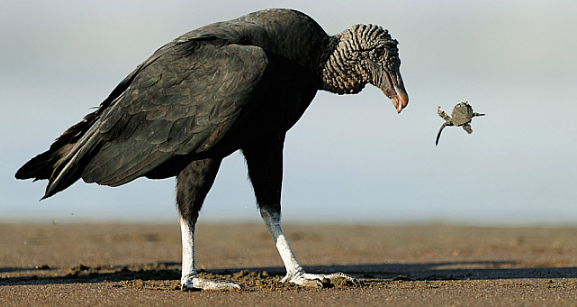
“We’re not dead yet!” Jerry yelled, but I wasn’t too sure about that.

“Shoo, scram, scatter!”

“Don’t waste your energy, it’s not worth it.” I said slurring my words a little in pain.

“Yeah, ok mom,” Jerry snapped.

As the island grew closer, the dog sleepier, and Jerry and I more hopeful, we realized that we were almost out of water and had to conserve energy or we might get heatstroke; we had to pray that the tide would carry us to shore.

Slowly but surely, we circled around the small island and came up upon the shore. By the looks of it we were on a small beach surrounded by sharp boulders. The water we had entered from had a coral reef with every color imaginable; I glanced down into the water and saw that there were fish for days and scary looking sharks, eels, and crabs for nights.

As we pulled the sad little raft ashore, Henry still sleeping in it, we started to notice that there were different types of fruit growing on trees. I went over to one side while Jerry checked out the other, Henry close by his side. I found coconuts while he found a newt. I heard his pathetic scream and came running over just to see that Henry had peed on his pants that he had laid out to dry. The ever-so stupid dog came over and dropped them at my feet; I gave him some pats though.

As we started gathering wood for fire and the day getting hotter and hotter, Henry seemed to look like he had found something… WATER! Henry had found a somewhat large pool of water in a small dip in the rocky ground. The water was not fresh, but we could boil it down to make it safer to drink. Jerry continued to gather wood for a fire while I started making a small hut for protection during the long night to come.

We decided, as in me, that Jerry was going to move the camp up from the beach to where Henry had found water. I watched and laughed while I petted Henry because Jerry was continuously tripping over the rocks. Finally, as I got yelled at to come over and help carry supplies, we saw for the first time what happened at nightfall.

Me, Henry, and Jerry all dove behind a nearby bush and hoped that the thing didn’t see us. We heard it scampering around, its disfigured body making disgusting noises. Blurp blotch bloop. Jerry, looking as white as a ghost, stood up and charged at the monster from behind. I couldn’t help but look away – I heard a scream and prepared for the worst, but all I saw was Jerry holding a head. Thankfully the monster was slain but little did we know there were more to come.

Finally, as the sun set, we finished making a secure little hut and a small fire.

“Jerry,” I said, “we should look at the body.” He gave an uneasy nod and we stepped closer to what could have been the end of us. We looked over the bush and Jerry said this with a disgusted face, “It looks like a self-portrait of you.”

“What?!” I whispered angrily. “It’s some kinda alien you dunce.” As we got a closer look however, we found out that it was no alien: in death it had dissolved into a mixture of a bunch of different sea animals.

Area 51 we both thought in our heads – it was the only explanation. We decided to try and cook the mutated monstrosity, but it did not end well… the guts that were poorly taken out by Jerry exploded once we started cooking it. After what felt like forever of cleaning guts off the floor, ceiling and walls off our new camp, me and Jerry went fishing for some ‘reel’ fish.

We were both starving and the wet soup crackers weren’t cutting it.

“You caught anything?” I asked impatiently, “I’m starving over here!”

“Quit your yapping! I am just as hungry as you are and you haven’t caught anything either!”

 I was about to say something back to him but I got a hard yank on my makeshift rod and immediately went into survival mode. Jerry came over to help me as fast as he could and in no time, we had a three pounder lying at our feet.

“Thanks,” I said, “but, I caught it so I get to eat it by myself!”

“You try to eat that thing by yourself and I will throw you into the water while you sleep. And besides I helped pull it out too, we share it 50/50.”

Jerry finished gutting the fish and teaching me how to do it about two hours later. We ate the nice juicy fish like a pack of wolves. Me and Jerry both got one pound while Henry also ate a pound as well. After he finished eating, he started chewing on the bones. We were talking about the monsters while having the meal.

“Do you think there will be more of them?” I asked, “I think you should stay on guard duty just in case.”

“Why don’t you be on guard duty? And if there are more, how would I kill them by myself?” he rebutted.

I did not have the patience to deal with him so I just started to doze off.

Blooch blotch bloof we both heard again. We sprang into action and the monster didn’t know what hit it. When a third monster (counting the one whose guts exploded) came from behind Jerry who flung him 10 feet away, I could almost feel the terror in Jer’s eyes. I turned around and got ready for the hardest one on one in my life, but the monster didn’t seem that intelligent. I managed to dodge its large swing and stab it where its armpit should have been and it retreated to the water. The monster was shaped to where all of its limbs were some kind of long fish, the torso was a tangled mess of different sea plant and crustaceans which gave it a tough outer shell, the head was of a shark so its eyesight wasn’t up-to-date. I rushed over to Jerry where he laid unconscious. Henry was standing by not knowing what was happening. Jerry’s arm was bleeding, a little bit of bone sticking out. I dragged him over to our camp and lit the fire so I could see better. I put a flat stick in some bandages as a makeshift cast while Henry wandered around seeing if I wanted to play fetch.

 As I was tending to Jerry, I could hear a faint sound of a static kind of voice. Our radio was picking up a signal; I dropped Jerry’s arm and ran over.

“Hello? Hello? Is anyone there?”

“Hello? This is Floridian Airlines, are you in distress?”

“Yes, me and my friend are trapped on an island in the Bermuda Triangle. Send help please!” After I said that, the radio lost signal with the other person – all I could do was pray they found us. I finished tending to Jerry’s arm and threw a stick for Henry to go fetch.

It was like an alarm, for I could hear the helicopters as I awakened from my slumber. The people on the other side of the radio had traced our location and sent help!

“Jerry! Jerry! They’re here!”

“Five more minutes… wait, who is here?”

“Help! The people who radioed us came to save us!” We didn’t have enough time to keep chatting though because the people started to yell instruction for what to do. It was hard for them to land the aircraft so they told us to move over to a flatter spot on the island. I helped up Jerry and called for Henry as we started moving toward our escape.

I woke up to my wife in my arms asleep and Jerry in the bed next to me with Henry snoring like a pig at his feet. I looked at my wrist and the dirty gold Rolex read six thirty am. The Seminole Indians had been taken care of by a group in New York and Jerry’s arm had been patched up. The doctors had told us that we were going to need to stay in the same room for a while though because the people of Florida were being eaten by alligators.

JASON QIN

The War of 1812: A Tragic Fall and a Fledgling’s Flight

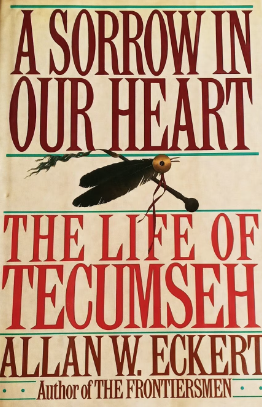
This essay references Allan W. Eckert’s A Sorrow in Our Heart, a 678-page biography on the Shawnee warrior Tecumseh which compiles over 850 sources in an attempt to provide as comprehensive of a depiction of the life of Tecumseh as possible. However, there are still things that no one knows for certain; for example, undocumented dialogue is completely made up, but Eckert aims to create it based on evidence from his over 850 sources.

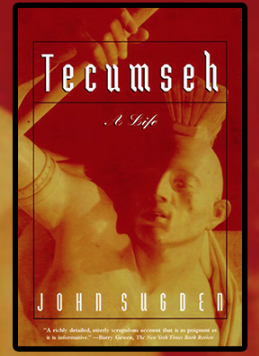
I also reference John Sugden’s Tecumseh: A Life, a 30-year effort to create the first authoritative biography on Tecumseh to truly understand the almost mythical man in the history of both Native Americans and the United States of America. In Tecumseh: A Life, Sugden does not utilize creative nonfiction, only presenting documented dialogue.

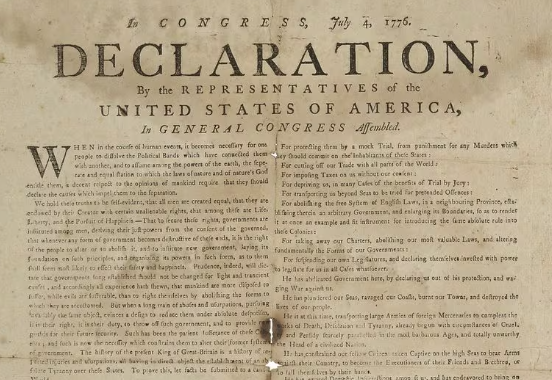
In the final paragraph of the Declaration of Independence, Thomas Jefferson introduced the members of the Second Continental Congress as “the Representatives of the united States of America.” Granted, the word “united” was not a part of the official name at that point, but the name stuck around. Not only did the Declaration of Independence challenge the idea of the role of government, but it also declared the thirteen colonies as separate from the United Kingdom. 

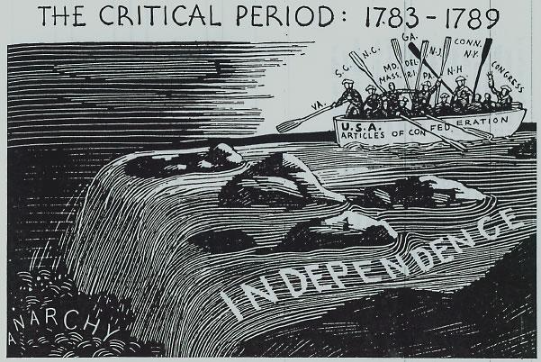
However, in that same paragraph, the unity is implied to be temporary, as after Jefferson refers to the colonies as the “united States of America,” he refers to the colonies as “Independent States.” There’s this sense of plurality here as opposed to unity. This sentiment makes sense as Jefferson later proved to be an antifederalist, supporting the disastrous Articles of Confederation (1783-1789),

and opposed the ratification of the Constitution. The Articles of Confederation were essentially a group of documents outlining a treaty of cooperation between thirteen sovereign republics (the thirteen former colonies). As a result, those six years when the Articles of Confederation reigned over the supposed “united States of America” were filled with chaos and not a lot of cooperation. Clearly, the states needed to unify under a strong, central government. Thus, the Constitution was born.

The Constitution created three branches of government: the executive, legislative and judicial branches. The American people had succeeded in laying the groundwork for the United States of America in which the federal government had significant power without creating a king. However, calling them “American” may be a bit generous due to the lack of national identity during this time period. People would refer to themselves not as Americans, but as citizens of their respective states. They called themselves New Yorkers, Virginians, Nutmeggers or Connecticuters, Pennsylvanians, Massachusettsans, but not Americans. However, with a war against their old oppressors on the horizon, could they unite in a new way, in the War of 1812?

As it turns out, the War of 1812 (1812-1814) quickly evolved into a fight for nationhood, but to fully understand this fight, one must look at the Shawnee.

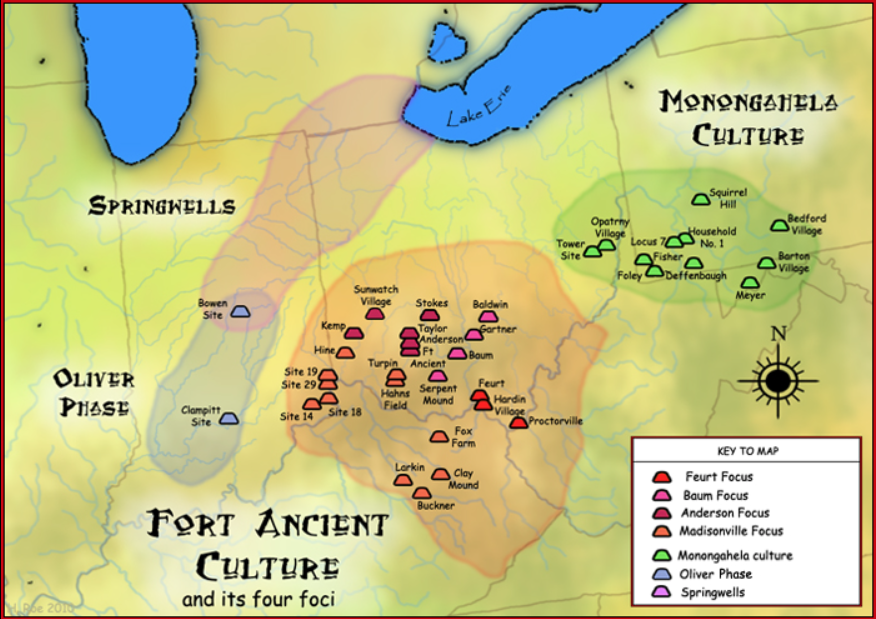
Historians debate the origins of the Shawnee nation; some historians claim that the Shawnee descend from the Fort Ancient culture of the Ohio River, and others link them to the Siouan-speaking tribes.

Diseases brought by the Spanish devastated the Fort Ancient people, and afterward, evidence shows that they moved into a more nomadic way of life, just like the Shawnee from the 1600s to the mid-1700s. Cultural similarities and Shawnee oral history link the Shawnee and the Fort Ancient people, but oral history also links the Shawnee to Siouan-speaking tribes. According to the Shawnee, however, they descend from the Algonquian-speaking nation of the Lenape, and the Algonquian nations of Canada consider the Shawnee to be a part of their own. 

What historians do know for sure is that by the 17th century, the Shawnee were scattered across the area bounded by the Mississippi, modern-day Alabama, modern-day Ohio, and the Atlantic Ocean. The Shawnee were roaming mercenaries, moving in with tribes who requested their elite warriors for protection and moving out in search of the next battle. If the Shawnee were so scattered, then what did it even mean to be a Shawnee? 

The Shawnee were “often with different factions within their own tribe supporting different factions of the whites”; however, they somehow managed to stay unified, “never allowing these diverse alliances to become hot warfare among themselves” (Eckert 9).

In another sense, they were organized. The Shawnee split themselves into five septs, and each sept had its own subchief, allowing for each sept to work as its own nation while following the orders of the Grand Council. Perhaps this system worked due to the relatively small population of the Shawnee, as estimates for the 1660s place the figure between 10,000 and 12,000. 

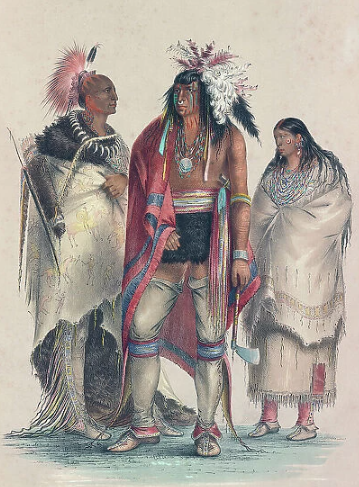
George Catlin

The Shawnee rivaled the Iroquois, a five nation alliance concentrated in the Finger Lakes region (central New York), a tribe of nearly 12,000 as well. But they were eventually to settle, for a short period at least: one Iroquois-Shawnee conflict in 1690 won the Shawnee a homeland. In this conflict, the Iroquois declared war on the Miami, and the Miami sent out a cry for help, which the Shawnee answered. As a thanks, the Miami invited a group of Shawnee warriors to settle in the lands they held north of the Ohio River called the Scioto Valley. But in 1692, the group of Shawnee had to leave it and join the Delawares on the lower Susquehanna River in Pennsylvania.

But with white settlers flocking into Pennsylvania, the Shawnee looked back west. Their leader, Opeththa, believed that the Scioto Valley was the land promised to the Shawnee by the Great Spirit hundreds of generations ago. He convinced the Grand Council to send a delegation to the Miami. The Miami agreed to give up the land again, as they wanted to place the Shawnee in between them and the growing numbers of European settlers. Now that the Shawnee finally had their land, could they fend off the white settlers?

Four wars outline this struggle: the French and Indian War (1754-1763), the American Revolutionary War (1775-1783), the Northwest Indian War (1786-1795), and the War of 1812 (1812-1814). 

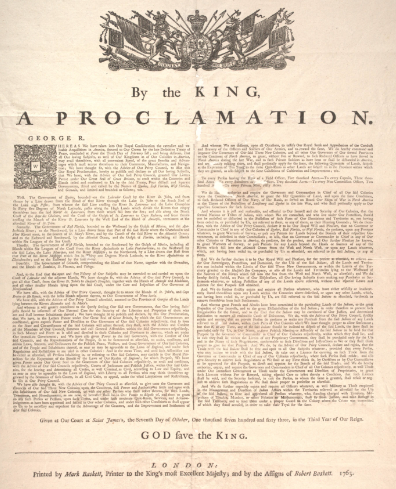
The Shawnee historically had horrible luck with choosing sides. The Shawnee sided with the French in the French and Indian War: they lost. The British issued the Proclamation of 1763,

which blocked settlement past the Appalachians, and the boundary line should have worked, but the British made little effort to enforce it. However, the Shawnee’s problems came from the settlers and not the British, so when the American Revolutionary War broke out, the Shawnee sided with the British: they lost. Not only did the US gain its independence, but it also officially gained the territory past the Appalachians. To defend their territory, the Shawnee joined with other tribes in the region to form the Northwestern Confederacy, leading to the Northwest Indian War: they lost.

Think of it like betting in sports. Pick someone to win and someone to lose. The Shawnee bet on the French in the French and Indian War, and they lost to the British. The Shawnee bet on the British in the American Revolutionary War, and they lost to the Americans. Then, a group of angry sports fans (not the Cleveland Indians, but the Northwest Confederacy) decided to ambush the Americans and the Shawnee joined in, and they got arrested. However, with the War of 1812 bringing Britain and America against each other again, could the Shawnee capitalize on this final opportunity? Could they successfully gamble it all?

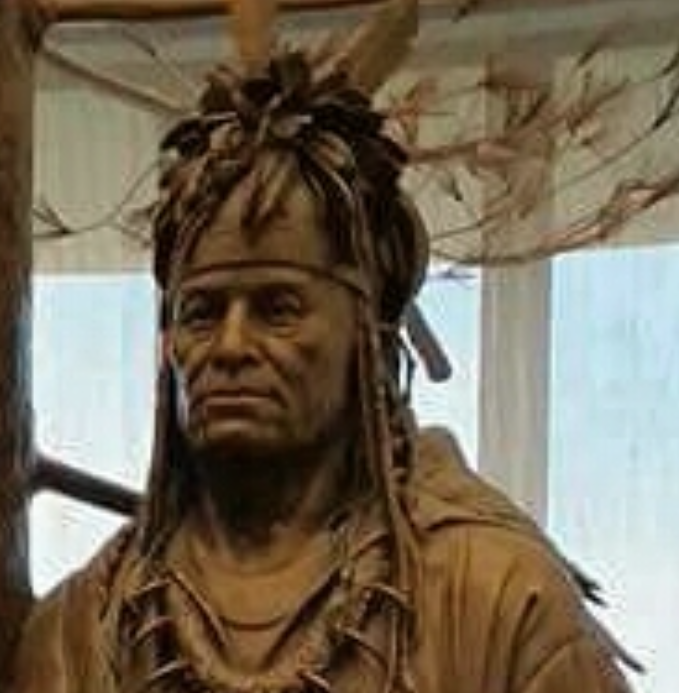
Pierre le Dru

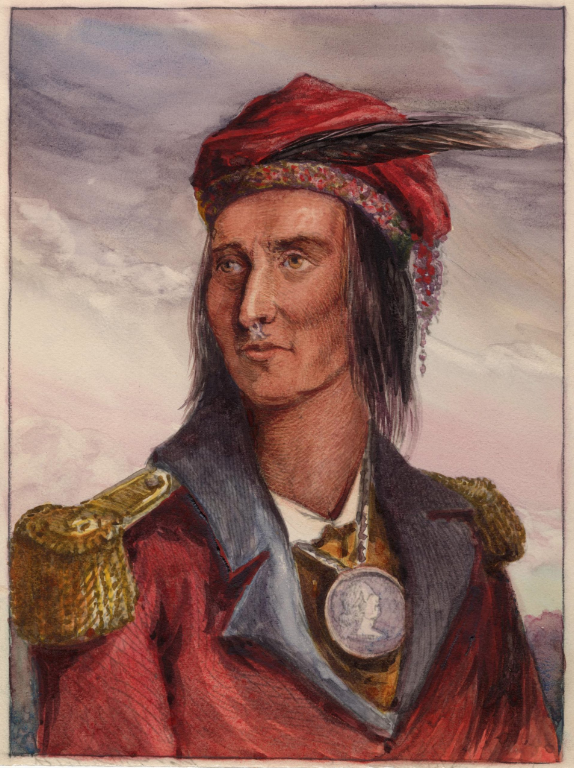
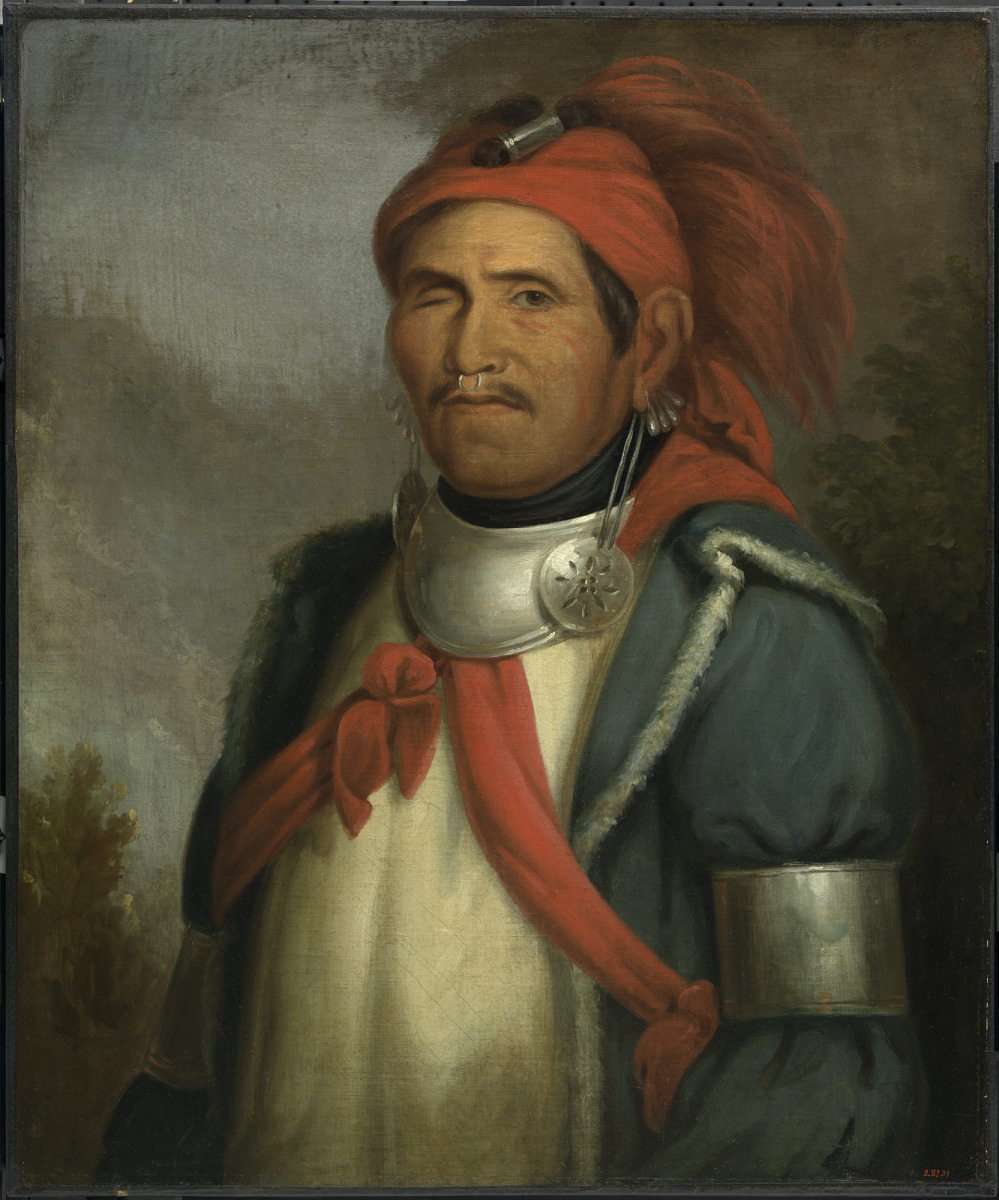
Tecumseh (1768-1813) is the most important figure in organizing this final opportunity. His father, Chief Pucksinwah, died in the Battle of Point Pleasant in 1774 when Tecumseh was six, and the boy swore to take down the colonists who robbed him of his father; as he grew older, his anti-American sentiments grew even stronger.

He went on his first mission when he was 10, and what did he do? He fled in fright. Ashamed, he vowed to stand his ground. In the years to follow, he would only retreat at the orders of his superiors. At 15, he attended an intertribal conference where speakers established this idea that Indian lands belong to all tribes, and no land could be ceded to the United States without the agreement of all tribes. The tribes attending this conference formed the Northwest Confederacy. In 1785, the Northwest Confederacy conducted a series of raids along the Ohio River, kicking off the Northwest Indian War. In 1794, he fought in the Battle of Fallen Timbers, a Native American ambush that turned into a crushing blow for the Northwest Confederacy. In 1795, The Northwest Confederacy sued for peace and signed the Treaty of Greenville (1795).

Painting by R. F. Zogbaum

After the treaty, Tecumseh split off from the peace-minded majority in the Shawnee and took some of his followers with him. He cobbled together Tecumseh’s Confederacy—a pan-Indian alliance built to eventually go to war against the whites. 

Henry Inman

In 1805, Tecumseh’s brother, Tenskwatawa (1775-1837), connected with his inner prophetic potential: he drank too much alcohol. People thought he was dead, so they prepared his body for burial. While preparing his body for burial, he woke up and recounted a vision of two worlds: he’d seen a utopian world for those who lived according to their tribal customs, and a hellish one for those who accepted Euro-American customs. After surviving that first vision, he started gathering religious appeal for resistance against the whites. He promoted tribal conservatism, resisting attempts to force Euro-American customs onto Native Americans and, of course, resisting American westward expansion. 

He became known as “The Prophet,” and in 1808, with Tecumseh, he founded the capital of Tecumseh’s confederacy, Prophetstown, in modern-day Indiana.

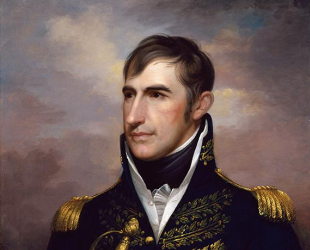
In Prophetstown, he and Tecumseh gathered followers from many different tribes, including the Shawnee and the Chickamauga. While Tecumseh built his confederacy, William Henry Harrison was also making moves. As the governor of the Indiana Territory, William Henry Harrison wanted to clear out the Indians residing in his territory, so he bought them out.

            What Tecumseh is known for today aside from the battles he fought is his oratorial skills—the speeches he gave. As a result, he is perhaps the most revered Native American of all time for not only his actions, but also his message. His extraordinary ability to command his words and convey his ideas to his supporters and opponents immortalized him.

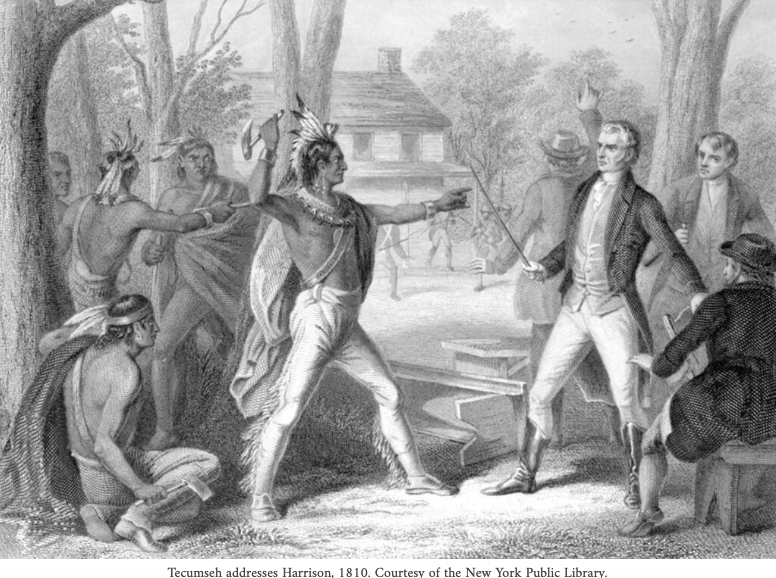
On August 20, 1810, Tecumseh, 42, spoke with Indiana governor William Henry Harrison about the Treaty of Fort Wayne, and his words would become known as his “Address to William Henry Harrison on Selling a Country”: 

“Houses are built for you to hold councils in. Indians hold theirs in the open air. I am a Shawnee. My forefathers were warriors. Their son is a warrior. From them I take my only existence. From my tribe I take nothing. I have made myself what I am. And I would that I could make the red people as great as the conceptions of my own mind, when I think of the Great Spirit that rules over us all. I would not then come to Governor Harrison to ask him to tear up the treaty [the 1795 Treaty of Greenville, which gave the United States parts of the Northwest Territory]. But I would say to him, ‘Brother, you have the liberty to return to your own country.’ You wish to prevent the Indians from doing as we wish them, to unite and let them consider their lands as a common property of the whole. You take the tribes aside and advise them not to come into this measure. You want by your distinctions of Indian tribes, in allotting to each a particular, to make them war with each other. You never see an Indian endeavor to make the white people do this. You are continually driving the red people, when at last you will drive them into the great lake [Lake Michigan], where they can neither stand nor work.”
Tecumseh tells Harrison that what he is doing is wrong in order to avoid war. He confronts Harrison about his dividing and conquering tactic, saying that he wishes “to prevent the Indians from doing as we [Tecumseh and his confederacy] wish them, to unite and let them consider their lands as a common of the whole [of all Indians].” Then, he says that, “You never see an Indian endeavor to make the white people do this,” essentially telling Harrison that he is the villain of this story—that he is attacking the Indian tribes unprovoked. Tecumseh lays out Harrison’s cards right in front of him in order to show him exactly why he is not only fighting for himself, but for the Indian people, in a just crusade against a conqueror.

The use of “liberty” and “unite” to shame Harrison is also brilliant verbal irony. Tecumseh turns fundamental parts of the Declaration of Independence against Harrison. The Declaration of Independence claims liberty to be an “unalienable right,” while the document as a whole symbolizes the unification of the thirteen colonies into the “united States of America.”

He continues:

“Since my residence at Tippecanoe [Prophetstown], we have endeavored to level all distinctions, to destroy [traitorous] village chiefs, by whom all mischiefs are done. It is they who sell their land to the Americans. Brother, this land that was sold, and the goods that was [sic] given for it, was only done by a few. In the future we are prepared to punish those who propose to sell land to the Americans… “

Tecumseh’s words exude a radical pan-Indianism. He clearly intended to unite the Indian tribes against the United States as he criticized the village chiefs, a few people who made decisions for many. He was prepared to take drastic measures to achieve this goal.

Tecumseh also openly states that his confederacy’s purpose is to defend the land of the Indian tribes, and if he needed to, he would attack the United States. Were the mighty words matched with military strength? Well, Tecumseh’s confederacy required vastly more strength to go toe-to-toe with the US, so Tecumseh visited the southern tribes to gain their support. Seizing this opportunity, Harrison organized his attack.

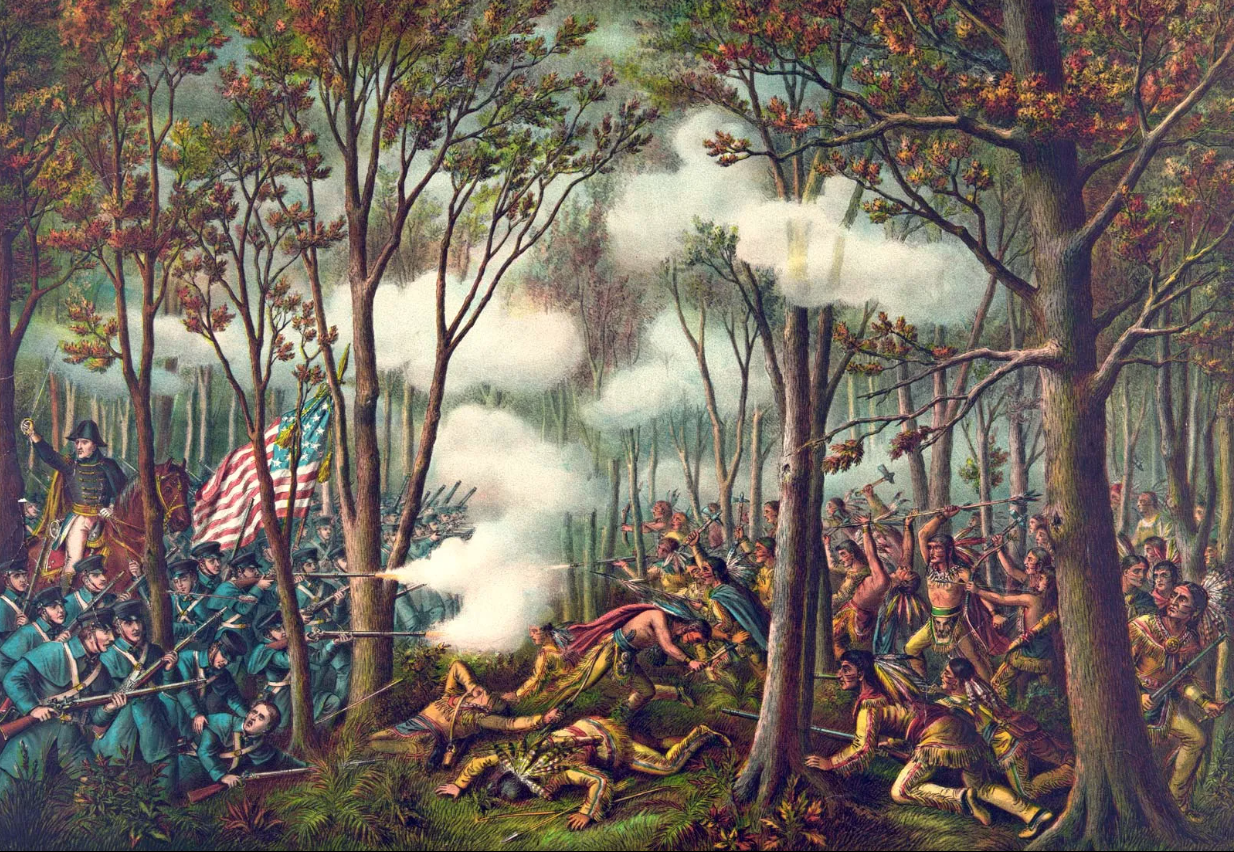
During his absence, Tecumseh had put the tippler Tenskwatawa in charge of Prophetstown. On November 6, Harrison and his militia forces approached Prophetstown to negotiate with Tenskwatawa, but the 1,000 militiamen he brought showed that he intended to fight. Tenskwatawa attempted to murder Harrison in his tent, assuring the warriors that the Great Spirit would protect them from any harm. The warriors did not succeed. The next day, Harrison burned Prophetstown.

Tecumseh’s War began at that: the Battle of Tippecanoe (another name for Prophetstown), and this battle delivered a major blow to his confederacy. In seven months, he regathered his strength, rebuilding Prophetstown and amassing 800 warriors in his capital. When he heard of a war between the British and the Americans, betting on the British was his only choice. He couldn’t stay out of it; what if this was his last opportunity? As a result, Tecumseh joined the British in the recently-declared War of 1812, his hand forced into risking it all. At this time, Tecumseh’s confederacy and its allies numbered around 3,500 warriors. He headed toward Fort Malden, where he was to meet up with Major General Sir Isaac Brock to plan a siege on Fort Detroit, headed by General William Hull.

General William Hull (1753-1825) had been a lieutenant colonel in the Revolutionary War, and the US pulled him out of retirement for the War of 1812. Experience is valuable in war, and in his prime, Hull fought in key Revolutionary War battles like Saratoga, Trenton, and Princeton, and he fought to defend Fort Ticonderoga and Boston. But it had been over two decades since the Revolutionary War: he was also inexperienced with fighting, and intensely fearful of Native Americans, an exploitable weakness. 

Hull’s campaign started off on the wrong foot. The US government had not informed him of the current state of war when he sent a schooner, Cuyahoga, up the Detroit River with “all of the army’s excess baggage, entrenching tools… musical instruments… Some thirty officers and men… all of [the President’s] papers, orders, notes, correspondence, accounts, and field reports” (Eckert 574). Unfortunately, the British controlled the Detroit River. In the Battle of Amherstburg, the British defeated the severely outmatched Cuyahoga. The British boarded the vessel and seized everything. With the British in possession of Hull’s plans, the invasion of Canada was doomed from the start.

After stopping in Detroit, Hull crossed the Detroit River and entered Canada on July 12, 1812. The lack of artillery, supplies, and efficient communication lines plagued his invasion. The invasion lasted less than a month, ending on August 7, 1812, after Tecumseh’s warriors ambushed an American supply convoy, causing Hull to retreat. In the end, Hull had ended up right where he started: with over 2,000 men stuck in Fort Detroit.

Tecumseh began attacking Hull’s supply line. American forces met Tecumseh’s at the Battle of Brownstown (August 5, 1812) and the Battle of Maguaga (August 9, 1812), and perhaps Hull was rightfully scared of Tecumseh’s men. Those battles were quick ambushes which inflicted disproportionate casualties on the US military. At Brownstown, the US forces outnumbered Tecumseh’s 8-to-1, but the US suffered around 100 casualties (70 of which were MIA while the number of men killed and wounded is not clear) while Tecumseh suffered just one dead. At Maguaga the US forces outnumbered the British-Indian alliances’ 3-to-1 and their casualties also outnumbered the British-Indian alliances’ 3-to-1!

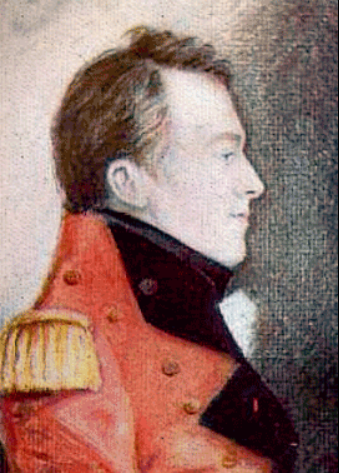
Around this time, Tecumseh met up with Major General Sir Isaac Brock. Tecumseh gained a lot of respect for Brock when he learned of the latter’s plan to attack Detroit. Glad that a British man was finally taking action, he was more than willing to cooperate (Sugden, 336). Canadian historians like to claim that Tecumseh said “This is a man!” in regards to Brock (Sugden 336). Tecumseh’s prowess as a leader and a warrior also gained him Brock’s respect. Together, they devised a plan to take Fort Detroit, and they put that plan into action on August 15, 1812.

Brock led the British regulars and Canadian militia while Tecumseh led his warriors, and they came up with a clever strategy: bluff and deception. Since Hull’s militia nearly outnumbered the British-Canadian-Indian alliance 2-to-1, they needed to trick Hull into thinking that the numbers were more even than they actually were. How did they achieve such deception? Why, they just had Tecumseh’s warriors run through an opening in the forest repeatedly to make it seem like there was a massive Native American presence at Fort Detroit. In other words, although Hull outnumbered Brock and Tecumseh’s forces 2-to-1 while being in the safety of a fort, Hull thought he was outnumbered.

Also, Brock sent Hull a summons of surrender, in which he said, “It is far from my intention to enter into a war of extermination, but you must be aware that the numerous body of Indians… will be beyond my command once the contest commences” (602). In other words, he threatened Hull with a massacre, and Hull’s timbers shivered, so he called a detachment of 350 militiamen back to the fort.

Brock originally planned on drawing Hull out of the fort, but upon hearing news of these reinforcements coming to aid Hull, Brock knew that he had to win quickly. Consequently, Brock drew up plans to storm the fort and take it the next day.

The next day, on August 16, 1812, Tecumseh and his warriors entered the Detroit village to prevent its inhabitants from joining the defense while the British army assaulted the fort. Tecumseh met little resistance. Brock’s column moved into a ravine and prepared to assault the fort against the American batteries. However, at 10 AM, the battlefield fell silent as the American artillery stopped firing on Brock’s position. A white flag hung on the side of the fort. Hull had surrendered (Sugden 340).

The Siege of Detroit put Tecumseh’s pan-Indian message on full blast. It energized the Indian tribes as many pro-American Indians switched sides (608). Warriors from tribes all over the northeast joined his cause, and Tecumseh’s words “were as revered as though they had been uttered by Moneto [the Supreme Being]” (608). Quickly, his ragtag bunch of thrill-seeking warriors had grown into the massive pan-Indian alliance Tecumseh had dreamed of united by one cause: defeat the United States. Could they give the United States a taste of their own medicine and successfully unite their different cultures and views to take down their common enemy? Could they establish a pan-Indian nation to fight the United States and deter any future attempts to conquer their territory? Could they establish the first (true) Native American nation?

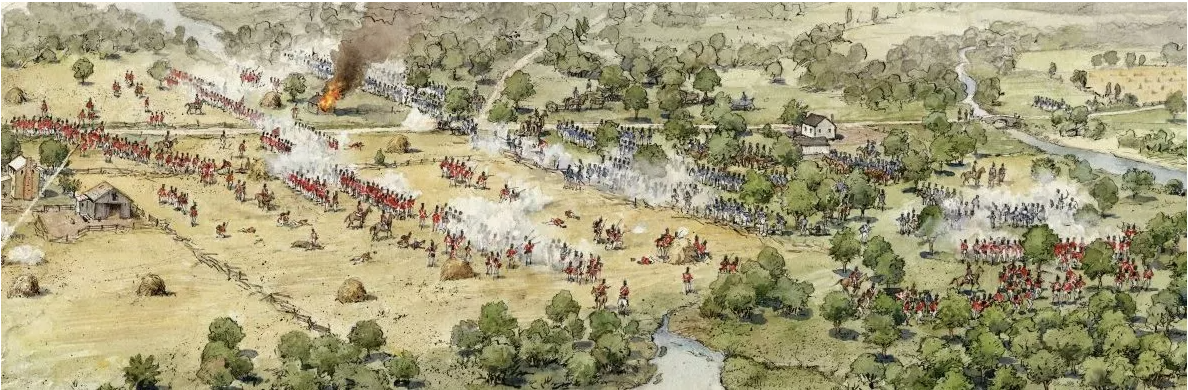
Perhaps the sheer size of a united group of Indian tribes would have forced them to organize with a centralized government and attempt to write a constitution like the United States. Perhaps that would have been the first Indian state. Then, Tecumseh’s War would have been studied not as a flashpoint in American history, but as a key event in another nation’s birth. However, anyone who has seen a map knows that the United States owns the Midwest, so what went wrong? The final battle of Tecumseh’s War was the Battle of the Thames on October 5, 1813.  He lost. Not only that, but it was the British failure to push the American forces toward the forest wherein lay Tecumseh’s warriors that lost the battle. Tecumseh’s confederacy was integral to the victory that may have saved Canada and bought essential time for the British, yet when Tecumseh needed the British to pull their weight at the Battle of the Thames, they did not. A year before the end of the War of 1812 came the end of Tecumseh’s dreams for a pan-Indian alliance strong enough to tango with the fledgling United States.

The threat of Tecumseh’s dreams of a pan-Indian nation-state resulted in him being squashed under the weight of the rapidly growing, albeit young, United States. However, would Tecumseh’s tragic fall pave the way for the flight of the fledgling United States and bring unity to the imperfect union?

So now that we see that Tecumseh, despite his powerful words, was not a phoenix, what was the climax of the War of 1812, and how did the fledgling USA become an eagle?

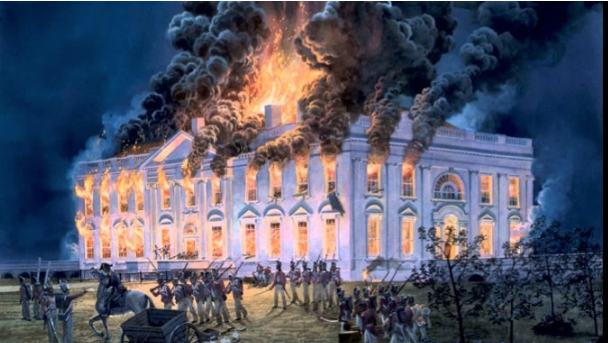
The year is 1814. The month is September. Nineteen days ago, the British army rolled into Washington, D.C. and burned it to the ground. Things are not looking up for the US. Other than a few naval victories courtesy of the USS Constitution, the US has seen little success and a lot of failure in the War of 1812.

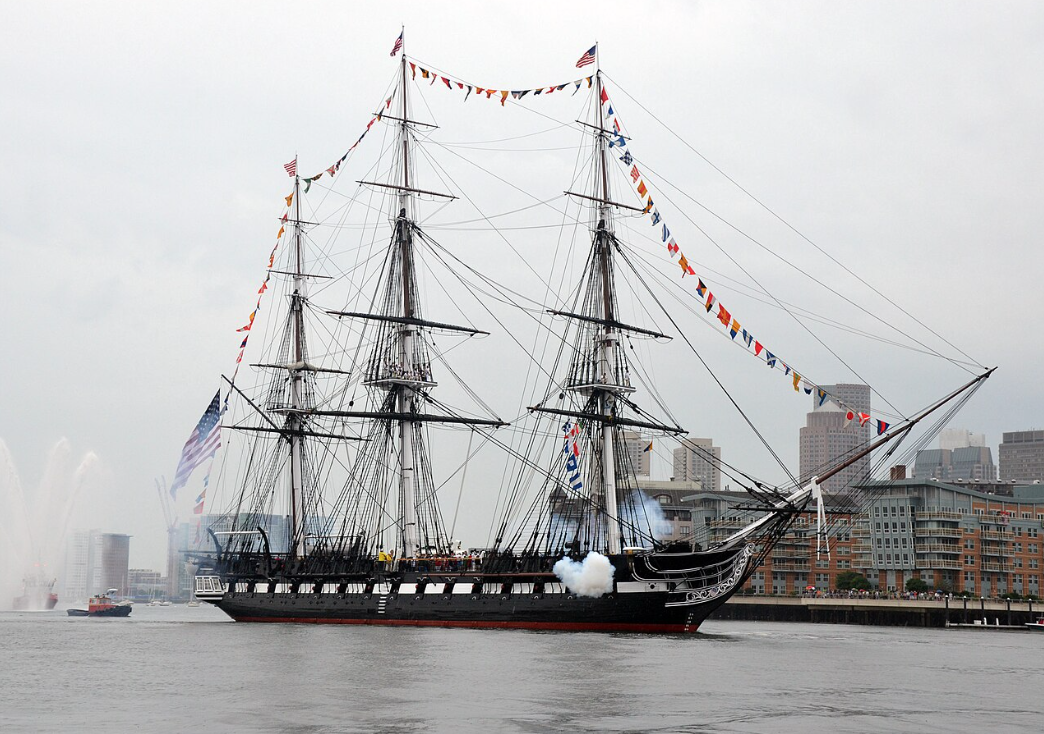
USS Constitution, still afloat today

On the bright side, Thomas Macdonough secured a key naval victory for the US in Lake Champlain and ended British hopes of invading New York and Vermont. Now, with Baltimore under fire, could the US prove that it can win a major battle on land? Three battles made up the defense of Baltimore (September 12-15, 1814): the Battle of North Point (September 12), the Battle of Hampstead Hill (September 13), and the Battle of Fort McHenry (September 13-14).

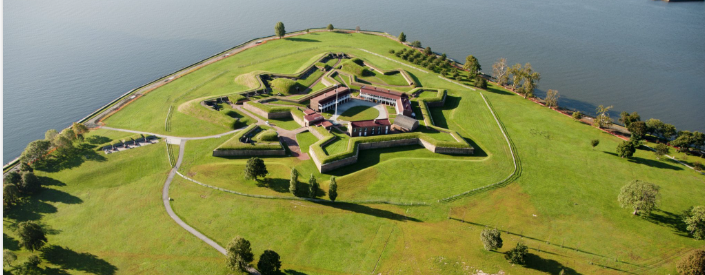
The Battle of Hampstead Hill and the Battle of Fort McHenry occurred at the same time, as the British attempted a two-prong attack on Baltimore. Before these two battles, the British had fought US troops at North Point in which the US troops retreated to Hampstead Hill to mount their defense. However, placed along the coast was Fort McHenry which played the crucial role of preventing British naval support from assisting at Hampstead Hill.

Thus, the British army advanced on Hampstead Hill while the British navy bombed Fort McHenry, hoping for a surrender. Fort McHenry had about 1,000 men manning the defense under the command of Major George Armistead. The fort’s walls had been recently fortified, and the Americans had sunk merchant ships at the entrance to the Baltimore Harbor to block any moves by the British to use it to attack. On a truce ship sat Francis Scott Key, who had just negotiated for a prisoner of war and was being temporarily detained because he had gathered too much intel on the British invasion of Baltimore.

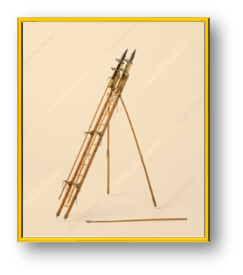
He watched as the HMS Erebus fired Congreve rockets, which lit up the sky with a red glare.

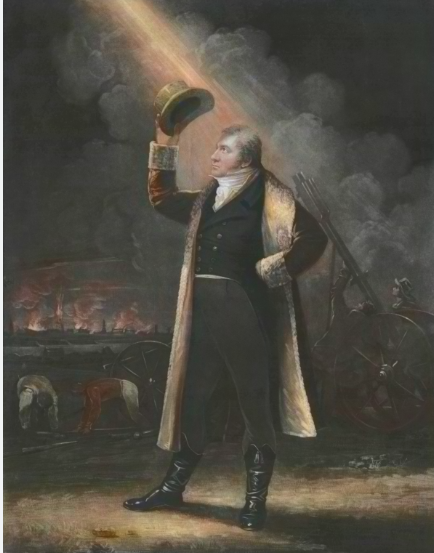
Sir William Congreve, the inventor of the rocket

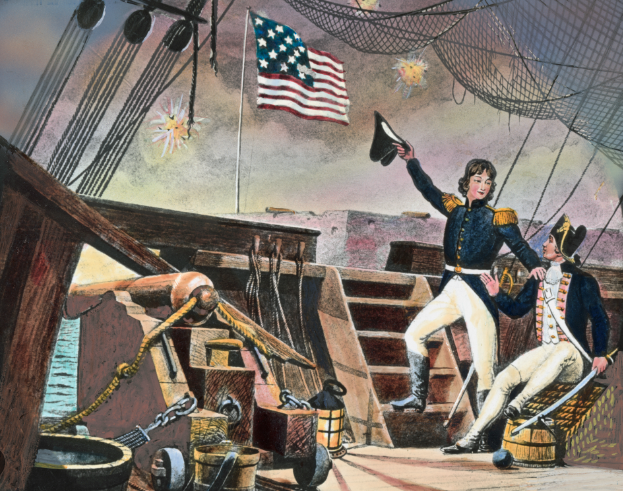
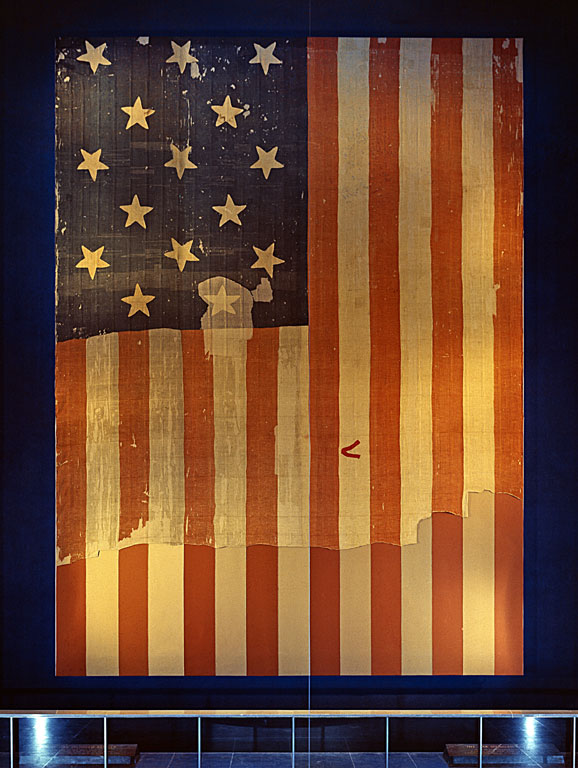
He watched as mortar shells, fired from bomb vessels Terror, Volcano, Meteor, Devastation, and Aetna, burst in the air. He watched as the explosive projectiles lit up the American flag, tattered yet still proudly waving the stars and stripes above the fort. For the next 25 hours, he watched as British vessels fired round after round of cannonballs, launching a total between fifteen and eight hundred, but the fort and its one thousand men held strong.

By the morning of September 14th, the British started to retreat, and the oversized star-spangled banner waved over the land of the free and the home of the brave. The moment Key was released, he wrote a poem inspired by the battle on the back of an envelope. Not long after the battle, newspapers all around America published the poem, and when a music printer named it “The Star-Spangled Banner,” the name stuck.

The actual Star Spangled Banner, or the Great Garrison Flag, the very flag that flew over the Battle of Baltimore at Ft. McHenry on display at the Smithsonian

O say can you see, by the dawn’s early light,
What so proudly we hail’d at the twilight’s last gleaming,
Whose broad stripes and bright stars through the perilous fight
O’er the ramparts we watch’d were so gallantly streaming?
And the rocket’s red glare, the bomb bursting in air,
Gave proof through the night that our flag was still there,
O say does that star-spangled banner yet wave
O’er the land of the free and the home of the brave?


On the shore dimly seen through the mists of the deep
Where the foe’s haughty host in dread silence reposes,
What is that which the breeze, o’er the towering steep,
As it fitfully blows, half conceals, half discloses?
Now it catches the gleam of the morning’s first beam,
In full glory reflected now shines in the stream,
‘Tis the star-spangled banner – O long may it wave
O’er the land of the free and the home of the brave!


And where is that band who so vauntingly swore,
That the havoc of war and the battle’s confusion
A home and a Country should leave us no more?
Their blood has wash’d out their foul footstep’s pollution.
No refuge could save the hireling and slave
From the terror of flight or the gloom of the grave,
And the star-spangled banner in triumph doth wave
O’er the land of the free and the home of the brave.


O thus be it ever when freemen shall stand
Between their lov’d home and the war’s desolation!
Blest with vict’ry and peace may the heav’n rescued land
Praise the power that hath made and preserv’d us a nation!
Then conquer we must, when our cause it is just,
And this be our motto – “In God is our trust,”
And the star-spangled banner in triumph shall wave
O’er the land of the free and the home of the brave.

Why exactly did Fort McHenry send such a powerful message? Why exactly was Fort McHenry so galvanizing? How did a poem about the battle become synonymous with the eagle’s cry—with freedom, with courage, with bravery, with America? Perhaps it was the message of America’s second triumph over Britain—the most powerful nation in the world. Perhaps it was the message of the resilience of the American soul.

The very context of the song is inspiring; the classic story of the underdog—of the little guy holding his ground against a giant. Also, Francis Scott Key was a lawyer who accidentally penned the national anthem. A key part of the American identity is the belief that you can be anything, and having a national anthem that’s written by a lawyer who was just observing what happened at a battle? That’s just American.

The Star-Spangled Banner perfectly represents the colors of well, the star-spangled banner. Red can represent hardiness and valor, white purity (in the sense that America is pure from the influence of other countries), and blue can represent vigilance and perseverance. The Star-Spangled Banner is essentially the Battle of Fort McHenry told in the form of a poem, and of the thousand hardy, valorous, vigilant, perseverant, men who held the fort for the independence of the United States.

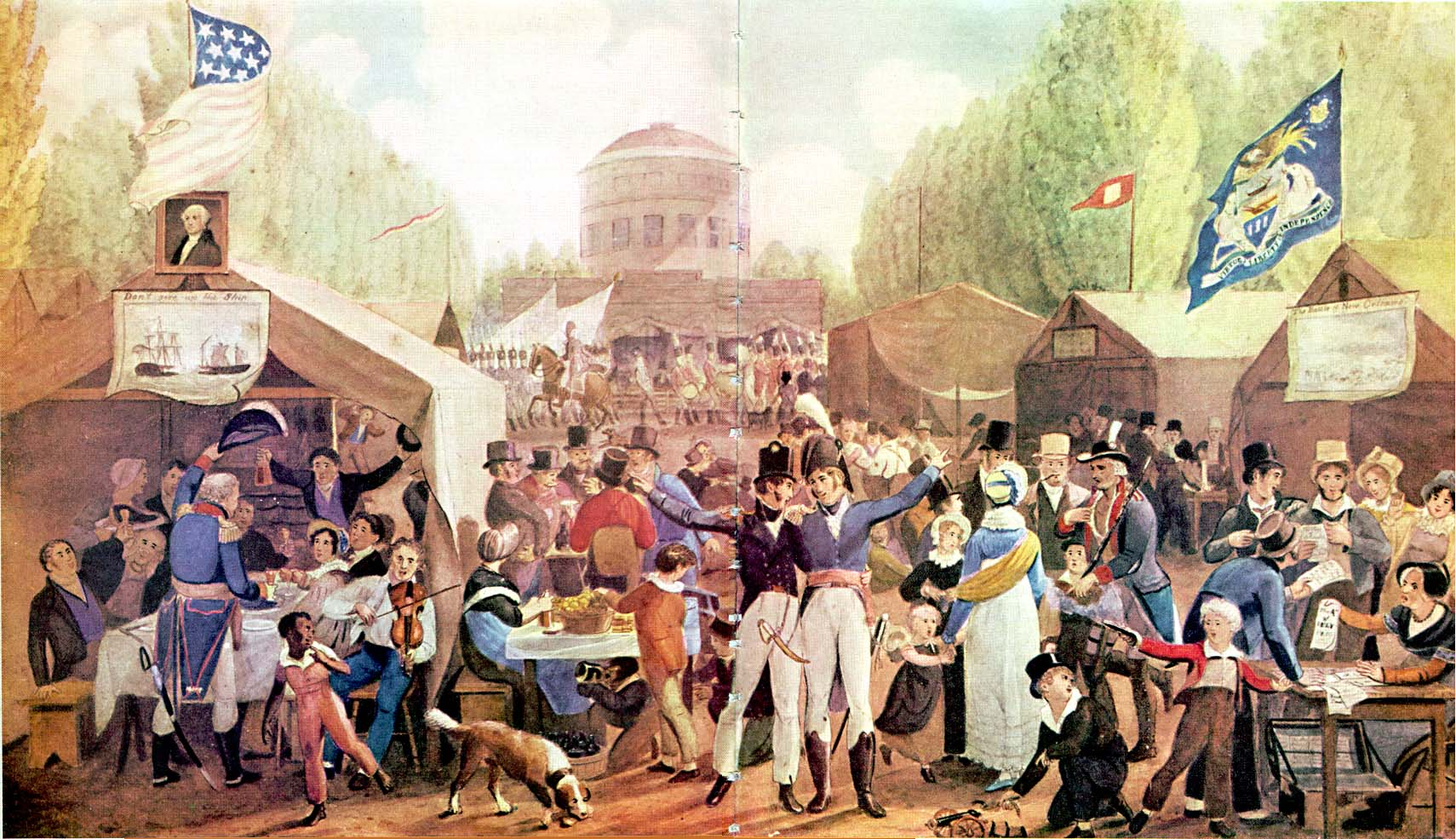
The War of 1812 brought the United States together, with its end kicking off the Era of Good Feelings (1815-1825), a period of widespread national unity; people were finally calling themselves Americans.

Independence Day Celebration in Centre Square by John Lewis Krimmel, 1819

On the other hand, the war devastated the Native American peoples, officially kicking their ally, the British out of American territory and resulting in the fall of Tecumseh, one of their greatest leaders. The United States unified at the cost of the shattering of the Native American peoples, which begs the question: what is the cost of national unity? With the current rapid polarization of American politics, does America need another war? In other words, must unity come at the cost of others, or can the state come together to peacefully save the nation?

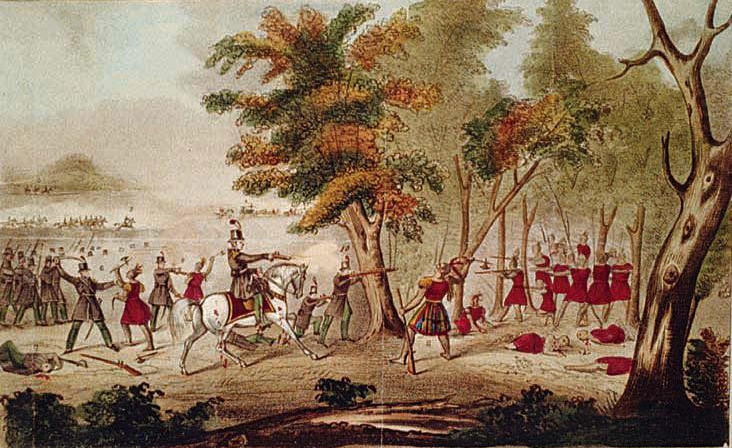
Battle of the Thames and the death of Tecumseh, by the Kentucky mounted volunteers led by Colonel Richard M. Johnson, 5th Oct. 1813. Lithograph c. 1833. Image Courtesy of the Library of Congress


ALEX LIN

Sexually graphic books in school libraries and actual US Government censorship

WARNING: Due to the nature of this subject, some sexually graphic information is included in the below. It is only named, but younger students should only read with parent supervision.

by Alex Lin 

The current issue of school library book banning was introduced to me during class when my teacher gave us the second essay of the year to write for that week. Ms. L went over the handout (a story from The Week, which is a collection of mainstream media put into magazine form) with us, and the whole class had a lot of questions about it because we were all wondering what it was about: why were books being banned? Was this censorship? Our assignment was to annotate the whole article and then give our own personal reaction to it. I began annotating the article and suddenly, I knew exactly what was happening here. Banning books, I wrote, was wrongheaded; the teachers and librarians were doing the right things by putting those books back in the school libraries. Now, Ms. L never clarified what the books were about, or into what detail they went, and The Week portrayed the issue as a type of modern book burning, a 1933 moment, repeated in modern American schools. So naturally, I thought that parents shouldn’t be, as I wrote, “puppying” or helicopter parenting their kids, and in the spirit of the First Amendment, that they should back off.  

But we didn’t understand what the actual meaning of censorship was in 2023, and how important this topic was to fully grasp, both for young Americans like me and for all Americans.  Instead, we were being manipulated to cry foul at book banning in schools. But was this banning merited? And where was the real censorship happening? 

So the topic, it had seemed to me, was about censorship. People in this generation are well aware of it; we seem to hear about it from many sides. Was this book banning the censorship that everyone is worried about? Or is the real censorship actually in a completely different sphere? 

Our teacher made no mention of Missouri v. Biden which is a blockbuster suit against the current executive branch from the attorney general of Missouri. What does this suit allege? Oh, just that the Biden administration has been working with Twitter, Facebook, YouTube and Instagram, among others, to actively censor the American people. 

In Missouri v Biden, the government lost, and the case was upheld by the Fifth Circuit, which, in September 2023, reinforced the language, severely limiting the executive branch from any and all censorship. It came out that the government was trying to hide, to keep things they didn’t want the public to see. What was being censored? Anti-mask movements from scholars, and warnings from doctors who researched the dangers of the COVID-19 vaccines. Even Hunter Biden’s laptop – the government tried covering it up by saying it was “Russian bots” – and the fact that the New York Post was shut down by Twitter for 45 days. 

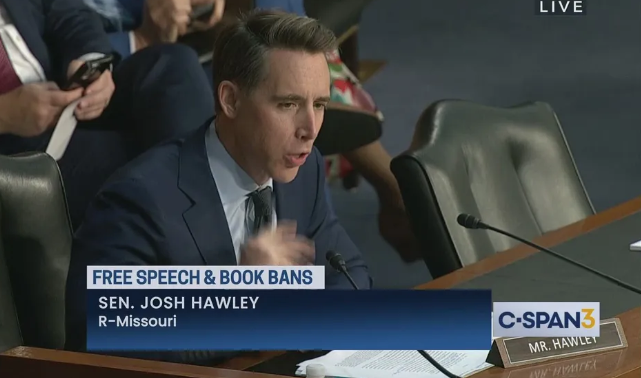
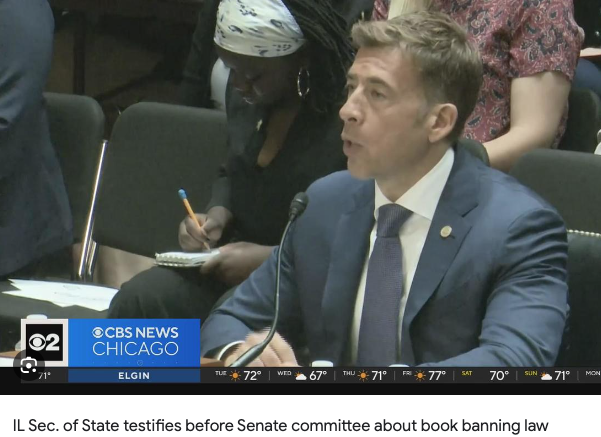
Then I watched a video with Senator Kennedy of Louisiana about the book ban. He was asking a panel of experts about this issue, one of whom was the Illinois Secretary of State Alexander Giannoulias. He read from two books, one of them being All Boys Aren’t Blue. It was a very graphic passage about dildos and anal sex. How could this be seen as appropriate for a school library? I was disgusted… and very worried about why there are people in that court trying to fight for this type of content to be available to kids at all! Those books should be nowhere near a school. The Illinois Secretary of State and the various people that sat with him at that Senate panel screamed that it was book banning, but in reality, they are surreptitiously trying to weasel these explicit books onto the school library shelves. 

How do the media portray librarians?

With such a controversial issue, thousands of articles have been written. But when one does a simple search for book-banning, or censorship, or librarians, a typical article that pops up would be slanted, or censored, to favor the issue as book-banning. Take the example of a Washington Post article from November 11, 2023. Written by Ruby Cramer, this is a  portrait of a librarian who is a martyr for the cause.

The article is a portrait of a librarian that emphasizes her struggle with so-called censorship as something wrong and hurtful to her, whose job description includes that she is paid to control what teenagers can see. 

“The Librarian Who couldn’t Take it Anymore” 

This portrait is of a Puerto Rican-born librarian, Tania Galiñanes, who is panicked because of the “censorship rules”, and has put in her notice to quit. Reading it, one gets a sense that the writer is agreeing with the librarian and feeling sorry for her, with the intent to persuade the reader.  

Ruby Cramer uses words like “pure” and “absurd” which essentially paint the librarian as a martyr. “It should have been absurd, kneeling over a box of music she couldn’t read, sent over by a music teacher who wasn’t sure what she was allowed to have in her classroom. But now the library was a place where things like this happened.”

“To Tania, the pure act of reading was becoming more and more political, and as a result, she  had to spend much of her time reviewing the books on her shelves — not to suggest one to a student but to ask herself whether the content was too mature for the teenagers at her school.”

Reading this made me question why librarians are paid to do their jobs; they are adults in a teenagers’ school every day and they can’t seem to figure out if these books are mature enough for children’s viewing? Is it such a burden to read through materials and to make sure that they are not out of the range of appropriate subjects?

See the angle here:

“Cramer and Galinanes are both are smarting against Florida’s Department of Education new requirements.

She heard the first-period bell ring, 7:15 a.m. She’d wanted to get to the box right away, but now she saw one of the school administrators at her door, asking whether she’d heard about the latest education mandate in Florida.

‘What’s the name of this thing?’ he said. ‘Freedom Week?’

She exhaled loudly. ‘Freedom Week.’

‘Oh, good,’ he said. ‘You know about this.’

Yes, Tania knew about it. It was one more thing the state had asked of them, a mandatory recitation of parts of the Declaration of Independence ‘to reaffirm the American ideals of individual liberty.'”

We see here that Cramer and her subject, this poor beleaguered librarian, would much rather promote licentious materials than to salute the flag or spend any time thinking about the principles of the USA. 

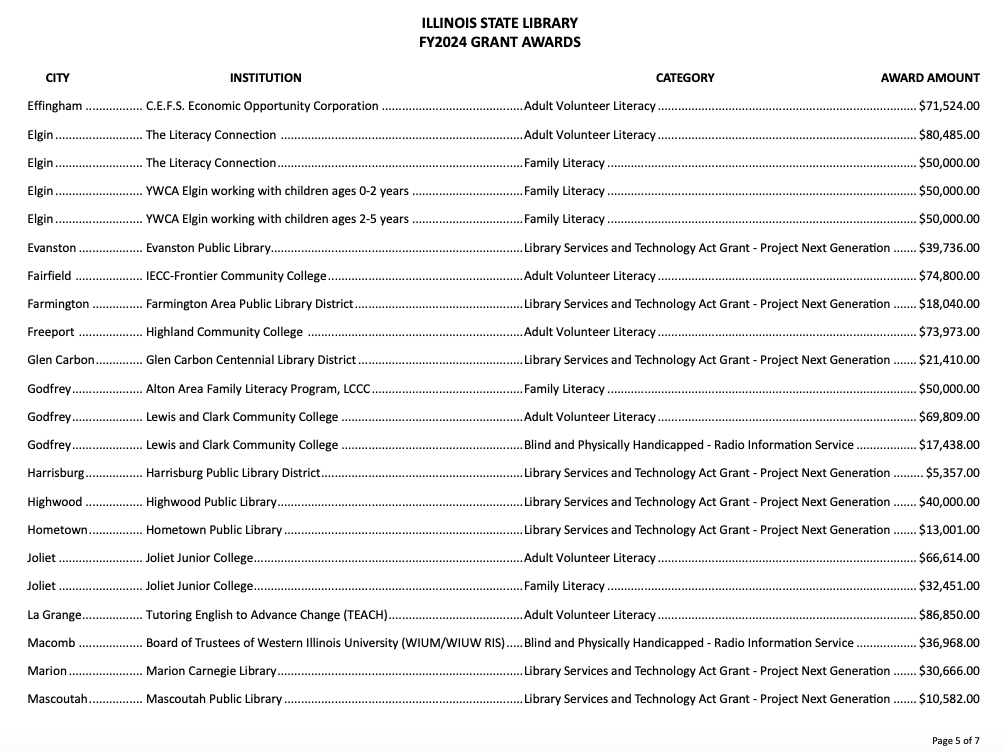
So when it all boils down, I thought this case was an easy win and all were going to stand with banning these sexually inappropriate books in libraries, school or otherwise. But right before finishing this opinion piece, I found that Illinois Secretary of State Alexander Giannoulias, one month after the Senate hearing, is still pushing this agenda, using the power of the purse to bring these books, under threat, into public libraries in Illinois. He is on record threatening town libraries with removing their funding if they do not accept LGBTQ+ books with explicit sexual content. These sexual deviants won’t stop! 

Look at the numbers:

One wonders what types of books must be included in libraries, so that the funding will be released?

Works Cited:  

Theara, Coleman. “How Books Bans Are Affecting Schools and Libraries.” TheWeek.com, 11 Sep.  2022, https://theweek.com/briefing/1016551/how-book-bans-are-affecting-schools-and libraries 

Kennedy: SHOCKING MOMENT: John Kennedy Reads Graphic Quotes from Childrens’ Books at  Senate Hearing YouTube, 12 September, 2023

Ruby, Cramer. “The librarian who couldn’t take it anymore,” 11 Nov 2023, http://apple.news/AOsXX3sDvQn6uYwgcRZFzkA


ANNA QIN

Appreciating Americana

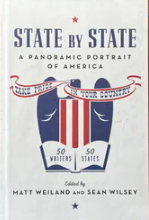
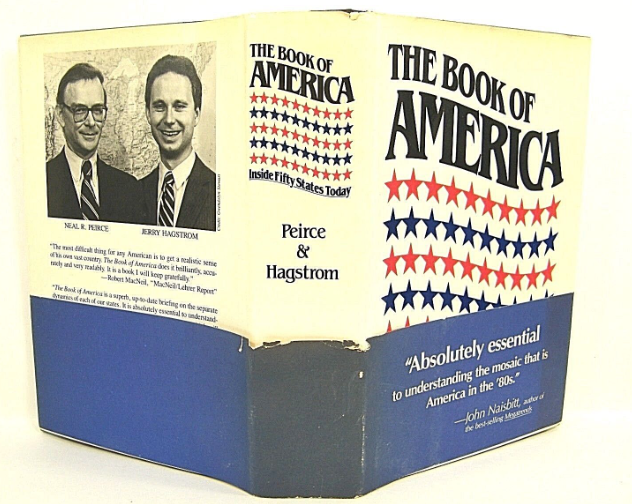
State By State: A Panoramic Portrait of America, edited and compiled by Matt Weiland and Sean Wilsey, aims to create one book containing 50 different essays, written by 50 different authors, about the 50 U.S. states. Each individual essay attempts to capture the notable features and gives a unique understanding to each place. Weiland states that “this book started with a hunch and a conviction.” He believed that though the states are “bound together today as tightly as any confederation on earth – [they] somehow stubbornly resist blending into a single undifferentiated whole.” So together, Weiland and Wilsey strived to create something that would unravel the differences and display the distinctive qualities of each state. This idea had been done before: the WPA American Guide series of the Federal Writers’ Project in the 1930s and a few other efforts, such as The Book of America edited by Neal Pierce and Jerry Hagstrom.

The FWP included the works of more than six thousand writers with over 500 pages per state bound in great thickly-bound volumes, one for each state.

The complete set of State Guides, property of Craig Hodgkins

Weiland and Wilsey wanted to create something more personal and more suitable than these larger efforts for people in America to learn about their country in one volume. State by State answers the big question: “What makes one state different from another?” The two aimed to create something that would showcase pride for their country. Their conviction, written in the preface, was that “despite drive-time radio and the nightly news and the Sunday paper, despite all the books and blog posts, the documentaries and songs, American and the lives lived here remain strangely and surprisingly under described”. Which then leads to their hunch: “for all the talk of identity in American life, the personal fact that defines American lives as much as gender, ethnicity, or class is where you’re from, which more than anything means your home state (my emphasis)”. Choosing mostly authors to write about their home states, they were able to deliver personal portraits of these places. Weiland and Wilsey therefore achieved their goal of creating a book compiled of all 50 of them. 

To understand America, it is important to understand the Declaration of Independence, the founding document of the United States of America or the formal cause of our nation. The Declaration of Independence, written based on the common goals of unity, freedom, and the protection of civil rights, is what brought to the world’s attention the importance of America. Part of having pride in our country means also having pride in our government, the people who lead the country (consent of the governed) and whose job is to do what is best for the people. The Declaration of Independence defines freedom as so important that “whenever any form of Government becomes destructive of these ends, it is the Right of the people to alter or to abolish it, and to institute new Government, laying its foundation on such principles”. From this, it is clear that the Declaration of Independence is a statement showing the other “powers of the Earth” (other nations) that this new government will be “of, by, and for the people”. The Declaration states this self-evident truth: “that all men are created equal, endowed by the Creator with certain unalienable rights”. While saying “all men are created equal,” it doesn’t necessarily mean everyone has the same things, possessions, strengths, etc, but that our “equality” is defined by each individual’s God-given rights to freedom. Being “born equal” means born human. In addition, Americans had to put their lives on the line: so much so that “we mutually pledge[d] to each other our Lives, our Fortunes and our Sacred Honor”. Putting the fate of our lives into the formation of our country took major bravery and instills within each one of us a respect for our Founders.

To understand the type of federal republic the USA is, the idea of consent should be understood and is regarded in another section of the Declaration. Being an American comes with having equal rights, no matter who you are. A major topic in the document revolves around consent, meaning the mutual agreement between both parties, the governed and those who govern. Requiring consent brings the feeling the ability to have a say in what happens. The Declaration emphasizes the Consent of the Governed: the citizenry choose to have their leaders come from their own ranks, and choose to allow these men and women to exercise authority over them for a limited amount of time. The United States government is representative; though not everyone gets exactly everything they want, federal elections for president, for instance, require that the majority of the electors are in favor of the president. It becomes clear that the basic foundation of the country is run on the best interest of the people and reveals many reasons in which citizens of America take pride in their country, giving Americans a sense of importance and value. While each state of the USA gets an equal distribution of power in the Senate, one fiftieth, in relation to the country overall, the individual power distribution differs due to the difference in populations, and this is seen in the House of Representatives. In that sense, no state is alike, for the concentration of political voices does not necessarily match specific locations. However, as it is the United States of America, the way the system works regards each state as a whole and each as an equal part of the country. For example, the government is organized by equal representation so that each state has a ratio equal to their population. Delaware, a small state, has 2 Senators just as every other state, but only one Representative. On the other hand, California, which has a much larger population to represent, has the same two Senators but 53 Representatives. But both states have equal power in the sense that the Senate (the upper legislative chamber) is able to crush a proposal by a different state. So if California wanted to implement something new, Delaware has equal (one-fiftieth) power to let it pass or deny it. Different from other countries of the world, Americans can feel a sense of having an impact on their personal state, and through this, their country.

State by State’s subtitle is “Take Pride in your Country”. While reading through the preface, I noticed many references to American people, stories, achievements, etc. and decided to research them in hopes of learning more about my country, the USA. Weiland and Wilsey included these references to demonstrate Americana. What is Americana? Americana is art, statuary, writing, sculpture, dramatic art, paintings: the culture and history of America, specifically the United States. Here are a few references to Americana that I found interesting.

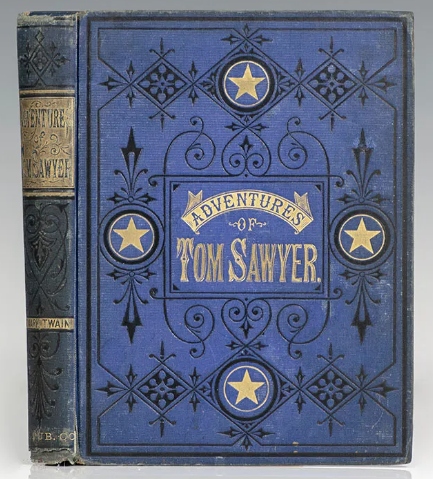
The Adventures of Tom Sawyer, written by Mark Twain, starts off with a small preface. Twain wrote to the readers that though his stories are aimed at a younger audience, he would be glad if adults read it as well. He writes “although my book is intended mainly for the entertainment of boys and girls, I hope it will not be shunned by men and women on that account, for part of my plan has been to try to pleasantly remind adults of what they once were.” In the first chapter of Adventures of Tom Sawyer, small additions of humor are added in that make the story more light-hearted. The beginning focuses on an old lady, Aunt Polly, who wears glasses but never looks through them, and Twain comments that “she could have seen through a pair of stove-lids just as well.” Written in 1876, the story contains some old terms that have a different definition than what most people are used to today. This book became one of Twain’s most famous novels and is also regarded as a masterpiece in American literature alongside Adventures of Huckleberry Finn.

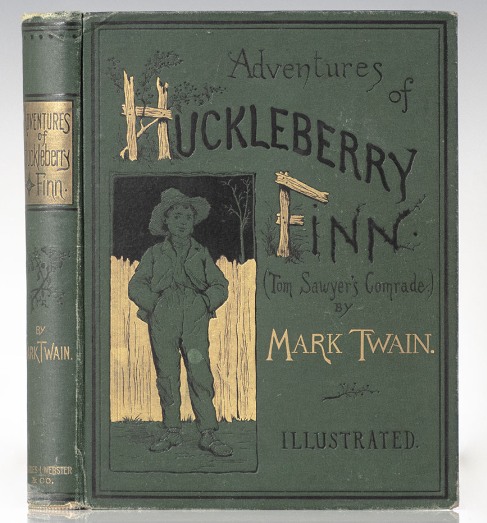
“You don’t know about me without you have read a book by the name of The Adventures of Tom Sawyer; but that ain’t no matter.” Who is speaking here? It’s Huck Finn, Tom’s buddy, narrating a book of his own! The Adventures of Huckleberry Finn towers over the 19th century as one of the most important American novels. The widow, his foster mother, “cried over [him], and called [him] a poor lost lamb, and she called [him] a lot of other names, too, but she never meant no harm by it”. The widow helps him get dressed, feeds him, and teaches him. This book is considered to be one of the first major American novels to be written in vernacular English and is one of the three Great American Novels (along with Gone with the Wind and Moby-Dick) that form that elite club. This story is so important to American history and I hope in the future I get the chance to read this book and learn why this has made such a great impact.

John Cheever, another successful short story writer and novelist who is referenced, wrote several pieces in his career: “The Enormous Radio”, “The Swimmer” (there’s a film made of this as well), The Wapshot Chronicle, Bullet Park, and more. His short story collection, The Stories of John Cheever won him the Pulitzer Prize for Fiction and a National Book Critics Circle Award. His major success of his career was recognized and just before his death, he was awarded the National Medal for Literature, and his complete oeuvre is published by the Library of America. I listened to the first couple of minutes of The Enormous Radio. Cheever does a fantastic job of going deep into descriptions of both objects and actions and providing a clear image of the events occurring. He hooks the reader by making everything sound very dramatic and turning a humdrum event into an action-packed retelling. He includes numerous similes comparing the radio to “an aggressive intruder” and others. 

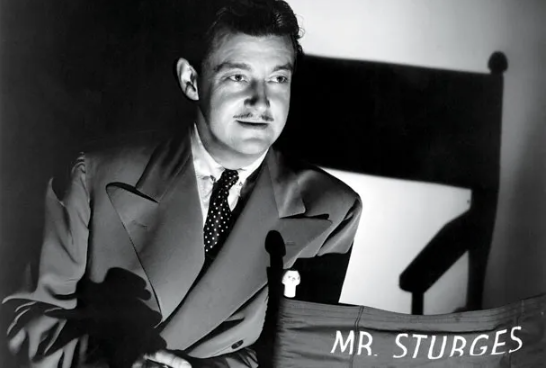
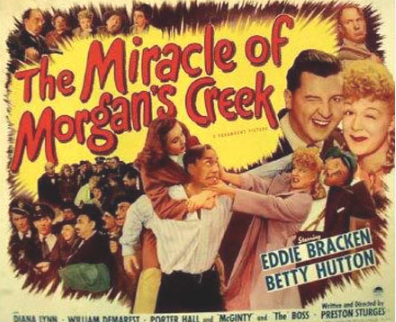
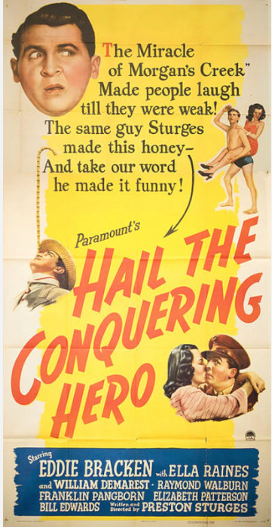
Turning to the film side, Preston Sturges, a playwright, screenwriter, and film director, created screen art in the 1930s in the screwball comedy format. Sturges became the first person to win the Oscar for the Best Original Screenplay. His works, including The Miracle of Morgan’s Creek

and Hail the Conquering Hero earned him Oscar nominations. Sturges kicked off his career on Broadway which earned him much recognition. Later, he was able to make it to Hollywood where he wrote for Paramount. Between 1939-1944, he released some of his greatest works.

The Lady Eve, Sullivan’s Travels, The Palm Beach Story, and The Miracle of Morgan’s Creek which was noticed by the American Film Institute and chosen to be included in the 100 funniest American films. I was intrigued by this so I looked into two of Sturges’ films. The first being The French, They Are a Funny Race (1955), which takes place in Paris. The second was Palm Beach Story (1942) which takes place in New York City. Palm Beach Story, in my opinion, was very well filmed and it seemed like a movie that we would watch now, in 2023, however, in black and white. The audio was clear, the filming was perfect, the acting was amazing as well. Sturges, being a comedy filmmaker, included many humorous parts into this film. I had a good laugh in a couple of different moments. One of these moments being after a young lady kisses an old man, and he yells “Whoopee, hot diggity!” and scurries away. 

From these references and many more found in the preface, the readers receive an expanded knowledge of the term Americana.

Though the sense of Americana is constantly present in the preface, “Georgia” by Ha Jin, demonstrates the views of America through a foreign perspective. Jin emigrated from China and he became relatively familiar with the US state, Georgia, and was chosen to express his opinions on the state. 

According to Ha Jin, he does not “have a hometown” though he does admit that he lived in the northeast of China for his first twenty-one years. While this is his true native land, the only ties he associates with the place are the two or three happy childhood memories. On the other hand, he finds that he is “full of affectionate memories” from Georgia, a state in the USA. In the summer of 1993, Jin moved his family to Georgia in order to take a job at Emory University as a teacher of poetry. At first sight, he was met by the “good feng shui” of his new house in the suburbs of Lilburn, finding appreciation in the lake filled with waterfowl and a brook named, surprisingly, the Yellow River. Though being the only Asian family in this subdivision, Jin felt the friendliness of his neighbors and the warm welcome to the town. His family was even greeted with a vase of flowers and a kind note from an old woman living a couple of doors down. Indeed, Jin said that “[he] will stay in Georgia even if [he doesn’t] get the tenure.” When countered with the question “why?”, he responded “because life is easier down here,” and also because he loves his house. It is evidently seen that Ha Jin feels at ease and has a sense of comfort in Georgia that he had not mentioned he felt in his twenty-one years in China.

As a professor, Jin is a bibliomaniac. In just two years, Jin collected over forty boxes of books, running out of room to store them in his small apartment in Somerville, Massachusetts. Though forced to throw some of his library out due to limited space, he did not stop collecting more, and those, he took to Georgia with him. As he started teaching full time, his obsession grew, setting up dozens of bookshelves and buying boxes worth of books at local book sales. In addition, Jin would stop at Goodwill to search through the book section, finding things like The Word Finder and first editions of For Whom the Bell Tolls, The Heart of the Matter, and Beloved. Not only was his library growing, but he also found interest in religion. Living in Georgia, “churches were a major power” where advertisements with inspirational quotes could be found everywhere. He began to look deeper into the Bible which became “vital to [his] writings in those years.” Reading many different versions of the Bible, he found what he liked in each of them and memorized scripture in order to learn it in his heart. Additionally, Jin worked on his second short story collection, Under the Red Flag, which later earned him the Flannery O’Connor Prize for Short Fiction.

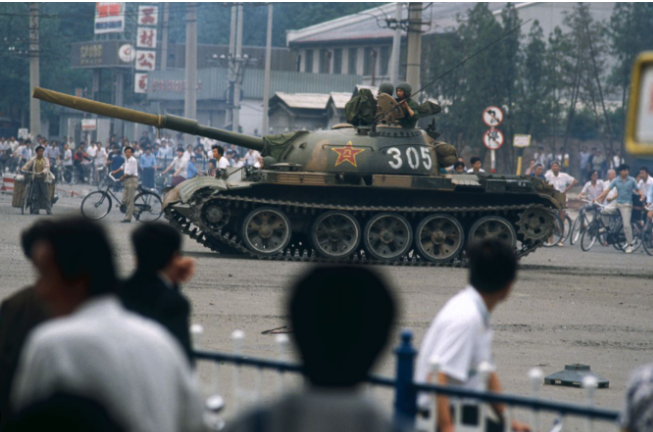
Jin writes of his time there, that “this step toward self-sufficiency came because my life in Georgia had made me turn to the Bible” and added that “[his] nine years in Georgia were crucial to [him] as a beginning writer.” Additionally, Jin mentioned that after the Tiananmen Square massacre, he and his wife decided to stay in the United States. 

The Tiananmen Square massacre, also known as the June Fourth Incident, was centered around demonstrations that lasted weeks and were led by students in China. These protests were in hopes of advancing democracy and obtaining more freedoms. Thousands of students staged protests which were eventually shut down violently by the Chinese government. Following this incident, the government tightened control over the country and ended the political reforms that first started in 1986. As mentioned, Ha Jin did not return to China after this and later became a U.S. citizen. As a nation, the USA provided Jin more freedoms and opportunities to express his ideas in his works and pursue his career. 

As a girl born in America, I have learned to be proud of my country and its achievements. Through researching the references that were mentioned in the preface of this book, I was able to discover and learn about the amazing things that have been accomplished in America. Having Chinese roots, like Jin, we have both experienced the freedoms and amazing opportunities offered in this country and through reading State by State, have grown in our knowledge of Americana. 

Me and my brother at Tiananmen Square in 2014.

Timper Xu, a 10th grader in San Francisco, responds:

Anna’s essay starts with an interesting title: “Appreciating Americana”. While Americana means culture that roots on this piece of land (USA), appreciating it means not only respecting American culture but also understanding and learning about our roots. But how? How can we learn and understand our roots? Anna reveals this with her own experience and through her explanation of the hunch and conviction of State by State. In this case, we know the hunch and conviction of State by State (and the history of the WPA series); what we don’t know is Anna’s experience and view. This is the most attractive and unique part, for a thousand people could write about State by State; a million people could write about Georgia and Chinese immigrants, but a person’s own experience cannot be duplicated, nor can their view be cloned (this is also one of the main goals of Weiland and Wilsey – they want something more personal). As her title reveals a wider aim, too, her essay isn’t only about Ha Jin’s “Georgia”, but is also about State by State’s premise, other authors who demonstrate Americana, and some political events that once happened in China. 

This essay isn’t limited to Georgia, it is more individual, more independent; I see this when she writes about Tom Sawyer and Huckleberry Finn, I see this when she lists the stories John Cheever wrote, and how those stories were successfully made into films, I see this when she talks about how she “learned to be proud of [her] country”!  She used this opportunity to learn more about America and brought us along with her in her pursuit of knowledge: a citizen’s view of her nation, her country, and its core qualities.

Comparing these very different nations in freedom and independence versus restriction and limits, the allowance to protest versus the Tiananmen incident, ABCs can get a sense of their being in a better society; but what do we yearn for? What do we miss? How does even modern-day Chinese culture excel in certain ways ABCs may not appreciate? In 1949 modern China was born, things were more chaotic and extreme than the 1990s where the tiananment incident appeared: you could see this in novels and movies like To Live. But things change, you can see a clear pathway of China turning more and more democratic as it modernizes, especially after Internet appears.

On the other hand… What this shows is not a thing that can be done just because of the difference in society, but actually the gap between civilizations that is due to history. 

We have to know, no country is fully democratic at the beginning, even the US: there is a process for freedom and democracy to fully arrive. Slavery wasn’t abolished in until 1865, voting rights for women was not gained until 1920, the ending of the Jim Crow laws never came until the mid 1960s. The independence and freedom we see today wouldn’t have appeared without the past 250 years of developing, strengthening, and filtering of laws and policies. 

Time is what China doesn’t have: in the 1900s, a whole century of chaos, starvation, and war gave no time for democracy to appear (note that supremacy isn’t peculiar to the communist government in the mid-late twentieth century, the Nationalists lead by Chiang Kai shek wasn’t any better at democracy nor the imperial dynasties that were before, though Sun Yat Sun did try to turn China into a democratic country); the dictatorship that is halfway abolished after the Reform and Opening Up also gave no land for freedom to survive. These reasons form up what we see now as the Tiananmen Incident or some other event that happened at that period. 

You can see a thousand shortcomings in China, but there are two virtues that can’t be denied: the ability to adapt to the newcoming era, and pursuit of peace (as long as no one tries to tear off territory). Have you ever seen China really invade another country? Or have you seen something as worse as the Tiananmen Incident appear nowadays? Time and the gain of knowledge for every citizen in China shaped the Chinese Government into a status were most people feel okay with. (You couldn’t say that this status is perfect, but going completely democratic also causes issues such as the rampant of drugs or the public promotion of LGBT issues). Persecution of Christians? Falun Gong persecution? Set out both sides?

It is not only an U.S. citizen’s privilege that Anna could stand freely on the Tiananmen Square, it is the unstopping change in history that causes this: like how the unstopping change brought US out of the hands of Britain, like how liberty and freedom replaces imperial power, like how supremacy is abolished and how democracy emerged.