William P. Wood and The Origins of the Secret Service
When most people hear the term “The Secret Service”, they often think of spy movies, like Mission Impossible, Bourne Identity or of the character James Bond in the 007 films. Sorry to disappoint, even though those are all great films, when the first Secret Service was created they weren’t scaling rooftops or uncovering drug cartels. This idea of special protection first came from George Washington. He realized he needed personal protection along with protection for the new government’s money and the official papers of the Continental Army. Washington knew that there was always a possibility of the president being kidnapped or worse, especially because he himself had hatched a couple of failed attempts on British war generals during the Revolutionary War. Washington developed a team of professionals to follow him around when he went to visit boot camps, to help inspire soldiers. The men who got assigned to protect Washington were proud to protect their hero. Unfortunately, when George Washington died, presidents after him did not feel the need for protection. It seemed that, just when the Secret Service was about to develop, it was left in the past, forgotten for many decades. Then came the year of 1865. President Abraham Lincoln saw the problem of counterfeiters printing thousands of fake bills. He scrambled to create an elite team of men, each with a different set of skills to take down counterfeiters. When The Official Secret Service was first created, their main goal was to shut down these counterfeiters, because at the time there was a huge economic crisis as nearly ⅓ of the currency in America was fake. The goals had shifted from when George Washington was using the SS for his protection. But the government remembered, and recommended that the Secret Service should also protect the President as well, and Lincoln agreed, but he received that piece of paper the morning he was assassinated, and he never signed it.
With all the counterfeit money, the beleaguered system was unfair to small businesses that were just starting. For example, if a man with a fake twenty wanted to buy a candy for 2 cents (that’s how much candy was worth in the 1860s), he could give the cashier a fake twenty and walk home with nineteen dollars and 98 cents in real bills and coins, and a free piece of candy.
For 9 decades, tourists would stroll by the original grave, in the Congressional Cemetery, of William P. Wood, “marked by only a simple piece of granite engraved with his surname” (NY Times, Hulse, Carl, 5/29/2001). A great hero, he served as the first Secret Service Chief, but few in the 20th knew who he was.
Wood’s being appointed the head of the newly-formed Secret Service was a late development in a long career. As a daredevil Cavalry officer, he served in the Mexican War and in the Civil War, slipping past enemy lines and gathering info, making the South loathe him. Of all the countless deeds Wood did for this country, his life was largely unrecognized until 2001, when retired members of the Service came together to install a black granite headstone, identifying him as “the first chief of the Secret Service, the commandant of the Old Capitol Prison and a veteran of the Civil War and the Mexican War” (Hulse).
Wood was born in Alexandria, Virginia, in 1820. Wood was still just a young man when he fought in the Mexican War, under the command of General Samuel H. Walker. After the Mexican War, Wood went on many adventures in his free time. Apparently, Wood helped out in William Walker’s filibuster expedition to Nicaragua in 1855. Today a filibuster is a technique used on Capitol Hill where a statesman speaks ad nauseam, effectively blocking the passage of a bill. But, “filibuster,” at the time, referred to men who engaged in illegal attempts at seizing Latin American and Caribbean territory in violation of neutrality laws. You might be wondering why securing a legislative filibuster would require a vacation to Nicaragua? Well, it wouldn’t. These 19th century men, though, their name coming from the Spanish “filibustero”, describing pirates, were almost universally acquitted by sympathetic juries despite the clearly suspicious legality of their little adventures.
On July 1, 1865, the Treasury Department, at the behest of the 39th Congress, officially assigned Wood with the duty of “detecting and bringing to trial and punishment, persons engaged in counterfeiting treasury notes, bonds and other securities of the United States.” After the assassination of Lincoln, the government was desperate for a man like Wood. William P. Wood was chosen as the first Secret Service Chief because of his reputation as the Commandant of the Old Capitol Prison, and for catching plenty of POWs and putting them in the “Big House.” A bulky squared jawed man, Wood was definitely built for the job.
The Treasury Department was not the only one out to stop this chaos of counterfeit bills, as the Feds raced to find a solution. In the grand year of 1863, Congress was so desperate to catch the counterfeiters across the states that they spent an overwhelming $25,000 on the cause. This isn’t even when counterfeiting hit its peak in 1865. Now I know $25,000 doesn’t sound like much, after hearing all the news about politicians spending tons, but remember, we are in the year 1863. A fine piece of candy cost 2 cents. In the present day, the $25,000 dollars spent back then would amount to about $477,576 (Yes, I did do some math… I mean a website did it for me). But apparently that wasn’t enough; in fact, Congress got so impatient with the problem that in the next year (1864) they spent another $100,000, about $1,415,069.09 in today’s cash. In the beginning, law enforcement efforts were under control by the Solicitor of the Treasury, the Treasury Department’s chief lawyer. Treasury Secretary Salmon Chase issued an order to the effect in Dec. 22, 1863, that “all detectives and other persons in the employ of the Department and engaged in the prosecution of these measures” had to report to the solicitor, Edward Jordan. Jordan, a Republican who had served as a prosecutor in Ohio, was close to Lincoln, who awarded him with the Treasury job in 1861. Chase also convinced Secretary of War Edwin Stanton to assign Col. Lafayette C. Baker, the head of the War Department’s National Detective Police, to help the Treasury out in its campaign. Baker was a swashbuckler, kind of like Wood. He wore a silver badge with the phrase “Death to Traitors.”
An illustration of William P. Woods’ doggedness: Wood was best known for his arrests of William Brockway. One of the most successful counterfeiters, he questioned Brockway for five days before he confessed. Wood would never stop until he got answers, but it still took him years to catch Brockway. For some reason, the Treasury Department felt that he was not fulfilling the promise of putting all efforts into the job and William P. Wood was demoted from Chief of the Secret Service, and Hiram C. Whitley took his place. Wood was officially out of the office, but he still wanted to live that life and for many years he did. Out of office, no longer the SS head, he continued to pursue Brockway and caught the counterfeiter in 1869, but only received $5,000 of the $20,000 he was promised.
Wood was so angry that even when William Brockway was released from prison he still continued to stalk him, taking his rage out on the notorious counterfeiter. In the summer of 1870, Wood approached Brockway once again and informed him that, “he could save him serious trouble if Brockway would give him $1,000 in cash” (Reed, Fred L. The Bank Note Reporter, Sept, 2009). Brockway declined Wood’s offer. Then Wood forced his arrest on a trumped-up charge, but Brockway was quickly released. This infuriated Wood, as all the time he spent to lure out Brockway seemed for nothing, Brockway still slipping out of prison. Six months after Brockway was released, Wood shadowed him again. If he, Wood figured, couldn’t convince the U.S.Treasury for the rest of his 30 pieces of silver that he felt the government owed him, he still believed he could personally take it out on Brockway. Wood believed the counterfeiter to have great wealth secreted away from his schemes over the years, and he somewhat believed that if he found this hidden treasure, he could take it. Wood confronted Brockway again, and this time demanded $5,000 in exchange for showing Brockway “how to get out of his scrape” (Reed).
Wood continued to press claims against Brockway in the courts. He swore an affidavit (a written statement confirmed by oath) got an arrest warrant, and arrested Brockway. The arrest seeped its way into the newspapers. An example of headlines concerning the case: “Counterfeit Treasury Bonds… A Startling Conspiracy by Expert Counterfeiters… An Arrest of a Wealthy Citizen… Capture of William Brockway – Otherwise Known as William Spencer… Alleged Operations of the Accused to Defraud the Government – The Prisoner Held on Thirty Thousand Dollars Bail.”
Wood died penniless in 1903. Decades earlier, he had barged into the White House without permission to claim that Mary Surratt was not guilty, and that her hanging in the afternoon should be canceled. President Johnson denied the claim and Mrs. Surratt was hung that night. Mary Surratt was born in the 1820s – Surratt converted to Catholicism at a young age and remained a practicing Catholic for the rest of her life. She married John Harrison Surratt in 1840, and had three children with him. An entrepreneur, John became the owner of a tavern, an inn, and a hotel (they were pretty rich). The Surratts were sympathetic to the Confederate States of America and often hosted fellow Confederate sympathizers at their tavern (seems that age did take a toll on Wood’s detective skills but hey, everyone has their golden days). When Chief William P. Wood passed away, his last words were “The Surratt woman haunts me so that my nights are sleepless and my days miserable.” Wood still believed that Mary Surratt was not guilty.
Mary Surratt was convicted of helping shelter John Wilkes Booth, Lincoln’s assassin.
Wood’s influence on The Secret Service today still exists. Their motto, that “… each man must recognize his service belongs to the government throughout 24 hours of each day. Continuing employment in the Service will depend upon demonstrated fitness, ability as investigators, and honesty and fidelity in all transactions.” Wood might not have made the cut in the present day, but back then we needed a strong and strict leader who didn’t mess around. Wood’s new black granite grave helps us recognize his hefty contributions to American life.
Overall, William P. Wood helped shape the basic standards of loyalty and commitment, and is now remembered by Secret Servicemen and women as their first Chief. The duties of the Secret Service have changed through historical events, starting just from chasing down counterfeiters, to stopping cyber attacks. Wood did run into many problems after he caught Brockway, and his detective career died down. Though he was still respected by the D.C. townsfolk, the government was basically done with him. After his decades fighting for the government, he had been simply pushed aside until 2001. From childhood to death, Wood was always persistent in getting what he wanted, and he never gave up. In the end, Wood never did get those 30 pieces of silver that the government owed him. When he got too weak to fight crime, it seems that he became melancholic about his fall from power as he felt that it was his only purpose in life, and perhaps he only thought about his days as the chief of the Secret Service. He had many connections and friends within the government, but they abandoned him and demoted him and left him with nothing, but through all the struggle, and thanks to a new headstone at the Congressional Cemetery, he is remembered as an American hero and the first Secret Service chief who shaped this country before, during, and after the Civil War.
STUDENT FEEDBACK BY JONATHAN L:
Dear Bryant, What an amazing essay – I imagine that even though he made mistakes, he was a great guy.
I also really liked your beginning: “When most people hear the term “The Secret Service”, they often think of spy movies, like Mission Impossible, Bourne Identity or of the character James Bond in the 007 films…”. Since we were expecting some boring history lesson, but heard spy movies, our ears perked up, we sat up a little higher, kind of like in the movie UP: there was a dog who, whenever he thought there was a squirrel he would shout squirrel and point at it.

I also like your recursive style, which is very interesting, making the reader read more intently. It isn’t in a normal order, which causes the reader to, well, the reader while reading the story sorta has puzzle pieces not fitting, perhaps upside down, but when you finish the essay they understand how the puzzle pieces finally fit, showing a beautiful image of William “The P-Dawg” Wood.
But in total honesty I liked your conclusion best. I loved how you portrayed how he died but was remembered, how he was forgotten and started rotting in that old grave but then was remembered by his fellow teammates and finally added his mark to history (maybe even into a 6th grade history book). This part almost brought tears to my eyes – you really just summed up his whole life in that sentence (…well at least the good parts): “Overall, William P. Wood helped shape the basic standards of loyalty and commitment, and is now remembered by Secret Servicemen and women as their first Chief”. William Wood was a great guy ending his life in a boring way but then, with a bang, his contribution to the U.S.A was helpful; being selfless he really worked his hardest to impress, to save and to be strong and never give up: “From childhood to death, Wood was always persistent in getting what he wanted, and he never gave up.” This now is a nice sentence really showing the reader, me, that Wood should be remembered for his persistency and his determination.
One thing I thought you could do better was to be to give more background info like…
Who is Brockway – where is he from?
What was Wood’s childhood like? What was happening in the nation during his childhood?

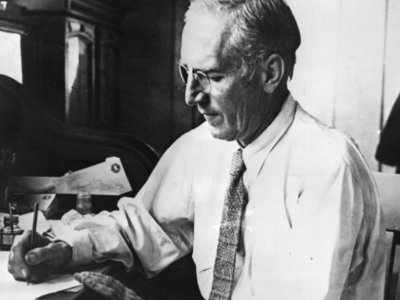
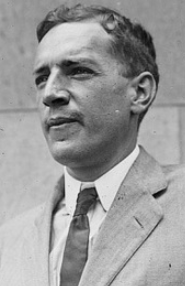


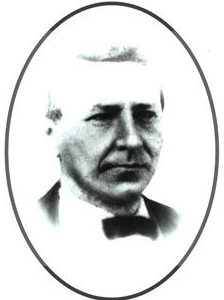




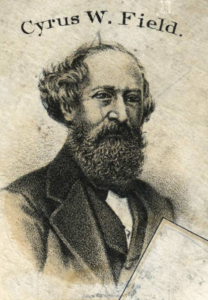 was responsible for the idea of trying to create a telegraph line from the U.S across the Atlantic Ocean. Cyrus tried four times to build, and four times he failed. Finally, with the help of American and British ships, the fifth time was the charm and it was built in 1858. It was not until 1866 though, that the Great Eastern, a British ship, ended up laying the first permanent telegraph line across the Atlantic Ocean.