
Monthly- Archives: August 2012


JESSICA C

The Realism of Eudora Welty
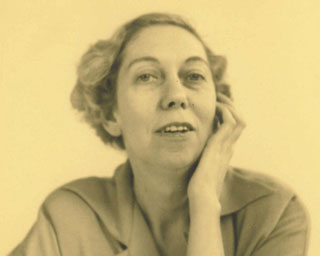
Eudora Welty (April 13,1909 to July 23, 2001) was an American author of short stories and novels, fiction mostly set in the Depression-era of the South. From Jackson, Mississippi, Welty was a celebrated and respected author and received the Pulitzer Prize in 1973 for her novel The Optimist’s Daughter. She received the Presidential Medal of Freedom, and was the first living author to have her compositions published by the Library of America. Welty was not only a master in fiction as is displayed in her collection of autobiographical essays, which explain the connection between her Mississippi childhood and her later career as a writer. One Writer’s Beginnings, published in 1983, is a collection of three lectures given at Harvard University. Welty shares details from her childhood including her relationship with her parents, Christian Welty, a director of Lamar Life Insurance Company who loved to dabble in photography, which inspired her, and Chestina Andrews Welty, a schoolteacher who reinforced Welty’s love of reading. Nineteen years later, in 2002, an author by the name of Suzanne Marrs published a book called One Writer’s Imagination: The Fiction of Eudora Welty. This book draws upon Marrs’s nearly twenty years of conversations, interviews, and friendship with Eudora Welty in order to describe Welty’s ability to transform experience and transfigure facts, utilizing them in fiction. Marrs analyzes the subtle ways Welty reacted to important historical and personal events of her time.


Welty shared a love of gardening with her mother and her editor, Diarmund Russell, that was evident in her short story “A Curtain of Green”. The story takes place in Mrs. Larkin’s large, wild, and densely grown garden. This lush hideaway has become her obsession since an accident that caused her husband’s death:

“Within its border of hedge, high like a wall, and visible only from the upstairs windows of the neighbors, this slanting, tangled garden, more and more over-abundant and confusing, must have become so familiar to Mrs. Larkin that quite possibly by now she was unable to conceive of any other place. Since the accident in which her husband was killed, she had never once been seen anywhere else. Every morning she might be observed walking slowly, almost timidly, out of the white house, wearing a pair of untidy overalls, often with her hair streaming and tangled where she had neglected to comb it” (Selected Stories of Eudora Welty, 187).

There, in the untamed mess that is Mrs. Larkin’s home, accompanied by her worker, a colored boy by the name of Jamey, she tries to deal with the fact that her love for her husband was not enough to save him from his tragic death. “In the story, the gardener, like the writer, confronts the dark irrationality of human experience and attempts to deal with that irrationality” (OWI, 6-7). Mrs. Welty also dealt with death of her husband through spending time in the garden. However, “Mrs. Larkin seeks not Chestina Welty’s ‘well designed [garden] plot,’ but seeks ‘to allow an over-flowing’” (OWI, 7) and in the garden, Mrs. Larkin, now a thoroughly distraught woman, nearly kills Jamey. As Jamey is working, she finds herself standing behind him holding and raising a shovel, preparing to strike at his head. Mrs. Larkin’s realistic character has the same love, which “seeks to but cannot protect the beloved” (OWI, 7) as Mrs. Welty has, and both loves are over-wrought in intensity. “A Curtain of Green” “found its starting point in the depth of Mrs. Welty’s love for her husband, in her abiding grief at his loss (a grief that loomed over a concerned daughter), in her intellectual and creative toughness, and in her inability to retreat into a mindlessly conventional consolation” (OWI, 7). The observation of character and attention to anguish is evident in “A Curtain of Green”.

“A Worn Path” is one of my favorite short stories. Eudora Welty was able to create such realistic and authentic characters and scenery – it was incredible. This story shows the readers “the primitive roads, ramshackle hotels, dogtrot houses, oil lamps, open hearths for cooking and heating, and desperation” (OWI, 12) in the poverty-stricken Depression-era of Mississippi.

“…On she went. The woods were deep and still. The sun made the pine needles almost too bright to look at, up where the wind rocked. The cones dropped as light as feathers. Down in the hollow was the mourning dove–it was not too late for him… It was not possible to allow the dress to tear. ‘I in the thorny bush,’ she said. ‘Thorns, you doing your appointed work. Never want to let folks pass, no sir. Old eyes thought you was a pretty little green bush’” (Selected Stories of Eudora Welty, 241-242).

“A Worn Path” has “death as a backdrop, but not a controlling factor, in the lives of her characters who find sources of meaning and fulfillment despite economic deprivation” (OWI, 13-14). For example, in “A Worn Path”, when Phoenix Jackson received a nickel from the nurse for Christmas, she set it in her soul that she would go find and buy a little paper windmill for her grandson – her meaning and fulfillment despite the economic depression and her advanced age. Furthermore, the character Phoenix Jackson takes a journey that is definitely not appropriate for her age, determined to get medicine for her sick grandson. However, according to Welty in an interview with fellow Pulitzer Prize winner Beth Henley (also a native of Jackson, Mississippi), Welty imagines that Phoenix Jackson would go and complete the route even if her grandson had died.

Welty had a friend named Helen Jay Lotterhos, an accomplished Mississippi artist and longtime friend. She was active in the Mississippi Art Association and presented her pieces, which were inspired by European modernism, at the Jackson Municipal Art Gallery. Because she and Welty worked closely together, their friendship developed over the years. Lotterhos was interested in figurative work and landscapes, and “…they often went on sketching trips around Jackson” (Passionate Observer: Eudora Welty Among Artists of the Thirties, 43). One day, when Lotterhos took Welty on an art trip, Welty saw a figure in the distance going somewhere with a purpose; she wasn’t just walking outside for a breath of fresh air or to take an afternoon stroll. Welty’s attention to truth and character is also evident in the confrontation of Phoenix Jackson (a black woman, for those who haven’t read the story) and the hunter (a white man). It was a “truthful interpretation, I mean, truthful picture, of this, of the two races confronting, meeting each other on the street like that” (Welty, Eudora, interview with Pulitzer-prize winning Beth Henley). Welty came up with the character of the hunter because she “wanted a contrast between her attitude toward the whole world and what she was doing and his” (same interview), which shows Welty’s attention toward revealing Phoenix Jackson. When she meets the hunter on her trip, after he scares a large dog away with his gun, he points the gun at her. Rather than being frightened as the hunter expected, old Phoenix Jackson didn’t even flinch. Here, we can sense the opposition between the hunter and main character:

“…and then he laughed and lifted his gun and pointed it at Phoenix. She stood straight and faced him.

‘Doesn’t the gun scare you?’ he said, still pointing it.

‘No, sir, I seen plenty go off closer by, in my day, and for less than what I done,’ she said, holding utterly still.

He smiled, and shouldered the gun. ‘Well, Granny,’  he said, ‘you must be a hundred years old, and scared of nothing…’”  (Selected Stories of Eudora Welty, 247).

However, Phoenix Jackson goes through life humble and determined, and when she is faced with a life-threatening situation, she stares it down and stands up straighter. For Welty to create the hunter, the antithesis of Phoenix, she had to understand her well and that is prominently displayed because Jackson is described realistically:

“She wore a dark striped dress reaching down to her shoe tops, and an equally long apron of bleached sugar sacks, with a full pocket: all neat and tidy, but every time she took a step she might have fallen over her shoelaces, which dragged from her unlaced shoes. She looked straight ahead. Her eyes were blue with age. Her skin had a pattern all its own of numberless branching wrinkles and as though a whole little tree stood in the middle of her forehead, but a golden color ran underneath, and the two knobs of her cheeks were illumined by a yellow burning under the dark. Under the red rag her hair came down on her neck in the frailest of ringlets, still black, and with an odor like copper” (Selected Stories of Eudora Welty, 240-241).

In this excerpt from “A Worn Path”, Welty depicts Phoenix Jackson so specifically that she becomes a real person that we can envision.

Picture a tiny one-room house, built with some spare plank boards, all uneven, and barely standing. Then, enter through the doorway – no door, just a doorway – and what do you see? You see clothes hastily packed away on the dirt in a corner, some rusty pots and pans, a few rickety chairs, and grimy blankets on the floor – the beds. That’s what a good shelter was in the Depression era, as Welty saw in her travels when employed by the Works Progress Administration (WPA). The setting for “The Whistle” was based on these sharecropper shacks and the plot is based on “a one-crop, cash-crop tenant farming system that Welty saw in her WPA work” (OWI, 13). In the story, a Mr. Perkins is the landowner, on whose land farmers pay rent with their crops. No wonder it seems like you’ve been transported eighty years back into the Depression when you read “The Whistle”. This story is based on actual events: “… a friend of Welty’s lived in Utica, Mississippi, a truck farming center near Jackson, and Welty occasionally visited her there. In the thirties, during an overnight stay, Welty heard a piercing whistle warn local tenant farmers of a coming freeze… though she had heard the whistle from the comfort of a fine house, the next morning Welty encountered visible signs of a poverty and a desperation she had never imagined: The fields were covered with clothes and bedclothes, anything the tenants could muster to protect their fragile crops” (OWI, 20-21). After Mr. Perkins’s whistle shrilly blew through the cold night sky:

“Promptly, Sara and Jason got out of bed. They were both fully dressed, because of the cold, and only needed to put on their shoes. Jason lighted the lantern, and Sara gathered the bedclothes over her arm and followed him out. Jason took off his coat and laid it over the small tender plants by the side of the house. Then he glanced at Sara, and she reached down and pulled her dress over her head. Her hair fell out of its pins, and she began at once to tremble violently. The skirt was luckily long and full, and all the rest of the plants were covered by it” (Selected Stories of Eudora Welty, 111).

This, and the fact that Jason burned every single piece of furniture in the house to protect Sara from the cold claws of winter, proved how well Welty was able to generate a true to life setting and plot through her actual experiences during the thirties.

In a Paris Review interview with Linda Kuehl, Welty says, “Well, if you write about an actual event, you can’t shape it the way you can an imaginary one.” Although there is a tone of regret in this sentence, I like that Welty uses actual events as muses because it makes her stories that much more bona fide. As evident in “A Curtain of Green”, “A Worn Path”, and “The Whistle”, Welty wrote her life into magnificently vivid short stories and novels.


Bibliography

1. One Writer’s Imagination: The Fiction of Eudora Welty by Suzanne Marrs

2.  One Writer’s Beginnings by Eudora Welty

3.  Selected Stories of Eudora Welty by Eudora Welty

4.  Interview with Pulitzer-prize winning Beth Henley

5. Passionate Observer: Eudora Welty among Artists of the Thirties René Paul Barilleaux, Mississippi Museum of Art

6. The Paris Review, Fall, 1972, Vol 55


SALLY H

The Truth About Plum Lake


Under Plum Lake by Lionel Davidson is an intriguing book that is filled with ideas and theories beyond our time. “Under Plum Lake is a novel that from the first moment leads us, fascinated and convinced, into a world beyond our imaginings – a novel with the rare storytelling art, the emotional conviction, and the unforgettable voice of its own that characterizes a Lost Horizon or a Little Prince (dust jacket blurb, first edition).” In the beginning, the narrator, Barry Gordon, gives you little bits of information, compelling you to read on. Then he says he’ll get it clear. You learn that he is thirteen and is in his family’s summer house. He has two sisters, Sarah, who’s 17 and Annie, who’s 9, and he wants to find a supposedly long gone village’s lost treasure and looks at a cliff, swimming out in the sea, treading water near the rock face. He finds three caves and then swims back. The next time he swims out, he realizes that the caves are completely oval, and he has the feeling that someone is watching him but he doesn’t see anyone. He sees, swimming at high tide, that the bases of the cave project outward, looking-like platforms and seemingly intended for use as platforms. Beyond the first cave, there is a flat piece of rock that looks like a step and seems intended as a step. He begins to leave as it starts to rain and he almost drowns and gets caught and punished again by his parents.

One night, Barry sneaks out from his house and goes to the cliffs, trying to enter from above. He finds an entrance by breaking through a slate that’s disguised to look like the rock around it. He pulls out the slate and finds himself staring into a big hole. He has the sensation that he has to keep going even though he thinks he should leave, so he keeps going and he sees something floating in a hole. He finds himself looking at a boy that looks around the same age as him. Barry finds out that this kid’s name is Dido and Dido has white hair. Barry learns that Dido is from Egon and it isn’t in outer space but inner space. Dido says, “Inner space, Barry, there’s a world beneath this world. The real world. Egon.” Dido keeps touching Barry’s head and seems to be forcing Barry to do what he wants. Dido brings Barry to Egon and Barry learns that Dido is 99, his little sister is 60 and their baby sister is 18 years old.

There are many aspects to life in Egon that are different from ours: Barry asks Dido, “How does your sky stay up?” Isn’t air lighter than water? And isn’t Egon underwater? Our sky is part of the air. What is the thing Egonians live in? Is it air too? But water is not air. In Egon, the sun, moon, and stars shine. But do they have weather like rain and snow? Egon has the same animals and similar people. They have horses, cows, fish, and whales. They do have all the same things we have, like the same species and food, but they also have much more. They have Tigra trees the fruit of which is made into a delicious drink. They have stardew and many other things.

How about their vehicles: do they have the same designs and have the same parts like wheels, a steering wheel and pedals? No, their cars have no wheels because they use magnetic force. These vehicles go back and forward, up and down, and increase or decrease in speed. There is a speed limit not because of crashes (you can’t crash) but because of the force line. The distance between two cars is controlled when they are switched on.

This undersea world provokes so many questions from the reader: Is the magnetic force stronger near the core where the Egonians live? How big is Egon? Do they have laws, politics, or money for that matter? How do they construct buildings of such strange shapes (like a pineapple or a shell)? Where did all the new colors come from? “But it was like a carnival. Some of the buildings were like twists of striped candy; others like flowers or mushrooms. One had a pear-shaped dome, the color of a pearl.” How does everything glow in different colors? How does a building float in the air? How do you ride a rainbow over a moat with whales in it? Dido says, “It’s the finest city on the earth – the finest there’s ever been.” Dido’s dad runs the world. Dido says, “I know, I’m sorry. I should have told you. My father’s president of Egon. He runs the world. Welcome to the palace.” Egon’s culture is quite interesting – Dido and Barry go to many parties and Barry drinks Tigra and tries stardew. Tigra is a pure silver liquid with maroon stripes inside. The stripes move inside the drink. Dido informs Barry of the fact that Egonians live about seven times longer than humans. They don’t fight in Egon because they can’t feel pain so you can’t hurt each other. But if you hurt yourself very badly, you could die early. Egonians can pretty much do anything, play any instrument, do tricks, and compete like an Olympian, an artist, musician, or dancer.

Barry and Dido go to Plum Lake. Plum Lake is 12 miles long and 3 miles wide and surrounded with Ragusa plum trees. They say it’s the finest place on earth. People get to spend ten weeks in Plum Lake during their lifetimes. A week at Plum Lake is like three months anywhere else which is equivalent to two years and six months. One takes five-minute naps between activities, which equals a whole night’s sleep. But old people sleep longer. Old people can do all the same things as younger people can. They don’t get ill or move slowly. They’re live to be over 700. The only way that you can tell them apart is that they have no eyebrows and have thinner hair.

Everything is free at Plum Lake. You can eat where you want, do what you want. It takes up to an hour to eat a Ragusa which is a giant plum eight inches long and peeled like a banana. As you chew the fruit, the part you’ve bitten off grows back until it’s whole again. There’s a gas inside. You continue for sixty minutes and then gas goes and the Ragusa melts. Dido and Barry power ski at the power slopes, (it’s skiing but you have controls and can float off the ground); they power toboggan (similar to power skiing but in a toboggan); they visit the pleasure dromes (like a planetarium with seats surrounding a space in the middle but with no stage or screen), and then they went on kites, giant triangular kites with movable wings and controls.

Under Plum Lake is in-depth, provoking comparisons to human life. Do we multitask because of our relatively short lives? Strangely, we live longer than a lot of the species that live on land or water. We do not live the longest, but we are not placed in the same category as the animals that live shorter lives. The common housefly only lives about two weeks to a month! Nevertheless, the book addresses our lives, in relation to the longevity of the Egonians and the future. Their technology and ways of living are much more advanced.

Barry talks about how he saw the future and how marvelous and wonderful it was. He says, “You read stories and you see films. They show you the future, and it’s creepy. It’s a terrible future with frightening people and mad-looking places. And they’ve got it all wrong. I‘ve been there and it’s great. It’s a future full of fun. It’s supposed to be.”

There is no mention of any religion. There is only one mention of god when Barry asks if the giant mind is god. Dido says he hasn’t studied that yet, so there is a hint that the people study religion. Also Davidson makes clear that the people of Egon are still people, not another alien species to Barry. Many concepts in the book are still unexplored in our lives and could be eventually be discovered. For example, how do the cars float in the air? The kites glide using the wind and controls, but you can stop it in the air even though there’s gravity. At the power slopes, you can lift up into the air and switch power on and off. Also, when you get out of the pleasure dromes, you’re floating a little bit off the ground. The sun, moon and stars shine through the water, and the Egonians breathe in the water or whatever is down there. Or the way there is pretty much a lake inside a bigger lake, and the bigger lake is the ocean. And about the gravity, is the gravitational pull stronger than where we are? Dido says when people tried to move earth to a different place, the great stone brain split into different pieces, making the continents we know today. Was Egon somehow the only place in the world that was unaffected? And stretch mechanics: how does a car turn into plane or submarine? Dido says a piece of wood is a piece of wood simply because its atoms are arranged in a certain way. And if they were in a different pattern, it wouldn’t be a piece of wood anymore. Is this how stretch mechanics works? Do the atoms arrange themselves in a different way, changing entirely?

The way that moat could hold dozens of whales and the way you can ride a rainbow over a moat sounds completely fictional, but as Barry said, he has seen the future. I noticed that in the end, Dido does not say anything about returning to Barry’s time. He only talks about returning to Barry’s world. Does this mean that we live during the same time as the Egonains? Then there is the abyss. The abyss is a place of nothing. There is no air, gas, water, time or energy. But Dido says it is a holy place because all life came from it. When they arrive in the abyss, Dido tells Barry that he absolutely cannot see the world making itself, yet he wants to take Barry to the abyss because Dido wants to do something for Barry just to prove that he wouldn’t forget Barry and never would. He wanted to do something very special. Barry doesn’t know that he probably isn’t supposed to go to the abyss.

Dido says that the brain and the mind are two entirely different things. Everything has a brain, even trees do. He says that once you have the programs to work your brain, you grow your mind. And that basically, your mind is your life, so the bigger mind you have the more life you have. He says by the time your brain is shaped up, you are about 70 or 80 so people above don’t live long enough to grow the right kind of mind. He says that though minds are all different, brains are mostly the same. He said that the brain was programmed to minds and brains can’t do anything by themselves. Something I found particularly helpful was how he said, “The brain is just basic stuff. It’s like quartz or silicon that can be activated electrically; except what activated a brain is thought, which is faster.” Dido says that brains are controlled by minds and the earth is a brain but it is just a small cell in a bigger brain and the bigger brain was the universe. So therefore, there is a mind beyond the universe. He says, “Though the world is a complete brain, it is still only a cell in a bigger brain. The galaxy is a brain, too. It is one enormous whole brain, and works like one, controlling all the millions of worlds that made it up, but it is only still part of another brain. The universe is a brain. And it goes even further than that.”

Based on Dido’s insights, life formed in the ocean, and everything came from the ocean. We are made of water: three-quarters of our body is made of liquid. He says our blood, sweat, and tears are salty because the sea is. He says, “Everything came from the sea; everything started there and life on the globe was in just a thin skin round the edge, like the skin of an apple.” He says that the world was in three layers. That the outer one was the world of mountain dwellers that was so high up, there wasn’t much life. So it was the smallest and harshest layer. Dido says that below the first layer, there is the sea which has life in every part of it. He says that not only the sea has everything that’s above, it has more of everything. More life, more chemicals, minerals, more food, more oil, coal, gold… it has more of anything and everything. The foundation of the Earth, the crust, is the third layer. It is thicker than the first and second layer combined. I agree with this worldview. Life needs water and sunlight to survive and the ocean has both. Life lives in the water so the water won’t run out, and sunlight penetrates the water. But that raises another question: What about the life that lives in the deepest part of the ocean? There is barely any or no light there. Soon creatures create their own light though. Anyway, where we live, we live in air and receive sunlight directly. But water, we have to receive from rain, snow, or by drinking water or from foods that contain liquid. Life in the ocean gets water 24/7 because they live in it, and sunlight can penetrate the water. So Egonians seem to have more access to water and light.

My opinion is that this book is almost like a key to us. We probably have always thought about some of the things in this book but never really brought them to the surface. This book unleashes them all and gives us endless moments of pondering. We will always have a question about this book. No matter how many times we read it or how long we think about it, Under Plum Lake fills us with a sense of awe and wonder. We feel almost the way Barry did after experiencing Egon: filled with knowledge that’s ahead of our time.