BENJAMIN WANG
Benjamin Wang
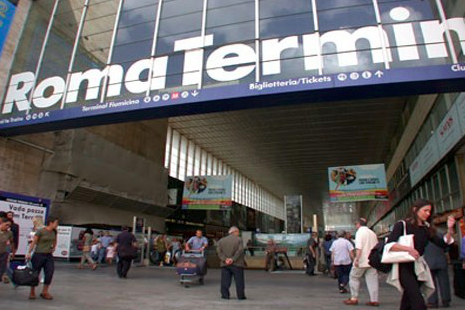
When we first landed at the airport in Rome, I couldn’t really grasp the idea that I was outside of the States, since the general area around the airport was very urban and nothing there really screamed “ITALY!” to me. I guess I was expecting to see a bunch of restaurants with rich aromas of pasta and pizza coming from them, but I was still only in the airport, so obviously I was expecting too much too soon.
When we arrived at our hotel, I was finally able to see what made Italy, Italy. The roads for one, were these old fashioned brick roads that weren’t perfectly even and had some concave dips here and there, which felt weird at first, since in the U.S, especially the area where I live, is pretty urbanized so smooth sidewalks and roads are commonalities for me. But the roads alone were already enough to make me think I was actually in Italy and that this was what they walked on every single day. If you were there, you’d see cars driving through spaces that were the exact same width as the car, all while people were walking! But the most interesting part of it was that it felt organized and safe, which was just odd to feel since I’d been walking in such a tight area with a cars behind me for a good portion of the trip. It didn’t seem like there was a system to control this type of traffic either because there were no lights or anything to command when the driver could drive or when the pedestrians could walk. It just worked. Seeing all of this made me think of how organized the people were and how patient they were as well, leading to me realizing how kind everyone perhaps was.
On the second day in Rome, when we were trying to find some place to eat, we asked a local for their favorite restaurant, and before we knew it, she took us on an entire tour of town; and it was free! She brought us restaurant to restaurant, to local shops, to all the places that someone who lived there would normally visit. The people running these restaurants and shops were extremely kind as well, and almost every one of them tried starting a bit of small talk.” Where do you come from,” some would ask.
“We come from the U.S.,” was our usual response. What was odd was that the person who toured us around said, “I hate Americans,” but we didn’t feel offended or anything because it sounded more like a joke – to this day we hope that was a joke. The Italians were kind and liked to make others laugh. It was amazing.
This whole trip was interesting because we got a glimpse of what the Italians’ daily lives were like, which we couldn’t get out of just looking at famous sites such as the Colosseum or the Vatican. People would gather in the streets for all their meals, and around 10 PM to 11 PM, the streets would become full of life. There were people gathering around with each other at every restaurant possible, sharing laughs and drinking. It was like everyone was throwing a party, but this was only their dinner. I couldn’t help but to be shocked at how late they ate, because typically at home, I’d normally eat around five or seven PM. Ten to eleven was when I’d be getting ready to sleep!
We then woke up the next day, to my surprise, with no jet lag at all. We all woke up around eight in the morning, which was a normal time to wake up around, unlike waking up at two in the morning. When going out for breakfast, I wasn’t entirely sure what to expect, because Italian breakfast isn’t really something I see that often on the media or anywhere in general. I’ve never seen Italian breakfasts showcased on TV shows, described in novels, or talked about by my friends who are Italian, which led to no expectations at all. Except for maybe seeing a croissant and other sugary foods accompanied by a coffee here and there, I was pretty much flying blind.
When we were walking around town, we noticed a lot of people eating pastries while drinking some coffee for breakfast, but their breakfasts seemed to consist of smaller portions than we were used to cooking ourselves. “I guess they take their breakfasts lightly,” my dad said. “Sugary foods are probably also normal as well,” he added on, due to all the pastries and sweet aromas in the air. Not only that, but the flight attendants gave us these small sweet pastries for breakfast before we were about to land in Rome. So some things that shocked me about breakfast would probably have been eating more sugar, but in small portions. It didn’t really feel like breakfast, though. It was just a small snack to get your day started, which I enjoyed.
After some time, we stopped by another restaurant for some lunch. Walking in, we all knew that we were going to order some pasta and pizza, because everyone says that Italy’s got the best pasta and pizza (probably because they were the ones who made it, I don’t know). Well, we all sat down, completely awestruck at the amount of pasta and pizza options there were. There were at least 15 different variations of both types of foods, and there were even more options outside of the iconic foods! I eventually settled with a seafood pasta that had small bits of shrimp and pieces of zucchini. My brother ordered pasta that was covered in tomato sauce with large and fatty pieces of bacon with shredded cheese. My mom ate some seafood ravioli, and my dad got a margarita pizza, since he couldn’t choose due to how many pizzas there were available.
Let me just say that my pasta literally smelled like the sea! I took one whiff of it, and boom! I was already at the beach or the Mediterranean Sea, but one ridiculous place the smell brought me to was a ship of fishermen. One thing that surprised me, however, was that there was no sauce on it. I assumed it would have been covered in a tomato sauce at least because that’s just how pasta is normally eaten in America. But this pasta in Italy was plain noodles with zucchini and shrimp. Oh, by the way, for being along the border of the Mediterranean Sea, I thought the shrimp were extremely tiny. To give you some perspective, they were smaller than one of my knuckles. The shrimp were so small, that when I got the pasta, I thought they forgot the shrimp. But that didn’t matter to me, really, because it tasted great! When I saw how they used no sauces at all on this, but somehow made it taste better than pasta in America, I already knew their chef was a wizard.
Oh, and the portions here were small too.
One other thing that I found weird was my dad’s margarita pizza. When you think of a margarita pizza, doesn’t a pizza with large chunks of fresh mozz with visible areas of plain tomato sauce and basil, with no cheese overlapping it, pop into your mind? But in Italy, clearly they thought of a regular, plain, American slice of cheese pizza, yet according to my dad, “it was better than any pizza I’ve had in my life.” So even if Italian margarita doesn’t equate to an American margarita, it was still great nonetheless.
After a delicious lunch, we all decided to take a trip to a church. But! We had to take a small detour for some amazing gelato. Before eating gelato, I never understood why it was called gelato. It’s just ice cream, isn’t it? I thought. So why didn’t they just call it ice cream? Well that’s a great question! That’s because gelato is different than ice cream. When I ate ice cream in New York, it took a while to melt and had a hard texture to it. Ice cream in New York actually felt like a solid, like you can hold it and keep it in the same shape for some time. But gelato, no, this is something else. In an instant, the gelato on your cone is droopy already and it’s practically completely melted. It felt like eating a liquid. When I eat ice cream in America, I bite it (don’t attack me), so ice cream as a solid made more sense to me, so when I shifted gears to gelato, it was awkward to eat, since I was biting a liquid. The Italians probably thought I was some sort of psycho. But it was still great – you should try their caramel gelato.
Once we were done with our gelato, we finally made our way to the church.
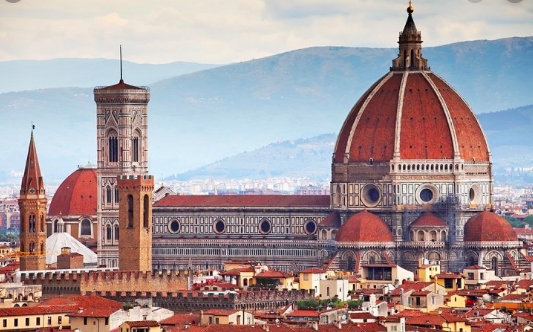
My initial impressions of this massive church were all “what the heck” and “how’d they make this” because JUST THE OUTSIDE was that spectacular. It was so cool that my mom even said, “I don’t know even know where we are right now, but this is the place of my dreams.” They had Roman gods (well it seemed like they were Roman gods, but it was weird since it was a Christian church) standing on top of massive pillars ordered neatly in a circle. The entrance to this church was within the perimeter of the circle and in the circle were a bunch of fountains, statues, and cool monuments. We eventually ended up just spending our time outside the church because the line to actually go in the church was ridiculously long. To be more specific, the line wrapped around the entire circle formed by the pillars and continued on outside the area. But our time outside the church was still worthwhile.
Seeing just the outside of the church I got a strong understanding of how valuable religion is (or was) to the people since they clearly worshipped Jesus as much as they possibly could have. Why else would they build 30 statues and place them 50 feet high? What other purpose would they have for fancy water fountains in the middle of a circle? If it was for drinking, wouldn’t a regular water fountain be more practical? Everything about it just told me that Christianity was the best thing that ever happened to them. When I went to China and visited Buddhist temples, it was clear that religion was tremendously worshipped there as well, seeing how they’ve built fancy buildings where people can pray to a Buddha and light incense to pray to our ancestors. But seeing this attraction in Rome blew the Buddhist temples out of the game. Everything about the Roman statues surrounding religion was monumental.
But let’s speed up the pace a bit. The vacation lasted for about another five days, and there was lots that we did, but nothing that was really different than the previous activities I’ve already talked about.
Another cool place we visited was called Portofino. It was a port city, so what a creative name for it! We visited many churches, as per usual, but what was cool about this was that the mountains and cliffs there were very tall and steep, so most of the traveling was going upwards instead of walking inward of the city. The lowest part of the city was where all the restaurants and shops were, while the higher we went up the more nature there was and churches along the way. But up a bit higher, we saw this castle. According to the travel guide, it was used to defend the small city from invaders, which made sense. Hearing this made me think we’d be able to see some cool things from back then such as old weapons or something like cannons or crossbows. But there were many areas for flowers and cool trees and other plants to grow which were nice in addition to giving such an amazing view of the city just outside this castle. The city was so full of things that if you looked around, you’d see that the hills went up even higher, but the highest point seemed like it was a forest and had no human presence there. If you looked down, you could see the vibrant blue water hitting the rocks of the base of the city, which I thought was the most amazing sight ever despite being such a simple thing.
About this castle, which is called Castello Brown, had many cannons built on it to defend the city against many outsiders. Having such a great height advantage gave the city a good chance at successfully defending their city almost every time they encountered some big baddies. In fact, this castle was so important that when Gio Andrea Doria, who was a famous naval commander after taking part in the rise of Genoa against the French, the people were able to make him turn around and leave. After some time, the castle experienced another attack by the English, which occurred during Napoleon’s Ligurian Republic, resulting in the destruction of one of the little towers. Later on, the possession of this castle was passed around to a few families, leaving the structure with a few modifications, and later, was sold to the City of Portofino. It was awfully humid and felt like we were lobsters being steamed, which told us that we just had to leave, and unlike scarlet lobsters (recently cooked to death) who are never hungry (partially because their wee souls have just left their buglike bodies) we were hot and hungry.
At the bottom of the hill we entered et another restaurant, with high hopes. The food was great as per usual. We had some more pasta since it’s just that fantastic, along with some grilled octopus. “What’s trofie al pesto?” I asked my dad.
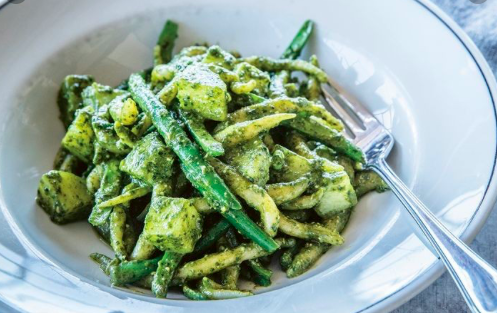
“Well, I guess it’s just pasta, since what else would you put pesto with,” my dad responded, “here let me search it up.” He searched up images of this food, and sure enough, it was a type of pasta, just not one we’ve ever seen before. “It looks like tiny bits of pasta with pesto sauce over it.”
“What do you mean?” I asked.
“Like they took pasta and just cut into small pieces and served it that way,” my dad answered. After this, I had already decided I was going to try it, only because it doesn’t seem like I’ve had it before. Also because you can’t go wrong with pasta in Italy.
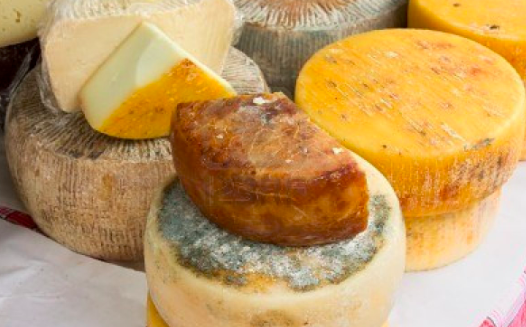
When it was finally served, the waiter asked if we wanted some cheese over our pasta. It was pretty funny too, because he had one of those curly mustaches that I guess Italians are shown to have in American cartoons or drawings and old posters. Then my mom asked how good the cheese was compared to American.
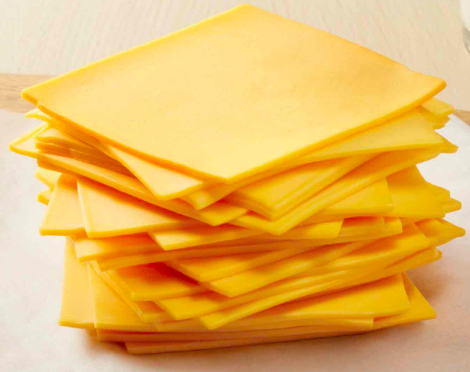
“Obviously this is the better cheese,” the waiter responded. “American cheese, not so great. Sometimes, the cheese taste not real,” he told us, which made everyone laugh at the table, including the waiter himself. Oh, and how could I forget! Small things added up to make Italy memorable: literally every restaurant we came by, instead of serving us water from the tap or elsewhere if we were to order water, they gave us this glass bottle of either regular water or sparkling water for the whole table to share. It made even the cheapest of restaurants feel extremely fancy and would really make you feel all about that luxury life.
In Portofino, a sailor took us on a small boat along with others to just go out into the Mediterranean Sea. It was amazing to see. The water was so blue that it made me question the quality of the water back in the States. And the sailor! Wow, he made me think of that Popeye cartoon that my dad says he was obsessed with as a kid. Never got past one episode of that cartoon, but that was probably because I was around eight years old at that time. But the sailor had a striped shirt, a cap for his head and everything. He also had a grey mustache that was thick and rectangular, and I don’t know if that screams sailor to you or not, but it sure does to me.
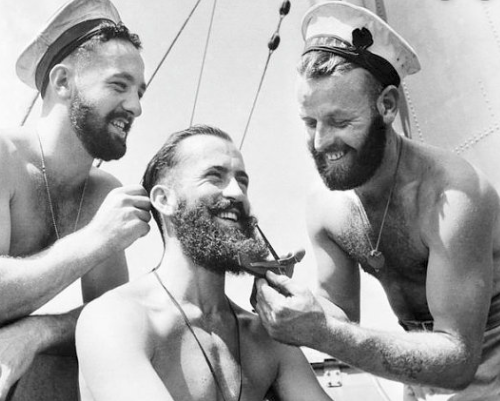
Everyone in Portofino dressed pretty similar. Many wore long pants for some reason I’ll never know, and many wore striped shirts. Maybe it was an Italian custom? I’ll have to figure that out if I ever go there in the future. And for many of the adult men, a ton of them had white hair with broad mustaches. The women on the other hand were shorter and either had straight or curly blonde or brown hair. Sometimes it felt weird because it’d feel like looking at a bunch of clones, but really everyone just dressed in a similar fashion.
That pretty much wraps up my trip to Italy since there wasn’t much else different to talk about, but before I leave, I’d like to give a list of recommendations of things to do in Italy.
- Eat gelato, tons of it
- Eat pasta until you can’t move
- Try the seafood
- Visit local areas and embrace yourself in the people’s culture