Monthly- Archives: May 2022


ROEN SCOTT


Four Snarling Subspecies of Canis Lupus

Have you ever seen those little beady eyes poking out from the shadows that make you feel uncomfortable? Have you ever heard howling piercing the starry night sky? Have you ever laid awake at night in your tent wondering who in the world is doing this? Well, today you’re in luck because I’m going to teach you all about those animals. Now to answer your question, the animals that you are asking about are… THE WOLF! Well, perhaps you haven’t had the opportunity to camp in the wilderness.

Now, it is probably not that common to hear a wolf in the wilderness but I have had that special opportunity in my short lifetime. My grandmother lives in Colorado, the Centennial state, near the woods. Last summer I was visiting her and in the late evening I heard a wolf howling. For a second, I was nervous that they were coming to attack us, but then I realized that they barely even knew that we were even relatively near, and that they were just living their normal life, much like we were. Some people are terrified of this animal, but I think that they are beautiful and courageous creatures. I heard long legato howls that could last for minutes, and short staccato ones as well, that lasted for only a few seconds at a time.

Let’s start with an animal that I’m sure you’re all familiar with, the cute and cuddly dog! Now, I know it’s hard to believe that dogs, the precious animals that they are, can be related to such a ferocious creature. Yup, you heard me correctly, the dog is a descendant of the wolf. What does this mean you ask? Well, this means that these two animals are thought to carry a common, extinct wolf as an ancestor. Yeah, I know, mind BLOWN.

Okay, ready to get scientific?! All right, so dogs and foxes cannot reproduce because they are different species. If it was a dog and a dog or a fox and a fox, they would be able to reproduce. Get it a tad bit? Good. Since we figured out that dogs and wolves are descendants of each other, we know that they can reproduce. Yes, they have different names, and different appearances, but these two animals can definitely reproduce together. Thank you for tuning in for the anatomy of a dog and a wolf, hosted by Roen!

Northwestern wolf

The subspecies of the famous Canis Lupus, the interior Alaskan wolf, has come into the history books. First introduced in 1905 by the American zoologist Daniel Elliot, it is based off a specimen from the icy cold state of Alaska, specifically the Susitna River region, near Mount McKinley (Denali). The Mammal Species of the World: A Taxonomic and Geographic Reference, first recognized it in 2005, exactly a century after Daniel Elliot described it.

The northwestern wolf is arguably the largest gray wolf subspecies of all our furry friends. It ranges from Alaska, the upper Makenzie River Valley (commonly known as its other name), southward throughout the western Canadian provinces, and the Northwestern United States.

The fierce and ferocious males have an average weight of 56.3 kilograms (124 lb), and for the elegant yet smaller and brave females, 38.5 kilograms (85 lb). The height of these wolves is 85 cm (33.5 in). The customary color for this particular subspecies is tawny grey or tan, but they can also vary from white to black. The lifespan of these mammals reaches from 4 to 10 years, the oldest one of the bunch being 12 years of age.

These wolves tend to have packs of 7 to 9 members, but oftentimes can vary. Like many other wolves, their pack will carry a mated pair and their offspring. What we know as a wolf pack is usually just a big family – the alpha, the momma and cubs from various litters.

That specific pair is commonly the only ones that breed for the pack. For these wolves, the minimum breeding age is 1 year, and the average number for the litter size is 4-6 pups.

They have a vast territory. About a thousand miles to the east, in the Southern Yukon Province of Canada, moose, boreal woodland caribou and Dall sheep are the main prey for these furry carnivores, while on the North Slope of Denali, barren-ground caribou is the main prey.

This is the general territory of the Northwestern, or Interior Alaskan wolf
Timber wolf

The Scottish naturalist Sir John Richardson first wrote about the subspecies in 1829. Commonly their names are given to then in reference by its color, however he chose to name it Canis lupus occidentalis in reference to its geographic location (occident means Western).

These wolves mainly kill calves and old moose when fleeing. The common hunting success rate for moose is 10% in a hunt, and a pack kills a moose every week or so to eat for 2-3 days. These animals need a lot of meat!

This wolf loves the woods (timber is wood, taken from forests, for building). What types of woods? Temperate broadleaf woods (which means these forests have few coniferous trees, like pines and redwoods)… but these gray beasts also like the fir trees, and guess what? These meat eaters also like snowy regions!

You know how some people are bookworms? Well, this wolf is a woodworm! These wolves could be in the woods all day and never get tired of it. If you ever asked a wolf what its perfect vacation would be, he would probably say “In the woods, trekking with my friends!”

Similar to the Northwestern wolf, the mating behavior of the Timber wolf is monogamous in nature. Only a dominant or alpha pair mates within a pack, producing a single litter of pups. The breeding season sets in early January and continues till late February. After a gestation period of exactly 63 days, the females give birth to between four and six pups in a den which is usually located in a rock crevice or in a hole dug by the wolves themselves.

These wolves are very strict with which wolves breed and which don’t. The only ones in the a pack that breed are a dominant or alpha pair mate, producing a single litter of pups. Their breeding season is in early January and goes into late February. After 63 days the females have between four in six pups in a den near them.

Hello again, my patient readers. You’re probably thinking, okay, we’ve already covered two types of wolves, this is probably the conclusion paragraph. WRONG!!! We still have a few more things to cover before I let you guys go.
The Italian wolf

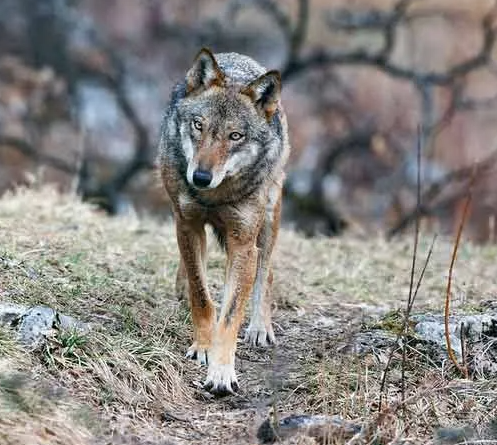
Now, I’m sure you’ve all heard of Italy, but have you heard of the Italian wolf? The Italian wolf lives in, you guessed it, Italy! They are a species of the Canis Lupus as well as a subspecies of the C.I. Italicus. These mammals have a very meaty diet which consists of wild boar, chamois (a horned mountain goat), roe deer and red deer. They can eat up to 1.5 – 3 kilograms of meat a day. Humans eat between three to five pounds a day (1.1 kg-2.25kg). Now, that might not seem like that large of a difference, but keep in mind that one kilogram is equal to 2.20462 pounds. These males have an average weight of 24-40 kilograms, which is equal to 53-88 pounds. The females however, tend to be about 10% lighter. Their body length is usually 100-140 centimeters, equal to 39-55 inches. So, if the Italian wolf weighs 65 pounds and eats up to 6.8 pounds of food a day, and if a human weighs 160 pounds and eats up to 5 pounds a day, the wolf eats more food. The human would weigh more than the wolf in the end, but the wolf would eat 1.8 pound more than the human. For wolves, 13 pounds of weight per wolf requires one pound of food. However, for humans, 32 pounds of weight for humans, requires one pound of food.

 Now, let’s do the math for proportion:

Wolf X weighs 65 pounds and eats up to 6.8 lbs of food per day

Human X weighs 160 and eats up to 5 lbs a day

13 lbs of weight per wolf = one pound of food

32 lbs of weight per human = one pound of food

Tundra wolf

Okay everyone I have a very special announcement so listen up. We are officially on our last type of wolf!!! This last wolf that we are going to be covering is called the Tundra wolf. The Tundra wolf is another subspecies of our one and only grey wolf and its scientific name is Canis Lupus Albus. Their family is Canidae, like our other friend the Italian Wolf. The Tundra was first described in 1792 (wow that’s a long time ago) by Robert Kerr. Their habitat ranges from much of the high Arctic (Greenland, Alaska and Northern Canada.) Finally, their diet consists of deer, wapiti (aka American elk), moose, caribou, bison, muscle ox and mountain sheep.


ALISON BIZZARO

Meg Murray, drawn by Alison

I was always doing something wrong. I was doing poorly in school and always got made fun of, and today I got into a fight while defending my little brother, who was called dumb by a boy I passed on my way home from school. The idea of me getting into a fight disgusted my other brothers, since they were supposed to be the ones protecting the family. On top of it all, I had trouble hiding my emotions. This particular night, with a hurricane brewing outside, I was unable to sleep, so I paced for awhile. Downstairs I heard our big dog, Fortinbras, barking, which is odd because he never barks without reason. I then remembered, at that moment, that I heard about a tramp who had stolen twelve sheets from the constable’s wife. The tramp hadn’t been caught, and I worried that they were headed to my house next. I visited my brothers’ room, twins Dennys and Sandy, next. Dennys and Sandy weren’t great students, but they still usually got Bs. They were strong and good athletes, and were never made fun of. When I made my way to the kitchen, I saw my “dumb baby brother” Charles Wallace, who was not at all dumb and quite intelligent, and had a strange way of knowing exactly what mother and I were thinking and what we wanted at any given time, making cocoa.

My mother was the complete opposite of me. She was beautiful and a smart scientist, compared to my plainness and unfortunate school life. I loved my mother, but sometimes I had feelings of resentment towards her. In the kitchen, Charles Wallace brought up the name Mrs. Whatsit, who was supposedly a woman who lived in the haunted old shingled house in the woods with her two friends. This was extremely odd news to me, since I thought that no one lived in that old house. Just then, Fort started barking again, and I worried that it had to be the tramp. Mother went to the door to see who it was, and moments later, brought in a figure who was bundled up in many layers of clothing. It was even hard to tell the gender of the figure. However, Charles Wallace seemed to know exactly who it was: Mrs. Whatsit. The odd woman had apparently been blown off course, and ended up resting at our house. I was extremely confused. This old woman just comes barging into our house in the middle of the night and no one thinks anything of it. She must be the tramp, I thought. And, to my surprise, I proved to be correct. I listened to the conversation happening between Charles Wallace and Mrs. Whatsit, with Charles Wallace scolding Mrs. Whatsit about taking the sheets and Mrs. Whatsit saying she can’t return them because she’s used them already. Not only has this odd lady barged into our house in the middle of the night, but she’s also stolen Mrs. Buncombe’s sheets! I brought over the sandwich I was making for Mrs. Whatsit, still extremely confused. Mrs. Whatsit requests to take her boots off before she eats, and she needs mother to take them off for her. When the boot comes off, Mrs. Whatsit goes flying backwards and water pours out of the boot, and the same happens with the other boot. Mrs. Whatsit seems content, and decides that it’s time to leave. On her way out, she tells mother that “there is such a thing as a tesseract.” Mother does not react to this well, and her voice trembles. I am immediately concerned. What could that possibly mean?

A few days later – on the Planet Uriel. When I finally stop crying, Mrs. Whatsit decides that it is finally time to explain the tesseract to me. It is clear that she is extremely knowledgeable on this subject, another trait that further proves her presence to be unhuman like. She goes on to explain how squaring of the dimensions can eventually lead to the tesseract, like in math. I don’t understand at first, and even after the concept being explained a second time, I still don’t understand. “Oh dear, I guess I am a moron,” I say. “That is because you think of space only in the third dimensions. We travel in the fifth dimension. This is something you can understand, Meg. Don’t be afraid to try.” She is extremely patient and kind with me. She doesn’t call me stupid or scold me for not understanding like the kids at school or my teachers; she just explains it again, more clearly.  I wondered if Mrs. Whatsit could have been some kind of a guardian angel or something, sent to aid Charles Wallace, Calvin, and me. The second time Mrs. Whatsit tries to explain the concept of the tesseract to me, she has Mrs. Who demonstrate with her skirt. “La experiencia es la madre de la ciencia. Spanish, my dears. Cervantes. Experience is the mother of knowledge,” Mrs. Who recites. Mrs. Who’s character always intrigues me. She seems even more knowledgeable and wise than Mrs. Whatsit. Her quotes can seem random to anyone who doesn’t know her or her situation, but to us, they always make perfect sense. Maybe Mrs. Who is a manifestation of wisdom, like a goddess perhaps, but more humble and modest. Whatever are these ladies? Things? How they have truly been created and sustained for is completely out of my knowledge, but I am grateful for the comfort and wisdom they bring.


COLLIN AARONSON

A wonderful pastime: collecting coins

Have you ever wondered where that strange coin in your sock drawer is from or where it was made? I wondered that and I became a coin collector. I have old coins and relatively new coins. I have gold coins and I have silver coins. I have copper coins and I have bronze coins: I have weird coins and I have normal coins! The point is, you should start looking into coins because they might have some extreme value you might not know about. So start collecting coins today!

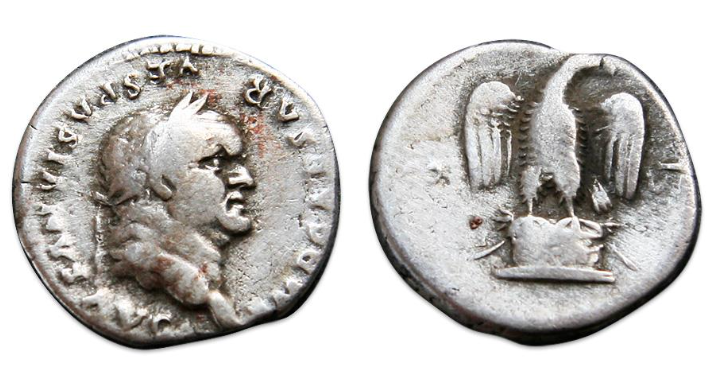
Vespasian AR Denarius. Rome mint, circa 76 AD.(18 mm, 2.7 g)

From a Liberty Walking to a Standing Eagle, from a Franklin half dollar to a Liberty Bell, from a Presidential Seal to an Eagle-in-Flight, the names of the coins themselves are fantastic.

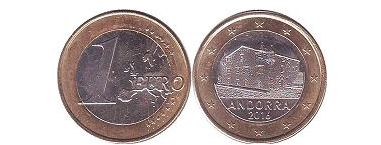
Counting coins! Euros! This is a one-Euro coin. It is the currency of the European Union, and overtook many currencies, gradually but still not used by Switzerland, nor Denmark among others. It is heavy enough to count easily in one’s pocket by fingering it, but is altogether bland, and pretty forgettable. After all, it is used all over the European Union, so it doesn’t have much personality.

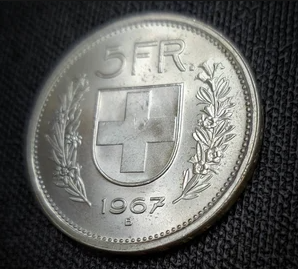
Five francs Swiss (did you know that, though Switzerland is in the European Union, it does not use the EU currency?)

A long time ago when there was someone dumb enough to leave a penny printer on without watching it, a mistake occurred, one side of all the pennies were blank! And that’s why you make it through college kids!

Some of the most common coins in America are the penny, nickel, dime, and quarter. The penny is one of the only coins made in the U.S. that uses bronze instead of silver. The nickel is the only U.S. coin that is called by its metal content. The “dime” is based on the Latin word “decimus,” meaning “one tenth.”

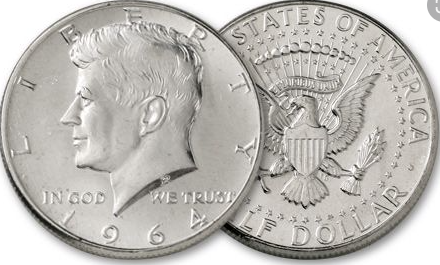
I will break down for you these three excellent coins starting with the half dollar: 1988. The man on the coin is John Fitzgerald Kennedy.


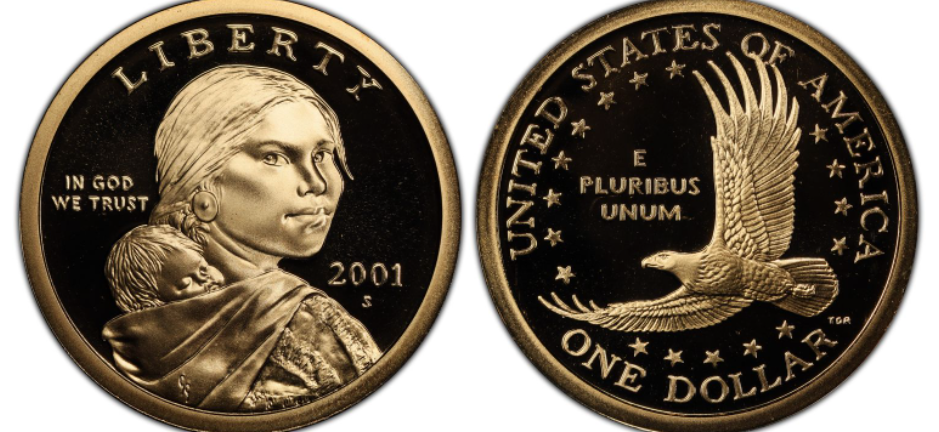
The dollar coin features Sacajawea: this 2001 one dollar coin is worth $5.25 which is 5 1/4 times what it used to be.

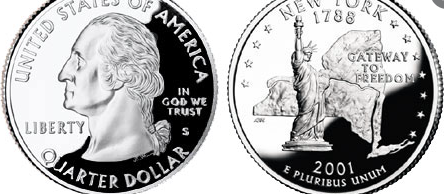
The quarter is one of the Statehood series – common but appealing to the eye

Each coin starts as a blank. Blanks are punched out of 1,500 foot-long strips of metal by blank machines. The strips end up looking like a long flat strip of metal Swiss cheese. Sometimes some of these coins don’t get stamped on both sides making some of them have a blank side. This is really rare because the machine or some other technical difficulties would have to have happened making a blank side. Although it’s not that worthwhile looking for since it’s only 12 to 15 dollars and it’s still really rare, I would recommend looking for one. However, I haven’t even looked for one, and do not possess one.

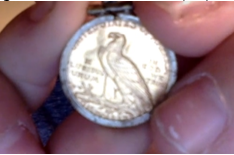
My grandma is very special to me; something that was very special to her was her jar of coins. When she was little, she liked to go on walks and look for coins. Five years ago we found that jar and looked through them: one of them was a 23-karat gold coin! She let us keep the ancient jar of coins, but this jar was really dusty and hard to see through, so we put all the coins into a bag and that was the start of the bag. Then of course with the gold coin we found we had to look into it, and we found out a lot, one of those things being that the coin was worth a lot (16k).

The Standing Eagle

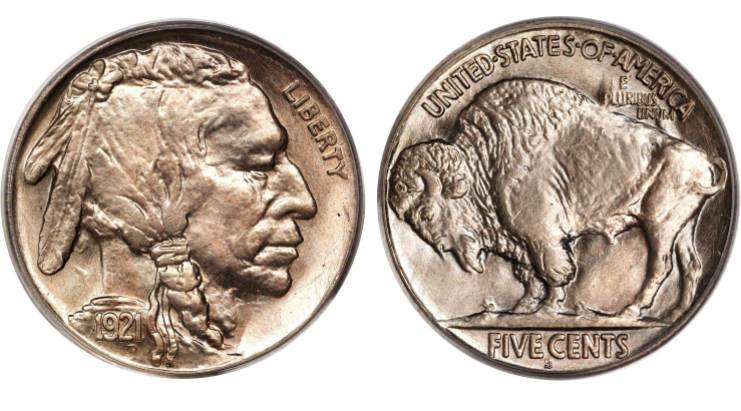
There are lots of coins – which ones should I talk about? Maybe the Franklin half dollar, maybe the Peace dollar, maybe even the Mercury dime. Oh! I know, how about the buffalo nickel? The buffalo nickel has a buffalo as you may have guessed, on the back of the coin. The buffalo’s name is Black Diamond, and the strange thing is that he is a bison, not a buffalo. The coin is also named the Indian head coin because the front of the coin, drum roll please, has an Indian head on it (wow what a shocker)!

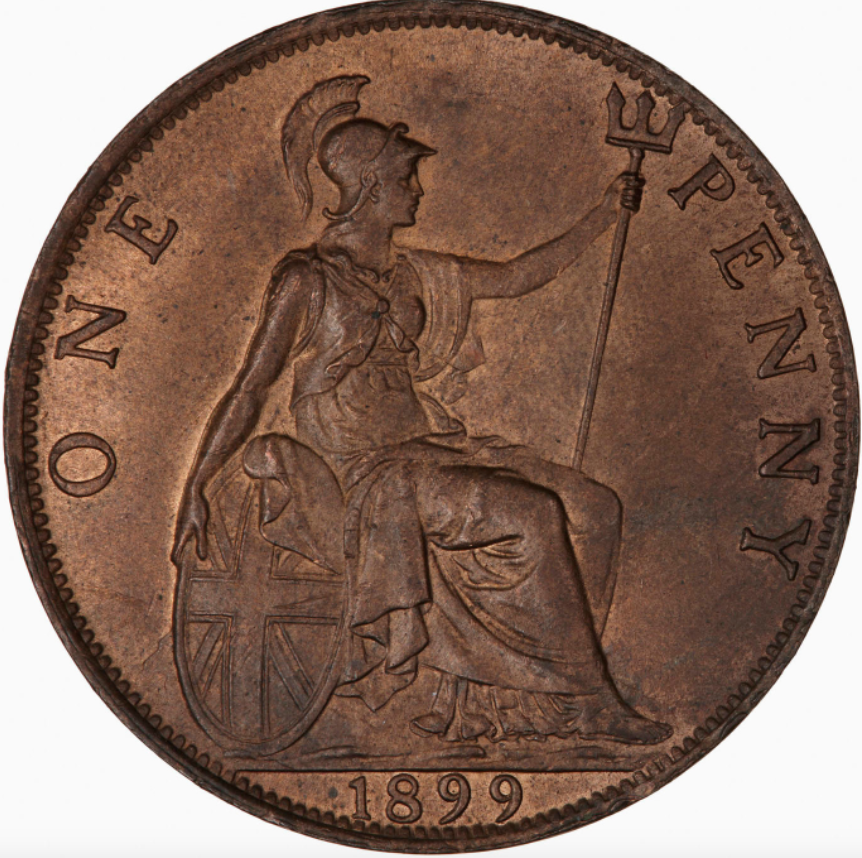
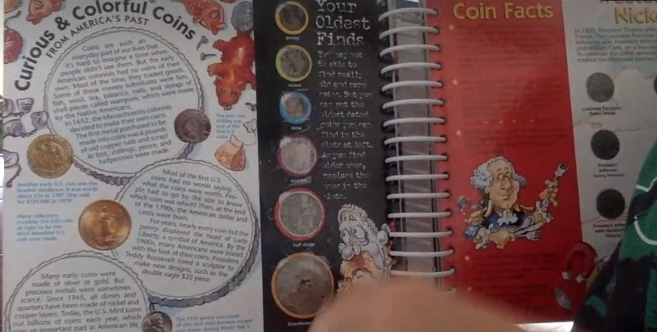
Oldest coins: In the above photo, you can see room for old coins (on the right part of the left page). These are, in descending order: First we have the penny. Now, if it were a normal penny then we wouldn’t be talking – first this penny is called the Indian head cent and it was made in 1899, it’s old and hard to see but it’s still here today; second we have a nickel – this nickel is no ordinary nickel though, this nickel is called a Liberty Head V nickel, it was made in 1899 and is worth $8.32 which makes it 166 times its original value.

Alas, the coins that you have read about have been read, the pictures have been looked at, and the cool tidbits are over. The final stretch is here… but I’ll throw you a bone or two… along with some cool facts.

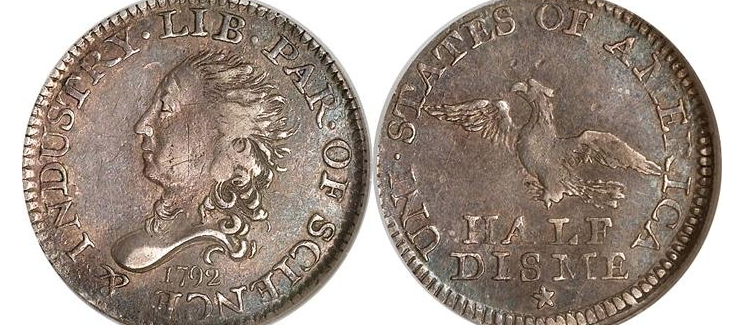
The first coins at the U.S. mint in Philadelphia in 1792 may have been made from George Washington’s silverware. Because there were no gold mines nearby, the silver and gold was sourced from jewelers, private parties, and recycled foreign coins.

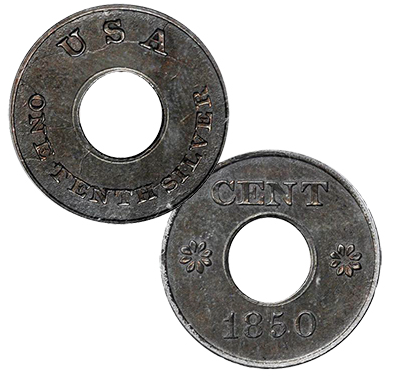
One of the first pennies minted as an experiment in the 1850s had a donut hole shape in the middle.

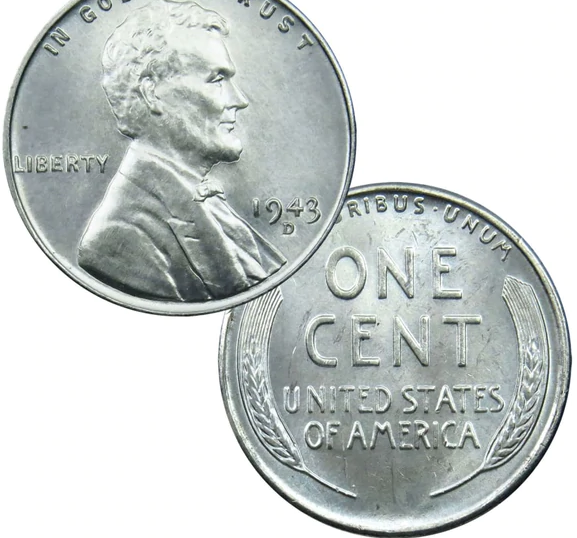
The 1943 zinc-coated steel Lincoln penny is the only U.S. coin that can be picked up with a magnet.

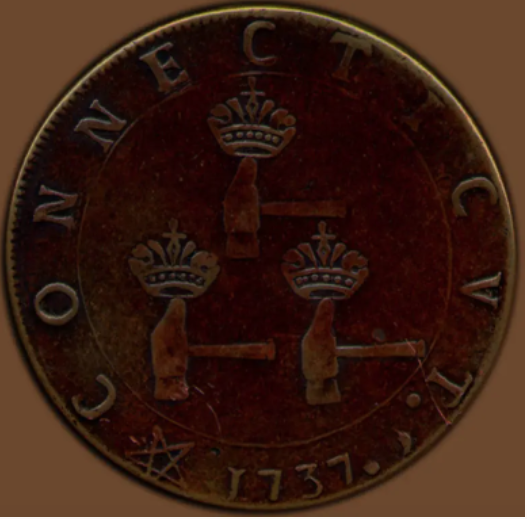
The Highly brothers of Connecticut made the first copper coins in America in the 1730s. When people questioned the value of the coins, John Highly issued new coins with these words stamped on them: VALUE ME AS YOU PLEASE.

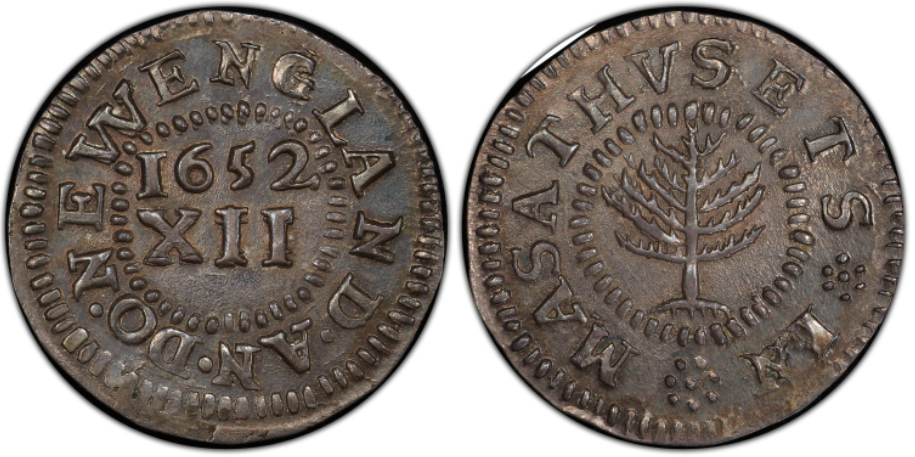
In collecting coins, stories unfold at every turn. When we hold the coin to the light, when we scrutinize the marks of age, when we research a recent find, and when we know as much as possible about that coin, it seems as if we are scratching the surface. For instance, our final coin. Behold, a coin of the Pilgrims! Because the Pilgrims were a renegade group from Britain, they willingly withheld information about currency.

Nearly all the early “pine tree coins” made in Massachusetts bore the date 1652—-although they weren’t issued until 1687! The British did not want the colonists to make coins. So the early Americans tricked the British into thinking they stopped making coins in 1652!