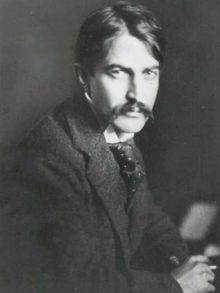
Today, there exist many writers whose works have transcended time and are still read. However, opinions on those works are controversial. Take Stephen Crane for example: some think that he was a brilliant man who wrote incredible literary works, while others wonder what all the praise is for. Back in the late nineteenth century, the critics had a lot to say, and many slammed his works – noting weaknesses in his fiction.
Mr. Crane’s novel, Maggie: A Girl of the Streets, was often criticized as being too raw for the time period. Maggie is essentially about a poor family stuck in the New York slums in the 1860s. Edward Bright (Illustrated American, July 11, 1896) criticized Maggie by saying, “I have for several years contended that Richard Howard Davis’ sentimental slum sketches are as false to the actual conditions as I am now reluctantly forced to own is Mr. Crane’s presentation of the life of the same locality.  There is little to choose between hollow sentimentality and lurid melodrama.” The point that he makes here is interesting and could be true. Davis’s work gave the slums a false gleam, it seems. These two authors are complete opposites and Bright suggested that for a story of the slums to be successful, the writer must find a middle way. Bright also mentioned Maggie to be “as so good but impossible of general acceptance because of . . . swearing.” During this time, even if they were not gentlemen or ladies, people tended to elevate their own self-worth, and as such, a raw, truthful, and crude novel would have been shunned. Bright did praise Crane by saying that the dialogue had “masterly vigor and convincing reality,” but he also called Crane “an artist who knows how to draw but cannot paint.”
One of Crane’s most controversial and famous works is the novel The Red Badge of Courage. Henry Fleming is a young man who volunteers to go off to fight in the Civil War, imagining a glorious future ahead of him, but instead, he bumps into reality and must change his mindset to survive. He finds that war is not like it is in stories: it is bloody, violent, and frightening. He can lose his life at any moment if he is not careful, and that chance of death scares him into briefly abandoning his troop. General A.C. McClurg (a well-known publisher and war veteran) was insulted by Crane’s story. He believed that the book was “puffed into success by entirely undeserved praise.” He stated that the book was only successful and lauded because people believed what they read in the newspapers instead of deciding themselves. “Nowhere are seen the quiet, manly, self-respecting, and patriotic men, influenced by the highest sense of duty, who in reality fought our battles.” McClurg was an extremely patriotic man who saw this book as “vicious satire upon American soldiers and American armies.” He believed that everything that Crane wrote was false and cruel; the men in the army were better than that. He looked down on those who praised Crane, calling them deserters and saying there was no place for such people in the army: such people were basically just leeches, bragging about how they were in the war and “enjoying good pensions” from their “efforts.” In addition, an unsigned critic called The Red Badge of Courage “nothing more or less than a series of battle pictures.” This critic is basically saying that the novel contained no story, but was rather a documentary. William Morton Payne agreed, saying that it was “merely an account, in roughshod descriptive style.” Payne also criticizes Crane’s characters calling them “hardly convincing,” wanting more story and depth. He said that this is no story because we do not really know the characters, we just know the events, the actions, the situation. And finally, Payne stated, “We do not know, nor does the writer, what it is that actually does go on in the mind of a man who is passing through his baptism of fire.” Thus he completely disagreed with those war veterans who went up to Crane and told him that he got it right. He believed that Crane knew nothing, and in that the end, neither did the reader. According to Payne, if it is the writer’s job to give the reader new insight, then Crane ultimately failed.

Crane’s The Third Violet is essentially a love story between an artist and a girl with a higher social status than he. Situated in a peaceful rural area where vacationers can enjoy hikes in the woods and picnics near streams and rivers, The Third Violet has been criticized as a work that is confusing, and too short, and “were it not for the dog and one or two touches of nature, we would not like it at all” (unsigned). This speaks volumes about the critic’s opinion on this particular story. He or she plainly disliked it. From this the reader can infer that the story is bad overall, but it might pique their interest to find out why it’s so bad. As they say: “any publicity is good publicity.” In other words, even when critics slam the book, saying that it’s the worst thing they ever read, readers will be compelled to read the book to see why it’s so bad. It’s kind of like giving a movie an F. The general public will be more interested in seeing this movie than, say, a movie that got a B or a C. When the audience sees the movie, or reads the book, they will then form their own opinions: maybe they will think, “Well, it wasn’t that bad,” or “Yup, that thing stinks.” No matter the opinion, however, the publisher or the studio still makes money. The same anonymous critic also mentioned that “Mr. Crane deliberately tells a story that is no story at all,” and went on to talk about how it needs to be more dramatic so that it will not be so boring and shallow. For instance, the critic mentioned the romantic lead is a woman “… who is very sorry when she learns that the artist is smitten; but the model will not kill herself, or even lose her appetite.” Crane’s critics see room for improvement in this particular work.
The Open Boat, a short story by Stephen Crane has been described as both disappointing and soulful. One critic mentioned how “the reader takes his place in the dinghy and has his heart in his mouth.” This critic is saying this is a story that the reader will never forget. However, Joseph Conrad (a great and respected novelist) mentioned that Crane “gripped you with greased fingers,” contradicting the other critic. He did say that Crane grabs the reader’s attention, but only for a little while and that when one slips out of his grip one is surprised. He expected more than he received. One critic absolutely loves The Open Boat, while the other was disappointed with it once he read it. I, myself, view The Open Boat to be a rather stale and tedious piece of work. For people who have had a similar traumatic experience, they would’ve been able to connect with the story, but to me, this is merely a boring account of four men in a boat. Such a story is flat and bland.

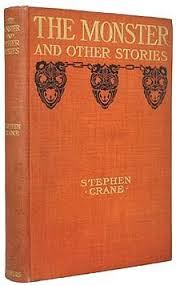
Crane’s novella The Monster, places the doctor in a fix that makes the readers wonder what is the right course of action. When the doctor must choose between saving the black man’s (Henry) life or letting him die, he is in conflict. This man saved his son from a burning house! However, if he lives, he will live as a monster, because the fire left him with fearful burns and a terrifying face. In the end the doctor chooses to save the man’s life, which results in townspeoples’ fearful reactions and his family’s social life degrading. Robert Bridges talks of how the reader may feel some skepticism about Crane’s dexterity and his ability to make people believe that he has complete confidence in his work, and states, “. . . he is a juggler who is perfectly sure that he will catch the knife by the handle every time. The reader can’t escape the suspicion that perhaps Mr. Crane is not juggling with real knives—and if he did catch the wrong end it would not hurt him.” Bridges paints an interesting picture with his words saying that Crane is not “playing with fire,” so to say, he is not risking his neck, but is cautious, “playing it safe.” Crane has confidence in his writing, but is this really all that great or bold? Is he truly experimenting with literature? Bridges also later mentions that Crane, “follows the admirable Hawthornesque plan of suggesting horror by showing its effects upon various observers.” Another critic, Julian Hawthorne, son of Nathaniel, is enraged at Crane about this short novel, criticizing, “Crane leaves the matter in that condition, without the faintest pretense of doing anything whatever to relieve it!” and describes the ending as “an outrage on art and humanity.” The ending is frustratingly vague: the doctor does not decide whether to send Henry away or to let him stay, and he watches his social life fall to ruins, as no neighbors attend Mrs. Trescott’s tea. While it is true that most short stories end in cliffhangers, at least they give a hint as to what happens next! Maybe I just don’t see it, but Crane seems to give no such hint. Julian Hawthorne also describes Crane as someone who “never gets more than a few feet above the ground, and often falls below even that moderate elevation.”