
Monthly- Archives: November 2012


JONATHAN JU

Mr Watt´s Literary Services

Rereading

Reading is one of my most favorite things to do. Almost everyone knows how to read. However, books can sometimes be complicated and hard to understand. When this happens, one of the things that can be really helpful is to read the book over again. Reading the book over again can allow you to understand it in a more in-depth perspective than you did before. You will be able to perceive new details you didn’t previously notice. Best of all, you get to relive the whole book again. A paper published in the Journal of Consumer Research found rereading offers mental health benefits because it allows more emotional connection and self-reflection instead of the first reading, which is more based and focused on the events and plot of the book. Three books that I decided to read over again were The Son of Neptune, The Lightning Thief, and The Mark of Athena, all by Rick Riordan.

While rereading The Son of Neptune I noticed the tiny details in the book, like the color of someone’s shirt. The orange Camp Half-blood shirts helped me get a better sense of the setting because they seemed to blend in with the morning sun and the happiness of the camp. This helped me enjoy the story more, because I got a better sense of the setting, Camp Half-Blood, from this detail. In addition, I also understood more about the story because I was able to do some independent research into Greek mythology, reading from the school library book that profiled the gods and other mythical creatures.

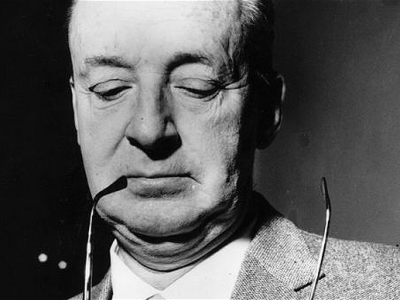
Vladimir Nabokov once said “Curiously enough, one cannot read a book; one can only reread it. A good reader, a major reader, an active and creative reader is a rereader.” While I don’t agree with Nabakov that ‘one cannot read a book’, I think that he means that rereading is uncovering aspects of the book like themes, and character details, plotting, key moments, and this only happens to readers who are attentive and creative. This shows the power of rereading a book.

This idea enabled me to use my knowledge and refer back to it while rereading parts of the book. I had new perceptions about the personality of the characters. The first time I read the book I felt rushed; the second time was different because I was able to learn the personality of each character and get to know them better. For example, I know more about Percy than I did before; Percy cares a lot about his friends and family and always thinks that he should be the leader. I noticed many new and vital aspects of The Son of Neptune, like when the characters were in Alaska. The details of the setting and the animals described allowed me to expand my senses while reading it for the second time.

Another book that I understood better when I read it again was The Lightning Thief. When I read it the second time I was able to grasp the plot more easily. What affects me most deeply is how Riordan captures the Greek and Roman mythological world and puts it in the modern day, thus enabling me to almost interact with the story. For example, modern day mortals see and interpret things differently from the mythological world because of the Mist. If a Minotaur appeared, mortals might interpret it as a wild bull.

Another book that I really benefited from by reading again was The Mark of Athena. The Mark of Athena includes Greek gods, adding Roman gods, too. The first time I read the book it was very confusing to understand the Roman god personalities. Many of the gods had different personalities as well as names that differed from their Greek side. For example, Dionysus the wine god’s Roman counterpart is named Bacchus. Through rereading, it became easier for me to remember each god’s Greek and Roman personality. I also learned that Riordan often uses small details to lead up to a part of the story that you can predict, if you notice these details. For example, during The Mark of Athena, Piper makes the eidolons swear on the River Styx to not possess anyone on Leo’s boat. However, the eidolons hint that they can still possess others. This helped me understand how the story might be continued on in the House of Hades. My prediction in the forthcoming book, the House of Hades is that the group of demigods will travel to Greece to close the Doors of Death while Percy and Annabeth find the other entrance of the Doors of Death in Tarturus.



LARRY HO

Mr Watt´s Literary Services
“Simple, genuine goodness is the best capital to found the business of this life upon. It lasts when fame and money fail, and is the only riches we can take out of this world with us.” Louisa May Alcott, Little Men
To Louisa May Alcott, general goodness is the most important possession. Kind people express their soul, and they continue to possess goodness for the rest of their lives; the soul is also the base of life, it determines the type of person one is. Alcott compares goodness to capital and life to business, capital being the base of business and what fuels the business to continue operating. When all of one’s material possessions are lost, we can still have the capital of general goodness that will not be taken away. Then, general goodness will never be lost and people can recover.
I completely agree with Louisa May Alcott, that what is on the inside is more important than the physical things you own. The rich buy expensive cars and several houses as a status symbol, but if they do not have a good heart, none of the luxuries matter. Someone who is not rich and lives a humble life can be superior to the rich because the foundation of their life is based on the goodness of their heart. Those who are selfish, who are cruel, avaricious or merciless, even remorseless: they cannot do anything but try and impress, while someone with a good heart will flourish in the business of life.
In the fable "The Happy Prince" by Oscar Wilde, a young swallow learns to give unconditionally, and changes people's lives. The swallow alights on a statue named the Happy Prince who is decorated with all kinds of jewels and gold. The Prince, though a statue, has the ability to communicate, and convinces the swallow to aid him in sending his jewels to the poor in the city. Over a few months the swallow delivers all of the Prince's jewels. The swallow's heart slowly changes and he becomes great friends with the Prince. The swallow has changed, but the officials in the town have not. The mayor and his advisors look at the Happy Prince stripped of its jewels and decide to scrap it. The townspeople only value the Prince's jewels that decorate him. The townspeople, being so focused on the valuable jewels, disregarded the poor and pay no attention to them. The poor who have been helped by the Prince and the swallow have learned something they will never forget and they will continue to carry it on with them if they become rich. At the end of the story the Happy Prince and the swallow die and go to Heaven; their hearts have not changed and they continue to be selfless. The prince's leaden heart will not burn and the workmen throw it away. God wants "two most precious things in the city," and the angel brings the Prince’s leaden heart and the swallow’s body to him. God is happy with the angel's choice and lets them rest in heaven. "You have rightly chosen," said God, "for in my garden of Paradise this little bird shall sing for evermore, and in my city of gold the Happy Prince shall praise me."

A good heart is the support for, and the most important part of, a person. Possessions can be lost then replaced, while the heart cannot be replaced. After the prince and the swallow died, there was no one else in the city that was as selfless as them. Once they were gone no one else in the city could replace their kindness. This idea is demonstrated in a short story by Eudora Welty, which also proves that genuine goodness is the base of life.
In “The Worn Path” by Eudora Welty, an old African-American woman walks long distances in order to get her grandson medicine. She struggles to walk along an ancient Indian path called the Natchez Trace, and because of her old age she experiences hallucinations. This lady is very old; she was born before blacks had right to education and was born into captivity as a slave, yet she still walks every month to Natchez, Mississippi, from her home deep in the woods, to fetch this medicine. When Phoenix finally arrives at the town she is greeted by the sight of Christmas lights and people carrying presents in their arms. “There were red and green electric lights strung and crisscrossed everywhere, and all turned on in the daytime.” She makes her way to the hospital where she asks a woman to help her tie her shoes.
“A lady came along in the crowd, carrying an armful of red, green, and silver-wrapped presents; she gave off perfume like the red roses in hot summer, and Phoenix stopped her.
‘Please, missy, will you lace up my shoe?’ She held up her foot.
‘What do you want, Grandma?’
‘See my shoe,’ said Phoenix. ‘Do all right for out in the country, but wouldn’t look right to go in a big building.’
‘Stand still then, Grandma,’ said the lady. She put her packages down on the sidewalk beside her and laced and tied both shoes tightly.
‘Can’t lace ’em with a cane,’ said Phoenix. ‘Thank you, missy. I doesn’t mind asking a nice lady to tie up my shoe, when I gets out on the street.’”
Phoenix enters a clinic and is asked for her name. Phoenix does not respond and the attendant speaks louder. It is hard to speak to Phoenix because of her old age – she must be in her 80s. The nurse comes in and defends “Aunt” Phoenix telling the attendant about her situation – and then administers the “soothing-medicine” – her grandson swallowed lye several years back.
“‘My little grandson, he sit up there in the house all wrapped up, waiting by himself,’ Phoenix went on. ‘We is the only two left in the world. He suffer and it don’t seem to put him back at all. He got a sweet look. He going to last. He wear a little patch-quilt and peep out, holding his mouth open like a little bird. I remembers so plain now. I not going to forget him again, no, the whole enduring time. I could tell him from all the others in creation.'”
As she departs, she is treated in a different manner.
“‘It’s Christmas time, Grandma,” said the attendant. ‘Could I give you a few pennies out of my purse?’…she stared at her palm closely, with her head on one side.Then she gave a tap with her cane on the floor. ‘This is what come to me to do,’ she said. ‘I going to the store and buy my child a little windmill they sells, made out of paper. He going to find it hard to believe there such a thing in the world. I’ll march myself back where he waiting, holding it straight up in this hand.’
She lifted her free hand, gave a little nod, turned around, and walked out of the doctor’s office.”
The woman speaks louder and she gets no response. It is hard to speak to Phoenix because of her old age. The nurse comes in and defends Aunt Phoenix telling the attendant about her situations. People learning about Phoenix’s hardship may inspire then to help her out. Phoenix is able to affect others with her heart. True kindness is shown through dedication.
Simple genuine goodness is the foundation of a person. It controls the person’s decisions and can never be lost. One’s physical possessions can be lost and be recovered or replaced. The good heart can never be lost, yet it is hard to gain a good heart if one’s is crooked. Goodness could be said to be the most important body part of a person, and is a gift that changes others. Even now, people with genuine goodness influence people around them. Buddha gathered thousands of followers to try and end suffering in the world; Martin Luther King Jr. gave speeches to thousands of people on tolerance and freedom. People continue to change the world with their hearts today.


OLIVIA SHEN

Chinchillas

 
Do you know what a chinchilla is? Do you know why a chinchilla is called a chinchilla? A chinchilla is a small furry animal in the rodent family. These rodents have been popular since the 16th century, because of their rich, velvet like fur. They are called chinchillas because they were named after the Chincha people. (The name chinchilla literally means little Chincha). The Chincha people of the Andes once wore its dense, velvet-like fur. Chinchillas have a fascinating natural history, and the story of their decimation and recovery is one that causes people to consider animal rights. Chinchillas are bred for their fur, but they are also raised as pets.

Historically, colonies of wild chinchillas were found in Bolivia, Chile, and Peru, but now, the colonies only found in Chile. Chinchilla population was decimated during the late 19th and 20th century, because their immense popularity in the fur trade. People started to understand how the chinchilla’s fur got from the chinchilla onto the fur owner’s body, so they started to wear various other furs, like rabbit, mink, fox, anything other than chinchilla fur.

Chinchillas have many different types of colors. Chinchillas have approximately 60 hairs sprouting from each follicle. Some of the lighter colors are white sapphire, white violet, pink white, tan white, white, wilson white, stone white, ressesive white, beige, tower beige, royal blue, charcoal, blue diamond, ultra violet, violet wrap, pearl, beige violets, and sakrison. Chinchilla fur is extremely soft which led to extinction for one of the species. Though it is illegal to hunt wild chinchillas, people still continue hunt them because of the luxurious fur.  Between 1895 and 1921 over 3 million chinchillas were exported from Chile. Some authors reported that more than 21 million chinchillas were killed between 1840 and 1916. In 1916 chinchillas were believed to be extinct until a rediscovery of a wild chinchilla population in Chile in 1975.

Chinchillas are not the best type of pets for children who don’t understand that chinchillas don’t like to be touched. Chinchillas can be fine pets to older children, those who can understand the chinchilla’s feelings. Chinchillas have a really good memory so, if you frighten them, they will remember you for a very long time. Always approach a chinchilla quietly because if you approach too loudly, the chinchilla can get frightened and seek shelter. These rodents love to chew. If you use a wire cage, the chinchilla can chew its way out. I recommend putting cardboard in the cage for gnawing purposes. Giving cardboard to chinchillas is like giving bones to dogs. However, it’s very important that chinchillas don’t gnaw on too much cardboard. If they eat too much, it can be very unhealthy for them and they can’t digest properly. It is important to protect chinchillas. They shouldn’t be killed just for their fur.