Monthly- Archives: March 2024


TAYLEN LI

The Life and Work of Robert Capa
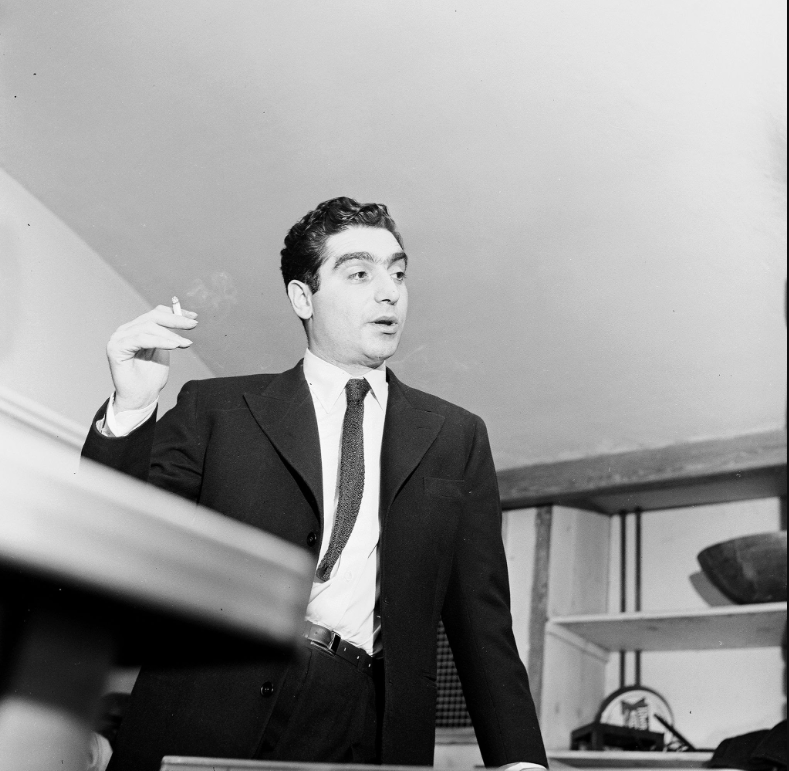
Robert Capa (1913-1954) was one of the greatest photographers and photojournalists of the 20th century and arguably the most monumental war photographer in history. Capa was born in Budapest, Hungary, as Endre Ernő Friedmann to the Jewish family of Julia and Dezső Friedmann. As a child, Capa was involved in a kids’ gang that wandered about the Jewish quarter of Pest, Hungary. His aggressive attitude was rewarded with the childhood nickname of Capa, which translates to Shark in English. Within the group of boys, Capa was known to be fearless, and one to always be seeking adventure.
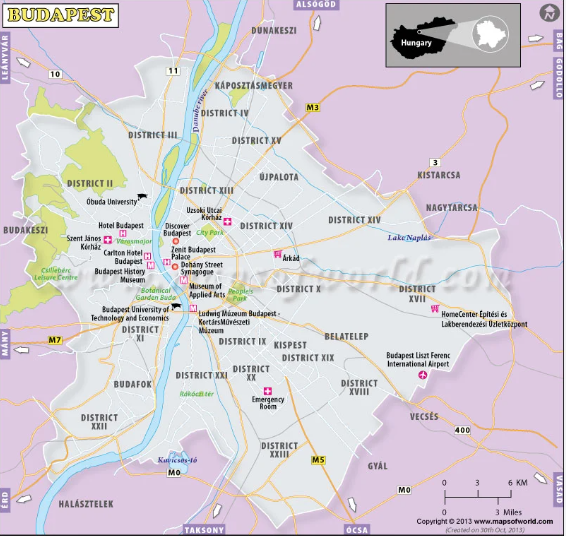
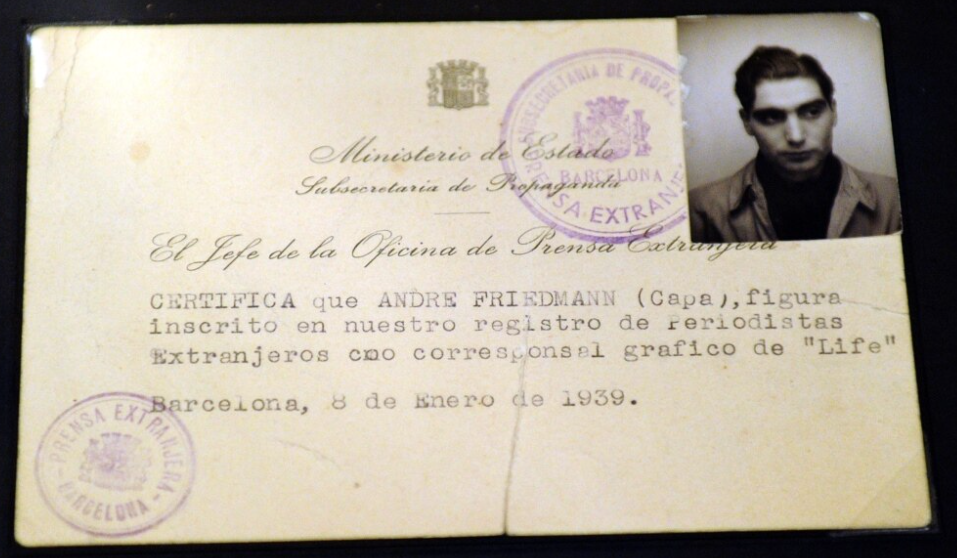
In his early life, Capa became involved with leftist revolutionaries and controversial politics. Despite never actually joining the Communist Party, when the youth was just eighteen, he was accused of apparent communist sympathies. At a Budapest demonstration against the Hungarian fascist dictator Miklos Horty, Capa (at the time Andre Friedmann) was wounded and arrested by policemen. He was forced to flee Hungary for his safety and moved to Berlin. Initially, Capa had wanted to become a writer and journalist, but since his fluency in German was still significantly faulty, Capa became a photographer, as it was the nearest thing to journalism that didn’t require a spoken language. After finding work as a photographer in Berlin, he fell in love with the art of recording images. Capa had a new goal in mind, and that was to combat fascism with photography.
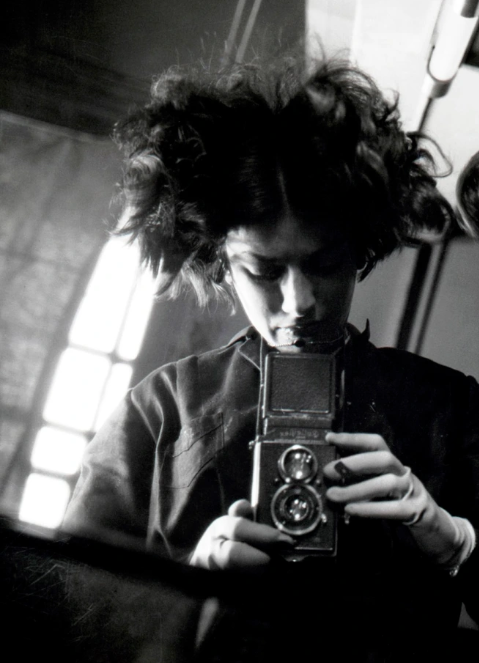
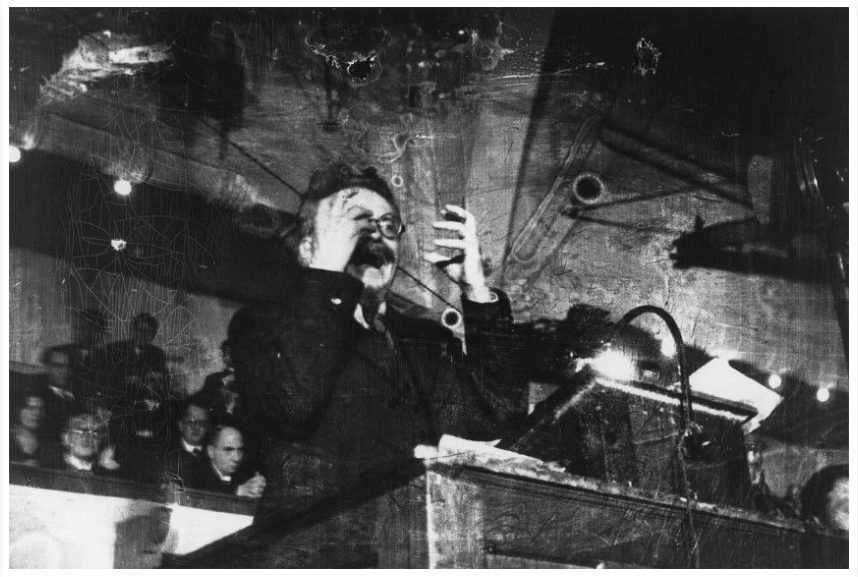
In 1930, Capa enrolled in journalism classes at a radical school for political studies, known as Deutsche Hochschule für Politik (German Academy for Politics). Upon finishing school, Capa worked in Dutch-Hungarian photographer Eva Besnyo’s darkroom for a year until an opportunity arose – Soviet exile Leon Trotsky was to speak in Copenhagen and Capa wanted to photograph it. “The Meaning of the Russian Revolution” was Capa’s first photograph, and through a brilliant employment of lighting and shadow, a stunning depiction of the passionate Leon Trotsky was captured.
After witnessing the rise of the Nazis and their ruthless persecution of the Jews, Capa felt unsafe as a leftist Jew living in 1930s Germany and decided to move from Berlin to Paris in 1933 with his camera and not much else. There, the impoverished man changed his publishing identity to Robert Capa, a more Americanized name, to avoid discrimination in France – thus making it easier to find work as a freelance photographer. His photos began to sell so successfully under the fabricated pseudonym that the man decided to officially change his name to Capa.
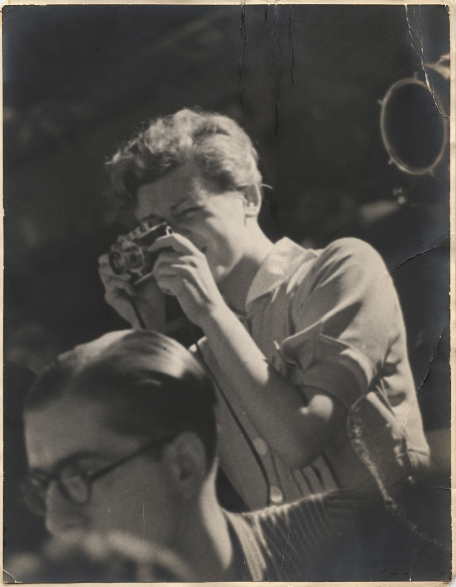
In Paris, a 20th-century site of artistic freedom and expression, Capa met the love of his life, Gerda Taro,  who had just gotten out of prison on a charge of anti-Nazist propaganda. Gerda was a German photographer who had fled Nazi Germany for the same reasons as Capa, for she too was a Jewish refugee that narrowly escaped persecution. A friendship was established at first, but the two grew closer together through their work and collective passion of photography. By the summer of 1935, Capa captured the vivacious woman’s heart and presented her with her first Leica as a gift.
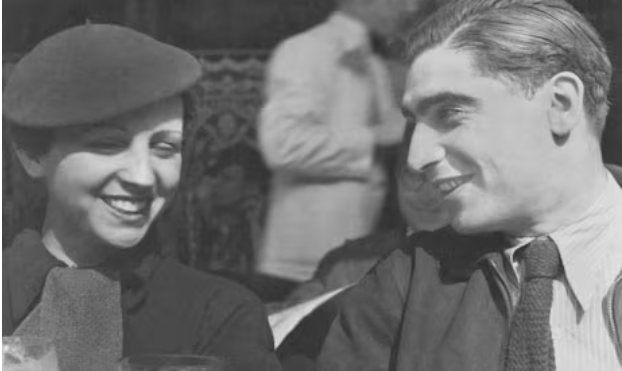
In the cafes of Montparnasse, Capa met a group of fellow refugees from Germany and became friends with Polish photographer David Seymour,
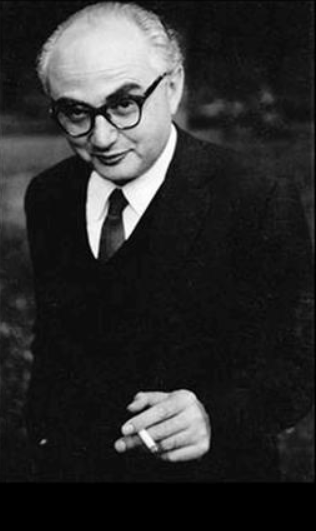
(nicknamed Chim) and French artist Henri Cartier-Bresson. The three were collectively known as “the Three Musketeers”. Capa, Seymour, and Cartier-Bresson worked together using 35mm cameras and captured political drama unfolding in the streets of Paris. In particular, the group photographed the demonstrations of the leftist Popular Front coalition that campaigned for better working conditions against the fascist leagues. For Capa, taking photos was his way of fighting the war against fascism – instead of a gun, he carried a camera.
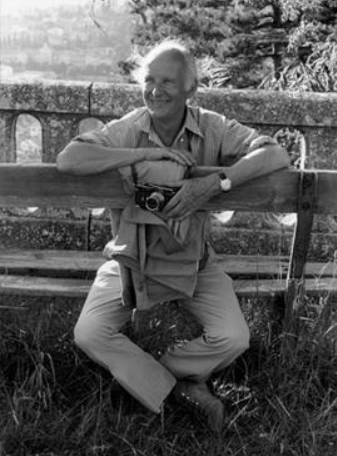
Henri Cartier Bresson in 1972

At the spark of the Spanish Civil War, Capa and Taro hurried off to Spain to capture photos of the war. Taro herself had wanted to reveal the suffering of the civilians and soldiers as a result of the war. Her various photographs depicted brave soldiers, struggling families, and the emotional power that she possessed with her camera in hand. Meanwhile, Capa photographed the experiences of the common people during the war, and they were published in magazines around the world. The couple camped with the soldiers, risking their lives many times to cover the fighting up close while capturing everyday life with their cameras.

One Sunday on the 25th of July 1937, tragedy struck. During a retreat of the Republican Army at Brunete, a town west of Madrid, Gerda Taro was hit by a tank and died the following day. She was only twenty-six, and the incident left Capa heartbroken for the rest of his life. One year after the death of his beloved Gerda, Capa published a photo book, Death in the Making, to memorialize the photos they had taken together and commemorate his life partner.
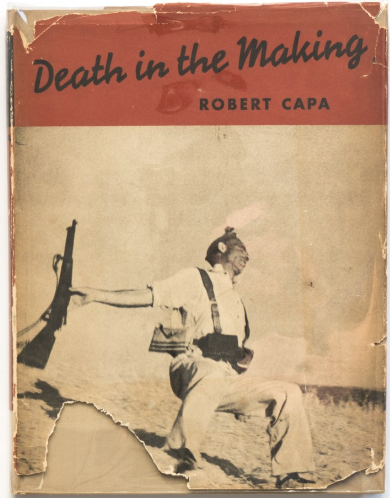
Taro would go down to be remembered as the first female photographer to be on the front line and die during the war. Despite the couple never getting married, Capa called Gerda the woman of his life. The story of Robert Capa and Gerda Taro, two lovers who died for freedom, while doing what they had loved, has inspired many.

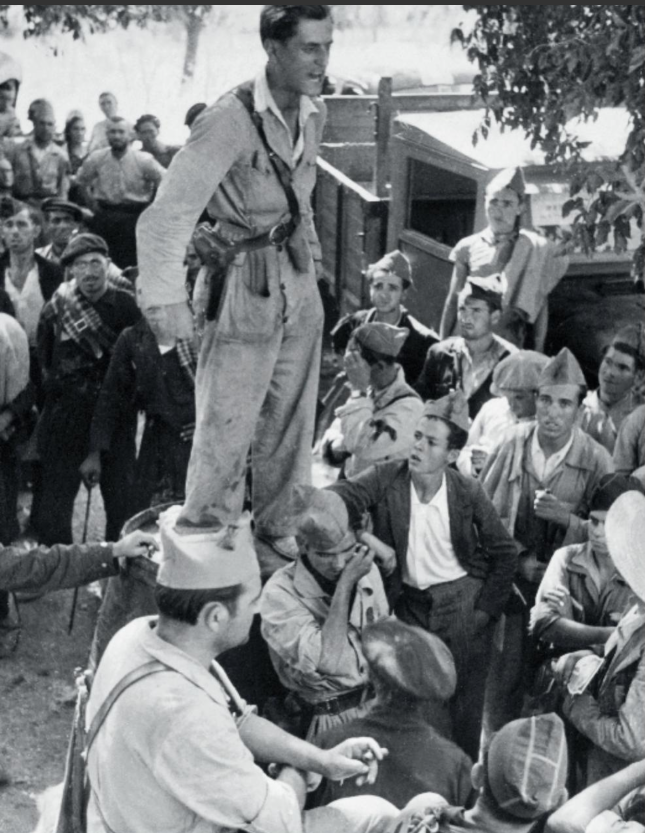
The book Death in the Making contains photos that illustrate the early days of the war, covering the lives of both soldiers and civilians, as well as men and women. The beginning of Death in the Making portrays the initial excitement and innocent alacrity of soldiers departing from home and the journey they make as they prepare for the battlefield. The Republican soldiers are seen playing with animals, smiling and cheering on the train to the Aragon front, and listening to inspirational speeches from commanding officers. However, as the book goes on, the darker parts of war come into view. Capa reveals impoverished commoners, civilian victims running for their lives, men carrying their dead comrades, and soldiers in buildings and schools, preparing to fire. One scene taken by Capa from an elevated place depicts a speech being held, which very much resembles that of the Saint Crispian’s Day Speech from old Shakespeare’s Henry V.
Without a doubt, Capa’s most iconic group of captures are his “Magnificent Eleven” photos of D-Day. These celebrated negatives are characterized by the landings of American troops on Omaha Beach, France. Some portray soldiers trudging knee-deep in water whilst carrying loaded backpacks, buckets, or even their fallen brethren. Along with the soldiers, they are accompanied by partly-submerged tanks, immersed artillery, and Czech hedgehogs, which were large metal x-shaped obstacles that were used to block off enemy tanks. In most of these D-Day photos, a similar backdrop of the looming beachhead is visible in the background. As for the foregrounds, they are distinguished by the detailed seawater, sweeping waves, and swooshing sea foam.
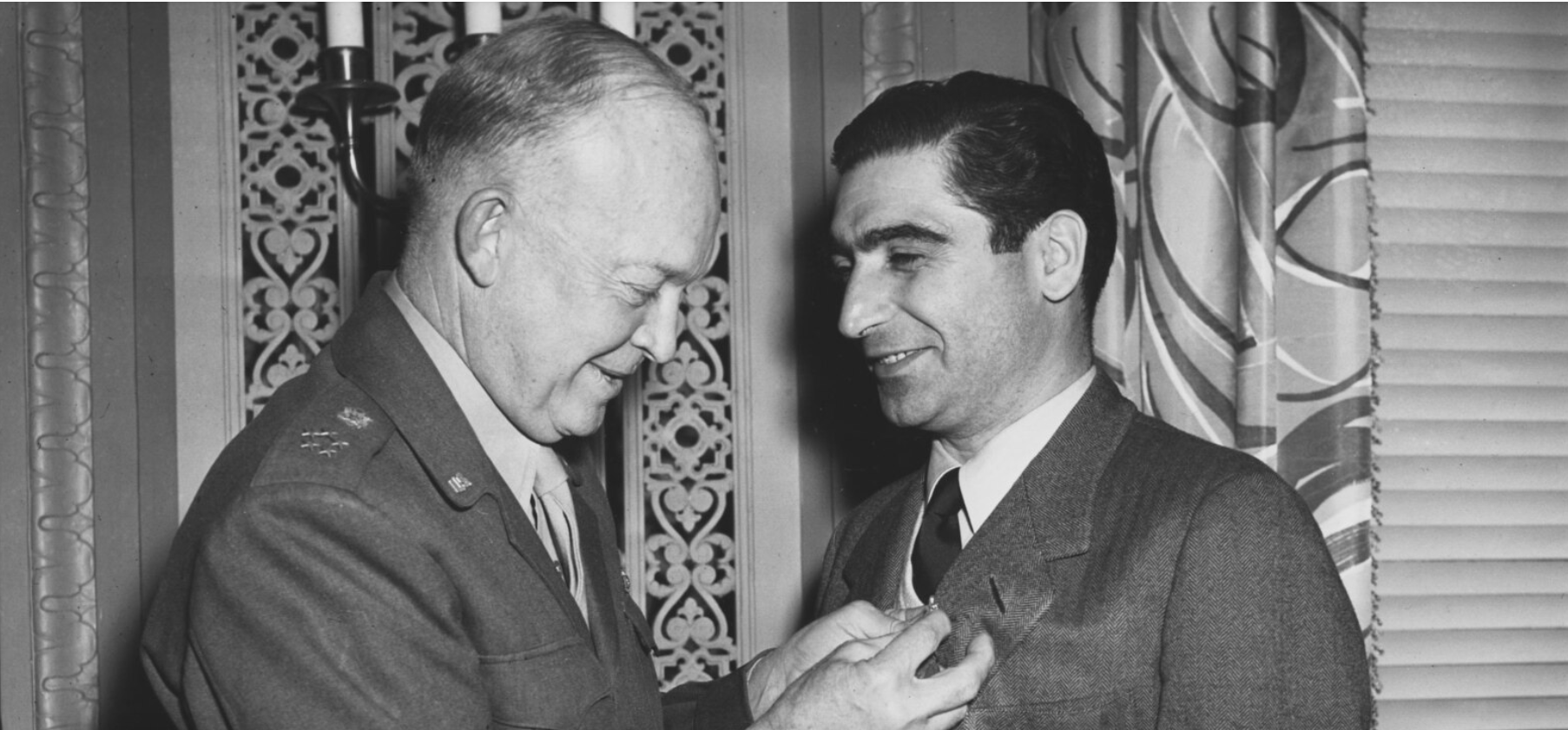
In 1947, Capa was awarded the Medal of Freedom by U.S. General and later President, Dwight D. Eisenhower. That year, Capa also co-founded Magnum Photos in Paris, the first collaborative agency for worldwide freelance photographers that served to provide pictures for international publications. He became president of the organization and was responsible for managing work for freelancers.

Along with documenting World War II across Europe, Capa also covered and published photos of five wars in ten different countries, including the Spanish Civil War, the Second Sino-Japanese War, the 1948 Arab-Israeli War, and the First Indochina War. Capa’s most famous photo, “The Falling Soldier”, was taken during the Spanish Civil War; it depicts a poignant black-and-white image of the death of anarchist militiaman Federico Garcia as he falls backward from being shot in the head.
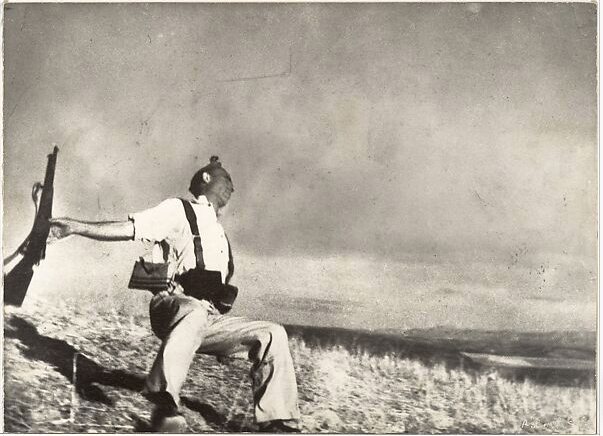
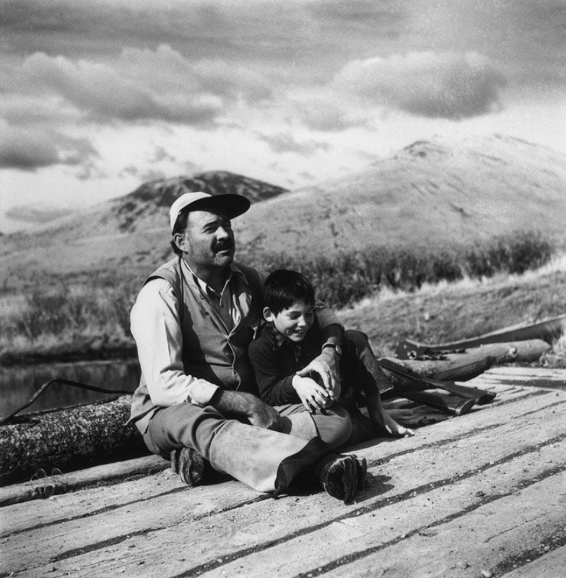
The soldier dies while looking at the empty space in the right part of the photo, which creates a visual that magnifies the soldier’s desolation during his death. Not only is this photo iconic, but it was also incredibly controversial, for Capa was accused of staging the photograph. Also during the Spanish Civil War, Capa became friends with renowned American author Ernest Hemingway, who later became a noteworthy subject of Capa’s photos.
In 1948, Capa visited Israel to witness and capture the ceremony of Israel’s independence, along with the subsequent war. Over the next two years, Capa documented the lives of immigrants who traveled to the new-born state of Israel. In these photos, Capa depicts the Jewish refugees and soldiers as heroic, reflecting his own identity and ideology.
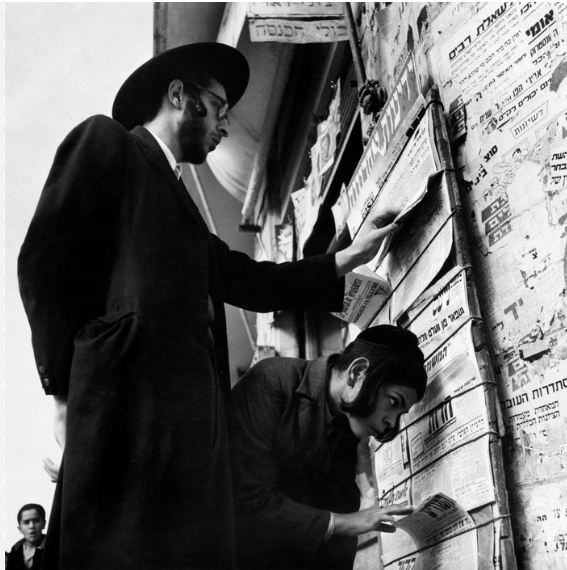
Although Capa shows sympathy towards the Jewish population, he never portrays the thousands of Palestinians who were displaced or forced to be expelled as a result of the Arab-Israeli War. Perhaps this was because Capa himself was a Jew, and he favored their narrative although they were also involved in the foregoing violence and brutality.

In a 1954 exhibition in Japan for Magnum Photos, the LIFE magazine requested Capa to travel to Southeast Asia and take photos of the ongoing anti-colonial conflict between the imperialist French and the Viet Minh. During a combat photo shooting, forty-year-old Robert Capa was fatally killed by a landmine while doing the thing he loved.

Capa’s life was one of achievement, love, and tragedy. He was a photographer, a lover, and a man who chased his dreams. His touching, unprecedented photographs have played a crucial role in remembering and commemorating the historical events of the 20th century – leaving his mark on both the genre of photojournalism and modern history. A pioneer of modern war photography, Capa has paved the way for many new generations of photographers to come.

Montserrat Reyes responds:

Student Feedback:

            The early life of a famous person provides a reason as to why they grew up to be the way they are, and focusing on specific moments, like Capa’s involvement in a gang and fleeing from Hungary, help you portray Capa as “fearless, and one to always be seeking adventure”. My favorite part was when you mentioned Capa’s interest in journalism, but because of the language barrier, he became a photographer by chance. It really opens my eyes to how the most unexpecting people normally get the most recognition for their work. 

            Additionally, Capa’s courage is different from what most people think of when the word is used. Like you said, “instead of a gun” Capa used his photography to show support for the side he was on in addition to risking threats from the opposing side. The fact that he was in danger but still wanted to capture what was truly happening is the action of an unsung hero. As his career goes on, it’s evident that he, and his partner, want to be at the forefront of the biggest conflicts of the time. “The story of Robert Capa and Gerda Taro, two lovers who died for freedom, while doing what they had loved, has inspired many.” Their ambition and bond over making a difference is stunning because it really emphasizes how much more of an impact one can make if another person is beside them. 

            Capa’s Death in the Making demonstrates how photography is more than a picture, it’s a story that follows real people. The story has super high, and devastatingly low, points that are able to be shown. The thing that I most admire about photography is that the image is already given to you, unlike a book, but your imagination is what expands the story to mean something to you, making it more impactful than a movie. Out of the three, which one most speaks to you?

         I think it’s important that you draw attention to how Capa’s photographs connect with his ideas, like when he “depicts the Jewish refugees and soldiers as heroic, reflecting his own identity and ideology”. On top of that, you share that Capa has a bias as to what he documents; you brought up the fact that him being Jewish made him not capture the trouble of the Palestinians. By sharing both the good and bad sides of Capa, it keeps you in the middle which shows that your writing is unbiased and gives the readers a different perspective on him. But, since you did choose to write about him, how did you react when you saw this? Did you distrust Capa for letting his beliefs affect his work?

            The way you wrote Capa’s story is CAP-tivating and sentimental. Sometimes, I forget that famous people have a personal life and with this work you bring light to parts of Capa’s life that are as equally important as his impact throughout his career.




EZRIE ZINCHIK

The Man Behind Apple

Steve Jobs, one of the greatest inventors to ever live, was born in San Francisco on February 24th, 1955, and died on October 5th, 2011, of pancreatic cancer, at the age of 56, just 68 days after he resigned as CEO of Apple.

Steve Jobs really fascinates me because he created the first iPhone and that really set the road for how we use technology today.

What is it about the iPhone, do you think, that has given it an almost sole proprietorship on phone technology for more than a decade? 

If we look previous to the upsurge of the iPhone, it becomes noticeably understandable that the range of options for personal phone designs was vast, but then the iPhone took over the tech industry and skyrocketed in popularity over the years. But what is it about Jobs that allowed him to dominate in tech like this? And how come these days, either you have an Android or an iPhone? Who has a Motorola anymore, or a Siemens phone? Did you know that in the USA over 60% of all cell phone users are iPhone users? That is an insane market share, close to a monopoly.

As a fellow Californian, and also sharing the fact of being born in San Francisco, I personally admire Jobs. 

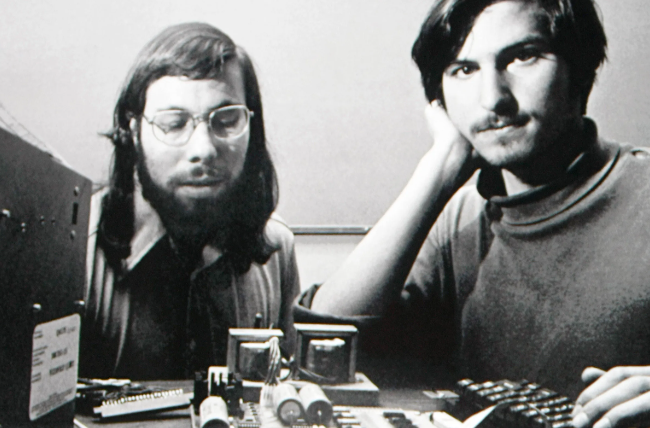
Steve Jobs was adopted by Paul and Clara Jobs and as a young boy, showed interest in electronics and technology. During college, Jobs met another guy that was also into computers as much as him named Steve Wozniak in 1971. SJ and SW’s very first partnership started later on after SW read an article called “Secrets of the Little Blue Box” (Esquire Magazine).  This inspired SW to create his own blue box(s) which later allowed them to create long-distance phone calls at no cost because back then, they only had phone booths that you had to pay a few cents to use. Even Jobs said that if it had not been for Wozniak’s blue boxes, “there wouldn’t have been an Apple”.

Apple’s first logo

Though he was in high school, and Jobs was in college they became great friends. Jobs dropped out of Reed College to pursue a career of computing.

Apple, founded in 1977 in his garage, was a very exciting company, the excitement coming from Jobs himself. He was, as Tim Barajin writes, “the visionary and spiritual leader” of the company, but those board members who were monitoring his leadership style had some fears that he did not have the maturity or stability needed, and they offered him a reduced role. Now, I know you are thinking, didn’t Jobs create Apple? How could he be treated this way? 

When Steve Jobs resigned from Apple in 1985, the future was unknown, and he later talked about that as being unsettling yet exciting.   

After Jobs left, Apple took a lot of the credit for the computer market with the LaserWriter computer printer, and PageMaker or Adobe Systems. But Apple’s profits crashed after the introduction of IBM clones when PC computers began offering similar functions with a lower price.

After Jobs resigned from Apple he started a new tech company called NeXT that had only a little bit of success in the tech industry. Jobs, still immature as a leader, would yell at top executives in front of everybody, which led to NeXT’s unsuccessfulness.

However, during Job’s “NeXT period” he matured. And when he returned to Apple in 1997, he was a better leader than before, for having matured, and he was more modest and more fit to lead the $1,000,000,000 company that at the time, was in trouble and close to being bankrupt.

Jobs’ retaking his company is one of the greatest comeback stories in American business history. Just look at these numbers. In 1997, Apple Inc was losing $1.04 billion, due to the IBM clones; a year later he balanced the books and even turned a profit of over $300 million. How did Jobs do this?

After, Jobs had Apple start back from base one and only sell four products (two computers and two portable devices). Additionaly, Apple does had not tracked all their expense in a traditional way, an idea Jobs provided in 1997.

At his 2005 commencement at Stanford University, Jobs talked about how Reed college is almost expensive as Stanford. And how he later then dropped out. “The heaviness of success was being replaced by the lightness of being a beginner again,” in reference to his time after being let go from Apple. Less sure about everything he entered the most creative period of his life.

As we go through life with our cell phones always in our pockets, or in front of us, or stuck to the dashboard of the car for mapping, one wonders how life could be navigable without these tools. Therefore, it makes sense to look into the years before this tool was introduced, to see how the human heart hungered for such a portable device. Let me give you a bit of a guided tour on the evolution of the portable phone.

If you want to look at the very first portable phone, then you would have to concede that almost 100 years ago, the German railways figured out a way to make calls from the rails: in 1926, the first mobile telephone service was given to first-class passengers on the Deutsche Reichsbahn going between Berlin and Hamburg. But for our modern sense, we can track back to the beginning of this century: in 2000, the Nokia 3310 was introduced.

It went on to sell 126 million units. In Japan, the first commercially available camera phone, the Sharp J-SH04, was put in motion in November 2000, in Japan.

But you could only use it in Japan. Europe would not get its first ever camera phone until the appearance of the Nokia 6750 in 2002. In 2003, the 3G standard began to be implemented around the world. Honk Kong-based Hutchison Whampoa owned Three brand, offered the first 3G network connection in the UK among other countries.

Three also released a trio of 3G handsets, namely: the Motorola A830, the NEC e606 and the NEC e808. In 2007, Steve Jobs made history when he revealed Apple’s first iPhone to the world. Not only did it have the best features that could possibly be put inside the hardware, but the iPhone completely revolutionized the meaning of what a mobile phone could be.

  What made the iPhone special was what all other phones in the past didn’t have, which was many functions and features all in one device. 


In 2011, Forbes magazine named Apple “the most valuable company in the world.” On October 5th of that year, Jobs died.


CHRISTOPHER TIAN

Toad-headed, the rainbow, smashed headed rock… what are these monsters?

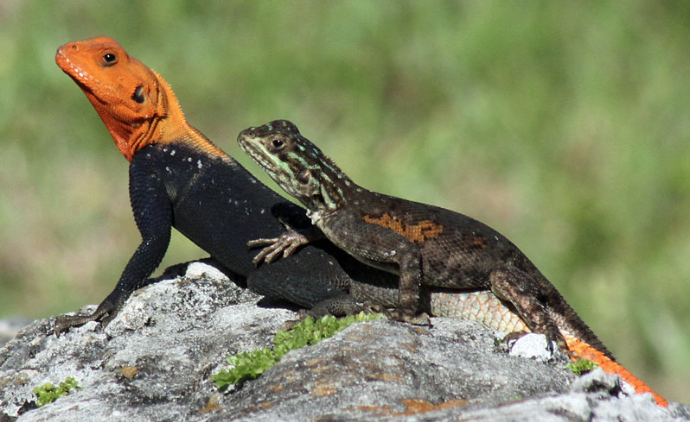
The agama comprises at least seven species found across Africa where they are the most common lizard. They can be found in sizes of 12.5 to 30 centimeters and have a wide variety of colors. Their front teeth are designed for quick cutting and chewing of their prey. They may also eat grass, berries, seeds, and even the eggs of smaller lizards.

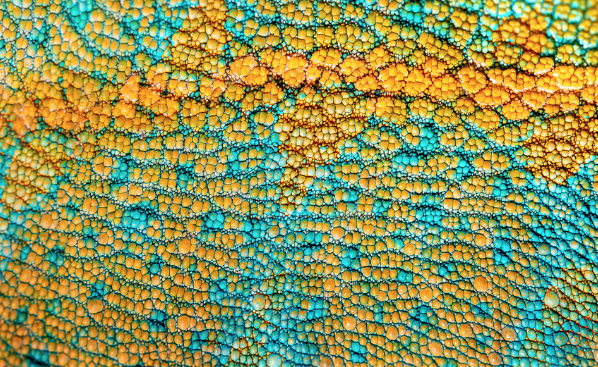
Aculeata the master of land, the tropical Aarmata, Persimilis the dwarf, the spiny Caudospinosa, the pale Rueppelli, the rainbow Wachirai, the long tailed Mucoso… agama lizards thrive in various habitats across the globe. Agamas rely on external heat sources to regulate their body temperature. They are often found in the sun absorbing warmth and energy to stay active and maintain their metabolic functions. One of the most striking features of agama lizards is their body expressions and their coloration. Males can inflate during courtship or territorial disputes; the vibrant displays of hundreds of colors is extremely visually stunning.

Male agamas vigorously defend their territory, displaying aggressive postures and engaging displays to establish dominance. Agama lizards are agile and fast-moving creatures who make well-developed plans and, with their strong muscles – they sprint across the ground and quickly evade predators. 

These lizards have a diverse diet primarily consisting of insects and other small invertebrates. They use their long sticky tongues to capture prey with precision, showcasing their hunting skills.

Like other reptiles, agama lizards periodically shed their skin. Shedding helps them get rid of parasites and maintain healthy skin conditions. During this process, they may appear discolored until their new vibrant skin emerges.

Agama lizards belong to the family which consists of over 300 species in various regions around the world. These lizards are known for their vibrant and striking colors which can range from shades of blue to red to orange, yellow to green depending on the species and gender.

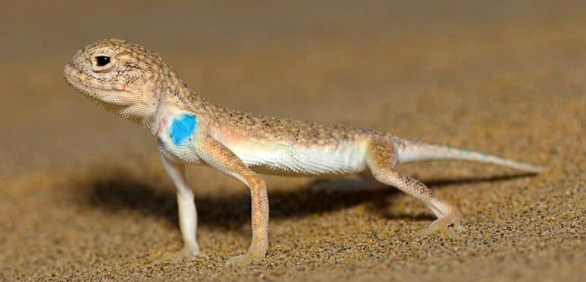
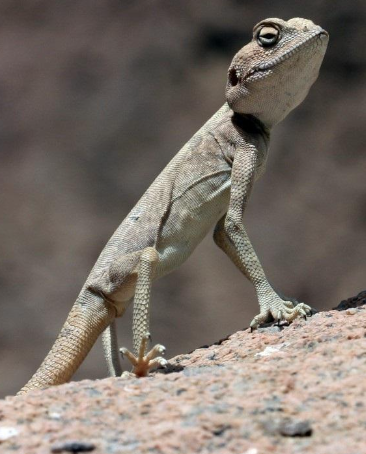
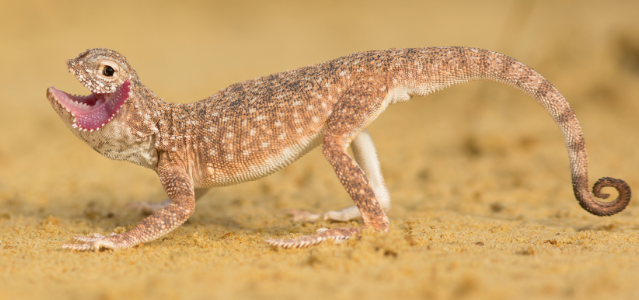
The secret toad-headed agama has a few hidden tricks to help it thrive in its arid landscape. Daytime temperatures often approach 100°, so the agama adopts a tiptoe stance

to limit his contact with the hot sands. He tries to escape the sun’s rays by burying himself, shimmying into the sand, disappearing in seconds. Sand provides excellent camouflage from predators. Sometimes four months pass underground in which the agama becomes incredibly hungry, only dreaming of the days where his belly was full.

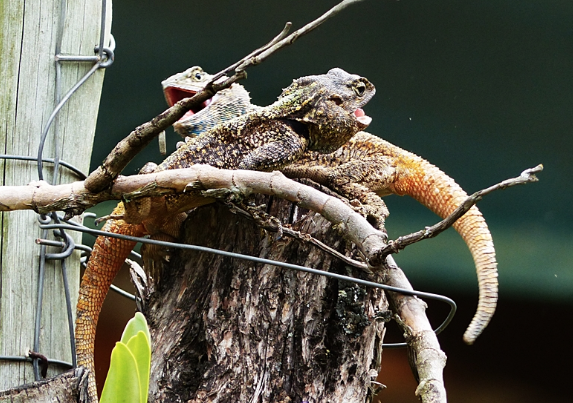
April is the beginning of the agama mating season. A single male agama is never the only one in the area, and he’ll need to take on a challenger if he wants to earn the right to breed fights over females. Fights can be bloody, but they have less violent ways to scare off the competition.

The challenger unveils his brightly colored skin flaps undeterred; the other male flicks his tail at the challenger, ignoring his intent to stand his ground.

The challenger replies eventually – he works in some swagger and the other backs down after a great struggle, leaving the two lover agamas to get to business, creating the next generation, and all this is just one battle faced by all who wear the lizard skin. 

What makes a reptile a reptile? There are four main reptile groups: turtles and tortoises; snakes; lizards, crocodiles and alligators; and the tuatara. The tuatara is a the fourth, little-known branch, first found in New Zealand. The tuatara is the sole member left in the Sphenodontia, which was represented by a lot of species while the dinosaurs were thriving. Tuataras can even grow up to 80 centimeters in length. The remnant males can actually reproduce every year, but unfortunately females usually breed between two to five years, so you can imagine there is a lot of stalking around in bad temper. But back to the reptiles as a class: they are egg-laying animals. Although some snakes give birth to live young, it is a strange fact that the eggs hatch inside the mother’s womb. Reptile eggs are amniotic which means that they have a fluid-filled bag surrounding the embryo. This prevents the eggs from drying out so they can lay their eggs on dry land.

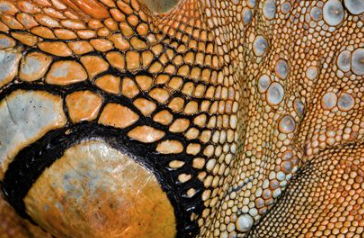
Reptile skin has scales with no hair or feathers. Their scaly skin protects them from drying out – reptiles shed their skins as they often grow in one piece. Almost all reptiles have four legs (the fancy name is tetrapod). Most have short legs and swing their backs side to

side, most reptiles have three-chambered hearts. Alligators and crocodiles however have a four-chamber heart much like birds and mammals. Reptiles are ectothermic or cold-blooded, and they have to use their surrounding environment to warm and cool themselves. Also, reptiles are vertebrates, meaning they have a vertebrae column that protects the spinal cord (like us!). This is useful because when they have a vertebral column, it allows it to support the body’s physical structure and nervous system, allowing for movement and sensation. It also supports the weight of the body, transmitting it to the ground through the limbs. Another thing that can be useful about the vertebral column is that it can protect and support the spinal cord. They also bear the majority of the weight put upon your spine. The body of each vertebra is the large, round portion of bone.

Now, to profile a few of these marvelous agama lizards.

One of the most aggressive lizard species that is known to man is the toad-headed agama. It is a special species that is part of the Phrynocephalus genus family. It is one of the biggest and fiercest species in the genus, and one could often discover it in arid and semiarid environments. It is generally spotted on tops of large, high sand dunes, and occurs at elevations from between −148 ft below sea level to 3,281 ft above sea level in places such as Asia and Eastern Europe. The toad-headed agama is named that because of its unusual lifestyle, different appearance, and strange methods of communication. It can unfold colorful skin flaps at the corners of its mouth to create a vibrant show. Adults can grow up to 24 centimeters long at their full scale – they are greatly known for their red oral display frill. 

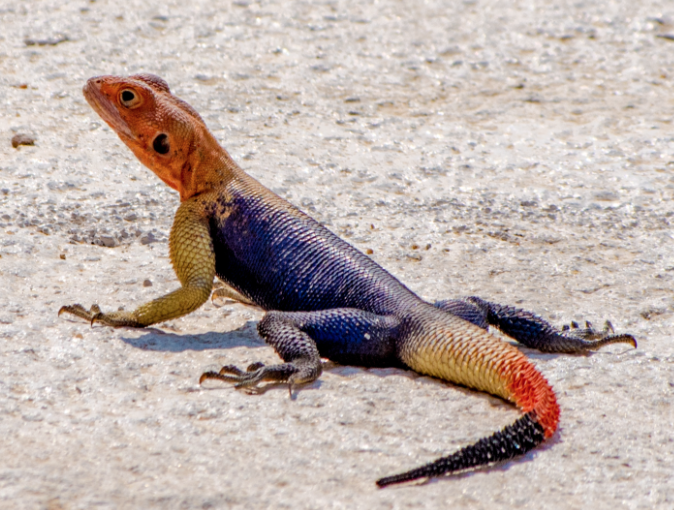
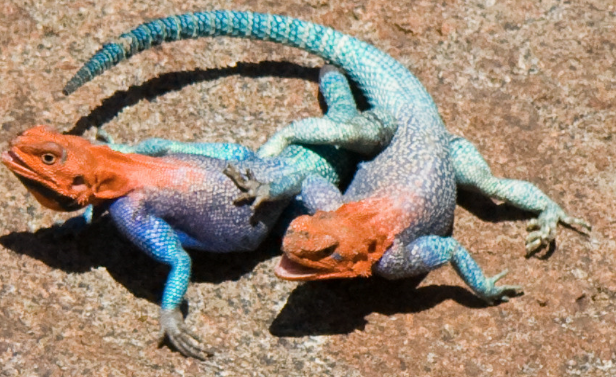
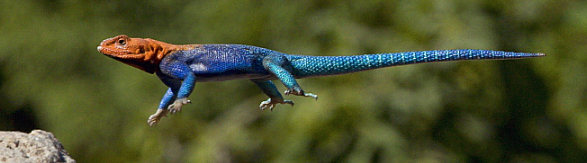
The famously known West African rainbow lizard, also known as the African redhead agama, is a rare lizard native to West Africa. It is a marvelous member of the Agamidae family. This is a powerful lizard that has conquered places all the way from South Florida, from Miami north to Martin County. The first ever to be found was found in Florida in 1976. Male African red headed agamas are colorful bright orange heads, with beautiful dark blue bodies, multicolored tails, and they can even grow up to a foot long. Females, on the other hand, are not as colorful, but they do have some bright areas where they shine, and are smaller than males. African red headed agamas are usually insectivores. They form small social groups that contain both dominant and subordinate males. The eggs they lay are usually in huge clutches ranging from five to seven ellipsoidal eggs. The eggs will generally hatch within eight to ten weeks.

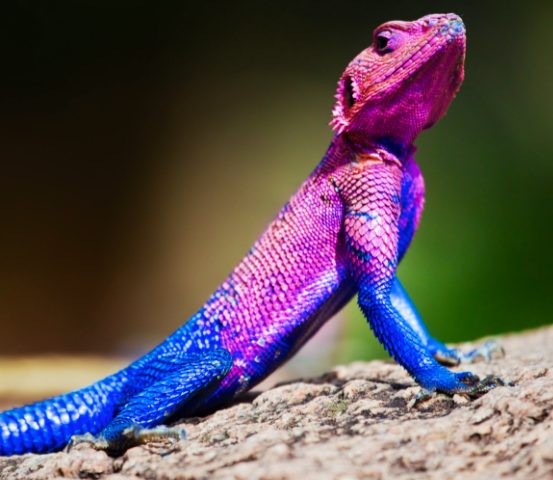
The Mwanza flat-headed rock agama is often mixed with the rainbow agama as they have many similarities. The flat-headed rock agama can be often found in semi deserts and can be seen in the hot weather just peacefully basking on rocks. The male’s head, shoulders, and neck are often seen in bright red or even violet; on the other hand, their body is royal blue. The female is usually found in shades of brown and is impossible to distinguish from female agamas of other species. The Mwanza flat-headed rock agama waits for their prey to come in close and then suddenly they pounce on their prey. It waits quickly and eagerly under a rock or large stone, or in the shade and waits for an insect or small mammal to walk by, so it can capture it. After that, it chases the prey and catches it using a tongue with a tip covered by spikes.

The Kenyan rock Agama, Agama lionotus was particularly hard to find. Finding the Kenyan rock Agama took a bit of searching. This species can be a stippled brown and black which makes it nearly invisible; it’s a camouflage expert, able to change to a color of its choice. It is said to be the commonest lizard in Kenya, and also found in parts of Ethiopia, Uganda and Tanzania. The Kenyan rock agama is not toxic, venomous, or aggressive to humans and often leaves when approached.The bite of a large agama could painful, but it is highly likely that there is no chance of death. The Kenyan rock agama is known to eat insects, especially ants, grasshoppers, beetles, and termites. They will also consume berries, other fruit, seeds, eggs, flowers, grasses, and even small mammals, but will be more hesitant about it. The Kenyan rock agama lives in small social groups with a dominant male and several subordinate males and females. The dominant male defends the territory from intruders.

From the toad-headed to the smashed rock, from the frog faced to the rainbow – agamas have both the color, vibrancy, and attitude.