Monthly- Archives: May 2023


CHRIS HE

Moldy pork

The Bay Area seems like a shiny toy, but actually it is a piece of moldy pork – I do not feel prosperous living here, but rather very uneasy. Justice is treated unjustly, those who are given the power of maintaining justice don’t do it, and this needs to stop as soon as possible.

I was a victim of the progressive theory and practice under the control of Alameda County District Attorney Nancy O’Malley, since replaced by Pamela Price.

I was robbed. In addition, my friend’s car window was smashed, which changed my whole attitude about living in the Bay Area as this never happened when I lived in Boston. The punishment for the crime must fit the crime, otherwise, criminals will work together to injure and ruin their fellow citizens at an increased pace, as we can see today in certain cities run by District Attorneys who protect the criminal class. 

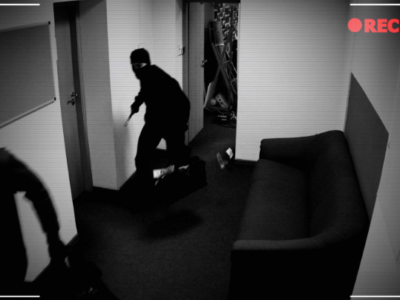
On September 20, 2022, I turned off the lights and went to sleep at 12:10 because I had an exam the next day. At 3:00 a.m. I heard a loud bang and was awakened in my sleep. I didn’t care about the noise at first until I saw some flashlights coming in and three black men dressed tightly, hiding their faces. They came to my bed and pulled me up – I realized I was being robbed. They started searching my room for anything of value, such as my jacket, shoes,  cash, etc. They turned my roommate’s and my room upside down and stole our coats and shoes. I  called the police immediately after they left, and when police arrived and turned on the lights in the living room, I finally saw how I had been burglarized – my door had been smashed open and the lock broken (where the loud noise came from). When the police arrived they made a brief recording and collected some fingerprints and evidence in the room. 

I was very intimidated and asked them if this kind of thing happens often here. Ironically, they said it started to happen more often after the epidemic and ended with the words “Welcome to Oakland”. I can’t imagine that in such a prosperous metro area as the Bay, evil is growing so quietly in the dark, even turning my memory of this beautiful city upside down – it’s a city of sin. We are already in Gotham City, and since evil cannot be controlled by the government and the police, I think the Bay Area needs a Batman, their own hero. Having the Batkid save Gotham in 2015 was obviously not enough.

California’s violent crime rate increased by 6.0%, from 440 per 100,000 residents in 2020 to 466 per 100,000 in 2021. While robberies fell somewhat (by 1.9%), aggravated assaults jumped by 8.9%, and homicides and rape increased by 7.7% and 7.9%, respectively (Lofstrom). Why do criminals become criminals? Is it because they are in great need, and so they strike strangers to get what they need, like bread and milk? No, that can’t be the whole story; people living in poverty often turn to crime as a means of survival. But there is a cause and effect between police policy, punishment, and the law, and when there is a lack of punishment, somehow the criminals become aware of this, and they… wait for it… yes, they learn about this laxity and commit more crimes. 

This is a well-known fact in the Bay Area – if you decide to break the law, you may only receive a slap on the wrist. Assemblyman Kevin Kiley (R-Calif.) is in support of the bill to repeal Proposition 47.

During his February appearance on Fox News, Kiley said, “We removed the consequence for stealing – and what do you know, it caused a lot more stealing. Under Prop 47, you can go into a store and steal up to $950 worth of merchandise and it’s not even charged as a felony. It’s not even a slap on the wrist” (Loe). Justice officials will pretend that this is to ensure that life is better for people who have lost their income or sources of goods during the so-called pandemic. This doesn’t actually ensure that their lives will be better, for they must live with their guilty consciences. Rather, imagine that when what you have worked so hard for is available to others at their fingertips and you have no protection. It’s really an insult to people who are working hard even during an epidemic – the law is destroying what they have worked so hard to earn and carefully maintain.

Reducing crime during a pandemic in the Bay Area was challenging. The spike in crime in the Bay Area was largely attributed to decreased revenues, judicial inaction, and legal favoritism. Now that it is over, several strategies need to be implemented to address this issue. One approach is to address economic inequality by providing job training programs, employment opportunities, and increased access to affordable housing, which would also help reduce crime. Repealing Prop 47 that protects criminals, and increasing enforcement against criminals will encourage more people to work for income and food – not a crime. Another strategy would be to increase patrols and police presence in high-crime areas, such as the Oakland area, where crime is common but police presence is far from adequate. And to address these problems, additional officers are needed to deter criminal activity. And finally and most importantly, start punishing these criminals – as they are permitted to get away with crime, I along with countless others are suffering and will continue to suffer more, while the City by the Bay will continue to become a pigsty.

Works Cited

Loe, Megan. “No, You Can’t Steal up to $950 Worth of Merchandise in California without Consequence under Prop 47.” Verifythis.com, 23 Feb. 2022, https://www.verifythis.com/article/news/verify/crime-verify/california-prop-47-shoplifting-950-fact-check/536-4d1de58e-bf47-4ede-8c2f-b4d0c1788b86.

Lofstrom, Magnus.“Crime Trends in California.” Public Policy Institute of California, Feb. 2023, www.ppic.org/publication/crime-trends-in-california


LOCHLAN McCARROLL


The Hagfish: a living wormy fossil

Scientists estimate that the hagfish has been around for 300 million years and has barely changed. They are the only animal with a jawbone but no spine. They are so interesting and unique and must be studied for their ways of helping our world and for their unique characteristics. 

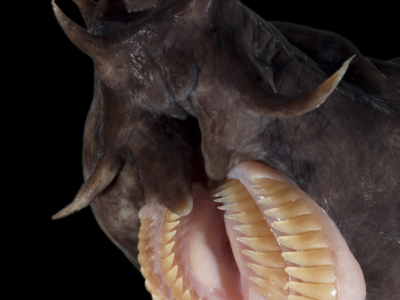
The amazing slimy hagfish body size ranges from 4cm to 127cm, but most are sized around 35cm-50cm, depending on their species. They have paddle tails for swimming and a body like an eel. They have no true fins but 6-8 repulsive barbels around the mouth and nostril. A barbel is a fleshy filament growing from the mouth or snout of a fish. The coolest part about the hagfish in my opinion is its jaws and mouth because their teeth do not open and close vertically, but horizontally:

This lateral motion of the jaw is only shared by other arthopods, animals in a taxonomic rank consisting of insects, crustaceans and other animals lacking spines. The amazing hagfish teeth are shaped like horns and they retract and protract to grasp food. The color of a hagfish depends on its species; most common are a grayish pink and look like a worm, while some can also have blue-gray skin. 

Mucus pores^

The distinct boneless, scaleless, and jawless hagfish shoots mucus, which when combined with threadlike fibers, becomes slime. This amazing slime comes from 90-200 pores along its body. This sounds like a lot but the slime only emits where the hagfish has been bit or attacked. 

Their foul slime is rare in the animal universe. The mucus, when mixed with seawater, acts as a net to trap predators using the slimy threads and is very dangerous. The slime is thought to be sticky but is surprisingly soft, compared to other animals like the velvet worm, whose slime has a rough texture. However, this hagfish mucus is better and stronger than your average mucus. It comes out through 100 glands along its body. When the mucus mixes with seawater it becomes very dangerous slime. The slime expands 10,000 times its size in around 400 milliseconds (0.4 seconds). This slime is made of very thin proteins which have nearly bulletproof properties like kevlar. To quote the Oxford Dictionary, kevlar is a “synthetic fiber of high tensile strength used especially as a reinforcing agent in the manufacture of tires and other rubber products and protective gear such as helmets and vests.”

This slime can clog the gills of fish and sharks causing them to have trouble breathing, or may even suffocate them. When the hagfish is attacked it releases the slime, causing its predator to gag and release the hagfish. The hagfish’s fierce slime is why very few marine animals attack, because of this mucus and gill clogging defense. 

While the hagfish’s slime is used as a defense from predators, at times it might get stuck on the hagfish itself, and this fish doesn’t want to be covered in its own slime!

The spineless hagfish wraps its tail around its body to remove the slime from itself in an overhand knot. The hagfish not only slimes when being attacked, the hagfish slimes when agitated and does the same overhand knot technique to clean its gills and body.

Hagfish slime is used for many fascinating applications and is part of various peoples’ diets. Hagfish are mainly eaten in Korea. In fact, Koreans eat these fish so much that they have a risk of going extinct and the hagfish even has to be imported from the United States. This food is valued very much and has a very elaborate cooking process. For those who want to learn: step one, the hagfish are skinned alive for maximum freshness. Then they get cut up into segments and are slapped onto a grill, still moving. After that the fish can be served in many ways such as in stir fry or in sauces. 

The slime can also be used for many products. It’s used for fabric and in wallets and belts. The slime has medical uses too. The wet mucus can help treat some burns and dried slime can help with bandages.

To conclude, the hagfish might not be the most admired marine animal.  However, the hagfish can shoot slime and tie itself into knots and, having amazing characteristics, can help solve many problems and has caught the attention of many scientists and is an animal that we must protect for the future of slime, food and more.


EDWIN ZHAO

Hoaglund’s Shell

The critic and editor Phillip Lopate has many insights on the personal essay – how it functions, what makes it tick, how it is attractive to readers, and its various unique aspects. In his second aspect of the personal essay (the first is “The Conversational Element”), he defines “Honesty, Confession, and Privacy” as essentially the motor of the personal essay – the plot, as it were, that causes the reader to turn the page. “In opening up to the reader, in revealing my weaknesses, I become vulnerable, and this vulnerability becomes a magnet that draws the reader closer to me.” But does every personal essay require the overt expression of privacy to drive it? Or can these feelings leak out from a personal essay in indirect ways?

Edward Hoaglund, one of Lopate’s selected authors, in his “Courage of Turtles” expresses how his many turtle experiences represent as a learning experience in his inner life.

In his essay, Hoaglund does less with sharing emotions, but is incredibly adept in sharing his mind: his mind as it studies, absorbs, receives impressions, as it seeks to classify and define, and all this with turtles. We learn about the different types of turtles he has encountered, and without him stating it overtly, we see the connection to himself, and the turtles themselves turn Hoaglund’s insides out. It is almost by omission that we learn about Hoaglund: for he rarely lets us into his personal life, except through his kaleidoscopic treatment of this wonderful animal – he is so focused on the turtles themselves. But what is the overall impact of the essay? If we look at the last few lines, where he drops a turtle into the Hudson River, he gives up on his turtle: “I recognized that I must have done the wrong thing… there was nothing I could do, I walked away.”

He does show some emotion when he talks about frogs – “Frogs are depressingly defenseless: that moist, extensive back, with the bones almost sticking through. Hold a frog and you are holding its skeleton” (658) – could this be interpreted as expressing the fragility of the writer, seeing that he is subject to frogs’ naked exposure? Or is it that he vastly prefers turtles for their armor, and that perhaps his love of these animals has to do with his own need for protection? At any rate, the frog is basically the inverse of turtle, and so at the essay’s conclusion, we are intrigued to learn more about Hoaglund himself.

June Qin responds:

It’s interesting that you explored Hoagland’s essay through the lens of “Honesty, Confession, and Privacy” because, as you mention in your response and as I saw when I read Hoagland’s essay, Hoagland talks more about turtles than he does about himself, so how does he confess and show vulnerability to his readers? Your guiding questions of “Does every personal essay require the overt expression of privacy to drive it? Or can these feelings leak out from a personal essay in indirect ways?” nicely set up the rest of your response and provide food for thought as we begin to write our own personal essays.

Throughout Hoagland’s discussion of his love for turtles, he reveals more of himself; as you point out, “the turtles themselves turn Hoagland’s insides out.” The essay’s ending illustrates this: we see Hoagland’s mind working as he drops the diamond terrapin into the Hudson River, sees its fear, and proceeds to walk away. To me, this scene harkens back to the essay’s title, “The Courage of Turtles,” as we can imagine that the turtle persevered through the unfavorable conditions and likely made it to safety. Compared to the turtle, Hoagland doesn’t seem nearly as courageous. Is he embarrassed or ashamed of what he did? I would like to hear more of your opinion on this scene.

I liked your analysis of his distaste for frogs and how his preference for turtles over frogs possibly parallels his desire for protection as a writer. While reading this section of your response, I snapped back to your title, “Hoagland’s Shell.” Your diction—“the fragility of the writer” and the “armor” of the turtle shell—also ties back to Lopate’s aspect of “Honesty, Confession, and Privacy.”

Overall, I enjoyed your insightful commentary on Hoagland’s essay.


JASON QIN

JASON IS READING LORD GRIZZLY BY FREDERICK MANFRED. This novel, written in 1954, is the authoritative creative nonfiction masterpiece by Manfred, far far superior to the more recent The Revenant, which was made into a Leonardo DiCaprio vehicle of the same name. In Manfred’s work, buffeted by many long hours exploring the countryside where Hugh made his 247-mile crawl, and by reading over 100 books written by and about mountain men of the 1820s, the reader is launched into a veritable time capsule, hurtling back exactly 200 years ago to experience, along with ole Hugh Glass, the rough-and-tumble nature of frontiersman life.

###

When Major Henry states that the “Fact is, one could almost claim we’ve slipped a little, fallen behind the red devils. The red devils sacrificed animals to live; we sacrificed humans”. He is stating that the “red devils” are more morally advanced than the whites because instead of sacrificing humans, they sacrifice animals, the humans being people like Jesus Christ, and the animals being the grizzlies that the Indians worship as their “giver of life” (73). Not only that, but the Indians feel genuinely sorry about sacrificing the bear, as they “bring him the best food they have left” when they have a shortage of food (73). However, Jesus Christ was not really sacrificed, he was executed as an enemy of the state because he promoted a religion that did not include the Roman emperors as gods; however, the Roman leader Pontius Pilate had initially shown resistance to punishing him, and had reluctantly taken him into the garrison to flog him as a token. When presenting his victim to the Jews, who for religious reasons wouldn’t enter the garrison, they screamed at the top of their lungs, “Crucify him! Crucify him!” As a point worth noting too, Jesus was claiming that he was the Son of God, which had been prophesied in the Old Testament, and the Jews were not happy with this fulfillment of prophecy.

Hugh despises this pro-Indian stance from Henry, as he states that all of these deaths are because of “his love-the-redskins sermons,” and that if he did not let “the Rees off easy last June,” none of this would be happening (79-80). This statement proposes a Machiavellian idea that if one must choose, one would rather be feared than loved. Who says that the Rees would care if the whites loved them? It does not change the fact that they are encroaching on their land and threatening their way of life by cutting them out of trade. People will always fight for their own interests, for example, the Romans executed Jesus Christ because a monotheistic religion would have and did threaten the fabric of their society, and the Indians who sacrificed bears, simply wanted food. Since simply respecting their traditions and their people does not give the Rees what they want, the Rees will continue to fight. Therefore, from the perspective of the Rocky Mountain Fur Company, it would have been best if Major Henry had been absolutely brutal with the Rees. Would that have been good for the Rees? Of course, it would have not.