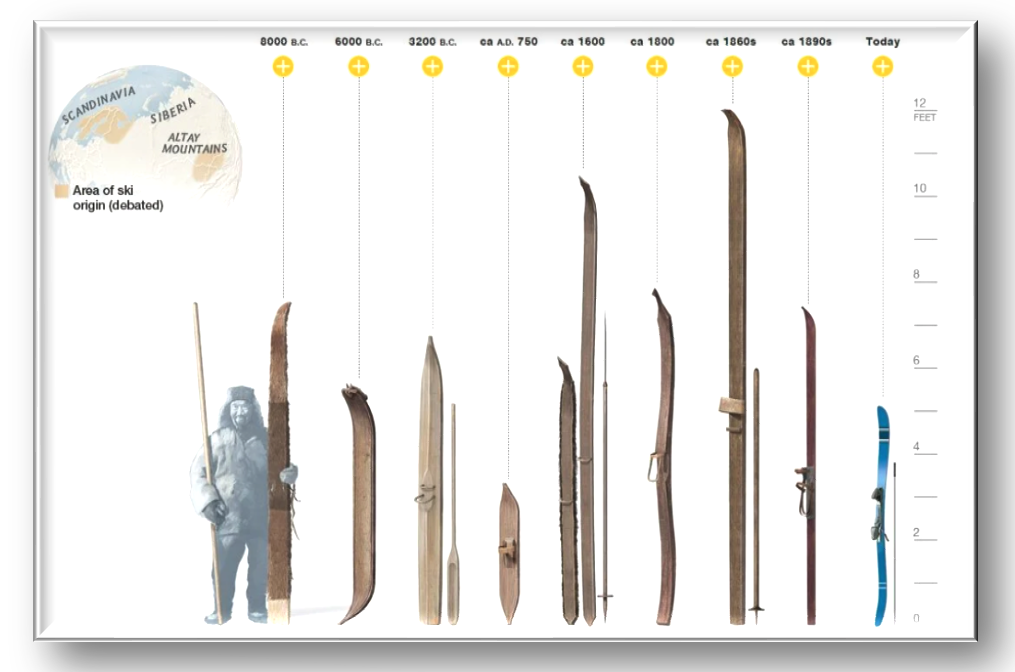
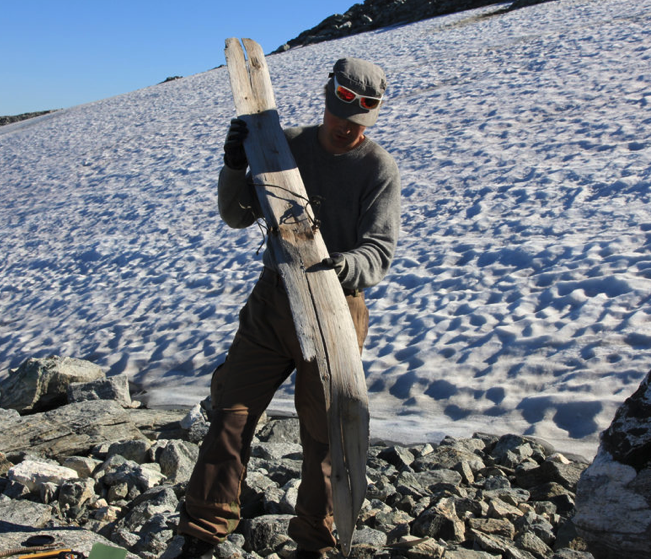
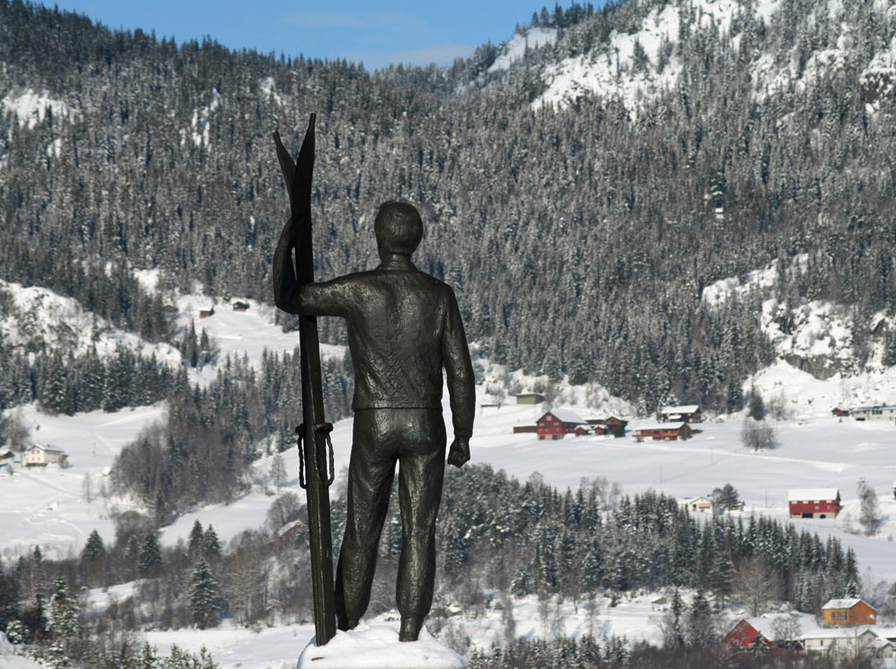
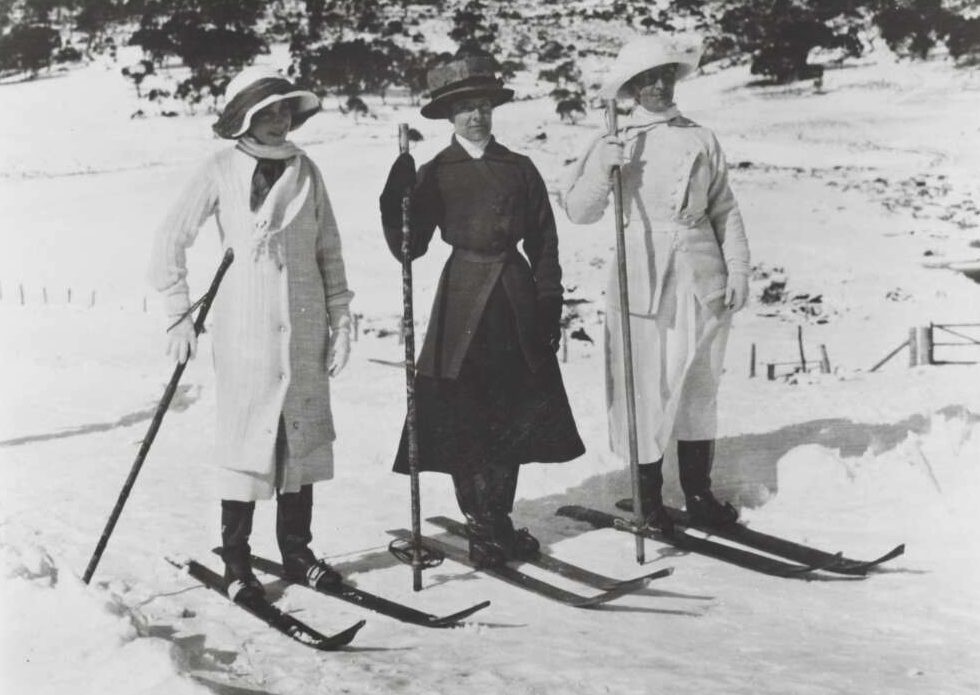
Skiing began thousands of years ago, first as a method of travel for people living in snowy areas. Early evidence suggests that skiing first appeared in parts of Russia and Scandinavia, where heavy snow made other forms of transport incredibly difficult. People there would find wooden planks and use them as early skis. Archeologists found evidence of long wooden skis in Russia dating back almost 8000 years.
In Norway, people discovered cave paintings depicting people on two pairs of wooden planks with poles in their hands that were believed to be over 4000 years old, and it is often stated that the Sami people of modern-day Scandinavia were some of the first people to rely on skis as a survival tool, even using them as a way to hunt.
At this time, skis were often uneven and scuffed, often made from birch or pine wood, leading to many accidents and injuries. Not long later, skiing techniques and equipment improved. Many people developed their own ways of skiing, such as using skis of different lengths for more maneuverability, which helped hunters catch prey more easily, using poles to help them balance, or using animal skins to improve uphill climbs. Even today, you can still see the effects of these thousand-year-old inventions. To this day, many touring skiers will use a type of “skin” made from nylon or goat hair to climb high mountains and then ski down.
Slowly, skiing became embedded in local culture, especially in parts of Northern Europe. In the 1800s, skiing first became a sport. Norwegian engineers came up with ways to make skiing not only faster but also safer, introducing new skis and techniques.
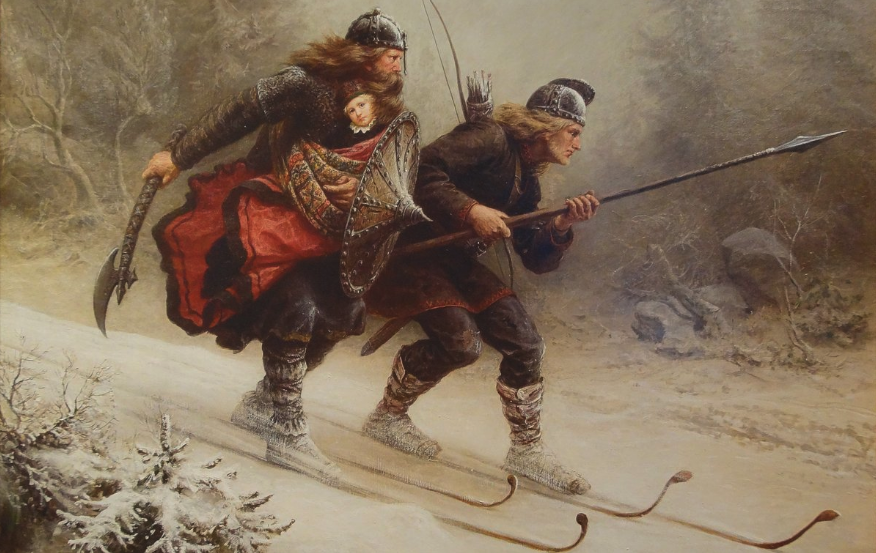
This depiction of “the Birkebeiner skiers” carrying Prince Haakon to safety during the winter of 1206 has become very important in Norwegian history-telling. The prince later became King Haakon IV and his reign marked the end of the period known as the Civil War Era in Norway. Picture: By Knud Bergslien, The Ski Museum. Holmenkollen, Oslo, Norway (Public Domain).Sondre Norheim
A prominent figure pioneering much of skiing was Sondre Norheim (1825-1897), a farm laborer from Telemark, Norway, who personally made his skis from a piece of plain hardwood and decided to give them a slightly smaller waist underfoot, which became known as a sidecut, something that modern skis still rely on. Not only that, but he also introduced bindings that secured the heel, allowing for greater control and safety as well as the ability to turn more easily.
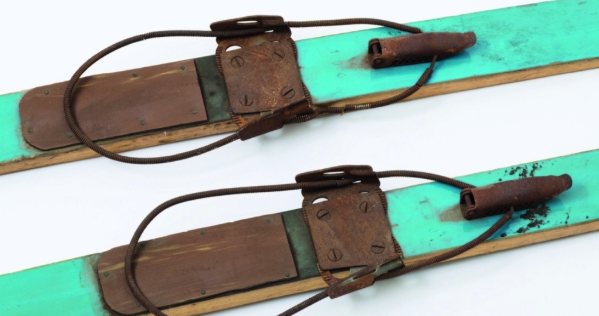
Kandahar binding
Rope binding
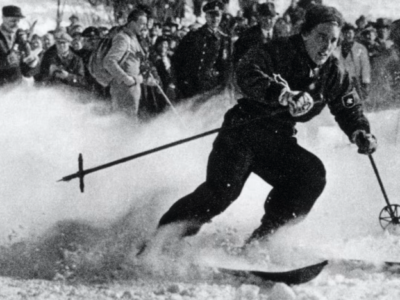
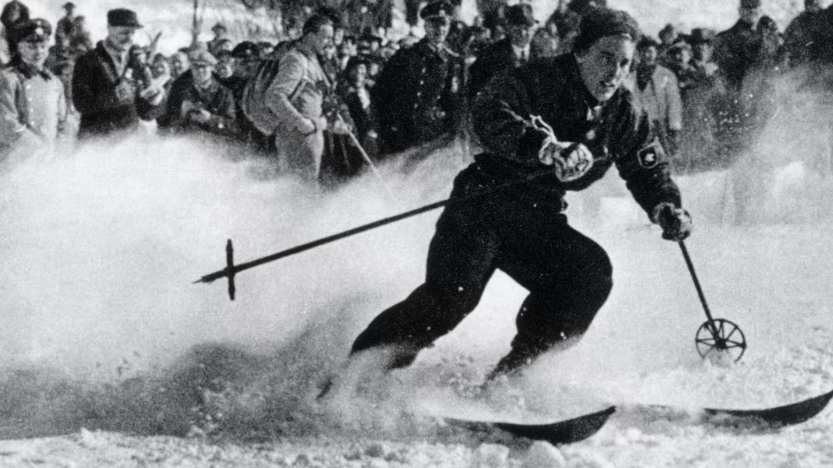
These sudden innovations basically became the underlying foundation of alpine skiing, making turns possible for the first time. Around this time, skiing competitions started to become more popular, and the sport attracted thousands across Europe, where ski clubs formed all around the continent. Spectators and participants increasingly grew more interested in skiing. In the 1930s, there was yet another leap in technical progress. Austrian skier, Felix Leitner, invented the use of steel edges on skis in 1928, giving them a more reliable grip for all sorts of harsh terrain. Right after this invention, another skier named Guido Reuge invented the Kandahar cable binding, which locked the heel down more aggressively, making steeper and steeper descents easier, although it came with a blaring downside, as the binding would not release during falls, often injuring the skier badly. Then, engineers came together to make a massive leap – the development of laminated construction. By combining layers of hickory, fir, and other softer woods to produce a ski, weight dropped immensely while still being more durable than any other ski that had come before it. By the 1936 Winter Olympics, these innovations were used by the Nazi regime as a propaganda apparatus. They used images with Aryan skiers dressed fashionably, designed by propaganda artist Ludwig Hohlwein, to promote a “master” race.
Joseph Goebbels, the Minister for Public Enlightenment and Propaganda, quickly used the opportunity to make an image of the new “National Socialist Germany”. During the games themselves, German athletes
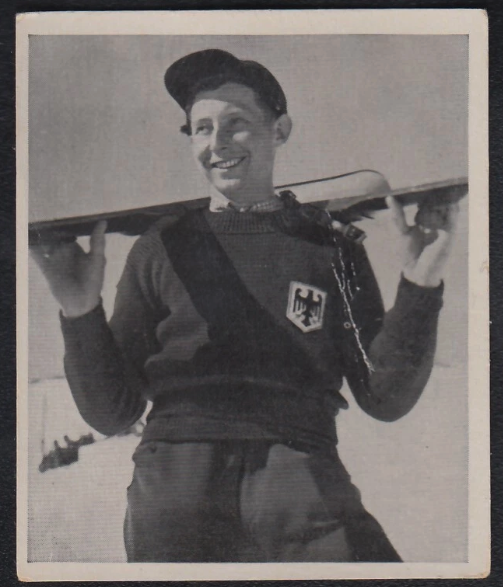
Franz Pfnur and Christl Cranz
won the men’s and women’s alpine skiing events, and their victories were used as proof of the Aryan race superiority.
Slowly, as technology advanced, skiing became more of a recreational sport rather than a form of transportation, and in the early 20th century, skiing was officially recognized as a sport and included in the first Winter Olympics of 1924. Women, a part of the European women’s rights movement, started skiing to send a message of “I’ll do whatever I want”, while demanding equal rights as men.
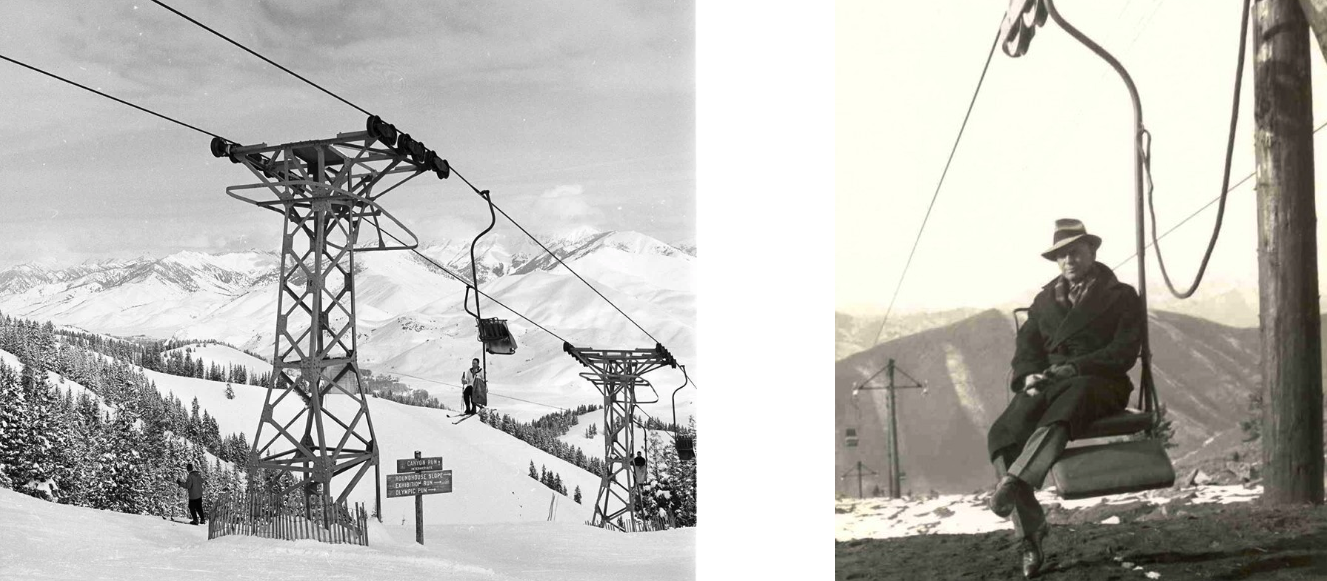
The Olympics marked a major turning point, skyrocketing skiing across the globe as a new sport. It became an icon of luxury and class, leading thousands of wealthy people to go out skiing as a way to boast to others. During this time, the invention of a ski chairlift came into view, making skiing more accessible to everyone, creating a mass boom across the world as tourism spiked.
With the increase in skiers, there was a higher demand for safer, newer, and more stylish equipment. In 1947, an aircraft engineer, Howard Head, built the first ever aluminum-laminate skis, called the Head Standard. These skis with metal cores were faster, more stable, and more predictable.
Howard Head 1914-1991
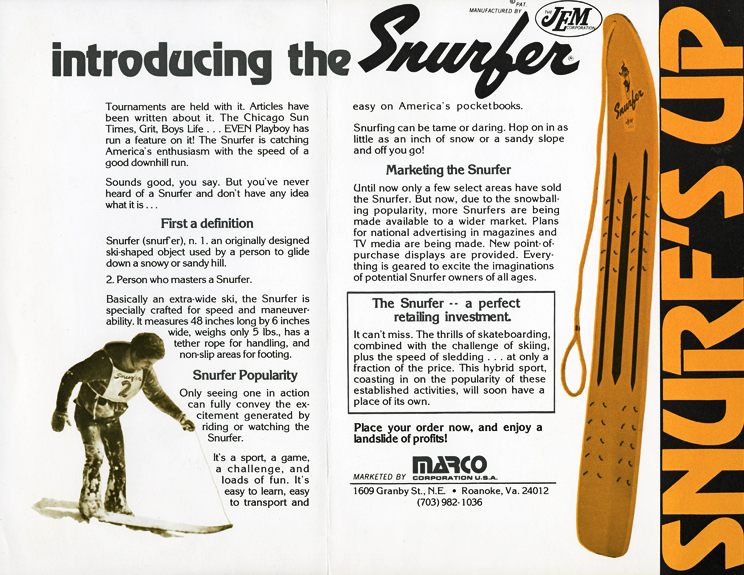
As the skiing population kept growing, more inventions came. 1960 saw the introduction of fiberglass, borrowed from the aerospace industry to make skis that were even lighter. Years later, Sherman Poppen, trying to create a fun pastime for his daughters, stumbled upon an invention he originally called the snurfer, which involved a combination of skiing and surfing.
The snurfer eventually evolved into the modern snowboard through innovative bindings and designs. Years later, in 1998, snowboarding was officially inducted into the Winter Olympics, cementing itself as one of the most widely recognized sports. Today, skiing and snowboarding are viewed not only as sports but also as a form of leisure pastime, enjoyed globally.
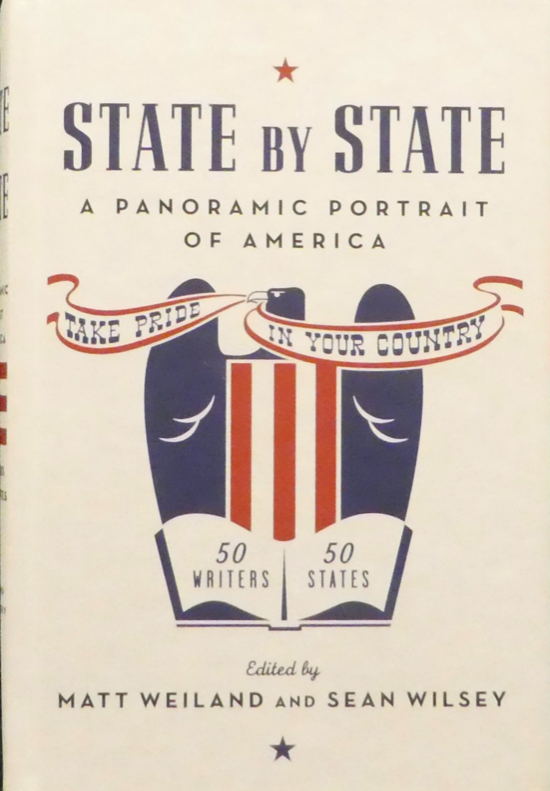
had a mission: uncover America and all its richness, one state at a time. The project grew from a hunch and a conviction. The hunch was that for one to truly understand America, they must learn it state by state, and to acquire an accurate understanding of a state, information should be gotten from the accounts of those who have an adept fluency in that state’s history, culture, and landscape. Beneath the hunch, Weiland and Wilsey sought to communicate a deeper conviction, which was that despite the largeness of the United States, many of its places remain under-described and neglected. So in 2006, the two invited fifty writers to serve as representatives of their respective home states. A few exceptions to this make the book even more interesting: Jackie Lyden, the NPR reporter, covers Missouri, and Paul Greenberg takes a fishing trip to Alaska, but for the most part, each state is written by a prominent writer who grew up there, moved there, or knows it very well. Two years later, they published their anthology, naming it State by State: A Panoramic Portrait of America. Each chapter of the book depicts each state through a unique lens formed from the personal experiences, cultural values, and relationships of the authors.
Wilsey
Myla Goldberg was chosen to write “Maryland”. Born in 1971, she was raised in Prince George’s County, which at the time was one of five out of Maryland’s twenty-two counties that was predominantly suburban. Goldberg’s upbringing in Prince George’s County placed her at the physical and ideological crossroads of Maryland. Growing up between federal institutions and the rural landscapes she longed to reach, Goldberg lived in a state that had always been divided geographically, politically, and socially. Throughout her essay, she depicts the dichotomies that she experienced while growing up: city versus suburb, North versus South, freedom versus restriction, and publicity versus secrecy. Myla’s unique position would later shape her portrayal of Maryland not as a unified state, but as one perpetually divided against itself, mirroring the larger United States.
Myla Goldberg has been writing all her life. As a young girl, she sat at her grandparents’ kitchen table, writing and illustrating a crayon-book story about Edgar Allan Poe. She enjoyed an abundance of genres, spanning from the works of Stephen King to childhood favorites like Bridge to Terabithia and Watership Down. Later, authors like Milan Kundera and Kurt Vonnegut introduced her to the idea that fiction could incorporate philosophy, humor, and non-linear storytelling. Today, Goldberg is a professor of writing at Sarah Lawrence College. She writes with both discipline and curiosity, often joking that she doesn’t outline because “the fun of writing is finding out what’s going to happen.” Her most famous novels, Bee Season and The False Friend, are concerned with childhood memory, belief, obsession, and ultimately, identity. Bee Season presents a family where each member becomes consumed by their own obsessive pursuit, leading to disaster. The father character, Saul Naumann, has a lifelong quest for divine connection which develops unhealthily onto Eliza when he sees her spelling ability as a mystical gift. His obsession blinds him to the needs of his other family members. Aaron, Eliza’s brother, also goes down a similar path in his spiritual search. Eventually, the family collapses from their obsessive pursuits. When I was reading Myla’s Bee Season, I developed feelings of sympathy towards the Naumann family. The daughter of Saul and central character of the book, Eliza, demonstrates an extraordinary ability in her school’s spelling bee competition, far surpassing the excessive mediocrity of the students around her as well as her own former mediocrity. It seems that overnight, she goes from a quiet, overlooked child to the center of attention in her family. Her father, a self-absorbed religious professor, notices her talent and, absorbing it as something enigmatic and rare, he attempts to connect her natural ability with Jewish mysticism, believing that there is deeper religious meaning to her spelling gains. His spiritual interest quickly turns into an obsession, and as the novel progresses, the relationship between the two begins to intensify, hinting at internal conflicts that aren’t obviously apparent. Her other novel, The False Friend, concerns a woman trying to untangle a 20-year-old memory and explores the complexities of moral judgment, the fallibility of memory, and the adults that children become.
Goldberg
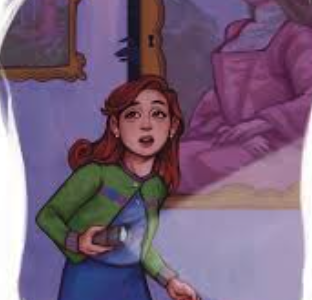
Goldberg begins her essay by exploring the housing development that she was raised on, toying with the word “ivory” to illustrate the demographics and exposing the military-industrial complex of industries that surrounded the greater DC area. She provides an anecdote of a childhood excursion by bicycle where she’s hamstrung at every turn by buildings and even a guard who tells her to turn around. This yearning for physical freedom of course is mentioned in the first paragraph: “I liked the place best during the impressive blizzards of the 1970s”. When the “lanes and drives became impassable” and “towering piles of shoveled snow obscured” her view, the normally orderly suburban landscape was transformed. The snow disrupted the roads and boundaries that usually limited her movement, creating a sense of mystery and temporary freedom. In this way, she strengthens the idea that the blizzards made the environment feel less controlled and allowed young Goldberg to imagine greater physical freedom.
The metro area gave her many impressions. One of the earliest of these was “peeing in the shrubs that fronted the main headquarters of the Internal Revenue Services”.
Internal Revenue Services, Washington D.C.
The cities of Baltimore and D.C. provided for a series of mixed impressions. On one hand, they were the places where she would often visit the National Air and Space Museum and Washington Monument for the Fourth of July.
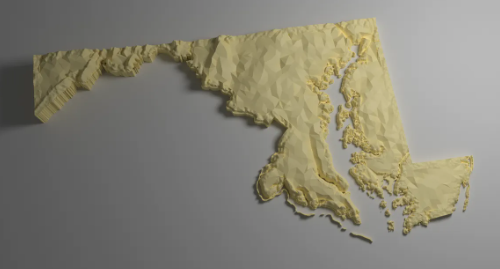
They were, however, also the lens to her first perceptions of crime, liquor addiction, and particularly poverty that her younger self found too “complicated” as opposed to more simple incidents she experienced back in the suburbs, like encounters with “experimental pigs”. She tells us that if she had been able to travel forty more miles, she would’ve discovered “the wilderness” outside of Montpelier. Comparing the state to a handgun, she says P.G. was the “trigger” that was stationed between the “rural areas that form Maryland’s barrel and handle”.
The two gun components represent a small epitome of our nation’s red/blue discord: the barrel, or the more liberal domain of Maryland, comprised Montgomery County, while the handle, a site of republican values, include Cecil County and others along the eastern border.
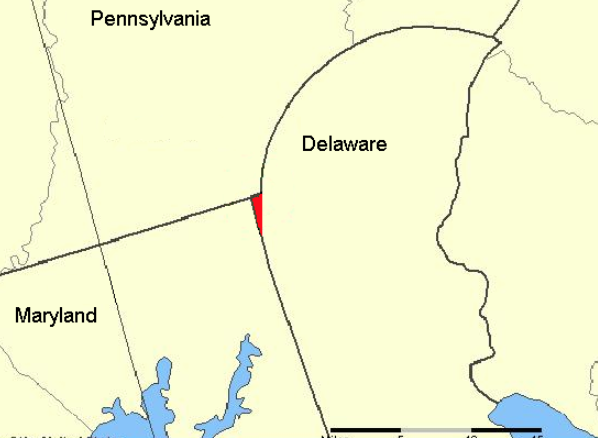
While her current depiction of MD as a border state between the north and south is largely accurate, upon further research, I, a Marylander myself, was surprised to find out just how divided the state had been even before the events that Goldberg covers, during and after the Civil War era. She vaguely gestures toward the liminal position of the Mason-Dixon line in her brief mentioning of it, but treats the boundary as a nineteenth century site of political and social quarrel rather than the culmination of centuries of religious, territorial, and cultural instability in the region. That is to say, she doesn’t thoroughly explore complexity of the Mason Dixon line’s history or that of Maryland’s. The state was actively contested rather than simply split, and had been since its colonial days. Long before the line became known as the divider between slavery and freedom, it was drawn to resolve land disputes and long-term rivalries between the Catholic Calvert family of Maryland and the Quaker William Penn family of Pennsylvania. As I delved deeper into the convoluted history of Maryland, I discovered that the state’s identity had been uncertain since the start. Boundary issues were always prominent; for instance, the Catholic leadership of Maryland often clashed with the Protestant Virginians. Furthermore, when William Penn came to the mid-Atlantic in the late 17th century, assertions for land developed due to an overlap of Penn’s chartered land within Maryland’s northern boundary. This dispute over land went on for decades, and wasn’t truly resolved until the Mason–Dixon line was surveyed in 1767.
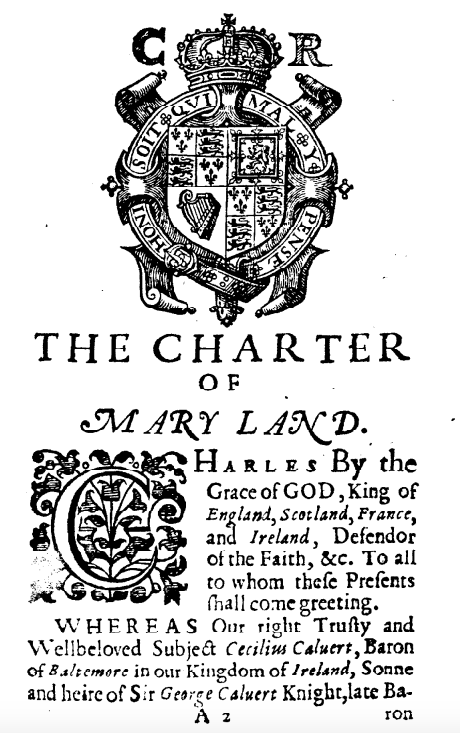
Furthermore, early faults in mapping allowed Penn to claim land that should have belonged to Maryland, including Philadelphia, and even after the survey of the line by Charles Mason and Jeremiah Dixon, those errors were not corrected, but instead standardized. Maryland was founded on division, negotiation, and shaky coexistence, and even nearly four hundred years since King Charles I granted the provincial charter to Cecil Calvert, as Goldberg confirms, those principles still linger. Upon further study of the eighty-year-long Penn-Calvert boundary dispute, I learned that a twelve mile arc spanning across northern Delaware exists as one of the only borders in the United States that is round. Known as the “Twelve Mile Circle”, the border was formed in 1681 by King Charles to shield his brother’s holdings from Penn’s charter. A portion of this circular border, known as the arc line, forms part of the Mason-Dixon Line. I view this unusual discovery as proof in the pudding of Maryland’s messy, conflicted state identity.
Goldberg reveals her own political leanings. Having grown up in Prince George’s County, she adopted Northern, Democratic values as opposed to the more Republican ones of rural Maryland – the part of the state she had sought out for much of her childhood. She calls herself a “Yankee”, a term referring to the Northerners and Union soldiers during the Civil War. As a child, she had thought Maryland to be firmly Unionist, but in fact the state probably would have joined the Confederacy had Lincoln not imprisoned nine Maryland legislators who were in favor of secession. She personally reflects on this gap of knowledge through comparing the secrecy of her childhood environment, where people avoided talking about their jobs likely due to their being government positions, and the two-dimensionality of her education, which presented a simplified, resolute history of Maryland. Goldberg goes on to write about the differences between her experience growing up, and her Northern friends’: “‘My life-long sense of kinship with those north of the Mason-Dixon Line was the last casualty of my civil re-education. I recently learned that my born-and-bred Bostonian friends don’t think of themselves as Yankees. In New England, there was no Us and Them’”. The Mason-Dixon Line, originally surveyed between 1763 and 1767 to settle a boundary dispute between Pennsylvania and Maryland, would eventually signify the crucial boundary between the Southern slaveholding states and Northern free states during the Civil War era.
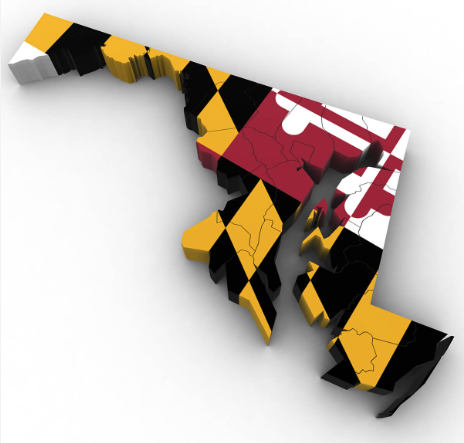
Nearing the end of her essay, Goldberg alludes to the state flag to capture the divided loyalties of Maryland. Instead of a customary blue background with a centered state seal, Maryland’s is divided into four diagonally symmetrical quadrants of yellow-black and red-white. The yellow-black originates from the coat of arms of Maryland’s colonial founder, while the red-white cross was adopted by the Maryland secessionists who flew it as a banner. Although combining the two elements was supposed to invoke reconciliation after the Civil War, the complete division of the colors and shapes reflect the true nature of Maryland’s internal discord. Goldberg concludes by reflecting on the continuity and change in Maryland, tying back to her initial childhood anecdotes. Housing integration has changed the demographic of Ivory Pass and the old “wooded road that provided [for her] escape from suburbia” was expanded to make room for new housing developments. On the other hand, the state song has survived through condemnation and a certain Stars and Bars flag in Cecil County reflects lingering Confederate sentiment. So although landscapes have changed, Maryland’s cultural division remains, just like the clashing design of its flag. Her final image of the Confederate flag shows it to be hoisted atop an industrial cherry-picker in such a way that it rises higher than the “torch-wielding arm of the Statue of Liberty”. Lady Liberty, long understood as an emblem of freedom and democracy, is visually surpassed by its literal antithesis, that being a banner (at least to a Northerner) associated with secession, rebellion, and resistance. The presence of the flag signals that for those of the South, it is something to be culturally honored and preserved.
What does it mean when a symbol associated with rebellion and division looms above one representing freedom and democracy? Can a state, or a nation rather, truly be united when visions of liberty still clash? These questions carry even greater weight when we consider the American Civil War, which was one of the deadliest conflicts in American history, resulting in roughly 1.6 million deaths. At major battles like Gettysburg, where about 25,000 soldiers were killed or wounded in just three days, the cost of division was made devastatingly clear. And yet, more than a century later, the symbols and ideologies that fueled such immense bloodshed still persist with the Confederate flag living on to represent heritage and regional pride. Like its flag, the state itself remains a both jumble of competing views and a reminder that unity is never absolute.
The pride of the South is tied to a historical narrative in which they have emphasized their distinct identity in opposition to Northern authority. The Mason-Dixon Line, slavery, the Civil War, and other factors contribute to a sense of regional autonomy and cultural discord. By emphasizing the height of the flag, Goldberg illustrates how ingrained this sentiment still is in American society today. Maryland, being a site of division since its establishment as an American state, is used to serve as the ideal proof of this. The contrast between the Confederate flag and Lady Liberty encapsulates the state’s, and the nation’s, dual nature. While one points toward liberty and opportunity, the other surpasses it, clinging to a smeared past. In this concluding image, Goldberg reveals that America’s internal divisions are not buried in history but remain visible and unresolved.
By revisiting one of the nation’s foundational documents, the Declaration of Independence, it can be observed that conflict in America has never been purely geographic or political. The Declaration starts with universal claims about human rights, consent of the governed, and the duty of citizens to revolt against corruption. This notion is representative of Maryland’s history. Maryland, a state where “battle lines divided homes and backyards” and where even the contradictions embedded in its state symbols persist, echoes this foundational American dilemma: how to create a unified society when people fundamentally disagree about justice, authority, and freedom. Goldberg’s choice to focus on cultural and regional divisions underplay the deeper ideological conflict in Maryland. By extending Goldberg’s insights through the framework of the Declaration, it becomes clear that the divisions she explains are not just regional, they are enduring and inseparable from the American identity itself. In this sense, Maryland is not just a divided state, it is a symbol of America striving towards unity.
In closing, Goldberg ultimately does advance the vision of Weiland and Wilsey, which posits that one’s authentic understanding of America’s complexity begins with a careful study of their familiar surroundings or their home state. Through personal memory and symbolic reflection, Goldberg presents Maryland as a prism through which the United States’ own divided identity becomes visible. Her Maryland is not simply a depiction of the Old Line State’s landscape, economic, and political flaws but a portrait of America in miniature. It is conflicted, complex, and still seeking to define itself.
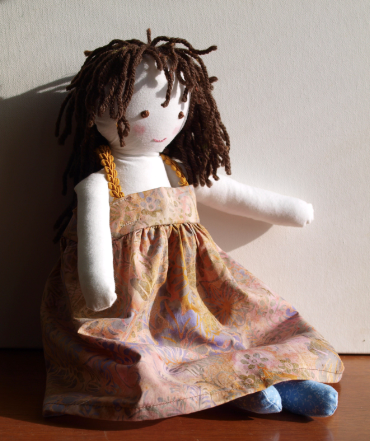
“Look Molly, I drew a picture of you – doesn’t it look just like you? Brown eyes, she has brown straight hair and wears a yellow plaid dress and has a blue bow.”
Molly was my best friend for it was always a joy to look into her felt eyes, to hold her little felt hands, and to see what she had decided to wear today (not felt, but cotton today). Now, I know you are thinking, Molly chooses?! And I get it, you think I’m playing around. But Molly is…
All of a sudden, I heard, “Nancy!”
I ran to the kitchen downstairs.
“Yes, Mom?”
“I’m taking Lewis to the park, want to come?”
“YES!” I exclaimed. “Come on Molly we’ll have a lot of fun at the park!”
I brought her with me to the park. At the park, my little brother Lewis took off towards the swings, and Mom opened her book on the bench. I looked at a pile of mud and thought it would be fun to jump in, with Molly under my arm.
“Let’s go, Molly,” I whispered. “Let’s have some fun!” I took a few steps back and jumped. SPLAT! Mud everywhere! Ugh, now I had to take a shower when I get home – but I didn’t realize that we would have to go home… immediately.
“Nancy! You’re a mess, we’re going home right after I call your brother,” my mom said angrily, snapping her book shut. We came home and when I got into the house, I made footprints up the stairs into my room to put Molly on my bed so I could go take a shower. “You better be there in the same spot, Molly,” I said as I walked away.
When I was heading into the shower, I heard laughter down the hall; I ran down the hall and checked who was there. Nobody. Who was that? it didn’t even sound like Mason’s stupid laugh. Whatever. My older brother Mason is annoying but I can tolerate him… sometimes. He’s loud and obnoxious all the time, so he always disturbs me and Molly’s tea parties. He never stops talking and it makes me very annoyed. But every once in a while he can be nice. Like when he does my chores, haha! And occasionally joins in tea parties with me and Molly.
I jumped into the shower, but as I shampooed, I heard footsteps going into my room… was that my baby sister? Grace is the worst and if I wasn’t such a good person myself, I’d absolutely hate her. Here’s why: she is a tattletale with a mouth of nonstop whining, and she does it all the time.
As I soaped up my hair, I realized that I was proud of Molly, proud for the fact that she didn’t get mud on her felt, proud of the fact that she’s mine, all mine, and that there will never be another Molly. Molly better be there when I’m done showering, I thought. I finished, thinking of how quickly I’d be reuniting with Molly. I opened my door slightly to peek at Molly on the bed. I opened the door even more and… Molly was GONE!
My heart dropped! My favorite doll I had since I was born, was gone.
I yelled, “WHO TOOK MOLLY!” so angrily that everyone in the house could hear. The culprit
either was someone from my family, or someone broke into my room by the window and
stole Molly.
“FAMILY MEETING!” I yelled to my entire family as they all gathered in the living
room. Dinner was almost ready, so everyone was around.
“So who stole Molly?” I looked at everyone suspiciously.
“I was on a call with my friends. I wouldn’t want to steal that doll of yours,” my older
sister Libby said.
“I was over at my friend’s house,” my older brother Mason said with a grin.
All my other siblings were with my dad hanging out, so this case started getting hard to
figure out. My other little brother Malachi stood up.
“Well Mason, which friend’s house were you at?”
“At Aiden’s house.”
“Ok I vote that Mason took Nancy’s doll. He’s acting suspicious,” Malachi said,
raising his hand.
“Or did you steal it? You’re the one who’s trying to blame it on me when I said I
was at my friend’s house.”
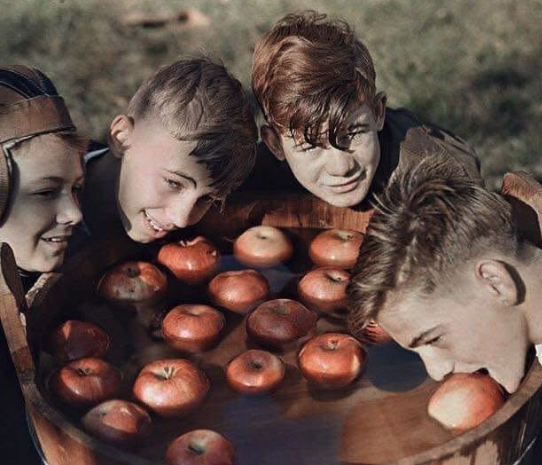
“I was with Dad, Grace and Libby outside trying to bob apples.”
“We don’t have any proof that anyone did it so why don’t we wait till there are more hints,” my older sister Libby said.
“Fine but I still think it’s Mason,” Malachi said.
“If I don’t find Molly by tomorrow you guys are going to be in big trouble,” I said in a serious voice, squinting eyes at everyone.
I searched the whole house by crawling. I looked everywhere – the couch, the kitchen. I flopped onto my bed and stared at the ceiling acting like I didn’t care. I wished that I could just magically bring her back.
The entire night I was overthinking so much I almost got no sleep.
After I lost Molly, I felt sad and empty. She would always be in my arms and we would be having a tea party with all my stuffed animals, but now no longer. When I went to sleep, she wasn’t there next to me while I slept, and it felt lonely.
At breakfast, I usually saved a seat for Molly, but today she wasn’t there. My older brother Mason had taken her usual spot, and I couldn’t help wondering: who would ever want a little girl’s doll? It didn’t make sense… until later. The next day, I searched everywhere. Nothing. Just as I was about to give up, something caught my eye: a small tuft of yellow fabric stuck under the edge of the rug. I tugged at it, and it led straight to Mom and Dad’s closet. My heart raced. I opened the closet door and there she was. Molly! Her yellow plaid dress was wrinkled, and her blue bow was still in place. I heard a quiet snicker.
I turned around. “Mason!” I exclaimed. “I KNEW it was you!” He leaned against the doorframe with a smile on his face.
“That’s what you get for stealing my money.”
“It was one time! And I was going to pay you back!”
Before Mason could talk back, Mom came in with her hands on her hips. “Mason. Did you hide your sister’s doll?” He froze, then nodded.
“You are grounded,” Mom said.
Mason sighed. “Ugh fine, but she started it.”
I held Molly and said, “Detective Molly solved her first case!”
How Nancy became the Drew
(Summer, three years later, midnight)
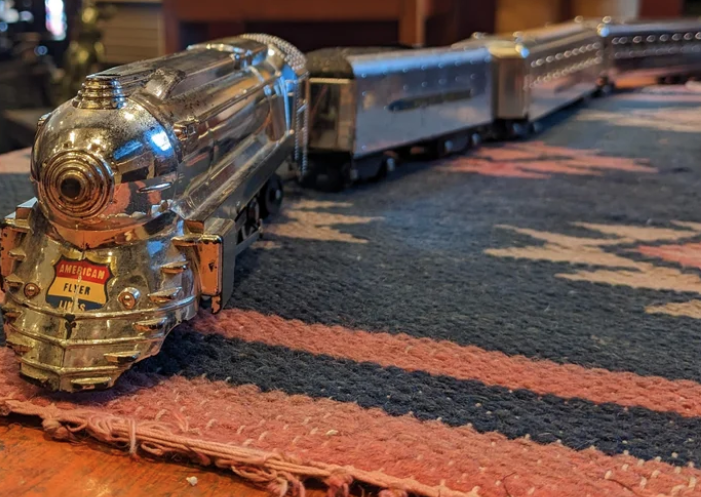
Rick’s Toy Shop on Hollingsworth and West Street was a toy shop which had many amazing toys like cars, Barbies and other fun things to play with. All the lights were off but the only light there was shone on a silver display case. The glass case was round and inside was a silver toy train. It was very old and special to Rick.
But in the morning the train was gone! The round glass case was empty and the lock was unlocked on the floor. Mr. Grimes, the janitor who cleans the shop, claimed he found the train missing. “I locked up the case last night before I left to clean the toy shop. I don’t know what happened.”
Detective Nancy found out about this by reading the River Heights News and decided to do something about it.
Nancy knew the toyshop owner because that is where her best friend had come from! She used to love going to Rick’s toyshop when she was little, and of course that is where she got Molly, plus a bunch of her other dolls she played tea party with. Nancy wanted to check in with Rick in case he had any clue what happened last night to the train or if he had any camera footage. She walked her way there holding Molly, hoping that there were clues to help figure out who stole the train. Nancy walked in the toy shop and a bell rang when she opened the door. She saw the empty case with a piece of paper that said, “If you see someone with this toy train, please bring it back!”
Nancy walked in and saw a door that said, “Rick’s office: Knock before you enter”. He must be in here, she thought. She knocked on the door and Rick opened the door.
“Nancy! I haven’t seen you in ages, you’ve gotten so tall! Molly looks the same!” Rick said excitedly.
“Yeah, I haven’t been here in so long, your shop looks great!”
“I read that you were robbed – of a valuable silver toy train?”
“Yes. When did you become a detective?”
“So why’d you come here?” Rick asked.
“I started when I young and I solved my first case finding Molly. So I read about the stolen train over there, could I ask some questions?”
Rick smiled wistfully at the damaged train case. “Sure.”
Nancy took out her notepad which had many questions on it. Nancy opened her notepad and looked seriously at Rick.
“Rick, you were here yesterday, right?” Nancy questioned.
“Well, I left the shop after 8 but Mr. Grimes was here sweeping until 10.”
“Did you lock the case yourself, or did someone do it,” Nancy asked.
Rick paused for a second. “No I let Mr. Grimes do it, I trust him.”
“Why do you trust him?”
“Because Mr. Grimes is an old man. He’s a nice guy and he would never steal the toy train.”
Nancy tapped her pencil and paused and had a strange feeling it was Mr. Grimes. “Was there anyone else in the shop before it closed?”
“I saw a 10 year-old boy near the train area, then he came to ask me about toy models. He stayed a long time though.”
“Do you know his name?”
“No, but I found some of the toy soldiers knocked over near the train case.”
“What does he look like?”
“He had freckles, a blue backpack on, with a bowl cut. He was about 5 feet tall with buckteeth.”
Nancy wrote it all down and felt excited. This might be the first real case she’d solve.
“Thanks Rick,” she said smiling and putting her notepad in her pocket, “I will figure this case out.”
Nancy ran out of Rick’s Toy Shop. “Wait, I need to get our bike at home first,” Nancy said to Molly. “At least our house is near so it won’t take too long.” Nancy finally made it home and entered her garage passcode and quickly took her bike out. She immediately rode her bike around the entire neighborhood with Molly sticking out her pocket. “Ugh, where is this kid,” Nancy said to Molly. Nancy saw a girl her age walking around the block that went to her school. She stopped her bike.
“Hey, have you seen a kid that has freckles, a bowlcut, 5 feet, and buckteeth?”
The girl paused for a moment, “Yeah he sounds familiar, I think lives somewhere down this street in the big green house.”
“Thanks!” Nancy took off and biked down the street and saw the big green house. Nancy unbuckled her helmet and put it on her bike. She took her notepad and walked up the steps. She finally made it up to the door and rang the doorbell. No one showed up, so she knocked on the door. A beautiful woman with long red curly hair showed up to the door.
“Who are you?”
“Hi, I’m Nancy. By any chance do you have a son that has freckles with a bowl cut?” She didn’t mention the buckteeth.
The lady had so many questions but she kept them to herself. She yelled, “Xavier! Come down here, someone’s at the door for you!”
He ran down the stairs and stood next to his mom. “Who are you?” he asked.
Nancy instantly knew who he was. He went to her school, and though his teeth were crooked, she didn’t think they were bucked.
“Hi, I’m Nancy I have some questions to ask you.” She got her notepad and pencil ready.
“Who are you? Xavier do you know this girl?”
“Hmmm, well I see her around my school sometimes but I don’t really know her.”
“Well Xavier this is important, and hello ma’m, my name is Nancy Drew. This is for a detective case I’m trying to figure out.”
His mom stood against the doorframe and said, “Hm ok then.”
“Were you at Rick’s Toyshop yesterday? if you were, what were you doing?”
“Yes how did you know? I was just looking around playing with toy soldiers.”
“Did you knock any over?”
“No, what! I put them back!”
“Hmm, did you perhaps steal the silver train in the case next to the soldiers?”
“No, what! Why would I steal a toy train? I have plenty of toys.”
The mom looked frustrated and interrupted their conversation. “Why would my little boy steal? He’s like an angel. Come on Xavier, you don’t need this random girl asking you weird questions.”
When she tried to shut the door, Nancy interrupted. “Wait! I just need some questions to ask for this mission, please, I need to crack this case.”
Xavier and his mom thought about it. “Fine, I guess so,” the mom said.
“Great! Thanks. So, did you see anyone suspicious in the store around the train? On the news there’s a bunch of articles about the missing train.”
“Yeah, when I was walking around the neighborhood I saw a random newspaper flying around. So I picked it up and I saw that the toy train went missing,” Xavier said.
“Ok so you saw it in the newspaper, but yesterday in the shop did you see anyone near the toy train before it went missing?”
Xavier thought for a couple seconds. “Well I saw some kids crowding around it and saying how cool it was. There was also a man walking by, mopping the floors.”
Nancy scribbled on her note pad. “Well how were the kids acting, were they acting weird?”
Xavier paused for a second trying to remember. “One kid was playing with toy cars and kept looking back at the train. He had a bright red hoodie on and jeans.”
“Do you know his name?”
“No. I don’t think he goes to our school. You are in Mrs. Moready’s class, right?”
“Yes – but this kid with the red hoodie? Did you see what direction he went to?”
“No, but I saw that the janitor was looking at the case and he wasn’t holding the mop anymore.”
“Hm that’s important I’ll write that down. Thanks for the help.”
The mom said, “I hope this wasn’t a waste of time because we could be doing other things right now.”
“Trust me, this is very important, this train might be worth a lot,” Nancy said in a serious voice.
“Wait how much is the train?” Xavier interrupted.
“Well I don’t know yet but if it’s on the news it’s not just a random toy,” Nancy said. “Well I got to go now, bye thanks for your help.” Nancy put her notepad and pencil back in her pocket and hopped on her bike with Molly. “Okay Molly, so we have two suspects, the janitor and the kid with the bright red hoodie.”
While Nancy was riding on her bike she saw a girl at the park doing her homework with a bunch of papers. All of a sudden there was a big breeze and one of the girl’s papers flew onto Nancy’s bike. Nancy went up to her and said, “Hey I think this is yours.” The girl looked up and said, “Thank you.” Nancy decided that maybe this was her chance to actually make a real friend.
“Hey, my name’s Nancy Drew, what’s yours?” Nancy said.
“My name is Mary McGrath.”
“Hey I think this is yours.”
“Thank you. Thanks for picking up my paper. I’m trying to get this stupid biology worksheet done. Freshman year is pretty tough-ish.”
“I’m in 6th grade, first year at middle school, so what’s it like as a freshman and how is it different from middle school?”
“Nancy, I think my favorite year so far was 7th grade – and I’ll tell you why in a sec – but I see you chewing gum. Can I get a gum? My breath is horrible.”
“Sure! I have plenty of gum anyways.”
“Thanks. I know I’m supposed to smell like sugar and spice and all that, but sometimes I mouth-breathe on my hand, or lick my hand and smell it, and I’m like … nasty! Why is the mouth so gross!? Oh nice – I love Arctic Grape. Can I get two?”
“Yeah, I also like it, it’s my favorite flavor.”
“Thanks, so anyway, you definitely will like 7th grade. And I’m telling you all of this because I want you to see how 9th grade fits into it all. Make sense?”
“Well, will 7th and 9th grade be harder than 6th grade? Because some people say that it will be way harder than 6th grade.”
Mary sighed and pushed her hair back. Nancy noticed that she’d dyed the under part of the hair (the kind closest to the scalp) blue and wanted to ask her about it, but because it was the hair that grows underneath all of the other hair, she thought that maybe it was a sort of hair secret or something.
‘’So what are you up to lately, I’ve been busy with homework and tests,” Mary said.
“Well you might think this is childish, but I’ve been trying to solve a mystery.”
“Oh what type of mystery?”
“You know Rick’s Toy Shop?”
“Yeah my brother loves to go there to look at the cool toys.”
“Well, a valuable train went missing and I’m trying to find out who stole it.”
Mary’s eyes widened. “I saw that in the newspaper the other day, and I’ve been thinking about it. Want some help?”
Nancy looked surprised. “Really? You would help me?”
“Of course, I’ve been thinking about the train too but I didn’t know what to do about it.”
“Ok to start off, I have a bunch of information written on my notepad, here take a look.”
Mary skimmed through all the notes. “Wow there’s a lot of information. Have you interviewed the red hoodie guy?”
“Well I was about to but I decided to go to the park for a rest.”
“We could go look for him now. I think I might know him because he sounds familiar.”
Nancy’s face lit up since she was one step closer to solving the case. “Sounds great! By the way I didn’t mention it earlier but I love your hair, it’s cool, I wish I could dye my hair but my mom won’t let me till I’m older.”
“Thanks! I had to do a lot of convincing, anyway let’s get back to this mission, my brother probably knows him, we could ask.”
Nancy and Mary hopped on their bikes and went to Mary’s. When they arrived at the McGrath house, Nancy’s eyes widened at how nice Mary’s house looked compared to hers. The lawn was perfectly cut, the porch was decorated with fairy lights, and there was a hammock and a trampoline in the front yard.
“Whoa…” Nancy said.
“Yeah, my mom likes decorating our house,” Mary replied.
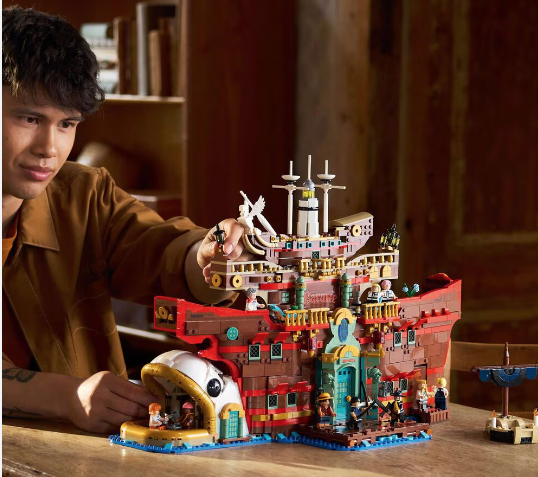
They walked into the house, and Nancy saw a boy on the counter building a LEGO ship. That must be her brother, Nancy thought. Nancy put Molly down. For a second she started to arrange her so that she could survey the Legos as if she was supervisor.
“Hey, Joe, this is my new friend Nancy. I met her at the park,” Mary said.
Nancy smiled. “I’m Nancy. If you don’t mind, I have to ask you some questions.”
Joe had brown hair and big brown eyes and was about four feet ten inches tall. He looked like he was around nine years old.
“Sure. What type of questions are they?” Joe asked.
“Have you heard about the Rick’s Toy Shop incident?”
“Yeah, my sister has been talking about it.”
“Well, do you have any information about it?” Nancy took out her notepad and pencil, ready to write whatever he was about to say.
“Well, there are some rumors going around my school about it.”
“Like what rumors?”
Joe leaned closer and whispered, “Apparently, someone from my school saw someone go into a random house down the street from the toy shop.”
“Well, do you know which house?”
He shrugged. “No, but my friend said he was carrying something big, like a box.”
Nancy scribbled notes down. “Big, like a box? Could there possibly be a train in there?”
“Hmm, possibly. He’s been acting strange at school lately.”
“Perfect! We can check that house and get the evidence we need,” Nancy said excitedly. “Do you mind telling us where it is?”
“Yeah, sure. It’s two blocks down from Rick’s Toy Shop, and then you keep going straight until you see the house with a crooked mailbox. That’s where the guy went,” Joe said.
“Gerald Street?”
“Yup.”
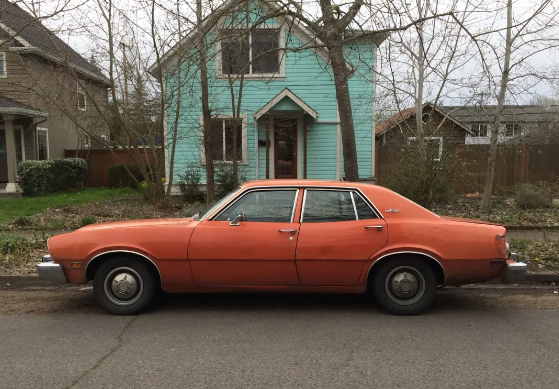
Nancy and Mary nodded and ran out of the house to hop on their bikes. It didn’t take too long to get to the neighborhood since Mary lived near Rick’s Toy Shop. They biked down the Gerald Street and saw the crooked mailbox Joe was talking about. In front was parked an ugly orange 1980s Maverick sedan.
“There it is. Let’s go check if anyone’s home,” Nancy said.
They rang the doorbell, and an old man with black glasses came out. He looked like he was about sixty years old. Nancy thought, maybe this is the boy’s grandpa? She peered past him and saw a cluttered front hallway. Lights were strung up in the room behind, and she could hear a whirring noise, as if a sewing machine were running. There was an odd stench of moldy newspapers, and the old man, while strong-looking, had a shifty eye.
“Hello,” the man said slowly. “Do you girls need something?”
Nancy and Mary looked at each other. Then Mary finally said, “Um, we were wondering if someone younger lives here too.”
The old man shook his head. “Nope. Just me and my wife live in this house.”
Nancy made a puzzled expression. Joe never said there was an old man living here, she thought.
“Are you sure? A little boy who mostly wears a red hoodie?” Nancy asked.
The old man adjusted his glasses nervously and chuckled. “Nope, never seen him before. Hey, what’s this about?”
From deep in the house the girls heard a woman calling, “Jerry?! What’s going on?” He looked behind himself and sneered, closing the door in their faces.
They hopped on their bikes and went down the road.
“Hey, Nancy, that old man was totally acting suspicious. Want to spy on him before school with me? I know it sounds kinda weird, but trust me.”
“Was that Mr. Grimes?”
“I’m pretty sure it was.”
“Hmmm… I really want to solve this case. Sure!”
“Great! Meet at my house before school. See you tomorrow!”
Nancy had all the information she needed, and after discussing the plan with Mary they biked back home.
Nancy got off her bike and ran into her house. She saw her dad in the kitchen making popcorn.
“Hey dad, I need your help.”
“Why, is the VCR not playing? It’s movie time!”
“Do you know if Bill, the guy at the bank, ever does private security work?”
“Yes he does actually. Why?”
“Well you know how Rick’s Toy Shop – “
“Yes, Nancy, it’s all you’ve been talking about at the dinner table for the past week. What is going on?”
“Well, I met a girl named Mary. We are trying to solve that case on the news with the missing train.”
“Mary who?”
“McGrath.”
“Ah, Dennis McGrath’s kid, yes, Mary! Nice, Nance! She’s a bit older than you, though, isn’t she?”
“Yes Dad.”
“So what are you asking about security guards? Bill?”
“Well, we need to stake out a crummy old house on Gerald Street, and I need backup.”
“Let me call Dennis and see what he thinks.”
“Dad!”
“Yes, honey?”
“Don’t call the cops! I want to get the crook myself.”
“Well, let me see what Dennis thinks. He knows his way around City Hall.”
Meanwhile at the McGrath’s, Mary was pacing back and forth. She heard the phone ring, but was in another world, until, “Mary! Maaaar!”
“What Dad!”
“Come down here for a second, ok? Got a question for you. Are you friends with a girl named Nancy?”
“Yeah, I’m helping her solve a case.”
“Oh, her dad just called me.”
Mary’s stomach sank. There was no way they could catch Mr. Grimes now.
“Yes, he said you two had a suspect on the Toy Shop case. I told him to call the cops, but he convinced me that you two have some inside information?”
Joe looked up from his Lego project and said, “Can I help?”
Mary informed her dad about the Grimes home stakeout, and surprisingly he agreed, and she kindly allowed Joe in on the plan.
It was 6 am the following morning. A black sedan with tinted windows turned slowly onto Gerald Street, parking a few houses away from Mr. Grimes’s home. Inside the car sat Mary’s dad and Bill, the security guard from the bank. They agreed to stay nearby in case Nancy and Mary needed help. Meanwhile, Nancy and Mary rode their bikes down the road and hid them behind a wooden fence near the house. Joe was already there, crouched in the bushes where he had a clear view of the front door. He had a backpack with some reconnaissance gear: a pair of binoculars, some rope, and a pair of handcuffs made out of Legos. In addition to the Grimes’ Maverick, a sleek black van was parked in front of his house. It was a black sprinter van. There were less windows, and it was taller than a normal car. In the back of the van there was a ton of space.
Nancy’s dad had helped place a few small cameras near the windows earlier that morning, so they could see inside without getting too close. Nancy and Mary crouched beneath a window. Nancy slowly peeked inside and pulled out her notepad. Inside the room, she saw Mr. Grimes standing at a table. Across from him was a man wearing an old polo shirt. He seemed to be in his late 20s. On the table was a shiny silver toy train that looked exactly like the one stolen from Rick’s Toy Shop. Nancy quickly scribbled notes as Mr. Grimes placed the train into the box. The other man opened his wallet and took out a thick wad of bills. They then left the room. Mary glanced back toward the bushes and saw Joe waving his hand. It meant someone was coming toward the door.
“Look Mary, he’s waving his hand! I think someone is coming!”
Mary and Nancy ducked down and saw Mr. Grimes and the other man with the box under his arm in front of the door of the house. Nancy peeked back at her dad and Bill and raised her hand, sending a strong signal. Bill radioed the police.
Nancy and Mary waited patiently for the cops to come and arrest him. In a matter of two minutes, they heard a siren coming from down the street. Joe peeked his head out of the bush a little and saw the blue and red sirens going off. The police pulled in front of the house and Mary’s dad came out of a squad car.
Mary’s dad came out of the car and yelled, “Put the box down!”
Mr. Grimes and the delivery man both said, “Yes sir.”
“I need you to tell me if this the missing train from Rick’s Toy Shop and if you don’t tell me the truth I will find out myself.”
Mr. Grimes dropped the box down and looked at his shoes. “Yes I stole it, very sorry sir.”
Nancy and Mary came out from the side of the house and watched the scene.
Mr. Grimes looked at Mary’s dad apologetically. “I feel very guilty for stealing this toy train.”
“You will probably serve 5 months in jail.”
“Okay then.” Mr. Grimes was directed into the back of the squad car.
One of the cops looked closely at the man who had been there to buy the toy train. He had thick eyebrows, brown shaggy hair with a beanie, wearing a green jacket with a dark red shirt under with jeans.
“Hey stay there!” the cop said as the guy turned around nervously.
“Sir, hand over your license, I need to run your license in case of criminal records.” The man handed over his license. The cop called on his walkie talkie to do a license test.
A woman then appeared at the front door opening it. “What are all of you doing outside of my house?” She then looked at Mr. Grimes in the police car in disbelief.
The cop turned towards the old lady, “Ma’am we are currently running a test on someone’s license please do not disturb us.”
Mr. Grimes looked back at his wife and mouthed from the car, “Stay out of this and go back into the house.” She then gave him a disapproving look. “Well you guys could at least tell me why my husband is in a police car?”
“He was illegally selling this expensive toy train, that’s more than enough information to take him to court.”
“The test is done running,” the policeman said to the young man. “You are released; on the other hand, Mr. Grimes you will be taken to court.”
“Wait, I just paid him half a grand, can I get my money back?” the young man spluttered. The police officer asked Mr. Grimes if this was true and Grimes fished in his pocket for the wad of bills. The young man’s money was returned.
Mr. Grimes laid his head back into the car seat. The police car then drove away.
“You may go back home, as we have nothing to hold you on,” Bill said while he looked towards the guy with the brown shaggy hair.
“Thank you.” He turned back to his package van and drove away.
Nancy and Mary jumped up and down.
“We finally solved the case, yippee!” Mary said as she hugged her dad.
“Thanks everyone who helped,” Nancy said while taking the train from the box.
A red shiny Mustang pulled up in front of Mr. Grimes’ house next to Nancy. It was Rick. He rolled down the window.
“Hey Nance, I see you have the silver toy train, great work!”
Nancy gave him the silver toy train through the window. “No problem – it was fun solving the case and it felt good catching a bad guy.”
“Thanks kiddo, you will be a great detective when you grow up.”
Joe walked up, and fished around in his backpack.
“Nancy, I think you left this at our house.” It was Molly.