
Monthly- Archives: January 2013


SEBASTIAN BRICE

Mr Watt´s Literary Services

Fred and Matthew

Scene i

Fred Couteur’s farmhouse on the outskirts of Milwaukee, WI. There is a barn, which is two levels high and absolutely stuffed with hay. The first level is where the horses and cows live, and the chickens live on the second floor. There’s a bunny hatch in a fenced-in area near the house with a brimming bowl of bunny food. The snow is gently falling at this hour of 9 am. The sun is rising fairly high in this mid-winter morning, and orange rays shine radiantly through the cold air onto the gathering snow. Fred, 16, has finished his morning chores and is having a snowball fight with his friend Matthew Roman, 17. Fred is 6’9”, with luscious brown hair, burly shoulders, an 8-pack, grass-green eyes, huge muscles, canckles, and a tattoo of a 2-headed dragon with one head on each arm. Matthew is 7 feet tall, blonde hair, enormous hands, toothpick legs, medium-sized muscles, and a tattoo of a tank with a bullet in mid-flight pointing towards his chest, a 6-pack and a naive smile on his face wherever he goes.

Matthew: I bet I can build the best snow fort.

Fred: Let’s see whose fort is better!

Matthew: Ready, set, go!

Fred: I’ll beat you easily!

Matthew breaks away from Fred and slides right into a fluffy pile of snow near his driveway, and, sitting with his legs splayed, he calmly begins manufacturing snowballs. Fred makes snow boulders bigger and tougher than Matthew’s, speeding up the snowfort-making process. He looks like a gorilla, with his super-quick snow-boulder-making process and his carvings of bananas on the snow boulders. When Fred is done, he sits on a stool made of snow and sighs and then starts laughing at Matthew.

Fred: I knew mine was better! Now go home, I have to harvest the remaining wheat before the snow melts and rots it.

Matthew: Okay, see you tomorrow… don’t forget, it’s my birthday.

Fred starts to harvest the wheat field when lightning strikes him and everything goes dark.

Scene ii

Fred wakes up in the middle of the wheat field with no idea what happened. The only thing he knows is that he wants to skydive with Matthew. So he gets up from the wheat field, goes home and gets dressed and drives to 135 Plain Lane.

Matthew: You ready to skydive?

Fred: Yeah!

Pilot 1: Matthew and Fred, are you ready?

Pilot 2: Time to skydive!

Matthew: I bet you’ll chicken out!

Fred: Will not!

Matthew: Will too!

Pilot 1: You can argue while you’re skydiving. Now let’s fly!

Pilot 2: Put on your skydiving gear so your brains don’t explode!

Pilot 1: Yeah! Boom!

Pilot 2: Let’s go!

They soar 150 feet, straight up, in a fancy helicopter. They stop in mid-air and start to hover.

Pilot 1: Give a thumbs-up if you are ready to skydive!

Fred: The last one to the ground pays ten dollars!

The friends give the thumbs up.

Pilot 2: Relax and let us take care of you.

Pilot 1 & 2 shove Matthew and Fred out of the helicopter. Fred drops for a hundred feet before activating his parachute, but Matthew activates his chute after dropping fifty.

Fred: I’m feeling funny!

Matthew: I’m not!

Fred starts to glow and turns into a sugar glider.

Fred: (In a high-pitched voice) Whoah! Didn’t see that coming!

Matthew: Me neither!

Fred and Matthew float down into a mountain of snow and Matthew pays Fred $10 for winning and in a puff of smoke, Fred turns back to normal.

Fred: That was insane!

Matthew: I know, right!

The two best friends high-five each other until their hands are blood-red.

Fred: Let’s go to my place and eat… some… CAKE!

Matthew: OK.

They get into their cars and drive to Fred’s house.

Fred sees his house being vandalized by the Baby Bottom Gang, (don’t let the name fool you, they’re wretched). Fred gets out of his car and wells up with so much anger he turns into a lion, the king of the wild.

Baby Bottom Gang member 1: They’ll be so surprised that they’ll leave this country forever!

The Baby Bottom Gang starts to laugh with their chief, but their laughter is interrupted by a burly roar.

Baby Bottom Gang member 2: Chief, was that you?

Baby Bottom Gang member 1: No I was hoping it was number 3.

Baby Bottom Gang member 3: Maybe I did, maybe I didn’t.

The chief turns around and sees Fred the lion and screams like a young girl. The other two turn around too and start screaming. They start to wet their pants.

Baby Bottom Gang member 1: Look boys, it’s fake. Look how fake his mane is! Watch, I’ll tear it off.

The chief walks up to Fred and starts yanking his mane. Fred wells up with anger and he roars so loud the window shatters – and he blindly chomps off the chief’s arm in a matter of seconds. The Baby Bottom Gang runs away with the chief sobbing in their arms, blood gushing from his arm stub. Fred transforms back into his regular form right when Matthew arrives in his car.

Scene iii

As they eat cake, Matthew and Fred talk.

Matthew: This is the best cake EVER!

Fred: Thanks, I bought it from Gofer’s Ice Cream.

Matthew: How did you get your powers? Because I want them, too.

Fred: I don’t know – maybe you’ll get these powers for your birthday present? I just hope I find out soon, because I want these powers forever.

They finish the cake silently.

Matthew: Thanks for the party man, it was killer! See ya.

Fred: See ya.

Fred goes about his morning routine so he can goof off longer, later. After feeding the cows and chickens, he turns into a cow because he is curious about how they like their food. Only one cow complains.

Cow: I would like grass instead of wheat!

Except for the grumpy cow, the feeding is pretty quick.

Fred goes back to his house, forgetting that he is a cow, and after bumping into the door several times, realizes his mistake and turns back to Fred with a soft moo.

The phone rings.

Matthew: Help… me.

The line gets cut off.

Fred: I need to help him! He needs me!

Fred turns into a bat and uses echolocation to find Matthew, who is being held in a tiny room at the top of a 40-storey brick building.

Scene iv

Matthew looks banged up, his eye swollen, nose bleeding, with a boot mark on his face.

Matthew: I won’t tell you anything!

Hidden voice: Then you leave me no choice.

The scene goes black but you can hear punching and kicking and occasional yelling.

Scene v

Fred the bat is hovering right outside the window and sees the abuse.  Fred flies down to the ground, turns into a bull and rams down a massive golden door with a ferocious charge.  Angry guards come at Fred with maces, ninja stars, and guns.

Guard 1: Kill him!

Guard 2: Skin him!

As Fred the bull plows through the guards like they are rag dolls, he makes his way up, and hears Matthew screaming.

Matthew: Help me! Anyone!

Hidden voice: No one will help you. You’re pathetic.

Fred changes into a cheetah to quickly get up the stairs. At the last floor, he sees Matthew, unconscious, bleeding while the hidden voice laughs. Behind a wall is seen a robotic arm that moves up and down. Fred is confused and turns into an elephant in case he has to stomp on this guard.  A slow and eerie clapping comes from the robotic arm and a real arm.

Baby Bottom Gang member # 1: Well, well, well, look what we have here, a guest. But your slaying is scheduled for… right now! Turn around or prepare to die! You can’t hurt me – you see, I’m wearing a full set of diamond armor.

The diamond armor is jagged with a tip on the chest that can pierce through anything but diamond itself. The Baby Bottom Gang member # 1 looks 5’11 instead of 5’2, because his shoes are tall and hard, turquoise, and glinting in the sun.

Fred: Let’s end this!

BB1: Couldn’t agree more!

Fred turns into Chuck Norris, the only man who can break diamonds. Fred Chuck Norris does one fatal karate chop and shatters the diamond armor. The chief starts to punch and kick Fred Chuck Norris but after 10 punches, Fred Chuck Norris gets annoyed so he kicks him in the most vital part of his robotic arm, the tiny self-destruct button. At first, the building is intact and then you see bricks flying everywhere, dead bodies flying everywhere and an orange puff of smoke signals that it has blown up the entire building. Fred and Matthew are immediately put to the hospital.  Someone runs across the stage with a sign that says, “Three months later.”

Matthew and Fred are at the hospital entrance, ready to depart.

Fred: I hope this never happens again.

Matthew: Agreed.

Scene vi

Fred wakes up in the wheat field with a charred hand and a gushing blood scrape right near his eye. He stands up, stretches, and then says:

Fred: What just happened?

Matthew comes along and exclaims, “You can’t believe it but I had the craziest dream last night! You had super powers that were amazing! I just wish that that was real life.”

Fred:  I do have super powers.

Matthew:  No. Everything was just a dream.

Fred: But I was a sugar glider, a bull, a bat, a cheetah? How is this possible?

Matthew:  It is possible in a dream, but not in real life. It must have been your imagination. Dude, look at your charred hand, does that seem like it was real? Of course it was! You were struck by lightning on a metallic vehicle! You were knocked out for a couple of hours. But that was all just a dream.

Fred: But the Baby Bottom Gang, skydiving in the winter, didn’t that happen? You’re wrong. It wasn’t a dream. Why you ackin’ so cray cray bro?

Matthew: I’m the one who’s ackin’ cray  cray? I’M ACKIN’ CRAY CRAY? Who thinks that they have super powers and can do anything like skydiving in the winter? Who is the Baby Bottom Gang anyway? The only gang here is the Geezer Gang. And they can’t even kick a soccer ball, let alone a 17 year-old.

Fred: You can’t tell me what’s fake and real! How about the explosion, the hospital, us eating Gofer’s cake? Do you remember ANY OF THAT?

Matthew: The only explosions I know of are in movies or TV shows. I never went to the hospital and neither did you! And the closest Gofer’s is 75 miles!

Fred: Ok. You can think it is fake but I think that the “dream” was real and so is the Baby Bottom Gang, skydiving in the winter, and super powers. You’ll see!

Matthew: (sighing) You can’t stop being a kid, can you? Let’s forget this even happened and walk into the sunset like some movies or plays end, ok?

Fred ponders for a moment and says: Sure.

Fred and Matthew walk into the sunset and when Fred turns around completely, there is a cat’s tail poking from his ripped jeans.

LA FIN.


Silver medal

And the silver goes to… 


Helen Liu and Sarah Xu!


Both young ladies worked through at least eight drafts, and the results are exciting, informative essays about two very important battles in human history. Read the essays and write comments!


HELEN (HANYU) LIU

Mr Watt´s Literary Services


The Twenty-Six Miles’ March

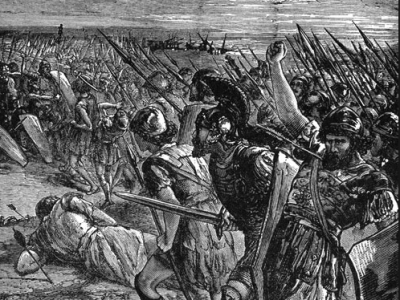
Athenian hoplites, heavily armed foot soldiers of ancient Greece, marched with dignity and pride resting on their shoulders towards the battle that changed the ancient world – the Battle of Marathon. The opposing side, the Persians, also had all their honor and pride at stake. Both sides marched earnestly towards each other on that hot September day in 490 BC. With faces dripping sweat, the Greeks climbed over rugged mountains and through dense forests. They reeked of anxiety – not even the sweet chirping birds or relaxing flow of the river were enough to calm them. The air rang with encouragements from Callimachus and Miltiades, the brave commanders of the Greek army, motivating them to put everything they had on the line. The soldiers, their jaws clenched and fists tightened, continued to step upon untrodden leaves and past undeveloped land to reach the Marathon Plain. Meanwhile, the weary Persians were already camping out there. After months of gentle swaying on their little boats, they had finally hit land. Heat descended since the light salty sea breeze no longer accompanied them. Still, energy levels were high and adrenaline was still pumping. Datis and Ataphernes, the generals of the Persian side, made sure the soldiers were still on guard even as they rested upon the gentle Marathon plain. However, soon, the meeting of the Greeks and Persians would sever the clear skies, the tall grass, and the peaceful silence. The minute they met, warm blood would spill on the pure green grass, dyeing the plain a deep frightening red. The bloody battle was a clash of frustration and a resolve of past feuds. The outcome was completely unexpected. The outcome of this battle would mark the end of the Archaic Period (750-500 B.C.) and the transition of preserving Western Civilization, into the new Classical Period (500-336 B.C.). The Battle of Marathon acted as an important turning point for time periods and culture. What did it say about the Greek Hellenistic culture in contrast to the Persian culture, and what principles did the winning side demonstrate during the battle? What did the battle prowess of the winning side witness to the world? Most importantly, what legacies did the Battle of Marathon leave?

Greece and Persia had a noisy past, dotted with fights and rebellions. Both strong countries had major cities in that, when captured, could mean the death of either’s glorious rule. The influential capital of Athens, rich in both culture and intellectual development, governed Greece. Meanwhile, Sardis was the jewel city of the entire Persian Empire. Sixty years before the Battle of Marathon, Darius, the king of Persia, recaptured Ephesus and Miletus from Athens, two prosperous and important cities in Ionia, located in present day Turkey. These two cities were significant, located near the bridge from the Middle East to Europe, at the Bosphorous Straits, acting as the string of cities connecting the Persian Empire to the Greek’s. Therefore, the Persians needed to take over these two influential Greek colonies so they could use them to start expanding their strong empire. Also, by capturing these two important chess pieces, the Persians stopped the Greeks from any future territorial expansion to the east. Now under the Persians’ rule, the formerly Greek Ephesus and Miletus were now dominated by Persian culture, and governed and organized by Sardis, the capitol of the Persian Empire. However, even though the seized cities were now considered to be Persian, they could not let go of their Greek past, their Hellenistic culture.

The clash of cultural differences led to many revolts in the new Persian territories. In Ionia, over the course of a few decades, many attempts to overthrow the government occurred, but all to no success. Then in 499 BC, nine years before the battle of Marathon, Aristagoras, the tyrant of Miletus, asked the Greeks to help Ionians revolt against the Persians. Athens, with holdings as far as Eretria, in present day Africa, agreed, in order to save their colonies and take back some of the territories that the Persians had stolen from them. The Greeks sent twenty-five ships with a total of 1,000 men to march over hills to Sardis. Sardis was the great capital of the Persian Empire at that time, and managed most of the cities in newly captured territories, including the two now conquered, Ephesus and Miletus. Crossing rivers and the Aegean Sea, the Greek soldiers arrived at the great capital of the Persian empire – Sardis. The army burned down the beautiful city and a temple of their local goddess Cybele, while killing and enslaving many citizens. The once rich capital of Sardis was now in shambles, lying dead on the ground. The resulting anger and hostility led to years of constant rivalry between the two countries and bitter hatred burned in Persian hearts for the Athenians’ assault upon their mighty capital.  King Darius was furious when he was later informed that his dear capital was stripped to ruins and swore to retaliate against Athens. He grasped the once-buried hatchet again. Though the Persians suffered a great defeat about nine years before the Battle of Marathon, their violent culture did not fade or diminish. In fact, the Athenian’s invasion kindled the Persian’s fighting spirit, giving them the will to gather, train and fight back with even greater forces. The Persian Empire’s culture was built upon this fighting fire. Its violent morals were different from the Greeks’ interests in science, politics, trade, and cultural influence. The Persians were more concentrated on war, rather than the arts. Athens, the capital of Greece, was focused on advancing the natural sciences, visual arts, architecture, and technology. This dynamic difference of cultures was demonstrated during the Battle of Marathon, as Athens strategized brilliantly, while Persia depended on its massive army forces. At the end of this battle, only one culture would continue to thrive and advance, while the other one would decline dramatically.

King Darius dreamt his sweet revenge. However, he knew that the first step towards retribution was to simmer down the still-present revolts in the compromised lands in Ionia that were quickly spreading throughout the Empire like wildfire. In order to quickly cool down the flames of revolt, the Persians slowly flooded the Ionian region with their army. The Persian fleet and Ionian, allies of Greece, finally clashed at sea in 494 BC, four years before the Battle of Marathon. In the end, Miletus, (the city that the Athenians had previously burned down Sardis to protect), was defeated and destroyed. Once again, people of Milutus, or what remained of it, became a colony of Persia. Soon, the revolts died down and the Persians continued to capture the rest of Ionia. However, they did not stop there. They hungrily wished to capture Greece like a pack of wolves, spying on their prey from the far distance.

In 492 B.C., two years before the Battle of Marathon, it was finally the Persians’ time to shine. They decided that it was time to feast upon the Greeks. An enormous Persian army of twenty thousand men led by General Mardonios marched from the northeast. They advanced into Greek territories, dangerously closing in on Athens, invading Thrace (the section of land west of the Bosphorous Strait), then Macedonia (north of present-day Greece), and capturing both. Fortunately for the Greeks, Mardonios had great casualties in battle, and his fleet was sunk by a storm off Mount Athos. The Athenians thought that the gods had given them their blessings with such a chanceful mishap. Then King Darius decided to capture Greece in a peaceful way; he sent heralds, or ambassadors, one year before the Battle of Marathon to each city-state in Greece requesting earth and water, the tribute which meant releasing everything, from the land to the sea. Earth and water was a traditional symbol for submission of everything. Athens, knowing the cruel Persian ways, saw through this diplomatic ploy. As Darius probably expected, many of the heralds were abused or killed. Darius now knew of no other way to capture Greece besides war – a more familiar pastime. However, Persians did not realize then that their once great and mighty conquering culture was now rusty and dusty.

It turned out that Darius had been planning to start a war all along. He sent the heralds as mere animal sacrifices and stalling objects. While the heralds were being executed, the Persians constructed many triemes, a type of ship that the Greeks used, along with horse transports. The triemes had three rows of oars on each side and were fast and agile because of the sharp angular cut at the bow. In 490 B.C.E. in the beginning of the year of the battle, in order to catch Athens and Eretria off guard, he sent a fleet of only 600 ships, carrying 30 to 40 warriors each. Because of the small size of the boats, the Persians had to stop by many islands on the way to replenish their supplies. When the Persians landed at a Greek city-state named Naxos, they burned it to the ground and enslaved the people in the same way the Athenians had torn apart Sardis eight years before. The troops continued to march toward Athens, destroying bigger cities like Delos, Karystos, and Eretia, leaving a trail of devastation behind. The Persian army became a destroying machine, taking grand cities and beautiful scenery in, and spitting out crushed rubble and bloody battlefields. As they closed in upon Athens, the Persians wanted to sneak up from behind, so they landed somewhere other than Attica. Attica was a district that bordered the sea in the south and east. It was thought that the Persians would land there due to its calm waters and accessible beaches. However, the Persians did the unexpected – they stopped on the Marathon Plain instead, a bit south of Attica.

Meanwhile during all the destruction of their neighboring cities and towns, the Athenians were terrified. They had heard long and tragic stories about the Persians storming towards them and were desperately clueless on what to do. Finally, in early September of 490 BC, Athenian scouts spotted the Persian army landing on the grassy Marathon plain. The beacon fires on Mount Pentelikon were lit and the news spread quickly to Athens. The citizens in Athens quickly voted on what to do about the threatening situation. General Miltiades convinced everyone to defend Athens, to show their virtue and bravery, arguing that the Athenian hoplites were more trained and had a better formation and equipment. He exhorted the Athenians to defend themselves and their city. The Athenian citizens were strongly moved and convinced by the General and moved to fight their mighty rivals. For both sides, victory meant everything: the past, the present, and the future. Victory would change history and both sides were determined to win at all costs. The Persians betted on their taste for revenge, while the Greeks, protecting their culture and family, prepared to fight one of the most significant battles in history. After the dust cleared and the clouds drifted, the sun would shine on a new world.

War trumpet calls rang through the air, echoing through the grassy plain. The two armies, staring each other down, approached with both confidence and attitude. The Persian army, like hungry wolves waiting to launch on their victims, swiftly advanced. The Greeks, like ferocious bears, charged with all their might. However, the Greeks faced two major problems. One was how greatly outnumbered they were to the Persians, and the other was that before the two armies could even meet, the Persian archers could shoot arrows down upon the Greeks. The Greeks’ military formation was formed in a phalanx, a body of infantry with long spears drawn up in close order with shields overlapping, usually eight ranks deep. Indeed, due to the large outnumbering and outflanking, the Persians could wrap around the Greeks’ formation and attack from behind. When a phalanx is attacked from any other direction than in the front, it is vulnerable and extremely vulnerable to casualties. Also, the initial arrows that would pour down from the Persians would result in great loss of life for the opposite side. The Greeks, too, had no archers. Miltiades came up with a solution to the arrows problem – the hoplites would run through the rain of arrows so that casualties were few. On this hot summer day they would have to form again into the tight phalanx once they reached the enemy. Miltiades knew that the soldiers were robust and trained, and that exhaustion would not be a key factor. The problem of the outnumbered army was more difficult. Miltiades eventually commanded the army to be thinned in the middle, down to four ranks. With Miltiades’ plan in mind, the soldiers took a deep breath and began the battle of their lifetimes, anxious to achieve the outcome. With their life on the line, the coin was tossed into the fountain of hope. Whichever side it landed on would demonstrate the victor’s strategic abilities, creating lasting legacies.

The weight on both sides’ shoulders was heavy. The Persians were desperate for the sweet taste of revenge while the Greeks were bent on maintaining their victorious streak and protecting their homes. The Greeks, dragging their motivations with them, arrived within the range of arrows. Just like planned, they swiftly charged forward, losing a few men. The two armies then clashed and exploded with heat, terror, passion, and fury on the smooth flat lands. Spears and swords soared through the air, and the sound of clashing shields was deafening. The soldiers shouted with anger and the commanders screamed with encouragement.

The two armies collided for a long time on the grassy plain. Scattered weapons and lifeless bodies lay on the ground, stiff and cold. However, that didn’t cool down the excitement bursting on the battlefield.  Finally, like the soft fall winds pushing upon the grass, the Greek left and right flank slowly started to force back the Persian right and left flank, while the Greek center phalanx was being pushed back. The Persian army on the side began to retreat, admitting defeat, and fled to their ships. They were of no match to the strong and healthy Greeks that had everything at stake. As tables began to turn, the battle was at its turning point. As if planned magically, the victorious Greek left and right fleet now turned back and assisted their losing comrades. The Greeks attacked the vulnerable center wing from behind and quickly pulverized the army. The Persians were vanquished. Running back to the beach where their ships were anchored, a bloody slaughter took place. Soldiers were dying in chaos, and blood stained the beach red. The ocean was almost blood-warm. The Persians, demolished and thrashed, lost their order and control. The Greeks still bravely urged on, but lost some great commanders like Kallimachos and Kynegeiros. Kynegeiros, brother of the great playwright Aeschylus, bled to death when one of his hands was cut off. But at last, the long battle was over, leaving the Greeks victorious.

Though the Persians were defeated, the ones who lived and escaped did not give up hope. They wouldn’t back down until the very last minute – this was the Persian culture. The fleets that were still battle ready made a turn to the southwest, heading directly towards Athens, for Athens, at the moment, was vulnerable. The Persians, with the image of Sardis burning to the ground still in their hearts, headed towards Greece’s prize city. The Greek generals, fully aware of the situation, had no choice but to order the exhausted hoplites to march back home. With their weary legs shaking and heavy arms trembling, they began the twenty-six mile march back to Athens. Keeping in mind that they still needed to protect their valuable capital and culture, the Greek soldiers quickened their pace. After stopping in Kynosarges, a sanctuary of Herakles, they managed to land in Athens with lightning speed the night before the Persians arrived. When the Persians saw the powerful Greek army in broad daylight fully rested, they unraveled with terror, and decided that it was time to depart. Once again, the Greeks had beaten them. The battle was completely over, leaving the Persian’s will to fight burned out and lying among the ashes. Sixty years prior, the Greeks had broken their capital, and now they had shattered their once invincible and mighty Persian culture.

The Greeks, strategically manipulating the situation to their favor, were left with most of their men, and all of their culture. In the aftermath of the battle, one of the ten Greek tribes, or military divisions, remained behind to bury the dead, assist the wounded, and guard the Persian loot. They counted about 6,400 dead Persian soldiers and only 192 Greek casualties. These were cremated and the dust was put in a soros, a special mount, near the battlefield. It is about fifty meters high and nine meters wide. Now it almost appears to be a small hill, with light green grass and natural flowerings decorating the outside. This innocent scene conceals the bloody history of the Battle of Marathon.

After the battle, many animal sacrifices, especially goats, were made to celebrate the victory. Famous singers wrote and performed many songs about the glorious victory. Through all the written works inspired by the Battle of Marathon, Greece’s artistic customs are greatly emphasized. Poets not only inscribed the action of the battle into their poetry, but also Greece’s intellectual culture. The citizens then constructed a shrine to Pan, a temple to Glory, and many other statues and carvings. Also, a monument was placed at the turning point of the battle – when the Greeks’ outer flanks defeated their Persian attackers. The magistrates personally presented the Marathon hoplites with heroic honors. Their legacies were to be remembered for years and years to come.


JESSICA YAN

Mr Watt´s Literary Services
Chi-Chen Itza: My Journey into the Ancient World
     Feeling the essence of the warm heat radiating off my skin and hearing the distant chatter of tourists pushing past one another, I smiled and looked all around in admiration. I was in Mexico for winter break, in the ancient city of Chi-Chen Itza, in Rivera Maya to be exact, and right now I was completely dazzled with the tremendous magnificence of this whole place. We went to numerous places in Mexico, but Chi-Chen Itza was the most memorable of them all. I will never forget the image of all the ancient buildings: my jaw was hanging wide open when we walked from one building to the other. It was amazing.
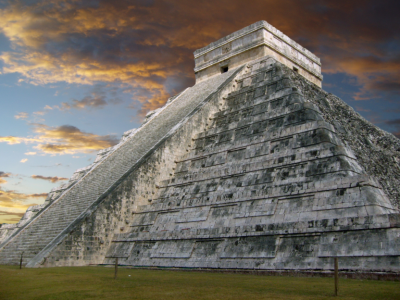
     Visiting Chi-Chen Itza was thrilling and exciting. We rode for three hours in the bus, and I had a sudden outburst of energy when we were let out of the vehicle. I quickly bounded off the steps before the rest of the tour group, and I was the first person from the bus to see Chi-Chen Itza, the ancient city. What met my eyes truly stunned me. Out in the distance, I could see the Kukulkan Pyramid in the ancient city, also known as the El Castillo, one of the seven wonders in the world. It was so huge I could barely look at it as a whole, and I kept gawking at its dominance and superiority, with thin, intricate steps carefully carved out in the front. As I gazed at the pyramid through my sunglasses, I could see snakes facing the ground, carved out of stone on each side, as it was believed that when the sun set, these reptile creatures would slide down to the Underworld. The pyramid had obviously been built with precision. Tremendous amounts of mathematical calculation must have been required, and it was astonishing to know that people had to work so hard on the measurements to construct the magnificent building, the size of an enormous beast, glowing golden in the sunlight.  The tour guide, who explained all the history and buildings in Chi-Chen Itza every step of the way, informed us that the pyramid was specifically designed so that when we clapped, echoes that sounded like birds would be reflected. As proof, our whole tour group clapped their hands on the count of three, and it really was true! Our echoes sounded like birds squawking in the air, and if someone didn’t know that it was the echoes of us clapping out loud, they might have thought it was a real bird. The whole concept of how the Mayans built the Kukulkan Pyramid amazed me.
     “Don’t mix Chi-Chen Itza with chicken pizza,” the tour guide joked. The ironic thing was that a few minutes before, I had seen and heard a man selling Chi-Chen Itza t-shirts by the sidewalk. “Chicken Pizza t-shirts for sale!” he had yelled out to everyone. I was momentarily confused, wondering why anyone would be selling chicken pizza t-shirts, and the thought just made my mouth water. It turned out, the man was just saying Chi-Chen Itza t-shirts for sale, and I had gotten the whole concept confused.
 
     As our tour group was walking with the guide, the sun was beating down on us, harder than ever. The sun was out and it shone an extravagant, bright color, as if to say, “Ha, bet you can’t bear the heat. You can’t even look into me!” It was unusually hot, and as we trudged forward I strained my ear, moving my sticky body, to hear what the tour guide was saying. Apparently, long ago in the city of Chi-Chen Itza, there was a very intense ball game, called Pok ta Pok, where two teams battled to get the ball into the hoop, but they couldn’t use their hands at all, only their stomachs. One game could take up to three days straight! Each season, a group of Mayans would willingly volunteer to participate in the sporting event, knowing that execution by the victors of the game was inevitable. The sporting event would be held at night, with the king, queen, and special guests sitting on high, official platforms with seats, on opposite sides. The spectators would be on the side, and each person would hold a torch, so it would be easy for the competitors to play. The loser lost his head, and even though it sounds cruel, they were willing participants, and knew that they would risk dying from the moment they volunteered to play in the annual games. More than twenty people would die a year because of the games.
     We also passed by a bunch of rocks and two startled iguanas were staring right back at us. Green and gray, blending in with the rocks, they froze, not even moving the tiniest bit. We came upon a stone wall with Mayan pictures and art. All the images on it were carved, displaying images of a loser of the annual games in Chi-Chen Itza getting his head cut off and other important events that had happened over the course of the years. There is a very easy way to differentiate the difference between a person of Mayan royalty and the common people: all princes and royal men had heads shaped like squashes because from when they were babies, their heads were put into squash-shaped molds. People of royalty thought that it was good to have a head shaped as a squash, and a person was counted as good looking if they had squash heads. People that were not royalty, on the other hand, did not have heads shaped as squashes.
     After a long day’s walk through Chi-Chen Itza, I felt pleased and satisfied. It was totally worth the time, and I learned a lot about the Mayan culture, too. With the humid air nudging my skin and the fragrance of the palm trees and the lush, dark green leaves with multiple sides filling my nose, I took one last glance at Chi-Chen Itza, with its grand Kukulkan Pyramid and the dry, dusty ground with large, leafy trees in the distance and savored my moment in the ancient city.


WILLIAM GAO

Mr Watt´s Literary Services

Ambition

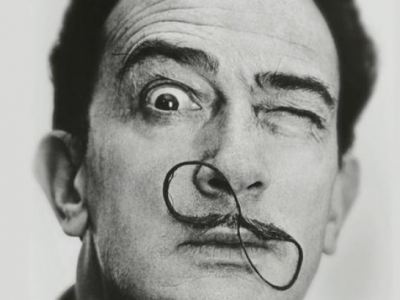
Without ambition, there is no true ability. Salvador Dali stated, “Intelligence without ambition is a bird without wings.” Ability to act isn’t enough if you don’t have the drive. You need to want to act and be willing to try hard to achieve. Capacity to accomplish isn’t enough: you must desire to see results. Many people have the ability to achieve their goals, but laziness and lack of ambition can interfere with their ability. Salvador Dali was a 20th century surrealist painter from Spain. He had a lot of ambition when he was younger, allowing him to keep working to become an amazing artist even after tragic events such as his mother’s death when Dali was 16. He was also expelled from the Academy of Fine Arts in Spain because he was accused of fomenting unrest. His ambition allowed him to bounce back and keep working. When Salvador Dali began to paint, he worked patiently and would almost always finish. He never gave up until it was clear he couldn’t accomplish his vision, and this ambition to finish his projects helped him become an amazing and highly successful painter.

The great American President Abraham Lincoln also had something to say about ambition. He said, “Every man is said to have his peculiar ambition. Whether it be true or not, I can say for one that I have no other so great as that of being truly esteemed of my fellow men, by rendering myself worthy of their esteem.” Abraham Lincoln’s ambition was to earn esteem from his fellow men by making himself worthy of their respect. When Abraham Lincoln was elected for president, he had a difficult task ahead of him: to reunite the South and the North. He needed to have others respect him so they could listen to him. In order for others to respect him, Lincoln felt that he had to be able to respect himself as a person before others could respect him as a president.

Lincoln had a very difficult time maintaining this, rendering himself to himself worthy of respect while his fellow countrymen were slaughtering each other. While attempting to end the Civil War, he also had to attend to problems in his family, and to passing the 13th Amendment. He needed to be able to trust himself before others could trust him to be able to reunite his divided country. Lincoln strove to represent the United States as a whole during his time as president. If Lincoln wasn’t worthy of respect, then America wasn’t. When it came down to the survival of America as the United States, Lincoln’s ambition to render himself to his highest standards was vital to crushing the Confederacy. If it weren’t for this ambition, the Civil War would possibly have continued to tear the United States apart.

I have been in the position where I have the capacity to do something, but have lacked the motivation. However, when I work toward a goal diligently, I can accomplish what I set out to do very easily and quickly. In the summer of 2012, I went to the Center for Talented Youth camp. There I studied Discrete Math and had to progress through college-level courses even though I was only 13. To accomplish this I had to have a lot of ambition. On days where I didn’t have motivation to work, I wasn’t able to accomplish as much. If I don’t have the drive to perform an action I am capable of executing, then it’s as if I don’t have the ability to accomplish the action at all. The lack of drive affects you negatively because you lose the ability to become successful. I agree with Abraham Lincoln’s quote because his ambition is to make himself worthy of the esteem of others. Because he had this ambition, he accomplished the task of being a figure of respect, because he had both the desire and the willingness to look in the mirror and re-define his character. I have also been in the position where I had the ability to accomplish something, as a leader. When I play soccer and my team is at the top of the league, I have ambition to play hard and to get my teammates to do what I think is right. Lincoln had to work hard to get his cabinet to collaborate with him. Exercising works the same way. It can be physical torture if one doesn’t have the motivation to push on through, but if one has the desire and he breaks through the pain, one will receive many positive rewards.

Both Abraham Lincoln and Salvador Dali felt that ambition is very important, but Lincoln assumed that every human being has ambition, while Dali said that ambition essential was for success. Ambition is like the gas that fuels the car: without the fuel, you cannot progress toward any goal you have set for yourself. However, there is good ambition and bad ambition. Good ambition betters yourself or others. Bad ambition is motivation or drive to accomplish a goal that will harm another or others. Good ambition and bad ambition are both defined by motives. An example of good ambition is desiring to become a leader of a program that donates money for humanitarian purposes. Good ambition usually creates motivation and drive to accomplish tasks that can improve the welfare of others. Bad ambition can lead to greed and ruthlessness, affecting one’s judgment. It can lead you to putting your own goals in front of others and can lead to ignoring consequences, especially negative ones. In the book, Forest of Secrets by Erin Hunter, the antagonist, Tigerclaw, has ambition to become leader of his clan. When his leader chooses another person as deputy instead, Tigerclaw is enraged and his good ambition to become leader turns into bad ambition to kill his leader and take power by force. One should always strive for good ambition in order to improve one’s life and the lives of others, and one needs to avoid situations that might corrupt  one’s motivation. Certain situations can destroy the ability to realize the full consequences of one’s actions.

For instance, the Swede from Stephen Crane’s “The Blue Hotel” is corrupted by his ambition. The Swede, who “… had the sense of silly suspicion which comes to guilt,” is playing a card game with a few other men in a hotel. After another man accuses the Swede of cheating in the game, the friendly competition erupts into a brawl. After soundly beating the man, the Swede turns ambitiously to another bar nearby, looking for a fight. This becomes his downfall as his opponent is armed with a knife and makes short work of the Swede.

When you are too engrossed in what you are doing, you forget to slow down and recognize the negative and positive effects of your actions.  What’s most important about good ambition is that it produces positive results. It is what motivates wonderful people all around the world to make the world a better place. Ambition is also simply what makes you get out of bed to try and improve your life and the life of others around you.