Monthly- Archives: February 2023


SIMON LIM

The Battle of Kadesh

1350 B.C.

In the capital of Hittite empire, Hattusa

76 years before the Battle of Kadesh   

The barracks adjacent to Hattusa were usually in constant motion. Even in passing you could always hear the sharpening of swords or the grunts of a late night spar. But tonight, the city lay still. The majority of the Hittite force was off on another campaign to wrest Kadesh from the Egyptians, fighting for honor, while a few unfortunate few had to stay and keep watch for a counterattack on Hatti. This was the most tedious of all the jobs, simply staring out into the plains, watching for anything out of the ordinary. Most would find themselves staring backwards into the city. And how could you resist: even at night the city was something to behold from a scout’s vantage point. Torches in temples were kept alight even in the dead of the night, which gave the large structures a dull glow, while the stone walls surrounding Hatti cast a shadow down on the city. Îzzet knew his job was pretty much pointless. No way would the Egyptians have the audacity to strike so far north. Despite the fact that Kadesh was in Egyptian territory to the southeast, it was very poorly defended due to the number of rebellions within the region. This left it wide open for the Hittites to claim. 

He knew it would be a decisive victory and the rest of the Hittite force would return to Hatti soon. But all he could do for now is pray to Zababa (the Hittite god of war) and wish he was there, fighting alongside his comrades for honor and glory. 

But Îzzet, a proud Hittite soldier, bred for battle, of no substantial rank, felt it was completely unreasonable for his exclusion. Not only had he been left out of the combat, but his chores were also more than tripled in amount. The responsibility of a large part of the barrack’s upkeep was left solely to him. Mucking the floors, sharpening the weaponry that was too shabby to bring, and exterminating pests were all on his list, the last of which was extremely frustrating. He would chase a rat for half an hour, then stare at a hole it snuck into for the next half.  

Îzzet made a point of educating himself as much as he could on the most recent Hittite campaigns, mostly from whispers and rumors from other soldiers. That fool pharaoh, Amenhotep IV, had seemingly neglected the need for protection. He had been so focused on enemies within his walls to see the threat of enemies outside, leaving Kadesh vulnerable. Kadesh seemed to be the center of much previous conflict. He wondered if it was even a good thing for this land to be under Hittite control. He’d long heard of a large battle at Megiddo, the neighboring city-state to Kadesh, nearly 100 years prior to this takeover; however, collecting more information proved to be nearly impossible. Hittite records were almost never kept of previous war engagements. Kadesh was at the border of Hittite, Egyptian, and Assyrian territory. It would be a valuable area to control for any of these massive dynasties to expand further. 

Meanwhile: el-Amarna, Egypt 

Pharaoh Amenhotep IV stood at the newly constructed shrine to the sun God Aten. Once he had become the pharaoh and ruler of Egypt he proclaimed that all the gods of Egypt were a lie except for one, the almighty sun god, Aten. Despite it being the middle of the day, the shrine was almost completely empty except for an odd slave here and there. Of course, they were only there to clean, guard, and maintain the shrine. It seemed the subjects were clearly unhappy with the changes taking place and it was only logical to assume that they wouldn’t visit a shrine commissioned by a pharaoh they despised. It had been just over a fortnight since he had moved the capital to el-Amarna. He had begun replacing each all shrines to worship Aten exclusively. In other matters, things were falling apart in the north-east. Many of the newly conquered city-states, including Kadesh, still rebelled against Egyptian rule. But his starting a monotheistic religion, devoting all his people’s focus to Aten he thought, would strengthen their resolve. He knew that, in time, he would reclaim the land, but only once all the chaos had subsided, for who could resist the pacifying influence of Aten?

He had set up a somewhat unsteady peace treaty with the Mitanni nation, desperately needed. Without the resources supplied from Syria and Palestine, he might not have enough forces to quell the uprisings sprouting across Egypt. His advisors were quite insistent in dealing with a matter involving the protection of Kadesh – however this was the least of his worries. On one hand, Kadesh was a useless city-state, supplying nothing to the capital except a makeshift military border, but on the other, what would it mean for the growth of his religion if the bright shining disk of Aten couldn’t blast Kadesh into a million sunbeams?

But he did fear the potential outcome when the day to finalize control of Kadesh would come. He had read tales engraved on the walls of the Hall of Annals about a fearsome battle up there near Megiddo, around 100 years ago. The writing had stated that nearly 12,000 had died in the battle, but also said that it was a resounding victory for the Egyptians. When questioning his advisors further on more of the details he found that nearly a third of casualties were on the Egyptian side despite them claiming victory. It had been a very impactful battle and he wished to not suffer similar losses.

The most interesting part of the inscription however was the recorded aftermath. It was written by Thutmose III’s commander and military scribe, Tjaneni. From what Amenhotep IV could tell, Tjaneni’s attention to detail was impeccable, surpassing the skills of the other scribes. Amenhotep had even made the trip to the great Temple of Amun at Karnak to read the full portion. The most impressive section of the writing was the efficiency shown when dealing with the civilian riots. Amenhotep had decided to make a point in studying these texts to prepare for the many rebellions within his kingdom that he knew would come. 
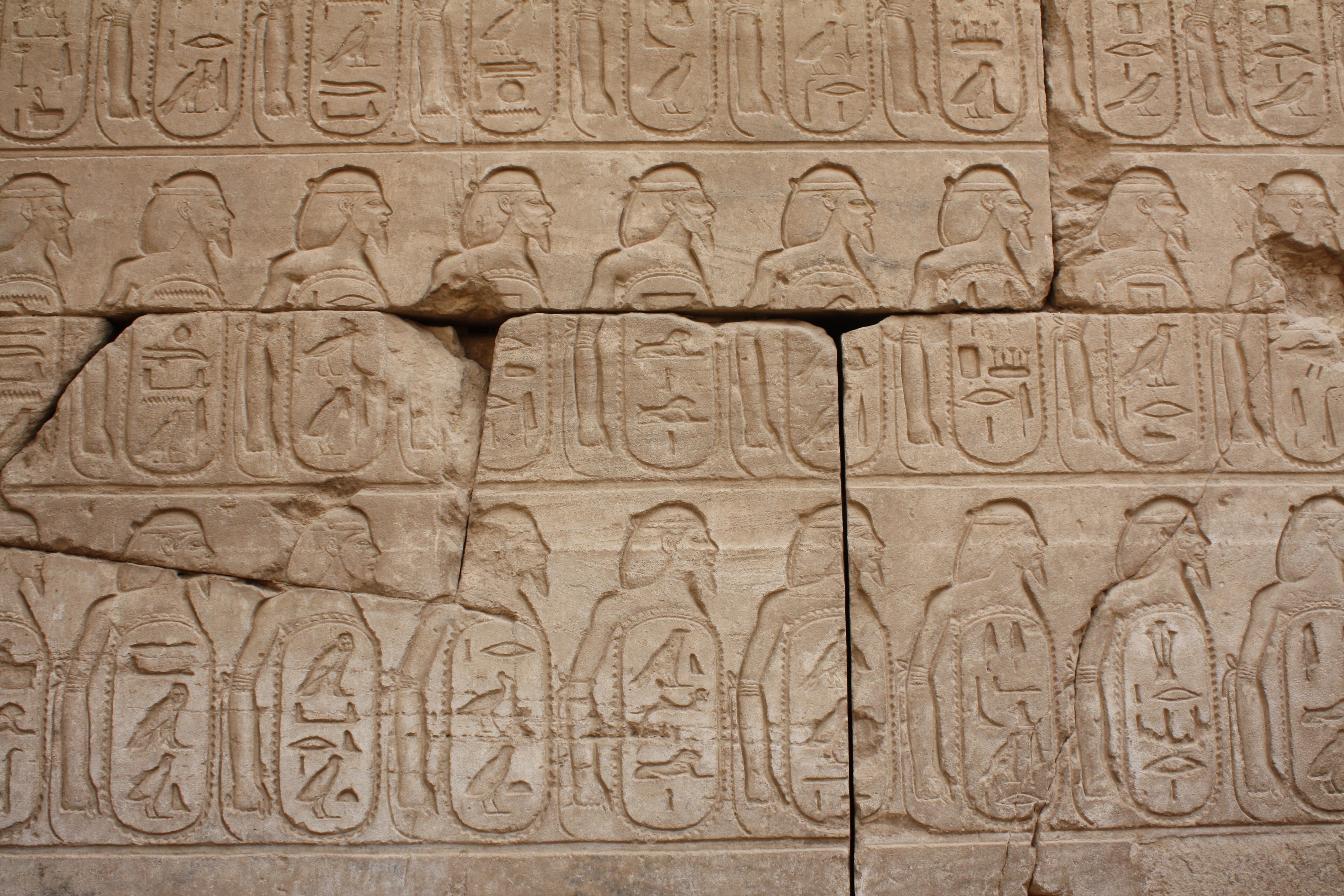
1279. In the capital of Hatti, Hattusa

Five years before the Battle of Kadesh 

It was Mursili III’s third year as ruler and king of the Hittites, but things were seeming dicey. He looked into blanked eyes, staring at the statue of a deity. The corridor was dimly lit and completely silent except for the echoes of his footsteps on the stone floor. His reign had been getting more and more difficult over time, especially with this new Egyptian Pharaoh. Ramses II seemed like a formidable opponent based on the information Mursili had collected from his spies. Despite his age, Ramses’ military knowledge was astronomical. Mursili knew that in a war against him, simply sending men without planning wouldn’t be enough. The important part was that this new child of a Pharaoh held a grudge towards the Hittites from the Kadesh siege that had happened 70 years prior. 

The Hittites had walked into Kadesh uncontested, as if the Egyptians were almost asking for it. The border city was lacking in garrison due to political issues in the capital and was free for the taking. This grudge complicated things. Rumors were also spreading about Mursili III’s uncle, Hatusilli. It seemed he was gathering a large force to dethrone him. Mursilli was conflicted: between sending the majority of his armies and chariots to Kadesh to defend the border or keeping as much of his force close to him as protection from this inevitable attack from his uncle, what was he to do? What had convinced him that these were not just simple rumors? However, why had his uncle ignored every accusation Mursili had thrown at him? Why hadn’t he heard confirmation from his angry uncle? Was Uncle Hatusilli deliberately leaving him in the dark? Oh well, it was time to decide. 

Rock relief of Hattusili III, Hatusilli on the far left

The most annoying part was that every time he would sit down to think, he would be surrounded by messengers bringing reports from Kadesh every other minute. They were all the same in essence. “Your majesty, we need more funds” or “Your majesty, we need more soldiers” or “Your majesty, more Egyptian scouts were spotted”. It was all very draining. On increasing occasions Mursili was forced to hide in shrines and temples to just get some quiet. 

Many of his advisors would calmly but persistently recommend a peace treaty which was just plain idiotic. First off, the Egyptians would never sign a peace treaty, as it was clear they had plans for bloodshed, and it was a sign of weakness to them. Begging for mercy is never an option. Also, Mursili and all the kings before him had worked tirelessly to expand the Hittite reach and control it. He had no plans to stop the expansion of Hatti. That included destroying and claiming Egypt! A peace treaty would greatly stunt the growth of the Hittites. 

As of now, he was feeling as if sending his army away to Kadesh would be the only real option. Losing Kadesh, right in the border land between Egyptian and Hittite territory, would give the Egyptians almost free access into Hatti. That could lead to the end of the Hittite empire. Of course, sending his army away would be basically waving goodbye to his crown and maybe even his life if his uncle was in a bad mood. He refused to lose his land to the Egyptians. Mursili also knew his uncle well, and he knew that he would make a strong leader – and if he had to pay with his head, at least old Uncle Hatusilli would have a strong hand on the ‘gyptians. But then again, he’d rather have his head intact, even if he had to cross into the reviled ‘gypt. 

1280 B.C.

6 years prior to the Battle of Kadesh

Pi-Ramses, the capital of Egypt. 

Upon the Pharaoh Ramses II’s parading through the commoners of the capital Pi-Ramses, peasants would fall prostrate to their knees in honor of his magnificent presence. His chiseled features were comparable to none and not a single thread of cloth was misplaced along the long dark velvet robe, emblazoned with the crest of a Pharaoh and encircled with true nuggets of gold which shone in the midday sun. A path would be made instantaneously for he and his escort of a dozen well-built and heavily armed men. Peasants tripped over themselves to clear the road, for the punishment for standing in the way of his majesty would most likely be a swift death from the sword of his guard. And of course, these guards sported their own armor with only the sharpest weaponry, forged from the strongest of steel. Ramses looked into the fifteen-foot polished bronze mirror, noting how his aquiline nose caught the light with perfection. He sighed. What did he need to do to make his visage immortal, other than finish his pyramid which would house his mummy forever? Ah! it would be to finally vanquish those hairy Hittite monsters and rip back Kadesh from their beefy fists. He had begun sorting things out for a potential war between him and the enemy king Mursili. 

1275 B.C. Hattusa, one year before the Battle

Mursili III

Mursili girded himself with a topaz-embedded belt, strapped on his sandals and quickly marched out with his phalanx of guards into the dawn. The rows and rows of chariots were unmanned; all drivers had been told the previous day to polish and perfect their vehicles, and it was now time to inspect. If any portion of the vehicles were unpolished, were broken, or were found to be in disrepair, the attending driver would be called to account. 

The midday sun perfectly struck the lined up chariots and cast shadow straight down on the pathway. Each chariot was identical, a large wooden vehicle with a simplistic design… yet with clear potential for violence. The large platform could support three men and could out speed any other chariot in any other nation. The soldiers manning these vehicles would only be chosen from the most courageous and skilled of the Hittite force. It took a real master of the bow to hit an Egyptian charioteer while moving 15 miles an hour. However, he knew his bowman could do it. Two horses would be required to pull this beast of a vehicle but would also make it two times as difficult to take down. 

1274 B.C.

Egyptian territory near Kadesh, war camp

Ramses II

Ramses II had barely slept in the past two days. Every second of night and day was consumed with preparations for the approaching battle. And even when he did sleep, his dreams were haunted by the possible outcomes if this siege was not successful. His reign could end and his many goals of expansion would die with him, that is if he even returned alive. However, it was vital that this unsteadiness was not shown to his citizens. He had taken many more parades through the capital to show the commoners of his strength and confidence as Pharaoh and general, before eventually setting off with his army across Judah and Galilee to get to the plains that were Kadesh.

1274 B.C.

Kadesh, South of the Orontes River

Egyptian scout named Iah Heru 

Iah Heru wasn’t sure if he felt lucky or unlucky that the battle that had been brewing for almost a century would take place in his lifetime. But once Egypt claimed victory over the Hittites he could return home and live out the rest of his days in peace, after of course, he and his comrades being celebrated as heroes. Despite scouting being one of the easiest jobs, he was still one of the only volunteers for the position. Once the battle began, he and the other scouts could stay in the back with minimal combat required. He guessed the prospect of being captured and tortured to death scared the others out of volunteering.

Skirmishes between the two empires was almost a tradition at this point. One of his scouting comrades, Neith Re, had been captured by the Hittites a few nights back. There was no doubt in his mind that Neith had died, most likely a gruesome death. He thought of the men in the camp preparing for a battle they knew would come, commanders scheming in their tents; there would be an almost dead silence in the night, only disrupted by the occasional brief bout of laughter or the sharp metallic sound of someone perfecting the point of their spear.

The Egyptian scout reared the hill and looked out over the sea of Hittite campfires and makeshift shelters. The counting of men was difficult but the sheer number of chariots was clear – he estimated around 3,000 at least. As soon as he saw this, he grabbed the reins of his horse and started galloping back to his camp. The Hittite chariots dwarfed the Egyptians at least 1,000. And they also seemed to be larger and could probably fit up to 3 people. The commanders would need this information in the battle to come if they wished to claim victory. 

The Battlefield

Kadesh plains

Late May, 1274 B.C.

From the battle of Megiddo, to Izzet’s deep brooding and frustration, to Amenhotep’s zealous beliefs and objectives, to Mursilli’s great dilemma, to Ramses’ deep grudge for the enemy that took so much from Egypt, to Mursili’s fanatic preparations, hundreds of years had been leading up to this one historic moment. A battle was brewing and soldiers on both sides knew it. 

Each nation had gathered allies from across the land in preparation. In the middle of the day the camps were bustling with life – they could be seen for hundreds of rods (rod = 150 feet) straight. And to the west, one could even spot wagons of hayricks and matériel slowly moving along, for all the fastest steeds had been taken for battle. The Egyptian presence was formidable. The battalions of Hittites were less orderly and more of a clump, large tents placed at differing intervals apart. The training grounds were fully occupied with men being directed through formations and exercises for war. Looking carefully, you could spot a larger tent rimmed with a golden hue, the base for the general and king. Messengers and diplomats hung right outside hoping for a word with his majesty. Each nation had nearly 50,000 armed to the teeth whether it be by sword, spear, bow, or shield. 

Infantry were equipped with a strong flexible bow composite of wood and horn, with arrow shafts of reed and wood, tipped off with a polished bronze arrowhead. Quivers would hold 20 to 30 arrows, each identical to the next. Soldiers were equipped with a dagger with a ribbed blade and a curved hilt, sharpened to a deadly perfection.

Ramses’ force was split into six, four of which were named after their own respective Egyptian gods: Amon, Ra, Ptah, and Seth. Ramses’ personal guard would be the 5th of those divisions with a 6th division of hired Canaanite soldiers. The Canaanite mercenaries were known for their ruthless nature in battle and their ability to strike fear into any who opposed them. This 6th division was known as the Niren. An average of 9,000 men were assigned to each force. However, the Hittite soldiers showed no fear of the enemy ahead. Muwatalli had collected the full might of Hittite influence. He had twice the amount of Egypt’s chariots, and double the infantry as well.

The majority the Egyptian force bore no armor – some merely donned a belt and a small triangular loin cloth. They carried shields of wood and ox hide, square at the bottom and perfectly round at the top. However, the more important officials wore leather tunics reinforced with small bronze plates and padded skullcaps.

Across the Hittite camps you could see many different designs of armor and clothing. Some wore long plated tunics stretching all the way down past the knees while others had forgone any armor in favor of mobility. Pointed helmets of bronze and leather were also worn to protect from swift death from an arrow. Shields were circular with the sides rounded in. The Hittite leader stood tall, fully adorned with mail tunic reaching down to his knees. Not a single brass scale out of place; so polished in fact, that from a distance it could be mistaken for sheer gold robe.

The Pharaoh Ramses sent ahead 3 scouts to find the Hittite army and once they had returned he began the march towards them. Each of his divisions were spread far apart, ready to offer assistance if another division were to be attacked. The Egyptian force was near perfectly quiet. No one dared make a sound, each of them kept one ear out at all times for an attack from behind. For they knew the element of surprise would be crucial. They feared the battle would be over all too soon if the Hittites could overwhelm them from behind. Suddenly, their fears were validated when a mass of nearly 2,500 Hittite chariots, large, strong, and armored many layers deep, crested over a hill directly behind them!

Egyptian scouts had foreseen this attack and rushed back to inform the Pharaoh. But they arrived too late. Heavy Hittite chariots rammed into the unorganized and unaware Egyptian camp; heavy swords and arrows flew seemingly without purpose or direction. But the camp was too compact, and the large Hittite chariots had nowhere to go. Egyptian footmen pulled Hittites out of their chariots by their long hair and slashed their throats. Blood and dust soon filled the air and covered the ground. In the midst of battle one squadron of bowmen were able to organize themselves apart from the bloodshed and began endlessly firing arrows into the mass of chariots. Arrowheads hit home and embedded themselves in the skulls of Hittite soldiers. The slaughter was constant and brutal. A division of Hittite chariots pushed for the Pharaoh directly and his personal guard defended wave after wave of attacks. Ramses was trapped. Threatened from all sides and nowhere to run. There were only two options, and the first led to death, so he chose the second. He took all the chariots that remained and swooped in a wide arch, launching a fearsome counterattack on the Hittites from behind. Because of the fleet scouts, another Egyptian division had caught up with the battle and joined Ramses in his attack. From out of nowhere Ramses had gone from the underdog to the clear winner. With no other options the Hittite soldiers were pushed back; they had realized their fatal mistake. In the Hittites’ eagerness to charge they had left behind nearly 40,000 infantry which would have outnumbered the Egyptians nearly 2:1! Their retreat soon became a headlong rush for safety, for the Egyptians showed no mercy. Foot soldiers rushed to cut them off, and surrounded by soldiers and river, the Hittite division had nowhere to go.

After their stunning defeat in battle the Hittites stumbled back to Hattusa, but Ramses and his army were too weak to continue the siege and headed back to Eygpt. Kadesh was untouched. Of course, Egypt claimed the event to be a clear cut victory for Egypt, and were celebrated as heroes when they returned, while the Hittites were up in Kadesh, scratching their heads on why Ramses didn’t take their land. In the Hittite point of view, they had won because the ‘Gyptians hadn’t seized and occupied Kadesh: Ramses didn’t take Kadesh and that’s all there was to it. Essentially, both sides claimed victory, making this the biggest draw in history! Egypt had their pride and Hatti had Kadesh.


JASON QIN

Chaim Potok’s The Chosen throws the reader into a bildungsroman, a coming of age story, of two Jews, Danny Saunders and Reuven Malter, during the tail-end of World War Two and its aftermath as the horrors of the Holocaust are unveiled to the public, and movements like Zionism rise to debate the idea of the Jewish nation-state… all of which comes to a head in Chapter 13.

Chapter 13 starts Book 3, which begins Danny and Reuven’s education at the Samson Raphael Hirsch Seminary and College, where Danny is studying psychology and Reuven is studying mathematical logic, and Danny is miserable. He is solely interested in Freudian psychoanalysis, while the psychology taught in the College only consists of experimental psychology, taught by a Professor Appleman. He rejects it, as he sees zero connection between rats and mazes, mathematics, and the mind. However, after some heated venting, Danny decides to consider Reuven’s suggestion to talk to his professor about it after class. When Reuven comes home, he narrates to us his father’s passion for Zionism and how his passion for it is affecting his health, as he will do anything for the Jewish nation-state in Palestine.

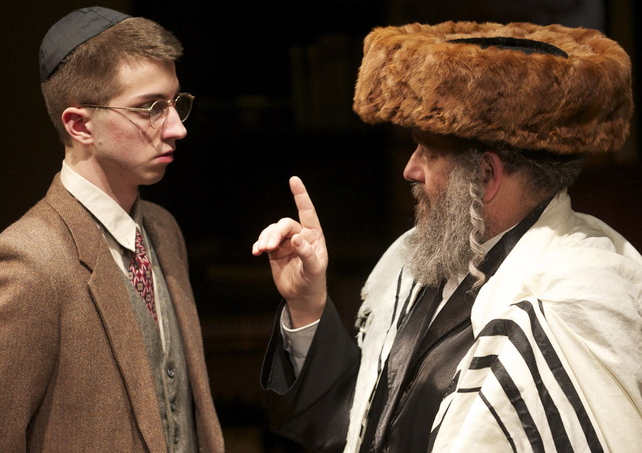
Reuven and Reb Saunders

One must understand the significance of Reuven’s father being an avid Zionist. Danny is Hasidic, son of a tzaddik (leader of a group of Hasids), and that tzaddik, Reb Saunders, despises Zionism. He believes that the Jewish nation-state should be built by the Messiah, and not by “Jewish goyim,” or as he puts it, “contaminated men” (198).

When the second semester rolls around, Danny finally decides to meet with Professor Appleman, and he finds out that because Freud is not the only source of truth in terms of psychology, Reuven begins coaching Danny in math. Back at home, the reader learns about a Zionist rally at Madison Square Garden, where Reuven’s father is going to give a speech, on possibly the largest stage in New York, which may or may not be a huge success and be published in many newspapers that Reb Saunders may read. In school (Reuven switches between home and school a lot), Reuven can feel the tensions rising, and Zionist and anti-Zionist groups form, everyone but the Hasids on one side. It seems as though Chaim Potok is building to a climax, letting the tensions simmer until they finally break, with the Madison Square Garden rally.

Mr. Malter’s speech is a massive success, and Danny is banned from speaking to Reuven. At this point in the novel, it seems as though this is Reuven’s low, as while the Zionist movement is making headway, it is causing many personal problems. While others are cheering, Reuven is “alternating between violent rage at Reb Saunders’ blindness and anguished frustration at Danny’s helplessness” (232). While the world is moving around him, he is stuck in a quagmire that his shattered friendship left behind.

This novel is not just about two boys growing up, for Chaim Potok makes sure that every world event is timed perfectly with his story, and in reality, this time period allows for the most tumultuous character development for these two Jewish boys. Rooted in external issues out of their control, such as the Hasidic tradition that is forced on Danny, The Chosen brings the gut-wrenching feeling of injustice to the reader, and all of it culminates in Chapter 13.

Reuven may very well be caught in the worst possible time in history, as who knows, perhaps this situation is playing out somewhere else in the world. Not only that, Mr. Malter explains Reb Saunders’ reaction by saying that “he has no answer anymore to [his] Zionism,” that he needs to uphold an example as the tzaddik (232). Perhaps Reb Saunders is not targeting Reuven with his rage, but the movement of Zionism as a whole. However, that does not explain his explosions he had “yesterday at breakfast, last night at supper, and this morning again at breakfast,” nor does it negate how Reuven is being personally affected (231). Although Reb Saunders’ anger is not directed at Reuven individually, Reuven clearly feels the effects. He hates Reb Saunders with a “venomous passion,” so much so that “it began to affect [his] schoolwork” (234). Reuven clearly feels the effect of the passions of an unjust man, so who is to say that personal injustice is not being inflicted onto him?

AARON HUR responds:

I appreciated the fact that you talked a lot about Zionism, and the contrast between Reb Saunders and Mr. Malter’s beliefs. I think that the whole basis of that chapter was centered around Zionism, and eventually Mr. Malter’s speech, leading to perhaps the end of Reuven and Danny’s friendship. Something that you said that stuck out to me especially was when you were talking about Chaim’s strategy for writing the book: “This novel is not just about two boys growing up, for Chaim Potok makes sure that every world event is timed perfectly with his story, and in reality, this time period allows for the most tumultuous character development for these two Jewish boys.” I agree that all of these events, the start of WWII, Roosevelt’s death, the Holocaust, all world events that take place in this book, are timed to sort of throw a wrench in Danny and Reuven’s life. I additionally agree that it all culminates in chapter 13. This is the high point in the controversy between Danny and Reuven’s family, and although it has been stirring up throughout the book, Reb Saunders has had enough of it, as it gets unleashed in Chapter 13.


JONATHAN LIM

Seneca the Younger and The Art of the Personal Essay, ed. Phillip Lopate

“On Noise” is an essay that reveals the musings of a man, known as a classic Stoicist, statesman, dramatist and satirist. Twelve of his essays survive, and in The Art of the Personal Essay editor, Phillip Lopate, four are collected. In this essay he tills the soil of his present circumstances, and turns over some delightful paradoxes.

Aside from his opening, where he lists the various and sundry noises assaulting him from his apartment in the middle of Rome, each paragraph in the essay turns over a subject carefully. From identifying two main sources of sound, first the general which is not distracting, and then the human voice, itself always arresting, he then goes into this verse: “The peaceful stillness of the night lulled the world to rest”.

Seneca argues that our reason for retirement is because our ambition has been piqued. This retirement is an unsuccessful one because ambition occasionally “rears its head again.” If we are to be truly retired, our thinking would be unbroken by the noise, and we would never face that type of distraction again. 

We would assume after such a racket that this stillness would soothe. But what about the anxieties that surface in the night? Seneca argues that when the mind is most at rest, not only when lying down, but when it is hard at work and keeping idleness at bay, rest is achieved.

Seneca also states that being distracted or having an unstable temperament means that you have yet to attain a strong level of detachment. Without detachment, we are uneasy and become “prey to anxiety.” The example he gives us is an excerpt from the Aeneid in which the main character, Aeneas, who used to not fear anything, fears everything because of the burden he carries. This burden is his father and his son. Because of his attachment to keeping his load safe, every noise keeps him up and every breeze brings with it anxiety. 

So, the day you are finally at rest is the day you have detached yourself and all the noises do not reach you. Seneca describes it as “a meaningless hubbub of empty sound”. 

And then finally the ending plot twist. He’s outta here! Why should he have to endure the noise? What if Aeneas found a safe haven for his family and never had to deal with such fretful noises? Well sometimes, the answer is just to step away from the noise. Cause why suffer? Ulysses certainly didn’t. 

Discuss Seneca’s “On Noise” with the “Expansions and Contractions of Self” from Lopate’s introduction.

When introducing a quote, usually the author would build off of it, as if the quote were a foundation for a house. However, Seneca does the opposite. After putting down a quote from the translations of Varro Atacinus, he immediately refutes it with the words, “This is incorrect.” In his introduction, Lopate says, “Personal essayists are adept at interrogating their ignorance.” If this was true, then why is it that Seneca’s “On Noise”, the first essay of the entire book, counters that? He gives out advice and shares his knowledge about noise, retirement, the strength of men, and detachment. However, in his salutation, he admits he’s had enough of the noise, a human reaction after all.

Seneca has achieved his goal: he is imperturbable, above the fray until the end, when he leaves. He states at the end of his essay that he was only subjecting himself to the maelstrom of noises in Rome “to give myself a test and some practice. Why should I need to suffer the torture…”? His character is set, built on rock solid Stoicism, and there seems to be nary a chink in the armor. However, his analysis can be too basic: “The temperament that starts at the sound of a voice or chance noises in general is an unstable one and one that has yet to attain inward detachment. It has an element of uneasiness in it…”.

“I cannot for the life of me see that quiet is as necessary to a person who has shut himself away to do some studying as it is usually thought to be,” and “But I swear that I no more notice all this roar of noise than I do the waves or the falling water…”.

To his credit, Lopate does attribute the exploration of the expansions and contractions of self to “personal essayists from Montaigne (1533–92) on”, and Seneca the Younger lived (c. 4 BC. to AD 65).      

Lopate: “The personal essayist must above all be a reliable narrator; we must trust his or her core of sincerity. We must also feel secure that the essayist has done a fair amount of introspective homework already, is grounded in reality, and is trying to give us the maximum understanding and intelligence of which he or she is capable.”

Seneca’s confidence does not come off as arrogance, but rather, he has an educational tone. He is informing us of all he’s learned about the noise around us. We can see from his writings that he is sincere and reliable. Seneca’s goal is to give us the most knowledge possible of all that he has learned. We can trust that each word written by Seneca has a strong sense of confidence and wisdom behind it.

June Qin responds:

Lopate characterizes a personal essayist as “a Houdini who, having confessed his sins and peccadilloes and submitted voluntarily to the reader’s censuring handcuffs, suddenly slips them off with malicious ease.” Initially, Seneca seems to do exactly the opposite of what Lopate describes; he showcases his incredible ability to live above a public bathhouse that emits “a babel of noise” without going crazy. Yet, going back to the essay’s first sentence, he confesses that “I cannot for the life of me” understand why people need quiet to study; this inability later explained in the essay as he explains the paradox that peace isn’t attained through rest. Rather than continuing to expel his own limits, he uses the credible and stoic character that he built up in the beginning to explore humankind’s susceptibility to be “prey to anxiety.” I especially enjoyed Seneca’s example of a man urging everyone in his household to be quiet as he sleeps, but the noises he complains about, “he never heard them at all,” because they were imaginary which illustrates Seneca’s point of inner restlessness being more disruptive than external distractions. After this discussion, the ending in which he admits that he will move away from the public bathhouse, conceding that “it [is] a lot simpler just to keep away from the din,” seems unexpected, yet it is here where he echoes what Lopate implies: “I am more than the perpetrator of that shameful act; I am the knower and commentator as well.” His confession adds to his character’s complexity; he is more than just stoic.

Isaac weighs in:

When reading Seneca’s “On Noise” while also keeping in mind the make up of the personal essay, I find that Seneca’s essay slightly wanders off the well beaten path. His essay is less intimate than described. Though he does seem to speak directly to the reader, I didn’t find the companionship that Lopate mentioned. However, Seneca did follow the “Honesty, Confession, and Privacy” aspect of the essay. His writing is frank which also portrays him as a reliable author. After reading Jonathan’s response to the essay, I found his point on the tone to be interesting: “Seneca’s confidence does not come off as arrogance, but rather, he has an educational tone.” Seneca’s essay at times does seem too confident, but as Jonathan described, it is more educational which makes it a personal essay. 


ANNA QIN

Intersecting Visual Art and the Art of the Setting

Eudora Welty

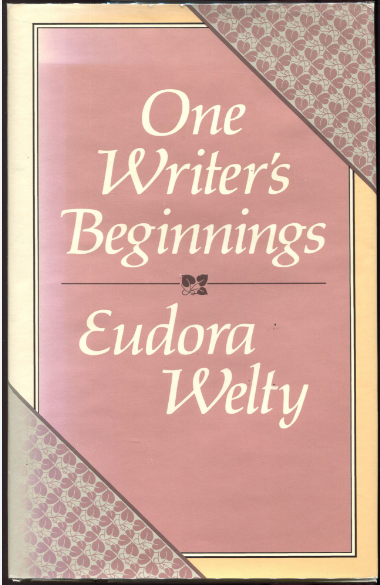
Eudora Welty (April 13, 1909 – July 23, 2001), daughter of Christian Welty and Chestina Welty, was a short story writer and photographer, born in Jackson, Mississippi. As seen from her memoir, One Writer’s Beginnings, she grew up in a supporting and loving family which included her mother and father, and her two younger brothers Edward and Walter. As a child, she attended Davis Elementary School then graduated from Jackson’s Central High School in 1925. She attended college at the Mississippi State College for Women and later, at the University of Wisconsin. From there, she studied and graduated at the Columbia University School of Business. To start off her career, she worked as a publicity agent for the Works Progress Administration. In her free time, she would take photographs, usually of the poor, as well as people suffering from the Great Depression. She continued to take photographs until the 1950s. Welty’s first short story was, “Death of a Traveling Salesman,” published in 1936. She then went on to have a number of short stories published and her first collection of short stories, A Curtain of Green, was published in 1941. Some awards and honors that she was given included the Pulitzer Prize for Fiction for the novel The Optimist’s Daughter, the National Book Award for Fiction, for The Collected Stories of Eudora Welty, and more. She was successful as a photographer too: her early photographs have appeared in books including One Time, One Place (1971), Photographs (1989), and Eudora Welty as Photographer (2009). She passed away on July 23, 2001, due to cardio-pulmonary failure, in Jackson, where she is buried.

In Welty’s childhood, we can see a great sense of comfort taken from her environment. From the very second she was born, she felt so much love from her two parents. Welty’s mother introduced her and taught Welty her love for books. “She read to me in the big bedroom in the mornings… She’d read to me in the dining room on winter afternoons in front of the coal fire… and at night when I’d got in my own bed” (OW’sB 5). Her mother showed her how there is so much that can come from reading: experiencing different lives and a whole world of imagination. Her father also loved her endlessly and would show Welty and her siblings little gadgets, how to look at stars, and other things. This would help her learn how to experience new things, whether it was just little toys in their house or things in life. These things would benefit her as “[she] developed a strong meteorological sensibility”(4), and could help her find her way home if they “were lost in a strange country” (4). She also would get to play with toys, not only for girls, but also “as soon as the boys attained anywhere near the right age, there was an electric train, the engine with its pea-sized working headlight, its line of cars, tracks equipped with switches, semaphores, its station, its bridges, and its tunnel” (5). Welty had the privilege to live with incredibly loving parents who would no doubt do what was best for she and her siblings. And of course, a place that she could always count on: a “bookcase in the living room, which was always called ‘the library'” (6). Even more than that, their house had encyclopedia tables and a dictionary stand under windows in their dining room. Welty took advantage of this home library and as soon as she could read, she “[read] them all alike and as they came, straight down their rows, top shelf to bottom.” She was never away from the love of her parents, her siblings and her home.

Jill Krementz

In the first few years of her life, she, with the help of her parents, would learn life lessons that can be seen in some of Welty’s stories. Her father buying she and her siblings many gadgets “represent[ed his] fondest beliefs—in progress, in the future.” She also mentions how “neither of [her] parents had come from homes that could afford to buy many books… [her] father was all the while carefully selecting and ordering away for what he and Mother thought we children should grow up with. They bought first for the future” (6). This belief of doing things for the future comes up a couple of times in the first few pages of One Writer’s Beginnings. Since both of her parents believed in this, it is possible that she could have included this in her story “Livvie”. She grew up with many things in her house like oak grandfather clocks, cuckoo clocks, Kodak cameras, instruments, and much more.

As previously mentioned, Welty grew up in a very stable family and community. In her autobiography, One Writer’s Beginnings, Welty shares a story of a time her family set out on a journey. The Welty family owned a five-passenger Oakland touring car and took it on a trip to Ohio and West Virginia.

Her mother was the navigator, holding in hand, an AAA Blue Book. Her father’s “sense of direction was unassailable” (43), and he liked to travel “through the country” (43). She and her brother Edward would sit in the back seats “with [their] legs straight out in front of [them] over some suitcases.” This particular journey lasted for about two weeks total, there and back, and “each day had my parents both in its grip” (44). Eudora would sit behind her father which led her to “[inheriting] his nervous energy in the way [Eudora] can’t stop writing on a story” (44). Many of these trips uncovered realizations like how “writers and travelers are mesmerized alike by knowing of their destinations (44).” Eudora proceeds to write about her great grandfather, the lawyer Ned Andrews. She learned about the time her mother agreed to cutting off her hair in exchange for a set of Dickens, Ned’s “courtroom flair” (47), and Ned’s many other talents. Eudora had a very fortunate and happy childhood where she could hang out with her siblings, had good relationships with her parents, experienced normal childlike things, and took trips with her family. Things as little as this trip helped her become the writer she is so famous for being. 

Passionate Observer: Eudora Welty among artists of the thirties is published by Mississippi Museum of Art with three sections about Welty’s career: first, Welty as photographer, second, Welty as a writer, and third, Welty and her artistic colleagues that grew alongside her. One Writer’s Beginnings

was transcribed and enlarged upon from her William E. Massey Sr. lectures in the history of American civilization, at Harvard University in 1983, and was on the New York Times bestseller list for 40 weeks. It includes her life leading up to her writing career and what inspired her and created the pathway to her accomplishments. Throughout the book, she reveals her childhood to her early adulthood, in fine detail.

After Welty’s years at the University of Wisconsin where she majored in English literature, she returned home to where both she and some of her friends had reconnected and caught each other up and their accomplishments of their early careers. She was lucky, for her talent was, while perhaps the brightest light in the town, not the only one. Lotterhos, Hemmingsworth and others were gaining national reputation. 

Welty, far left, Lotterhos, second from right

“All three were interested in figurative work and landscapes. The tradition of realism, with only slight echoes of their training in European modernism, dominated their works. They were all active in the Mississippi Art Association, presenting their shows and the work of others at the Jackson Municipal Art Gallery. Their lives were entwined with each other and with Welty as she embraced their talents and efforts” (Passionate Observer, 43).

Through the art scene, Welty met many people and soon became friends. Helen Jay Lotterhos returned home to Jackson the same year as Eudora. Together, they “became good friends, sharing a lively interest in art and writing” (43). Lotterhos and Welty took sketching trips around Jackson where they would find a place of interest and have picnics while sketching. “Lotterhos wrote of one such occasion ‘in early November’ when Eudora took her to see an abandoned house that had caught her imagination” (43). Lotterhos went on as an active artist and teacher and became very successful. Her art was exhibited in exhibitions by the Mississippi Art Association, Mississippi Federation of Women’s Clubs, and many more. 

Another one of Welty’s artist friends was William Hollingsworth.

They both grew up in Jackson just a block apart from each other. Hollingsworth and Welty shared an interest in drawing cartoons. However, he eventually transitioned to focus more on serious art. When the FERA (Federal Emergency Relief Administration) office shut down in 1938, he created a studio in his father’s house. Later, his paintings were featured at the Jackson Municipal Art Gallery. He also won the gold medal from the Mississippi Art Association. Hollingsworth’s art began gathering attention from exhibitions all over the country. He and Welty “collaborated on a show of work by Welty’s friend Karnig Nalbandian…” (45). At this time, Welty took a one-year master’s course at Columbia University in New York where she spent more time absorbing the city than sitting in the classroom; her photographs from this period are very important… but when her father died, she moved back to Jackson, permanently. 

Another mutual friend was Karl Wolfe. “Wolfe must have been a welcome figure to Eudora who had reluctantly given up the riches of the New York art world to return home” (47). Wolfe moved from Columbia, Mississippi to Jackson the year Welty had returned from Columbia University. Wolfe returned home to just wait out the Great Depression but after surprising success he moved permanently from Columbia, MS, to Jackson and set up a studio. He won prizes early in his career from the Mississippi Art Association, the Alabama Art League, and more. Wolfe and Hollingsworth became good friends and took sketching trips similar to Lotterhos and Welty. Wolfe’s new wife was an artist as well and they both lived a life dedicated to art. 

Marie Atkinson Hull had an impact on many artists in Jackson during the Great Depression. “She taught painting to both Eudora Welty and Helen Jay Hotterhos, her cousin, and was an art colleague of Karl Wolfe and William Hollingsworth” (48), influencing many artists during that time. “She was for over a half century the dynamo that turned the wheels of art in Mississippi” (48). As a young artist herself, Hull had taken lessons from people like Aileen M. Phillips Shannon, and as she got older and more experienced, she became the teacher. 

Some other artists around Jackson were John McCrady, Walter Anderson, Caroline Russel Compton, Leon Koury, Richmon Barthe, and more. Although Welty may never have known each of them personally, she knew of their work. Welty was inspired by many artists of her time and was able to stand alongside them as they each became successful. 

From these friends, she may have gained inspiration for some of her stories. In Eudora’s story “A Worn Path”, when Phoenix Jackson arrives into town, it is all festive and decorated for Christmas. People walk around the streets carrying “an armful of red, green, and silver wrapped presents.” Though not very deeply described, one can imagine the crowded town filled with large groups of people purchasing presents or decorating the town for the season. A painting, High Farish by William Hollingsworth, looks similar to the town in “A Worn Path”.

High Farish

In this painting, there is a busy street with a lot of people walking around. Lots of people seemed to be dressed in dresses or summery clothes. There are buildings and stores lined down the street and many people going into them. Although it may not be winter, it does look to be raining since many people carry umbrellas held over their heads. Welty could have been inspired by this painting by an old friend and included it in “A Worn Path.”

Another one of Eudora’s stories, “The Whistle” has a setting very similar to William Hollingsworth’s painting Three in a Wagon. In “The Whistle”, Sara and Jason Morton live on a farm that is isolated from everyone else in the woods. The first paragraph of this short story describes the setting of where they live. It is said that “A farm lay quite visible…among the stretches of deep woods in their colorless dead leaf.” In Three in a Wagon, there are a couple of small houses far away from anything else. No one is around besides the three men in a wagon and a small figure following close behind. There seems to be dead grass surrounding the area with bare trees and dying bushes. The leafless trees show that it is winter and cold. In “The Whistle”, “the moonlight covered everything, and lay upon the darkest shape of all, the farmhouse where the lamp had just been blown out.” In the painting, there is the smallest house in the very center which is the darkest point of the painting. Later in the story, we learn that there is a fire going in Sara and Jason’s house. Coming out of the chimney of the house in the painting, is smoke. That means there must be people living inside and a fire going as well. This house exactly describes the Morton’s house. Three in a Wagon resembles Sara and Jason’s house very similarly in “The Whistle.”

In one of the most visually stimulating scenes in “The Wide Net” Welty brings us to a hill where two boys are watching “far down and far away a long freight train passing”. Welty turns to several figures of speech to convey her meaning, “it seemed like a little festival procession” and “the tiny pink and gray cars like secret boxes” and when it comes to actually depicting the scene, she must revert to the ocular effect it has on one of her characters: “tears came to Grady’s eyes, but it could only be because a tiny man walked along the top of the train, walking and moving on top of the moving train.” John McCrady’s Oxford on the Hill shows a couple houses and buildings far in the distance. There are winding roads through the many hills, and countless trees surrounding the area. As a person standing on top of the hill, it would be quite hard to see a person walking in the town or along the path. Similar to how hard it is for Grady to see the man moving on the moving train, it is hard to even see a person standing near the houses in the painting. 

A fourth story written by Welty is “A Visit of Charity,” which is about a Campfire Girl, Marian, who has to visit an old lady at a senior center. She is taken to the room of two old ladies who both have snobbish attitudes and bad manners. As Marian walks in, “something was snatched from [her] hand – the little potted plant. ‘Flowers!’ screamed the old woman.” The first old lady stares at the flowers in awe while the second old lady, who is in bed, says they’re “stinkweeds.” They go on to argue back and forth about pointless things while Marian stands to the side shyly. Though not perfectly similar, a sketch by William Hollingsworth resembles the two old ladies. In reality, this sketch is of the same person from two different angles, but it can be seen as two different people. In this sketch, they are both sitting on chairs painting or drawing something. The lady does not seem very young. She wears a sun hat, a knee-length skirt, a sweater over a shirt, and some sandals. One might imagine the old lady with Marian to look somewhat similar. 

Almost all stories contain a setting or an imaginary place that readers must picture in their minds if not specifically detailed out. The images in paintings by Eudora’s friends capture the emotion of the story and helps me understand what perhaps was direct inspiration, perhaps indirect. Being able to match these friends’ paintings to a specific story opened a whole new view of the writing and reinforced a clearer picture in my mind. Welty has said “Authors use setting to create meaning, just as painters use backgrounds and objects to render ideas.” My appreciation of art and its deeper meanings has grown. A painting could have the force to impact a story, inspiring the setting and ideas.

Bibliography

  1. One Writer’s Beginnings by Eudora Welty, Harvard University Press, 1983

2. Passionate Observer: Eudora Welty among Artists of the Thirties, Mississippi Museum of Art, 2002


MICHAEL LIN

The McCormicks

Past Palm Street, an already isolated road, the McCormick house stood alone. It was a huge abode, built with the highest quality materials and led to by a gargantuan driveway with iron gates. The McCormicks lived in Stowe, a small town in Vermont. Palm Street was a road originally used to get around Mount Mansfield, but about a century ago, a grand house was commissioned to be built alone in the forest. Inside the house, the walls were lined with booming trophies and glistening gold medals. Along the great banister were draped pennants – and all of the decorations, some of them even a bit gaudy, did not match the formal austerity of the home; in fact, one could imagine that this was one of the grandest frat houses in New England. But no, the McCormicks were a family of four: mom and dad and two sons. On this late November afternoon, with the sun almost gone, a regal quiet spread throughout the home. Clocks ticked, the house creaked and popped occasionally, but it wasn’t until about a quarter to five that in the distance one could make out the sound of an approaching car.

Luke and his mom entered through the garage door of the house. Luke immediately took off his puffy winter jacket and hung it on a hook, next to where his brother would. He slipped off each of his black sneakers and walked past the spotless mudroom with his bag slumped over his shoulder. Luke passed by the glossy marble kitchen top, passed the fancy cocobolo table they dined at, and sauntered into the living room. He saw a big cardboard box. His mom pursued him after he turned the corner, taking off her puffy coat as well and placing her purse on the marble countertop.

“You are going to be delighted to see what’s inside of there! Go ahead, open it!” Luke proceeded to carefully take off the tape and unfolded the cardboard box. Inside was a huge trophy, that read: “Luke McCormick, winner of the annual winter Stowe Middle School Math competition”

“That was from last week!” she exclaimed.

Luke made his way up to the second floor. The stairs were glossy with a beautiful runner carpet and were protected by an extravagant railing. Made of a rich dark brown, the banister wound its way past the second floor up to the attic.

“Hey mom!” Luke shouted, laying on his bed, “When’s that new math thingy I have tomorrow?” His mom called back from downstairs. “It’s from five to five thirty, just after your Pre-SAT prep session you have!” Luke groaned and laid his head back, “Alrighty,” he mumbled. After five minutes, Luke meandered his way back downstairs, past all the shining awards that glistered with his name, and sat down on the couch with a despondent look. He shouted, “Hey mom, do you think we could chill on the prep things, maybe remove the Pre SAT one?” A silence was heard, then, “Absolutely not!” Luke sighed and opened his backpack.

When Luke was just about to finish his first worksheet, he heard the mudroom door flung open with a bang. Luke’s older brother Jack had come home from school. “Alright babe, see you later, I just got home and gotta do work now,” Jack said into his phone, “Love you!” Jack quickly flung off winter clothes and sped into his room. Their dad followed behind Jack, hanging up his coat and sitting down to rest on the family couch, and he let out a very audible sigh, from even a room over. Luke walked over and sat down next to him, “You all right?” he asked.

“Yeah, I guess, Jack’s been a handful these days, always wanting to go out with his girlfriend and making me drive him back and forth. He seems happier than ever though, so I’m also happy!”

”I guess so…” Luke responded. “But you’re still more excited for my new badminton thing that I’m going to, right?” The dad sat still for a second.

“Sure, sure, sure, of course!”

Luke went back to whittle away at his gargantuan pile of work. He had his work cut out: for geometry he had to solve a lot of homework problems, for science, study up for a presentation on Newton’s laws; English, an analytical essay, and for social studies, he had to study the Civil War. Luke heard some commotion from his brother’s room, which was just across the hall. Inside, Jack was sitting down on his desk, playing a video game that he had just died in. Jack banged and slammed his table with his hand even though it stung, until he heard his door open.

“Are you okay?” Luke peeped.

“Yeah sure, now get away.”

“Alright man.” 

Luke stepped back into his room: he had to get through eleven pages of his PSAT workbook, ten pages of a math competition preparation book, and needed to practice his violin before dinner. For the rest of the afternoon, Luke completely zoned in on getting these things done, but he was interrupted many times by his brother’s grunts and bangs. Jack played the violin too, but Luke heard no practicing. Once dinner was ready his mom called, and Luke stopped his reading of The Great Gatsby to make his way out of the room. Jack left his room at the same time. With dreary eyes and a slouch, Jack looked like he was in terrible shape as they both made their way down the stairs to the dinner table. The two brothers entered the dining room, which was sectioned off from the rest of the house by a cased opening with a pearly white arch. Inside was a marvelous glass table that was held up by intricate curves and beams of smooth iron.

On top of the table were four platters that were all covered by bright silver cloches. “I hope you boys are ready for what your dad and I whipped up!” They all took their seats on the rich wooden chairs engraved with tangled designs, and with dark velvet cushions.

“Alright, now for the big reveal!” their mom chirped. The cloches were lifted and on the table were four masterful dishes of food. Roasted racks of lamb covered in garlic and a crust of herbs, a creamy mouthwatering plate of alfredo, a rich chicken piccata,

and to top it all off, a plate of broiled lobster tails.

“Alright, Alright, before anyone can dig in, your father has an announcement! Dick?”

“Well sons, it is very exciting news I have for you! We have just received a letter in the mail – Jack’s gotten into the Vermont All-State orchestra! It was really hard, but he got the audition off splendidly. Can we have some applause for Jack?”

As Luke was clapping, he couldn’t help but wonder how Jack had gotten into such a renowned orchestra. Jack hadn’t practiced at all when Luke was home, and he was also out with his girlfriend a lot or playing games. As they dug into the delicious food, Luke shared about his afternoon, saying “I got all of my work done, and read some of The Great Gatsby.” Hoping to get some sort of response, Luke looked up at both of his parents, but they harbored zero reactions. They just kept on eating their food and grinning at Jack. Luke kept his dinner table manners. His elbows didn’t touch the table – but he couldn’t help glancing at Jack who was resting his arms on the table, using only one fork and knife, and eating directly off the plates with the food on them… and to top it off, Jack was scrolling on his phone while chewing! He wasn’t even looking back at their parents who were praising him. For the rest of the dinner, Luke ate his food in silence, and when done, left the table. He turned back and saw Jack still scrolling on his phone while slowly eating, with his parents talking at and about him. Luke turned away and headed up back to his room.

For the rest of the night, Luke read more of his book, and completed more of his assignments, but kept on hearing his brother watch videos loudly, bang on his table, and talk to his girlfriend. Yet, he still heard no practicing at all. He put down The Great Gatsby on his bedside countertop and walked over to Jack’s room.

Luke slowly opened Jack’s door and saw Jack blasting music into his headphones while playing videogames on his computer. He knocked on the door to grab his attention.

“Hey, shouldn’t you practice your violin?”

Jack turned around and took off his headphones.

“Honh? Could you repeat that.”

“I said you should practice your violin.”

“Why the hell would I do that? I just got in! Now’s the time for celebration!”

“You really should stop doing useless things and do something productive, you know.”

Jack got up out of his chair.

“What did you just say? Who do you think you are? Mom?”

Jack towered over Luke and started walking towards him.

“Get the hell out of my room.”

Luke made his way out of the room, but before he closed the door shut, he said, “What’s gotten into you? You’ve never been like this; I was just trying to help you.”

But there was only silence.

In the master bedroom, Mister and Missus McCormick were getting ready for bed. Dick took off his tie, unbuttoned his shirt, and changed into pajamas.

“Hey Janet, how was your day?”

Janet, already dressed in casual clothing for the night, was taking off her jewelry.

“God it was the worst, I couldn’t stand looking at Jack at dinner tonight.”

They kept talking as Dick changed into his nightwear.

“Hey, today was some stressful stuff for me too. I mean, I was with him all day, and he didn’t even seem happy when I announced it, Janet.”

“You’re right, but how is Luke going to take it? You know how jealous he can get.”

“I do.”

“What do we do? Jack barely wants to do anything anymore, and even with that announcement of his success, he didn’t even lift a finger!”

“Janet, this can’t be all for nothing, I risked so much getting Jack into that orchestra, 3rd chair too! Do you know what could have happened? Picture the news, ‘Wealthy CFO bribes his son into prestigious orchestra!’”

“You do have a point Dick, but what can we do? What do you think? I’ve been busy with Luke, and he seems to orbit towards you more.”

“I think he just likes doing what he enjoys the best, so maybe we could try to find something he enjoys and highlight that.”

“Maybe, we’ll try and find something about that tomorrow, it’s getting a bit late.”

They walked out of their separate changing rooms and climbed into bed.

“Good night, Dick.”

“G’night.”

The next morning, after shooing the boys off to school, the parents visited an academic advisor in Stowe. His name was Mr. Hart. As they were exiting their car, Janet expressed her concerns.

“Are you sure this will work, Dick?”

“Kinda, I mean what else can we do? They are professionals, plus this one was quite expensive, must be worth it.”

“I suppose so.”

They entered Mr. Hart’s office, checked themselves in, and then sat in the conference room. After a few minutes, Mr. Hart walked into the room.

“Alrighty, you guys have already sent me the information on your sons, but what are you concerned about?”

Janet was the first one to speak.

“Okay, so you know how one of our sons Jack has been despondent recently?”

“Mhm.”

“We just don’t know what to do with him, he used to have so much excitement to do things just a year ago, but now that he’s in high school, he barely wants to do anything outside of school besides play games and talk to his girlfriend.”

Mr. Hart rubbed his chin.

“I see, so he’s showing major signs of being burnt out. What do you have to say, Mr. McCormick?”

“Well, since he’s been sticking around with me more, I think he just wants to do what he enjoys doing instead of doing all the things that we forced on him.”

“That does make sense I suppose, but what is your goal here?”

Janet responded first.

“I mean we just ultimately want him to be happy in the end – it’s just he needs to do something outside of school, or else he won’t be able to go anywhere in life.”

“Ok, so you guys want him to get interested in something and be excited about that?”

Both of the parents responded in unison.

“Of course.”

“So, why don’t you try and get him hooked on something to do with games then? He seems to really enjoy playing games, so maybe learning about how games are made will inspire him to learn about coding and computer science!”

Dick responded. “Alright, that seems like a good idea.”

“Ok, are you folks satisfied with this session?”

“It seems so.”

“Well, good luck on the games, and I am interested to see how Jack will react. Good day.”

Mr. Hart walked out of the room.

The parents left the conference room and went back towards the main entrance. They stopped by the secretary to pay for the session on the way out.

“You are the McCormicks?”

Dick responded. “Yep.”

“Okay then, your session was a recorded 15 minutes, and with the hourly rate being six hundred dollars, that will be one hundred and fifty dollars.”

Janet whispered to Dick.

“Holy crap, that’s almost ten dollars every minute.”

“It’s worth it if we can help Jack out.”

“You’re right.”

Dick quickly wrote a one hundred and fifty dollar check, signed it, and handed it to the secretary.

“Thank you, have a nice day!”

“You too,” Dick responded.

The couple then walked back into the car and started their journey back up the mountains to their home.

After a long day, while Luke was in a trance finishing his work, the parents took a visit to Jack’s room. They opened the door to find him, once again, playing more video games. They knocked on the wall to signal their presence, and Jack turned around.

“Hey Jack, can we have a talk?” said Janet.

“What for?”

“It’s just something for moving forward,” chimed in Dick. “Jack, I know you love playing those video games, but we were just wondering why you never want to do anything anymore. I know you’ve told us you don’t want us to force things upon you anymore, so I’m asking you here, what do you want to do?”

Jack stared at his parents, with his eyes wide open and his mouth dropped a tiny bit.

“Hey Dick, are you sure this was a good idea?” whispered Janet.

Jack got up out of his chair and walked towards his parents, with a surprised face. Are they serious right now? thought Jack. There’s no way I actually got into the orchestra, I literally didn’t practice, so Dad must have done something again, and now they are pulling this out?

“Come on son, no need to be so surprised, it never should have been that way in the first place, we just wanted to look out for you.”

Jack snapped out of his surprised gaze.

“Since you love playing games so much, maybe you could learn how to make one of your own! How’s that sound?”

“Umm, s-s-sure, I would love that! But how would I ever be able to do that?”

“We already found a good class online for Java programming and game design, all we need is your approval!”

“Alright, sure, let’s do that now then!”

On the other side of the hallway, Luke stood behind his closed door, with his fists clenched tightly. Why does he get all the good treatment? They never pay attention to me anymore. WHY? I put in so much more effort into everything, and they never treat me like they treat him. Luke slammed his door open. He saw Jack giving his parents a hug.

“Thank you guys so much for this,” Jack said.

“No problem boyo… after all, you are our son.”

Luke stood in his doorway, staring at the happy family.

“Why do you treat him so nicely but never me? What did I do to deserve that?”

Janet turned around instantly.

“Honey…”

“Why do you guys always force so much on me and not him? WHY?”

Jack stepped out of his room and stared at Luke.

“Can you shut the hell up?”

“EXCUSE me young man. That is no way to talk to your – .” Janet was interrupted.

“Mom, please just don’t. Just go back into my room for one second, let me deal with this.”

The parents stepped back into the room, but carefully listened from inside.

“What the hell do you even want?”

“Why the hell do you get all the attention?”

“Are you even looking at yourself? Look around you, dumbass, see all those trophies, have you ever even seen them fawn over me before today?”

Luke opened his mouth. But was immediately interrupted.

“When have I ever got any damn recognition before you have? It’s always, oh my gosh Luke you did so good on this! Oh my gosh Luke, terrific job! Our parents are always, always, ALWAYS, checking on YOU! I didn’t even know they cared about me, so this has been wonderful. I’ve never been this happy in a while and you are RUINING IT, so stop CRYING!”

Luke stared at his brother.

“Fine, enjoy it while it lasts.”

Luke walked back into his room. He threw all his books that were on his desk onto the floor and got his laptop free from all the papers and pens and study materials, laid on his bed, and started playing browser games.