Monthly- Archives: June 2021


QIUYE QIAN

Mr Watt´s Literary Services

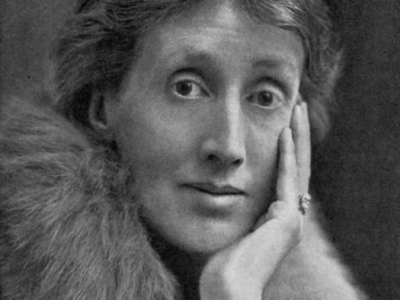
“Street Haunting” by Virginia Woolf, is an essay which reveals the author’s walking journey through the London streets in winter. She uses incredible imagery as she records a stream-of-consciousness account of going across town in search of a pencil.

I’ve written a mirror image (and much shorter) response to the essay, to both be influenced by Woolf, and to share with you how her words are timeless and yet transmissible to me, in Shanghai, in 2021!

Woolf has a very delicate and thoughtful writing style, which shows the readers the scenery of London street at night. She lets the mercurial nature of the mind revert to memories such as a bowl she got in Italy, details which many people would perhaps ignore (for these memories occur before she has left her apartment). But this prepares the reader for her lustrous and dazzling street images. From her essay, I learned how to mirror her syntax and to hybridize her images with my reality.

In Woolf’s essay, the author starts with an excuse to leave her apartment— getting a pencil. My version is: I want to walk to eat a certain dish! Her essay actually influences the reader to think… when have I had such and such a kind of experience, what I have seen, what I have thought? From Woolf, I learned how to use this unique starting place to affect the reader. Because my essay is shorter I’ve linked to her ending to create a closed loop. In addition, I learned how to use her and my images to expand and let it flow like water.

For a link to Woolf’s original essay, please see here: http://s.spachman.tripod.com/Woolf/streethaunting.htm

Shanghai Tramping

By Qiuye QIAN

No one perhaps has ever felt stirred to find Shanghai dumplings on a Friday afternoon. But there are times when it can become the only thing to do; it occurs at times when, as sophomores at JZIB (the High School Affiliated to Shanghai Jiao Tong University), that we are so dog-tired and hungry that we need these dumplings, and an excuse for walking halfway across Shanghai between lunch and dinner suffices to leave home.

As the high-achieving student must take breaks to preserve their sanity, and the aesthete takes to vigorous exercise to balance out his remunerative musings, so when the desire comes upon us to walking around Shanghai, eating braised pork in brown sauce does for a reason, and arising from our rooms we say: “Really, I must eat braised pork in brown sauce,” as if using this as an excuse we could engage with our magnificent city and where it likes us best – by setting out with no particular aim save to get a braised pork in brown sauce.

The hour should be around 8 pm in the coming death of spring (the best time to view the busy night scene of Shanghai). For in spring, the bitter smell of mint and the cheap taste of tobacco mingles; the beer is preferred warm for the local people. We are no longer annoyed as in the winter by the strong pungent smell of hot pot and the artificially sweet air from the fruit supermarket. The night hour, too, gives us the irresponsible sensation which darkness and lamplight bestow. We are no longer quite ourselves. As we step out of the house between eight and nine, we shed the self our friends know us by, and become part of that rambling drunkard in a small restaurant, whose society is so agreeable after the solitude of staying with homework.

For at home we sit surrounded by objects which perpetually express the oddity of our own temperaments and enforce those memories. That wooden doll on the shelf, for instance, with fine marks and patterns, was bought at Chenghuangmiao on a sunny day: we were just aimlessly wandering in the antique shop when an old woman who had been boasting about the antique furniture in the shop plucked at our skirts and said she would find herself starving one of these days, but, “Take it!” she cried, and thrust the lovely doll into our hands as if she never wanted to be reminded of her quixotic generosity. So, guiltily, but suspecting nevertheless how badly we had been fleeced, we carried it back to the little house. Late in the afternoon, the pet dog Little Bean and the lost cat JJ sang a horrible song just like the crying of a small baby, so that we all leant out into the garden to look, and saw the light from the nearest large department store laced about among the old China fir and the dense clouds grey in the sky. This memory was balanced, just like the oyster shell on the beach, submerged among the billion grains of sand that washed away imperceptibly. There too was the shriveled old gatekeeper, who rose among the shadow of trees and rusty iron door and revealed the secrets of his soul–as everyone who is going to hug death does. All this – Shanghai, the late afternoon, light laces about the trees, the old man and the secret of the soul – rise up in a soft fragrance from the wooden doll on the shelf. And there, as eyes fall on the floor, is that dot of the dried oil painting on the mahogany flooring. Little Jessica made that. “The young girl’s a little devil!” had said Mrs. Crystal, putting the cup with which she was about to add tea and water to so that it evaporates round white rings from the glass of the table.

But when the door shuts on us, all that vanishes. The petal-like covering which our souls have stretched out to house themselves, to make for themselves a pupa distinct from others, is broken, and there is left of all these layers piled up, like an asphyxia of baroque pearls (before they’re liberated from the oyster shell) with growing lines of perceptiveness, an enormous eye. How beautiful the Shanghai street in summer! It is at once enthusiastic and indifferent. Here vaguely one can trace carved door frames and windows; here under the lamps are suspended fog of pale light through which pass quickly bright men and women, who, for all their youth and energy, wear a certain look of unreality, a reserved air of depravity, as if they had given life the slip, so that life, deceived of her prey, dances away without them. But, after all, we are only gliding smoothly on the surface. The eye is not a pearl, not a crystal, not a diamond displayed in the jewelry cabinet. It floats us smoothly down a stream; resting, reflecting, the brain sleeps perhaps as it looks.

For the eye has this strange property: it rests only on beauty; like crows, they choose beautiful and shining things, greedily carry them into their nests and enjoying them carefully.

The crow returns with a full load, carefully decorating the nest, vanishing in smoke. The aroma of braised pork in brown sauce slowly rises from the steam, with warm oil flickering on the translucent skin. The steam, the lovely doll, the young lady and men, everything are locked in a wooden box again. Cunning eyes deliciously and successfully imprison our deeper thinking, and all returns to the simple appetite.


COLLIN AARONSON

Mr Watt´s Literary Services

The adventures of Edgar the Bat and his sister Colette

By Collin “the Magnificent” Aaronson

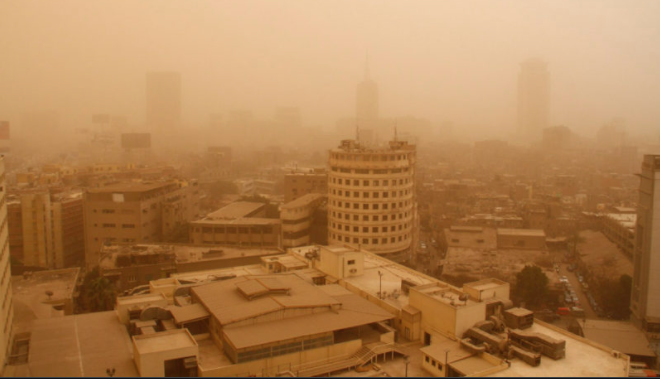
All the way in Egypt where Edgar the bat lives, it’s over 109 F, which he is used to, and it’s 4:30 in the afternoon. It is a sunny day in summer and he is sad because there are many bats dying every day because of the heat. Edgar has this strange ability that makes him not get too hot and it has been passed down from relative to relative for generations. He faces the problem of helping fellow bats by spinning a weather wheel. The weather wheel is a device that makes clouds form in the sky. The only reason nobody else is manning the wheel is because it is made out of metal, which gets really hot and hurts if you touch it. But since Edger doesn’t get affected by heat he can spin it!

At the weather wheel there are two seats, one for him and one for his sister Colette. When they were younger they were play-fighting and Colette bit part of Edgar’s ear off, but other than that he’s a stout little bat. Edgars’ nose is red with little black spots; he has green eyes; Edgar has been doing this job since he was born in 2017, and as he is 4 human years now (18 bat years) the date is 2021.

The Weather Wheel Control Room

One time Edgar and his sister were making clouds for the town. He was turning and turning the wheel and couldn’t help but notice the rusty parts and the moldy wooden parts. There were big panels there just in case the thing broke down, too, standing at the ready.

It was the tallest thing in the town and it needed to be the tallest so it didn’t get caught on any buildings, and so the other buildings would not deflect the winds – for, without a direct flow of weather, how was the weather wheel to work?

“Ugh five more minutes.” Edgar slapped his alarm off with his wing, and then scratched his head with the one claw that stuck out at the end of it. He always turned on Batnews at the beginning of the day. But he had slept in, for over an hour! He heard  some unsettling news:

“Live in downtown Cairo: Bats and Battinas! Right now the new tallest building is being built but will this have any affect on the weather wheel? Speaking of the weather wheel… It seems as if an operator is missing –  one of them is late to do their job of protecting the town… I wonder if something happened to him.”

“RING RING!”

“Who’s there?”

“It’s me your sister, where are you? Everyone is wondering if you are hurt and you’re making me do all the work over here!”

“Sorry, I slept in.”

“Don’t be sorry get over here now!”

“Ok here I come. Where is the remote? Whatever… I got to go. It’s not a far fly from here to the weather wheel, about 1 minute, Byee!” He dropped out of the window and sailed away.

 “Ugh… you’re finally here: did you see that they’re making a taller building than the weather wheel?”

“Yeah, why?”

“I don’t know, aren’t they not supposed to do that?”

“Whatever.” Later that day Edgar and Collete finally got home from a long day of work just to find the T.V. shorted out because Edgar had left it on.

The next day the tallest building was finished and it looked spectacular. Collete woke up Edgar and they went to work and arrived on time. What they just missed was the fact that any building taller then the weather wheel was being built, and that it even got caught on the weather wheel, but the construction bats of the town had ignored the rule and built it anyway. It was too late! Edgar and his sister were already spinning and there was a big storm on approach and it was going to make direct contact with the batborhood, killing many bats!

When Edgar noticed that, he told his sister and they both turned, gasped, their bat fur going from dark to pale. They had to press the emergency button but it was too late: the storming sand clouds knocked over the building, killing many, destroying a lot of houses… including Edgar’s!

“Edgar, what have we done? I think we’ve just done the worst thing in history!”

“Colette, what are you talking about!?”

“What will they do to us?”

“I don’t know… more or less I don’t want to know. We didn’t do anything!”

“I at least hope people are a little reasonable with what we just did.”

“We didn’t do anything wrong, Colette.”

 There was dust everywhere: you couldn’t really see anything or breathe as the dust was too thick. Edgar and Colette were hugging on each other for dear life, but the air still felt grim. You could hear little bats crying for their parents wishing they would come back, but knowing that it was no use. As I said before, the air was grim, and Edgar and Collete were stunned so that they couldn’t think straight.

Edgar and Colette flew back to their now-destroyed house hiding in the rubble. They were too scared to show their faces so they just hid. Then a rescue team showed up and saw the edge of Edgar’s wing and so they helped him but when Edgar saw  the bat’s faces he realized that they were after him to bring him in front of a group of waiting bats.

Edgar croaked out: “We are sorry for the destruction of the town: we didn’t know that was going to happen, and we didn’t try to hurt anyone. We were only trying to help! Please don’t blame this on us. Me and Collete think its the mayor’s fault because he made the building.”

Everyone turned to the mayor and he went practically gray under his glossy fur, yet some people didn’t blame him as they were still mad at Colette and Edgar. 

The next day, bats of all ages, lengths, widths, and heights gathered at a town hall. They were furr-ious! One side stood snarling towards Edgar and Colette, and another group snarled at the mayor. First, a bat who sided with the mayor took the stage and spoke:

“Good morning. My name is Jackson. I know we have lost lots today and I just want to say I lost someone too: my brother Benny! He was going to be a good bat but the two people that so-called save the day on the regular, manning the weather wheel: well, they have killed hundreds. They should be kicked out of the town and never be allowed to return!”

Then from Edgar and Colette, a mother bat strode to the mic. “I know we have lost it all, but at the end of the day that doesn’t mean you can blame our weather wheel watchers for this, even because they have been saving lives for three years now! I personally lost my baby Tommas.” She began weeping.

Edgar passed the mic to Colette. “Who is to blame here? The Cairo court of law will decide. But we hope that all of the bats that died yesterday go to heaven. They will always be proud of you. You will eventually meet them someday again.”

Everyone went off to bury their dead.


CHLOE ZOU

  The Starlight Barking

Spoiler alert you dummies! Don’t spoil it for yourselves – but since so few people read this book, let it be a guilty pleasure.

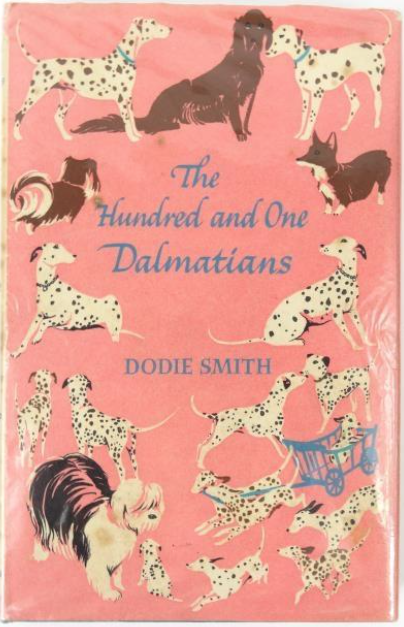
This world is entirely different from the first book. Only dogs are awake (other than the two cats and Tommy). Perhaps this is the world that some dogs dream of at night and in their thoughts, a world where humans are non-existing, where dogs are the almighty. Here, dogs have human abilities and even more such as “metaphysical” powers. This term was applied by Cadpig and used by Missus who though may not be good with directions is quite capable of understanding more abstract concepts, in which Pongo is not so good – of course, he has his areas of expertise as well! In this special world, dogs can open doors just by thinking about doing so, they do not need to bark out loud, but instead, all they need to do is send thoughts by thought waves which can travel to different continents. Dogs can swoosh (going incredibly fast and barely touching the ground) and reach places in a couple of hours where normally it could’ve taken days. On this day, dogs can feel like a racehorse galloping across the pasture, even like cars! But this isn’t the dream world for most dogs, Pongo and Missus included.

This is the little-read sequel

They feel too strongly a pull to their beloved humans to leave earth and go off to a far away star with Siruis who will give them a life similar to the one these dogs have experienced for a day. And perhaps, this one unique day of metaphysical powers was a good thing. It helped dogs such as Pongo satisfy their lure to adventure such as the one he experienced at Hell Hall years ago, without leaving their pets forever. In the beginning of the book, Pongo’s desire to have adventure and the way he feels guilty about it as well is shown. How could he think of leaving his humans? Yet, his emotions couldn’t be helped. As it said in Starlight Barking, “Surely he had everything he wanted? Why, then, was he sometimes just a little bit discontented?” And then you will see Pongo admitting to himself that he had been a bit wistful as he watched dogs leave Heaven Hall to their new owners/pets, where new and exciting adventures would occur. So, one could look at this special day with the Dog Star as a good event that would be beneficial for both us and dogs. We should be thankful that though our owners needed a special day for themselves, they are not yet ready to leave us forever and hopefully they never will, for us humans treasure our owners/pets and hopefully they treasure us too.


NATHAN LUU

I think that Memorial Day is a day that we get to remember the people that fought in war for us. They put their life on the line just to protect us from other countries. To veterans that are still alive, I want to ask you: how was it during the war? When did you not feel scared, nervous or anxious? Imagine going to war face to face with bullets flying all over the place. I would never risk my life because my biggest fear is dying. And going to war has lots of deaths. War is probably the one thing I’m most scared of. I’m also here to say thank you for putting your body on the line just to save random strangers in the U.S.A such as myself. I’ve also learned that oaths are a very serious thing to deal with. If you don’t do it and you were trying out for being a soldier, I think bad stuff will happen. I have learned a lot about Memorial Day and knowing what it takes to enter military service, and to thank all soldiers for protecting us.