
ALEX LIM

Part 1…
“Zach Curring bobs and weaves going left to right… with half a second left on the clock, he shoots and he scores!” screamed the commentator. The buzzer went off. “And that’s it for this game in the Junior Olympics Hoverball, I’m Jon Clades talking live from Cali, USA, saying goodnight and happy sports!” Jack, Zach’s most caring friend, raced out to the locker room the meet him.
“Dude that was the sickest goal I’ve ever seen in my–” Jack was suddenly cut off.
“Practice starts at 7:00 AM tomorrow!” Mr. Murphy screamed, sweating and slobbering like a military dog.
“Man,” said Jack, “is Mr. Murphy always like that?”
“Sadly yes,” said Zach. “Well, I should go now, I’ll see you tomorrow out on the field.”
72 hours later…
“Ok, we are in Overtime,” said the commentator. “Zach Curring being the great player he is, if he scores this last goal the season is over, oh here we go, he fakes, he dodges, he shoots, he … and he misses! And all of a sudden OH GOD, #17, straight off the hoverboard in a full tackle… the ref has just put down a red flag for an illegal BULL tackle, Curring is now on the ground with two possibly shattered femurs!” There was a huge bloody scuff from where the kid hit him.
“Zach!” screamed Jack from the sidelines, “ZACH!” He tried to climb the barrier, ripping at his knuckles as he went.
1 hour earlier…
“Alright boys I want a clean, fair game, no bull tackles, no goalie tackles, none of that,” shouted the Olympic ref. All the players nodded. “OK,” said the ref. “Lets hover!” All the players remained silent except for one, #17, who yelled at the top of his lungs, and then looked around sheepishly.
3 months later…
Zach recovered from his injury, but had to get metal femur implants so he could walk – he worked intensively, as he didn’t want to be looking like a dog with three legs. When he finally felt confident, Zach stepped onto the field where players were already practicing. He went to the locker room to get ready. While Zach was forcing on his equipment, over the metal femurs, and before he could say anything, Mr. Murphy appeared and said, “Zach I hate to say this, but you are kicked off the Olympic team. Let’s face it, you’ll never play the same again and I’ve found a replacement for the California games.”
“Are you serious?” asked Zach, meekly.
“I’m sorry,” said Mr. Murphy, as he reached for a paper towel to wipe his mouth. He then turned away, barking to Zach’s replacement. The replacement was player #17.
Zach kicked off his equipment and threw it at a locker, denting it, and walked off the field choking back tears of anger.
“Hey Zach,” shouted Jack, appearing out of nowhere. “How did practice go?” Zach walked past him without saying a word.
“Hey what’s wrong?”
“Just get away from me,” said Zach. “Haven’t you heard I just got kicked off the team?” He stomped away as Jack watched him go.
Once Zach knew he was out of sight, he ran home, sprint-hopping on his metal femurs, occasionally hopping on one foot as if he wanted shelter from everyone in the world. They would laugh at him, saying “Hop for your life, boy, hop for your life!” He ran up to his room, unnoticed, and turned on his TV to the sports channel and watched it, until a commercial came on. He listened unwillingly for he devastatingly hated commercials, until his ears caught the voice of the commercial spokesman saying “Junior players prepare, in a month, player trades and tryouts start for the Hoverball Olympics, so what are you waiting for? Start practicing now!” But before the spokesman finished speaking, Zach was already downstairs, and suddenly he ran back upstairs to get his hoverboard – and then he turned off the TV and sprinted back down. He stumbled down the last two stairs but it didn’t matter – he was going to practice and practice until he got everything down, he was going to make the best position in the best Olympic team.
1 month later, four months after his injury…
It had been one month now and Zach had practiced EVERYTHING: dodging, shooting, conditioning, stretching, tackling, and passing. His metal femurs completely bonded with his body, and he could do anything as if nothing happened at all, plus, he no longer had to worry about bruises on his upper legs.
He packed everything into a bag and was on his way to the Hoverball Olympic tryouts until he saw a familiar face: #17. Zach tried not to look, but he thought to himself: “Please don’t look at me, please don’t look at me.” And when he didn’t look – “Whew,” he thought, “Thank god he was wearing pearbuds. OK, I better hurry up or I’m going to be late.”
Zach ran off to tryouts, and when he arrived, there were at least 100 players on the turf: most were high school students from all over California, and included tall 8th graders: he was the only 7th grader. He carried his equipment bag onto the field and jogged over to the signup table that said “Ages 13 to 15.” The man at the table said, “Please sign here,” without looking up. Zach quickly and messily signed his name, age, gender, height, weight, birth and address, and handed the man his Olympic competitive playing ID card. When the administrator looked at the card, he frowned and looked at Zach oddly and asked, “Are you really Zach Curring? It’s been months since your injury and… especially since you’ve played competitively – ”
Zach cut him off. “It really has been, hasn’t it?” he asked sarcastically.
“Well, good luck,” the man said, and Zach went back over to the entrance to get his bag and then walked over to the locker rooms to get changed. As he changed he was jangling with nerves, thinking about what could go wrong. These are only some of the things he was thinking: “What team will I be on, what if I miss an easy catch, will they give us lunch as it’s almost 12 o’clock, and especially what if I don’t get on a team at all?” He slowly walked over to the line where the team and position tryouts were and debated between a team with strong and huge players, a team with a with medium-sized player that could both tackle and shoot, or a team that was all about shooting and aggression. He picked and switched multiple times until he finally decided to tryout with a team with the strong midfield because in his experience, playing with a team that is balanced on both offense and defense usually emerges as the victor from the field, usually… .
Finally he realized that people were shouting at him to move up in line, and he then noticed that he was first in the line and in front of him everybody was divided into three lines. Left line was defense, right was offense, and middle was midfield… naturally. Suddenly Zach heard a male voice announcer:
“First you are going to go over to the table in front of you and write down which team you are going to try out for, second you are going to go over to where the coaches are to your right, at the first station, to show them your passing and catching, third, you are going to go over to the second station to the right of that station and you are going to show them your tackling and blocking, and finally you are going to go over to the third station and show them your shooting, then you will exit the field. About a week later from this day you will receive a letter announcing your team and your position, or your being disqualified, thank you for your participation.”
By the time the announcement was finished Zach was already at the table to write down the team he was trying out for. “Hmm, which team which team? I’ll try for the Camport Bulldogs, the team closest to my hometown, and also the one and only enemy of my previous team, the Cambridge Lighting.”
After signing up at the desk, he slowly walked over to the line of the first station to show the coaches his passing and catching. There he waited impatiently for the five minutes that felt like an hour. When it was his turn to throw and catch, half of the people were already at the second station. Zach floated on his hoverboard to an open spot and waited for someone to come and pass and catch with him, and within two minutes somebody ran by, chucking the hoverball at Zach’s face. Luckily, Zach had fast reflexes and caught the ball right in front of his face one-handed, and said: “So that’s how going to be huh?”
Zach threw it even faster than the other kid had, and it hit the kid so hard that he fell off his hoverboard. Everybody stared at Zach including the coaches. “Ok, I think that’s enough throwing and catching,” said the station one coach.
Zach whispered to himself and chuckled under his breath. He quickly walked over to the second station: tackling and blocking.
Zach went straight to the nearest open partner at station two and the other kid tackled. But Zach had the feeling he wanted to have a little fun with the kid, so he waited for him to charge, but right before the kid was about to dive onto his metal femurs, Zach jumped off his board and did a front flip, landing right back on it. The kid, on the other hand, slid on his front side for 3 or 4 yards, off his board, onto the turf. Zach snickered at him with everybody else until he realized he was about to be bull tackled just like before – when he’d shattered his femurs. He reflexively faked to the right and did a spin move to the left, leaving the kid to go flying to infinity, and beyond!
As Zach walked over to the third and final station, he caught a glimpse of Jack in the stands talking… to the kid who had replaced him on the Lightning, #17. He watched the two walk off the field, chatting. He wasn’t paying attention when it was his turn to shoot, and as one of the coaches tossed him a ball to throw, it hit Zach’s helmet.
He snapped out of his daydream and caught it right before it was going to hit the ground. You have one shot! Zach thought to himself. Make it count. The goalie was in perfect position to block almost anything. Estimating the height and width of this particular goal, offsize, and figuring it out, Zach flew at it. He threw the hoverball at the top post, making a loud bang, forcing the goalie to jump up to try and catch it… but he missed. The ball rebounded off the post and Zach caught it, three meters in front of the goal. All of a sudden, everything was in slow motion to him – he knew everybody was watching as he fired a curveball into the goal. It went through the goalie’s legs at a remarkable 99 MPH. Everybody gaped at him. The goalie didn’t even know what happened by the time he landed back on his board.
“Thank you for having me on this field today,” Zach said, ripping off his helmet and unstrapping his pads. He then flew off the field on his hoverboard, heading home.
1 week later…
Zach was sitting on the couch watching TV when he heard the doorbell ring.
“Mom can you get the door?”
“Get it yourself, don’t be so lazy,” Mrs. Curring shouted back. Zach sighed and reluctantly got up from the couch, leaving the TV on. He opened the door to find that a letter had been left on the doorstep.
“To Zach Curring, from the OHBA (Olympic Hoverball Association).” He bent down to pick up the letter, but all of a sudden he heard Jack talking to someone. Zach dove into the bushes next to his house with the letter. He listened into the conversation closely, and quickly realized Jack was talking to that #17 again. “So how do you think Zach is going to do this season?”
“Pfft, that kid? He doesn’t stand a chance, I’ll cut left, cut right, pull a spin move and shoot, that is literally what I’m going to do, to get past him it will be so easy,” said #17.
“Thanks for telling me your move,” Zach thought, and once the two passed his house, he jumped out of the bushes and scurried back inside to read the letter.
Hello Zach Curring,
How are you today? My name is Bobby Liverstone and I am the head of the United States Olympic Hoverball Association. You have been accepted into the Camport Bulldogs as a mid-field. I hope you have a good season this year.
Sincerely,
Bobby Liverstone.

Zach stared at the letter and read it three more times to see if he wasn’t crazy – no he really saw what he read, he was on the Camport Bulldogs!
2 weeks later
“Hey mom, I’m on goin’ to ball practice, I’ll see you tonight.” Zach called upstairs.
“Ok bye honey, see you – it’s fried chicken tonight!” Zach rushed out of the doorway, set his board down and flew over to the Camport hoverball field. By the time Zach got there, practice had already started, “Hello,” said the coach, “my name is Mr. Riverstone and welcome to the Bulldogs, and you may be?”
“Zach Curring.”
“Ah yes, I’ve looked forward to meeting you! Get your equipment on and I’ll show you our d-line, o-line and mid-field.”
I hope he stays like this the whole time I’m on this team, and I hope that will be a long time, Zach thought to himself as he followed the coach.
After the tour of the field, approximately 30 mins later…
“Hey, is this that peewee player you kept on fussing over?” shouted an offense at the big burly man next to Zach.
“Yes it is, just give him some to figure out how we do things on the Bulldogs, ok?” said the coach, calmly.
“Fine,” said the boy who was supposedly the captain of the o-line, while smirking at Zach.
“So, you’re Zach Curring huh? I’m Kyle,” said the captain in a mocking voice. “I expected you to be a little bit taller.”
“Oh, you’re talking about height? Wow you must really stink at hoverball to be talking to me about how tall I am,” Zach snapped back. Zach heard light chatter within the group of players.
“Trust me little boy, you don’t want to go there and it sounds to me that you’re looking for a little fight,” said the captain.
“I don’t know what you mean – “ Zach was suddenly cut off.
“Oh, you know exactly what I mean, I’m challenging you to a shoot off! Comon’, whadya say, first to 3 wins sudden death?” Zach thought carefully about this challenge. What if I lose this? I will get mocked for a long time. But if I win this, this could get me respect and the captain title.
“Alright,” Zach said, “you’re on.” The captain nodded and winked at the goalie who was going to block for him and Zach. Everybody on the field watched the two players. The captain was up first, the ball didn’t go very fast but it hit the side of the post and went straight in through the middle of the goal. “BOOM!” exclaimed another player. “Beat that!” Zach thought to himself. That goal was too easy to save, it was a simple shot. Eh, forget it I’ll crush him anyway. And Zach faked the ball to the left causing the goalie to jump for it and then chucked it at the right, scoring an easy goal. He gave an innocent smile to other players, while his opponent shot a dirty look at the goalie. “Completely miss this one!” mouthed the captain to the goalie, looking like he was going to break the ball.
He charged at the goal, faking left, faking right and lightly throwing the ball in the top right corner, scoring. Ok that goal was TOO easy to save, they’re definitely cheating here. I’ll just have to play it smart on these last two goals, and somehow keep him from scoring his last one, Zach thought to himself as he stepped up to the 3-point arch, giving the captain a blank look, though he was enraged inside. Zach slowly hovered over to the two-point line and suddenly flew at the goalie giving him a big jump, and, in a flash, Zach threw the ball right through the goalie’s legs, straight into the goal. The score was 2-2 all tied up, Zach thought what could he do to keep the captain from scoring this last one? Suddenly something popped into his mind.
“Challenge!” Zach shouted; everybody looked at him.
“Rebound off the top right corner, through the legs and into the goal, top left, no goalie, timed 5 seconds.” The people stared, like he was some sort of alien, including the captain – he was especially frightened. “I’ve got a timer!” shouted a player in the background. Only one junior player ever pulled this stunt off in the world he had died, 30 years ago, in 2973 from a fatal head injury.
“Oh my god, here we go,” whispered the captain to himself.
“3, 2, 1, begin!” shouted the timer. The captain charged at the goal at full speed and threw the ball at the top right post. It rebounded, and he caught it once again still rushing forward, then swept the ball in between his legs and with all the force he had left, chucked the ball into top left corner of the goal. “Oh jeez,” the captain thought. “Hey, what was the time?”
“Uhhh, I don’t think you want to know,” said the timer.
“Just tell me,” said the captain in an annoyed tone.
“Yeah, would you go all “rage quest” on me if I told you that you got a 5.12?”
“@%$#!” Screamed the captain, and tackled the timer screaming @&%*, @#%^, *&@#!
“Well ok then, I’m up!” shouted Zach as he slowly floated over to the 3-point arch. “3, 2, 1, GO!” shouted another timer in the background. Zach mindlessly and instinctively flew at the goal at the sound of the word go. Added to the pressure, Zach also had to do it 0.25 seconds faster because he was the challenger and it was a timed event. He threw the ball at 80 MPH to the top right post, caught it at 60, swept it through his legs at the speed of lightning and with careful aim threw the ball into the goal at the top left corner, faster than he had ever before. Everybody looked at him like he was a god. “4.73” said the timekeeper, amazed. The people around Zach cheered and cheered endlessly; he was like a king in that moment until he saw the captain walking towards him, slowly clapping….
“Well, well, impressive, so yeah looks like we’ve got ourselves a new king!” said the captain.
“YEAH!” cheered everybody around Zach. He was the hero of the field, he was the god of shooting, he had made a new world record in that very day.
The following week…
It was a muddy day with an estimated six inches of rain coming in. Practice was cancelled, and Zach just stared into the distance, rather than study for the history test that he had tomorrow. “Zach!” his mom called, “Dinner’s ready – come down now!”
“Hold on mom, I need to finish reading this section about the ancient pyramids!” Zach shouted back. He quickly skimmed the last two pages and thought, eh I’ll read it again later, and ran down the stairs skipping two at a time and jumping off the last three. That night he had chicken caesar salad, orange juice, and two chicken tenders, but he saved the rest for his dad for when he got back from the office. Zach jogged back upstairs one step at a time, jumped onto his bed and turned on the TV to press the record button on his favorite channels. He then turned the TV off and impulsively kicked off his shoes, deciding to go straight to sleep still fully in his clothes, completely forgetting to study for his huge history test the next day.
1 week later after that…
“And here we are with the first game of the season, the Bulldogs and the Fire, battling it out on the field and it looks like it is not going to be a close match… the score is 4 to 1. If the Fire plan on winning this one they’re going to need a miracle to happen,” said announcer Jon Clades.
6 days previous to the game…
There was a friendly little scrimmage on the field between the d-line and the o-line, and the middies were split in half. Zach was on the team with the o-line and as usual, he was starting middy. A defender passed him the ball. “Go, go, go!” people were shouting. Zach faked left, spun to the right, faked a pass, shot and scored! The score was 3-2 his team. And with 5 seconds on the clock there was no way they can score. “5, 4, 3, 2, 1, WOOOOO!” Zach’s team shouted as they ran over to carry him off the field again. The other team threw down their helmets and started yelling at each other, trying to figure out whose fault is was for losing the scrimmage. “Alright!” called the coach “that’s the end of that scrimmage, the offensive line wins by one goal, now everybody go back to your stations and practice with a partner what you need to.” Everybody was silenced at the words of the coach and quickly scrammed and squirmed back to their stations like little mice. The middle of the field was quickly empty and quiet. Zach jogged back over to his coach, ball and board in hand and asked him “Coach, what would happen if some of the d-line players were trained to be both o-line, and d-line to do the same with the o-line, so we can sit them out and if a player gets injured we can just sub them in?”
“Hmmm,” the coach said, “that is a very risky move because – ”
“- I know it’s risky but based on what I just saw on the field during that scrimmage, it looks to me that if you keep playing the way you are, the Lightning will keep improving, we won’t, and we will constantly lose to them every year just like what both you and I saw in the scrimmage.”
“Alright fine, we’ll do it,” replied the coach hesitantly. “I’ll see you at practice tomorrow 3 pm sharp.”
The next day, along the way to school…
“Hey Zach!” A boy called out.
“What.” Zach replied and turned around, to see three players from the Lightning, all older than him.
“So, Zach I’m so sorry to here about your legs, your position on the lightning being TAKEN, and not to mention – ” said the kid sarcastically.
Wordlessly and instinctively, Zach, with all the rage built up inside of him threw a horrifying punch at the leader of the three, cutting off his little speech, right at his nose, making a loud and chill-giving crack. He quickly collapsed on to the ground with a steady stream of blood flowing from his nose. The second boy quickly ran behind Zach and got him in a headlock; he struggled to get free but couldn’t. Zach looked up from the ground only to see the third boy side-stepping towards him with his punch charging up. But right when the kid threw it, Zach ducked and slid through the second player’s arms, the punch made a loud POP on the other guy’s face, taking him down. Zach was now kneeling down right below waist level of the third player. He looked down and Zach threw an uppercut right into the kid’s can of cashews. He fell with a loud thump, moaning and groaning. Zach quickly ran away from the fight scene sprinting, ignoring everything around him, all the way to school, his right knuckles aching from impact.
Back to the game – 5 days later…
“Alright boys!” shouted the coach, “this is it, just keep doing what you are doing, this will be the first win of the season, and we’ll be one step closer to the finals! Alright? Ok, 3, 2, 1, BREAK!”
The Bulldogs scattered across the field and got into defensive position – they didn’t plan on scoring anymore, they just needed to keep the other team from scoring.
“Zone Defense!” shouted the coach. A couple players sidestepped to the left and the right and hovered as high as possible above the ground. The ref blew the whistle. The last quarter started with the other team, and the Bulldogs middies flew down to their positions on the goal line. The opposing team player with the ball slowly hovered over to about half way up the field and passed the ball to an o-line player, and then everything was in fast motion. Every middie and offense player scattered, and with all speed possible hovered down toward the goal. The ball was passed rapidly every second to a new player, but the defense couldn’t keep up but when they shot, the Bulldog’s goalie kept his eyes on the ball with sharpness so when the ball came flying at him, he jumped just at the right time to catch the ball and passed it to an attacker all the way on the other side of the field.
“Come on boys!” shouted Mr. Riverstone, “just 30 more seconds – just hold in there for 30 more seconds!”
“Ok we are approaching the end of the game,” said Jon Clades, “and Zach Curring once again has the ball… passing it to number 3 Jimmy McGhee on the Bulldogs, and it looks like we have a triangle formation on the field and at the rate they are going… it looks like the other team is… never going to get the ball.” The buzzer rang, loud and clear.
“And the end of this game the score being 4-1 the Bulldogs win! I’m Jon Clades talking live here from the California Chase Bank Arena, saying goodnight!… and happy sports.”
End of part 1…
To be continued…
Part 2… 3 days after the game at the Chase bank Arena…
“Alright, you guys were great at last weeks game, I’ll give you that,” said Mr. Riverstone, “and you need to keep playing like that but even better, alright? Ok, you’re dismissed from practice, remember to practice at home. Come to practice at 5pm sharp, we have a professional hoverball player from the major league bulldogs coming in tomorrow to talk to us.” But before Mr. Riverstone had even finished talking Zach was already hovering home on his board going as fast as he could so his mom could drive him to an emergency room at the local hospital. For his legs were wearing down at an accelerated rate that he had not been aware of until now. As he hovered home his legs quivered and shook, as if he was about to collapse. He reached the front steps of his house and suddenly tripped over his own feet and reflexively put his hands in front of him to catch himself. He crawled up to the front door of his house and violently knocked as hard as he could. When Zach’s mother opened the door, she gasped.
“We need to go the E.R NOW,” weakly shouted Zach. She helped Zach up and gave him an arm; he limped over to the car. Mrs. Curring rested him down on his back in the backseat of the car, and ignoring almost all the red and yellow lights she sped the car across town to the hospital.
45 mins later…
“Give me a surgeon NOW! His femurs are dissolving, faaast!” shouted a nurse. Zach was in the emergency room lying on a light blue hospital bed with the level of comfort that felt like the Milky Way bar. Was this really happening? Zach didn’t know. Everything he heard was muffled and blurry, and his eyes were struggling to keep open. He was put on some kind of sleeping drug. Zach struggled to stay awake but flickered between sleeping and being awake, like a light switch. After struggling to stay awake for several minutes, he finally gave in and went into a deep sleep completely unaware of what the surgeons were doing to him…
2 hours later…
“Hey, heeeeeeyy, wake up,” said a doctor sounding irritated.
“How long have I been out for?” asked Zach still yawning and groaning.
“Ummmm, about 2 hours,” replied the doctor, smacking his gums with a fat wad of red gum.
“When will I be able to leave?” asked Zach, feeling as if he was choking.
“Not for a long time,” snapped the doctor. Zach was shocked at this response, he had a game a week from now, he had already missed the Bulldog players meeting, and… now he couldn’t play for the rest of the season, he couldn’t avenge himself from being kicked off from the Lighting, and that cocky (no not Mr. Murphy) new midfield slob? He had to get out of the hospital and play for the Bulldogs – without Zach, the lead midfield, the Bulldogs would be burnt, blackened, ash-tasting toast.
“Th, the, there has to be SOMETHING that can speed up my recovery,” stuttered Zach.
“I’m sorry, there’s nothing we can do,” replied the doctor.
“That’s it then,” Zach thought to himself. “The season… my life… is over.” Zach broke apart inside, and shed tears like a disowned child.
2 months later…
“I’m Jon Clades talking live from the Dolby Digital and EA stadium and we are in the finals of the international hoverball season this year. Today the Bulldogs and the Lightning going head-to-head and I can tell you already this game is not going to go well, as Zach Curring is not here and last month the Bulldogs only won marginally when the Flames were caught cheating… not to mention the amount of hate toward their coach Eddie Woods. Anyway, here we are and it looks like the Lightning has won the coin toss and is choosing to receive the ball.”
“3, 2, 1, break!” shouted the player of the Bulldogs and in a flash the game had started.
1 hour later…
“And here we are, this game is like a rhino dart to the face: the score is 4 to 1, the Lightning is winning and it will take goals hit at the speed of light to win this game. But wait – ladies and gentlemen, Zach Curring has just stepped onto the field and is now playing more aggressively than ever.”
“Good to have you back,” yelled Kyle, bouncing like a ferret on his hoverboard.
“Just here for the love of the sport, time to make the odds even,” said Zach motivationally. I can’t believe a doctor snuck me out of the hospital and gave me some kind of shot so that my leg felt perfectly fine for now, Zach thought to himself. The ref blew the whistle and Zach jumped and slapped the ball right to an offense player in front of the goal and that was instantly a goal.
Later in the game:
“This is it, tie game sudden death, three minutes, no mercy!”
“Alright boys this is it, show ‘em what were made of! 3, 2, 1, Bulldogs!”
The players shouted and quickly floated across the field. “Play ball!” the ref shouted. And they were off! #17 instantly got the ball from the toss-off and Zach quickly hovered to his defensive position. #17 played jokes on all the Bulldog’s best defensive players, Zach quickly remembered what he said he doesn’t stand a chance: I’ll cut left, cut right, pull a spin move and shoot, that is literally what I’m going to do, to get past him it will be so easy… He doesn’t stand a chance, I’ll cut left, cut right, pull a spin move and shoot, that is literally what I’m going to do, to get past him it will be so easy. Zach repeated those words so many times in his mind. When the kid pulled his trick, Zach immediately knew how to pull this off. He waited until he pulled the spin move and spiked the ball from his hands and ran. Zach was amazed that this worked, but there was no time for amazement, he had to run and score the game – winning goal, #17 was on his tail. He was at the three – point line until he saw #17 going for the bull tackle. Zach was in slow motion again, he would hear his heart beating to the sound of the cheer in the crowd, Zach reflexively jumped and did a back flip, his board tripped #17, and Zach in mid air, in the process of landing back of his board, soccer kicked the diving kid right in the stomach making a loud grumble, and landed with both feet on the board with ease. He threw the ball at the fastest possible speed he could ever throw it at the goalie’s chest, the ball went in along with the goalie. That was that, the Bulldogs had won the season. “YEAH!” shouted everyone on the Bulldogs and Bulldog fans. #17 was on the ground moaning sounding like he was going to puke, they carried #17 to get him to an empty chair off the field and the Bulldogs continued their winning streak to the present day.
The End
More about…
Zach
Zach grew up to become a very successful Hoverball player, playing professionally for the Bulldogs, he retired at age 35 and lived the rest of his life peacefully. He married a lady at age 23 named Jeannette and is still alive today; Jack was Zach’s best man at his wedding.
Jack
Jack too, lived on to be very successful. He married a woman named Ashley and live is still alive today, the proud father and grandfather of many children and grandchildren, respectively.
#17
His real name was James, and he tried out for the major league Lightings but failed miserably, and his life went downhill from there and he died at age 50 from diabetes (mainly from stuffing doughnuts and cupcakes in his face and, he also took a couple whiffs of cocaine)…
Fifty years from the Bulldogs’ great season:
“And that’s the story of one of my best friends in high school.”
“Oo, oo Grandpa, Grandpa Jack, can you tell us that story again, just one more time PLEEEEEAAAAASE?” asked my grandkids in irresistibly cute voices.
“Ok, ok, but this is the last time I’ll tell it, ok? After this, you three go brush your teeth and go right to bed.”
“Yes Grandpa,” said my grandkids obediently.
 I should tell you about my ghost toy, and his name is Casper. He is a small figure who floats. He has a back that looks like a soft tail, like a bendy whale’s tail. His friends are Tweety, Sparky, Boo, and Penguiny.
 His eyes are very small, like Penguiny’s. He is a male dog who is very proud of himself because he broke the world record for being the cutest dog in the world. Sparky was an entertaining, but skittish monkey with stiff, smelly hair, which no one touches. Sparky is small.

 Tweety is a very skillful bird, who loves to fly around the house. But his wings are now too short, so he can only walk instead of fly. His hair is yellow and his beak and feet are orange. He pronounces his R as a W.

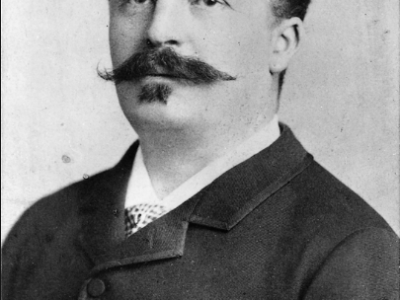


 They were beaten if they entered a white-only place, and were arrested if they sat in the wrong section of the bus. Claude McKay was a native Jamaican. Being both an immigrant and a black man, Claude McKay’s journey to become a renowned writer was not an easy one. In Jamaica, Claude McKay had had a nice life. As a young boy he was known as a good writer, he was well respected and honored as the next poet. But in America, he was criticized by people reading his poetry for being too black and for favoring the black community over the white community. He was occasionally excluded from the parties that authors and editors went to because of his racial overtones in his poetry, but overall, he led a very active social life after he became more established.

 , Booker T. Washington
 and George Washington Carver,
  who each played different roles in Claude McKay’s life. Frank Harris,
  who was a writer’s critic, was the first person in NYC to notice the talent of the young poet. In fact the first chapter is entitled “A Great Editor” in McKay’s autobiography, A Long Way From Home.
 and Hubert Harrison.
 and other influential African American figures. But McKay was not racist when making friends, and he was aware that there were plenty of whites that supported his cause. Some white associates of McKay, such as Frank Harris and Max Eastman,
 were major figures of the time, but McKay also had other white personal companions. An example is Michael, McKay’s friend who was a thief and a gangster.