DOMINIKA BRICE

Troubles in Rio
Loud screams. That’s all I hear through the tunnel up ahead. My pulse is racing and too much blood is getting to my head. I can’t think straight. Why would I be so nervous? There’s nothing to be nervous about… except maybe the millions of screaming fans right outside that tunnel, and the couple millions more watching me on TV has something to do with it. Come on. I have to pull myself together; I’m with all my Olympic teammates. You can do this. All you have to do is run out this tunnel and wave the flag of your country and smile. Ready… go! The screaming gets louder and louder as two flags hold the pack of Olympians in nice, tight, and organized rows. Then the lights hit us like lightning and I’m almost stricken down, but I can’t fall on national television! What would I do, just walk it off in the middle of the opening ceremony in Rio? That’s absurd. When my vision is restored, I find that I have continued walking, and finally realize that I should be thrilled. I love all the attention that we are getting, and so does everyone else walking briskly by my side. Everyone is taking selfies with their iPhones, Galaxy 6s’, just taking in the moment. I’m just making sure to keep the flag waving tall and proud in the crowded stadium. We finally make it around the big circle and we stand in our nice, tight, and organized rows while the other countries come in with their proud teams. Russia, Italy, Sweden, and the whole list come around a tight turn and find their way into the spots next to the Polish team. Then Dilma Rousseff, the President of Brazil, announces the start of the Torch Lighting Ceremony, and this is translated into two other languages; one of which I understand.
“Welcome to the 31st Olympic Summer Games in Rio de Janeiro, Brazil, 2016! My name is Dilma Rousseff and I am honored to be giving this speech on behalf of the country of Brazil. I am very pleased to announce that this is the most number of Olympians ever reported participating in the Summer Olympics, and here is Miranda Delphine of Ireland to light the Olympic torch!”
Miranda starts to process on stage with a pearly white smile against her velvet soft red lips. Her perfectly painted fingers wrap around the torch like serpents. She reaches the top of the spiral staircase and with a flick of her wrist, like the wave of a wand, the silver case of the enormous torch comes back to life, as if it was hibernating. Everyone cheers and claps, for the torch is awakened and all the athletes stand tall and proud as the National Anthem of Brazil begins to be sung by a choir of small angelic children, bringing tears to all who listen to the melodious tune. When we proceed back through the tunnel, everyone takes a last glimpse of the crowd and wishing this would never end, go back through the tunnel which we all enter and kiss the stadium goodbye.

Chapter 1
I would never guess that I would be here. I’m sitting in a foreign country’s hotel room with nothing but my luggage, just anticipating the days to come. I decide to walk outside the hotel and review my plans in Rio. I have four days before my first day of swimming at the Olympics, and I only have six days of events until I am just another spectator for about five more days until the closing ceremony. What to do in Rio?
The first day there is a huge parade in town with everyone wearing colorful masks and bright beads, so the first thing I do when I go into town is get a makeover. I buy a mask that looks like it’s the cross between a wolf and a bird with colorful strokes of blue, green, red, yellow, and purple, with corresponding colored beads hanging around my neck to match. As I’m walking away, I think I see a piece of metal glisten in the sunlight from the merchant’s chest, but it’s probably just a pin. I saw many locals with different gold animals clinging onto their front shirt pocket, so I pay no mind and walk away with my products. When I’m done shopping for the decorations, I buy a light summer dress rippling from top to bottom with splashes of turquoise and dark green. When I’m done shopping for the decorations, I buy a light summer dress, ripples flowing down with the colors of turquoise and dark green, and the mask beads rolling down, too. Later I find some locals to braid my hair like they did once in the Caribbean, ending my hair with the tight knots of small rubber bands, keeping my head nice and cool under the creative mask and the weight of the beads. I get to the parade and everyone is wondering who I am, because I have light skin, but have their masks and clothes on, and everyone is complimenting me on my outfit.
Finding a stoop out of the flow of the street, I am overwhelmed at the vibrant colors. People hold signs in dark red and black. I can’t read them, but all the people are screaming when they see them.
People start lining up behind the fences that were placed to separate the street from the sidewalk, and floats pull up single file until they reach the starting line. I see there is going to be a parade. As I get closer to the front of the parade, I recognize a familiar face; the merchant with the glistening pin is standing near one of the most beautiful floats I’ve ever seen.
“Hi, aren’t you the man I saw earlier?” I ask, brazenly hoping that I won’t get a reply in a foreign language. I take off the mask so he recognizes a familiar customer.
“Yes, of course! How could I forget such a gorgeous face?”
“Thank you,” I blush, and am relieved that we can communicate. There is a weird look to his eyes that gives me the impression that he is thinking about something. When the look goes away, he says, “There is no one that I could find to ride this float in the parade; would you like to?” He needs someone to sit atop the glorious float. I accept, jump over the fence despite wearing the gala dress and the mask and beads, and climb to the top.
The float is a tropical rainforest scene that has the most realistic living organisms you’ll ever see. There are trees with large canopies that hang over the whole float. There are papier-mâché butterflies and tropical birds of all different shades flying near the top of the tree, flapping their wings to the will of the puppeteers. Then there is the great stuffed jaguar, which I lay upon; oddly enough, it is covered in other animal skins. The stuffed jag actually feels like it has a heartbeat and is sending out heat to keep me warm. I feel protected. I rest in the shadow, the birds bringing peaceful noises to my restful ears, the butterflies bringing a storm of color, and the tiger protecting me like one of its cubs.
I finally wake up from my fantasy and see the spectators holding up signs and screaming in their native language from every corner of the market. It’s very intense shouting and I am intrigued, so I translate the signs on my phone. The red-lettered signs read, “Improper governmental funding,” “Stop the Olympics,” “Buildings over food?,” and, “We are starving and the government is spending money for a useless building? What blasphemy!”
Why would everyone be holding up signs like that? Isn’t this a parade celebrating their country? Why would that man ask me to be in a parade that was opposing the government? That’s when I realize that the people of Rio are upset that the government is spending money on the Olympics. Of course, I have been hearing that they were spending about 2.3 billion dollars on just the construction, and it wouldn’t serve any purpose after the Olympics were over – yet many of the people that live in Brazil are in poverty.
Then that man with the pin must be one of the organization’s leaders, and… in fact, the small metal plate isn’t a pin, but a badge so people can identify him! I am such a fool. Now the supporters think that they have me on their side and I can’t tell them what I really feel. It may be a great cause that they are protesting for, but I might get in trouble since I’m an Olympian. I can’t be seen protesting against the Olympics, because I will get a lot of bad press and publicity. The man with the badge starts to see my questioning look that I have glued to my face, though only my eyes and mouth are visible. I try to get it unstuck and when it finally comes off, I smile and wave to the crowd. He looks away, but he has a paranoid look in his eyes.
I check to see if my mask is on to prevent pictures of me going to the media, because news photographers are everywhere, snapping pictures of the parade. I try looking for where the parade ends, but I still can’t see the end from about a mile or so away. My brain is rushing to find a solution, but my mind is going blank. All my emergency situational files in my brain burn and are totally trashed from existence as I panic. Never before have I been in this type of situation and I can’t think straight, so I just try to relax and think of my options:
A) Take off my mask and get bad press: bad idea.
B) Get off the float and get busted by the leader: might take me away somewhere until the Olympics are over, so no.
C) Wait out the parade and then have to take off my mask for the photo-shoot at the end: definitely not.
D) Get someone to take my place so I can sneak away; no one here speaks English.
E) Wait until you get to the end and then say you have to go somewhere; again, no English.
Suddenly I see Mike in the crowd, holding mask, headdress, and a leather satchel, in the wrong place, at the wrong time like me. He is a close friend of mine who is also a US Olympian hurdler from Green Bay, Wisconsin.
I quickly text him;
“Hey Mike! U at the parade in
downtown Rio?”
“Yea, r u?”
Yes. U see that girl on
the rainforest float?”
“Yea, she looks kinda cute ;)”
“I know. That’s me lol. I need
some help!”
“No way! Y would u need help,
u are the one getting all the attention,
not me lol”
“That’s the problem, this parade is
protesting against the Olympics!
If we get caught here, we r in
serious trouble!”
“Woah that’s not cool! U sure?”
“Yea, I translated some of the signs!
Can u create a diversion so I can get
off this float and we can get out of
here?”
“K I got u. Wait one sec”
“Thanks so much!”
“Don’t sweat it!”
Mike gets a drum and starts banging on it with all his might and yells in English. Everyone started to become interested in what he was doing: a European man who has a very prominent sunburn over his body, which is covered in khakis, a loose shirt, and about 20 layers of sun block and cream stares, and another man with dark skin and no top on starts dancing with Mike. People around me turn to watch him while I slip down from the grass and sneak past the moving vehicles. I give Mike the signal that it’s time to go. He drops the drum, takes a bow, and pushes past the crowd to meet me in the parking lot. We get into his car and we drive away, leaving the now-suspicious group of natives to wonder where I am.
Grateful to Mike, I tell him all about my experiences on our car ride back in a great long spiel and we get the sense that this is all a dream, and that this isn’t really happening right now. It’s just such an absurd topic. You wouldn’t commonly encounter a protest against the Olympics and the government. Mike says he was really shocked when he got my text. He thought it was a prank and didn’t believe me at first. He accompanies me to my hotel room to make sure I got there ok. We decided to change and go out to late lunch. We go to a nice Mexican restaurant called Olé Molé where I order a fajita wrap with steak and Mike gets the nachos with chicken, jalapeños, olives, and salsa.
 Mike drops me off at the hotel and asks if I am going to be all right by myself, and I lie and say of course. I get inside and lock the doors and take a dangerously long breath and try to relax. It’s very hard at first but after a while I’m on the couch while watching TV. I flip through the channels and if it isn’t about the parade, it’s Brazilian TV.
I finally find an English channel. There are a lot of the replays of the Olympics, where I was pleased to see that there were many US finalists, but now they were talking about the parade. I was hoping for the best.
“This is Kelly Osser with the Channel 5 news. We were informed not that long ago that there was a parade being held, protesting the Olympics! Many people were accounted for attending this event; over 100,000 were said to have attended. Most of the people there were native Brazilians, but sources say that there were even some Olympians on the scene! Our camera crew couldn’t identify any of the Olympians during the parade, because many attendees were wearing masks, and no known Olympians were revealed after the parade commenced. There was only one mysterious figure that was the center of attention in a magnificent float who disappeared in the middle of the event! What was the cause of her disappearance? We’ll keep you informed; this was Kelly Osser, thank you and good night!”
I am so relieved! No one but Mike knows that the “mysterious figure” is me. The head of the protest organization knows I was there, but he has no pictures to prove his statement. However, he could be searching for the pictures of the parade.
But who informed the media about the parade? No one at the parade would’ve believed what everyone was doing because they don’t speak English, right… except for that pinhead that tricked me! Perhaps he planned to get me to be on the float to make a conspiracy against the Olympics by using an actual Olympian.
Chapter 2
Yesterday was one of the most surreal days in my life, and I didn’t think that there was any way that it could get worse, but I soon discovered that this statement would not hold true for very long.
I wake up as though it is an ordinary day; I get dressed, eat breakfast, brush my teeth, and get ready to plan the rest of the day. I decide to go to the football match that is going to be on in a couple of hours. I text Mike and ask if he wants to go.
When I pick up Mike in my car, I roll down the window.
“I am up for anything that you want to do. There is a football match dow…”
“Cool, I love soccer. Where is the match?”
“Downtown, near that Italian restaurant that we ate at whe–”
“Do you know how to get there or do you want me to drive?”
“Well you seem very antsy; is something wrong? You already interrupted me twice and you seem like you’re in a hurry, but…”
“Can we please go!” Mike yells, and finally I see what’s the matter. Two guys come up and try to open the locked doors, and I hit the gas. I ask why they were following us. Mike says that they work for the man at the parade, whose name is Edward.
“They approached me and forced me to get you out of the car. Sorry if I scared you, but I wouldn’t let them take you. I’ll make sure we aren’t being followed,” Mike says, now calmer. We have a steady ride to the match and luckily no one follows us. When we get to the nicely-cut grass of the arena, we make sure to climb in the middle of the crowd, so as to not be recognized. But the cameras looking through the crowd spot some of the Olympians attending the match and broadcast their pictures onto the Jumbo-Tron, Mike and I included, and everyone around us asks for our autographs.
Even other Olympians make their way onto the giant screen towering over everyone’s heads. The football match finally begins and the attention shifts to the athletes who aren’t just sitting on their butts. The two teams that are playing against each other are competing for their spot in the finals of the tournament with Brazil, and they are life-long rivals. There is a lot on the line for everyone on these two teams, and I can feel everyone on the edges of their seats, the energy surging through their bodies. It’s as if there is a wave of excitement over everyone in this arena… only it doesn’t reach me. I somehow can’t feel the energy as well as the man who is sitting next to me who is shaking from excitement, but after a while, the crowd overtakes me. The game is so evenly matched – tied almost every moment in the match. There are now only five minutes left in the match and the two teams have been tied at three for over twenty minutes. One goal might get one of the teams the win, but that makes the stakes higher, and the competition get tougher with it. There are many shooters trying to score, but none can get past the defensive line… but suddenly, there’s a breakaway! Peter Malczekowski gets past the defensive line with the help of an amazing head butt and is going for it! He takes his best shot… and it perfectly fits into the top right corner pocket of the goal! The crowd goes crazy, because if Poland can keep Germany at bay for less than a minute, they are moving on to the finals! I might as well be watching one of my own races!
I am so engaged that I almost completely forget about the situation in Rio. Poland is doing an amazing job keeping Germany at a safe distance and when everyone thinks it’s all over, Jan Denbar gets past three defenders around him and sprints for his life toward the left post of the goal. With only a few seconds remaining Jan makes his last attempt to score, but falls short as the ball hits the post and is headed away by one of the Polish defenders. Poland wins the semi-finals four to three and the crowd is screeching! They go crazy! I can’t believe how happy almost everyone was, except for the Germany fans, whoi are truly disappointed.
There is so much going on in the crowd. One group of people with matching t-shirts and hats all are cheering. Another group near us is speaking Polish, which I can understand clearly. They say they are so proud of their children. Before I can overhear the rest of their conversation, Alyssa squeezes her way through the crowd to get to Mike and me.
“Hey guys! Saw you on the Jumbo-Tron earlier and am hoping we can all hang out together,” she says. Alyssa is one of the few American Olympians to make it in the hammer throw, even though she has a very petite body.
I look at Mike with a questioning look and say, “Yes, of course!”
She comes and ushers us to the bottom of the stadium, her French braid pressed against her neon green t-shirt. She wears black tights and sneakers that she is being paid to wear by Nike since she’s one of the best gymnast in the world. She even has three bronze, two silver, and two gold medals, and the two gold and one of the silver ones are from four years ago. She’s trying to keep up her title.
“So, where do you guys want to go? Let’s go grab something to eat?”
Having eaten only one bag of peanuts during the game I say, “Yes please,” and Mike seconds my answer. I see a man with a black jacket with a high collar and beige fancy fedora exiting the stadium looking at us, but he gets into his car and drives away before I can mention anything to Mike.
Alyssa drives very calm and controlled, unlike Mike. His driving might be improved now that he seems more calm. Alyssa and Mike start to talk about what food they want, but I’m neither listening nor do I care what we eat. I think they decide on Italian, but I’m too preoccupied with staring at the window to find out for sure.
We arrive at the restaurant and the first thing I see when I get out of the car are two giant grape vine carvings running down the sides of the entrance. They must use giant grapes for their wines in that Italian restaurant! We get seated at a table meant for four and I sit between Mike and Alyssa. We all look at the menus placed before us. We get waited on very fast, because not many people are in the restaurant, so we decide on bruschetta as an appetizer to share, I order gnocchi, Mike orders spaghetti Bolognese, and Alyssa gets a mini-margarita pizza.
“So what are you two so nervous about? What’s happening?” Alyssa says.
“Do you promise to keep it a secret?” I whisper.
“Of course,” she replies.
“Well Mike and I were accidentally at a parade that was opposing the Olympics, and now we think that some people are coming after us to prove that we were there,” I say, making sure no one can hear me.
“Oh my goodness! Are you two all right? Did something…”
“Two men tried to stop us before we went to the match, but Mike drove us away from them. I’m pretty sure we lost them though.”
“How are you accidentally at a parade?”
“We went thinking it was a celebration and we didn’t realize that it was opposing the Olympics until I translated some of the signs they were holding up on my phone.”
“How in the world did they notice you? I heard about that parade on the news and there were over 100,000 people there!”
“Well I was tricked into sitting on one of the floats. That’s when I found out what type of parade it was and Mike caused a distraction so we could both slip away.”
“There you go again, always seeking attention!”
“I was not seeking attention! Don’t you think I get enough with people following me everywhere and never having my privacy! I can’t even go to the bathroom without someone noticing me! What’s your problem?”
“I’m just trying to look out for you! You can get hurt!”
“Ok ladies, that’s enough! This has gone on too far. This is a really bad situation and we need each other to get through it, and we can’t do that when we’re fighting,” Mike interrupts.
We both feel bad. With glum looks on our faces we both sit and wait for our food. When it arrives, a man comes and sits in the empty seat at our table, across from me. He says nothing, but he looks angry. Mike asks him kindly to leave, but he stands up and spits in my plate of gnocchi! Mike comes after him and grips the collars of the man’s shirt. He demands and explanation, and that’s exactly what he gets.
“What was that about? That was very rude of you!”
“I heard you all are Olympians and because of you, my building that I work in got torn down in place to build one of the Olympic buildings! It costed me my job and now I’m trying to find a way to support my wife and two kids!”
 “Well that’s not our fault! You should go complain about it to your government that made it that way!” Mike snaps back.
I am in total shock. But then again, he was eating at a fancy restaurant when he says he’s poor?
“Mister, why are you lying about your financial state?” I say, eying his half-finished plate of lobster.
“Why would you say that, you over-privileged snob?”
“Well how often do you eat lobster, kind sir?” Mike asks.
The man walks away from the table angrily. I know he was lying about his money problems. His clothes aren’t too shabby either. What game is he trying to play?
The waiter brings me another plate of gnocchi at Alyssa’s request and we all crunch on the bruschetta, each bite filling the silent space in our booth. I nibble on my gnocchi while Mike slurps his spaghetti and Alyssa munches her margarita pizza in the booth of awe and many thoughts.
Chapter 3

3 of my races are today; 200 butterfly, 100 freestyle, and 400 individual medley. I have slept very peacefully even though what happened yesterday disturbed me, and I get a hearty breakfast for the races, which are just five hours away. I sit down with Mike and Alyssa when the pre-race butterflies start. But these aren’t just any butterflies; these are Olympic butterflies. They are different from regular butterflies they are bigger and more dangerous. The side effects of ingesting Olympic butterflies may cause severe stomachaches, headaches, cramps, and sometimes, the nervous shakes. Eating gets really hard with the stomachaches, the cramps cause your muscles to tighten, headaches make you want to sit in total darkness and silence, and with the shakes, and you can never sit still. In some cases, these side effects do subside. I suffer only two of the above, a stomachache and a slight headache, but they are enough to keep me distracted.
Mike and Alyssa come with me to the building where my first few races are being held to cheer me on, but I am at a loss for words. No expense was spared for this new building. Great marble columns guide all who enter throughout the building, perfectly waxed turquoise stoned floors, and long, wide hallways leading to the changing area, where I part with Alyssa and Mike. They wish me good luck as they head for the stands and I get my Fast Skin Elite knee-skin on. My high-density microfiber swimsuit is almost completely black except for the two streaks of blue running down the sides. It is so hard to get into it because it’s at least five sizes too small, as it’s meant to be. Never before was I so nervous. I had to swim four laps in the long course fifty-meter pool of my best stroke. Even though butterfly is my best stroke, I am very nervous for the outcome of the race. The only thing that can calm me is my music. Only the sound of bouncy pop can lift my spirits.
My heat is three races up, and I put my cap on over my Speedo goggles. I make sure the goggles are tight around my face so there is a pressurized seal that keeps water from penetrating into them and clouding my vision. Now my checklist; goggles on, check, cap covering my ears, check, swim suit on, check, and finally positive attitude, almost there. I stretch for a while as I wait for my race to loosen up and calm my nerves. I pump myself up until my race is next. I know how to swim this race; I just have to believe in myself. My race is so close I can already feel it. I am in lane two out of eight and I am ready to go. I jump up and down while the last heat is on their last lap to get my adrenaline pumping and the heat finishes. Once their places are called I hear my name called on the microphone after lane one. I see Mike and Alyssa cheering when they hear my name and I feel a little better, but its time to get my game face on. I wait for all the names to get called, and it feels like an eternity.
“Swimmers, please stand,” the starting official says in a crisp, clear voice. I obey and step onto the rough block that happens to be my favorite shade of blue… and I stop myself before I get too off track. I recall a previous start that was colored by blue: it was when I was about thirteen and I just painted my toenails a light turquoise and when the official was starting us for the 200 freestyle, I got distracted by the color and dove in the water really late and lost the race.
“Swimmers, please stand,” the starting official says in a crisp, commanding voice. I step onto the rough block that happens to be my favorite shade of blue… and I stop myself before I get too off track. I recall a previous start that was colored by blue: it was when I was about thirteen and I had just painted my toenails a light turquoise, and when the official was starting us for the 200 freestyle, I got distracted by the color and dove in the water really late and lost the race.
“Swimmers take your marks… BEEP,” and I shoot into the water as fast as I can. I am swimming in the middle of the pack, not swimming too fast or too slow for the first lap. I focus on making my kicks big and prominent, and press my chest with every stroke so my arms and legs don’t have to work as hard, for now. The second lap comes within an instant and I push off the wall about fourth place. The second lap I swim the same as the first, but I know the third lap is always the toughest. I take a huge breath coming into the turn and I do as many dolphin kicks as I can underwater before I finally surface about fourth place. I need to pick up the pace.
My breathing is really heavy now and my lungs are on their way to bursting. At this point I need to focus on catching up and making sure I breathe at the right time. I finally come off the wall and I’m on my last lap in second place and my commando mode kicks in. I need to beat her! I push my hands to move faster, legs to kick harder, heart to pump more blood, and lungs to use more oxygen. I am so close to her and I see that she is getting very tired. My mom says that the winner of the race is the one who wants first place more, and I’m one lap away from the finals, beating the clear water with my arms and legs and I look straight ahead at the wall that’s so close I can already feel it in my grasp. And I sure as heck want it more. I drive my head down for the last few meters and I touch the wall with the tips of my fingers and turn around to the scoreboard, where I see that my name at the top with my best time ever posted!
A reporter comes to me while I’m with Mike and Alyssa. I am still in awe, still breathless.
“Dominika, what does it feel like to have won your qualifying heat and making it to the finals?”
“It feels amazing! I can’t believe that I got a best time! I just want to thank Alyssa and Mike for cheering me on!” I say as the camera pans all three of us.
“So are you three close friends then?” the interviewer asks.
“Yes. We haven’t known each other for very long, but we are still hanging out a lot,” Mike says.
“Are you going to be attending each other’s events here in Rio?”
“Of course! I heard that Alyssa is a crowd’s favorite for the gold medals in gymnastics!” I say.
“Did any of you go anywhere exciting before Dominika’s first day of events?”
“Well we did go to a futbol match between Poland and Germany together and ate a couple of meals together,” Alyssa replies.
“How about when you first arrived in Rio? Did you go anywhere?”
“Well the last time we were all together before the futbol match was the Team USA Dinner when everyone was here,” Mike says.
“Thank you all so much for your time! I’m very excited to see the rest of your events all of you and good luck in the finals Dominika,” the reporter says before the camera is turned off.
“So how’s the champ doing?” asks Mike. My vision is still a little blurry from the excitement of the race, but I can see that both Alyssa and Mike are really happy and proud of my accomplishment.
“How about we all go celebrate, ice cream on me?” I say while walking towards Mike’s rental car.
“So how in the world did you find the strength to beat that girl?” Alyssa asks.
“What I always do, push until the very moment your hands hit the wall.”
“Good thing I’m a gymnast, because hitting the wall would ruin my manicure.”
We all step into the metallic navy blue 2016 Toyota Highlander and Mike drives us to the ice cream shop that he claims to have the best ice cream he’s ever tasted.
“Ice cream must sound great after that race!” Mike says.
“Some chocolate soft-serve in a waffle cone with some sprinkles couldn’t kill me.”
“How did you feel right after the race?” Alyssa asks.
“I felt like I conquered the world, but I could barely talk to that reporter because I was so tired,” I say as I watch a forest of foreign trees fly by.
“Those were some weird questions she was asking, too.”
“It almost seamed like she was trying to make us confess something,” Alyssa adds.
Chapter 4
I get to the swimming finals for that day and everyone in the crowd is even more pumped than for prelims. I know this, because before I even walked into the building I could feel it shaking and I could hear the announcer’s voice booming through the marble floors, like a professional soccer announcer. My Olympic butterflies are at stage 2, with minor stomachaches, headaches, and cramps, but the cramps might have been caused by the fact that it was a certain time of the month and I am a girl. I go to the locker room and it’s particularly hard to change into a FastSkin with Olympic butterflies, my period, and the entire floor shaking. I finally manage to squeeze into the suit and make my way towards the pool.
The only person that I have raced against before is the girl I out touched in prelims, but I have heard about the girl that got third place in prelims named Victoria Versacci, from Italy. She is said to be the best swimmer in the world, but she slipped on the blocks during prelims, had a terrible first streamline, which is when your body and arms are straight and you’re still under the water, but she still got third overall. Now she looks like she was seeking revenge.
I get to the blocks early enough to watch the first heat dive into the water. I anticipate the whole race, watching the clock, and thankfully none of the swimmers beat my standing new best time.
The names are being called and right as they call my name, all of a sudden the stadium lights all shut off, each group of lights extinguished like fireflies until there was nothing left but darkness. The stadium crowd starts to panic. I can hear the chaos from the pool deck. Then there is a loud pounding. Someone is tapping on the microphone, and it gets everyone’s attention. Then a familiar voice starts to speak:
“I can bet all of you are wondering why in the world you can’t see anything that’s around you, and why most of you are listening to the voice of Juan Eduardo Santos Manuel Martinez. Well, to answer those questions, I believe that you should thank the… constructors and this fine country for supplying you with money that the citizens in poverty should be using for their own basic needs, but, no matter how much money the government is willing to pay, my team will always be able to hack into the computer system. You see, many citizens in Rio are suffering due to our fine country’s decision to host the Olympics. And now you may be thinking, who is Juan Eduardo Santos Manuel Martinez? Well, I am the leader of the rebels in Rio who don’t agree with the government, and we are here, because a very… special friend of ours keeps trying to avoid our grasp.”
I am completely in awe. I don’t even have to hear my name boom throughout the massive stadium to know it was me they were talking about. What can I do?
“You messed with the wrong people, you know who you are… and now you’re going to pay! You come pretending like you don’t know what’s happening, but you very well understand the entire thing! There’s no use lying anymore! You didn’t think you could hide from us forever, did you? You disrespect my country and you still expect to be looked upon as a champion? You think you can still race in my country? I thought you’d be smarter than that.”
I start fumbling to get to the locker room, and I can feel the questioning eyes searching to try to see where I am, but many failed, because it was completely dark. Some even looked at the other side of the stadium instead of the pool deck.
I finally get to the door and get into the locker room. I feel around for the exit and almost run across the marble hallway and am even more surprised to find that Mike and Alyssa pull up in Mike’s Toyota in front of the building.
“Get in, we’re getting you out of here!”
I quickly get into the car with no questions asked and Mike hits the gas.


 Formula 4, also known as F4, is a type of open-wheel racing (the car’s cockpit is exposed and so are the wheels from the body). The FIA (Fédération International de l’Automobile) made it specifically for junior drivers. It was created just about a year ago in March 2013, by the FIA, for racers graduating from karts and moving into formula racing. It is a far less expensive version of Formula 3. Since there are no global championships, individual nations are allowed to form their own races, with their own sets of specifications and regulations.

 and Sebastian Vettel. Michael is currently in an induced coma because he had an accident during a ski trip with his son. He is a seven-time winner of the F1 world championship provided by the FIA: Federation de l’ Automobile
 Now, F1 is probably the most popular type of track racing; but of course street racing and drag racing, which I may talk about in a later essay, could be more exciting. Formula 1 is also the fastest, besides Indy car racing, which makes it that much more exhilarating.
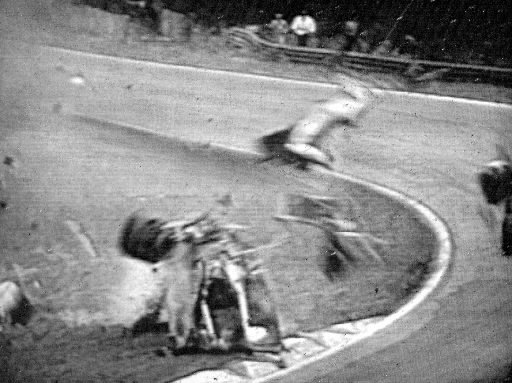
 Wolfgang Von Trips, 1961 R.I.P
 Nikki Lauda, 1976 very close call