Monthly- Archives: November 2022


ISAAC JAI

A Republic of Variety

State by State, A Panoramic Portrait of America began as essentially a road trip compressed into a book. In the 1930s, the Federal Writers’ Project was created. The project hired many of the most famous authors to write for them, like Richard Wright, an author who was also the founder of the South Side Writers Group which included Margaret Walker
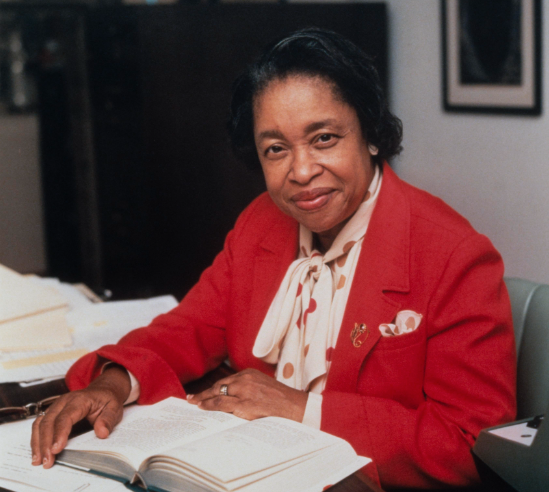
Margaret Walker

and Arna Bontemps,

Arna Bontemps

Wallace Stegner, a famous novelist who was awarded the 1972 Pulitzer Prize for Fiction and incidentally achieved the rank of Eagle during his Boy Scout experience, and even Studs Terkel, a well-known writer, actor, historian, and broadcaster who ran the Studs Terkel Radio Program.

Studs Terkel
Wallace Stegner

The Federal Writers’ Project was a clever method the government used to employ writers during the Great Depression. It was one of the greatest writing projects in history and a large section of the project was the State Guides. They consisted of forty-eight books on the then forty-eight states of America, each containing over five hundred pages of writing. Although State by State was inspired by the State Guides, it is not meant to correct it. Instead State by State gives a much smaller and shorter essay on each state, honoring the FWP through the attention to America’s identity found in statehood, yet aiming for brevity and perspicuity.

Matt Weiland is the Senior Editor of W.W. Norton and Company. Other than State by State, he has co-edited with Sean Wilsey,
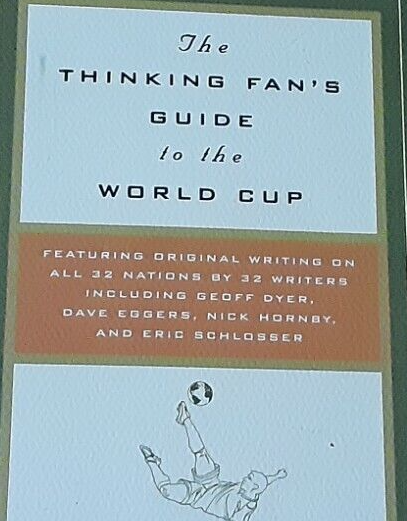
and co-edited with Thomas Frank, Commodify Your Dissent: The Business of Culture in the New Gilded Age (1997). Sean Wilsey is an author, his most famous books being the memoir, Oh the Glory of it All, and more recently, the co-author of Hello Molly, a memoir by Molly Shannon the actress and comedian.

After living abroad, Weiland had a sudden interest in America: “I was moving back to America after four years of living abroad. I was hitting the Americana hard:
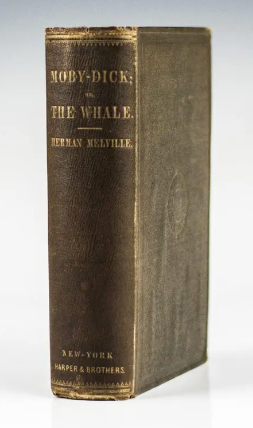
I read Moby-Dick and Huck Finn again, and I gorged on the Preston Sturges films and Will Eisner comics and the aching Old Time music that is heavy on banjos and beards” (xiv).

A few years prior to the creation of State by State, America had gone through the great tragedy commonly known as 9/11 but through this terrifying time, Americans came together. Weiland notes how in America, “the lives lived here remain strangely and surprisingly underdescribed” and that “sometimes it takes a tragedy to remind us so”(xiii).

Inspired by American sights, books, and films, Matt Weiland envisioned the very first stage of State by State. He felt that much of America’s glory was going unnoticed, so he decided to pursue his vision of this collection of essays with Wilsey. The idea was to capture America’s identity in the form of a book. The two wanted to compile a group of authors to write about their home states and they wanted to create a book that would tell a foreigner why we take pride in America. But the real audience was Americans, for as the subtitle states, “Take Pride on Your Country”.

The finished product is made of fifty-one different essays (including Washington D.C.) that largely exposes the makings of each state, allowing us to dive into parts of what each star on the flag represents.

While Weiland envisioned the glory of America, Wilsey experienced it. In the year of 2002, Wilsey was recovering from both the terror of 9/11 and the loss of family members. He states, “I thought a long slow drive across much of America would allow me to catch up with these losses”. With his dog, Charlie Chaplin and Michael Meredith, his friend who had also been busy creating a design proposal for the 9/11 memorial, Wilsey drove an old pickup truck from Texas to New York. The journey that he described in the introduction showed me how little I know of America. What knowledge of the states I’ve learned from school cannot compare to what one gets on the classic road trip. When Weiland and Wilsey edited each essay into State by State, we finally can grasp the idea of America with the fascinating stories and in-depth descriptions of each state.

State by State is largely composed of personal essays. While it’s great to have such a variety of states, it made it hard for me to select one. I thought about writing about West Virginia with the massive amount of mystery and beauty that the writer embedded into it. Or I could write about Virginia where the information associated with the state could make a piece filled with rich history: “Half or more of the Civil War’s 620,000 dead perished in Virginia; the toll in the state’s camps, prisons, hospitals, and battles is at best a guess, because most of the fallen were unaccounted for” (473). I also thought about Oklahoma. It is a relatable essay that summarizes the importance of S.E. Hinton’s hometown. I was drawn in by this essay because I had enjoyed S.E. Hinton’s book The Outsiders, so I thought analyzing the essay could show me where the concept for her books came from.

When remembering why State by State was made, I realized that each essay functioned as the portion of the state that the author decided to share – the author chose these specific parts of their state to write about given the limited amount of room in State by State. Most authors had a personal connection to the state they wrote about which helped to give value to their words. I decided to focus on a few states I connected with while reading the essays, states I’ve visited, and the states where I have lived.

California

William T. Vollmann, the writer of “California” is a novelist; he is one of the best known in State by State because of his engaging books full of research, creativity, and vivid detail. One of his most famous book series is Seven Dreams: A Book of Northern American Landscapes. This series covers the conflict between the European colonists and the natives and it consists of seven books: The Ice-Shirt, Fathers and Crows, Argal, The Poison Shirt, The Dying Grass, The Rifles, and The Cloud Shirt.
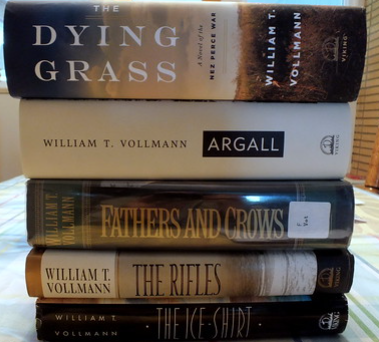
In 2005, he won the National Book Award for Fiction with his novel, Europe Central. Vollman studied at both Deep Springs College and Cornell University and he now lives in Sacramento, California with his wife.

In the preface of State by State, Weiland states, “No one doubts that America is growing more homogeneous with each passing year. Go from one time zone to another and the increasing sameness of everywhere is plain: one city blurs into another; the same architects build the same buildings, the same stores line the same streets, the same songs play on the radio: regional accents fade and everyone seems to be from somewhere else” (xiv). 

In his essay, Vollmann builds off of this point with a twist of sarcasm: “I dare to hope that a generation or two from now, if a sequel to this sequel comes out, its writers will have life even easier”(43).

After briefly covering homogeneity in America, Vollmann moves on to the “California dream” centered around times of exploration and gold: “Seized by the United States of America, California now began to incarnate a dream of gold”(43). Throughout the essay, Vollmann ponders the California dream to reflect on how it exists today.

Now, California is known for various things including John Steinbeck’s novels as many of them are inspired by California agriculture, and he recommends the long drives through the state: “East, you will pass through vineyards, dark green fields of tall corn, rolling reddish green fields speckled with dapple cows, walnut orchards, one of which is enclosed in a long white fence”(46). Similar to Wilsey’s road trip across the country, one through California best expresses the state. California’s beauty comes from the coast, mountains, forests, deserts, and culture. At the end of the essay, Vollmann finally wraps up his thoughts: “Sitting beneath an overhang of Sierra rock, listening to the river, I believe in John Muir’s wild California. Flying from Sacramento to Los Angeles, I look out the scratched oval window and rejoice at the lack of human spoor in the mountains below me. In the redwood forests near the Oregon border and the foggy flower-meadows around Point Reyes, my illusion of tranquil purity is restored. I love my darling California so much that I would believe in any sweetness” (55).

West Virginia

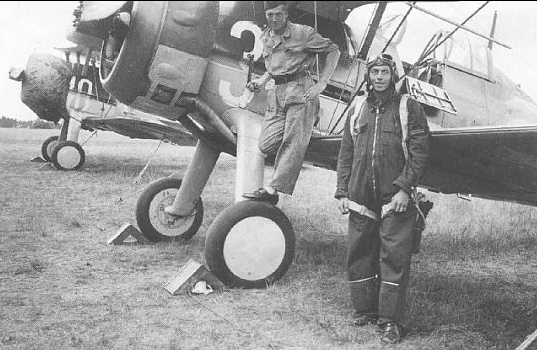
Jayne Anne Phillips is a novelist and short story writer. One of her collections is called Black Tickets. The collection lays out the suffering of the impoverished and goes into depth about these people who populate the small towns of the country. The first piece in Black Tickets, first published in New Letters magazine, is called “Wedding Picture”. This startling and compressed prose poem features multiple photographs. The first is of her mother: “My mother’s eyes are round and wide as a light behind her skin burns them to coals”. She paints the picture of an emotionless but beautiful woman. The end of the paragraph also hints at a possible pregnancy. The second of the pictures is of her father. He is standing next to a WWII plane with a girl painted on the side.
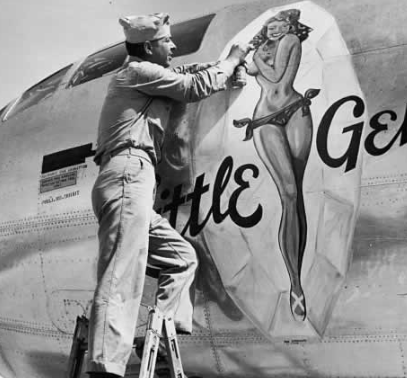
The paragraph ends with, “Now his big fingers curl inwards. He is trying to hold something” which leaves readers with unanswered questions. The third and final picture is the most abstract. It hints at death with the paragraph’s melancholy tone and use of detail: “Rising from his shoulders, the cross grows pale and loses its arms in their heads.” This is only a small chunk of Phillips’s work as she has written many other rich short stories and novels. Phillips graduated from West Virginia College and has held teaching positions at several schools such as Harvard University, Williams College, and Boston University.

Although I’ve never been to West Virginia, while reading the essay, I felt captivated by  Phillips’ description of the verdant mountains. From the start, she mentions the West Virginia mountains: “Here, in the highest average altitude east of the Rockies, the Appalachian Mountains isolated a thousand years of paradise for animals, flora, fauna, all fed by interlacing rivers and countless clear streams that ran from the highest elevations to the deepest valleys.” Unlike Vollman’s description of “mass culture, with its big box warehouses of the landscape, language, and mind itself” (43), West Virginia’s landscape is much more untouched (aside from the mountaintops razed by strip mining), keeping its culture from blending in with the other forty-nine states.

Phillips goes into the violent and somewhat dirty history of West Virginia. It was formed from Virginia during the Civil War and the split from Virginia also split the people living there: “One of my own ancestors spied for the Confederacy while her sons fought for the Union” (490). But despite this conflict, the purpose of the writing is about the beauty of home. Philips even gives readers a look into the comfort of a hometown: “In the late 1960s, Buckhannon is a football town. The relatively small high school has claimed the AAA State Championship three times in a decade, and the white wooden scoreboard on the courthouse lawn is kept up to date, Wins and Scores painted on each Saturday morning. Game nights. On Fridays, boyfriends steer their dressed-up girls into the bleachers, touching their shoulders” (497). Personally, I have not had much interest in the game of football itself, but I still enjoy these competitions as a social gathering. The memories created are unique and in my experience are memorable because of the time spent cheering for your team. While West Virginia is only known as a paradise for mountain wildlife to most outsiders, Jayne Anne Phillips shows how the personal connection gained from familiarity and memory is what is most recognizable.

Oklahoma
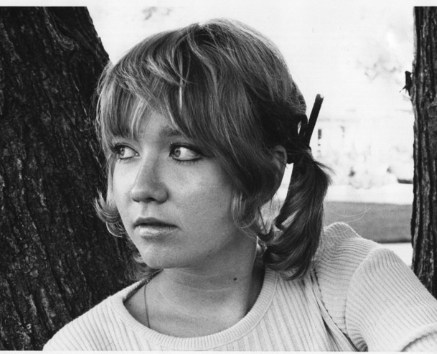
Another essay I decided to explore was “Oklahoma”by S.E. Hinton. Hinton is a novelist and short story writer. She is best known for her book, The Outsiders which was inspired by two rival gangs at her school, Will Rogers High School. This book was written when she was sixteen and now it has sold over fourteen million copies. In 1988, Hinton became the first to receive the Margaret A. Edwards award for her first four young adult novels: The Outsiders, That Was Then This is Now, Tex, and Rumble Fish. In The Outsiders, Hinton does a great job with her character development so that readers can connect to characters on an emotional level. When Johnny dies readers feel the loss; Hinton’s storytelling is riveting.
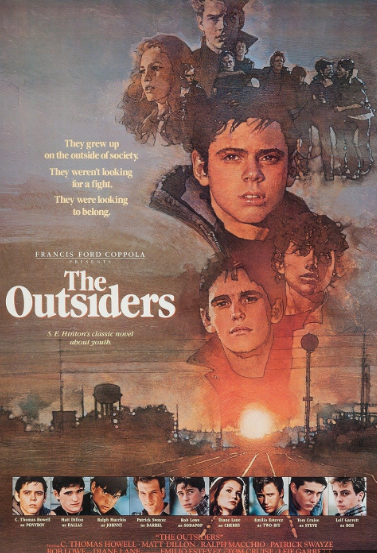
Hinton was born in Oklahoma and is living there today. She also spent three years in California which she describes as “one of the nicest places in the United States” to which I would agree due to the nice weather and abundance of natural beauty with forests, mountains, and beaches. A lot of Hinton’s essay explains why she still lives in Oklahoma and most of the reasons are the opposite of what I’d expect. Hinton reveals her view on Oklahoma through a conversation with her son: “I asked my son, who went to college on the East Coast and is now settled on the West, what he appreciated most about growing up in Oklahoma. After a moment, he said, ‘the cultural ignorance… In Tulsa, I could use my own brain to form my own opinions’.” Here Hinton agrees with the reasoning, but she believes that “cultural independence” is a better phrase for it.

Hinton also wrote that “Will Rogers High School, where I was inspired to write The Outsiders–in fact where I wrote a lot of it when I should have been doing other things–remains an art deco beauty, though now, in its seventies it is getting a little worn around the edges.”

By the end of the essay, it is revealed why S.E. Hinton finds Oklahoma the best place for her to live. She is surrounded by a variety of different friends but all of them are welcoming to her. Combined with the cultural independence, it “makes Oklahoma a great place for a writer, a free place for a writer” (367). She is free to write and enjoy life in Oklahoma with and can stay near the town where she built so many memories.

New Jersey

From what I remember, New Jersey is full of friendly people and lots of icy snow. I lived in a small but close community – a neighborhood of linked houses with a small creek running through the back. New Jersey was freezing in the winter, icy snow covering everything inside. However, the summers were the opposite. They were extremely humid, causing the weather to feel like a steam room. My summers were as relaxed as possible. I remember eating ice cream on the porch with my mom and biking in circles in our cul de sac.  Our neighbors babysat me while my parents made long-lasting relationships. Whether it was just my perspective as a young boy or the way my parents raised me, New Jersey felt like the perfect place to grow up. 

Anthony Bordain, the author of “New Jersey” was a celebrity chef, travel documentarian, and author. After graduating from the Culinary Institute of America, he became an executive chef at Brasserie les Halles in New York City. Later on, Bourdain began a TV show on the Food Network called The Cook’s Tour. It documented his food experiences in different countries and around different cultures. After this debut, Bourdain appeared in more shows where he documented his dining around the world, and he also judged for a few cooking shows. Throughout his career, Bourdain also wrote fiction and historical non-fiction. Looking at his shows and books, I can tell that Bourdain was a witty and optimistic man who enjoyed his travels and foods all over the world. Unfortunately, in 2018, Bourdain ended his own life in France while filming for Parts Unknown, one of his TV shows. 

Although Bourdain had a different childhood experience, many aspects such as the personality of his hometown’s neighborhood are similar to my own. Bourdain lived in Leonia and had a full New Jersey childhood and he viewed New Jersey almost like a cherished prison. Bourdain also mentioned that the song, Born to Run by Bruce Springsteen: “‘It’s a death trap, a suicide rap” [is] sung by thousands of people at Giants Stadium[;] I don’t know what kind of message that would send.” Clearly, Bourdain can tell that much of New Jersey’s population doesn’t see New Jersey as their dream state.

If you accomplished all your goals in life, the last place you’d think of living would be New Jersey. The state is the home of “commercial artists, college professors, unsuccessful actors, mid-level advertising executives” (302). New Jersey can be seen as a place you go after an unsuccessful attempt or it can be seen as a net that will always be there to catch you when you fall.

Bourdain described his childhood as chaotic and reckless, when he learned “how to make rockets by painstakingly jamming match heads into drilled-out CO2 cartridges, packing them in tight, priming them with a water-proof fuse from the Johnson Smith Catalogue and launching them from homemade mortars made from copper pipe,” (304). With activities such as this, Bourdain’s childhood seems like one from an old film. He was always curious which caused him to participate in these uncontrolled activities.

When in fourth grade, Bourdain was sent to a private school in Englewood, a much wealthier neighborhood. He experienced the differences between his living environment and found that Englewood was much more lenient. Much of Bourdain’s time in Englewood was taken up by his use of drugs: “We cruised endlessly, movement a destination unto itself, smoking weed and looking out the windows with fear, contempt, and bemusement” (306). As Bourdain grew older, he parted with his childhood friends and replaced them with “friends who smelled of nothing but fresh laundry, soap, and money–with the occasional background whiff of marijuana and cigarettes” (306). To this day, dropping his friends from Leonia remains his biggest regret. While his memories in Englewood were fogged up, Leonia was full of treasured moments that he could look back on.

Bourdain is on a tour and looking out of his hotel window. “I could have been anywhere. I could have been in New Jersey” (307).  He sees stores, restaurants, and malls and immediately thinks back to his home state. Even though Bourdain had escaped New Jersey, it still remains part of him.   

Looking back to Vollmann’s words on the increasing sameness in the United States, I agree. However, while the culture and structure may be growing too similar, the memories are not. They’re the reason that we feel connections. If there ever is a sequel to State by State, the authors will not have an easier job writing. Whether they choose to write about the history of a state or their experience in it, the personal value created by memory will change the way the state is viewed. The world may view the United States as a cluster of identical puzzle pieces but the individual looking at their state knows that a life of memories lays buried beneath the surface.


TAYLEN LI

Roald Dahl and Guy de Maupassant

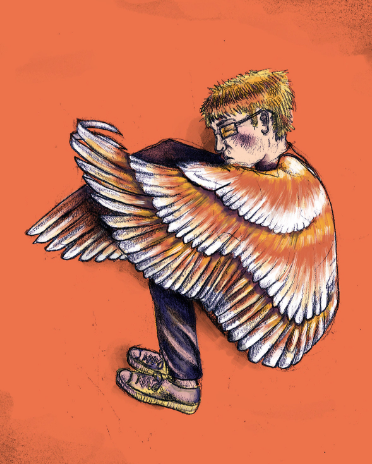
CRACK! BANG! A young boy, Peter Watson was hanging from fifty feet up on a tree, and bullets were being fired at him. The two hooligans had threatened to shoot at Peter if he didn’t jump.  One of the loutish ones reloaded his gun and screamed “Last chance!” But Peter still didn’t jump. So, he pulled the trigger. Wait! Hold on, let’s rewind a little. Best friends Ernie and Raymond were ruthless and dangerous bullies. When Ernie receives a rifle for his birthday, the two decide to go hunting. At first, they hike along the countryside, shooting small birds and waterfowl but soon enough they see a new target: Peter Watson. Peter was “always the enemy” and Ernie and Raymond despised him because he was “nearly everything that they were not”. The two thugs quickly creep up on Peter and point the rifle at him. Since Peter wasn’t armed himself, he had to follow Ernie and Raymond’s orders. As a joke, they tie Peter to a railroad track. Peter ponders his options and decides to dig himself into the ground with his body and protect himself when the train comes. Peter survives the train with his gut and brains. Later, Ernie fires at a lone swan wading in a pond nearby (the most protected bird in England as well as a symbol of royalty) and kills it. Ernie forces Peter to go check the nest for eggs. “Tears were running down Peter’s face” as he trudges towards the nest. Peter finds two small cygnets and decides to save them by lying to the bullies.  Finally, Ernie and Raymond decide to put the wings of the swan on Peter’s back, so they can make him climb a massive tree and jump off into the pond. Peter climbs up and up when he finally reached the highest point of the tree. Ernie shouts for him to climb over to the branch above the water, jump, and fly off. When Peter refuses to do so, Ernie fires the rifle at him.  Peter stayed put and the bullets flew past him. Ernie yelled one more threat and when Peter didn’t answer, he shot the gun. Suddenly, a bullet hit Peter in the thigh: “the force of it was devastating.” The branch split, and the boy began to lose balance. As Peter struggled and fought to hang on, he saw a light. “The light was beckoning him, drawing him on, and he dove toward the light and spread his wings.”

Joely Dean, illustrator


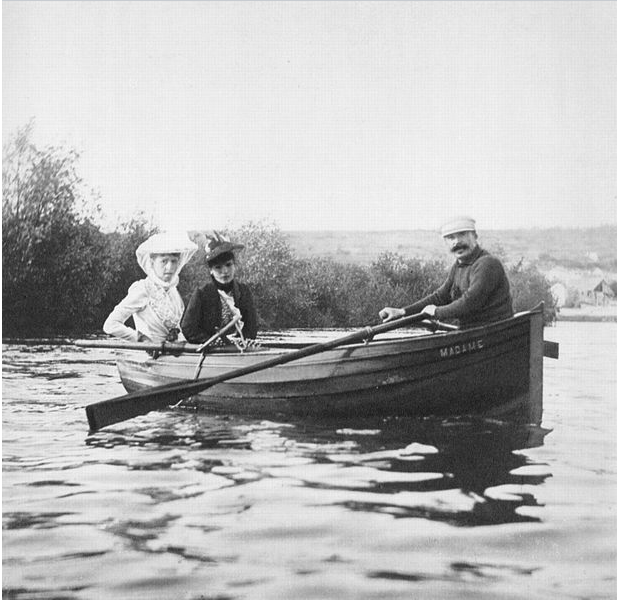
Could you imagine someone abusing and torturing an animal just for the purpose of entertainment? This story begins on a calm, quiet, and very peaceful morning. Most of the people of the coastal town are asleep. The only noises that can be heard were the sounds of birds chirping and the occasional splashing of a distant boat. Then, suddenly a small flatboat appears on the bank.

Guy de Maupassant rowing, with two lady friends

Two companions are rowing the boat, Maillochon, and Labouise or Chicot. Maillochon was “a man of forty or fifty, tall and thin, with the restless eye of people who are worried by legitimate troubles”. As for Chicot, he is “red, fat, short and hairy” and “[has] a habit of calling everyone “sister”. The boat disappears into the mist again and they soon arrive at the other bank. It was the shore of a forest and a great place for rabbit hunting. The two men were scavengers and lived off of hunting wildlife. After shooting at rabbits for a couple of hours, bagging a few, the two decide to get back on the boat. It is midday by now and the mist is all gone. A while later, Chicot spots something on the other side of the river. It is an angry woman dragging a hopeless donkey. This sparks an idea from Chicot. They paddle across the river and stop near the woman. Chicot offers to buy the donkey from the exhausted woman. Soon enough, they strike a deal. Chicot’s idea is a simple game: a simple but horrifying game. The two men take turns shooting at the donkey from afar. This causes the donkey to have ridiculous (to these miscreants) reactions. But it also inflicts agony that wouldn’t be enough to kill the donkey. Animal torture. The pair keeps on laughing every time the donkey brays in pain. Finally, Chicot violently sticks his gun down the donkey’s throat and fires. “A stream of blood was oozing through its teeth. Soon it stopped moving. It was dead.” Maillochon and Chicot take the body and go back to their boat. After a brief lunch and some naps, the two head towards the wine shop of dealer Jules. Chicot and Maillochon sell their rabbit parts and then begin to scam old man Jules. They make Jules think that he is getting something big like venison or a buck when it’s just the corpse of the donkey. Eventually, the two men convince Jules to accept their offer and they profit from the dead donkey.

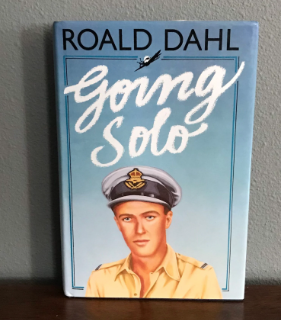
Roald Dahl is one of the greatest children’s book authors of all time, as well as a poet, short story writer, and screenwriter. He wrote the classics of Charlie and the Chocolate Factory, Matilda, BFG, James and the Giant Peach, and many other famous works. Born in Llandaff, South Wales on September 13, 1916, Dahl was half Norwegian. When Dahl was only three years old, his older sister and father passed away. Dahl’s first school was Llandaff Cathedral School but Dahl was abused by the principal for fooling around, so Dahl’s mother enrolled him at St. Peters, a British boarding school. In 1930, fourteen-year-old Roald Dahl transferred to Repton private school and spent four years there. Dahl’s mother offered to pay his tuition at Oxford or Cambridge University when he graduated but Dahl had other dreams to work for a company that would allow him to travel to places like Africa. After graduating from Repton in 1934, Dahl took a job as a clerk at the Shell oil company in London and lived with his mother and sisters in Bexley, commuting to work. After working as a clerk for a little over two years, Dahl took a job with the Shell branch office in Tanzania, Africa. He stayed there from 1937 to 1939. His book Going Solo

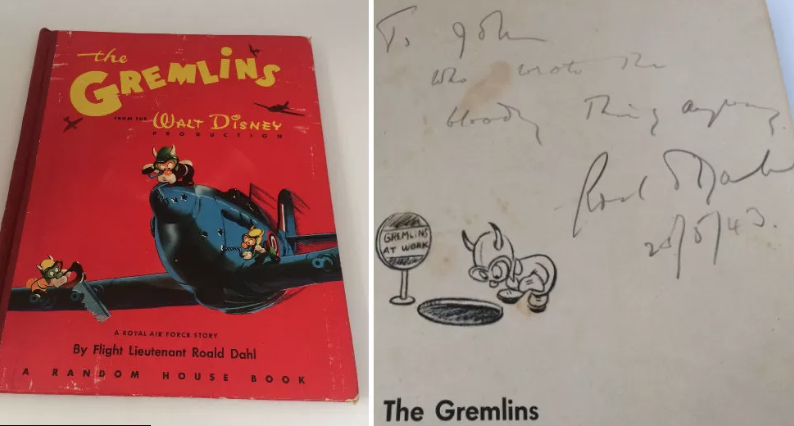
begins with him boarding the ship that would take him to Tanzania: “The ship that was carrying me away from England to Africa in the autumn of 1938 was called the SS Mantola.”  When World War II broke out, he joined the Royal Air Force (RAF). Dahl crash-landed in Libya and acquired serious injuries. But after recovering he went on to become an ace – a fighter pilot who takes down many enemies in air battles. After retiring from flying, Dahl started working as an assistant air attaché in Washington, DC. In D.C., novelist C.S. Forster encouraged him to write about his adventures in the RAF. Taking Dahl out for duck, the two were discussing Dahl’s experiences in the cockpit. At one point, masticating this dense fowl, Dahl had to put his hand up to his hero Forster. “C.S. my good man – how about we focus on devouring this wonderful bird, and when I get home tonight, I’ll write up some notes for you.” Well, what came from those notes eventually earned the title “A Piece of Cake”. When he sent it to Forster, the latter read it and was astounded at its quality and sent the untouched “notes” to The Saturday Evening Post. Published as “Shot Down in Libya”, Dahl’s first attempt at writing established him immediately as am important voice. For 25 years, Dahl wrote a few stories a year, all of which were snapped up for publication by magazines like The New Yorker, The Saturday Evening Post, and others. Dahl’s first book, The Gremlins, was unsuccessful but in 1961, when Dahl published Someone Like You, a collection of his short stories, his reputation was firmly set.

In 1963, Dahl began writing children’s books which catapulted him to even more fame.  He was highly influenced by his children and his own life. After decades of success as an author, Roald Dahl died on November 23, 1990, in a hospital in Oxford, England. His last published book was Esio Trot.
 
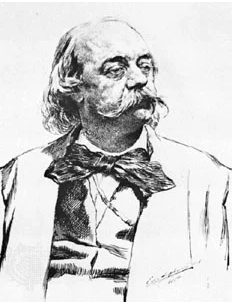
Henri René Albert Guy de Maupassant, known more commonly as Guy de Maupassant, is often depicted as “The Father of the Short Story” and is considered one of the best French short story writers. He is best known for his short stories, “Boule de suif” and “The Necklace”.  Maupassant was born on August 5, 1850, in Normandy, France. His parents separated when he was 11 years old, and Maupassant and his brother lived with their mother. Maupassant’s mother’s friend, novelist Gustave Flaubert,

Flaubert^

was a major influence in Maupassant’s life.  Maupassant developed an attachment to literature and writing from Flaubert and his mother.  From 1870-71 Maupassant served in the French Army in the Franco-Prussian War.

After the war, Maupassant returned to Paris, where Flaubert was staying. Maupassant became a protegé to Flaubert, eventually making him into a wonderful writer. The two developed a fond relationship and Flaubert lectured Maupassant on the economy of style and generally took care of him. When Flaubert died in 1880, Maupassant was devastated, but he found that he had turned into a proficient author. He had published many stories during their time together. During his twenties, Maupassant discovered he had syphilis and it started to cause strange behavior. After a suicide attempt, Maupassant was obliged to be transferred to a private asylum and died on July 6, 1893, in Paris from the illness. Maupassant’s work has inspired many including W. Somerset Maugham, O. Henry, and Henry James.


Dahl’s short stories “Katina”, “Madame Rosette”, and “An African Story” all have something in common and it’s that in the background of each tale there is the environment of war. All of them take place during wartime and each of the stories takes us to an account of Dahl’s various experiences. They describe the hardships and challenges of wartime, such as violence and despair, and how one’s feelings and mentality can change when encountering them.

In an interview of Roald Dahl in The Twilight Zone Magazine, Dahl explains how he was drawn to write “Over to You”, a collection of short stories from Dahl’s experience as a fighter pilot in WW2. Dahl says, “Ah, well, Over to You is easily explainable, because that was written during the war, which was a highly emotional time. You didn’t live in it, and most of your readers won’t have lived in it, and it’s almost impossible to understand what an emotional time it was.” This illustrates the dire conditions that soldiers have to go through during wartime.
 
The soldiers in Dahl’s stories are depicted as gloomy but not depressed. They tend to resort to drinking and unhealthy methods to cope with their loneliness, exhaustion, and anxiety. The soldiers have to face the hardships of being away from home and family, the fatigue of military training, and the pressure of staying alive on the battlefield. Soldiers have to spend years away from their families and loved ones, which can damage their emotional state. They also have to go through hours of military training and drills which may benefit their physical conditions, but it can also lead to exhaustion and stress. Being a soldier is the definition of being a man. A man is seen as strong and enduring. He can persevere no matter how tough the challenges are: those are the qualities of a passionate soldier. Because both Dahl and Maupassant passed through the gauntlet of forming their manhood on the battlefield, they are obviously authoritative in their depictions of soldiers and airmen.


In “Katina”, a story set in the remote mountains of Greece during WWII where Dahl was stationed to fight the Luftwaffe, Dahl exposes his soldier’s mentality in a heartbreaking tale about an honorary member of the squadron – poor Katina, a little Greek girl who has lost her family, buried alive as they are under a mountain of rubble. When Dahl witnesses Katina die from the gunfire of a German Messerschmitt, his soldier mentality of bravery and toughness instantly crumbles. Dahl is in immense shock from the traumatic event of losing someone so dear and important to him that he has a supernatural vision of Katina “standing in the middle of the field”. He cannot even feel the emotions of sorrow and despair because of how much he is taken aback by the death of Katina.  He experiences an extreme condition where he sees the spirit of Katina on the battlefield, a reflection of all the people “who lose everything in the war” and the people who are willing to fight through the hardships of warfare.


Maupassant’s “Two Little Soldiers” tells the story of two comrades-in-arms, Luc Le Ganidec and Jean Kerderen. The soldiers have very unstable emotional states, they are depressed and homesick. Every Sunday they would leave their barracks and go to the countryside because it reminded them of their homeland region: Brittany. During one of their trips, they meet a kindhearted milkmaid and soon both develop affectionate feelings for her. Luc Le Ganidec acts before Jean and he starts meeting with the girl regularly, without telling Jean.  When Jean finally finds out he is heartbroken. “He wanted to weep, to run away, to hide somewhere, never to see anyone again.” Luc Le Ganidec doesn’t even know what he has done to his comrade – the phrase “love is blind” is clearly displayed in this story. Jean suffered tremendously from both the depression and loneliness of being a soldier and the heartache of love. Ultimately, Jean commits suicide, Ganidec being an eyewitness of his companion’s death. The two soldiers were at the bridge they stopped at every Sunday, watching the stream when suddenly “Jean leaned over the railing, farther and farther”. Luc, “paralyzed with horror”, watched as Jean fell to his death. Jean’s head bobbed up and out of the water but soon enough, he began to sink. Moments later, Ganidec “noticed a hand, just one hand, which appeared and again went of sight.” Jean was gone.

Furthermore, throughout Dahl and Maupassant’s stories, some seem to have similar themes. Ernie and Raymond from Dahl’s short story “The Swan” are thugs and bullies and this is mostly because of their horrible parents. Ernie was “brought up in a household where physical violence was an everyday occurrence”. This is the main reason for Ernie’s violent behavior, his own parents influenced him to become a bully because he experienced brutality regularly when he was growing up. This is likely the same for Raymond, as their “gang of friends” would have “great pleasure in catching small boys after school and twisting their arms behind their backs.” In Maupassant’s “An Adopted Son”, a rich woman meets two peasant families. She wants to adopt the infant son of the Tuvaches, one of the families. The wealthy woman and her husband promise a better future and happiness for their son. The peasant mother selfishly refuses, even after being offered large sums of money. When the couple goes to the Vallins (the other family) for their boy, they agree. The Tuvaches were also an example of bad parenting behavior because they were narcissistic and didn’t consider how it would impact their son’s future and his needs and feelings.
 
In the interview between Dahl and The Twilight Zone Magazine, when Dahl is asked why he thinks Maupassant would have a job selling short stories today, he answers, “writing dates unless it’s very, very good. Tolstoy doesn’t date, or Dickens, but it’s got to be bloody good. I don’t think Maupassant’s that good…  The trouble with most short-story writers is that they are uneven, and they bash them out too fast.” Basically Dahl is saying that standards change over time and one’s writing has to be consistent and good to be outstanding. Dahl believes that Maupassant is “uneven” and has some stories that are exceptional but others not so much. I think that Dahl and Maupassant are both uneven writers.


For instance, in Dahl’s “The Swan” there are meanings that are difficult to at first grasp, whereas in “The Umbrella Man” the story seems to be on its face quite simple: An old man steals people’s umbrellas and then sells them on the street so that he can keep drinking. I think that “The Umbrella Man” had meanings that were easy to identify but “The Swan” required critical analysis in order to find the themes. On the contrary, Maupassant’s “My Uncle Jules” is an example of one of his less notable short stories. “My Uncle Jules” didn’t have as big of a first impression on me compared to a story like “An Adopted Son” because it didn’t have as much animation to make me feel blown away. In “An Adopted Son”, Maupassant conveys the topics of bad parenting and adoption through tone and adequate description, and it makes the reader feel strong emotions and engaged which can help the story have a larger influence.


EZRIE ZINCHIK

HUNDRED CAT

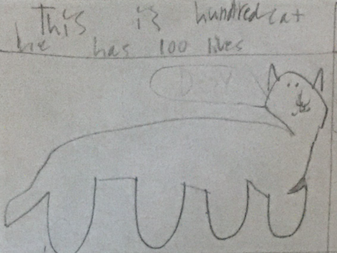
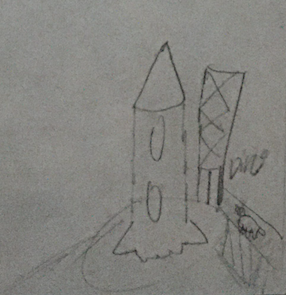
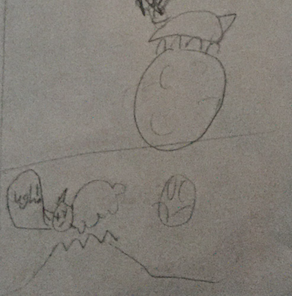
This is Hundred Cat. He has 100 lives.

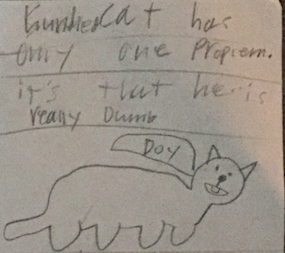
Hundred Cat has only one problem though, it’s that he is really dumb. “Doy,” says Hundred Cat dumbly.

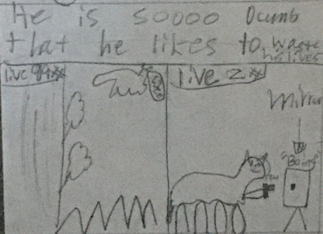
He is soooo dumb that he likes to waste his lives.

For example, it was Hundred Cat’s 99th life as he got ready to jump off a high cliff. Waiting below were rows of metal spikes sharper than a great white shark’s teeth. This is going to be fun, thought Hundred Cat. Hundred Cat jumped off. “WEEEEEE!!!” Hundred Cat was falling to his demise. “Ugh 😵!” Hundred Cat got skewered by the spikes. Hundred Cat could feel his body regenerating. With a crack and a snap and a stretch of his back Hundred Cat was fully regenerated. Also, it was Hundred Cat’s second to last life and he was setting up for a death. Hundred Cat put up a mirror that was up to his body height and loaded his pistol. “PEW!” Hundred Cat shot a bullet at the mirror and the mirror reflected it back at him: “POW!” The bullet hit Hundred Cat right in the chest. Blood started to pour out of Hundred Cat and he could feel his life slipping away. Suddenly he could feel his life quickly coming back into his grasp as his body patched itself up. Hundred Cat had only one life left and he was going to make it count. Hmmmmmm, what shall I do with my last life? thought Hundred Cat to himself. Then Hundred Cat got an amazing idea. He was going to do the ultimate stunt that no cat has ever done.

He was going to skydive from the moon to the earth. Hundred Cat quickly made his way to the nearest rocketship place and got in a big red rocketship, the color of a red rose that just bloomed.

Hundred Cat got in and put on the straps without any kind of spacesuit or oxygen tank. Hundred Cat then pushed the launch button and the rocketship took off into the sky leaving earth’s atmosphere. “PSHHHH!” The rocket ship landed on the moon. “Psh” the doors opened and out stepped Hundred Cat. Hundred Cat was losing oxygen so he quickly jumped off the moon. Since there was no gravity in space Hundred Cat hacked and horked and out came a hairy remote to the rocketship. Hundred Cat then pressed the self-destruct button and the rocket ship exploded, “KA-BOOM!” The explosion knocked Hundred Cat to a straight, on-course collision to earth. Hundred Cat was slowly losing oxygen but still held his breath a little longer. Hundred Cat finally entered earth’s atmosphere and took a big breath of air.

Hundred Cat was now going so fast that he was catching on fire like a meteor zooming through the sky. Hundred Cat could feel his skin slowly burning away but he still held on to his life. Finally Hundred Cat collided with earth and totally disintegrated, ending his last and final life.
                        The End      

RIP Hundred Cat


RABIA MAHMOOD

“The Mildenhall Treasure” is a great story. It uses something called creative nonfiction. This is when a writer takes a real historical fact or story and uses nonfictional characters and techniques to recreate it differently. For instance, one can read a newspaper account of an event and have the same set of facts playing out in your mind, but then you can read a short story version of the same events and something happens: fictional elements adorn the nonfictional facts, and even dialogue can occur, which causes you to completely recreate the story in the theatre of your mind.

            There was a lot of creative nonfiction in “The Mildenhall Treasure”. There were times when you could definitely tell were true and others when it wasn’t. One way to tell if a part is true is to ask yourself whether or not you think it would be true. For example, when it says “This was January and it was still dark, but he could tell there hadn’t been any snow in the night.” This is most likely true because when Dahl went to interview Gordan Butcher (the main character in this story), he probably mentioned the weather and that it hadn’t snowed during that night. Another example could be the time at which Mr. Butcher woke up. In the story, it says that he woke up at around 7:00 am. This is a detail that he might have mentioned to Dahl. For the untrue or made-up parts of the story, you can also guess these. Adjectives that you wouldn’t normally tell someone if you were telling a story. “As he moved through the half-daylight over the yard to the shed where his bicycle stood”: this is an example of something that he most likely was not told at the interview, and instead made it up so the story had a flow. He was probably told this along the lines of “I went outside to the shed and hopped onto my bike.” This very well could have been what Dahl had heard and he made all of that come from a short comment from Butcher. There are plenty more examples of this throughout the story. It can be very hard to tell which parts of the story are real and which parts of the story are made up. This is because if the storyteller (Butcher) loved the detail and mentioned every little thing then it would be very hard to find little things that were not real. But the fact is, we don’t know if Butcher talk extensively to Dahl – we do know they spoke for only a few hours.

             Creative nonfiction can be used to furnish the mind, and even can use motif to touch upon theme. In this story, one motif would be “the grey sheet of metal”. This is because the story is about someone who finds Roman silver, although in the contents of the sentence it is used as a metaphor to describe the sky unfolding over Butcher’s head. Also, this phrase is used more than once in this story. Another motif could be the use of the place name, “Thistley Green”. While it is a real place near the setting of the story, perhaps Dahl uses it here because when Gordon first sees the silver below the dirt Dahl describes the color of it to be a sort of greenish color around the brim of the silver plate.

            There are plenty more spread out across the story. It can be a little difficult at first to find a motif and that is because Dahl wove in little motifs throughout the story. He took a real story which he interviewed the witness himself and transformed the cold facts into something other people could enjoy. Dahl used his creative nonfiction skill to share and make timeless the story of Gordon Butcher and how he found the Mildenhall Treasure. Dahl is an amazing writer and has shown the technique of creative nonfiction in his writing. I absolutely loved reading this thrilling story. It had lots of detail and emphasis. I had to keep thinking back on what was real and what was not. It really messed with my mind.