
Monthly- Archives: October 2011


JING-WEI L

Utopias

Utopia: based on Greek: ou ‘not’ + topos ‘place.’


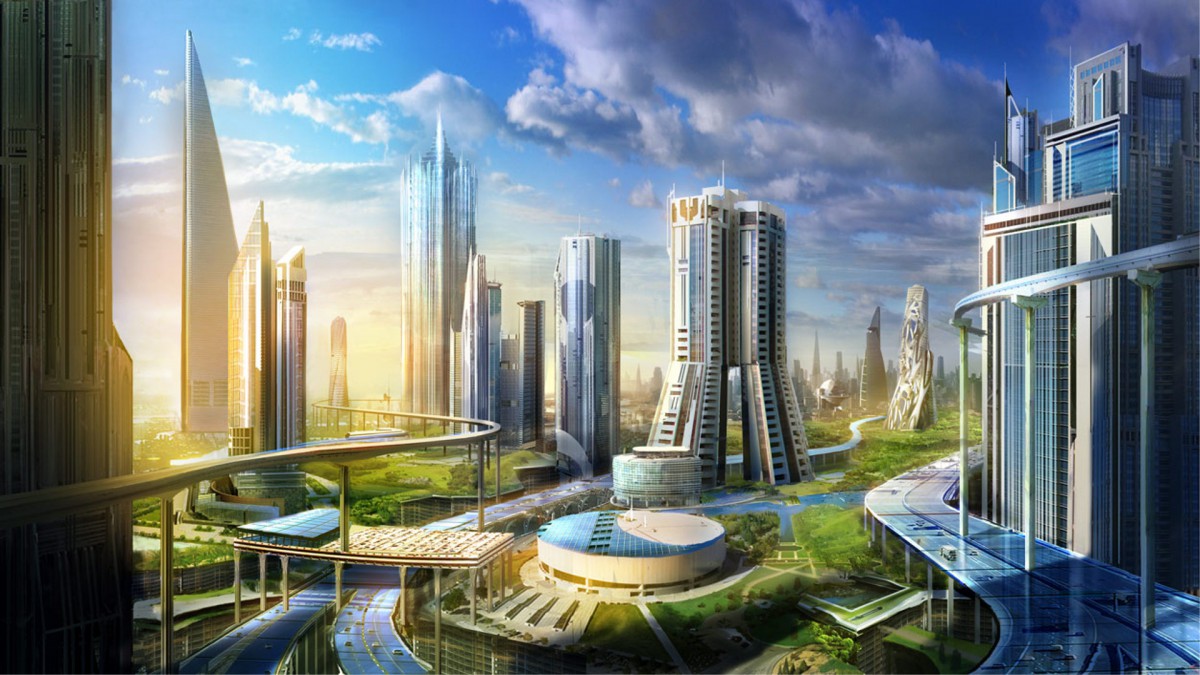
The definition of the word utopia is: ‘An ideally perfect place, especially in its social, political, and moral aspects.’ We all dream of the perfect world, but each person has different ideals so our ideas of perfection may all be different. Two examples of fully imagined perfect places are the setting for the novels ‘The Giver’ by Lois Lowry and ‘Player Piano’ by Kurt Vonnegut.


        

Utopias have been said to be “ … a perfect paradise that doesn’t exist, but which we all dream of anyway.” Based on what our world is now, the only thing we seem to have of for complete and utter peace and idea of perfection are hopes and dreams that we put on paper for the public to read.

‘The Giver’ is a novel about a utopian society that is seemingly perfect for almost everyone. There is no war, no conflict. Everyone is treated equally and the emotions there have been “toned down.” Without extreme emotions like love, jealousy, greed and anger, many conflicts are avoided like divorce and heartbreak. Without love the people of that utopian society have been spared from much emotional pain. There are also no social classes, which avoids a lot of problems. There is no violence because there is no envy, greed, or social classes, which ends up being beneficial to all. The population has also been controlled, which has been the root of many problems we face today like world hunger, overpopulation, and environmental issues like global warming. Children are assigned to a family; they do not stay with their birth mothers.  Matching a child to an ideal family should provide a safe environment for them to live in. In this way, there are no orphans or abused children, not that anyone has any evil incentives.  Also everyone is given the same amenities, for instance, all the children get a bike on a certain birthday so that they can avoid jealousy and envy. The scientists in that world have also changed people’s eyes so that they no longer see color, they can only see in grey, like dogs do, which also prevents problems. This world is a utopia because there is no violence, poverty or hunger. The government and leaders have taken over, but it is better than chaos.

‘Player Piano’ is another novel set in a utopian society. In this novel there is no poverty, hunger or war. The machines have taken over many jobs, performing them more quickly, efficiently and cheaply than humans can, making better quality products and using less money. The more intelligent with better jobs may have more money than others, but there are no homeless and starving on the street. Those who work in the division “Reeks and Wreaks” in the novel have initially the same houses with the same technology and are given sufficient amount of food. Also, because of the improvement in machines, people now have things like dishwashers that can clean things in just seconds. That way people don’t have to worry so much about taking up time with house chores like cooking and cleaning. The government and the intelligent people have taken over and have made America into a utopia.

Both novels are set in a utopian society, but those societies aren’t completely perfect. In ‘The Giver’ the people living in the society live in peace without many of the problems we have today in the real world, but they have lost a lot of freedom in this society. As mentioned, their ability to see color was taken away without their consent. Most of the people living in this utopian society do not even know about color. Another example is feelings: these people do not know true feelings like love. Thus a parent will not really love a child, which is very sad. Also, people are not able to choose their spouses – they are paired up based on things like characteristics and such. That is very unfair. Children will also never know their grandparents because of how the community works. This utopian society also kills the old and the lighter one of a set of twins. From the way this society works, they do not see this killing as anything morally wrong. It’s just a part of the job that they have. The weather is also controlled, so there is no such thing as rain and snow. Without snow, a child loses the chance to experience fun activities like snowball fights, sledding, and ice skating. There will be no precious child memories about Christmas and getting presents.

In the novel ‘Player Piano’ your status and future is all based on how intelligent you are, otherwise you will either have to work in the army or at “Reek and Wrecks.” That isn’t really a utopian society because this isn’t equality, and many people will not be happy with their positions as not everyone is a genius. Also in this world machines have taken over many jobs. Say a child has a dream of being a pilot. What if a machine was created that eliminated the need for a human pilot? That child wouldn’t even have a shot at their dream. People should be able to have the chance to achieve their dream jobs if they can. In the Player Piano society people have to take tests that will determine their future. If a college boy studies as hard as he possibly can, but is not intelligent enough, isn’t that unfair? He’s a good, hardworking young man. Also, what if the tests are wrong? What if a really imaginative kid was taking the test to see how creative he was, bombed that test? Machines may be better than humans in many ways, but they are not perfect. They cannot think for themselves when a problem or something new pops up. Player Piano may be a utopian society, but not everyone living in that community is happy with it.

‘The Giver’ and ‘Player Piano’ are both novels about utopia, and there are other similarities and differences. In both worlds there is no poverty or hunger. Everyone has enough to eat and has good homes to live in. Also both novels mention jobs that are the most desirable or the most honorable. Both novels are narrated by a central male character who eventually comes to see faults in his utopian society. At first they view their world to be perfect, but through a series of events and through influential people in their lives, they see their utopian world in a different light and take action. One difference in the novels is that ‘Player Piano’ is set in an era of technological advances, while ‘The Giver’ isn’t as high-tech. Another difference is that children in ‘The Giver’ are matched up to jobs depending on their personality and where they spent their community hours, while ‘Player Piano’s’ job placement depends on one’s intelligence. Also the people in ‘Player Piano’ can see colors and have memories of the past while people in ‘The Giver’ cannot. In ‘Player Piano’ there is a fine line between the rich and the regular people while in ‘The Giver’, there really aren’t concrete social classes. The Giver also mentions the job of a “Birth Mother” to create new life and control the population, and infants are assigned to a family that applies for a new child, but in ‘Player Piano’, children stay with their birth parents. Also in ‘The Giver’, most of the people living in that utopian society have shallow feelings and only know the life that they have and the jobs that they do, while in ‘Player Piano’ people have real true feelings and try to rebel to achieve a new life. Also, in ‘The Giver’, people are matched up to their spouses based on their personality and character while in ‘Player Piano’, people can choose who they want to be with. All in all, the people in ‘Player Piano’ seem to have more freedom of choice overall than those in ‘The Giver’.

Both novels about utopia display the hopes and ideals for the perfect world. In both novels the characters face confusion and desperation about what is right and wrong, but eventually find their way to their true beliefs in the end. Another similarity in these two works of literature is the main character finding something wrong with their seemingly perfect world. What seems to be real gold may actually be gilded wood that burns quickly and easily in the fire.


HANNAH H

First Day of High School


My alarm clock went off at 6 o’ clock in the morning, the sky still pitch dark. While I got ready for school, the just-woke-up-drowsiness, like fog, faded away. The worries I had built up in my mind about entering a new school came back to me. For the past few months they had followed me everywhere — they woke up with me, and tagged along during my daily routine, only leaving me when I went to bed. Today, I would have to confront those fears as today was my first day of school at Greenwich Academy. Once again, I’d be the new kid.

As my mother drove me to the all-girls school, there was not a word said between the two of us. She was just as anxious as I was, if not more. Twenty minutes after leaving home, we arrived at the school, and its winding paths leading up the building in which I would spend the next four years. Mom wished me luck as I exited the car and drove away, her car lights glowing in the misty air. Then I looked around me.

Filled with roaring cheers from spirited seniors, surrounded by the cars glistening from the raindrops falling from the cloudy sky, and inhabited by a sense of excitement that was catching, Greenwich Academy welcomed me with an everlasting first impression. The peace and serenity of the place seemed to comfort me. Confident and determined, I entered the building.

By lunchtime I had already met many of my classmates, all of whom were very welcoming and kind-hearted, and was quite content with all of my teachers and classes. While I munched on my burger and French fries, I chatted with my companions. We gossiped about the cutest boys at our brother school, Brunswick, and joked about the Bel Canto (choir) teacher’s miserable haircut. Before I knew it, I had relaxed and was being myself.

After classes came the sports. For the season, I chose to run cross-country. In my old middle school, for cross-country all I had to do was run freely for around forty minutes, but this was not the case at Greenwich Academy. Because I had already participated in preseason for two weeks, I was acquainted with all my fellow runners. Each day we’d run miles and miles (timed, of course) and afterwards be panting and drained of every drop of energy in our bodies, but proud of our accomplishment. The first day of regular practice was no different, and once again once I finished the difficult tasks assigned to me by the coach, I was weary, yet satisfied. Driving home from school after the exhausting but awarding practice, drenched in sweat, I began reminiscing on my first day of school, and the people I met.

Her name was Jordan and she introduced herself to me at 8:15 in the morning, her eyes full of spunk, her laugh full of joy, and her honesty shining through like a beam of light in a misty cloud. She had become my first friend at GA. Luckily for me, Jordan was in my first period class, so as we rushed from classroom to classroom, unsuccessfully attempting to find our English class before the period began, I got to know her better. I discovered she was a wonderful person, inside and out. My excitement for having made such a wonderful friend was uncontainable, and my face had broken out into a permanent smile. Eventually we arrived at the right classroom, and though we were tardy, that was trivial to our having just met.

Jordan was not the only person I met that morning who impressed me that morning. In my English class (the one I failed to get to in time) I met Ms. Gault whose bubbly personality was like none that I’d ever seen before. Unlike most teachers I’d previously had, Ms. Gault seemed like the type of person who would strive every day actually to make a difference in her students’ academic lives. Although the duration of time of the period was short, I noticed that I had already become attached to the young teacher. I knew for a fact that she would not only make the class educational, but throughout the year, I’d have a great time.

In bed that night, I was utterly and blissfully happy. All my uneasiness from the morning had been useless, I felt silly for ever having any concerns. Even though it was only day one, seeing students lose their voices from screaming so much and so loudly for their school, and having teachers whose attitudes match those of my passionate classmates, I knew deep in my heart that GA was where I belonged for my high school career. However, I knew that night I wouldn’t be able to sleep. The reason would not be that I was apprehensive about school still, but that I was so eager to get up the next morning to go to school!  When finally I drifted to sleep, I was like a bear, hibernating in the winter— my bed the cave.


ELIZABETH W


Once there was a whale named Spot. After a huge hurricane, he got washed up on the shore and couldn’t get back into the water. A few minutes later, a poor fisherman came to the beach that Spot was washed up upon and saw a huge whale laying there on the sand. The fisherman and the whale were the only two things on the beach. The fisherman, Jack, was going to scream to everyone. Jack wanted Spot to be sliced and eaten and he wanted all the fame for finding such a big whale. However, finally Spot talked to him and convinced Jack to be a good guy and to push him back into the water and go home. Jack turned into a merman for being so kind to Spot.


 The Friendship of Jack and Spot


Now Spot was a happy whale,

As happy as any could be.

But a strong hurricane pushed his tail,

And he came flying out of the sea!


Lying there on the sand,

Spot wished to find his friends

Jack a poor fisherman was looking for land,

Startled, he found a huge whale instead!


Jack scurried around thinking,

Of all the fame he could contain.

If he stood there screaming.

The whale would drive people insane!


And preparing for a shout,

Jack opened wide his mouth.

From Spot’s mouth came pouring out,

Words that came from the South.


Spot begged Jack not to flee,

Instead to roll him back into the sea.

Jack was not going to follow his plea,

But Spot was eager to be free.


“Good things can happen if you help a whale,”

Jack remembered what he read.

He turned pale and started biting on his nail.

Jack’s indecision he could not shed.


In his life, Jack wanted good things,

But he was poor and also needed the money.

Sand in Spot’s eyes made it sting,

While Jack’s nose started to be runny.


Eventually Jack with full effort,

Pushed Spot away from the beach.

Hearing Spot thank him, he opened a yogurt,

Laid down on the sand and started to eat.


All of a sudden he ran into the water,

His legs started to join, forming into a tail

The tail compared to legs was much longer.

He saw Spot, and he wanted to sail.


Spot and Jack became best friends

They explored the sea together,

Their friendship never ends.

They swim at ease under water in all weather.


HELEN (HANYU) L

HELEN (HANYU) LIU 8TH GRADE


Helen just moved from Connecticut to Boston, MA.


Just the consideration of starting a fresh school year in a new school can leave the body in abeyance and drown the mind in many hopes and doubts. Not knowing what to anticipate, the mind then constructs expectations and desires based frankly on imagination and previous experiences. These hopes and anticipations swim freely around in our heads until reality eventually proves them right or wrong. Once again I, who am about to enter my fifth school in the past seven years, have a pool-full of these expectations.

I cannot say that these hopes and doubts are different from my previous ones – to make new friends, fit in at school, understand in class, and to not get in trouble – however, they are no longer fears but rather things that are mandatory. Being a “new kid” many times before, adapting and accommodating in a new environment is not difficult, but not necessarily easy either. All schools are different and have their own special atmosphere that takes patience and skill to fit into. Also, each school has its own traditions and individuality so I look forward to discovering what they are.

Besides social life, which is what every new kid worries about the most, we come to school to learn. In eighth grade, I expect to learn more in algebra, World War I and II, biology and chemistry, more Latin vocabulary and roots, and further SAT vocabulary words. Also, getting to know the new teachers can be fun and uncovering their ways of teaching can be interesting to compare to my previous discoveries.

Finally, the most abhorrent part in starting a new school is finding my way around the actual building. Unlike my old school that had a California-styled campus (many separate buildings that are connected with small paths and are very open to the environment), my new school is all one big, enormous building. I doubt that I will be successful in making my way around in this structure in the first week so I’m going to need a map.

Commencing a new school is not an easy task, nor is it a hard task but a task that requires skill and careful thinking; this I already mastered through my seven years of practice. However, this doesn’t mean that I don’t have to struggle during the first few weeks because I still have the pool of hopes and doubts to deal with until reality catches up to them.


HANNAH H

BP OIL SPILL AND ACCOUNTABILITY


On the eve of BP’s catastrophe, its man-made disaster that killed eleven of its workers and numerous innocent animals, bankrupting thousands of businesses on the Gulf of Mexico, the Minerals Management Service, the agency that supposedly regulates and manages oil companies’ leases of our natural resources, was sitting on its hands.  The technology necessary for drilling a mile below sea level didn’t have the right safety protocols to prevent the spill. What was the MMS doing?  In September 2010, Julia Whitty from the investigative journal Mother Jones published an article about BP’s horrific cover up, with all the truths being kept from the general public.  MMS just let BP continue “…gambling at the border of controlled engineering, to be the deepest and cheapest driller of them all,” said Whitty.

After all they’ve caused, is BP taking responsibility?  No, it is covering up its mistakes. In fear of being sued, they decide to pay the victims whose lives they so very much disadvantaged with the BP Compensation Fund. That is it.  They simply don’t care about anything but their reputation. For example, they were and still are dispersing Corexit, a lethal dispersant onto the oil covered waters, fully knowing that the oil that was spilt, plus the dispersed Corexit, is the absolute worst combination possible for the environment.  Obviously the environment will thank BP after this. Even after all this BP still finds time to (according to Whitty) “round down” the numbers of the amount of hemorrhaging oil, and above all, “buy the silence of scientists with lucrative pay and confidentiality clauses”.

The Clean Water Act states that BP must pay $1,100 dollars for every barrel of oil that they spilled. But, because of their use of Corexit and other dispersants, the real size of the spill will forever be unknown, because only a meager amount of oil washes up on shore, “guaranteeing that BP’s liability will be vastly underestimated” (Whitty).

To better understand what consequences for these types of actions should be, we should look to the Canadian Oil Company, Syncrude. Syncrude is the largest oil sands project operator and in April 2008, was fined $2.92 million for killing 1,603 ducks because it had failed to put up warnings for the birds. This incident is on a far smaller scale than the BP Oil Spill, but the amount of money paid has been much more appropriate. Syncrude had to pay for harming nature, as should BP.  The Alberta court decision was fair, and laws protecting nature should ensure BP pays for its crimes. Syncrude was charged about $1,900 per duck.

A staff writer, Patrik Jonsson, of the global news organization, Christian Science Monitor, wrote an article in June of 2010 about the many deaths of the unfortunate animals in the Gulf of Mexico. While the number of animals killed in the BP oil spill is not known, Jonsson reports that there have been an estimated 1,000 slain seagulls.  “One fifth of the entire Juvenile Atlantic Bluefin Tuna population [has been decimated] as of August, the numbers rising substantially every day,” says Mathew McDermott of the environmental website, Tree Hugger. How much should BP pay? In the 10/21/10 edition of USA Today online, the Natural Resources Defense Council said that they thought BP would have to pay billions. Many of the killed birds and sea life were endangered, and the cost for harming or killing endangered animals can be up to $50,000 per creature.

Can you be numb to this fact: BP has resorted to purposely killing innocent animals to preserve what’s left of their reputation!  “Endangered sea turtles and other marine creatures are being corralled into 500 square-mile ‘burn fields’ and burnt alive in operations intended to contain oil from BP’s ruptured well in the Gulf of Mexico”, said Suzanne Goldenberg, a U.S. correspondent of London’s Guardian newspaper.

It isn’t only major oil companies that have nature harming ways. Everywhere you look, you can see people tossing their used napkins and empty bottles out the window of his or her car, or onto the sidewalk just a few measly feet away from a small sign, stating “no littering”.  Sometimes you come across streets cluttered with litter and nobody on that street bothers to pick anything up, when just the other day they boasted to their companions about how they were becoming so eco-friendly.

Henry David Thoreau once said, “Thank God man cannot fly, and lay waste the sky as well as the earth”.  But that was then: in modern times, more than a century later, even the average person can and does fly — but with the help of gas-guzzling, waste-leaving aircraft.  Google has hormone-free chicken in its cafeterias, a free shuttle for employees to take, and an employee incentive plan to walk, bike and use public transportation.  This would seem to be model behavior for an environmentally conscious company.  However they own and frequently use a $60 million “party plane”, which is three times as heavy (and three times as energy consuming) as a conventional executive aircraft, decked out with dining rooms, bedrooms and even customized showers.

Do you do enough to help out their environment? Can we as global citizens afford to be hypocritical any more?  How could we work together to eradicate the state of hypocrisy we’re in right now?

Several sources including the Environmental Protection Agency helped Oberlin College publish an article about recycling. While 56% of the paper used in 2007 in the United States was recycled, many Americans aren’t going any further. For example, Americans could be filling 21 million bags with the amount of food they throw into landfill.

Senators John Kerry, Joe Lieberman and Lindsey Graham with their Cap and Trade policy that supposedly will help the environment are proving to be top-drawer environmental hypocrites. Their policy just lets big companies cover up their just-as-big environmental footprints. The Cap and Trade Policy basically will let the companies have the same carbon footprints, but they can do things such as fund a rainforest to “offset” the footprint.  Corporations can trade their offsets, and Wall Street traders are lining up to bet on these offsets as new types of derivatives!  When will the madness stop?

Supporters of this bill include several companies, such as the Environmental Defense Counsel and the National Resource Defense Counsel, which seems contradicting. Congress has allotted two billion carbon tons to be traded as part of this bill.  Two billion tons is about 30% of total U.S. greenhouse gas emissions!  But there are countries who oppose this idea fundamentally and morally, like Bolivia. Bolivia’s president Evo Morales has spoken out against Cap and Trade but so far has not been heard as loudly as he deserves to be.

Like Ralph Waldo Emerson says in his essay, Nature: “If the stars should appear one night in a thousand years, how would men believe and adore… the city of God”: if nature was only around once in every century, we would be more appreciative of it, but because it is always able to be seen, we see it as a given. Nature is no longer viewed as something we deserve, but something we take for granted. People like Kerry and Lieberman think that ecology and stewardship can be translated into advantages for the business world, but if they observed more closely, or if they listened more closely, they would understand nature’s true meaning. They would understand that nature’s laws trump man’s laws.

Making empty complaints won’t help our planet.

I am handing you, the reader, a questionnaire, to compel you to understand your civic and environmental duties, and to make you stop and think about what you’re doing for the environment.  What ARE you doing and does your conscience approve of your behavior and outlook? Please complete the questionnaire and return it to me.  You may keep this informative essay to better understand the current state of the environment.  I will use your responses in an upcoming presentation about the effects of my inquiries.


QUESTIONNAIRE

1. What do you do think you should do in everyday life that is beneficial to the environment? (List)

2. What do you do in everyday life (and be honest) that effects the environment negatively? (List)

3. Do you contradict yourself in what you should do and what you do?

4. Does your conscience become affected when you do things that you shouldn’t, environmentally-wise?

5. How much effort would you put into changing those habits? Are you open to change?

6. How much do you know about the BP Oil Spill?

7. What are your opinions on their cleanup program?

8. Have you been on the BP website where it states all the ways it is improving the scene near the spill?

9. Should the government have done more about the spill rather than letting BP “handle it” themselves?

10. Should BP have to pay compensation? How much is appropriate for all they’ve caused?

11. Do you think that major corporations should be allowed to hide their footprints?

12. Have you heard about the Cap and Trade Policy?  What are your opinions about it?

13. Have you heard the opposition to Cap and Trade?

14. Is making money more of a priority than preserving the environment to you?  What is it, do you think, to politicians?

15. (To be answered after you have read the essay) Has this essay affected you? Will you react differently to hypocrisy and nature abuse now?

16. BP is murdering animals that were affected by the spill to cover up and dispose of their damage: does this surprise you?