ALLISON ZHAO
Forever Young, Forever Unique Axolotls
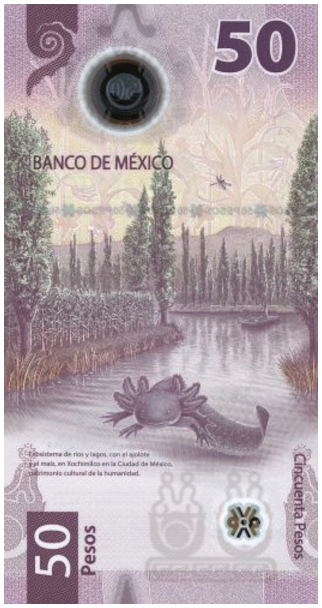
The axolotl is far from your average animal. From their major significance in Aztec culture to their involvement in popular media, they have had an outsized impact in culture. In particular, the axolotl took the face of the 50 peso bill in 2021, winning Bank Note of the Year the same year. 2021 also so happens to be the year they were also introduced in the popular game Minecraft; Google searches for

axolotls surged. Wherever axolotls take the spotlight, they continue to be iconic all around the world.
The axolotl’s ability to regrow limbs is one of its many characteristics that amazes scientists and makes them eager to learn about them. For younger axolotls, a limb can grow back in a little more than a month, and for older axolotls, regeneration can take several months. This ability comes in handy if axolotls ever clash with another animal. It is possible that one day, could we follow the steps of these creatures and regenerate as well?
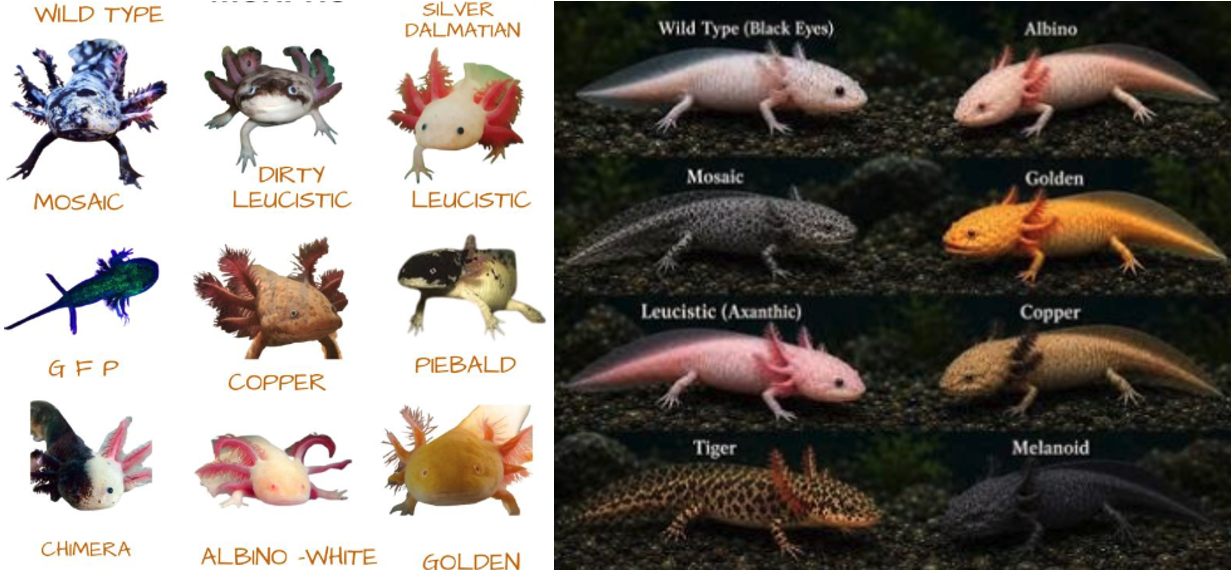
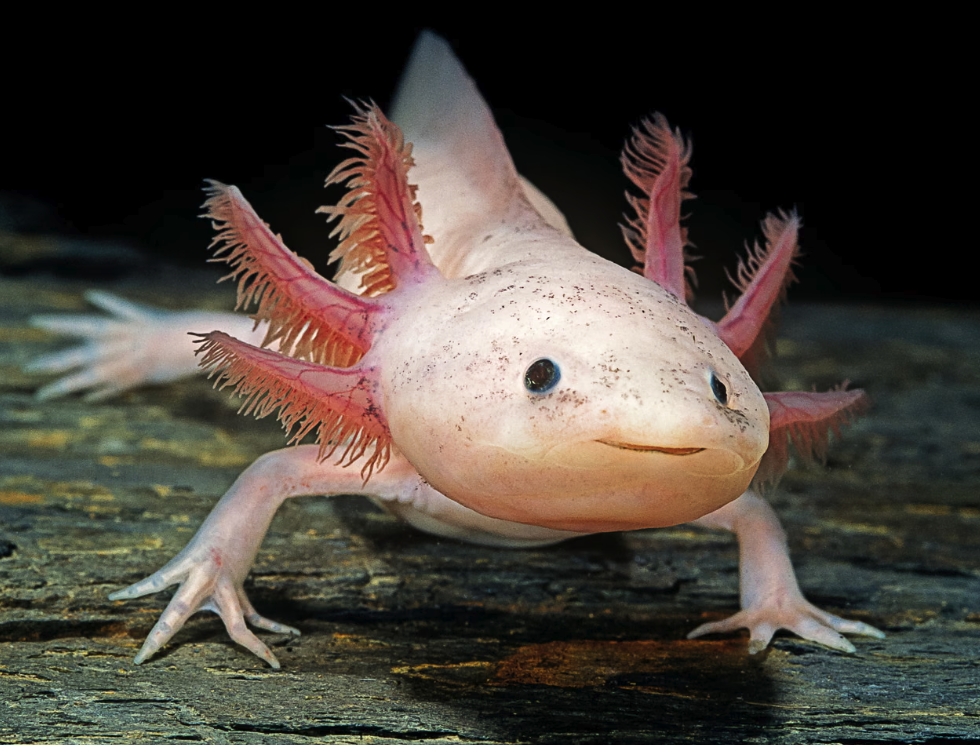
You may have seen the popular pink axolotls flood the image page of Google. However, they are not as common in the wild as one would think. Instead, the darker-colored axolotls take that crown.
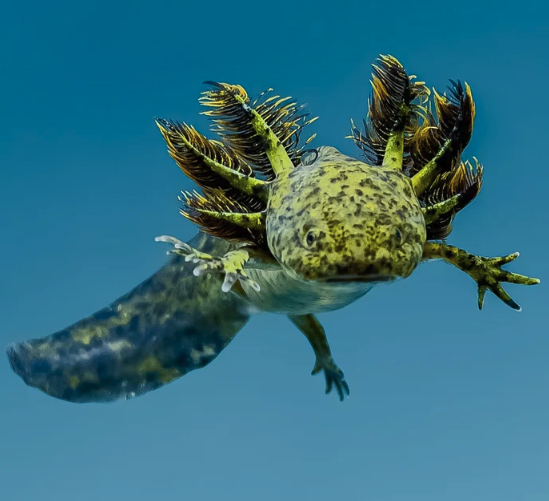
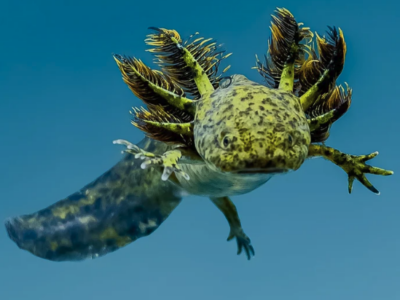
These axolotls inherit green or brown marks that cover their skin, with the occasional silver streaks. They can readjust to a slightly lighter or darker shade to camouflage with their surroundings if in danger. Pink or lighter shades are practically unheard of in the wild due to the stark contrast with the murky waters of their environment. Pink or lighter colored axolotls are mostly bred in captivity for later trade, as the softer colors are often more appealing to collectors and buyers.
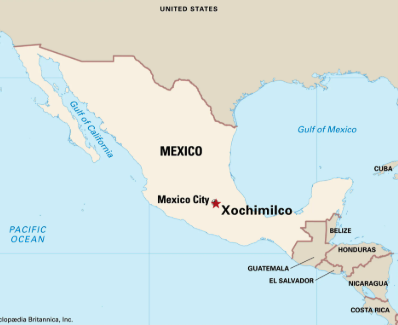
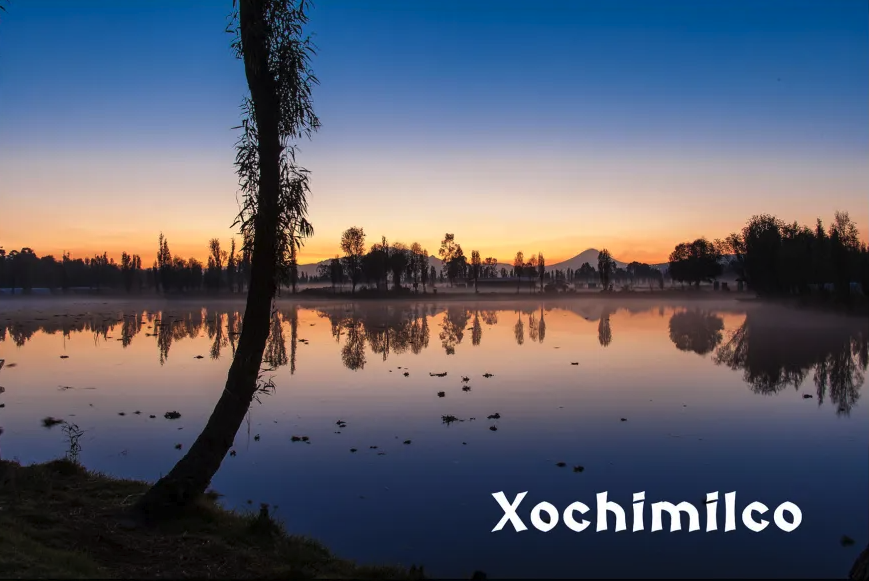
Axolotls live exclusively in Mexico, where there are only two lakes they can inhabit: Lake Xochimilco and Lake Chalco. This is because axolotls are lentic, meaning they live only in still-water lakes as opposed to fresh water that flows (lotic). However, Lake Chalco was drained over a period of several centuries, with the final drainage being around the 1890s. This caused a further decline in their wild populations, leaving Lake Xochimilco as the last natural habitat for these animals.
Do you find axolotls adorable for their babylike, permanent smiles? Well that isn’t just any coincidence. They have an attribute called neoteny. While most of their fellow amphibians will eventually move out of the water, calling land their new home as adults, axolotls do not follow that trend. They instead stay a forever-baby, preserving features such as their feathery gills, webbed feet, and dorsal crest while still reaching sexual maturity.
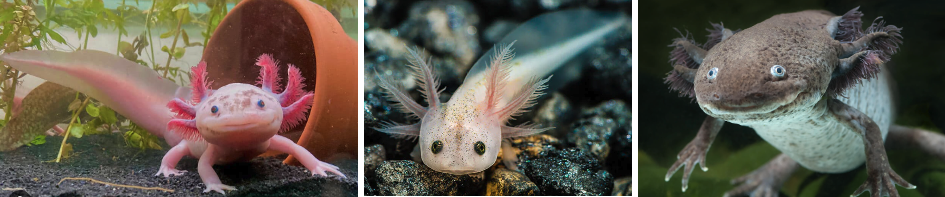
The name axolotl originates from Xolotl, the Aztec god of fire, lightning, and death. In Nahuatl, the Aztec language, axolotl translates to “water monster” and is pronounced differently.
In the Nahuatl dialect it is commonly pronounced: AH-show-LOAT, whereas we tend to pronounce it this way: ACK-suh Lah-tuhl.
In Aztec mythology, during the creation of the sun, the gods sacrificed themselves to set the sun in motion. However, Xolotl, terrified of losing his life, fled from the responsibility. Also being the god of twins, he transformed into a double maize (which we call corn), before turning into double maguey as well (scientifically known as agave and a type of succulent plant native to the Americas). Eventually, Xolotl settled on disguising himself as an axolotl, fleeing into the water. However, Ehecatl, the god of air of winds, found the cowering god, slaying him and finally completing the sun’s transformation (other variations do exist, such as him being banished to live as an axolotl forever).
Typically the top predators of still-water lakes, they hunt just about anything they can get their paws on, including fish, molluscs, and arthropods. They hunt by using a suction technique where they open their mouth, vacuuming in water and any prey that has the unfortunate luck of being nearby. They often need to swallow their prey as a whole due to the permanent juvenile stage their teeth remain due to their neoteny.
However, their status as apex predators has been removed because non-native fish such as carp and tilapia prey on axolotl eggs, and larger fish also prey on axolotls as a whole. They have only recently been introduced to the axolotl’s natural habitat. These invasive species have also contributed to the decline of the axolotl’s population. Axolotl’s are also cannibalistic, preying on or being preyed on by conspecifics (organisms with different physical characteristics but that are still the same species; for example, a brown, mottled axolotl and a pastel pink axolotl).
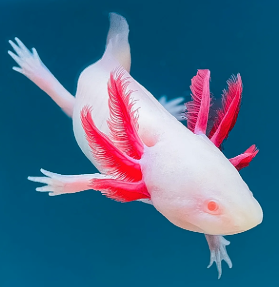
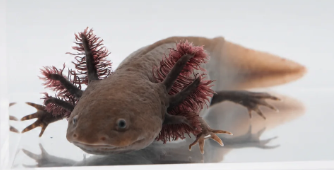
In the first six months of life after an axolotl hatches, it’s quite difficult to distinguish any sexual differences. By as early as six months of age, they begin to reach sexual maturity. Water temperatures and diet can also play key roles in maturation. There are some physical indicators, such as an axolotl’s size, that show whether the axolotl is sexually mature. A typical mature axolotl would be around 6 to 8 inches in length, but some may grow larger than that. An axolotl over 12 inches in length is exceptionally rare.
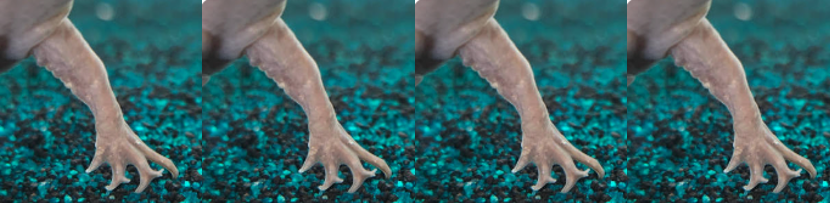
Another indicator of sexual maturity is the color of an axolotl’s toes, which may look like small claws and sometimes even with what looks like polished nails. The toes of a darker colored axolotl turn lighter, while the toes of a leucistic or lighter colored axolotl can turn darker. Leucistic axolotls lack pigmentation, causing paler skin, fins, etc. Their eyes are not affected by sexual maturity, unlike albino axolotls.
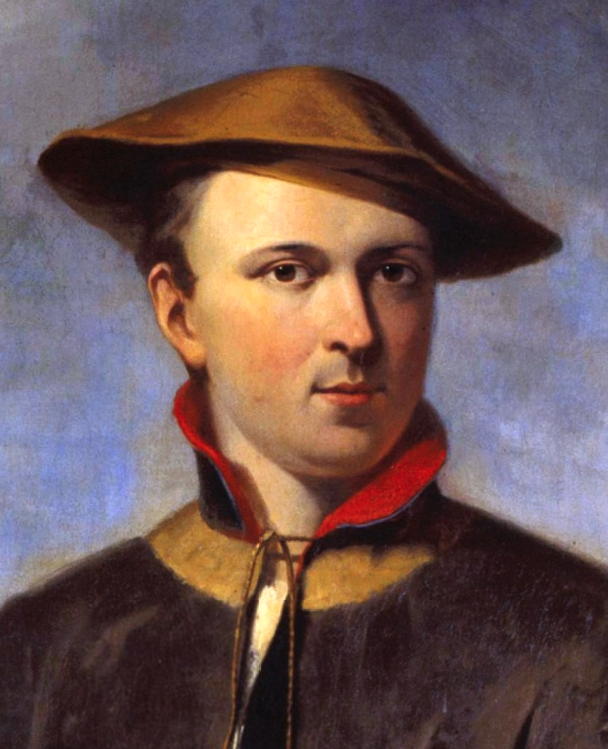
With millions of species and animals in the world, whether active or extinct, there is a need to organize them into groups to locate information efficiently. Using the characteristics and similarities of each animal, the classification of these organisms is known as taxonomy. Carl Linnaeus (1707-1778), a Swedish botanist, physician, and biologist, is credited as “the father of modern taxonomy”.
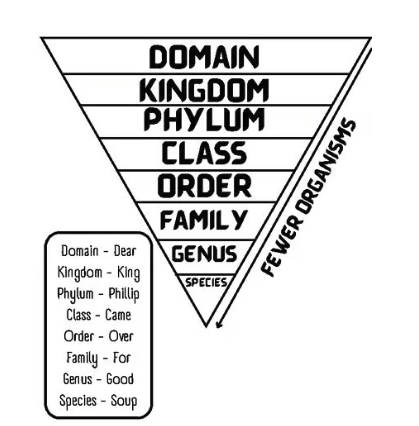
The word taxonomy was coined from the Greek words taxis (“arrangement”) and nomos (“law”). Taxonomy has eight major ranks: Domain, Kingdom, Phylum, Class, Order, Family, Genus, and Species. Domain is the broadest rank, and every organism belongs in one of three domains: Archaea, Bacteria, and Eukarya. As the ranks of the hierarchy go down, each rank becomes more specific in defining the organism.
The axolotl is no exception, having a classification in every major rank:
Domain: Eukaryota, Kingdom: Animalia, Phylum: Chordata, Class: Amphibia, Order: Caudata, Family: Ambystomatidae, Genus: Ambystoma, Species: Ambystoma mexicanum.
Although abundant in captivity (nearly 1 million), axolotls are classified as critically endangered, with fewer than 100 mature individuals remaining in the wild, according to the IUCN (International Union for Conservation of Nature). This status is the result of several different issues. For example, as industrialization increased in Mexico City, the nearby lakes were affected by pumps and pipes that polluted them, creating an unsafe habitat. According to Dr. Luis Zambrano, a professor of zoology at the National Autonomous University of Mexico, “All of our aquatic animals suffer from bad water quality, but amphibians suffer more because they have to breathe with the skin.” And when an earthquake hit in 1985, it forced thousands of people to relocate to new homes near the lake, adding more devastation to the wild population.
Ultimately, axolotls are so much more than cute animals and simple pets. They are meaningful representations of resilience, positivity, fragility, and much more. As their popularity continues to skyrocket, people are starting to wonder more about these fascinating creatures and what they truly symbolize around the world. Here are a few important meanings associated with axolotls.
a. Axolotls have one major characteristic: regeneration. They can regenerate nearly any part of their bodies within a few months. This superpower makes them a symbol of healing—not just physical wounds, but emotional ones as well. They represent the idea that recovery is possible, and no matter what, you can persevere through hardship.
b. As we know, axolotls are neotenic and don’t undergo metamorphosis. Instead, they keep baby traits while being sexually mature. This symbolizes that, through change, staying true to yourself is what really matters, despite what anyone says. No matter what age you may be, you are never too young to discover new things.
c. With their tranquil and docile natures, axolotls are a popular choice as a pet, especially considering their relatively long lifespans of ten to fifteen years in captivity. They symbolize the sense of positivity and peace that owners often get when owning an axolotl. With their happy smiles and adorable faces, they make them famous icons on the internet and even emotional support animals!
Unfortunately, the axolotls are slowly losing their place in the wild. In fact, as a result of various issues such as pollution, the average lifespan for wild axolotls has dropped to five years. As we’ve seen, they only live in one natural area, Lake Xochimilco. Even today, the habitat remains vulnerable to urbanization. They serve as a reminder of the true fragility of nature and how human actions impact wildlife. Axolotls aren’t the only ones affected by such issues, and action needs to be taken.
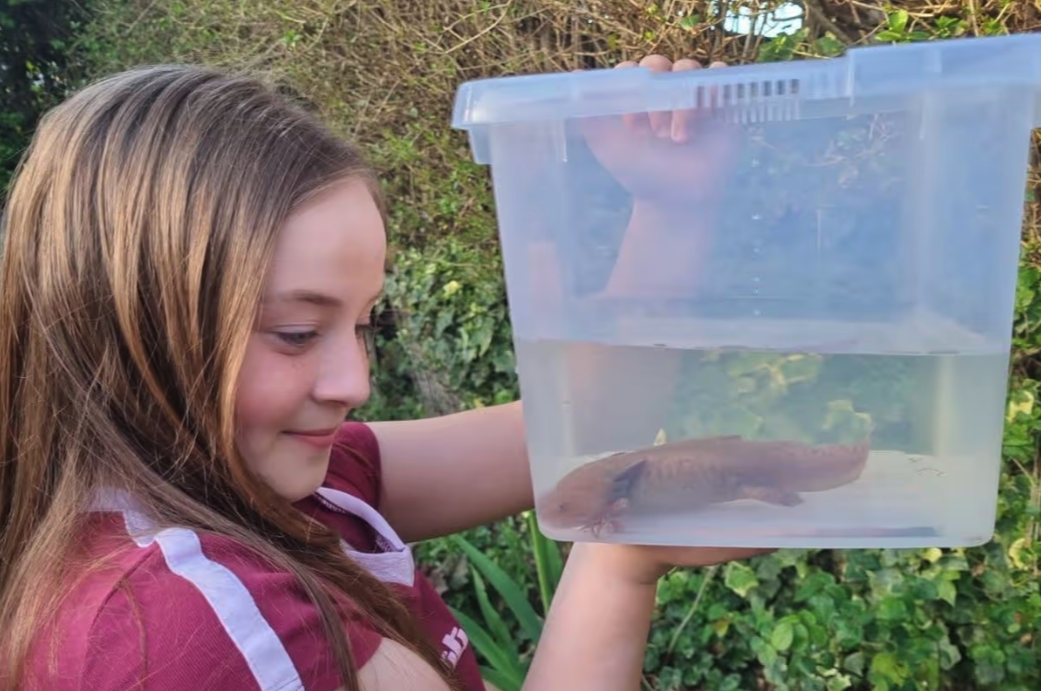
On the other hand, axolotls remain prominent all around the world. They continue to pop up around the world, whether in media or real life. In April of 2026, an axolotl was found by Evie Hill, age 10, in the River Ogmore, being the first ever recorded axolotl found in the wild in the UK. There are many channels across social media dedicated to axolotls. Despite their vulnerability in the wild, their impact remains absolute.